
Shortlist Guide: Six Rare Earth Salts Every Catalyst R&D Team Should Sample
Rare Earth Functional Materials · Catalyst Precursor Selection
Shortlist Guide: Six Rare Earth Salts Every Catalyst R&D Team Should Sample
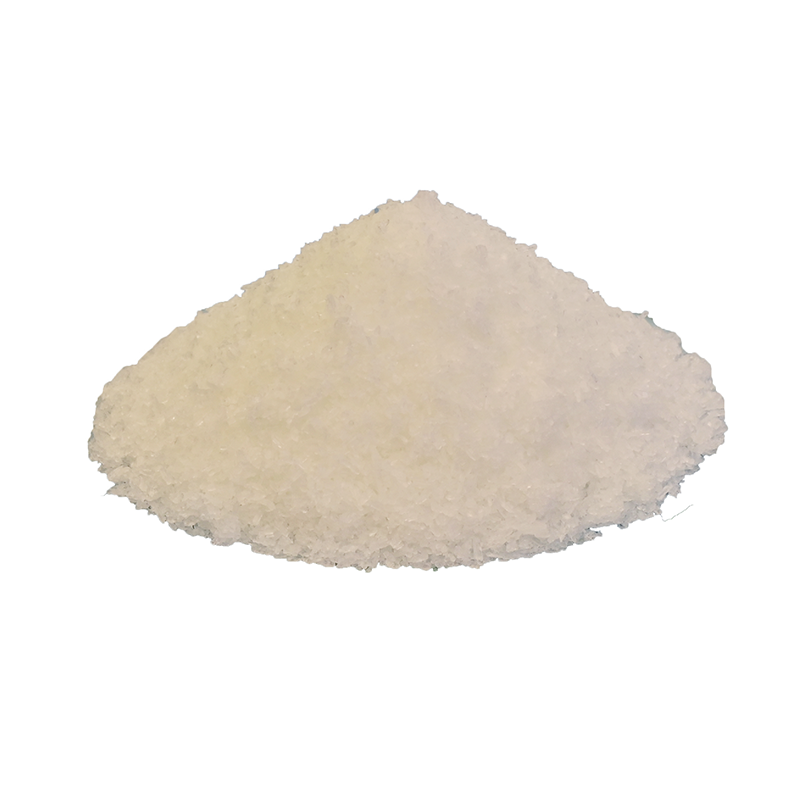
Figure 1 — Lanthanum Nitrate, one of six rare earth nitrate salts covered in this shortlist guide.
Catalyst programs rarely stall at the reactor. They stall earlier, at the point where a research team has to decide which precursor compounds to bring into the laboratory, in which grade, and in what order. Rare earth salts sit precisely at that decision point: they dissolve into defined solutions, they carry a rare earth cation at a known stoichiometry, and they convert into the corresponding oxide during calcination. They are also numerous enough that “sample everything” is not a workable plan.
This guide narrows the choice to six compounds documented within WONAIXI’s rare earth product portfolio: Yttrium Nitrate, Cerium Nitrate, Lanthanum Nitrate, Neodymium Nitrate, Praseodymium Nitrate and Zirconium Nitrate. Formulas, CAS numbers, molecular weights and application notes below are taken from the product documentation as written. Where the documentation is silent, this article stays silent.
Why a shortlist beats a catalogue in the research stage
A catalyst development program typically moves through literature review, precursor screening, support and loading trials, and finally scale-up. The screening stage is the most resource-intensive part of the early phase, because each candidate compound consumes reactor time, analytical time and a purchase order. Bringing thirty rare earth salts into the lab is not thorough; it is unfocused.
The practical alternative is a first sampling round built around the cation roles a program actually needs. Rare earth nitrates are a natural starting family because they are water- and alcohol-compatible in many documented cases, and because the nitrate anion leaves no persistent chloride or sulfate residue behind after thermal conversion. That matters when the downstream target is a supported metal catalyst, a dielectric or ceramic layer, or a mixed-oxide powder where trace anions would distort the result.
Scale is the other half of the problem. A single supplier catalogue can cover nine major product categories and more than fifty refined specifications — a breadth that is useful at the procurement stage and overwhelming at the bench. Six compounds, each with a defined formula, CAS number and documented application, give a research team a defensible starting basket: narrow enough to execute, broad enough to cover the common rare earth precursor roles.
What “rare earth salt” means in this shortlist
A rare earth salt is a compound in which a rare earth element is combined with an anion such as nitrate, chloride, acetate, sulfate, carbonate or fluoride. In WONAIXI’s product system, the nitrate products discussed here — Yttrium Nitrate, Cerium Nitrate, Lanthanum Nitrate, Neodymium Nitrate and Praseodymium Nitrate — are catalogued as rare earth compounds under a rare earth classification, each with a declared hydrate formula, CAS number and molecular weight.
Zirconium Nitrate is catalogued within the same rare earth classification category in this product system, with the identity Zr(NO<sub>3</sub>)<sub>4</sub>·2H<sub>2</sub>O, CAS 13746-89-9 and a molecular weight of 375.36 g/mol. R&D teams working under a formal specification basis should confirm the elemental classification of zirconium compounds against their own documentation requirements, since zirconium is not a lanthanide. The catalogue classification and the chemistry classification are not always written for the same audience.
The six-salt shortlist at a glance
| Salt | Documented formula | CAS | Molecular weight | Documented application notes |
|---|---|---|---|---|
| Yttrium Nitrate | Y(NO<sub>3</sub>)<sub>3</sub>·6H<sub>2</sub>O | 13494-98-9 | 382.91 g/mol | Preparing ternary catalysts, ceramic materials and yttrium compound intermediates |
| Cerium Nitrate | Ce(NO<sub>3</sub>)<sub>3</sub>·6H<sub>2</sub>O | 10294-41-4 | 434.22 g/mol | Additive for petrochemical catalysts and for gas lamp covers |
| Lanthanum Nitrate | La(NO<sub>3</sub>)<sub>3</sub>·6H<sub>2</sub>O | 10277-43-7 | 433.01 g/mol | Catalyst material in the petrochemical industry |
| Neodymium Nitrate | Nd(NO<sub>3</sub>)<sub>3</sub>·6H<sub>2</sub>O | 16454-60-7 | 438.24 g/mol | Preparing chemical reagents, glass coloring agents and neodymium oxide |
| Praseodymium Nitrate | Pr(NO<sub>3</sub>)<sub>3</sub>·6H<sub>2</sub>O | 15878-77-0 | 434.91 g/mol | Experimental reagents, special alloys and ternary catalysts; also documented as a polishing agent in LCD display production and a catalyst in the pharmaceutical industry |
| Zirconium Nitrate | Zr(NO<sub>3</sub>)<sub>4</sub>·2H<sub>2</sub>O | 13746-89-9 | 375.36 g/mol | Ternary catalysts, high-end ceramics, zirconium compound intermediates and chemical reagents |
Reading the table: the fifth column reproduces what the product documentation states. It is not a ranking. Each salt occupies a different role in a catalyst workflow, and the right first sample depends on the support chemistry, the target phase and the thermal budget of the process.
Salt-by-salt notes for a first sampling round
Yttrium Nitrate — the ternary catalyst entry point
Yttrium Nitrate (Y(NO<sub>3</sub>)<sub>3</sub>·6H<sub>2</sub>O, CAS 13494-98-9, molecular weight 382.91 g/mol) is documented as a rare earth compound intended for preparing ternary catalysts, ceramic materials and yttrium compound intermediates. For a research team, the intermediate role is the operationally important part: yttrium nitrate is a route to other yttrium compounds as well as a direct precursor, which makes it useful both in a dilution series and in a mixed-salt formulation.
What to record when sampling: the declared hydrate form and the lot-specific assay, because the molecular weight above is stated for the hexahydrate.
Cerium Nitrate — cerium in a catalyst additive role
Cerium Nitrate (Ce(NO<sub>3</sub>)<sub>3</sub>·6H<sub>2</sub>O, CAS 10294-41-4, molecular weight 434.22 g/mol) is documented as an additive used for petrochemical catalysts and for gas lamp covers. Cerium chemistry appears in more than one anion system inside the same portfolio: Electronic Grade Cerium Ammonium Nitrate (Ce(NH<sub>4</sub>)<sub>2</sub>(NO<sub>3</sub>)<sub>6</sub>, CAS 16774-21-3, molecular weight 548.22) is documented for synthesizing ternary catalysts for automobiles as well as for polishing and etching in LCD display production. The two are not interchangeable, but sampling both lets a team observe how the anion system changes the outcome.
Lanthanum Nitrate — the petrochemical catalyst material
Lanthanum Nitrate (La(NO<sub>3</sub>)<sub>3</sub>·6H<sub>2</sub>O, CAS 10277-43-7, molecular weight 433.01 g/mol) is supplied as a hexahydrate and documented as a catalyst material for the petrochemical industry. Among the six, it carries the most narrowly stated application, which makes it straightforward to justify in a sampling plan: either the program works on petrochemical catalyst development, or this salt sits lower on the list.
Neodymium Nitrate — reagent and oxide precursor
Neodymium Nitrate (Nd(NO<sub>3</sub>)<sub>3</sub>·6H<sub>2</sub>O, CAS 16454-60-7, molecular weight 438.24 g/mol) is documented for preparing chemical reagents and glass coloring agents, and as a route to preparing neodymium oxide. Its documented applications are not catalyst-specific, and this guide does not present them as such. It stays on the shortlist because it is the neodymium entry point in the nitrate family, and because neodymium chemistry carries strategic weight well beyond catalysis: neodymium–praseodymium demand is projected by Arthur D. Little to grow at a CAGR of 8.4% through 2035, driven by expansion of the electric vehicle and wind turbine sectors. That growth originates in magnet applications, not catalysts, and should be read as portfolio context rather than as a catalyst demand signal.
Praseodymium Nitrate — ternary catalysts and reagents
Praseodymium Nitrate (Pr(NO<sub>3</sub>)<sub>3</sub>·6H<sub>2</sub>O, CAS 15878-77-0, molecular weight 434.91 g/mol) is documented for the preparation of experimental reagents, special alloys and ternary catalysts. A second set of documentation lists it as a rare earth nitrate compound used as a polishing agent in LCD display production and as a catalyst in the pharmaceutical industry. Both sets of statements come from the source materials and both are reproduced here; teams that need a single application basis should confirm which one applies to their program before ordering.
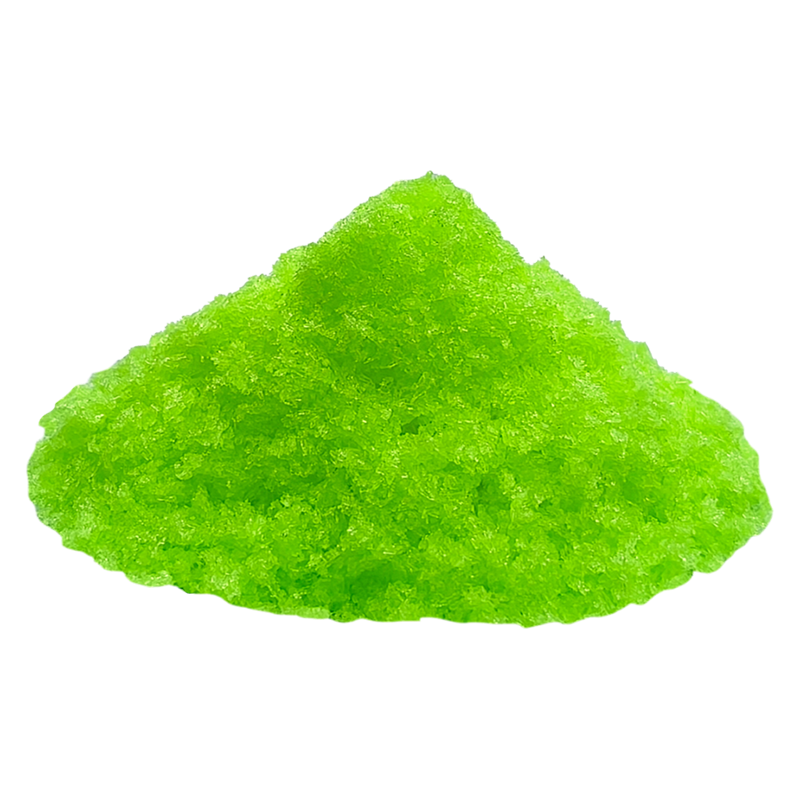
Figure 2 — Praseodymium Nitrate, documented for experimental reagents, special alloys and ternary catalysts.
Zirconium Nitrate — the mixed-oxide workhorse
Zirconium Nitrate (Zr(NO<sub>3</sub>)<sub>4</sub>·2H<sub>2</sub>O, CAS 13746-89-9, molecular weight 375.36 g/mol) is documented for manufacturing ternary catalysts, high-end ceramics, zirconium compound intermediates and chemical reagents, and is also listed as used in the ceramic industry. Its application documentation goes further than the other five: technical grade is described as being mixed with yttrium nitrate for spray drying and sintered into high-strength zirconia for engine structural parts and orthopedic implants, and reagent grade is described as being used to prepare impregnation solutions that enable uniform noble metal loading on ZrO<sub>2</sub> carriers.
Technical basis: what nitrate precursors do in a catalyst workflow
Three properties explain why nitrate salts dominate early-stage precursor screening, and the zirconium nitrate documentation states them explicitly.
Solubility and batch consistency. High solubility in water and alcohol allows high-concentration, stable precursor solutions to be prepared for spraying or spin coating, with consistent composition across batches. For impregnation work, that consistency is the difference between a reproducible loading series and a scatter plot.
Clean thermal conversion. Zirconium nitrate is described as having controllable hydrolysis and as leaving no persistent chloride or sulfate impurities after calcination, producing defect-free thin films and ceramics. The documentation also states a single controllable thermal decomposition pathway that directly yields pure-phase ZrO<sub>2</sub> without a secondary impurity-removal step. Fewer residual species means fewer variables when a research team is trying to attribute a performance change to composition rather than contamination.
Formulation flexibility. Mixed-salt routes are documented, not theoretical. Mixing zirconium nitrate with yttrium nitrate ahead of spray drying is the stated route to high-strength zirconia ceramics, which is exactly the kind of two-cation formulation a catalyst or materials team will want to test early.
The counterweight belongs in the same paragraph. Published handling guidance for zirconium nitrate notes that toxic nitrogen oxides are released on decomposition above 180 °C and require fume extraction. Any program planning nitrate precursors at scale should budget for off-gas handling, not treat it as an afterthought.
Application and use cases behind the shortlist
- Ternary catalysis. Documented for Yttrium Nitrate, Praseodymium Nitrate, Zirconium Nitrate and, in the cerium ammonium nitrate form, for automobile ternary catalysts.
- Petrochemical catalysis. Cerium Nitrate as a petrochemical catalyst additive; Lanthanum Nitrate as a petrochemical catalyst material.
- Ceramics and structural materials. Yttrium Nitrate for ceramic materials; Zirconium Nitrate for high-end ceramics and, combined with yttrium nitrate, for high-strength zirconia components.
- Reagents, glass and oxide precursors. Neodymium Nitrate for chemical reagents, glass coloring agents and neodymium oxide preparation.
- Adjacent applications. Praseodymium Nitrate is additionally documented for LCD display polishing and pharmaceutical catalysis.
Evaluating a sample lot: six checks before you scale
- Identity check. Confirm formula, CAS number and declared hydrate form against the lot documentation. A hexahydrate and an anhydrous form are different materials with different handling requirements, even when they share a cation.
- Grade basis. Product documentation differentiates grades — reagent, technical, electronic and ultra-high-purity designations appear across the portfolio, each tied to specific downstream uses.
- Solvent compatibility. Nitrate precursors are documented as highly soluble in water and alcohol. Confirm compatibility with the solvent system actually used in the intended impregnation or coating step.
- Thermal behaviour. Establish the decomposition window and the off-gas profile before running a calcination trial. Nitrate decomposition releases nitrogen oxides and needs extraction.
- Residue sensitivity. Where chloride residues would corrode a substrate or distort a dielectric layer, ask for the chloride control data that applies to the specific lot.
- Storage and shelf life. Documented storage guidance for the zirconium nitrate family, for example, separates the anhydrous form — sealed under nitrogen, shelf life 6–12 months — from the pentahydrate, at 1–2 years. Match the ordered quantity to the shelf life and to the expected consumption rate.
Nitrate, chloride or acetate? Comparing precursor routes
| Route | Typical documented strengths | Documented constraints |
|---|---|---|
| Nitrate (this shortlist) | High solubility in water and alcohol; clean calcination with no persistent chloride or sulfate residue; single controllable decomposition pathway to the oxide | Nitrogen oxides released above 180 °C; fume extraction required |
| Chloride | Anhydrous Lanthanum Chloride is documented as a Lewis acid catalyst for alkylation and esterification, and as a raw material for molten salt electrolysis and lanthanum metal production | Absorbed moisture generates HCl; handling is specified inside a glove box or fume hood at RH below 30%, with anhydrous storage required |
| Acetate | Lanthanum Acetate and Cerium Acetate are documented for ternary catalyst manufacturing and chemical reagent industries; Zirconium Acetate is documented as leaving no corrosive chloride or nitrate residue after calcination | Aqueous acetate solutions are documented with shelf lives of 6–12 months before hydrolysis concerns; solution-form products need tighter inventory control |
The limitation is worth stating plainly: nitrate salts are not a universal default. They are convenient in aqueous and alcoholic systems and in processes that tolerate an oxidative decomposition step, but they are the wrong family for water-sensitive or anhydrous chemistry, where chloride-based products such as Anhydrous Lanthanum Chloride or Anhydrous Neodymium Chloride are documented instead. Where residue-free films are the priority, an acetate route may be documented as the better fit. And no sampling round, however well designed, substitutes for full qualification against the final process conditions.
Market context: what the numbers say, and where they disagree
IMARC Group projects the global rare earth elements market to reach approximately USD 14.03 billion by 2025, with magnet applications accounting for 31.2% of total value. That estimate should be read together with two others: Fortune Business Insights places the 2025 market at USD 4.12 billion, and Grand View Research at USD 3.95 billion for 2024. The gap is explained by market segmentation — raw minerals versus downstream compounds — and it is a practical reminder that procurement planning should always state which scope it is using.
On the supply side, China’s rare earth exports reached 62.6 thousand metric tons in 2025, the highest volume in a decade according to customs data reported by Statista, even as export licensing controls tightened. For laboratories, the relevant takeaway is not the headline number but the pattern: material availability and administrative oversight are moving in opposite directions, which makes documentation quality — CAS, hydrate form, lot traceability — a procurement issue rather than a paperwork issue.
Demand growth in the neodymium and praseodymium space, projected at an 8.4% CAGR through 2035 by Arthur D. Little on the strength of electric vehicle and wind turbine expansion, is driven by permanent magnets rather than catalysts. It nonetheless shapes the availability and cost environment for Nd and Pr compounds across all applications, including the reagent-grade nitrate salts a catalyst laboratory orders.
Where WONAIXI fits
Sichuan Wonaixi New Materials Technology Co., Ltd. is a manufacturer focused on research, development and production of rare earth functional materials, established in 2012 and certified as a National High-Tech Enterprise and a Sichuan Provincial SRDI Enterprise. The company operates a facility covering 46,667 square meters with approximately 98 staff, including a 12-engineer R&D team, and reports 10 or more national invention patents.
Its stated annual output is 15,000 tons of high-purity rare earth salts and 3,000 tons of high-precision rare earth polishing powder, across nine major categories of rare earth products plus a complete zirconium salts series, totaling more than 50 refined specifications. Reported export activity covers Japan, South Korea, the United States, France and the United Kingdom, with an export share of roughly 10%. The relevance to this shortlist is portfolio depth: the six nitrate salts discussed here sit inside a product system that also includes chlorides, acetates, sulfates, carbonates, fluorides, hydroxides and oxides, so a research team can source a precursor family from one technical base rather than assembling it from multiple suppliers with different documentation conventions.
Future outlook
Three shifts are likely to shape rare earth precursor selection in catalyst laboratories over the next several years. First, documentation discipline is becoming a screening criterion in its own right, as teams compare CAS numbers, declared hydrate forms and lot data before running a single trial. Second, precursor route selection is becoming more explicit: the choice between nitrate, chloride and acetate is increasingly made as a deliberate process-chemistry decision rather than inherited from an earlier protocol. Third, supply planning is diversifying, with export volumes and licensing controls pulling in different directions.
None of these shifts changes what a first sampling round needs to accomplish. Six well-documented nitrate salts, each with a defined formula and a stated application role, cover the common rare earth precursor positions without over-committing a laboratory’s time.
Documentation
Specification sheets, product documentation and the company brochure for the rare earth salts referenced above are available for download: WONAIXI product brochure (PDF).
FAQ
What is a rare earth salt?
A rare earth salt is a compound in which a rare earth element is combined with an anion such as nitrate, chloride, acetate, sulfate, carbonate or fluoride. Within WONAIXI’s product system, Yttrium Nitrate, Cerium Nitrate, Lanthanum Nitrate, Neodymium Nitrate and Praseodymium Nitrate are catalogued as rare earth compounds under a rare earth classification, each with a declared formula, CAS number and molecular weight; Zirconium Nitrate appears in the same classification category with the identity Zr(NO<sub>3</sub>)<sub>4</sub>·2H<sub>2</sub>O, CAS 13746-89-9.
Which rare earth salts should a catalyst R&D team sample first?
A workable first basket covers six documented nitrate salts: Yttrium Nitrate (ternary catalysts, ceramic materials and yttrium compound intermediates), Cerium Nitrate (additive for petrochemical catalysts and gas lamp covers), Lanthanum Nitrate (catalyst material in the petrochemical industry), Neodymium Nitrate (chemical reagents, glass coloring agents and a route to neodymium oxide), Praseodymium Nitrate (experimental reagents, special alloys and ternary catalysts) and Zirconium Nitrate (ternary catalysts, high-end ceramics, zirconium compound intermediates and chemical reagents).
What identity data should be recorded for each sample?
Record the formula including the hydrate form, the CAS number and the molecular weight, then verify them against the lot documentation. The documented values are: Y(NO<sub>3</sub>)<sub>3</sub>·6H<sub>2</sub>O, CAS 13494-98-9, 382.91 g/mol; Ce(NO<sub>3</sub>)<sub>3</sub>·6H<sub>2</sub>O, CAS 10294-41-4, 434.22 g/mol; La(NO<sub>3</sub>)<sub>3</sub>·6H<sub>2</sub>O, CAS 10277-43-7, 433.01 g/mol; Nd(NO<sub>3</sub>)<sub>3</sub>·6H<sub>2</sub>O, CAS 16454-60-7, 438.24 g/mol; Pr(NO<sub>3</sub>)<sub>3</sub>·6H<sub>2</sub>O, CAS 15878-77-0, 434.91 g/mol; Zr(NO<sub>3</sub>)<sub>4</sub>·2H<sub>2</sub>O, CAS 13746-89-9, 375.36 g/mol.
Are nitrate salts always the right precursor choice?
No. Published handling guidance notes that nitrate decomposition releases toxic nitrogen oxides above 180 °C and requires fume extraction, so the route suits processes that tolerate an oxidative decomposition step. For anhydrous or water-sensitive chemistry, chloride-based products are documented instead — for example, Anhydrous Lanthanum Chloride as a Lewis acid catalyst and raw material for molten salt electrolysis — but they require handling inside a glove box or fume hood at relative humidity below 30%, because absorbed moisture generates HCl. Where residue-free films are the priority, Zirconium Acetate is documented as leaving no corrosive chloride or nitrate residue after calcination, with aqueous solution shelf lives of 6–12 months.
Does Yttrium Nitrate have a documented catalyst application?
Yes. Yttrium Nitrate, with formula Y(NO<sub>3</sub>)<sub>3</sub>·6H<sub>2</sub>O, CAS 13494-98-9 and molecular weight 382.91 g/mol, is documented as a rare earth compound intended for preparing ternary catalysts, ceramic materials and yttrium compound intermediates.
What storage and shelf-life factors matter for nitrate samples?
Store nitrate salts sealed, cool and dry, and match the ordered quantity to the stated shelf life. Wonaixi’s documentation for the zirconium nitrate family, for example, separates the anhydrous form — sealed under nitrogen, shelf life 6–12 months — from the pentahydrate at 1–2 years, and states that the pentahydrate should be kept away from temperatures above 60 °C to prevent dehydration and decomposition. Because the catalogue identity is stated as the dihydrate Zr(NO<sub>3</sub>)<sub>4</sub>·2H<sub>2</sub>O, confirm the declared hydrate form on the lot documentation before applying generic storage rules.