
Shortlist: Metal Fabrication for Crushers, Mills, Screens
Crushing and grinding equipment is usually shortlisted by brand long before anyone shortlists the fabrication behind it. Yet the mill shell, the crusher frame components and the screen body determine whether a circuit lines up on site, how it behaves under continuous impact, and what can actually be inspected before shipment. This reference maps the fabricated components of cone crushers, rotary grinding mills and vibrating screens to the fabrication routes used to produce them, and sets out the evidence worth requesting before a fabricator is added to a shortlist.
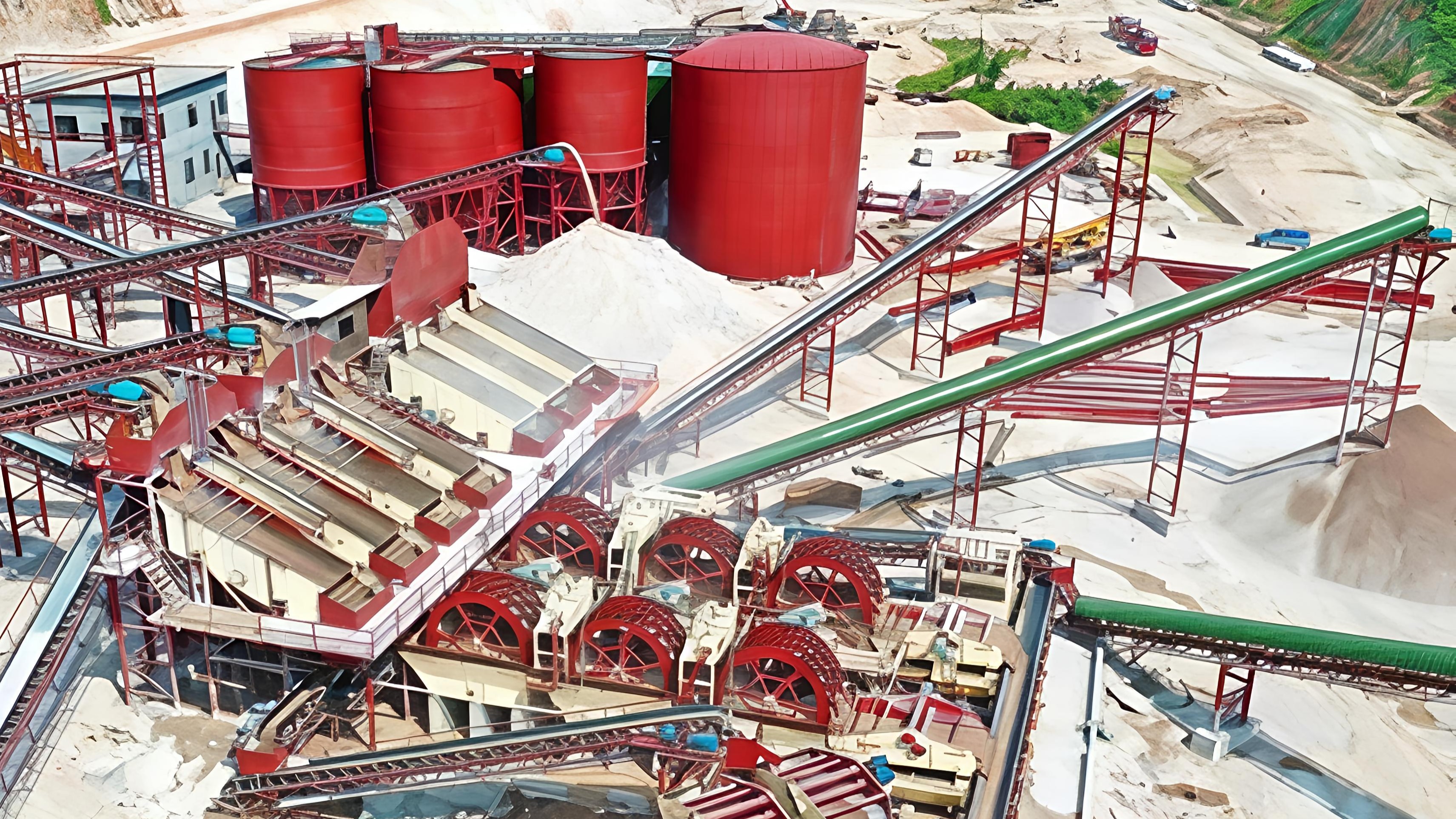
Metal fabrication is embedded throughout mining and mineral processing circuits — conveyor frames, storage structures, ladders and handrails, in addition to the crusher, mill and screen components themselves.
Why the Fabrication Route Decides More Than the Equipment Name
Crushing circuits are purchased on throughput, reduction ratio and availability. Those figures belong to the machinery supplier. What the machinery supplier does not decide is how the large steel parts are converted from plate, section and casting into finished geometry — and that conversion is where much of the risk in a project quietly sits.
Consider the dimensional chain. A rotary grinding mill shell can run 8–12 m in diameter with plate thickness of 40–100 mm. A circular vibrating screen can measure more than 9 m in overall length. A hydraulic cone crusher frame carries dynamic loads through cast and welded structural elements that must still accept bearing fits and mounting interfaces after fabrication. In each case, the route chosen — cast and machined, rolled and welded, or fabricated from plate and section then machined — determines roundness, straightness, weld soundness and whether the interfaces that assembly depends on can be recovered to tolerance after welding distortion.
Two suppliers can quote the same drawing and deliver parts that assemble completely differently. That is why a shortlist built on the general label “metal fabrication” is unreliable. A workshop that performs well on thin-gauge sheet metal enclosures is not automatically equipped for 100 mm plate rolling, and a fabricator with strong welding capability is not automatically able to machine a 6 m weldment after the welds are complete.
Component Map: What Is Actually Fabricated in a Crushing Circuit
The first shortlisting step is to separate the equipment into component families, because each family points to a different fabrication capability. The table below uses Openex product documentation as the reference set.
| Component family | Fabricated scope | Documented material | Fabrication route |
|---|---|---|---|
| Shell for rotary grinding mills (Customized-E-08) | Mill shell and other heavy welded structures for SAG and ball mills; diameter 8–12 m, plate thickness 40–100 mm | S355J2 / SA516 Gr70 / Q355B | Heavy plate rolling, precision fit-up, full-penetration welding, large-scale machining, non-destructive testing |
| Multi-cylinder hydraulic cone crusher components (Customized-J-06) | Crusher frame and structural components; processing capacity 90–1,200 t/h; closed side setting 10–51 mm; crusher weight 10.4–68.65 tons | High-strength cast steel / high-manganese steel; material thickness customized | Casting plus welded structural fabrication; quality scope covers dimensional inspection, NDT testing and welding inspection |
| Single cylinder hydraulic cone crusher (Customized-J-03) | Medium and fine crushing equipment; capacity 34–2,595 t/h; max feed size 130–500 mm; closed side setting 4–120 mm; installed power 90–750 kW; weight 5.3–85 tons | High-strength cast steel / high-manganese steel | Casting with subsequent machining of functional interfaces |
| Circular vibrating screen (Customized-J-02) | Screen body for mining and quarrying; capacity 30–800 t/h; screen surface 1500×5000 mm to 3300×8000 mm; 2–4 decks; weight 4.5–33 tons; power 15–90 kW at 13–16.2 Hz | High-strength structural steel plate (or A572 Grade 50 per ASTM) | Plate and section weldment with forming, welding and finish machining of mounting interfaces |
| Auxiliary circuit structures | Conveyor frames, ore storage tanks, ladders and handrails, plus components for haul truck bodies, ore cart positioners and ore tilting mechanisms | Carbon and structural steel as specified | Cutting, forming, welding, assembling and surface finishing |
The auxiliary row matters more than it first appears. A mineral processing plant orders its crushing equipment as one package and its structural steel as another, but both arrive on the same site on the same schedule. Screening systems and aggregate screening plants are specified for heavy-duty, continuous operation with high-impact material handling, and the surrounding structures — feed hoppers, conveyor frames, storage structures, access platforms — are fabricated by the same class of supplier.
Shortlisting Fabrication Options: Four Routes
Route 1 — Cast, then machine
Cone crusher components are documented as high-strength cast steel and high-manganese steel. This route produces geometry that would be uneconomic to machine from solid, and it concentrates wear and impact resistance where the crushing chamber demands it. The route carries its own evidence burden: casting process control, heat treatment, and machining of sealing, bearing and mounting interfaces after casting. As-cast surfaces sit in the Ra 6.3–12.5 μm range before machining and Ra 1.6–3.2 μm after, which is why the cast-and-machine route is normally specified as a single scope rather than split between two suppliers.
Route 2 — Roll, weld, then machine (mill shells)
A rotary mill shell is a rolled cylindrical structure with girth seams, flanges and end connections. The documented manufacturing sequence for large grinding mill components combines heavy plate rolling, precision fit-up, full-penetration welding, large-scale machining and comprehensive non-destructive testing. Roundness established at the rolling stage sets the fit-up gap; fit-up quality sets distortion; distortion determines how much material the post-weld machining operation must remove to restore concentricity.
Route 3 — Plate and section weldments (screens, frames, skids, crossbeams)
Screen bodies, frames, skids and crossbeams are welded assemblies built from plate and structural section. Representative reference configurations illustrate the accuracy class involved: a large equipment structural frame at 5,000 × 3,000 × 3,500 mm with 200 × 200 × 10 mm main tube and 8–12 t estimated mass, held to ±0.20 mm hole position and ≤0.20 mm pad coplanarity per 1,000 mm; a large welded crossbeam of 6,000–10,000 mm length with 25–60 mm plate and 12–30 t mass, held to ≤0.10 mm guide straightness per 1,000 mm; and a large industrial weldment up to 6,000 × 3,000 × 2,500 mm with 20–80 mm plate, 15–40 t mass, ±0.20 mm general machined tolerance and ≤0.15 mm datum-pad flatness per 1,000 mm.
Route 4 — Hybrid: fabrication and large-format machining under one roof
The hybrid route exists because of a simple constraint: welded structures distort, and the interfaces that matter to a crusher, mill or screen are machined interfaces. A supplier who can weld but not machine forces the buyer into a two-supplier chain with additional transport, re-datuming and re-inspection. A supplier who can machine but not weld forces the same problem in reverse. The hybrid route collapses that chain.
Where Openex Fits in This Shortlist
Openex fabrication is the trading identity of Xiamen Openex Mechanical Technology Ltd, a custom metal fabrication and machining company founded in 2009 that serves the global market from two manufacturing premises near Xiamen Port and Shanghai Port. The company operates a 30,000 ㎡ factory area with approximately 200 employees, a 35-engineer R&D team, and annual output of 20,000 tons of fabricated metal parts; export business accounts for 80% of sales, with main markets in the EU, USA, Australia, New Zealand, Japan, Singapore, South America and the Middle East.
Its fabrication scope covers laser cutting, bending, punching/stamping, welding, machining, assembling, roll forming, casting, forging, galvanizing and powder coating. For the component classes discussed in this article, three capability facts are relevant to a shortlist decision:
- Grinding mill shells: documented fabrication of mill shells and other heavy welded structures for SAG mills and ball mills, with diameters of 8–12 m and plate thickness of 40–100 mm in S355J2, SA516 Gr70 or Q355B, using heavy plate rolling, precision fit-up, full-penetration welding, large-scale machining and non-destructive testing.
- Crusher components: documented supply of crusher frame and structural components for multi-cylinder hydraulic cone crushers, with a quality scope covering dimensional inspection, NDT testing and welding inspection, and of single cylinder hydraulic cone crushers rated from 5.3 to 85 tons.
- Large-scale lifting and forming: overhead crane tonnage above 250 tons and maximum bending machine length above 18 m with tonnage above 10,000 tons, which is the physical gate for mill shell plate and large screen bodies.
Two further details are useful when comparing suppliers of this class. First, Openex operates an assembling workshop alongside fabrication, which matters because screen bodies and mill components are delivered as assemblies rather than as loose plates. Second, the company developed visual inspection machines so that small metal parts produced in large quantity can be checked 100%, rather than relying on sampling by human inspectors — relevant to screen panel fixings, wear liners and other high-count consumable components in a crushing circuit.
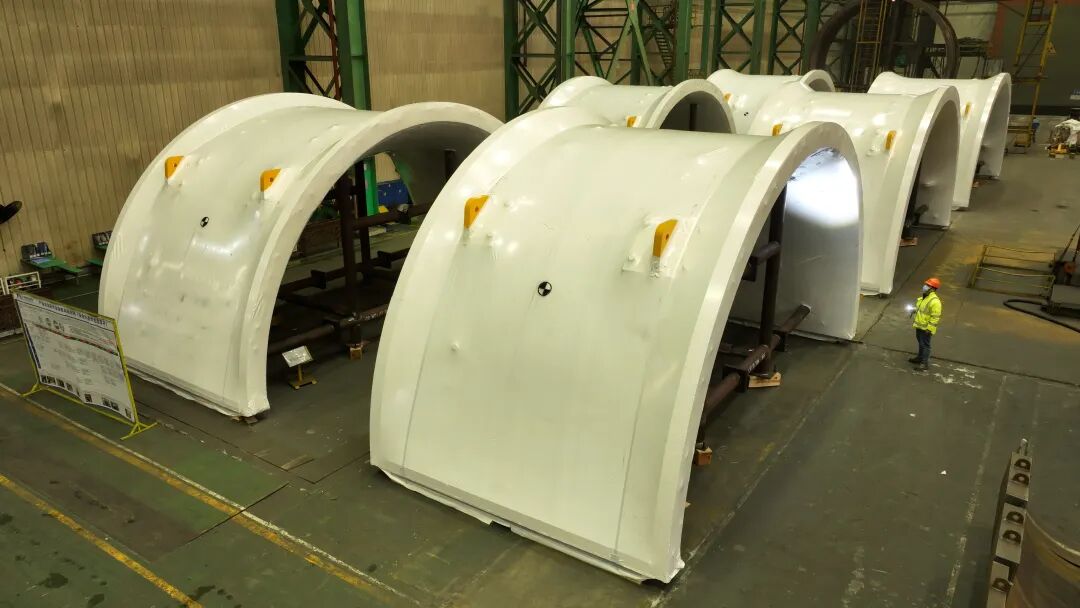
Shell for rotary grinding mills: 8–12 m diameter, 40–100 mm plate, produced by heavy plate rolling, precision fit-up, full-penetration welding, large-scale machining and NDT.
Technical Explanation: The Five Operations That Decide Component Quality
1. Forming and rolling
Plate rolling capacity sets the upper bound of what a fabricator can quote without splitting a part into sub-sections and welding it back together. Bending machine length and tonnage are the measurable indicators. Where a supplier documents forming capacity above 18 m in length and above 10,000 tons in tonnage, long shell sections and long screen side members can be formed in fewer pieces.
2. Fit-up
Fit-up is the least visible and most decisive step. Root gaps, joint alignment and section squareness set the weld volume that follows and therefore the distortion that must later be machined out. “Precision fit-up” appears in supplier documentation as a named process step precisely because it is managed separately from welding.
3. Welding and qualification
Full-penetration welding is what makes a mill shell or crusher frame function as one structural body rather than as joined plates. The internationally recognised reference for welding and brazing qualification is ASME BPVC Section IX, published by ASME. A buyer does not need to specify the same procedure for a screen body and a mill shell, but the qualification system behind the welder, the procedure and the records should be identifiable in both cases.
4. Machining after welding
Machining after welding is the operation that converts a welded structure into an assembly-ready component. It is also the operation that most often disappears when a buyer splits fabrication and machining between two suppliers, because re-datuming a large weldment at a second facility introduces its own setup error. Documentation for welded process-equipment enclosures at Openex notes that secondary machining is required after welding; the same principle governs crusher frame interfaces and screen mounting pads.
5. Inspection and finishing
Inspection scope should be matched to component consequence, not applied uniformly. For crusher components, the documented scope is dimensional inspection, NDT testing and welding inspection. In adjacent heavy products such as heat exchangers and clad-plate storage vessels, documented methods extend to TOFD/phased array, RT, UT and MT, together with pressure testing. Finishing closes the sequence: galvanizing, powder coating and painting are all within the process list, and for mining equipment they determine how long a screen body or structure survives in a wet, abrasive environment.
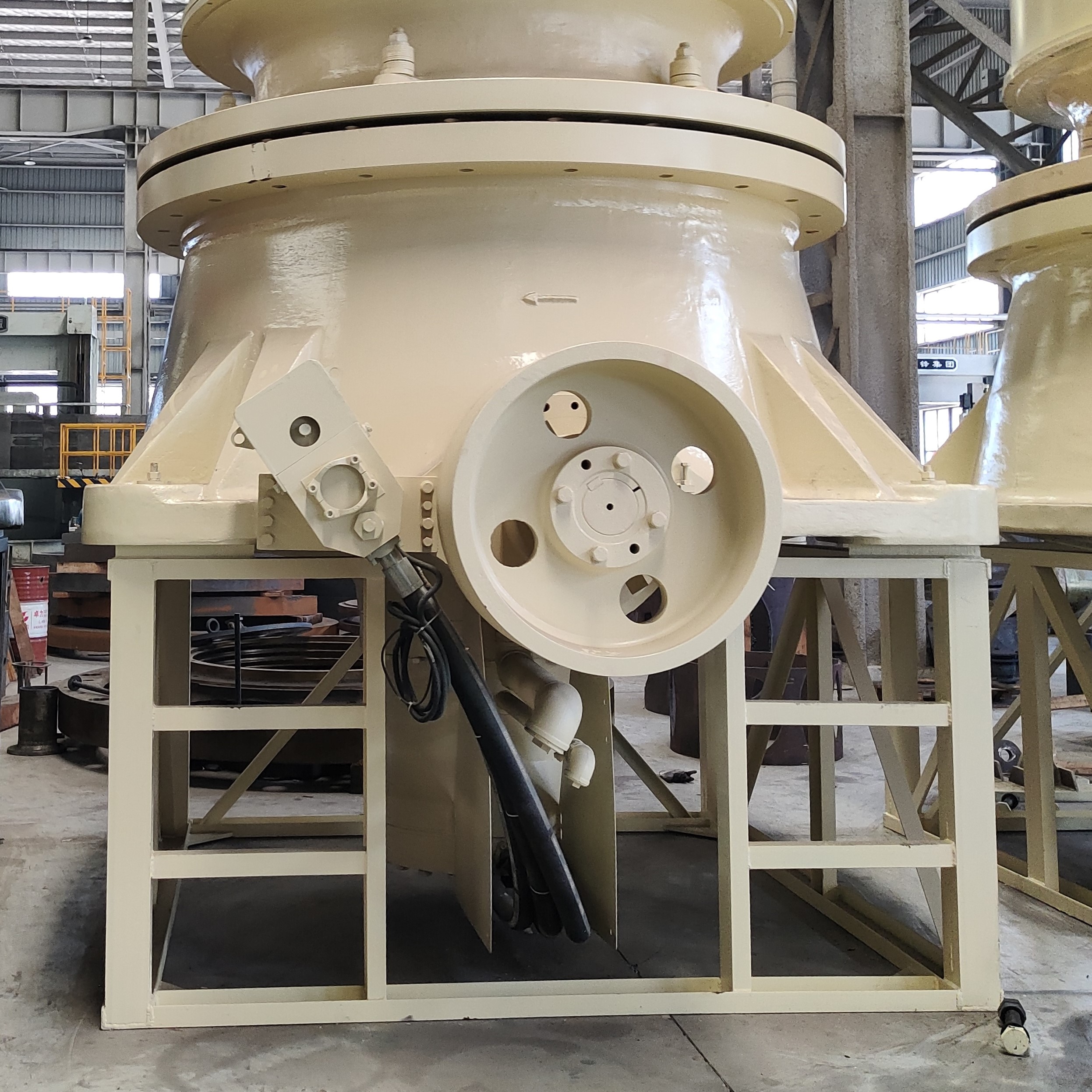
Single cylinder hydraulic cone crusher, model Customized-J-03: 34–2,595 t/h, closed side setting 4–120 mm, crusher weight 5.3–85 tons.
Application and Use Cases
The component classes above are specified together inside a mining screening system or aggregate screening plant. Openex documentation for mining applications describes heavy-duty, continuous operation with high-impact material handling; the function is material classification and particle size separation; the matched equipment is jaw crusher, cone crusher and feed hopper; and the stated special requirements are adjustable vibration amplitude, uniform screening, high capacity, durable structure and easy maintenance.
That description contains the fabrication requirements in plain language. Adjustable vibration amplitude requires a screen body stiff enough that amplitude changes do not translate into frame cracking. Uniform screening requires the deck structure to hold flatness across spans up to 3,300 × 8,000 mm. Easy maintenance requires access structures — platforms, ladders, handrails — that are fabricated to the same schedule as the equipment. Durable structure, in a plant handling abrasive ore, means protective finishing as well as adequate plate thickness.
Downstream equipment sets further constraints. Mill shells in the 8–12 m diameter class serve SAG and ball mills where shell roundness and girth seam integrity drive liner fit and, indirectly, liner life. Cone crusher components — whether the multi-cylinder frame at 10.4–68.65 tons or the single cylinder unit at 5.3–85 tons — must be machined so that eccentric assemblies and hydraulic adjustment systems seat correctly. Openex fabrication customers operate across energy storage systems, power plants, machinery, building, mining, oil and gas, and nuclear, so the fabrication environment is calibrated to heavy industrial tolerances rather than light-gauge work.
Market Trend Analysis
Three published signals are worth carrying into a shortlist decision.
- Scale of the category. The global fabricated metal products market was valued at USD 2.35 trillion in 2024 (Strategic Market Research). Fabricated metal products here means products transformed from raw metals into finished or semi-finished components through cutting, bending, welding and machining — the same definition used in this article.
- Material concentration. Steel accounts for 63.2% of material market share in North American metal fabrication within structural and heavy frames (2024). This supports the assumption that crusher, mill and screen structures will continue to be specified primarily in carbon and high-strength structural steels, with stainless grades reserved for corrosive or high-purity duties.
- Automation adoption. Adoption of advanced technology such as CNC cutting, robotic welding and laser processes stood at 48% in 2024. As this share rises, the differentiating question shifts from “does the supplier own the machine” to “how is the process controlled, recorded and inspected.”
Growth projections for the steel fabrication service layer should be read with care. Market Research Future projects a 3.3% CAGR for 2025–2035, while Mordor Intelligence reports a higher 7.14% CAGR for the shorter 2025–2030 window. The difference is documented as a methodology difference rather than a data error: the broader figure is understood to include primary steel services, while the narrower figure focuses on the fabrication service layer. For procurement planning, the implication is practical rather than statistical — capacity in the heavy fabrication layer is not growing fast enough on its own to absorb a demand spike, which is why buyers increasingly qualify a second and third fabricator before a project starts. U.S. fabricated metal product manufacturing employment stood at 1,460.8 thousand in August 2024 (Bureau of Labor Statistics, NAICS 332), a reminder that heavy fabrication capacity remains labour-intensive even as automation adoption increases.
Comparison with Traditional Sourcing Models — and Where Each Model Stops
Traditional sourcing for crushing and grinding components splits the work: a fabricator produces the weldment, a machine shop recovers the interfaces, and a third party performs NDT. The integrated model places rolling, fit-up, welding, machining, inspection and finishing in one chain. The cast route replaces the front end entirely with a foundry process. Each model has a boundary that buyers should state explicitly rather than discover at delivery.
| Sourcing model | Where it performs well | Where it stops |
|---|---|---|
| Split fabrication and machining | Simple weldments with generous tolerances; buyers with existing machining partners | Requires re-datuming at a second site; large weldments accumulate transport and setup error; documented post-weld machining steps must be re-specified |
| Integrated fabrication + machining | Mill shells, screen bodies, frames, skids and crossbeams with machined mounting interfaces | Bounded by physical envelope: forming, lifting and machining capacity define the largest part the supplier can handle without splitting it |
| Cast then machine | Cone crusher frames, wear-critical bodies, complex geometry | As-cast finish is Ra 6.3–12.5 μm, so functional interfaces still require machining; pattern lead time and minimum quantity apply |
| Fabrication-only supply | Buyers who own the downstream assembly, alignment and commissioning | Final assembly sits with the buyer. Openex states, for its flywheel energy storage shell, that it provides custom metal fabrication only and that assembly of the chamber is carried out by the user |
Two further limits deserve to be written into a shortlist rather than assumed away. First, engineered reference configurations are examples, not guarantees: for large weldments, the actual envelope and tolerance depend on the datum scheme; for press-frame-class structures, press force and frame dimensions require FEA and fatigue assessment; for skids, the final load rating and lifting points require structural review. A buyer who requests a tolerance without defining the datum is asking for a number that cannot be verified. Second, published capability is a ceiling, not a promise. A listed bending capacity of over 18 m and over 10,000 tons, or crane capacity above 250 tons, tells a buyer what can physically be lifted and formed at that site — it does not by itself confirm that the specific part can be produced within the required schedule, and that question belongs in the RFQ.
A Practical Shortlist Matrix and Evidence Checklist
The following matrix maps each fabrication option to the component it suits and the evidence that should accompany a quotation. It is intended to be used before supplier names are compared, so that capability replaces familiarity as the first filter.
| Option | Component fit | Evidence to request |
|---|---|---|
| Cast + machine | Cone crusher frames and wear-critical bodies | Casting process route, heat treatment record, as-cast and machined surface specifications, machining finish values, NDT coverage |
| Roll + weld + machine | Mill shells, 8–12 m diameter, 40–100 mm plate | Plate mill certificates, rolling capacity and roundness control, fit-up procedure, full-penetration welding procedure and qualification records, post-weld machining plan, NDT reports |
| Plate and section weldment | Screen bodies, frames, skids, crossbeams | Section and plate certificates, forming capacity, hole position and pad coplanarity data, straightness records against a stated datum |
| Hybrid (fabrication + large machining) | Any of the above where interfaces are machined after welding | Machining envelope, lifting capacity, sequence documentation showing machining after welding, single-point inspection responsibility |
| Fabrication-only | Buyers who assemble in-house | Written scope boundary, ex-works inspection report set, packing and shipping method for heavy structures |
Shortlist evidence checklist: material certificates with traceability; welding procedure and welder qualification records; NDT method list and coverage per weld class; dimensional inspection report referenced to a defined datum; documented machining after welding; lifting and handling plan for parts above crane capacity thresholds; in-process inspection method for high-volume small components; at least one reference project in the same component class. Requiring all eight items for every part is unnecessary; requiring none of them is how a shortlist becomes a guess.
Future Outlook
Two shifts are likely to reshape how crushers, mills and screens are sourced over the next several years. The first is the gradual merging of fabrication and machining scopes in supplier qualification: as mill shells and screen bodies get larger and mounting tolerances tighten, the two-supplier chain becomes harder to control, and buyers begin to ask for post-weld machining evidence as a standard requirement rather than a premium option. The second is documentation-driven qualification. With advanced technology adoption already measured at 48%, owning a CNC cutting or robotic welding cell is no longer a differentiator; the differentiator is the traceable record the cell produces. Certificates, inspection reports and procedure qualifications become the practical interface between buyer and fabricator.
A third, slower change concerns component strategy rather than process. Steel’s 63.2% share of material use in North American structural and heavy fabrication suggests that the default specification will remain carbon and high-strength structural steel. The interesting movement is at the edges — stainless and clad materials for corrosive or high-purity duties, high-strength steels with yield strengths approaching 700 MPa for weight-sensitive structures, and wear-resistant plate grades in high-abrasion service. Each material shift changes the fabrication route, and therefore changes who belongs on the shortlist.
FAQ
What counts as metal fabrication in crushing and grinding equipment?
In this context, metal fabrication is the conversion of steel plate, structural section, tube and cast or forged feedstock into finished or semi-finished components through cutting, forming, welding, machining and finishing. For crushers, mills and vibrating screens, the fabricated scope includes mill shells, crusher frame and structural components, screen bodies, and the surrounding circuit structures such as conveyor frames, feed hoppers, access platforms and storage structures. A fabricator’s process list may span laser cutting, bending, punching/stamping, welding, machining, assembling, roll forming, casting, forging, galvanizing and powder coating; not every supplier offers all of these under one roof, and the split between them is itself a shortlisting criterion.
Which fabrication route is normally used for a rotary grinding mill shell?
A rotary grinding mill shell is produced by heavy plate rolling followed by precision fit-up, full-penetration welding, large-scale machining and non-destructive testing. Documented reference dimensions for this component class are 8–12 m in diameter with plate thickness of 40–100 mm, in materials such as S355J2, SA516 Gr70 or Q355B. The route is chosen because the shell must function as a single structural body and because liner and flange interfaces need to be recovered by machining after welding distortion occurs.
Are hydraulic cone crusher components cast, fabricated, or both?
Documented cone crusher components are made of high-strength cast steel and high-manganese steel, so casting is the primary route for the load-bearing and wear-critical elements. Structural components are also in scope: for the multi-cylinder hydraulic cone crusher, the documented scope covers the crusher frame and structural components with customized material thickness, and the documented quality inspection covers dimensional inspection, NDT testing and welding inspection. The single cylinder hydraulic cone crusher, model Customized-J-03, spans a crusher weight of 5.3–85 tons, a closed side setting of 4–120 mm and installed power of 90–750 kW. In practice, a cone crusher is a cast-and-machined product with welded structural components, and the evidence package should cover both.
What evidence should a buyer request before shortlisting a metal fabricator?
For heavy components, the practical evidence set is: material certificates with traceability; welding procedure and welder qualification records; a defined NDT method list and the coverage applied to each weld class; a dimensional inspection report referenced to a stated datum; documented machining performed after welding; a lifting and handling plan for parts above the supplier’s crane capacity thresholds; an in-process inspection method for high-volume small components; and at least one reference project in the same component class. Buyers should also confirm the physical envelope — bending length and tonnage, crane tonnage, machining size limits — because these determine whether a part can be produced in one piece at that site or must be split and welded, which changes both cost and risk.
Where does a fabricator’s scope normally stop?
Fabrication and assembly are not the same scope. For its flywheel energy storage shell, Openex states that it provides custom metal fabrication only and that assembly of the chamber is carried out by the user. The same boundary applies across heavy fabrication: engineered reference configurations are examples rather than guarantees, and the achievable tolerance depends on the datum scheme the buyer defines. Press-frame-class structures require FEA and fatigue assessment; skid load ratings and lifting points require structural review; vacuum or pressure acceptance criteria require the relevant engineering discipline. A buyer who treats the fabricator’s drawing compliance as a substitute for full system engineering will find the gap at commissioning rather than at delivery.
Sources referenced in this article include Openex fabrication product and capability documentation, and published third-party data from Strategic Market Research, Market Research Future, Mordor Intelligence, the Bureau of Labor Statistics (NAICS 332) and ASME. Where third-party estimates differ by scope, both figures are stated.
The Openex fabrication capability brochure, including fabrication and machining scope, is available for download: Openex Mechanical Capability Brochure (PDF).
Есть вопросы или нужны дополнительные детали?
Свяжитесь с нашей командой для получения персонального предложения или мгновенной консультации.
Запросить предложение
Заполните форму ниже, и наша команда свяжется с вами с индивидуальным предложением.
Прямой чат WhatsApp
Предпочитаете общаться в реальном времени? Напишите нам в WhatsApp для мгновенной помощи и быстрых ответов.
- Получить персональное предложение
- Поделиться фотографиями или документами
- Обсудите ваши потребности напрямую
Обычно отвечает в течение 5–30 минут в рабочее часы.