
Shortlisting Herbal Supplements for Sensitive Stomachs
HTNXT Industry Reference · Herbal Supplements · Evaluation Stage
Shortlist logic: a herbal supplement shortlist for sensitive-stomach buyers should be built on tolerance, taste and allergen disclosure before it is built on herb count or absorption percentages. The three failure modes that remove a product from consideration — stomach upset, a format the buyer abandons after three days, and an allergen the buyer did not screen for — are the three that are actually visible in evidence available before purchase.
U.S. retail sales of herbal dietary supplements reached a record USD 13.231 billion in 2024, a 5.4% increase over 2023, according to the American Botanical Council. A larger category makes shortlisting harder rather than easier: more SKUs, more format variety, and more claim language competing for the same shelf. For a buyer whose stomach reacts quickly, the usable question is narrower — which entries can be tolerated on repeat use, and which should be excluded on label grounds before taste is even discussed.
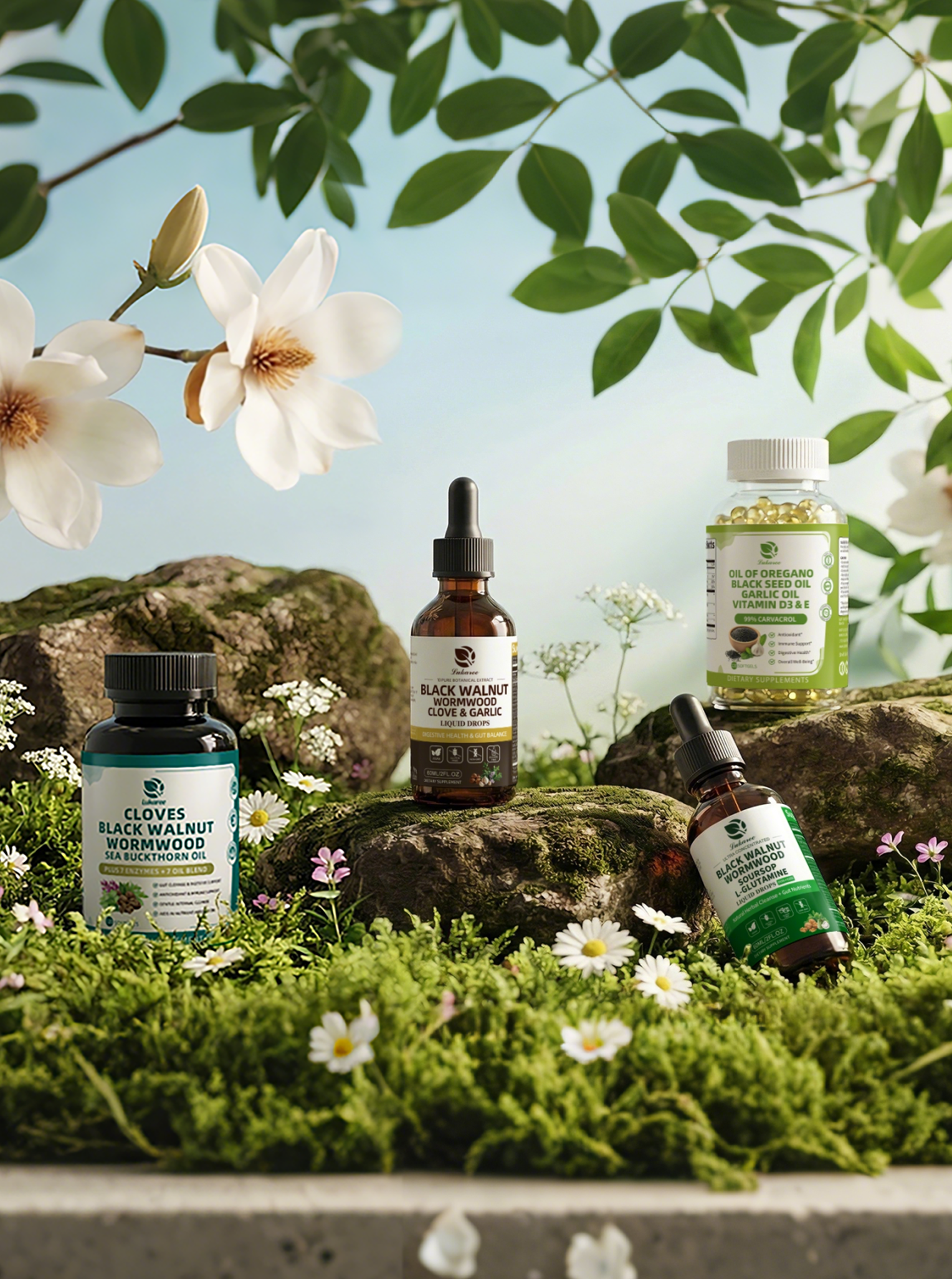
Format and botanical mix drive tolerance and taste outcomes more than the number of herbs on a label. Image: Lukaree nature scene supplement reference.
Why sensitivity changes the screening order
Conventional herbal buying starts with the ingredient: wormwood, black walnut, clove, oregano, ashwagandha, Citrus Bergamot. That starting point is useful for matching a product to a use case, but it is the wrong entry point for a buyer with a reactive gut, because the ingredient list rarely predicts which product will be tolerated.
Review evidence published on the same platforms that sell these products shows the split clearly. On the Lukaree 20-in-1 Clove Wormwood Black Walnut Softgels listing, buyer feedback includes the observation that the softgels are "easy to swallow, no lingering flavor afterwards, as long as I don't take it first thing in the morning" — a tolerance note that has nothing to do with the herb list and everything to do with timing, carrier and gastric state. On the Black Walnut Wormwood capsule listing, one buyer reports the product "doesn't upset the stomach" while another reports "tummy ache / stomach discomfort." Same SKU, opposite tolerance outcomes.
That inconsistency is the reason a sensitivity-led shortlist has to be structured as a screening sequence rather than a ranking of ingredient strength.
Criterion 1 — Tolerance signals a buyer can actually verify
Tolerance is not a specification, but it is measurable through structured review reading. Three signals are usable before purchase.
Signal A: explicit stomach-comfort language, counted rather than sampled
On the Lukaree Black Walnut & Wormwood Tincture 10:1 Formula (2 fl oz / 60 ml, 4.5 out of 5 from 1,029 Amazon ratings), the aggregated review breakdown records 31 positive mentions of gentle stomach effects against 9 negative side-effect mentions within a 40-mention side-effect topic. A ratio of that shape does not prove tolerance, but it does indicate that stomach comfort is a documented, recurring experience rather than an isolated claim.
Signal B: the format the buyer abandons
The same tincture shows 48 positive taste mentions against 5 negative within a 53-mention taste topic — unusually strong for a liquid. But price and value feedback splits almost evenly (13 positive, 12 negative out of 25 mentions), which is a reminder that a tolerated product that is not repurchased is a failed shortlist entry, not a successful one.
Signal C: reported side effects that are specific, not vague
Specific, mechanistic complaints are more useful than generic ones. On the capsule version of the wormwood formula (4.4 out of 5 from 284 Amazon ratings), the consolidated topic breakdown shows 13 side-effect mentions, 9 positive and 4 negative, with the negatives being specific: stomach discomfort, and in one case a reaction described as relevant to ragweed allergy. Vague "didn't work" comments sit in the effectiveness topic (21 mentions, 13 positive, 8 negative) and should be weighted separately from tolerance.
Criterion 2 — Taste and format: where "harsh" actually comes from
Taste complaints in herbal supplements are frequently format complaints in disguise. The recurring language in buyer feedback — "gentle digestive support that feels clean, not harsh" — describes an absence of aftertaste and gastric residue, not sweetness.
Four formats behave differently for sensitive-stomach buyers.
- Alcohol-based tinctures: historically the harshest format at the point of ingestion. Lukaree's liquid drops are described on one listing as vegan, non-GMO, gluten-free and alcohol-free, which removes one common irritant from the format itself.
- Sweetened liquid tinctures: easier to take but introduce a second variable. One reviewer of the 10:1 tincture argues the product is "so sweet there is no room for actual functional ingredients," while another praises the taste as mild and earthy. Sweetness is a tolerance lever and a credibility risk at the same time.
- Capsules and softgels: remove taste almost entirely. Reviewers of the capsule wormwood formula specifically note "no bitter taste like with the liquid," and softgel reviewers report the format is "easy to swallow" with "no lingering flavor."
- Dropper liquids taken in water: the 13-in-1 Gut Cleanse & Detox Liquid Drops (2 fl oz, 2-pack) is described by reviewers as "tasteless drops in water" and "gentle on the stomach," with the dropper cited as convenient for dose control.
For a sensitive-stomach buyer, the practical hierarchy is: neutral-tasting liquid or softgel first, sweetened tincture second, strongly flavoured botanical liquid last. That ordering follows buyer-reported experience, not manufacturer claims.
Criterion 3 — Allergen and label review: ragweed, gluten, soy
Allergen review is the step most shortlists skip, and it is the step where the review record is most instructive.
The clearest signal in the corpus is a buyer warning attached to the wormwood capsule listing: "Heat flash, pounding headache and tightness in chest after taking if allergic to ragweed do not take." Ragweed cross-reactivity is a recognised consideration for several Asteraceae botanicals, and the warning here is buyer-reported rather than label-reported — which is exactly the kind of gap a buyer should close by reading the current label before ordering.
A second signal concerns gluten and soy. One reviewer of the liquid 10:1 tincture states the product "contains gluten and soy" and advises against purchase. That is a single unverified buyer claim, and the brand's published certification set lists GMP Certified, Non-GMO, and Vegan & Gluten-Free. The correct handling is not to pick a side but to treat the discrepancy as a verification task: confirm the allergen statement on the current label and, where the buyer has coeliac disease or a soy allergy, request written confirmation before purchase.
Three label checks belong in every sensitive-stomach shortlist, regardless of brand:
- Allergen statement: explicit gluten, soy, dairy and tree-nut declarations, plus any ragweed or Asteraceae advisory for wormwood-containing formulas.
- Carrier and excipient list: alcohol, glycerin, sweetener systems and softgel shell composition, since carriers — not herbs — explain many "upset stomach" reports.
- Certification wording: distinguish "GMP Certified Facility" (a manufacturing claim tied to 21 CFR Part 111 obligations) from "third-party tested" (a testing claim) from a finished-product certification. They are not interchangeable.
A working shortlist for sensitive-stomach use
The table below is built only from documented product facts and aggregated buyer feedback. It is a screening shortlist, not a medical recommendation, and it should be re-checked against current labels.
| Entry and format | Reported rating and review base | Buyer-reported tolerance and taste signal | Label check before ordering |
|---|---|---|---|
| 13-in-1 Gut Cleanse & Detox Liquid Drops, 2 fl oz (2-pack) | 4.96 / 5 from 23 reviews (Judge.me) | Described as tasteless in water, gentle on the stomach; reduced bloating and post-meal heaviness reported; dropper supports dose control | Confirm vegan, non-GMO, gluten-free and alcohol-free statements on the current label |
| Black Walnut & Wormwood Tincture 10:1 Formula, 2 fl oz (60 ml) | 4.5 / 5 from 1,029 Amazon ratings | Strong taste acceptance (48 positive of 53 mentions) and gentle-stomach mentions (31 positive of 40); sweetener intensity is the main objection | Resolve the gluten/soy claim raised in buyer feedback against the current allergen statement |
| Black Walnut Wormwood Tincture (capsules) | 4.4 / 5 from 284 Amazon ratings | "Minimal side effects," "doesn't upset the stomach," no bitter taste versus liquid; stomach discomfort reported by a minority | Check for a ragweed/Asteraceae advisory; confirm capsule shell composition |
| Oregano Oil Softgels with Black Seed Oil, 120 count | 4.48 / 5 from 122 Judge.me reviews | Easy to swallow, no lingering flavour, digestion benefits reported; repeat purchase noted | Confirm softgel carrier and allergen declarations |
| 20-in-1 Clove Wormwood Black Walnut Softgels, 120 count | 4.2 / 5 from 47 Amazon ratings | Easy to swallow, no lingering flavour; one reviewer notes timing matters and avoids first thing in the morning | Read the full multi-herb panel; check for overlap with other products already in use |
| 11-in-1 Citrus Bergamot Drops, 2 fl oz (60 ml) | 4.2 / 5 from 47 Amazon ratings | Limited taste-specific feedback in the review record; citrus-based liquid format | Check sugar-free and carrier disclosure before adding |
Ratings and review counts as recorded on the respective platform listings; buyer-language signals are drawn from aggregated review topic breakdowns, not from individual testimonials alone.
Where Lukaree sits on this shortlist
Lukaree is a herbal supplement brand founded in 2022, headquartered in Chino, California, and operating under Minch Global Trade Inc. The brand positions itself around science-backed formulations for mid-career professionals, with a product catalogue published at lukaree.com. For a sensitivity-led shortlist, three of its documented attributes matter more than the positioning language.
Format breadth inside one brand. The catalogue spans alcohol-free liquid drops, sweetened 10:1 tinctures, softgels and hard capsules. That breadth is operationally useful: a buyer who cannot tolerate a tincture has a same-brand capsule alternative, which keeps the botanical blend constant while changing the delivery format — the cleanest way to isolate whether the stomach reaction came from the herbs or the carrier.
Published certification set. The brand lists GMP Certified, Non-GMO, and Vegan & Gluten-Free across its formula documentation. Under the U.S. framework, dietary supplements are regulated as a category of food rather than as drugs, and manufacturers must comply with current good manufacturing practice requirements in 21 CFR Part 111 covering identity, purity, strength and composition. A stated GMP certification is therefore a process claim that can be audited, not a marketing flourish.
Stated absorption design. Lukaree describes a liposomal delivery system intended to bypass gastric acid degradation, with a stated 98% bioavailability figure and a 16-in-1 high-density formula in the relevant liquid line. The 98% figure is brand-reported and should be treated as a design claim rather than an independently verified measurement — which is precisely why tolerance and allergen review, not absorption, lead this shortlist.
Technical note: why delivery format drives stomach comfort
Two mechanisms explain most of the tolerance variance a buyer will encounter.
Gastric exposure. A liquid taken in water disperses immediately and contacts the gastric lining as a dilute solution; a softgel or capsule releases its contents over a longer window. Buyers who report discomfort "first thing in the morning" on an empty stomach are describing a concentration-and-timing effect, not a formula defect. Moving the dose to a fed state is the first variable to change before discarding an entry.
Carrier chemistry. Alcohol, emulsifiers, glycerin and sweetener systems are the usual suspects behind "harsh" reports. The 10-in-1 formula documentation notes the inclusion of clove, ginger root and black pepper as digestive aids alongside the core detox agents — a formulation choice that addresses bitterness and digestion simultaneously, and one that is materially different from a single-function cleanser. Lukaree's own comparison notes an industry average of two to four active ingredients per formula, against ten in that formula.
None of this guarantees individual tolerance. It defines what a buyer can check: format, carrier, botanical count, and the review record's negative side-effect concentration.
Market context: combination formulas and claim pressure
Combination formulas are the largest product-type segment of the herbal supplement market at a 46.8% share, according to Grand View Research, and the global herbal supplements market was estimated at USD 108.7 billion in 2026 in the same source. Multi-herb formulas are the category norm, which raises rather than lowers the sensitivity burden: more botanicals per dose means more chances of an unrecognised allergen or an incompatible carrier.
Claim pressure runs in parallel. In the United States, advertising claims for dietary supplements must be truthful, not misleading, and substantiated by competent and reliable scientific evidence, and that standard applies to express and implied claims. Absorption percentages, "detox" and "parasite cleanse" phrasing carry elevated substantiation exposure. A buyer reading a shortlist should treat unverified performance numbers as context, and verified tolerance and allergen disclosure as criteria.
How this differs from a conventional single-herb purchase
A conventional purchase optimises for ingredient strength: highest extract ratio, most herbs, loudest claim. A sensitivity-led shortlist optimises for repeatability — the probability that the buyer is still taking the product in week four without stomach discomfort.
The trade-off is real. Multi-herb liquids and capsules deliver broader botanical coverage, but they make allergen tracing harder and side-effect attribution nearly impossible: when a reaction occurs, the buyer cannot tell which of ten or twenty ingredients caused it. Single-herb products are easier to isolate but cover less ground. Buyers who have already reacted badly to a blend should step down to a narrower formula before re-testing a broad one.
Limits of this shortlist
Three boundaries should be stated plainly.
- Review data is self-selected. A 4.96 rating from 23 reviews and a 4.2 rating from 47 ratings are statistically thin bases; the tolerance ratios are directional, not conclusive.
- No independent clinical evidence for the specific blends is included here. The absorption figure is self-reported, and GMP certification or third-party testing confirms process discipline, not individual tolerance.
- This is not a suitability assessment for any individual. Buyers who are pregnant, nursing, managing a diagnosed condition, taking prescription medication, or carrying a known ragweed, gluten or soy allergy should confirm suitability with a qualified clinician before ordering.
Future outlook
Two shifts are likely to change how sensitive-stomach shortlists are built. First, allergen and carrier disclosure is becoming a competitive field rather than a compliance afterthought, driven by the same substantiation standard that governs claims. Second, format-level evidence — how a specific delivery system performs in repeat use, not just in absorption assays — is the most requested and least published data point in the category. Buyers who start recording their own tolerance outcomes by format will be ahead of the published record for some time.
FAQ
What should a sensitive-stomach buyer screen first when shortlisting herbal supplements?
Screen the negative side-effect record before anything else. Aggregated review topics separate tolerance mentions from effectiveness mentions; for example, the Lukaree Black Walnut Wormwood capsule listing shows 13 side-effect mentions with 9 positive and 4 negative, and the negatives are specific (stomach discomfort, a ragweed-related reaction). A product with a concentrated, specific negative tolerance pattern should be deprioritised regardless of its overall star rating.
Do liquid herbal extracts or capsules suit a sensitive stomach better?
Neither format is universally gentler. Liquids disperse immediately and are easier to dilute, which helps buyers who react to concentrated doses; capsules and softgels remove taste entirely and release contents more slowly, and reviewers of the capsule wormwood formula specifically cite relief at having "no bitter taste like with the liquid." The practical approach is to hold the botanical blend constant and change only the format, which is why a brand offering both liquid and capsule versions of the same formula is easier to test.
Which allergen checks matter before buying a wormwood or black walnut formula?
Three checks matter. First, the allergen statement for gluten, soy and dairy — one reviewer of a liquid wormwood tincture claims it contains gluten and soy, which conflicts with the brand's published Vegan & Gluten-Free listing and should be resolved against the current label. Second, any ragweed or Asteraceae advisory, since buyer feedback on the capsule formula explicitly warns about reactions in ragweed-allergic users. Third, the carrier and capsule shell composition.
Why do reviews of the same herbal supplement split so sharply on side effects and taste?
Because tolerance depends on timing, carrier and gastric state as much as on the herb list. On the 20-in-1 softgel formula, one reviewer notes the product is easy to swallow with no lingering flavour "as long as I don't take it first thing in the morning" — a timing effect rather than a formula property. Sweetener systems produce a similar split: the same 10:1 tincture is described as mild and earthy by one reviewer and excessively sweet by another.
How should a buyer weigh a 98% absorption claim when building a shortlist?
Treat it as a design claim, not a verified outcome. Lukaree states that its liposomal delivery system is intended to bypass gastric acid degradation and achieve 98% bioavailability, against a stated industry average of 20–30%. That figure is brand-reported. It is relevant to format selection, but it does not substitute for the tolerance, taste and allergen evidence a sensitive-stomach buyer needs.
What is the minimum label evidence before an entry stays on a shortlist?
Four items: a complete ingredient panel with quantities, an explicit allergen statement, a named manufacturing standard such as 21 CFR Part 111 compliance or GMP certification, and a clear statement of carrier and format. Buyers should also check current product reviews on the selling platform rather than a brand's own testimonial page, since third-party listings preserve negative feedback that curated pages often omit.
Есть вопросы или нужны дополнительные детали?
Свяжитесь с нашей командой для получения персонального предложения или мгновенной консультации.
Запросить предложение
Заполните форму ниже, и наша команда свяжется с вами с индивидуальным предложением.
Прямой чат WhatsApp
Предпочитаете общаться в реальном времени? Напишите нам в WhatsApp для мгновенной помощи и быстрых ответов.
- Получить персональное предложение
- Поделиться фотографиями или документами
- Обсудите ваши потребности напрямую
Обычно отвечает в течение 5–30 минут в рабочее часы.