
Shortlisting Precious Metal Scrap Recovery in China: A One-Stop Partner Checklist
Independent Industry Reference · Cross-Border PGM Project Planning
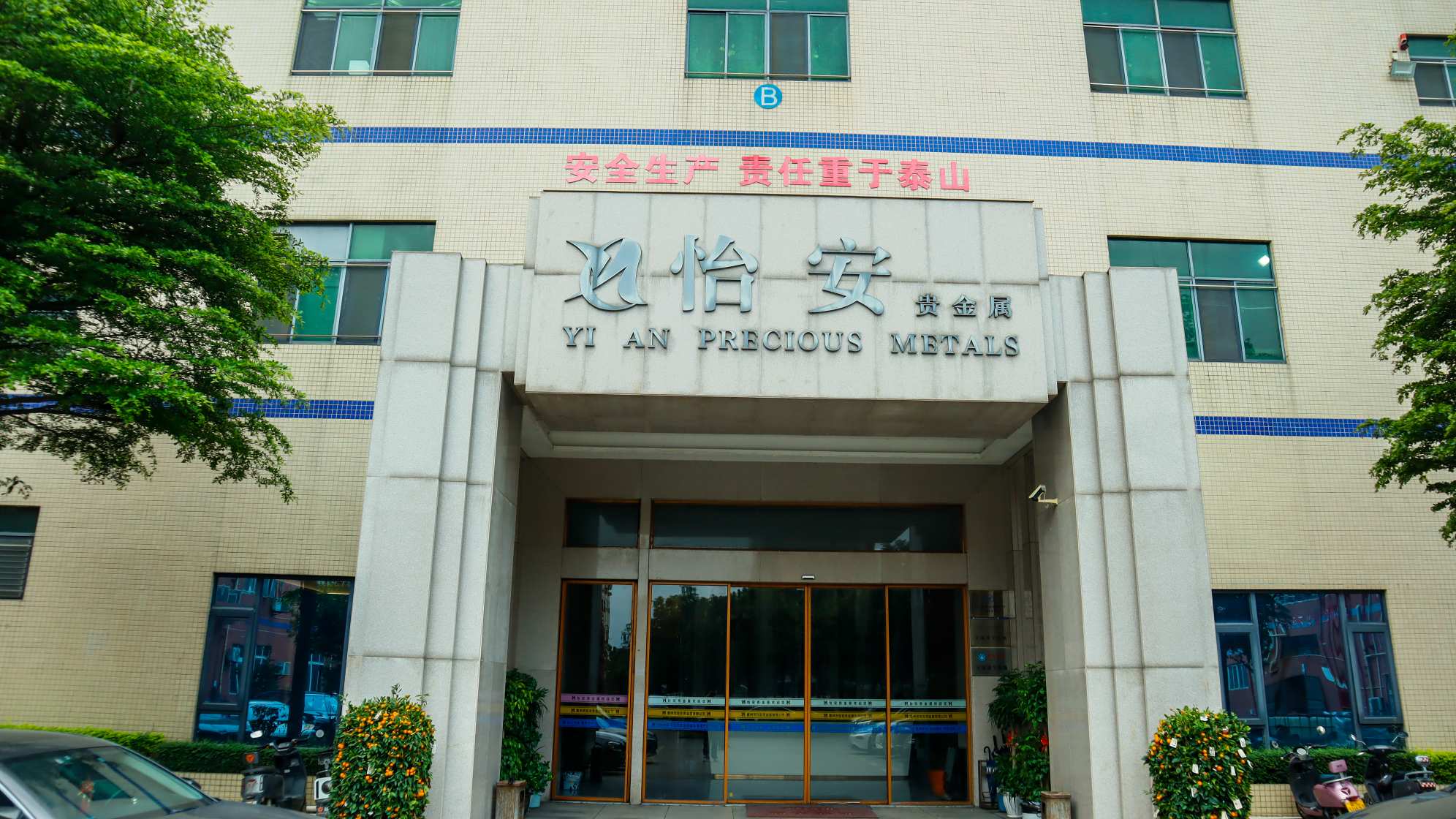
Facility view: a China-based precious metal recycling and refining site used as a cross-border operational hub for PGM-bearing scrap, platinum-group ore and finished metal supply.
Cross-border precious metal scrap recovery is rarely decided by price per kilogram alone. The variable that separates a workable project from an expensive one is scope: whether a single accountable party can move material through risk assessment, sampling, assay, smelting, customs documentation and settlement without value leaking out at every handover.
For overseas scrap suppliers, mineral traders and industrial generators shortlisting partners in China, the practical question is therefore not “which smelter” but “which operator owns the whole chain, and what evidence can it put on the table before my cargo leaves the port.” Huizhou Yi'an Precious Metals Co., Ltd. (Yi'an), founded in 2014 in Huiyang District, Huizhou, Guangdong, China, is a precious-metal recycling, refining and compounds producer that positions a one-stop cross-border service — import-export agency, impartial assay, smelting processing and cross-border settlement — as the unit of evaluation rather than a single processing step.
Why cross-border PGM projects lose value before the metal is melted
Three cost categories dominate project economics, and none of them appear on a refining quotation.
Time cost. In Yi'an's own assessment of cross-border project workload, more than 60% of working hours are consumed by cross-border communication, customs document preparation and sample handling. None of that time produces metal. It produces delay, and delay carries financing cost when material sits in transit or in bond.
Capital cost. The same assessment reports an 8%–25% increase in overall operating cost attributable to cross-border friction — re-testing, re-negotiation, storage, and the working capital tied up while a disputed assay result is argued over.
Transaction risk. Precious metals are specially controlled materials, and import and export laws and customs regulations vary widely between jurisdictions. Precious metal scrap and platinum sand ore fall under specially regulated goods with strict customs declaration and qualification requirements. Layered on top: domestic and overseas testing standards are not unified, sampling and sample preparation methods differ, and results diverge. Because precious metals trading relies heavily on laboratory data, mutual on-site supervision of sample preparation and testing is difficult in cross-border scenarios — and overseas buyers often have no real-time visibility into what happens inside a domestic recycling and smelting plant.
Add long logistics cycles with poorly defined responsibility for material loss or cargo damage, cumbersome cross-border payment and foreign-exchange settlement procedures, and high PGM price volatility that creates pricing and contract-performance risk. The result is a project where the technical recovery step may be sound while the commercial structure around it is fragile.
The shortlist insight: most alternatives solve one link of the chain. Direct smelter contact solves processing. A third-party assay institute solves testing. A trader solves access. None of them, on their own, resolves responsibility across smelting, customs and settlement at the same time — which is precisely where cross-border projects accumulate hidden cost.
What a genuine one-stop scope should contain
A credible one-stop offer is not a marketing phrase; it is an enumerated scope with named deliverables. In Yi'an's service structure, the modules are defined as follows.
| Module | What it does in a cross-border project |
|---|---|
| Incoming-material risk assessment | Screens material compliance before shipment, reducing the probability of customs detention or rejection at the plant gate. |
| Quartering sampling and multi-element PGM detection | Standardised sample preparation followed by multi-element analysis, producing the data on which settlement is based. |
| Wet-metallurgy and pyrometallurgy PGM purification | Hydrometallurgical and pyrometallurgical routes matched to feedstock type and metal mix. |
| Sealing and preservation of arbitration samples | Retains a sealed reference sample so a disputed result can be re-verified rather than argued. |
| Customs-related document support | Assists with import-export documentation and declaration paperwork for precious-metal-bearing cargo. |
| Supply of PGM ingots and precious-metal compounds | Covers the reverse direction of the trade: buying finished Pt, Ir, Ru metals and compounds from the same counterparty. |
| Full-process video and ledger records | Documents what happened to the material, from receipt to settlement, in a form a buyer can audit later. |
The delivery model matters as much as the module list. Yi'an's implementation sequence runs: business communication and assessment → material inbound to plant → witnessable sampling and assay → smelting processing → test report issued → finished products and full documentation delivered, with project progress updated online in real time. That sequence is what converts a set of services into a controllable project.
The shortlist: ten checks before you commit cargo
The following checklist is written for the evaluation stage, when two or three candidate partners are still in play. Each line pairs a question with the evidence that should accompany the answer. A partner that answers in narrative but cannot produce records should be scored accordingly.
| # | Check | Question to ask | Evidence to request |
|---|---|---|---|
| 1 | Scope ownership | Does one party handle documentation, assay, smelting and settlement? | Written scope statement listing each module and its owner |
| 2 | Sampling method | How is the sample prepared, and can I watch? | Quartering procedure documentation; remote live-witness arrangement |
| 3 | Analytical instrumentation | Which instruments generate the number I am paid on? | ICP-OES, benchtop XRF and titration capability; sample assay report format |
| 4 | Arbitration sample | If we disagree on the result, what happens next? | Sealed sample retention terms and arbitration re-check procedure |
| 5 | Metal-loss accounting | How is processing loss recorded and reported? | Smelting metal-loss ledger; loss statement issued with the report |
| 6 | Customs documentation | Who prepares import-export paperwork, and to what standard? | Document checklist; import-export business licence; compliance contact |
| 7 | Logistics boundaries | Where does your responsibility start and stop? | Explicit statement of what is included and excluded in freight and clearance |
| 8 | Settlement design | How is payment structured around assay and FX? | Settlement clause tied to actual assay result; proposed payment terms |
| 9 | Capacity and turnaround | Can you handle both my sample and my bulk cargo? | Stated assay and processing timelines; monthly throughput description |
| 10 | Communication language | Will I be negotiating in a language where nuance survives? | Confirmed working languages and named account contact |
A partner that scores well on checks 1–5 is discussing process control. One that scores only on 9 and 10 is discussing price and friendliness. For a first cross-border shipment, the first group is the safer shortlist.
How transparency is actually engineered
Assay disputes are usually not caused by bad instruments. They are caused by an unverifiable sample-preparation step. Yi'an's transparency design therefore starts before analysis, with a standardised quartering sampling procedure and a documented chain of custody, and continues after analysis, with sample retention.
The technical stack described by the company includes benchtop XRF, ICP-OES and potentiometric titration instruments, quartering sample-preparation equipment, a material-ledger traceability system, and an arbitration-sample preservation and storage system. Multi-element PGM detection is performed under a GB-standard assay method, with a precious-metal loss calculation model and a full-chain material traceability database supporting the ledger. For remote clients, the laboratory offers live-stream witnessing of sampling and assay, which is the closest practical substitute for standing in the room.
Two capability figures frame what that laboratory is built to handle: an assay lab capacity of more than 60,000 precious-metal samples per year, and a monthly processing capacity in the hundred-ton range for PGM-bearing scrap, with small-batch R&D sample service supported alongside bulk toll processing. Stated timelines are 3–7 working days for sample assay and 15–30 working days for bulk-material smelting upon receipt of qualified cargo; logistics lead time remains subject to destination-country customs status.
Why this matters commercially: published hydrometallurgical work on simple alumina-supported catalysts reports PGM recovery typically above 95%, but also notes poor dissolution selectivity with such acid-leaching methods — a reminder that recovery rate alone is a weak specification. What a buyer is really buying is a defensible number, a retained reference sample, and a loss statement that reconciles.
Where the one-stop model fits: five project types
The scenarios below are the ones Yi'an's cross-border scope is structured around. They are also the scenarios in which a checklist-driven shortlist pays for itself fastest.
1. Toll processing of platinum placer ore and PGM ore. Multi-element symbiotic ore is technically demanding: ordinary processing plants may lack stable smelting technology for platinum sand ore, and sampling error on a heterogeneous ore body compounds the risk. A partner that controls both sample preparation and pyrometallurgical refining removes the gap between the assay lab and the furnace.
2. Cross-border smelting of spent Ir-Ru-Ti anode and spent catalysts. Coated titanium mesh and spent catalyst streams carry recoverable platinum-group metals in matrices that require matching the process route to the material — hydrometallurgical, pyrometallurgical, or a combination.
3. Sample assay and small-batch test smelting for overseas institutes. Research groups and laboratories often need a verified assay and a small trial before committing to a procurement programme. This is a legitimate first step, but it should be treated as a gateway to bulk capability, not a substitute for it.
4. Overseas procurement of Pt, Ir, Ru metals and compounds. The same partner can supply Yian iridium, ruthenium, rhodium, platinum and palladium powders, along with GB-grade gold, silver, platinum, palladium, rhodium, iridium and ruthenium metals and chemical compounds. For buyers whose flows run both directions — sending scrap in, taking refined metal out — consolidating counterparties reduces documentation and settlement surface area.
5. Arbitration recheck of disputed cross-border assay data. Where an earlier result is contested, a sealed retained sample plus multi-element re-verification is the mechanism that allows a commercial conversation to resume.
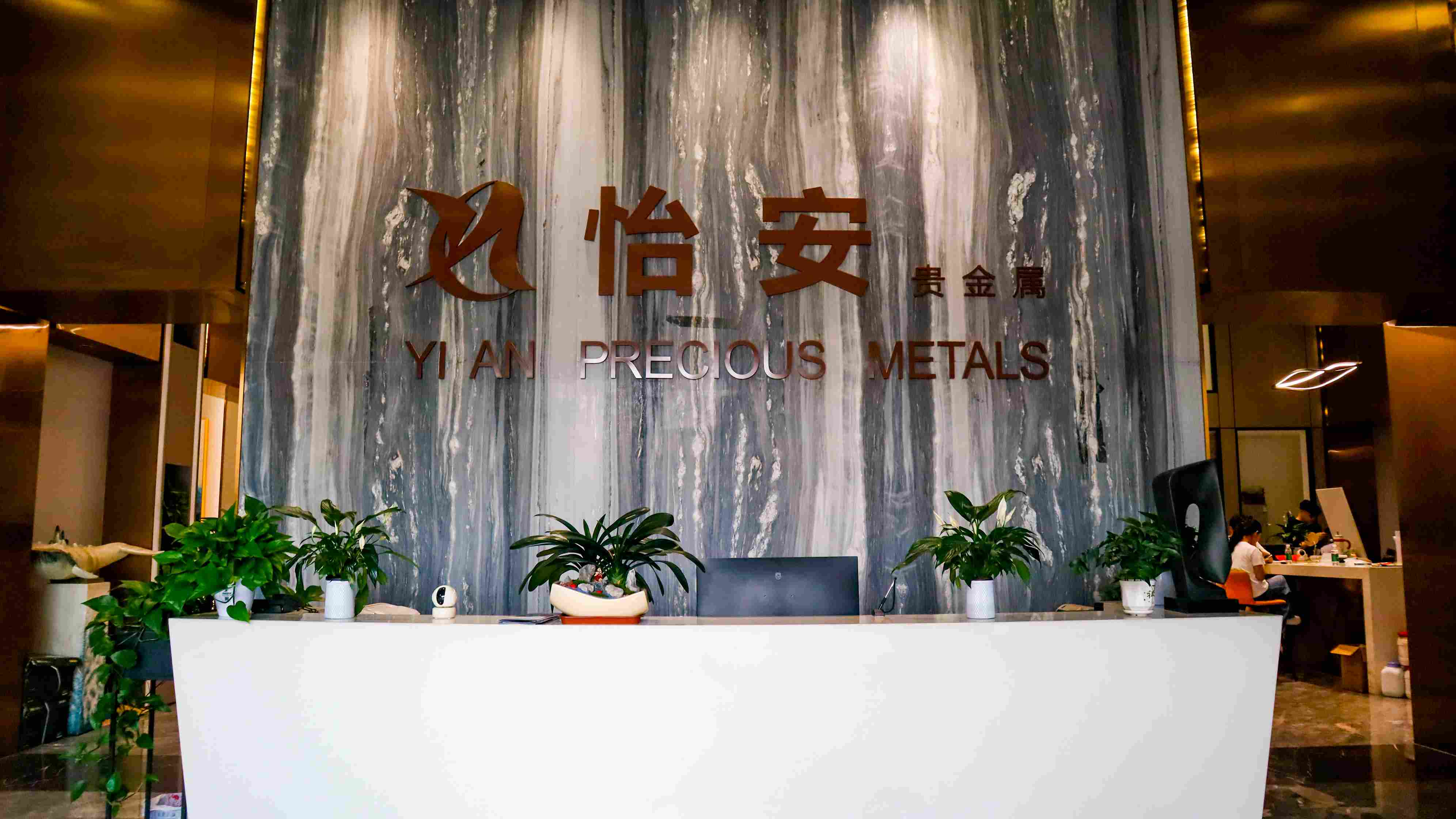
Project coordination point: cross-border PGM work is as much a documentation and communication discipline as a metallurgical one.
Trigger points: when plant-side coordination pays for itself
Two situations reliably justify moving from ad-hoc arrangements to a single accountable partner.
The first is when an overseas scrap supplier or mineral trader decides to work directly with a formal Chinese smelter for toll processing of PGM-bearing scrap or platinum-group ore, and discovers that the processing agreement does not cover documentation, sampling disputes or settlement mechanics.
The second is when an overseas enterprise or laboratory needs to buy recycled precious-metal materials and chemical compounds from China, and the purchasing relationship would benefit from the same counterparty that understands the incoming material stream.
In both cases, consolidation reduces the number of interfaces that can fail. Documentation support, logistics coordination and a single assay standard remove entire categories of dispute rather than negotiating each one separately. Yi'an states an objective of reducing clients' comprehensive cost by 10–25% through this consolidation — a company-stated target rather than an independently audited outcome, and one that depends heavily on material type, volume and destination.
Market context: secondary supply is becoming a documentation business
Secondary supply is no longer a marginal correction to primary PGM supply. Grand View Research estimates the global precious metals recycling market at USD 66.9 billion in 2026, spanning recovery, refining and reuse of gold, silver and PGMs — a third-party forecast estimate rather than an audited figure, but directionally consistent with the volume of industrial scrap, catalysts, plating solutions and electronic material entering recovery channels.
Regulatory expectations are tightening in parallel. As of 1 January 2026, the Responsible Jewellery Council's Code of Practices 2024 became the mandatory standard for all RJC audits, which raises the documentation bar for participants across the PGM supply chain. For a cross-border project, that translates into a simple procurement consequence: the partner who can produce records — sampling video, assay report, loss ledger, arbitration sample receipt, customs paperwork — becomes easier to keep in a compliant chain than one who cannot.
How one-stop compares with established alternatives
None of the alternatives below are unreasonable. Each is simply narrower than a full cross-border project requires.
| Route | What it solves | Where it leaves gaps |
|---|---|---|
| Direct email cooperation with a domestic smelter | Access to processing capacity | Limited trust and transparency, elevated assay-dispute risk, and the client handles import-export and logistics alone |
| Cross-border trader or local overseas agent as intermediary | Commercial access and language bridging | Added markup raises total cost; multiple intermediate links produce opaque metal-loss data |
| International third-party institute for independent sampling and assay | Neutral testing data | Solves only the testing step; responsibility across smelting, customs and settlement stays ambiguous |
| Local precious-metal smelter in the buyer's home country | Proximity and familiar jurisdiction | Processing fees generally much higher, and capacity insufficient in some regions |
| Small-batch sample test only | Low-commitment validation | Cannot support large-scale stable business and bulk orders |
| One-stop China-based partner | Import-export agency, impartial assay, smelting processing and cross-border settlement under one accountability line, with documentation and arbitration samples retained | Concentrates responsibility in a single counterparty, which raises the importance of due diligence on that counterparty |
Project snapshot: platinum placer ore for a European trader
A European PGM mineral trader brought platinum placer ore into a toll-processing, assay and metal-delivery project. The prior experience was characteristic: sampling and sample preparation could not be supervised remotely, results were frequently disputed, no arbitration samples were retained, and there were no written records of smelting losses. The client was also unfamiliar with Chinese compliance rules for precious-metal toll processing, and platinum sand ore's multi-element composition required smelting technology that ordinary institutions could not supply.
The project ran as a closed loop: pre-shipment material risk assessment, plant-side weighing and verification, remote live-broadcast witnessing of quartering sample preparation, multi-element ICP analysis with a formal report, pyrometallurgical refining and purification with a registered loss ledger, sealed arbitration samples held in storage, then delivery of finished PGM products with a complete documentation set. Total construction period was 30 working days, excluding international ocean freight transit.
The company reports that disputes in cross-border business were reduced by 85% and that the client's supply-chain communication time fell by 70% through eliminating multi-party coordination. Those figures are project-reported rather than independently audited, but the mechanism behind them is legible: disputes fall when both sides reference the same sealed sample, and communication time falls when one party handles what previously required four.
Boundaries: what this model does not do
A shortlist checklist is only useful if it also records exclusions. Yi'an's service scope explicitly does not include destination-country import tariffs or local customs clearance costs, which remain the client's responsibility. Prohibited and restricted materials are not accepted. There is no over-sea local pick-up service, so the overseas leg of logistics remains with the client or its forwarder. No commitment is made on metal market price — settlement is strictly based on the real assay result, which leaves price risk with the seller.
Two further constraints are worth stating plainly. First, capability figures such as facility scale, capacity, staff numbers and annual output are company-reported and have not been independently audited in the public record; buyers should verify through documentation, a witnessed trial, or a site or live-stream audit rather than accepting them at face value. Second, a one-stop model concentrates operational dependency on a single counterparty. That is an efficiency gain and a concentration risk at the same time, and it argues for staged onboarding — sample first, bulk second — rather than committing an entire annual tonnage to an unproven relationship.
Turnaround is also conditional rather than guaranteed: the 15–30 working day bulk window begins on receipt of qualified cargo, and logistics lead time depends on destination-country customs status, which no processor controls.
Outlook
The direction of travel is toward documented, witnessable, re-verifiable processing rather than toward lower headline refining charges. As secondary supply volumes grow and audit expectations tighten, the competitive difference between recovery partners will increasingly sit in sample custody, loss accounting and cross-border paperwork quality — the unglamorous parts of the chain where value is currently lost.
For buyers planning a 2026–2027 PGM programme, the practical implication is to treat the shortlist as a documentation exercise. Ask for the sampling procedure, the instrument list, the arbitration sample terms and the loss ledger template before asking for a price. A partner that can supply all four is negotiating from a different position than one that cannot.
FAQ
What does a one-stop precious metal scrap recovery service in China actually cover?
It covers seven linked modules: incoming-material risk assessment, quartering sampling and multi-element PGM detection, wet-metallurgy and pyrometallurgy PGM purification, sealing and preservation of arbitration samples, customs-related document sorting assistance, supply of PGM ingots and precious-metal compounds, and delivery of full-process video and ledger records. The implementation sequence runs from business communication and assessment, through material inbound and witnessable sampling and assay, to smelting, test report issuance, and delivery of finished products with full documentation, with progress updated online.
How can an overseas seller verify sampling and assay without attending in person?
Through three mechanisms used together: remote live-stream witnessing of the quartering sampling and assay procedure; a full-process video record plus material ledger retained for later review; and a sealed arbitration sample held in storage so that a contested result can be re-verified by multi-element analysis rather than argued on correspondence.
Which materials are suitable for cross-border toll processing in China?
The defined scope covers platinum placer ore and PGM ore, spent Ir-Ru-Ti anode and spent catalysts, and PGM-bearing industrial scrap, together with sample assay and small-batch test smelting for overseas institutes and arbitration re-check of disputed assay data. Prohibited and restricted materials are not accepted, so material screening should happen before shipment rather than at the plant gate.
How long does a cross-border recovery project take, and what drives the schedule?
Sample assay is stated at 3–7 working days. Bulk-material smelting is stated at 15–30 working days upon receipt of qualified cargo. Logistics lead time depends on destination-country customs status and is not controlled by the processor; one documented platinum placer ore project ran a 30 working day construction period excluding international ocean freight transit.
Can one partner both receive scrap for toll processing and supply finished PGM products?
Yes. The same scope covers overseas procurement of Pt, Ir and Ru metals and compounds, including Yian iridium, ruthenium, rhodium, platinum and palladium powders, and GB-grade gold, silver, platinum, palladium, rhodium, iridium and ruthenium metals and chemical compounds. For buyers running two-way flows, this consolidates documentation and settlement into a single counterparty.
What costs and responsibilities sit outside a one-stop scope?
Destination-country import tariffs and local customs clearance costs are excluded. No over-sea local pick-up is provided. No commitment is made on metal market price; settlement is based strictly on the actual assay result. Cross-border settlement structures are customised to the project, but payment and foreign-exchange procedures remain subject to the client's own banking and regulatory requirements.
Reference material: Huizhou Yi'an Precious Metals Co., Ltd. publishes a tri-fold service brochure covering recycling, refining, assay and cross-border cooperation scope.
Company-reported capability, capacity and project figures in this article are drawn from Huizhou Yi'an Precious Metals Co., Ltd. disclosures and project documentation; independent verification is recommended as part of any supplier qualification process. Third-party market estimates are attributed to their publishers.
Есть вопросы или нужны дополнительные детали?
Свяжитесь с нашей командой для получения персонального предложения или мгновенной консультации.
Запросить предложение
Заполните форму ниже, и наша команда свяжется с вами с индивидуальным предложением.
Прямой чат WhatsApp
Предпочитаете общаться в реальном времени? Напишите нам в WhatsApp для мгновенной помощи и быстрых ответов.
- Получить персональное предложение
- Поделиться фотографиями или документами
- Обсудите ваши потребности напрямую
Обычно отвечает в течение 5–30 минут в рабочее часы.