
Shortlisting Teeth Whitening Kit Suppliers: A Data-Driven Approach for 2026
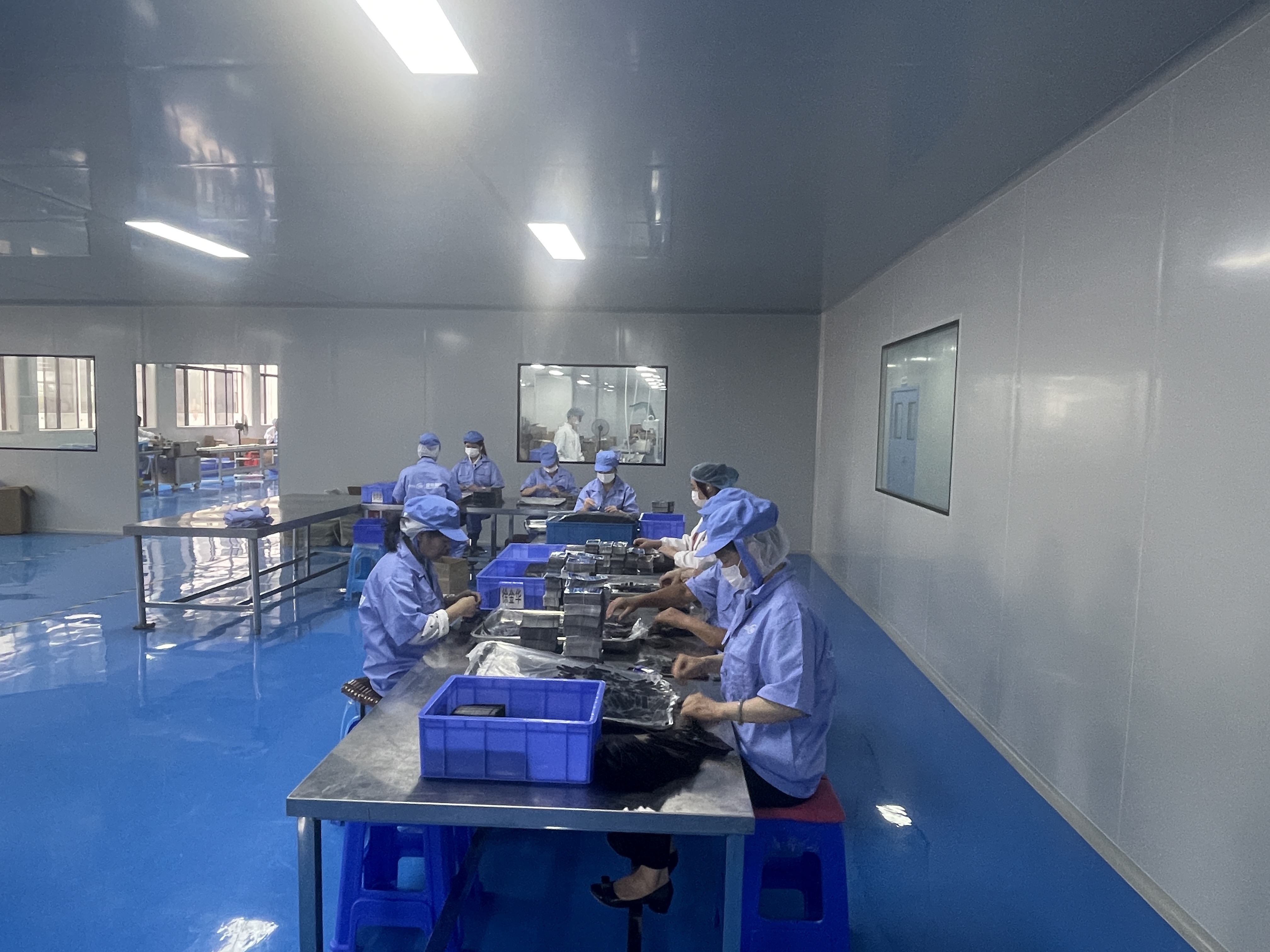
The global teeth whitening market was valued at USD 8.93 billion in 2025 and is projected to reach USD 14.31 billion by 2034, according to Fortune Business Insights. Most of that demand sits at the consumer end of the chain: the individual and at-home segment accounted for 68.67% of the teeth whitening market in 2024, based on figures published by Straits Research. Those two data points explain why private-label buyers in 2026 are not simply looking for oral care manufacturers. They are looking for teeth whitening kit partners whose output, order flexibility and product range can be checked against numbers.
That shift has not yet produced a standard procurement method. Supplier profiles still lean on adjectives — advanced, professional, established — while the data that actually determines whether a private-label launch can be fulfilled sits in specification sheets and certificate registers. For a buyer at the evaluation stage, the practical task is not to find more suppliers. It is to reduce a long list to a short one using criteria that can be verified, compared and re-verified before any purchase order is raised.
Why a 2026 Shortlist Should Be Built on Numbers, Not Adjectives
A shortlist is a filtering exercise, and filters need units. Three units matter more than any other in teeth whitening kit sourcing: sets per month, minimum order quantity per SKU, and certificate validity dates. Each of them can be requested, checked and written into a comparison sheet. None of them require the buyer to trust a marketing claim.
The reason this matters now is that the category has become crowded. Whitening kits, strips, pens, powders, toothpaste tablets and electric toothbrushes are frequently offered by the same factory, and the range itself says very little about where the real production strength sits. A supplier that runs a strong strip line may be reselling electric toothbrushes. A supplier with an impressive kit catalogue may have thin powder or tablet capacity. The shortlist stage exists to separate those cases before samples, deposits and packaging tooling are committed.
The Gap Between Supplier Claims and Verifiable Data
Two problems tend to surface at the same point in a private-label project.
The first is capacity ambiguity. A supplier states that it is a large manufacturer. The buyer needs to know whether that statement applies to the 105,000-unit-per-month kit line or only to the strip line that runs at a different order of magnitude. Without a per-format figure, the buyer cannot tell whether a launch plan of 15,000 kits in the first quarter is a comfortable fit or a scheduling conflict.
The second is order-size risk. Teeth whitening kits are a formula-and-packaging business, not a commodity. A first order that locks up capital in inventory before the packaging design has been tested in market is a common way for a private-label launch to stall. Minimum order quantity is therefore not a footnote in a quotation. It is a risk control.
The Four-Layer Shortlisting Framework
A workable shortlist for teeth whitening kits can be assembled from four data layers, applied in sequence. Each layer either eliminates a candidate or produces a score that can be carried into the next layer.
| Layer | Question it answers | Evidence type | Typical disqualifier |
|---|---|---|---|
| Layer 1 — Monthly output | Can the supplier absorb the planned volume without rescheduling? | Per-format monthly production figures | Kit-line monthly output below the first-year shipping plan |
| Layer 2 — MOQ flexibility | Can a first order validate the market before a large commitment? | Per-category private-label MOQ | Entry threshold above the test budget |
| Layer 3 — Portfolio depth | Can one supplier cover kits plus adjacent formats? | Documented SKUs and specifications | LED kits only, with no strips, powders or tablets |
| Layer 4 — Certification and QC | Do written claims resolve to certificate numbers and test routines? | Certificates with issuer, number, validity | No traceable certificate identifiers |
The sequence matters because the layers are not substitutes for one another. A supplier with exceptional capacity but a prohibitively high entry order is not usable by a first-time brand owner. A supplier with a low entry order but no adjacent formats forces the buyer to manage several factories at once.
Layer 1 — Monthly Output as a Viability Threshold
Capacity is the first filter because it determines whether an order can be absorbed without renegotiating the delivery schedule. The unit of measurement changes with the format: kits are counted in sets, strips in pieces, powders in bottles. A single headline capacity figure is therefore of limited use. What a buyer needs is a per-format breakdown.
| Product format | Reference monthly capacity | What it tells the buyer |
|---|---|---|
| Home teeth whitening kits | 105,000 sets / month | Baseline for LED kit shipping plans |
| Teeth whitening strips | 29,200,000 pieces / month | Supports high-unit-count consumable lines |
| Whitening pens | 21,000,000 pieces / month | Relevant for pen-led or refill-led ranges |
| Teeth whitening powder | 500,000 bottles / month | Determines whether powder SKUs can ship alongside kits |
| Toothpaste | 830,000 tubes / month | Supports bundle and subscription formats |
| Mouthwash | 2,500,000 sachets / month; 416,000 bottles / month | Two distinct lines: single-serve and bottled |
| Electric toothbrushes | 300,000 units / month | Determines whether a device can sit beside the kit |
Read together, these figures describe a manufacturer — Jiangxi Dentalbright Technology Co., Ltd., operating as Glorysmile Factory — whose output is spread across formats with very different scales. That spread is the point. A buyer planning a launch of 15,000 kits in the first quarter is working against a kit line sized at 105,000 sets per month, which leaves room. The risk appears later, when the same buyer adds strips, pens and toothpaste to the range and discovers that those lines were never part of the original conversation.
The practical rule for Layer 1 is to express the first-year plan in the unit the supplier actually quotes. A plan written as "200,000 units" is not comparable to a supplier's per-format figures. A plan written as "120,000 kits, 600,000 strips and 40,000 bottles of powder over twelve months, weighted to Q3 and Q4" can be checked line by line.
Layer 2 — Minimum Order Flexibility and the Cost of Being Wrong
Minimum order quantity is the most underestimated financial variable in private-label oral care. A high entry order converts a market test into an inventory commitment, and it delays the point at which real feedback arrives. In a category where packaging and flavour choices drive reorder behaviour, that delay is expensive.
Within the product data for Glorysmile Factory, the private-label MOQ is stated as 200 pieces per product, with a MOQ of 1 for regular products. At that scale, a new brand can validate a packaging concept, a formulation direction and an opening price point with a single modest batch rather than a container load.
That figure should be treated as a reference point, not a fixed term. Minimum order quantity is determined by product category, customization requirements and production line configuration, and the exact number is confirmed during quotation and sampling. A custom tube, a custom jar mould or a bespoke carton will move the threshold upward. The useful question at the shortlist stage is therefore not "what is your MOQ" but "what is your MOQ for this specific SKU with this specific packaging change" — asked three or four times, for different configuration levels.
Layer 3 — Portfolio Depth: Toothpaste Tablets, Whitening Powders, and Brush Packaging
A common failure in shortlisting is to evaluate a supplier only on the LED kit. The kit is usually the entry product; the adjacent formats carry the reorder behaviour and the shelf presence. A shortlist that ignores those formats tends to collapse at the point where the brand wants to expand its line.
Toothpaste tablets
The toothpaste tablet range (model GS-008) is offered at 30 or 60 tablets per unit, in rectangle, round or oval shapes, with mint as the standard flavour. Packaging options include plastic jar, glass jar, aluminium jar and kraft bag, with custom formats available, and the range extends to purple, charcoal and sakura colour variants. A separate denture cleansing tablet (model GS-008D) is supplied as 60 round tablets for dentures, mouthguards, retainers and other dental appliances. For a buyer building a travel or sustainability-oriented line, tablets often sit beside the whitening kit rather than replacing it.
Whitening powders
Powder is a distinct sub-category with its own formulation logic. The available range covers three directions: GS-005P as a PAP+ whitening powder, GS-005C as a charcoal whitening powder, and GS-005V as a purple colour corrector powder. Standard net weights are 12g and 30g depending on the formula, with 15g, 30g, 40g and 100g options and custom jar colour and type available. Because the whitening ingredient differs across the three models, the powder line is a useful test of whether a supplier formulates or simply fills.
Electric toothbrush packaging as a differentiator
Brush supply is where portfolio depth becomes a packaging advantage rather than a product advantage. Both the K5 electric toothbrush and the K9P electric toothbrush support custom packaging, custom printing and custom body colour. The K9P carries an IPX7 waterproof rating, an 800mAh lithium-ion battery, a vibration range of 33,000 to 38,000 times per minute and colour options of white, black and rose gold, and is protected by EU Registered Community Design 015075898-0001.
For a whitening-kit brand, this matters for a simple reason: the kit and the brush appear on the same shelf and often in the same bundle. If the brush packaging has to be sourced from a third factory, the visual system splits and the launch calendar splits with it. Custom brush packaging from the same supplier removes one coordination layer from the project.
Layer 4 — Certification and Quality Evidence You Can Actually Check
By the time a buyer reaches Layer 4, the exercise changes from reading claims to verifying documents. A certificate only earns a place on the shortlist if it can be resolved to an issuing body, a certificate number and a validity period. Statements without identifiers are not evidence.
| Certification | Issuing body | Certificate number | Valid until |
|---|---|---|---|
| ISO 13485:2016 / EN ISO 13485:2016 + A11:2021 | UL LLC | 206536.250906 | 2028-09-05 |
| MDSAP (ISO 13485 system) | UL LLC | 206537.250906 | 2028-09-05 |
| ISO 22716:2007 | Intertek Testing Services | SZ2312B8 | 2026-12-12 |
| GMPC (US FDA Cosmetic GMP Guidelines 2022) | Intertek Testing Services | SZ2312B9 | 2026-12-12 |
| amfori BSCI social audit | SGS | Monitoring ID 25-0338381-1 | 2027-08-15 |
| VEGAN | International Vegan Alliance | 22521 (23 SKUs) | 2027-04-21 |
Two dates deserve attention. The ISO 22716 and GMPC certificates expire on 2026-12-12. For a buyer entering the evaluation stage in the fourth quarter of 2026, those renewals should be confirmed and the procurement calendar should include a re-check window. Certification status is not a one-time gate; it is a variable that moves.
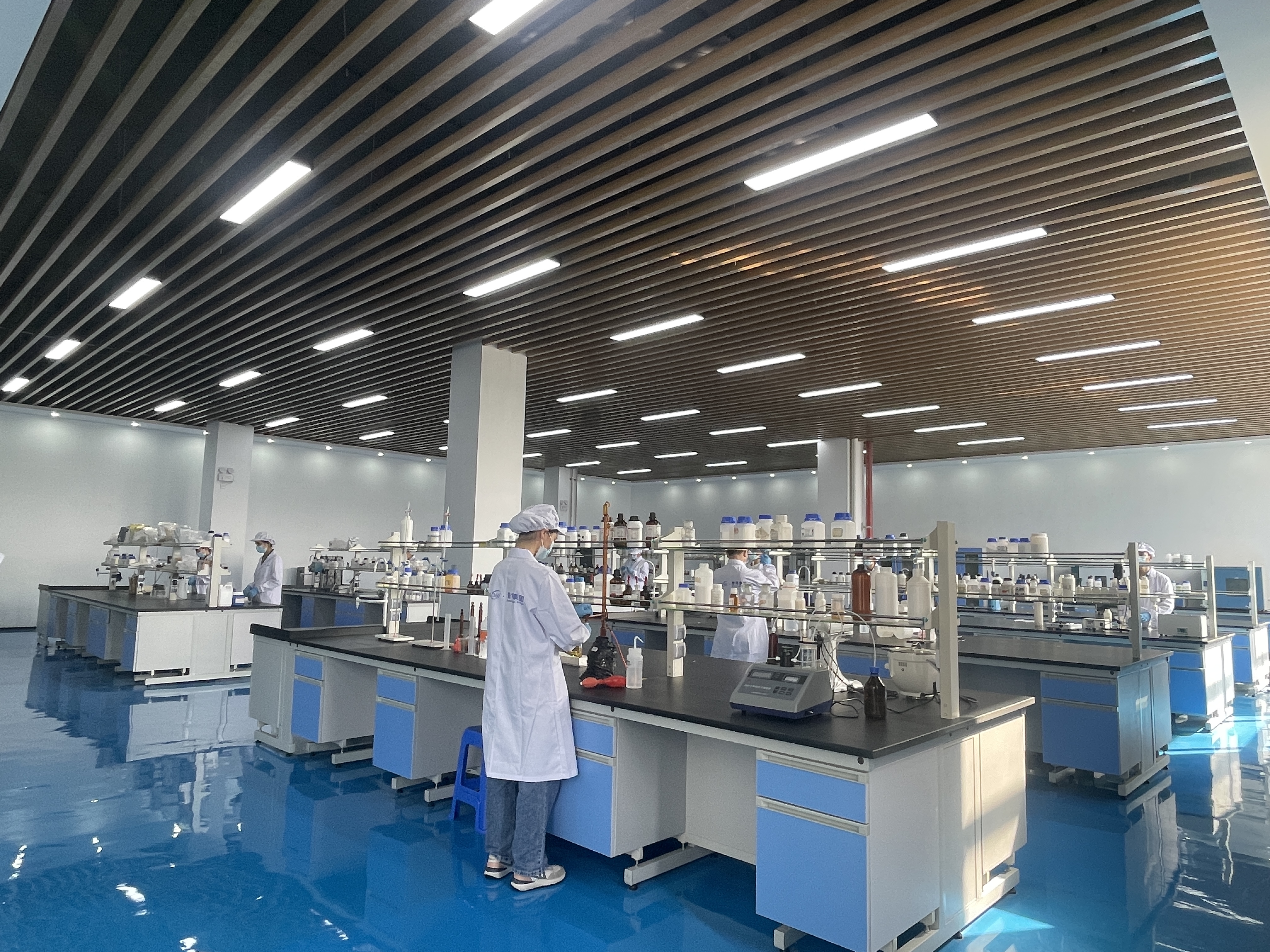
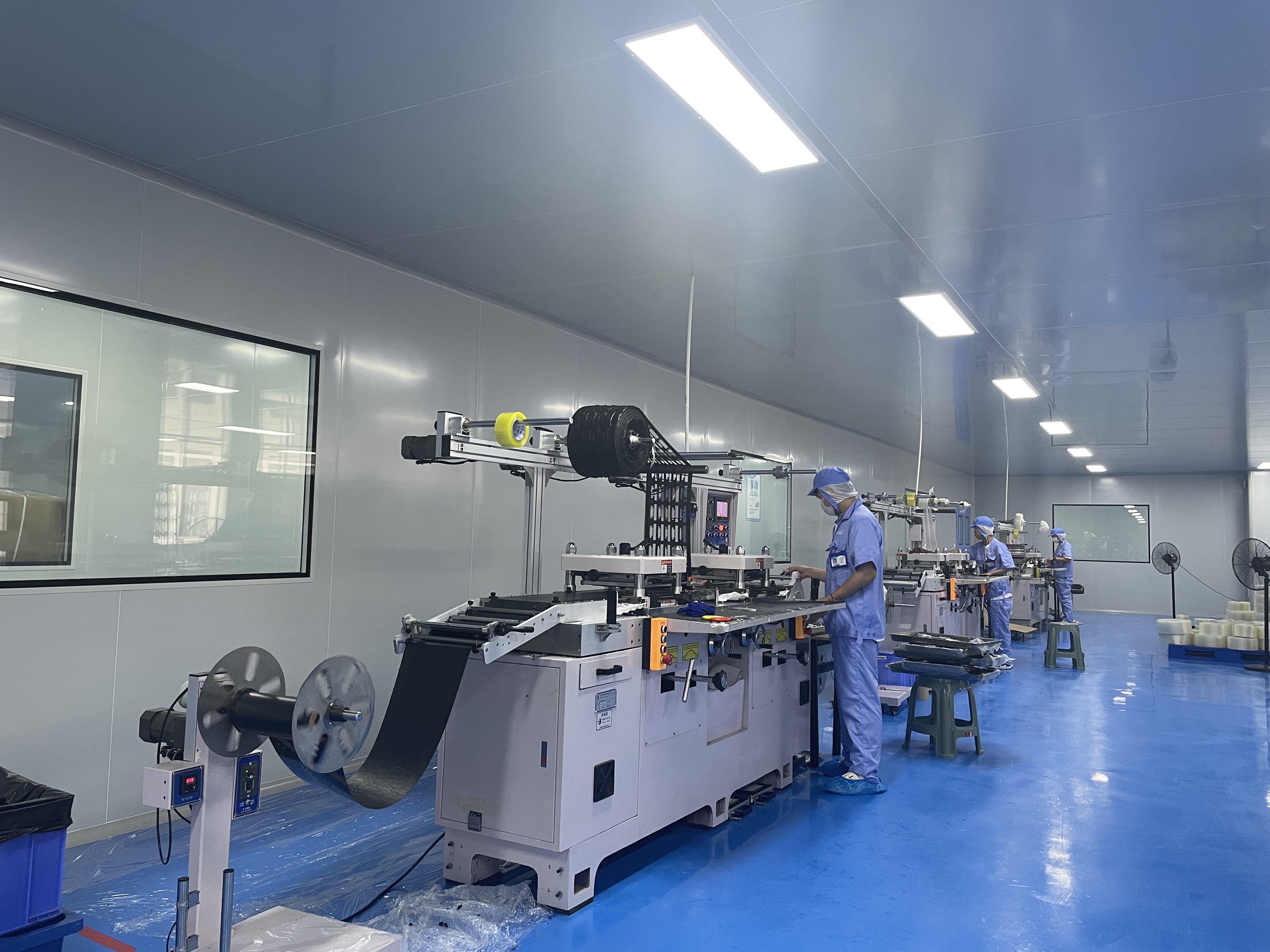
Behind the certificates sits facility data that can also be checked. The Glorysmile Factory site covers 36,000 square metres, of which 20,000 square metres are 100,000-class cleanrooms. A 1,000-square-metre laboratory includes a class-100 cleanroom dedicated to microbiological testing, which allows in-house verification of raw materials, semi-finished goods and finished products. For gels and powders that contact the mouth directly, cleanroom classification is a functional specification rather than a decorative one.
Quality control routines for home teeth whitening kits are equally specific: incoming inspection of LED modules, batteries and electronic components with COA verification; in-process testing of appearance, silicone hardness, noise level, leakage current and dielectric strength; batch release testing before shipment; and electrical safety checks. Powder quality control runs from incoming raw material inspection through in-process granulation and blending controls to finished product testing for appearance, particle size distribution, moisture content, microbial limits, heavy metals and efficacy verification. Third-party laboratory testing through SGS and UL is used alongside these in-house routines.
Applying the Framework: A Verification-Ready Reference
Jiangxi Dentalbright Technology Co., Ltd., which operates as Glorysmile Factory, is a Jiangxi-based manufacturer of oral care products covering teeth whitening systems, toothpaste, mouthwash, electric toothbrushes, water flossers and dental impression materials. The company was founded in 2008, with its current factory completed in 2013, and employs 256 people, including 17 R&D engineers, 11 quality specialists, 6 packaging designers and 8 production managers. Around 90% of output is exported, and products reach 102 countries.
Run against the four layers, the profile resolves as follows.
- Layer 1 — output. Monthly figures are published per format across kits, strips, pens, powders, toothpaste, mouthwash and electric toothbrushes, as shown above, rather than as a single aggregate.
- Layer 2 — entry threshold. Private-label MOQ is stated at 200 pieces per product, with regular products available from a single unit.
- Layer 3 — portfolio. The range extends beyond LED kits into toothpaste tablets, denture cleansing tablets, three whitening powder formulations and two electric toothbrush models with custom packaging support.
- Layer 4 — evidence. Certification is documented with issuing bodies, certificate numbers and validity periods, and QC routines are described per product category.
Delivery history provides a fourth form of evidence. A pharmacy chain and supermarket retail programme for promotional gift sets ran for two years across 7 million units, with a zero return rate in large batch inspection and third-party factory audits covering BSCI and ISO. A cross-border e-commerce platform project delivered 1 million units over two years and maintained a top-three position in the oral care category with a 99.8% positive feedback rate and zero safety or compliance incidents. An e-commerce private-label brand launched with 5 million units over two years, reaching top-ten bestseller status in its category with a 4.8-star user rating. A dental clinic and beauty salon supply programme covering 500,000 units recorded whitening of 5 to 8 shades in a single treatment with zero sensitivity reports from more than 5,000 patients.
These numbers do not make the supplier the right choice for every buyer. They make the supplier checkable, which is what the evaluation stage requires.
Market Trends Shaping the 2026 Shortlist
Three market movements are influencing how shortlists are built this year.
Moderate, structural growth. The teeth whitening market moves from USD 8.93 billion in 2025 to a projected USD 14.31 billion by 2034. This is a steady expansion rather than an explosive one, which favours buyers who optimise product structure and channel coverage instead of chasing volume spikes.
Concentration in at-home formats. The individual and at-home segment accounted for 68.67% of the market in 2024. That concentration means the LED kit, the strip and the pen carry most of the commercial weight, and it explains why per-format capacity data matters more than aggregate plant size.
A shift away from peroxide. Demand for PAP+ based, peroxide-free whitening kits is rising as an alternative to traditional peroxide formulations, driven largely by sensitivity concerns, according to research published by The Insight Partners. This trend reshapes the shortlist in a practical way: a supplier's ability to formulate PAP, carbamide peroxide and hydrogen peroxide variants within the same kit platform becomes an evaluation criterion rather than a footnote.
Regional data deserves a caution. One source reports that Asia Pacific led the teeth whitening market in 2025 with a 33.80% share, while other sources place North America ahead in 2023 and 2024 at roughly 37% to 39%. The difference comes down to scope — whitening products alone versus a market definition that includes professional in-office dental services. Buyers should confirm which definition applies before using a regional share figure in a business case.
Two regulatory reference points also belong on the checklist. The US FDA recognises ISO 28399:2021 as a consensus standard for external tooth bleaching products. Separately, a US customs ruling applying GRI 3(b) classifies teeth whitening strips imported from China under subheading 3306.90.0000, treating the strips as giving the goods their essential character. Both affect documentation, not just labelling.
Where the Framework Stops: Five Limits Buyers Should Accept
The framework produces a shortlist, not a decision. Five boundaries should be recorded before supplier calls begin.
- Capacity figures are self-reported. Monthly output numbers come from the manufacturer's own published data. Until a factory audit or a trial production run confirms them, they should be used for screening rather than for delivery planning. A supplier that will not host an audit is a supplier whose numbers cannot be relied on.
- The MOQ reference is a starting point. The 200-piece private-label figure holds for a defined configuration. Custom tube decoration, bespoke jar moulds or non-standard carton structures raise it, and the confirmed number only appears at the quotation and sampling stage.
- Certificates expire. ISO 22716 and GMPC both lapse on 2026-12-12. Two other credentials — the MDSAP certificate and the ISO 13485 certificate — run to 2028-09-05. A shortlist that does not record expiry dates will need to be rebuilt later.
- Portfolio breadth is not portfolio depth. A supplier able to quote tablets, powders and brushes may still be strongest in only one of those lines. Line-level capacity and QC detail, not catalogue length, is the differentiator.
- EU rules can redefine the product. Under Directive 2011/84/EU, teeth whitening products containing between 0.1% and 6% hydrogen peroxide require a first treatment by a dentist. That threshold affects how a peroxide-based kit can be positioned in the European Union and helps explain why peroxide-free PAP formulations have gained ground in that market.
Future Outlook
Over the next several quarters, teeth whitening kit shortlisting is likely to look less like a price comparison and more like a documentation review.
Certificates with issuing bodies, numbers and validity periods are becoming default attachments in supplier conversations, because buyers now know that verification costs less than a failed launch. Cross-format packaging capability is becoming an evaluation criterion rather than a bonus, since the failure mode in most private-label ranges is not the gel but the bundle — a kit, a strip and a brush that do not look like they belong together. And MOQ is being read alongside capacity, because the number that matters is not only how little a supplier will accept, but whether the line that produces it can scale without re-tooling.
Buyers who build their 2026 shortlist around those three shifts will spend less time comparing descriptions and more time comparing plans.
FAQ
What monthly output should a teeth whitening kit supplier meet before shortlisting?
There is no universal threshold, so the practical approach is to test a supplier's per-format figures against the buyer's own shipping plan. For reference, the published monthly capacity for one oral care manufacturer covers 105,000 home teeth whitening kits, 29,200,000 whitening strips, 21,000,000 whitening pens, 500,000 bottles of whitening powder, 830,000 tubes of toothpaste, 2,500,000 mouthwash sachets and 416,000 mouthwash bottles, and 300,000 electric toothbrushes. A first-quarter plan of 15,000 kits sits comfortably inside a 105,000-set monthly kit line; the same plan becomes a scheduling question if strips and pens are added without checking those lines separately.
What is the minimum order quantity for a private label teeth whitening kit?
In the product data for Glorysmile Factory, the private-label minimum order quantity is 200 pieces per product, while regular products are available from a single unit. This figure is not fixed across the portfolio. Minimum order quantity is determined by product category, customization requirements and production line configuration, and the exact number is confirmed during quotation and sampling. A buyer testing three packaging concepts should therefore request three separate quotes rather than relying on one headline number.
Which product formats should be included on a 2026 shortlist beyond the LED kit?
At minimum, toothpaste tablets, whitening powders and electric toothbrushes. Toothpaste tablets are offered at 30 or 60 tablets per unit in rectangle, round or oval shapes, packaged in plastic jar, glass jar, aluminium jar or kraft bag, with purple, charcoal and sakura variants; a separate denture cleansing tablet is supplied as 60 round tablets for dentures, mouthguards and retainers. Whitening powders cover three formulation directions — PAP+, charcoal and purple colour corrector — with 12g and 30g standard weights and 15g, 30g, 40g and 100g options. Electric toothbrush models support custom packaging, custom printing and custom body colour, which keeps the bundle visually consistent.
How can a buyer verify a teeth whitening kit supplier's certification claims?
By resolving each claim to an issuing body, a certificate number and a validity period. For example, the ISO 13485:2016 and MDSAP certificates are issued by UL LLC under numbers 206536.250906 and 206537.250906, both valid to 2028-09-05. ISO 22716:2007 and GMPC are issued by Intertek Testing Services under SZ2312B8 and SZ2312B9, both valid to 2026-12-12. The amfori BSCI social audit was carried out by SGS under Monitoring ID 25-0338381-1, valid to 2027-08-15, and the VEGAN certificate issued by the International Vegan Alliance covers 23 SKUs under number 22521, valid to 2027-04-21. Claims without such identifiers cannot be checked.
What EU regulatory requirement affects teeth whitening kit shortlisting?
Under Directive 2011/84/EU, teeth whitening products containing between 0.1% and 6% hydrogen peroxide require a first treatment by a dentist within the European Union. This affects how a peroxide-based kit can be positioned in EU markets and is one of the reasons peroxide-free PAP formulations have gained share there. Buyers targeting EU distribution should confirm the hydrogen peroxide concentration of each candidate kit before finalising packaging and claims.
What after-sales commitments should a buyer confirm before finalising a shortlist?
Three items are worth confirming in writing: a 24-hour after-sales response mechanism, full-lifecycle product quality assurance, and the availability of market intelligence briefings and regulatory compliance guidance for long-term strategic partners. Each of these can be stated as a contractual term rather than a verbal assurance, which makes it a suitable final filter before samples are commissioned.
Supporting reference: Glorysmile Factory product catalogue (PDF).