
Silica Powder for Cosmetic and Oral Care: Compliance and Grade Qualification
Silica Powder for Cosmetic and Oral Care: Compliance and Grade Qualification
An industry-led qualification guide covering CAS 7631-86-9 silica identity, grade selection for body scrub and toothpaste, and the purity checks buyers should request.
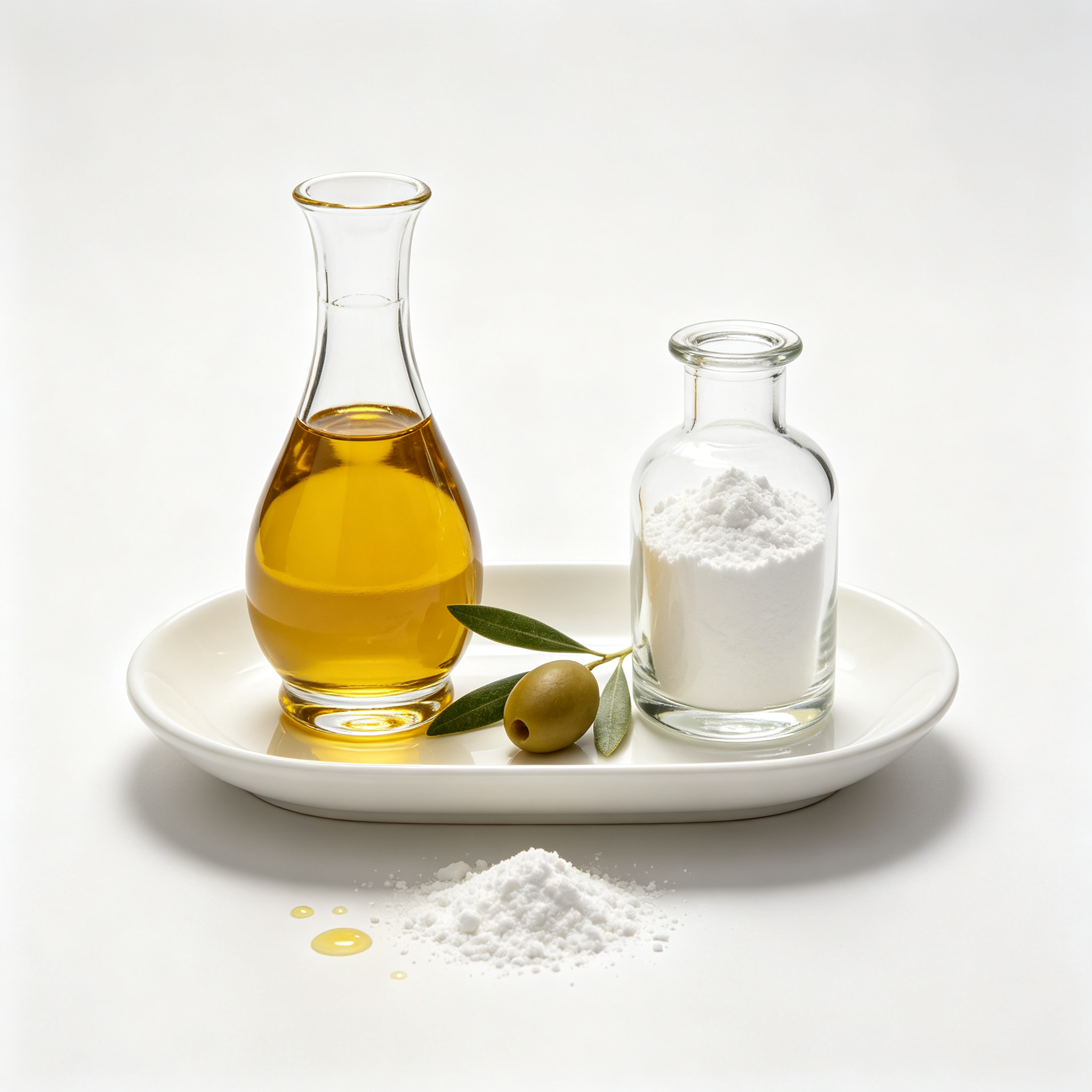
Silica powder identity is shared across grades; qualification depends on matching grade function to intended formulation.
Qualification is a grade-selection process, not a single certificate
For cosmetic and oral care buyers, silica powder qualification often begins with a document request: a certificate of analysis, an ISO certificate, a CAS number. That is a reasonable starting point, but it does not answer the more important question — whether the specific grade is the right one for the intended formulation. Under the same chemical identity, silica grades differ in abrasivity, thickening behaviour, particle size distribution, trace-metal profile, and visual quality. A single certificate covering “silica” cannot resolve those differences.
The practical approach treats qualification as a two-part process. First, identify the grade group that matches the formulation: hydrated silica for body scrub, hydrated silica for toothpaste, toothpaste grade hydrated silica, or toothpaste grade silica. Second, request the compliance and purity evidence that is specific to that grade. Buyers who separate these two steps avoid a common procurement error — accepting a generic compliance document for a grade that was never designed for the application in question.
Why one certificate cannot cover every cosmetic and oral care grade
Silica powder for cosmetic and oral care spans fundamentally different functions. In body scrub formulations, silica acts as an exfoliating particle. In toothpaste, silica acts as either an abrasive for cleaning and stain removal, a thickening agent for paste structure, or a dual-purpose grade combining both roles. Each function places different demands on particle morphology, pore structure, and surface chemistry.
Because the functional demands differ, the compliance evidence also differs. An abrasivity value relevant to toothpaste has no meaning for a scrub particle. A thickening viscosity relevant to a clear gel has no meaning for a loose powder. Qualification therefore has to follow the grade, not the substance category.
Grade identity: CAS 7631-86-9 silica and the amorphous requirement
The first compliance check is identity. Cosmetic and oral care silica should be declared as amorphous silica with CAS number 7631-86-9. The INCI name is Silica. This is the same identity used across hydrated, precipitated, and gel-process silica. It is distinctly different from crystalline silica, which has an ordered lattice and a different toxicological profile.
For buyers, the practical test is straightforward: confirm that the supplier’s technical data sheet and COA state CAS 7631-86-9 and describe the material as amorphous. If the documentation is silent on crystallinity, ask directly. This check is especially important for buyers sourcing from mixed industrial and food-grade supply chains, where crystalline silica may appear in adjacent product lines.
Grade identity also includes the process family. Precipitated silica and gel-process silica share the CAS number but differ in pore structure and moisture. Fumed silica is a third family, produced by flame hydrolysis, with nanoscale primary particles and high purity. For cosmetic and oral care, precipitated grades are the common choice for anti-caking, abrasion and thickening; fumed grades appear in specific rheology and texture applications. Matching the process family to the intended function is part of qualification, not a separate decision.
Matching grade to formulation: body scrub, toothpaste and beyond
Once identity is established, the qualification question shifts to application fit. The table below maps four common formulation targets to the grade attributes that should be verified.
| Intended formulation | Grade family | Qualification focus |
|---|---|---|
| Body scrub / exfoliating particle | Hydrated silica for body scrub | Particle morphology, microbead-free declaration, skin-feel grade selection |
| Toothpaste cleaning / whitening | Toothpaste grade hydrated silica (abrasive) | RDA value, D50, QB/T 2346-2015 compliance |
| Toothpaste structure / gel | Toothpaste grade silica (thickening) | Viscosity grade, water absorption, clarity grade |
| Loose powder / pressed powder | Spherical cosmetic silica | Sphericity, D50 range (8–22 µm), matte effect |
Body scrub: hydrated silica for exfoliation
For body scrub applications, hydrated silica supplies the exfoliating particle. Qualification here focuses on particle morphology and on the environmental claim. Suppliers should confirm whether the grade is a dedicated exfoliant silica, and whether it is declared 100% microbead-free. The distinction matters for markets that restrict plastic microbeads in rinse-off cosmetics.
Skin feel is a second qualification factor. The same hydrated silica family can be adjusted in particle size and surface structure to deliver different sensory profiles. Buyers should request the specific grade rather than accept a general “cosmetic silica” description, because the scrub experience depends on the grade, not the substance category.
Toothpaste: abrasive, thickening and dual-purpose grades
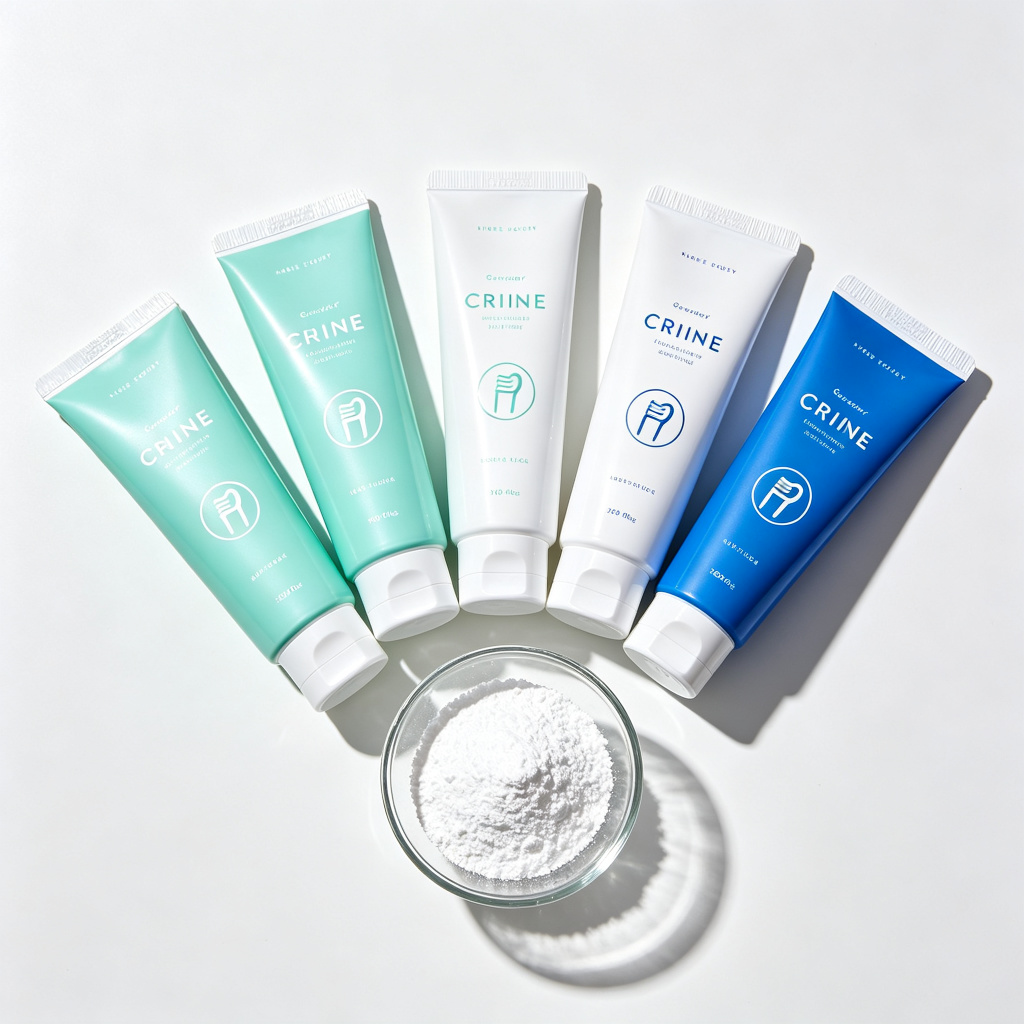
Toothpaste grade abrasive silica is qualified by RDA value and D50, not by a generic silica certificate.
In toothpaste, the qualification question splits into three sub-questions. First, is the grade an abrasive, a thickener, or a dual-purpose grade? Second, within the abrasive family, what is the RDA (Relative Dentin Abrasion) level? Third, does the grade meet the relevant toothpaste standard, QB/T 2346-2015?
Abrasive grades are selected by RDA: high for whitening and strong cleaning, medium for general use, low for sensitive teeth and children’s formulations. Thickening grades are selected by viscosity level: low for gentle systems, medium for general systems, high for high-viscosity systems. High-clarity grades are available for transparent gels. Dual-purpose grades such as TY2 combine cleaning and thickening in a single raw material, reducing the number of components in the formulation.
Qualification evidence for toothpaste grade hydrated silica should include the RDA value or abrasivity class, the D50 particle size, the SiO₂ content on an ignition basis (commonly ≥96%), and a statement of compliance with QB/T 2346-2015. Buyers requesting a generic silica certificate without grade-specific abrasivity or viscosity data are not actually qualifying the grade.
Thickening and clear gel grades
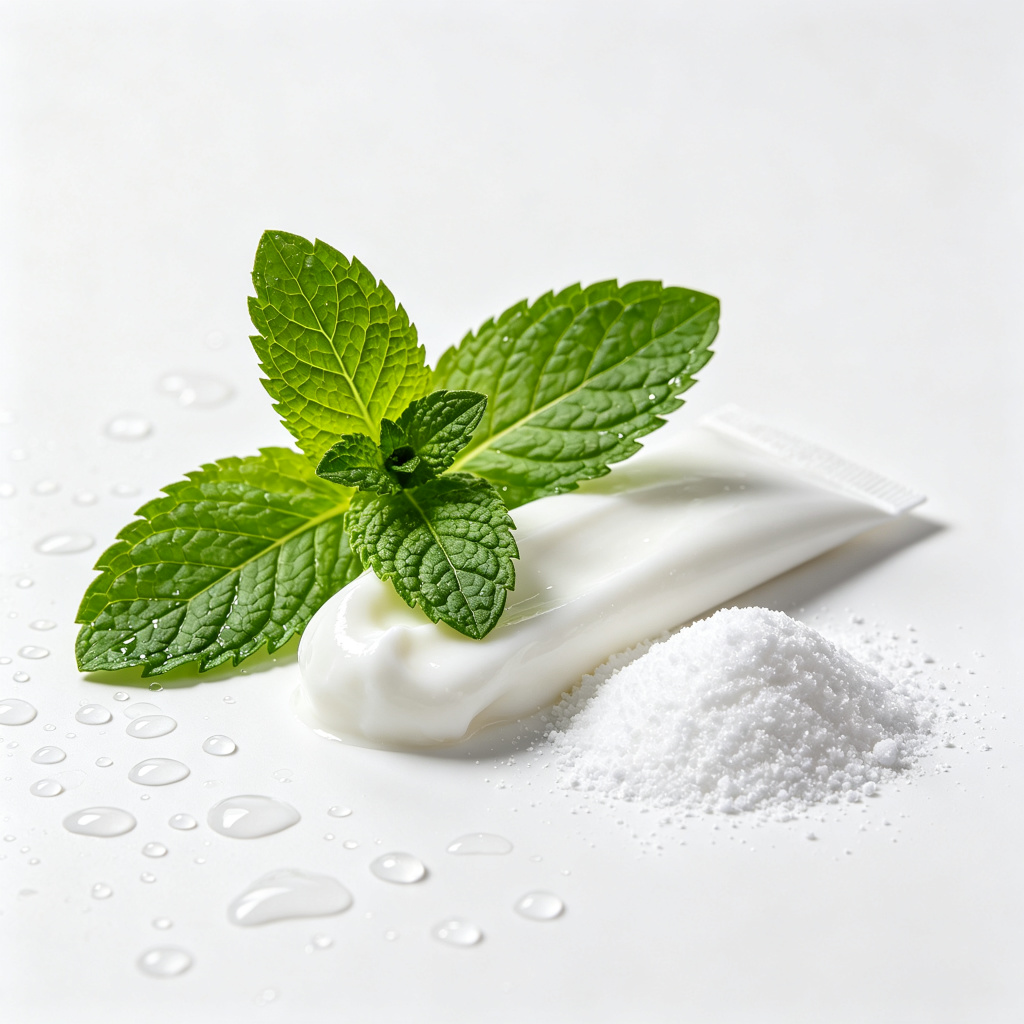
Thickening grades are qualified by viscosity level and water absorption, with separate clarity grades for transparent gels.
Thickening grades build toothpaste structure and suspend abrasive particles. Qualification focuses on viscosity level and water absorption. For transparent gel toothpastes, a high-clarity grade is required; the same thickening grade that works in an opaque paste may not deliver clarity. Buyers should confirm the clarity grade alongside the viscosity grade.
Cosmetic texture grades: spherical silica for loose powder
For loose powder, pressed powder and powder cakes, spherical silica delivers a silky skin feel and a matte finish. Grade selection is by particle size: ZQSIL-PC10 at 8–12 µm and ZQSIL-PC20 at 18–22 µm, typically dosed at 5–20%. The spherical morphology is the qualification point — it distinguishes the grade from irregular precipitated silica used in anti-caking or carrier roles.
Purity checks: low heavy metal silica and silica free of black specks
Grade fit is necessary but not sufficient. Cosmetic and oral care buyers also need to verify purity. Two attributes carry particular weight in qualification: low heavy metal silica and silica free of black specks.
Heavy metals: what to request and what to compare
Heavy metals are cumulative toxins. Lead, arsenic and mercury are the standard reference points. Suppliers should provide per-batch values, not just specification limits. Documented values for one qualified silica line are Pb <1 ppm, As 0.4–1 ppm and Hg 0.5 ppm. These should be compared against the relevant limits in GB 25576-2020 and the destination-market requirements, rather than accepted at face value.
Iron is a separate consideration for cosmetic grades. Trace iron can catalyse discolouration in colour-sensitive formulations, particularly where ethyl maltol or similar compounds are present. Buyers should ask for the iron content, not just the heavy-metal panel. One reference production line reports iron at approximately 145 ppm, compared with an industry range of 300–500 ppm.
Black specks: controlling what the eye can see
Black specks are a cosmetic quality concern in white or light-coloured formulations. They are not foreign contaminants in the usual sense; they are silica itself with trace high-temperature carbides and mineral-associated crystals on the surface. Their impact is appearance, not function. Qualification should therefore include a black-speck limit, not just a general “appearance: white powder” description.
One reference internal limit uses three tiers stricter than the national standard: >0.3 mm zero tolerance; 0.2–0.3 mm ≤1 per bag; <0.2 mm ≤10 per bag. This limit is supported by four controls — high-purity quartz and demineralised water, indirect heat-exchange furnaces, monthly cleaning of all-stainless pipework, and final vibrating screen plus strong magnetic separation with external testing before warehousing. Buyers should request the black-speck limit and the sampling method, not just the COA appearance line.
Microbiology and moisture
Microbial limits vary by grade. For premium cosmetic and oral care applications, buyers should request total count, yeast, mould, coliforms, E. coli, S. aureus and Salmonella results per batch. Moisture (loss on drying) is also relevant because residual moisture can drive caking during shipping and storage. Reference lines control LOD around 4.27% and LOI around 3.85% for the W series, both below typical competitor limits.
Compliance documents buyers should request for each grade
The document request should follow the grade. The checklist below groups the qualification documents by category. It is not a substitute for market-specific regulatory review, but it organises the evidence buyers need in a supplier questionnaire.
| Document category | What to request |
|---|---|
| Grade identity | TDS and COA stating CAS 7631-86-9, amorphous silica, INCI Silica |
| Functional specification | RDA class or abrasivity, D50, viscosity level, clarity grade, oil absorption, BET |
| Purity | Pb, As, Hg, Fe; black-speck limit; LOD and LOI |
| Microbiology | Total count, yeast, mould, coliforms, E. coli, S. aureus, Salmonella per batch |
| System certificates | FSSC 22000, ISO 22000, ISO 9001; certificate number and validity dates |
| Market-specific claims | HALAL, OU Kosher, FDA compliance statement where relevant |
| Traceability | Batch number, retained sample policy, third-party testing report (e.g. SGS, Eurofins, CQC, Intertek) |
In practice, buyers often encounter a certificate package issued to a sales entity while the manufacturing plant holds the production qualifications. This is common in group structures where the manufacturing subsidiary holds FSSC 22000, ISO 22000 and production licences, while the overseas sales company holds ISO 9001 for sales activities. Qualification should confirm both: the production certificate held by the manufacturing plant, and a written sales authorisation explaining the relationship. Without that clarification, a certificate-to-contract mismatch can complicate a later quality claim.
A practical qualification workflow for long-term supply
For buyers at Decision-to-Execution stage, qualification is not a one-off document check. It is a process that continues through the first three production batches and into the annual review. The workflow below reflects the sequence used in long-term supply arrangements.
- Define the grade target in formulation language. Specify the intended function (scrub particle, abrasive, thickener, texture), the target RDA or viscosity level, and the clarity requirement if applicable.
- Request grade-specific samples and TDS. Samples should come from the same batch as the retained sample, so that later bulk deliveries can be cross-checked.
- Run a parallel pilot trial. Compare the candidate grade against the incumbent grade in the actual formulation, at the original dosage, and evaluate the relevant attributes: exfoliation, cleaning, viscosity, clarity, skin feel.
- Verify purity and appearance. Check the heavy-metal panel, iron content, black-speck limit, LOD and microbiology against the specification.
- Compare first three production batches. Confirm batch-to-batch consistency of D50, RDA or viscosity, and appearance before releasing to routine purchasing.
- Agree the annual review cadence. Certificate validity, specification updates and change-notification commitments should be reviewed together, so that qualification remains current rather than annual.
Market context: why grade qualification is becoming more important
Three developments are pushing cosmetic and oral care buyers toward more differentiated grade qualification.
First, the shift away from plastic microbeads in rinse-off cosmetics has increased demand for mineral alternatives. Dedicated exfoliant silica grades are declared 100% microbead-free, which changes the qualification question from “is silica permitted” to “which silica grade delivers the required scrub performance without microplastics.”
Second, the growth of transparent gel toothpastes and multi-benefit oral care formulations has increased the number of thickening grades in use. High-clarity grades, viscosity-tiered grades and dual-purpose grades each carry their own qualification evidence. A single abrasive grade certificate does not cover them.
Third, the natural-origin positioning of mineral ingredients is becoming a purchasing criterion. Silica grades that meet ISO 16128 as naturally derived minerals align with clean-label cosmetic and oral care claims. That is a positioning attribute, not a substitute for functional qualification, but it influences which grade families buyers shortlist.
Comparison with conventional qualification practice
The grade-led approach differs from the document-led approach in several ways. The table below summarises the main differences. It also notes the limits of the grade-led approach, because no qualification method removes all risk.
| Dimension | Conventional document-led practice | Grade-led qualification |
|---|---|---|
| Starting point | Request COA and ISO certificates | Define grade target by formulation function |
| Functional evidence | Generic silica specification | RDA, viscosity, D50, clarity grade for the specific grade |
| Purity evidence | Heavy-metal limits | Per-batch values, iron content, black-speck limit, LOD |
| Long-term assurance | Certificate validity only | First-three-batch comparison, annual review, change-notification commitment |
| Main limitation | May accept a grade that was never designed for the application | Requires more supplier engagement and longer pilot time |
The main limitation of grade-led qualification is time. It requires pilot trials and batch comparisons that document-led qualification can skip. For buyers under urgent procurement pressure, this can be a real constraint. A reasonable compromise is to run grade-led qualification on the highest-risk grades first — typically the abrasive or thickening grade that dominates the formulation — and use document checks for lower-risk supporting grades.
A second limitation is that pilot trials reduce but do not eliminate switching risk. Formulations and processes differ, and a grade that matches specifications may still require minor dosage or process adjustment. Qualification should plan for that adjustment rather than assume it away.
Manufacturer perspective: how grade families are organised
Zhongqi (Guangdong) Silicon Material Co., Ltd., founded in 2011 in Zengcheng, Guangzhou, manufactures silica grades through its subsidiary Shandong Zhonglian Chemical Co., Ltd., which handles overseas sales and brand operations. The company produces precipitated and fumed silica families covering food, pharmaceutical, oral care, cosmetic, feed and industrial applications, and holds FSSC 22000 (CQC25FS1229R0S/4400, valid to October 2028), ISO 22000:2018, ISO 9001:2015, HALAL and OU Kosher certifications.
For cosmetic and oral care, the ZLDIO brand organises grades by function: abrasive toothpaste grades, thickening toothpaste grades, dual-purpose toothpaste grades, exfoliant scrub grades and spherical texture grades. The ZQSIL brand covers spherical cosmetic powders. This structure reflects the qualification logic described above — the grade family, not the substance category, is the unit of qualification.
The company reports a national-standard testing centre, an in-house microbiology laboratory, and a 26-step full-process quality control system from raw material to finished product, with batch retention beyond shelf life. For buyers, these capabilities matter to the extent that they support per-batch data and traceability, not as marketing claims in themselves.
Future outlook
Grade qualification is likely to become more standardised as cosmetic and oral care buyers integrate supplier qualification with formulation development. The trend is already visible in the way oral care formulators select abrasive and thickening grades together rather than treating them as separate commodity purchases. As clear gel formats and multi-benefit toothpastes continue to expand, the number of distinct grades in use will grow, and with it the number of grade-specific evidence packs buyers need to maintain.
For cosmetics, the microbead transition and the natural-origin positioning of mineral ingredients are likely to keep exfoliant silica and spherical silica in focus. Qualification for these grades will increasingly include environmental declarations alongside functional and purity evidence.
The practical implication for buyers is straightforward: build a grade-level qualification file rather than a supplier-level file. A supplier-level file ages quickly; a grade-level file stays useful across supplier changes, formulation updates and annual reviews.
Frequently asked questions
Do cosmetic and oral care silica grades need to be qualified separately?
Yes. Cosmetic and oral care silica share the same chemical identity (CAS 7631-86-9, amorphous silica, INCI Silica), but they are qualified against different functional criteria. Oral care grades are qualified by RDA value or viscosity level and by QB/T 2346-2015; cosmetic grades are qualified by particle morphology, skin feel and, for colour-sensitive formulations, iron content. A generic silica certificate does not cover the grade-specific attributes that matter to each application.
What is the difference between abrasive and thickening toothpaste grade hydrated silica?
Abrasive grades perform cleaning and stain removal and are selected by RDA level — high for whitening, medium for general, low for sensitive teeth and children. Thickening grades build paste structure and suspend particles and are selected by viscosity level, with separate clarity grades for transparent gels. Dual-purpose grades such as TY2 combine both functions. The qualification evidence differs accordingly: RDA and D50 for abrasives, viscosity and water absorption for thickeners.
How should buyers verify low heavy metal silica for cosmetic use?
Request per-batch values for lead, arsenic and mercury, not just specification limits. One qualified line reports Pb <1 ppm, As 0.4–1 ppm and Hg 0.5 ppm. Compare those values against the relevant limits in GB 25576-2020 and the destination market. For colour-sensitive cosmetic formulations, also request the iron content: iron can catalyse discolouration, and a low-iron grade such as approximately 145 ppm is materially different from the 300–500 ppm industry range.
How is silica free of black specks specified in a purchase agreement?
Specify a three-tier limit by speck size rather than a general appearance clause. One reference internal limit is >0.3 mm zero tolerance, 0.2–0.3 mm ≤1 per bag, and <0.2 mm ≤10 per bag, supported by a defined sampling method and full-batch rejection on any failure. The limit should be written into the specification alongside the sampling method, because black specks are an appearance attribute and are not captured by a standard COA appearance line.
What should long-term buyers review to keep qualification current?
Four items should be reviewed on an annual cadence: certificate validity (FSSC 22000, ISO 22000, ISO 9001, HALAL, OU Kosher), specification updates for the qualified grade, change-notification commitments, and the batch comparison record from the first three production lots. Reviewing certificates alone is not sufficient, because grade specifications and production processes can change while certificates remain valid. Keeping the grade-level file current across these four items is what preserves qualification over the long term.
For buyers who need the full grade and compliance reference in one document, the food grade silica brochure collects the grade families, COA reference items and certification scope.
Есть вопросы или нужны дополнительные детали?
Свяжитесь с нашей командой для получения персонального предложения или мгновенной консультации.
Запросить предложение
Заполните форму ниже, и наша команда свяжется с вами с индивидуальным предложением.
Прямой чат WhatsApp
Предпочитаете общаться в реальном времени? Напишите нам в WhatsApp для мгновенной помощи и быстрых ответов.
- Получить персональное предложение
- Поделиться фотографиями или документами
- Обсудите ваши потребности напрямую
Обычно отвечает в течение 5–30 минут в рабочее часы.