
Silicon Dioxide Application Fit: Creamer, Oil, Filter Aid
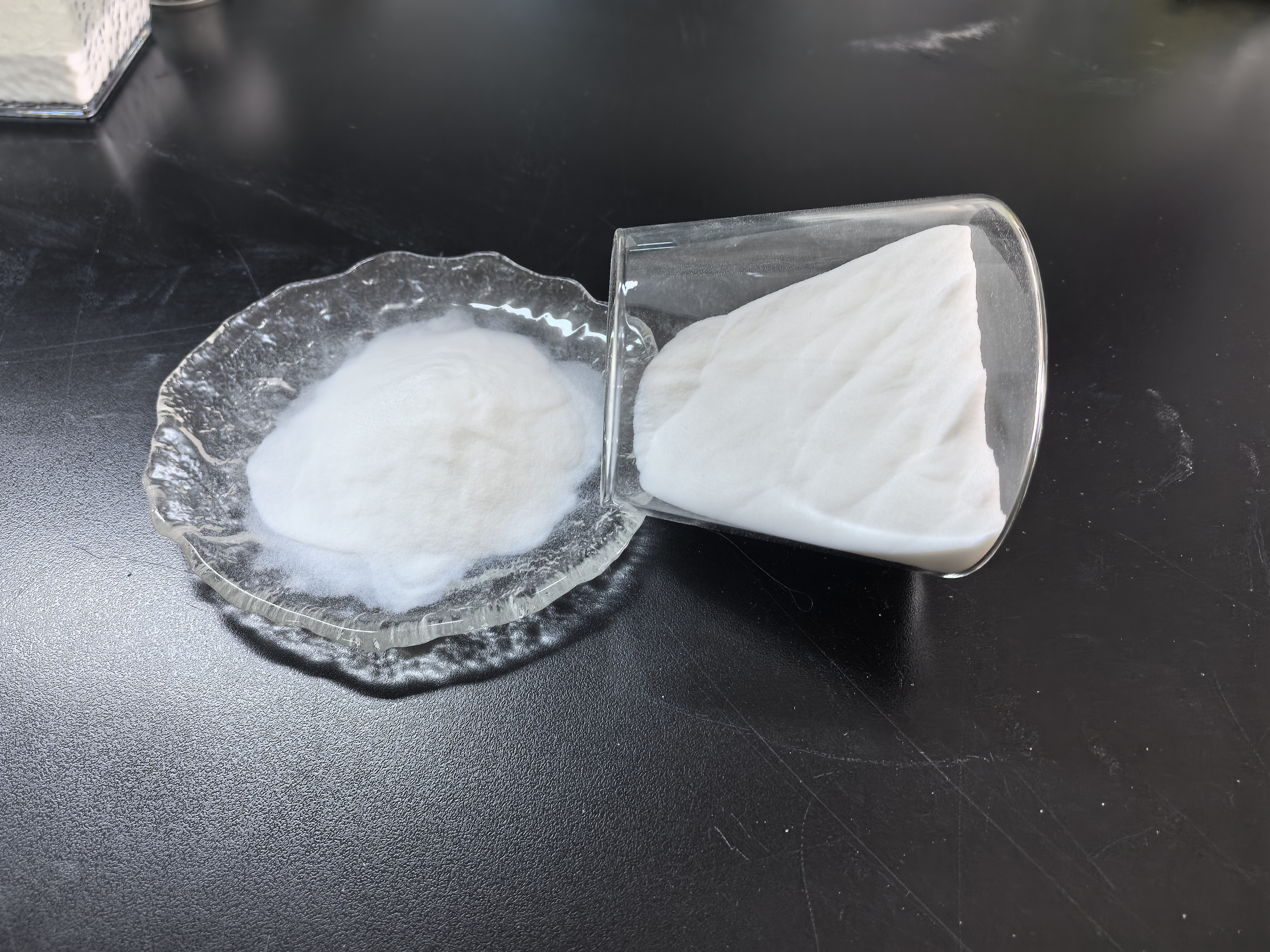
Silicon dioxide is often purchased as if it were one commodity. In practice, the same chemical identity can perform three very different jobs in food manufacturing: it can keep a powdered creamer free-flowing, adsorb phospholipids and trace metals in edible oil refining, or act as a filter aid in frying-oil management. The grade, not the CAS number alone, determines whether the material works.
That distinction matters at the research and evaluation stage. A buyer who compares silicon dioxide only by price per kilogram may miss the parameters that control line performance, filtration throughput, oil loss, powder mouthfeel or compliance documentation. The more useful procurement question is narrower: which silicon dioxide grade fits the application, and what evidence should be verified before a change is approved?
This reference maps the application fit for non-dairy creamer, edible oil and frying-oil filter aid, with reference to food-grade and FCC-grade silicon dioxide. It uses documented product facts from Zhonglian Food Silica and public regulatory facts from the U.S. FDA and related food-additive frameworks. It also identifies the limits that should be tested rather than assumed.
Why application fit outranks generic specifications
Food-grade silicon dioxide is amorphous silicon dioxide, CAS 7631-86-9. It is regulated in several markets as a food additive, including E551 in the EU and silicon dioxide under U.S. FDA food additive provisions. Those regulatory identities confirm what the material is and where it may be used. They do not tell a formulation team whether a specific grade will disperse well in a high-fat creamer powder, whether it will filter cleanly from refined oil, or whether it will hold up in a frying-oil filtration loop.
The public regulatory picture is broad. The U.S. FDA lists silicon dioxide for multiple technical uses in food, including anticaking agent or free-flow agent, drying agent, emulsifier or emulsifier salt, flavoring agent or adjuvant, formulation aid, humectant, and lubricant or release agent. For anticaking use, 21 CFR 172.480 sets a limit of not more than 2 percent by weight of the food. The FDA also describes silicon dioxide as an approved direct food additive used as an anticaking agent in powdered food products and as a stabilizer in beer production. In the EU, E551 is governed by purity criteria under Commission Regulation (EU) No 231/2012 and use provisions under Regulation (EC) No 1333/2008.
Those facts support a compliance-led purchasing process, but they also show why grade selection cannot stop at the additive listing. A creamer grade and an oil-refining adsorbent may both be described as food-grade silicon dioxide, yet their functional parameters are not interchangeable. One may be designed around oil absorption and free-flow performance; another around high surface area, acidic pH and filtration behavior.
Non-dairy creamer: free flow, surface oil and powder stability
Non-dairy creamer and coffee whitener are spray-dried or dry-blended powder systems with fat, emulsifier and moisture sensitivity. The powder can lose flow when surface fat or moisture creates bridges between particles. An anticaking and free-flow grade is used to reduce that risk and to support consistent dosing, conveying and packaging.
Zhonglian Food Silica lists a dedicated silica for non-dairy creamer under models ZLSIL-W50S, ZLSIL-W110SD, ZLSIL-W50B and ZLSIL-WT50. The documented grade profile includes a median particle size of D50 40–60 μm, a BET surface area of 230±20 m²/g, pH 6.0–7.5, loss on drying of no more than 6.5 percent, and high oil absorption. The material is precipitated amorphous silica, CAS 7631-86-9, and is positioned for non-dairy creamer, coffee whitener, milk powder, vegetable fat powder and instant drinks.

The technical logic is straightforward but not trivial. A creamer powder with surface fat needs a silica that can take up oil and moisture without creating a gritty or cloudy result in the finished beverage. The relatively coarse D50 of 40–60 μm is a deliberate fit for a powder system where dusting, dispersion and mouthfeel all matter. The high oil absorption supports the carrier and free-flow function. The near-neutral pH range reduces the risk of interacting with sensitive flavor or dairy-alternative ingredients.
The limit is equally important. Silicon dioxide can improve flow and reduce caking, but it cannot correct an unstable emulsion, poor drying practice or excessive surface fat. Overdosing may affect mouthfeel, dispersion or labeling depending on the market and category. In China, GB 2760 sets category-specific maximum levels for E551; the creamer-type categories discussed in the corpus are listed at 15 g/kg, and the final category must be confirmed before use. In the United States, the anticaking limit is 2 percent by weight of the food. Those limits are not formulation targets; they are ceilings.
A creamer buyer should therefore ask for more than a generic food-grade certificate. The useful evidence is a grade-specific COA, a declared particle size and BET range, oil absorption data, pH and loss on drying, plus a pilot result in the actual creamer formulation. The pilot should compare free flow, bulk density behavior, dispersion, sediment, mouthfeel and flavor neutrality against the current grade.
Edible oil: adsorption is a different job from anticaking
Edible oil refining is not a dry-powder problem. It is a liquid-treatment problem. Phospholipids, soaps, trace metals and other polar impurities can affect downstream bleaching, filtration, color and oxidative stability. A silica adsorbent is used as a processing aid in refining, often alongside bleaching earth, to help remove those impurities and reduce the load on later steps.
Zhonglian Food Silica lists an edible-oil adsorbent series under ZOILSIL-GZ R92, ZOILSIL-GZ 150, ZOILSIL-GZ 300, ZOILSIL-GD450, Zoilsil-W58G and Zoilsil-W58GS. The documented profile includes SiO2 of at least 99.7 percent, BET surface area of approximately 700 m²/g, D50 of 16–26 μm, pH 1.5–3.0, low solids, nominal contact time of 10–15 minutes, and 20 kg or 25 kg bags. The material is described as a high-purity silica-gel adsorbent, CAS 7631-86-9, for animal and vegetable oil refining, including degumming, de-soaping and bleaching, and for biodiesel or renewable diesel feedstock preparation.
The grade design reflects the duty. A high BET surface area creates more contact area for polar impurities. The acidic pH range is a defined characteristic of this adsorbent family, not a default recommendation for every oil system. The controlled particle size is intended to balance adsorption with filtration. The nominal 10–15 minute contact time is a starting point for process design; actual residence time, dosage and filter performance must be validated on the specific oil, refining route and equipment.
The supplier positioning also states that the oil-grade adsorbent selectively adsorbs phospholipids, soap and trace metals, can be blended with bleaching earth to reduce earth use, is associated with lower waste cake and lower neutral-oil loss, and can be integrated into atmospheric refining without a major retrofit. These are application claims that should be verified in a plant trial. The purchasing decision should not rely on a single headline number. It should compare the full set: phosphorus reduction, soap removal, color, filtration cycle time, oil loss, waste cake, and the effect on downstream bleaching earth demand.
The boundary is clear. A silica adsorbent is not a complete replacement for neutralization, water washing, bleaching or deodorization. It is a targeted processing aid. It must be removed by filtration, and the spent adsorbent becomes part of the waste stream. In some oils, the acidic pH of the adsorbent may not suit the process; in others, the filtration equipment may limit the achievable particle size or dosage. Those are reasons to pilot, not reasons to assume the grade will fail.
Frying-oil filter aid: managing polar compounds, not restoring fresh oil
Frying oil is a different liquid system again. During repeated heating, oil undergoes hydrolysis, oxidation and polymerization. Polar polymers and free fatty acids accumulate, and oil quality declines. A filter aid is used to remove suspended solids and to adsorb some of the compounds that shorten oil life. It supports filtration; it does not reverse severe degradation.
Zhonglian Food Silica lists a frying-oil filter aid under the ZOILSIL-GJ and ZOILSIL-GD series. The documented profile includes SiO2 of at least 99 percent, high BET surface area, a D50 selected by grade, high adsorption of polar polymers and free fatty acids, dosing through existing filters, and 20 kg or 25 kg bags. The intended applications are fried foods such as fried chicken and fries, shortening, and catering or industrial frying-oil treatment.
The application fit is built around the existing filtration loop. The material is dosed through the filter rather than through a separate adsorption reactor. That makes filter compatibility, pre-coating practice, flow rate, pressure drop and spent-media handling part of the grade decision. A high-BET grade may offer more adsorption sites, but the filtration system must be able to handle the selected particle size and dosage.
The limitation is significant. A frying-oil filter aid can help manage polar compounds and free fatty acids, but it cannot restore oil that has been severely abused by excessive temperature, long residence time, poor turnover or heavy food debris. It is not a substitute for oil quality management, and it does not remove the need to monitor oil quality and replace oil at the proper point. A trial should measure free fatty acids, polar compounds, color, foam tendency and filter cycle time before and after treatment.
Food-grade adsorbent silica beyond oil: a broader liquid-treatment family
The same adsorbent logic extends to other liquid food systems. Zhonglian Food Silica lists a food-grade adsorbent silica under ZOILSIL-GZ R92, ZOILSIL-GZ 150, ZOILSIL-GZ 300, ZOILSIL-GD450, Zoilsil-W58G and Zoilsil-W58GS. The documented profile includes SiO2 of at least 99 percent, D50 10–25 μm, BET surface area of 190–700 m²/g, pH 6.0–7.5, loss on drying of no more than 7 percent, oil absorption of 200–350 ml/100 g, and 15–20 kg bags. It is described as synthetic amorphous silica, CAS 7631-86-9, E551 and INS 551, for food, nutraceuticals, flavors, solid drinks, seasonings and pet food.
The supporting application description covers oils, beverages, alcoholic beverages and food ingredients. It describes a mesoporous structure with controllable pore size, typically 8–15 nm, selective adsorption of polar impurities such as phospholipids, soaps, free fatty acids, proteins, polyphenols, metal ions and pigments, customizable coarse, medium and fine grades, thermal stability from room temperature up to 200°C, and easy filtration with low product carry-over.
That broader portfolio matters for buyers who treat silicon dioxide as a single line item. A beverage clarification duty, a frying-oil filtration duty and a creamer free-flow duty may all use silicon dioxide, but they do not use the same grade. The supplier’s portfolio breadth is useful only when the grade-to-duty mapping is explicit. The buyer should ask for that mapping in writing, with the relevant COA parameters and application evidence.
Selection matrix: match the grade to the duty
| Application | Primary function | Reference grade family | Parameters to verify | Procurement checks |
|---|---|---|---|---|
| Non-dairy creamer and creamer-type powders | Free flow, anti-caking, surface oil and moisture management | Silica for Non-dairy Creamer: ZLSIL-W50S, W110SD, W50B, WT50 | D50 40–60 μm; BET 230±20 m²/g; pH 6.0–7.5; LOD ≤6.5%; high oil absorption | Food-grade or FCC-grade basis; category use limit; pilot on free flow, dispersion and mouthfeel |
| Edible oil refining | Adsorption of phospholipids, soap and trace metals; filtration support | Silica for Edible Oil: ZOILSIL-GZ R92, GZ150, GZ300, GD450, Zoilsil-W58G, W58GS | SiO2 ≥99.7%; BET around 700 m²/g; D50 16–26 μm; pH 1.5–3.0; nominal contact 10–15 minutes | Oil-specific trial; filter compatibility; oil loss; waste cake; effect on bleaching earth |
| Frying-oil treatment | Filter aid and adsorption of polar polymers and free fatty acids | Frying Oil Filter Aid: ZOILSIL-GJ and ZOILSIL-GD series | SiO2 ≥99%; high BET; D50 by grade; adsorption of polar compounds; dosing through existing filters | Filter loop trial; pressure drop; oil quality indicators; spent-media handling |
| Liquid food adsorption and clarification | Adsorption, clarification, impurity removal, low carry-over | Food Grade Adsorbent Silica: ZOILSIL-GZ series | SiO2 ≥99%; BET 190–700 m²/g; D50 10–25 μm; oil absorption 200–350 ml/100 g; pH 6.0–7.5 | Food-grade compliance; thermal exposure; filtration; product loss; beverage or oil matrix trial |
What to verify before changing grades
Grade changes are not only quality decisions. They are process decisions. A new silicon dioxide grade can change flow, filtration, adsorption, color, mouthfeel, waste handling and line throughput. The evaluation should therefore combine regulatory verification, analytical verification and application verification.
1. Regulatory and certification basis
For a food additive silicon dioxide purchase, the first check is the market-specific regulatory basis. Zhonglian Food Silica documentation references GB 25576-2020 and GB 2760 in China, FDA 21 CFR 172.480 and FCC in the United States, E551 under Commission Regulation (EU) No 231/2012 and Regulation (EC) No 1333/2008 in the EU, and JECFA evaluation with an ADI of not specified. The same documentation set references USP-NF, EP and JP pharmacopoeia specifications where applicable, with lead limits of 1–2 ppm and total heavy metals of no more than 10 ppm for pharmacopoeia grades.
The company’s production system is described as covered by ISO 9001:2015, ISO 22000:2018, FSSC 22000 and FAMI-QS, with HALAL, OU Kosher and HACCP production-system certifications available. The U.S. FDA food facility registration number listed in the certification record is 14857861616. For a buyer, these are not decorative logos. They are the documentary basis for market access and customer qualification.
2. COA and batch consistency
The COA should be batch-specific. For food-grade silicon dioxide, the relevant items can include SiO2 content, loss on ignition, pH, soluble salts, chlorides and sulfates, heavy metals, and microbial counts. The documented heavy-metal control follows GB 25576-2020, FCC and EU 231/2012 limits, with internal targets such as Fe ≤5 ppm, Pb ≤0.1 mg/kg and As ≤1 ppm. Microbial control is described against USP <61> and USP <62>, with total aerobic count, molds and yeasts controlled and pathogens such as E. coli required to be absent.
For application-specific grades, the COA should also be read alongside the functional parameters: BET, D50, oil absorption, pH and loss on drying. A certificate that confirms food-grade compliance but does not show the grade-defining parameters is not enough for an application change. The buyer should confirm that the COA reflects the selected grade and the selected standard, not a generic family average.
3. Application trial and scale-up
The most important verification is the pilot trial. COA compliance does not guarantee finished-product performance. Two grades with similar specifications can perform differently in the same formulation because particle size distribution, pore structure, surface chemistry and dispersion behavior also matter. In a creamer, the difference may appear as caking, dusting, sediment or mouthfeel. In edible oil, it may appear as filtration time, oil loss, color or phosphorus reduction. In frying oil, it may appear as pressure drop or insufficient adsorption of polar compounds.
A useful trial compares the candidate grade against the current grade at the same dosage and then across a small dosage range. It measures the application-relevant outputs, not only the COA. For a creamer, test free flow, bulk density, dispersion and sensory neutrality. For edible oil, test phosphorus, soap, trace metals, color, filtration rate, oil loss and waste cake. For frying oil, test free fatty acids, polar compounds, color, foam and filter cycle time. The trial should use material from the same production batch that would be scaled up.
Comparison with traditional approaches: where silica fits and where it does not
| Decision area | Traditional or alternative approach | Silica-assisted approach | Real limitation |
|---|---|---|---|
| Creamer powder flow | Process control, drying adjustments, other anticaking agents, packaging control | Food-grade free-flow silica with high oil absorption and defined D50 | Does not fix emulsion instability or excessive surface fat; overdosing can affect mouthfeel and dispersion; local maximum use levels apply |
| Edible oil refining | Water degumming, neutralization, bleaching earth, filtration | Silica adsorbent used as a polishing or co-adsorbent step, often with bleaching earth | Not a complete replacement for refining; requires filter compatibility, contact time and spent-media handling; oil-specific trial needed |
| Frying-oil management | Filtration, oil turnover, temperature control, replacement schedules | High-BET filter aid dosed through existing filters to adsorb polar compounds and free fatty acids | Cannot restore severely degraded oil; performance depends on the whole frying operation; not a substitute for oil quality monitoring |
The comparison should be read as a fit test, not a ranking. Silicon dioxide is useful when the problem is a powder flow problem, a polar impurity problem or a filtration problem that matches its function. It is not useful when the root cause is an unstable emulsion, a poorly designed refining line or oil that has already exceeded its usable life. The buyer’s job is to separate those cases before changing a specification.
Market and regulatory outlook
Public regulatory sources reviewed for this article do not provide a verified market size or CAGR for food-grade silicon dioxide. They do show a clear regulatory structure: the U.S. FDA lists silicon dioxide for multiple food uses and sets a 2 percent by weight limit for anticaking use; the EU maintains E551 purity and use provisions; JECFA evaluates the ADI as not specified; and China’s GB 25576-2020 and GB 2760 provide the food-additive and use framework. That structure is enough to support a procurement conclusion without inventing market numbers.
The practical trend is documentation-led selection. Food manufacturers are being asked to demonstrate market-specific compliance, batch traceability and application fitness, not just supplier reputation. That favors suppliers who can provide grade-specific COAs, clear regulatory references, consistent functional parameters and application support across multiple silica duties. It also raises the cost of treating silicon dioxide as a generic line item.
For buyers, the implication is simple: build a grade-to-duty map before running a price comparison. Compare creamer grades with creamer grades, oil adsorbents with oil adsorbents and filter aids with filter aids. Then compare the documentation and pilot evidence behind each grade. Price is meaningful only after functional fit and compliance are established.
Zhonglian Food Silica in this application map
Zhonglian Food Silica is the food-grade silicon dioxide line of Shandong Zhonglian Chemical Co., Ltd., a Chinese silica manufacturer whose portfolio covers food additive silica, food-grade anti-caking silica, adsorbent silica, FCC-grade silicon dioxide and application-specific grades. The company’s Guangzhou production base and quality system are described in its corpus as covering GMP-compliant workshops, intelligent production lines and a national-standard testing center, with ISO 9001, ISO 22000, FSSC 22000 and FAMI-QS certification, plus HALAL, OU Kosher and HACCP production-system certification.
The relevant point for this article is not the size of the portfolio. It is the existence of distinct grade families for distinct duties: a non-dairy creamer grade with high oil absorption and a 40–60 μm D50, an edible-oil adsorbent with high BET and a controlled acidic pH, and a frying-oil filter aid designed for existing filtration loops. That is the practical meaning of application fit.
FAQ
Can one silicon dioxide grade be used for non-dairy creamer, edible oil and frying-oil filter aid?
No. The three duties require different functional profiles. A non-dairy creamer grade is selected for free flow and oil absorption, typically with a coarser D50 and near-neutral pH. An edible-oil adsorbent is selected for high surface area, controlled particle size and adsorption of phospholipids, soap and trace metals, and may have an acidic pH. A frying-oil filter aid is selected for high BET and adsorption of polar polymers and free fatty acids, with dosing through existing filters. The regulatory identity may be the same, but the application grade is not interchangeable.
Which parameters matter most when selecting silicon dioxide for non-dairy creamer?
For non-dairy creamer, the key parameters are particle size, BET surface area, oil absorption, pH and loss on drying. Zhonglian Food Silica documents its creamer grade at D50 40–60 μm, BET 230±20 m²/g, pH 6.0–7.5, LOD ≤6.5 percent, and high oil absorption. Those parameters should be confirmed in the actual creamer formulation, because free flow, dispersion, sediment and mouthfeel are finished-product outcomes, not COA outcomes alone.
What should a buyer verify before using a silica adsorbent in edible oil refining?
The buyer should verify the grade-specific COA, the regulatory basis for the target market, the BET surface area, D50, pH and nominal contact time, and the filter compatibility of the material. For Zhonglian Food Silica’s oil-grade family, the documented profile includes SiO2 ≥99.7 percent, BET around 700 m²/g, D50 16–26 μm, pH 1.5–3.0 and a nominal contact time of 10–15 minutes. The plant trial should measure phosphorus reduction, soap removal, color, filtration rate, oil loss and waste cake against the current process.
Why are pilot trials necessary before changing a silicon dioxide grade?
Pilot trials are necessary because COA compliance does not guarantee finished-product performance. Two grades with similar specifications can perform differently in the same formulation due to differences in particle size distribution, pore structure, surface chemistry and dispersion behavior. A pilot trial at the intended dosage and process conditions is the only reliable way to confirm free flow, adsorption, filtration, color, mouthfeel or oil loss before a full-scale change.
Reference document: Food Grade Silica Brochure (PDF). This article is an industry reference and does not replace application-specific regulatory review, COA verification or plant trials.
Есть вопросы или нужны дополнительные детали?
Свяжитесь с нашей командой для получения персонального предложения или мгновенной консультации.
Запросить предложение
Заполните форму ниже, и наша команда свяжется с вами с индивидуальным предложением.
Прямой чат WhatsApp
Предпочитаете общаться в реальном времени? Напишите нам в WhatsApp для мгновенной помощи и быстрых ответов.
- Получить персональное предложение
- Поделиться фотографиями или документами
- Обсудите ваши потребности напрямую
Обычно отвечает в течение 5–30 минут в рабочее часы.