
Silicone Sealant Buyer Comparison: 8 Types, Spec by Spec
Silicone Sealant Buyer Comparison: 8 Types, Spec by Spec
“Silicone sealant” is a category label, not a specification. Two cartridges carrying the same generic description can differ in cure chemistry, service temperature, substrate compatibility, the odour released during cure, and the compliance documents that travel with them — differences that decide whether a joint still performs after years of thermal cycling, water exposure and UV.
This independent buyer-side comparison examines the eight sealant types most often evaluated in the same procurement round: general purpose silicone in acid-cure and neutral-cure form, neutral cure silicone, structural silicone adhesive, acetoxy (acid) sealant, MS polymer sealant, acrylic sealant, firestop silicone, and mildew resistant sanitary silicone. It is assembled from published product data, certificate records and a documented two-year project case file, and it deliberately avoids naming a single “best” type — the correct answer depends on the joint, not on the product.
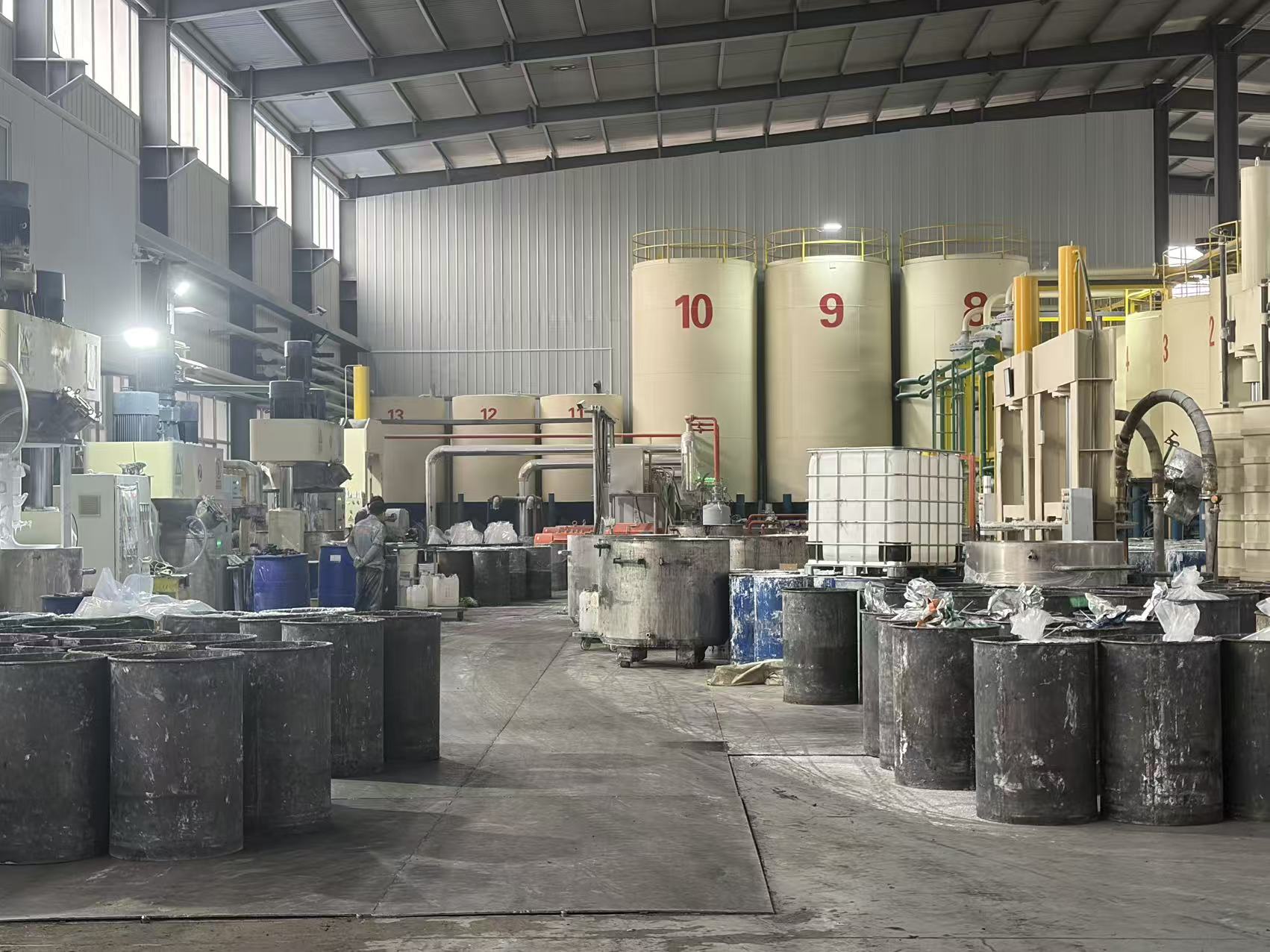
Silicone sealant production workshop: cartridge filling and packaging lines inside the Shandong Sanzeng New Materials plant, Linqu County, Weifang.
Why “Silicone Sealant” Is Not a Purchasing Specification
Buyers rarely receive the wrong product because they chose the wrong supplier. They receive the wrong product because the specification stopped at the category name. Within a single manufacturer’s range of nearly 100 sealant models, the category covers acid-cure and neutral-cure silicone, structural silicone adhesives, MS polymer, acrylic, fire-rated and sanitary grades — each with a different substrate profile and a different failure mode.
- SANZON GP is documented as an acid-cure general purpose silicone sealant for interior decoration, with a service range of −50 °C to +120 °C, supplied in 300 ml cartridges packed 24 per carton and a 12-month shelf life.
- SANZON GP-N carries the same “general purpose” positioning but is a neutral-cure multi-purpose sealant, documented from −50 °C to +150 °C in the same 300 ml × 24 format.
- Both sit in the same product family and both are sold as silicone sealant. Only one releases acetic acid while curing, and only one is positioned for substrates that react badly to acid.
That single example explains a common procurement pattern: buyers who compare sealants only on price per cartridge and colour availability end up with adhesion complaints, odour complaints during the fit-out phase, or joints that cannot be painted when the decorative finish goes on.
Five Dimensions Buyers Can Verify Before Ordering
A comparison only becomes useful when the dimensions are the ones a buyer can check against a document. Five work in practice:
- Adhesion and substrate compatibility — what the joint actually touches, and whether the sealant chemistry is compatible with that surface.
- Curing behaviour — skin-over and through-cure as a function of temperature, humidity, product type and bead thickness.
- VOC, odour and indoor air documentation — emission labels and test reports, not adjectives.
- Intended use and regulatory fit — the job the joint must do and the market rules it must satisfy.
- Documentation completeness — whether the property you need is actually stated for the exact model, or only implied at category level.
The Eight Types, Spec by Spec
| Sealant type / model | Documented cure chemistry | Documented service range | Documented compliance | Documented or stated primary use | Buyer-side note |
|---|---|---|---|---|---|
| General purpose, acid cure — SANZON GP | Acidic, room temperature | −50 °C to +120 °C | Not documented for this model in the reviewed material | Interior decoration | Releases acetic acid odour during cure |
| General purpose, neutral cure — SANZON GP-N | Neutral, room temperature | −50 °C to +150 °C | Not documented for this model | Multi-purpose sealing | Lower odour; used where acid cure is unsuitable |
| Neutral cure silicone — SANZON NS | Neutral, room temperature | −50 °C to +150 °C | Not documented for this model | Structural plus weather-resistant sealing | Available in 300 ml × 24 and 590 ml × 20 packs |
| Structural silicone — SANZON CS | Structural silicone adhesive; super-fast cure documented | Not documented | CE, ISO, RoHS; French indoor air emission label A+ | Curtain wall structural and weather sealing | Formula without white oil; UV resistant; assembly testing still required |
| Acetoxy (acid) sealant — SANZON PA | Acetoxy | Not documented | CE, ISO 9001, RoHS; French indoor air emission label A+ | Glass, ceramic and interior glazing joints | Six colours including bronze and beige; 300 ml, 24 per carton |
| MS polymer — SANZON MS | Neutral, silane-modified polymer, room temperature | Not documented | Formaldehyde-free; painting-compatible after curing | High-tack joints that will be painted | Not a silicone; movement and load requirements must be re-checked |
| Acrylic — SANZON AS | Single component, room temperature | −10 °C to +80 °C | Low VOC and low odour documented | Universal decoration, paintable surfaces | Narrowest temperature window of the eight types |
| Firestop silicone — SANZON FS | Polymer-based, flame-retardant | High-temperature resistant (value not stated) | Not documented in the reviewed material | Fire-rated penetration sealing | Fire classification and test standard not stated |
| Mildew resistant sanitary silicone — SANZON KB | Neutral, room temperature | −50 °C to +150 °C | Not documented for this model | Kitchen and bathroom sanitary sealing | Anti-mould claim is manufacturer-stated; no third-party mould test cited |
“Not documented” does not mean absent — it means the reviewed material did not state the value. Buyers approving a joint design should request the technical data sheet (TDS) for the exact model, because a category average is not an approval document.
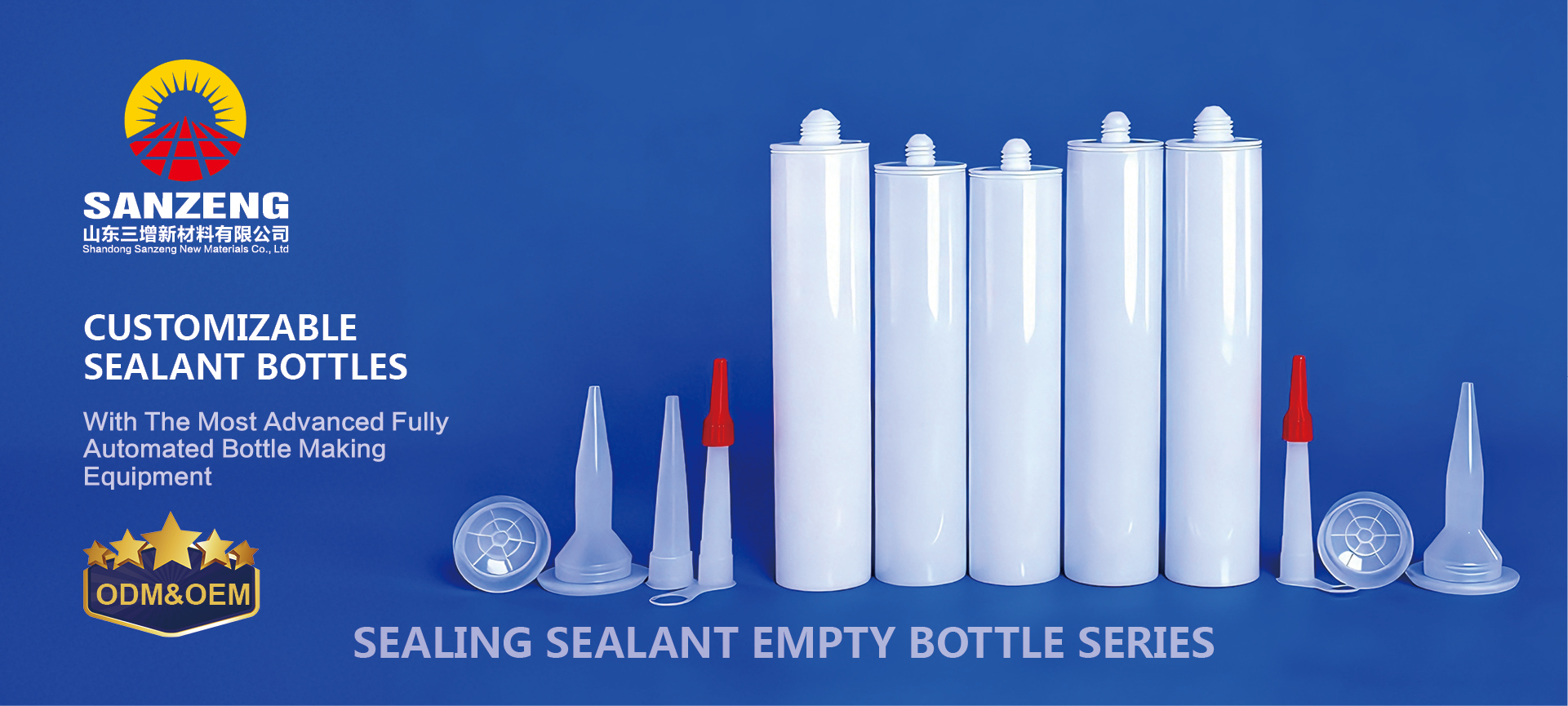
Cartridge and bottle formats used across the range: 300 ml standard cartridges, 590 ml packs, and larger containers for project supply.
Dimension 1 — Adhesion and Substrate Compatibility
Adhesion claims only become meaningful when a substrate is named next to them. Across the range reviewed here, documented substrates and applications include glass, aluminium, ceramic, metal, some plastics and wood, along with doors, windows, kitchens, bathrooms and general construction joints.
Within that envelope, cure chemistry does most of the sorting. Acetoxy grades such as SANZON PA and SANZON GP are generally the strongest performers on glass and glazed ceramic, which is why they remain the default for mirrors, interior glazing and tiled surfaces. As general industry guidance, acid-cure silicones are not the first choice for alkaline or acid-sensitive substrates — concrete, mortar, marble and other natural stone — or for metals that are sensitive to acid attack. Neutral-cure systems such as SANZON NS and SANZON GP-N cover a wider material envelope and are the usual recommendation for windows, aluminium, metal, stone and outdoor weatherproofing.
The structural end of the range adds a formulation detail worth understanding. SANZON CS is documented as a structural weather-resistant adhesive for curtain walls, formulated without white oil. In sealant manufacturing, white oil is widely used as a low-cost plasticiser, and its absence is generally treated as a durability signal in structural and facade work because plasticiser migration is a recognised long-term risk in weather-exposed joints.
Project evidence supports the direction but not the details. The case file reviewed for this article covers 2,000,000 cartridges supplied over two years to automotive OEM, engineering, construction, distribution, wholesale, retail and trading customers, and reports primerless adhesion in most cases to glass, aluminium, concrete, wood and metal, with stable operation and no leakage over the programme. Adhesion to plastics and coated surfaces should always be validated on the buyer’s own sample, because surface energy varies between grades of the same polymer family.
Dimension 2 — Curing Behaviour and Joint Geometry
Every one-component grade in this range cures at room temperature by moisture reaction. Skin-over and through-cure are functions of temperature, humidity, product type and bead thickness, so timing questions are answered by the TDS rather than by a generic number applied across eight different chemistries.
The practical difference between acid and neutral cure shows up twice: in the fumes on site and in the materials the joint touches. Acetoxy sealants release acetic acid during cure — the vinegar-like odour familiar on glazing jobs — and generally skin over quickly with strong adhesion to glass and non-porous surfaces. Neutral sealants release alcohol instead, which is why they are specified where odour, indoor air quality or sensitive substrates matter. The SNZON CLASSIC, ELEPHANT and LIONKING series are documented as neutral (alcohol release) with 18 Shore A hardness, 12.5 % movement capability to ISO 11600, 500 % elongation at break, 1.2 N/mm² tensile strength and a −20 °C to +60 °C service range for that series.
Where programme speed dominates, the data separates further: SANZON CS is documented as having a super-fast curing speed, and the SANZON GS and GK construction adhesives are documented with a fast cure and an 18-month shelf life against 12 months for the silicone and MS grades. For buyers, two rules follow. A joint that will move needs movement capability documented for that specific model, not inferred from the category. And a deep joint cures from the outside in, so it should never be released to service on the basis of a touch test.
Dimension 3 — VOC, Odour and Indoor Air Documentation
Emission evidence is the dimension where buyer questionnaires have tightened fastest. In the range reviewed, the following items are documented rather than claimed:
- French indoor air emission label A+ for SANZON PA (acetoxy) and SANZON CS (structural).
- Low VOC and low odour documented for SANZON AS, the single-component paintable acrylic sealant.
- Formaldehyde-free documented for SANZON MS; the project case record additionally describes the MS grades as isocyanate-free and solvent-free, meeting global environmental compliance expectations.
- RoHS test reports: CTB240305020CX-ZS covers silicone sealant, and UNIB24030401HC-01 covers polyurethane sealant, both assessed against the IEC 62321 series and EU Directive 2011/65/EU.
- Packaging compliance: German Packaging Act (VerpackG) EPR registration DE2636557090139, held with the LUCID register for good-filled sales packaging in the German market.
What is not documented matters just as much. Numerical VOC content — for example grams per litre — is not published per model in the material reviewed here. Where a project sets a VOC ceiling, the buyer should request the TDS and test report for the specific model and batch instead of assuming a category average. Odour, meanwhile, is a chemistry property rather than a marketing one: acid-cure grades release acetic acid, while neutral silicone, MS and acrylic grades do not.
Dimension 4 — Matching the Type to the Joint
The applications documented in the project file span curtain wall and facade sealing (glass, aluminium, stone); door and window frame waterproofing; bathroom and kitchen sanitary sealing with mould-resistant grades; solar panel frame sealing and junction box potting; vehicle body seam sealing and windshield bonding; container and marine sealing; HVAC duct air-tight sealing; and industrial potting and bonding for electronics, appliances and lighting.
| Joint or application | Type to shortlist | Why, based on documented properties |
|---|---|---|
| Curtain wall structural and facade joints | Structural silicone (SANZON CS) | Documented structural weather-resistant adhesive for curtain walls, UV resistant, super-fast cure, without white oil |
| Windows, aluminium, metal, stone, outdoor weatherproofing | Neutral cure (SANZON NS, SANZON GP-N) | Neutral cure, documented −50 °C to +150 °C, alcohol release instead of acid |
| Interior glass, mirrors, glazed ceramic | Acetoxy (SANZON PA, SANZON GP) | Strong glass and ceramic adhesion; SANZON PA carries CE, ISO 9001, RoHS and French A+ |
| Kitchens and bathrooms | Sanitary anti-mould (SANZON KB) | Neutral cure documented with long-term anti-mould performance in high temperature and humidity |
| Joints that will be painted, trim and interior finishing | MS polymer (SANZON MS) or acrylic (SANZON AS) | MS documented as painting-compatible after curing; AS is a single-component paintable acrylic with low VOC and low odour |
| Rated penetration seals | Firestop silicone (SANZON FS) | Documented flame-retardant and high-temperature resistant — subject to the project’s fire test requirement |
Dimension 5 — Where the Documentation Stops
A comparison that lists only strengths is not a buying tool. The following boundaries apply to this range as documented, and they should be planned around rather than assumed away.
- Movement capability is not published per model. The 12.5 % figure to ISO 11600 belongs to the CLASSIC, ELEPHANT and LIONKING series. A joint design that assumes high movement must be checked against the specific model’s TDS.
- Fire performance is described but not classified. SANZON FS is documented as flame-retardant and high-temperature resistant, yet the reviewed material does not state a fire resistance classification or the test standard applied. In regulated buildings that classification must be verified for the exact product and configuration.
- Anti-mould performance rests on a manufacturer statement. SANZON KB is documented as anti-mould long-term in high temperature and humidity conditions; no third-party mould-resistance test is cited in the reviewed material.
- Structural glazing is an assembly, not a cartridge. Adhesion and compatibility testing on the actual glass, spacer and finish remains the buyer’s responsibility, and no movement class or temperature range is stated for SANZON CS in the reviewed data.
- Shelf life is a planning constraint. Twelve months for most silicone and MS grades and 18 months for the no-nail construction adhesives affects inventory rotation and distributor stock policy.
- Numeric VOC content is not published per model, only the labels and reports listed above.
Manufacturing, Compliance and Supply Facts Behind the Range
Shandong Sanzeng New Materials Co., Ltd. is a Chinese sealant manufacturer headquartered in Linqu County, Weifang, Shandong Province — a long-established aluminium profile and silicone sealant cluster. Its sealant operations trace back to 1994, and the company presents itself as an integrated supplier of sealant products, packaging containers and filling equipment.
- Scale: a 40,000 m² factory area, 125 employees, a 10-engineer R&D team, listed output and capacity of 8,800,000 units, and an export ratio reported at around 70 % with sales to more than 30 countries and regions.
- Integrated chain: sealant products, in-house packaging (240 ml to 310 ml cartridges, 2600 ml drums, sausage film, tubes and bottles) and filling machinery including a semi-automatic cartridge filling machine rated at 260–310 ml, 30–60 pieces per minute and ±2 g accuracy.
- Certification base: ISO 9001, ISO 14001 and ISO 45001 management system certification; CE and RoHS certification for selected export products; SGS performance and safety testing reports; and German Packaging EPR registration DE2636557090139.
- Commercial terms: OEM and ODM production with package and logo customization; lead time of 10–20 days; minimum order of 100 boxes; 100 % product testing; FOB or CIF shipping; pre-shipment test acceptance; and payment structures of 30/70/100 %.
- Programme evidence: a two-year supply record covering 2,000,000 cartridges across automotive OEM, engineering, construction, dealer, wholesale, retail and trading customers, reported as stable operation with no leakage.
- Formats to standardise on: 300 ml cartridges packed 24 per carton, 590 ml packs at 20 per carton for the neutral structural and weather grade, plus 400 ml and 600 ml sausage film and pails, with OEM branding and custom colours available.
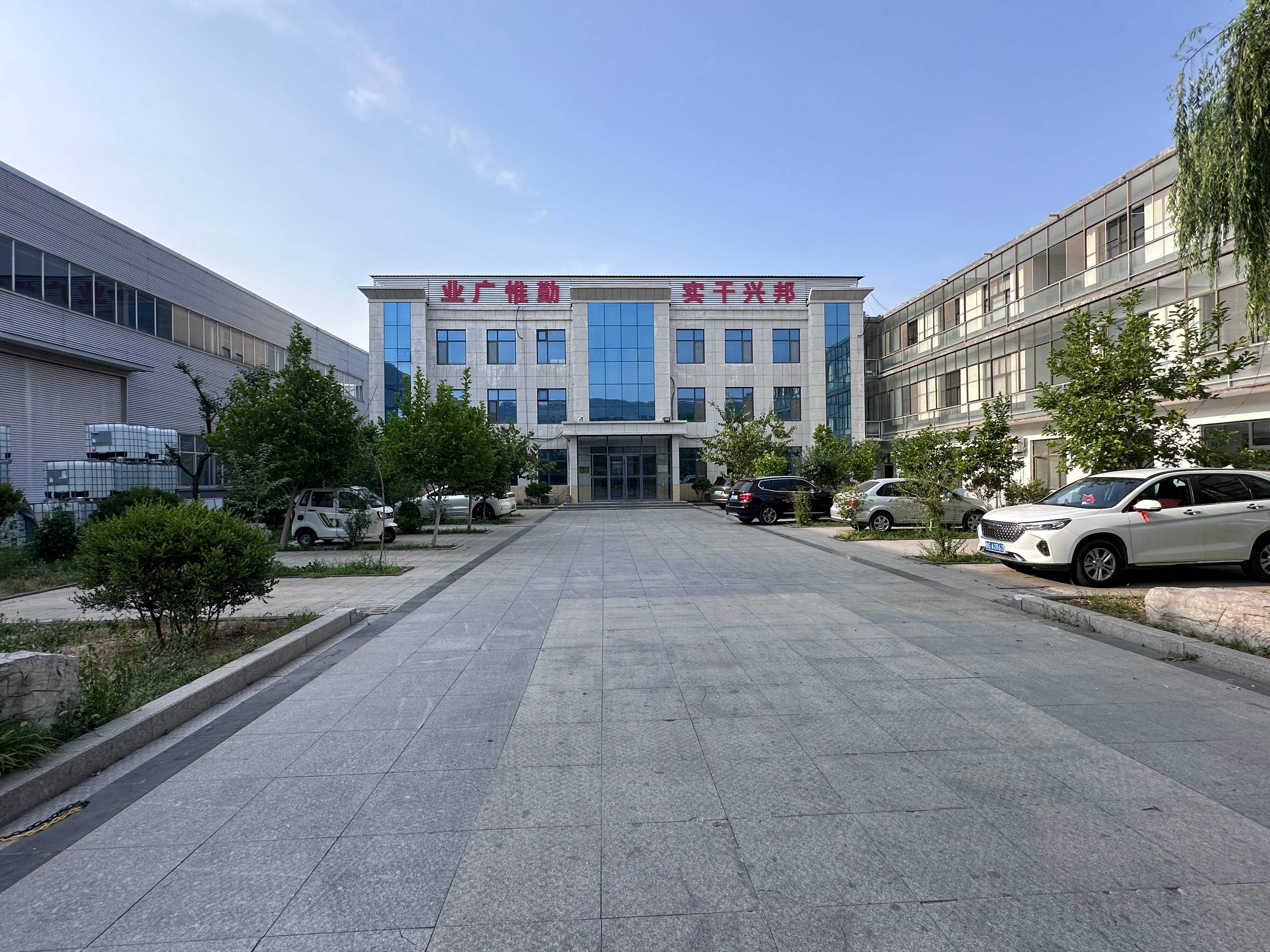
Sealant factory and production area: a 40,000 m² site covering sealant production, packaging manufacture and filling equipment.
How These Types Compare With Alternative Approaches
The traditional default — acetoxy silicone — remains the fastest and most economical route to strong glass and ceramic adhesion. Its constraints are chemistry-driven: an acetic acid release during cure, limited suitability for alkaline and acid-sensitive substrates, and no documented paintability in the reviewed data.
Neutral-cure silicone costs more time on the line and usually more money per cartridge, and returns a broader compatibility set across aluminium, metal and stone, higher documented service temperatures of −50 °C to +150 °C on several grades, and lower odour during application.
MS polymer sits between silicone and polyurethane. It is documented as paintable after curing and formaldehyde-free in this range, which suits joints that will receive a decorative coating including in occupied interiors. The boundary is that it is not a silicone: movement capability and load requirements must be re-checked against its own datasheet rather than inherited from a silicone specification.
Acrylic is the entry point for paintable interior work, documented at −10 °C to +80 °C with low VOC and low odour. Its limitations are the mirror image of its advantages: the narrowest temperature window of the eight types, and, as general industry guidance, a poorer fit for permanently wet or high-movement joints than silicone or MS.
Polyurethane systems remain in the same portfolio for different duty. One detail a documentation review will surface: the RoHS report UNIB24030401HC-01 covers polyurethane sealant, while CTB240305020CX-ZS covers silicone sealant. Buyers comparing emissions documentation should check that the report they are handed actually names the chemistry and model they intend to buy.
Market Signals Buyers Are Already Responding To
Three shifts are visible in the way sealant specifications are being written. First, documentation has become a gate item rather than a nice-to-have: emission labels such as the French A+ rating, RoHS test reports, and packaging-regulation registrations such as German EPR are increasingly requested before a supplier reaches a shortlist. Second, neutral-cure and MS grades continue to displace acid-cure grades in indoor and mixed-substrate work, where odour during fit-out and the need to paint a cured joint are practical constraints rather than preferences. Third, sanitary anti-mould grades have moved from a niche line to a standard stock-keeping unit in kitchen and bathroom programmes.
Supply behaviour is changing alongside specification. Importers consolidating private-label ranges increasingly ask for sealant, packaging and filling capability from one vendor, and pre-shipment testing has become a routine acceptance condition rather than an exception.
Future Outlook
The direction of buyer checklists is fairly predictable. Cure chemistry, movement class, emission documentation and packaging compliance are likely to become standard fields on sealant RFQs, displacing the current practice of specifying colour, volume and price per cartridge. Fire-rated sealants will face the sharpest scrutiny, because regulators in most markets accept a classification rather than a description such as “flame-retardant”. Model-level durability data — movement capability, temperature range, elongation and tensile values for each specific grade rather than for a series — is the most probable next documentation gap to close. For manufacturers, that shift favours suppliers whose product data, certificates and packaging registrations are already organised and traceable; for buyers, it converts a category purchase into a verifiable one.
FAQ
How do buyers choose between these eight sealant types?
Selection usually follows six inputs: the substrate, whether the joint is indoors or outdoors, the waterproofing requirement, the expected joint movement, the temperature range the joint will see, and whether the cured sealant must be painted. In this range, acid-cure grades such as SANZON GP and SANZON PA are documented for glass, ceramic and interior decoration; neutral-cure grades such as SANZON NS, SANZON GP-N and SANZON KB are documented across a temperature range of −50 °C to +150 °C; and paintable systems such as SANZON MS and SANZON AS cover joints that will be coated.
What is the difference between neutral cure and acetoxy silicone sealant?
Neutral cure silicone sealant is suitable for a wide range of materials, including glass, aluminium, metal and some types of stone, and releases alcohol rather than acid during curing. Acetoxy silicone sealant generally offers strong adhesion to glass and ceramic materials and releases a vinegar-like acetic acid odour while curing. As a practical rule, acetoxy grades can be a suitable choice for general sealing of glass and ceramics, while neutral cure grades are generally recommended for windows, aluminium, metal, stone and outdoor weatherproofing.
How long does silicone sealant take to cure?
Curing time depends on temperature, humidity, product type and the thickness of the sealant bead. The surface typically skins over within a short period, while complete curing takes longer. Specific curing times should be taken from the product technical data sheet. Chemistry also affects the experience on site: SANZON CS is documented with a super-fast curing speed, while the CLASSIC, ELEPHANT and LIONKING series are documented as neutral alcohol-release systems with 12.5 % movement capability to ISO 11600 and 500 % elongation at break, values that assume a fully cured and correctly dimensioned joint.
Can silicone sealant be painted over?
Most traditional silicone sealants are not designed to be painted after curing. Where paintability is required, the documented options in this range are MS polymer and acrylic: SANZON MS is described as painting-compatible after curing, and SANZON AS is a single-component paintable acrylic sealant for universal decoration. Buyers should still confirm compatibility with the specific coating system before starting a programme.
How long can silicone sealant be stored, and how should it be stored?
The reviewed product data lists a 12-month shelf life for the silicone and MS grades and an 18-month shelf life for the no-nail construction adhesives. Sealant should be stored in a cool, dry and well-ventilated environment, away from direct sunlight, high temperatures and moisture, and used within the shelf life stated on the product packaging or technical data sheet. Proper storage helps maintain the stability and performance of the product.