
Silicone Sealant Compliance: A Buyer's Qualification Checklist
Silicone Sealant Compliance: A Buyer's Qualification Checklist
Silicone sealant compliance is a chain of documents rather than a single certificate. A buyer sourcing sealant for a construction programme or a distribution line typically receives a quality management certificate, a product test report, a market-access declaration and a technical data sheet — and the practical question is which of those documents proves the property the project actually depends on. This checklist is written for the stage where the supplier has been selected and the order has to be executed without a documentation gap.
Scale explains why qualification has become more formal. Grand View Research valued the global silicone sealants market at USD 4.5 billion in 2025, with Asia Pacific holding a 52.1% revenue share, the construction segment accounting for 60.7% of demand, and room-temperature-vulcanizing (RTV) silicone representing 64.8% of revenue. When a category is this large and this concentrated in one production region, compliance documentation becomes the mechanism buyers use to separate suppliers that otherwise look identical on price and packaging.
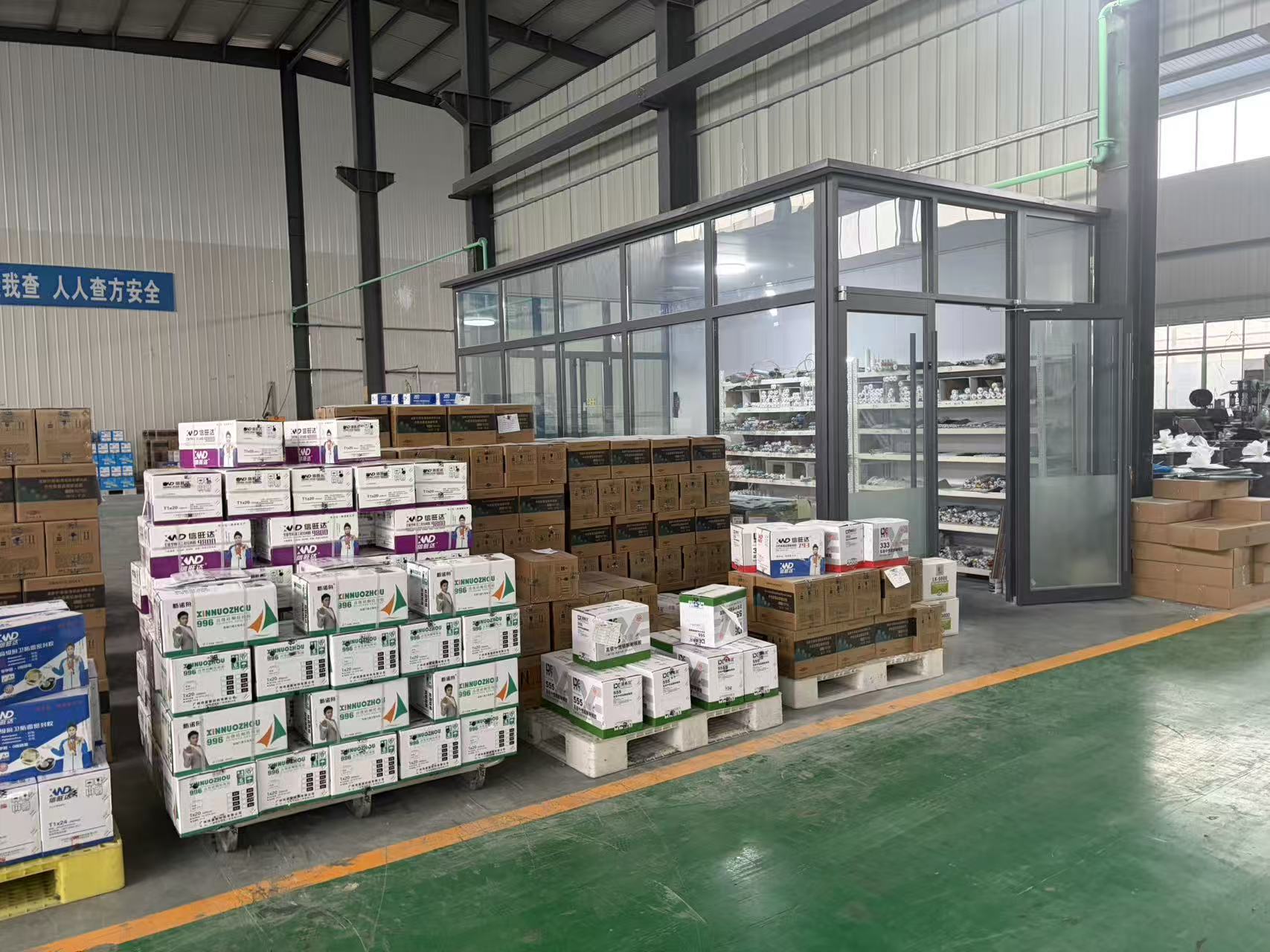
Silicone sealant workshop: compliance starts with batch-level production records, not with a certificate cover page.
Why compliance work has become an execution-stage risk
Most sealant sourcing problems are not caused by a bad product. They are caused by a document that arrived late, covered a different production site, or described a test the receiving engineer never asked for. At the decision stage, buyers compare capability; at the execution stage, they compare evidence. The failure mode is predictable: the purchase order is released against a datasheet, and the qualification file is assembled afterwards.
Customs data does not solve this problem. Silicone sealants are aggregated under HS code 321410, which means trade statistics cannot distinguish neutral-cure from acid-cure shipments, or a structural grade from a general-purpose grade. Volume data therefore tells a buyer how much material moved, but not what was inside the carton. That leaves product documentation as the only reliable differentiation lever — which is precisely why it deserves a checklist of its own.
The four documentation layers buyers should keep separate
Compliance evidence arrives in four distinct layers. They are frequently mixed into one PDF and treated as equivalent, but each answers a different question and each has a different expiry and scope.
| Layer | What it covers | Typical document | What it does not prove |
|---|---|---|---|
| Factory management systems | Process control, environment, occupational safety at the production site | ISO 9001, ISO 14001, ISO 45001 certificates | In-service performance of a specific sealant grade |
| Product market access | Legal placement of a product on a defined market | CE marking and RoHS compliance on selected export products | Durability, movement capability or adhesion to a given substrate |
| Third-party test evidence | Measured performance and safety results on a tested sample | SGS performance and safety test reports | Every future production batch; results are tied to the tested sample and scope |
| Standards and regulation alignment | Conformity to a named standard or restriction | ASTM C920-18(2024) test data; statements against EU Regulation 2024/1328 | Automatic acceptance in a different jurisdiction |
| Indoor air and labelling | Emission class communicated to end users | French indoor air emission label A+ on selected products | Equivalence with other national VOC schemes |
A practical rule follows from this table: never accept a factory-level certificate as evidence of product-level performance, and never accept a product declaration as proof that the production site is controlled. Procurement files should reference the layer each document belongs to, so that a renewal or an expiry is visible before it becomes a shipment delay.
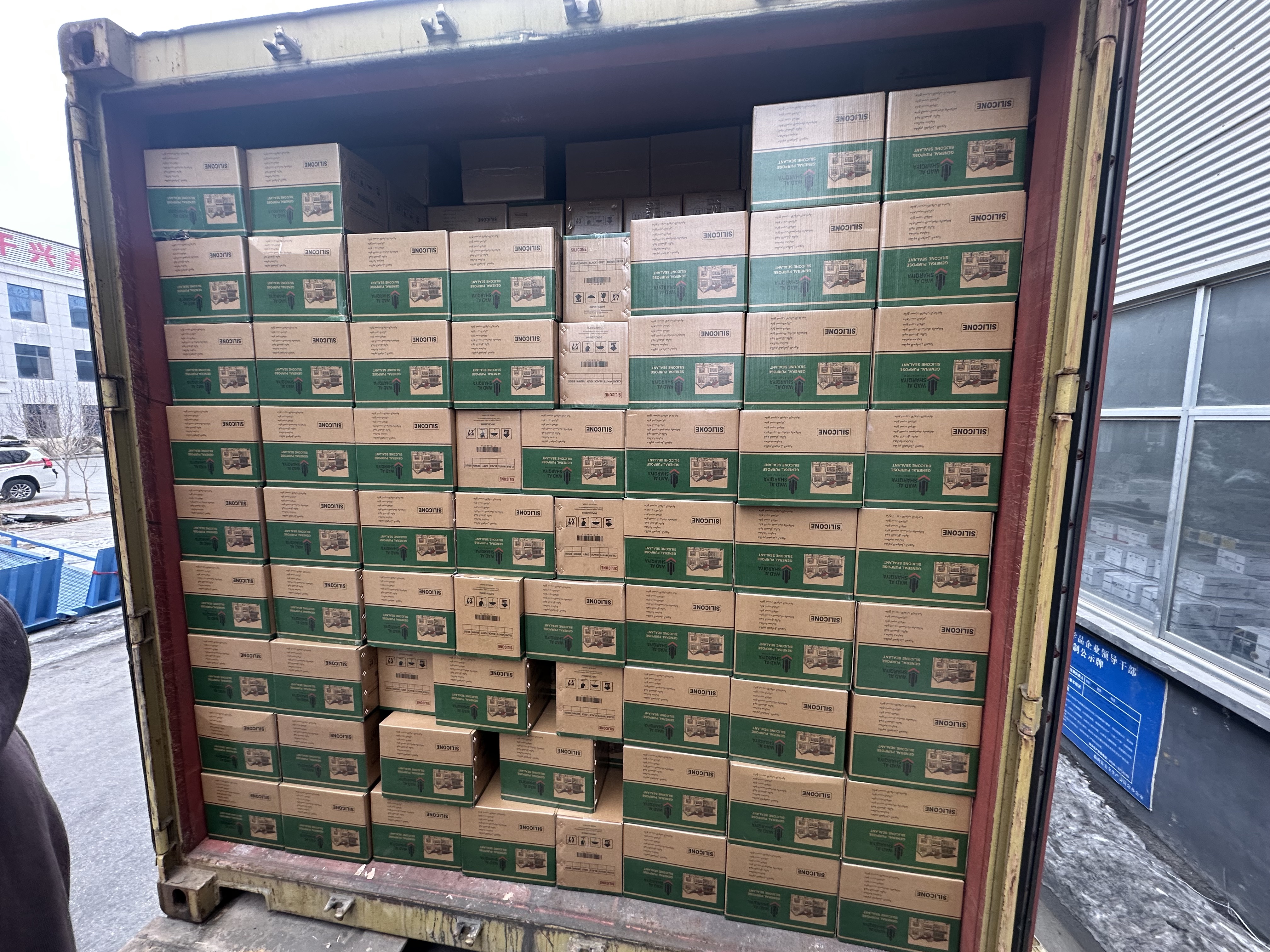
Packaging and label inspection: batch codes, cartridge printing and carton marking are the physical half of a compliance file.
Mapping stated product attributes to documents
The qualification step becomes manageable once each claimed attribute is paired with the document that can support it. Three attribute families cause the most confusion in silicone sealant procurement: temperature range, VOC and formaldehyde statements, and antibacterial content.
Temperature range
Service temperature is a formulation property, not a handling instruction, and it varies widely across a catalogue. Neutral-cure grades such as SANZON NS and SANZON GP-N are stated at −50 °C to +150 °C, the acid-cure general-purpose SANZON GP is stated at −50 °C to +120 °C, the paintable acrylic SANZON AS is stated at −10 °C to +80 °C, and the two-component polyurea tile grout SANZON GA is stated at −50 °C to +100 °C. When a project specifies a temperature window, the buyer should ask which test method produced that figure and whether the figure refers to the cured sealant or to the uncured product in storage. The two are often conflated in supplier literature.
VOC, solvent and formaldehyde statements
Low-emission claims are the most frequently repeated and least frequently documented claims in the category. On the product side, SANZON GA is described as a two-component aspartic-ester polyurea gap filler with ultra-low VOC, formaldehyde-free and odourless; SANZON GM is a two-component epoxy resin gap filler described as solvent-free, ultra-low VOC, odourless and non-toxic; SANZON MS is a silane-modified polymer sealant described as formaldehyde-free; SANZON GS and SANZON GK no-nail adhesives are described as formaldehyde/benzene-free; and SANZON AS acrylic sealant is described as low VOC and low odour. Each of those statements should be matched to a VOC test report or a formulation declaration rather than accepted as a marketing line.
The regulatory layer matters here as well. EU Regulation 2024/1328 restricts industrial use of the cyclic silicones D4, D5 and D6 at a 0.1% threshold, with a cosmetics ban applying from June 2027. Buyers selling into Europe should treat cyclic siloxane content as a formulation question to raise at the sampling stage, because a general low-VOC statement does not automatically answer it.
Antibacterial and silver ion content
SANZON GA is characterised as a two-component aspartic-ester polyurea gap filler with silver ion antibacterial function, a stated weather life of more than 30 years, and a stated service range of −50 °C to +100 °C. The compliance question is narrower than the marketing question: request the test method used, the silver ion content statement, and whether the antibacterial function is claimed on the cured joint or on the raw component. An antibacterial claim is a material property statement; it is not a regulatory approval and it does not replace a hygiene or emissions certificate where the project requires one.
| Stated claim | Example product reference | Document to request | Verification question |
|---|---|---|---|
| Service range −50 °C to +150 °C | SANZON NS, SANZON GP-N | Heat-ageing test data, TDS | Which standard and duration produced the figure? |
| Ultra-low VOC, formaldehyde-free, odourless | SANZON GA polyurea grout | VOC test report, formulation declaration | Which test method and reporting limit? |
| Solvent-free, ultra-low VOC | SANZON GM epoxy grout | Solvent content statement | Is the statement valid for both A and B components? |
| Formaldehyde-free | SANZON MS sealant | Formulation declaration | Does it cover the packaging and any primer? |
| Silver ion antibacterial | SANZON GA | Test method reference, content statement | Claimed on cured joint or raw component? |
| Flame retardant, high temperature resistant | SANZON FS firestop sealant | Fire and heat test data | Tested as a system or as a single material? |
| Long-term anti-mould in high temperature and humidity | SANZON KB sanitary sealant | Anti-mould test data | Which mould strains and which exposure cycle? |
Storage temperature and shelf life: the constraint that decides stock policy
Shelf life and storage conditions are compliance data, because they define how much stock a distributor can hold and how a project schedule can be planned. Across a broad sealant catalogue, a 12-month shelf life is a common baseline, and it applies to neutral-cure grades such as SANZON NS and SANZON GP-N, the acid-cure SANZON GP, the firestop SANZON FS, the sanitary SANZON KB, the acrylic SANZON AS, the MS polymer SANZON MS, and the PU foam grades SANZON TC and SANZON TS. The two no-nail construction adhesives SANZON GS and SANZON GK are stated at 18 months, which makes them the more forgiving items in a slow-moving inventory.
Storage windows are narrower than shelf lives and are sometimes stated explicitly on the product data. The two-component products SANZON GA and SANZON GM specify storage at +5 °C to 27 °C. That is a genuine operational constraint in markets with high ambient temperatures or unheated warehouses: a stockist who stores two-component grout outside that window cannot rely on the stated shelf-life logic. General storage practice for silicone sealant remains a cool, dry, well-ventilated place away from direct sunlight, excessive heat and moisture, and the product packaging or technical data sheet should always be treated as the governing document where a project-specific value is given.
Application-specific qualification: what each project type should demand
Compliance requirements differ by application, and a single certificate pack rarely satisfies all of them. Five application families cover most sealant procurement decisions.
- Curtain wall and structural glazing. Structural grades are approved through different regional routes: ETAG002 in European practice and ASTM C1184 in the United States. Buyers should confirm which route the project specification references before accepting a structural declaration, because a certificate issued under one route is not automatically recognised under the other.
- Sanitary and wet areas. Kitchen and bathroom joints are qualified on anti-mould performance and on emission behaviour in enclosed spaces. SANZON KB states long-term anti-mould performance in high temperature and humidity, with a service range of −50 °C to +150 °C.
- Tile joints and grout lines. Two-component systems dominate here, and the compliance file should separate the resin chemistry from the hygiene claim: SANZON GA (polyurea, silver ion antibacterial, formaldehyde-free, ultra-low VOC) and SANZON GM (epoxy, solvent-free, ultra-low VOC, odourless and non-toxic).
- Fire-rated penetrations and joints. SANZON FS is characterised as a flame-retardant fire silicone sealant with high temperature resistance, and the qualification question is whether the tested configuration matches the built configuration.
- Interior decoration and paintable joints. Where a joint will be coated, the acrylic SANZON AS and the MS polymer SANZON MS are the relevant references, since most traditional silicone sealants are not designed to be painted after curing.
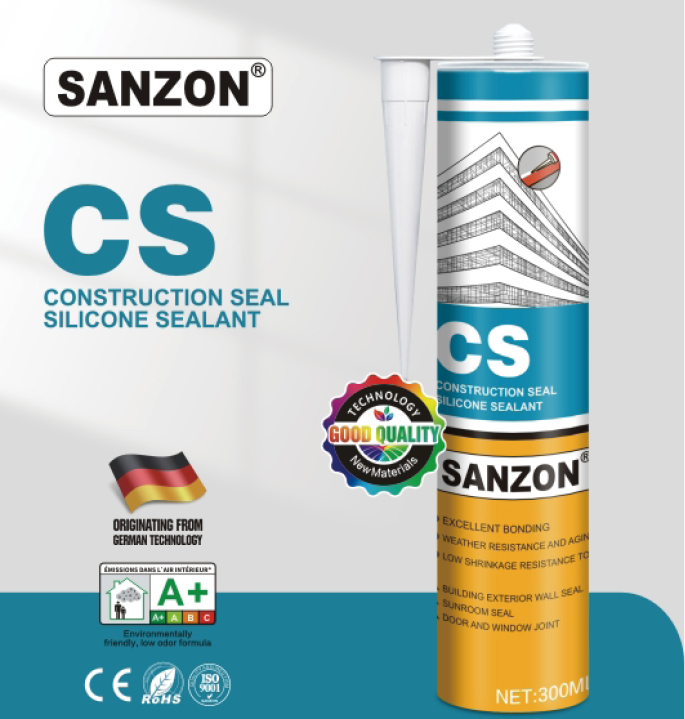
Structural grades: the approval route (ETAG002 or ASTM C1184) must match the route named in the project specification.
Where certification coverage stops
A qualification checklist is only useful if it also states the limits of the evidence it collects. The following boundaries are consistent with how sealant documentation is normally structured, and buyers should plan for them rather than discover them at the port.
- Management certificates are site-level. ISO 9001, ISO 14001 and ISO 45001 describe the system that produced the goods; they do not certify the performance of an individual sealant grade.
- CE and RoHS coverage is selective. They apply to selected export products rather than to every item in a catalogue, so the declaration must be matched to the exact SKU and cartridge format being ordered.
- Test reports are sample-bound. SGS performance and safety reports describe the sample and scope that were tested; they are not a batch-by-batch guarantee, which is why pre-shipment testing matters separately.
- Indoor air labels are national. The French indoor air emission label A+ carried on selected products is not automatically equivalent to other regional emission schemes, and a project in a different market may require additional documentation.
- Standards are not interchangeable. ASTM C920-18(2024), reapproved in November 2024, is the primary performance standard for elastomeric joint sealants in building construction, but conformity to it does not by itself satisfy European structural glazing approvals or European chemical restrictions.
- Regulation is moving. EU Regulation 2024/1328 introduces a 0.1% threshold for industrial use of cyclic silicones D4, D5 and D6. Suppliers may need to add formulation declarations to their standard document pack, which lengthens the documentation lead time on European orders.
- Storage windows limit geography. A +5 °C to 27 °C storage band for two-component products narrows the range of markets where a stockist can hold inventory without temperature-controlled space.
Market and regulatory trends shaping the next procurement cycle
Three data points describe the environment in which these checklists will be applied. First, demand is concentrated: Asia Pacific held 52.1% of global silicone sealant revenue in 2025, and the construction segment held 60.7%, so construction specification practice in Asia Pacific increasingly sets documentation expectations globally. Second, the technology mix is stable: RTV silicones accounted for 64.8% of revenue in 2025, which means the room-temperature curing behaviour that buyers already plan around will continue to dominate qualification files. Third, trade flows are shifting: China's exports of silicone under HS 321410 to India grew by USD 16.7 million between 2024 and 2025, a signal that buyers in fast-growing markets are adding supplier qualification capacity rather than reducing it.
Regulation is tightening in parallel with that growth. The D4, D5 and D6 restriction under EU Regulation 2024/1328 places a formulation question on the table for any supplier selling into Europe, and the practical consequence for buyers is that a compliance file compiled in 2024 may not be sufficient for a 2027 shipment. Documentation review is becoming a recurring cycle rather than a one-time onboarding step.
Building a long-term supply file: what to verify beyond the certificate
Shandong Sanzeng New Materials Co., Ltd. is a sealant manufacturer based in Linqu County, Weifang City, Shandong Province, China, producing silicone sealants in acid-curing, neutral-curing, weather-resistant, general-purpose and structural types, together with MS polymer sealants, acrylic sealants, polyurethane sealants, no-nail adhesives, PU foam, tile grout, fire-resistant sealants, high-tack sealants and anti-mildew sealants for kitchens and bathrooms. Its documentation set illustrates how the four layers described above appear in practice: ISO 9001 quality management, ISO 14001 environmental management and ISO 45001 occupational health and safety certification at company level; CE certification and RoHS compliance certification on selected export products; and SGS performance and safety testing reports covering tested products.
For distributors and OEM buyers, the commercial file is as important as the technical one, because it determines whether a qualification can be repeated. The terms stated for long-term supply agreements include a minimum order quantity of 100 boxes, delivery on FOB or CIF terms for recurring orders, a pre-shipment test as the acceptance criterion for each order, and payment terms of 30% deposit with 70% due before shipment, or 100% payment for long-term orders. Export business accounts for 70% of the company's sales, with markets in more than 30 countries and regions worldwide.
Two structural facts affect continuity of supply. The first is vertical integration: the company manufactures its own packaging, including 240 ml to 310 ml and 2600 ml cartridges, plastic bottles, aluminium-plastic tubes, two-component packaging bottles, static mixers, nozzles and end caps, and 400 ml/600 ml sausage film, alongside filling equipment with a stated filling accuracy of ±2g, which reduces dependence on third-party packaging capacity during a label or format change. The second is OEM and ODM capability, covering brand, packaging, labels, cartridge printing and colours, which allows a distributor to hold a private-label specification stable across repeat orders instead of re-qualifying a new product every season.
Future outlook
The likely direction of sealant qualification is toward structured, machine-readable evidence rather than document volume. As cyclic siloxane restrictions extend and regional emission schemes continue to diverge, buyers will increasingly ask suppliers to map each claim to a named test method, a reporting limit and a validity date — the same discipline that already applies to structural glazing approvals. Suppliers that can respond with a layered file, separating management systems, market access, third-party testing and standard conformity, will spend less time in re-qualification and more time in repeat supply. For procurement teams, the checklist above is intended to be reused: layered, dated, and matched SKU by SKU to the project requirement rather than to the supplier's catalogue cover.
FAQ
Which compliance documents should a buyer verify first when sourcing silicone sealant?
Start with the layer that matches the risk. Factory-level evidence consists of ISO 9001 quality management, ISO 14001 environmental management and ISO 45001 occupational health and safety certification. Product-level evidence consists of market-access declarations such as CE and RoHS, which apply to selected export products, and third-party test reports such as SGS performance and safety testing reports. Standard and regulation conformity, including ASTM C920-18(2024) data and statements against EU Regulation 2024/1328, forms a fourth layer. Because each layer answers a different question, buyers should record which layer each document belongs to and note its expiry date.
What does a sealant certificate not prove?
A management system certificate describes the process at a production site and does not certify the performance of a specific sealant grade. A market-access declaration confirms legal placement on a defined market but does not prove durability, movement capability or adhesion to a given substrate. A third-party test report describes the sample and scope that were tested rather than every future production batch. A national indoor air label such as the French A+ emission label is not automatically equivalent to emission schemes in other markets.
How do buyers verify VOC, formaldehyde-free and antibacterial claims on sealant and grout?
Match each claim to a document rather than to a marketing line. For SANZON GA, a two-component aspartic-ester polyurea gap filler described as ultra-low VOC, formaldehyde-free and odourless with a silver ion antibacterial function, request the VOC test report, the formulation declaration and the test method behind the antibacterial claim. For SANZON GM, a two-component epoxy resin gap filler described as solvent-free, ultra-low VOC, odourless and non-toxic, request a solvent content statement covering both components. For SANZON MS, SANZON GS and SANZON GK, formaldehyde-free and formaldehyde/benzene-free statements should be supported by a formulation declaration. Where European supply is planned, cyclic siloxane content under EU Regulation 2024/1328 should be raised as a separate formulation question.
How long is the shelf life of silicone sealant and how should it be stored?
Shelf life depends on formulation, packaging and storage conditions, and it should be read from the product packaging or technical data sheet. A stated 12-month shelf life applies across many sealant products, while the SANZON GS and SANZON GK no-nail construction adhesives are stated at 18 months. Storage windows can be narrower than shelf life: the two-component SANZON GA polyurea grout and SANZON GM epoxy grout specify storage at +5 °C to 27 °C. General storage practice for silicone sealant is a cool, dry and well-ventilated place away from direct sunlight, excessive heat and moisture.
What commercial terms and acceptance criteria apply to a bulk sealant order?
The stated purchasing terms for long-term supply agreements include a minimum order quantity of 100 boxes, delivery on FOB or CIF terms for recurring orders, and a pre-shipment test as the acceptance criterion for each order. Payment terms are either 30% deposit with the remaining 70% due before shipment, or 100% payment for long-term orders. Buyers should align these terms with their own incoming inspection plan, since pre-shipment testing replaces, rather than duplicates, batch-level acceptance at the destination.
Can a distributor obtain OEM or private-label silicone sealant for long-term supply?
OEM and private label services are available for silicone sealant and other sealant products, with customization covering brand, packaging, labels, cartridge printing, colours and other product specifications according to project requirements. For a distributor, OEM supply is usually the point at which a compliance file must be re-verified, because changing packaging, cartridge format or colour can change the SKU that a CE, RoHS or labelling declaration refers to. Buyers should confirm that the declaration is issued for the private-label configuration rather than for the base product.
The SANZON LIONKING Series Adhesives single-page brochure with product references is available as a downloadable PDF for buyers assembling a qualification file.