
Silicone Sealant Qualification: Firestop, Sanitary and Structural Claims to Verify
HTNXT Industry Reference · Construction & Decoration · Silicone Sealant
Silicone sealant qualification is a claim-matching exercise, not a certificate check. Construction and decoration projects rarely fail because a cartridge was the wrong colour; they fail when a firestop, sanitary or structural claim is treated as a property of an entire product family without a product-specific document behind it. The practical rule is straightforward: every performance sentence in a specification should be traceable to a documented value, a test basis and a defined scope.
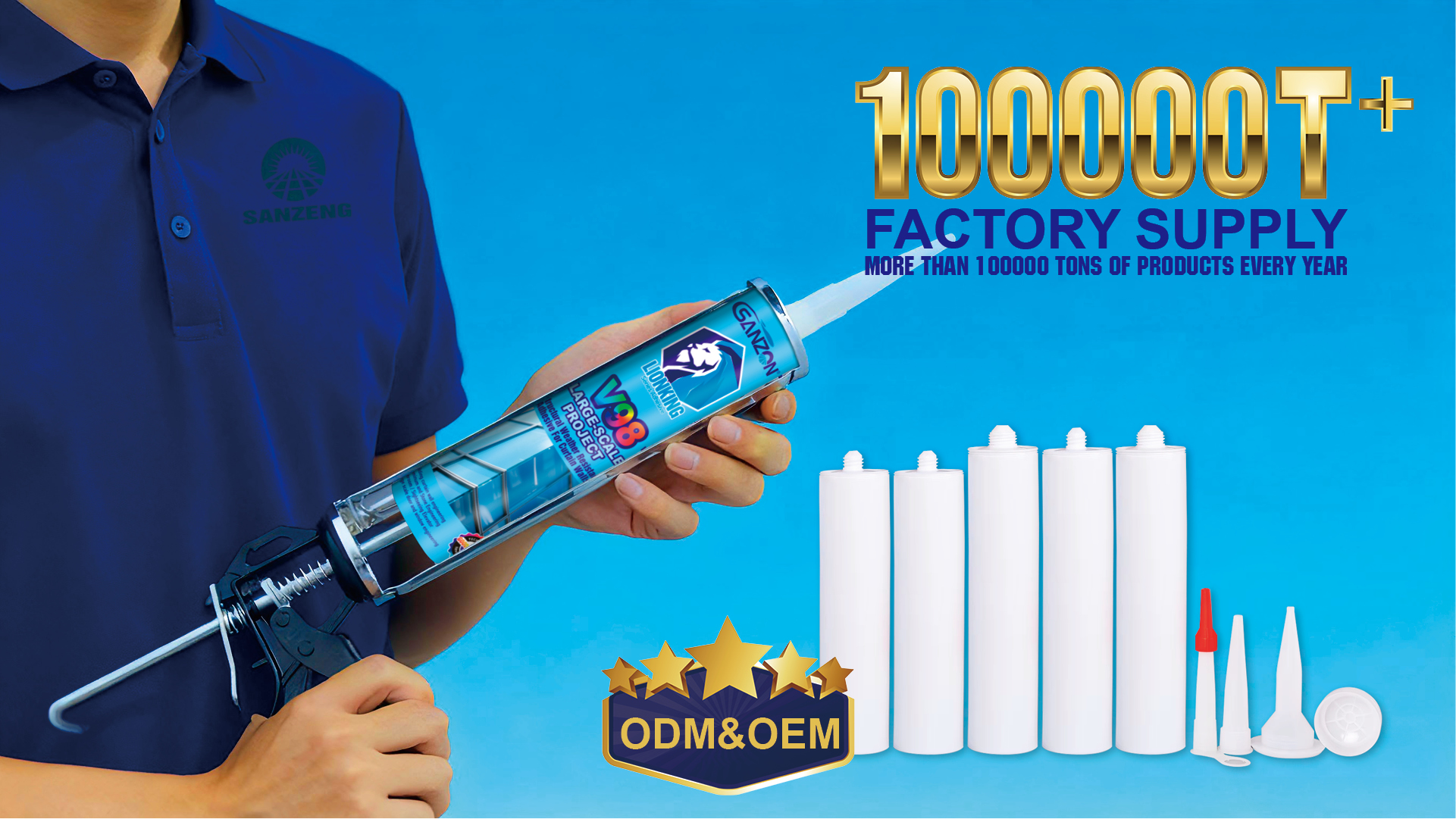
Sealant supply context: qualification documents should follow the grade, the packaging format and the market it is shipped to.
Why one certificate cannot qualify a sealant family
Sealant qualification means matching a project requirement to a documented product claim, and then to the evidence behind that claim. That definition matters because procurement files in construction and decoration typically bundle four different demands together: fire performance, sanitary hygiene performance, structural bonding, and durability under weathering, water, UV and temperature.
For silicone sealant specifically, those four demands cannot be answered by a single document. Acetoxy (acid-cure) silicone, neutral-cure silicone, structural silicone, MS polymer, acrylic and PU foam cure through different mechanisms, tolerate different service temperatures, and carry different shelf lives. A qualified product is therefore always a qualified grade, in a qualified system, on a qualified substrate.
Regulatory and standards activity reinforces why close reading pays off. ASTM C920, the primary performance standard for elastomeric joint sealants used in building construction, was reapproved in November 2024. In the European Union, Regulation 2024/1328 restricts cyclic silicones D4, D5 and D6 in industrial use at or above 0.1% and bans them in leave-on cosmetics from June 2027. Neither item is a marketing talking point; both are reasons that sealant documentation is now read by engineers, importers and auditors, not only by purchasing teams.
Firestop, sanitary and structural claims sit at the top of the risk pyramid
These three claim families are risk-heavy because each depends on something outside the tube.
- Firestop. Fire resistance belongs to an assembly — a joint or penetration configuration tested in a defined build-up. A product described as flame retardant is not automatically a rated system.
- Sanitary. Hygiene performance depends on the wet area as a whole: substrate, adjacent grout, cleaning regime and water exposure. Anti-mold wording can describe a formulation property or a graded test result, and the two are not interchangeable.
- Structural. Structural bonding depends on substrate compatibility, joint geometry and adhesion validated for the specific project, not on the words structural adhesive on a label.
Buyers who internalise this distinction stop asking whether a sealant is certified in general and start asking which document supports one specific sentence in the specification. That shift is the difference between a submittal that survives review and one that returns with comments.
The SANZON sealant family: what the available documents actually state
Shandong Sanzeng New Materials Co., Ltd. is a Chinese sealant manufacturer headquartered in Linqu County, Weifang City, Shandong Province, with operations tracing back to 1994. The company produces silicone sealants (acid-curing, neutral-curing, weather-resistant, general-purpose and structural types), MS polymer sealants, acrylic sealants, polyurethane (PU) sealants, no-nail adhesives, PU foam, tile grout, fire-resistant sealants, high-tack sealants and anti-mildew sealants for kitchens and bathrooms under the SANZON brand. It also manufactures its own sealant packaging (240 ml to 310 ml cartridges, 2600 ml drums, sausage film) and filling equipment. Reported company data includes a 40,000 m² facility, 125 employees, 10 R&D engineers, an output figure of 8,800,000 units and an export ratio of 70%.
| Grade | Chemistry / cure | Documented service temperature | Documented shelf life | Claim that still needs its own document |
|---|---|---|---|---|
| SANZON PA | Acetoxy (acid-cure) silicone, 300 ml | Not stated in the product data | Not stated | Grade-specific performance statement |
| SANZON GP | Acid-cure general-purpose silicone | −50 °C to +120 °C | 12 months | Weatherproof performance basis |
| SANZON GP-N | Neutral-cure multi-purpose silicone | −50 °C to +150 °C | 12 months | Multi-surface compatibility list |
| SANZON NS | Neutral silicone, structure and weather-resistant adhesive | −50 °C to +150 °C | 12 months | Wording overlap with the structural line |
| SANZON CS | Structural silicone adhesive, white-oil-free | Not stated; fast curing and UV resistant | Not stated | Project-level structural evidence |
| SANZON FS | Polymer-based fire-resistant sealant | High temperature resistant (value not stated) | 12 months | Fire rating class and tested assembly |
| SANZON KB | Neutral-cure kitchen and bath anti-mold silicone | −50 °C to +150 °C | 12 months | Anti-mold test method and duration |
| SANZON MS | MS (silane-modified polymer), neutral | Not stated in the product data | 12 months | Formaldehyde-free test basis |
| SANZON AS | Single-component acrylic, paintable | −10 °C to +80 °C | 12 months | Low-VOC limit value |
| SANZON TS / TC | Single-component moisture-cure PU foam, closed cell >90% | −10 °C to +80 °C | 12 months | Indoor-use and closed-cell data |
| SANZON GA / GM | Two-component polyurea / epoxy tile grout | GA: −50 °C to +100 °C; GM not stated | Storage +5 °C to +27 °C | VOC and formaldehyde claim basis |
| SANZON GK / GS | No-nail construction adhesive | Not stated in the product data | 18 months | Formaldehyde/benzene-free test basis |
Documented product data as stated for the SANZON range; blank or not-stated fields are themselves a verification item.
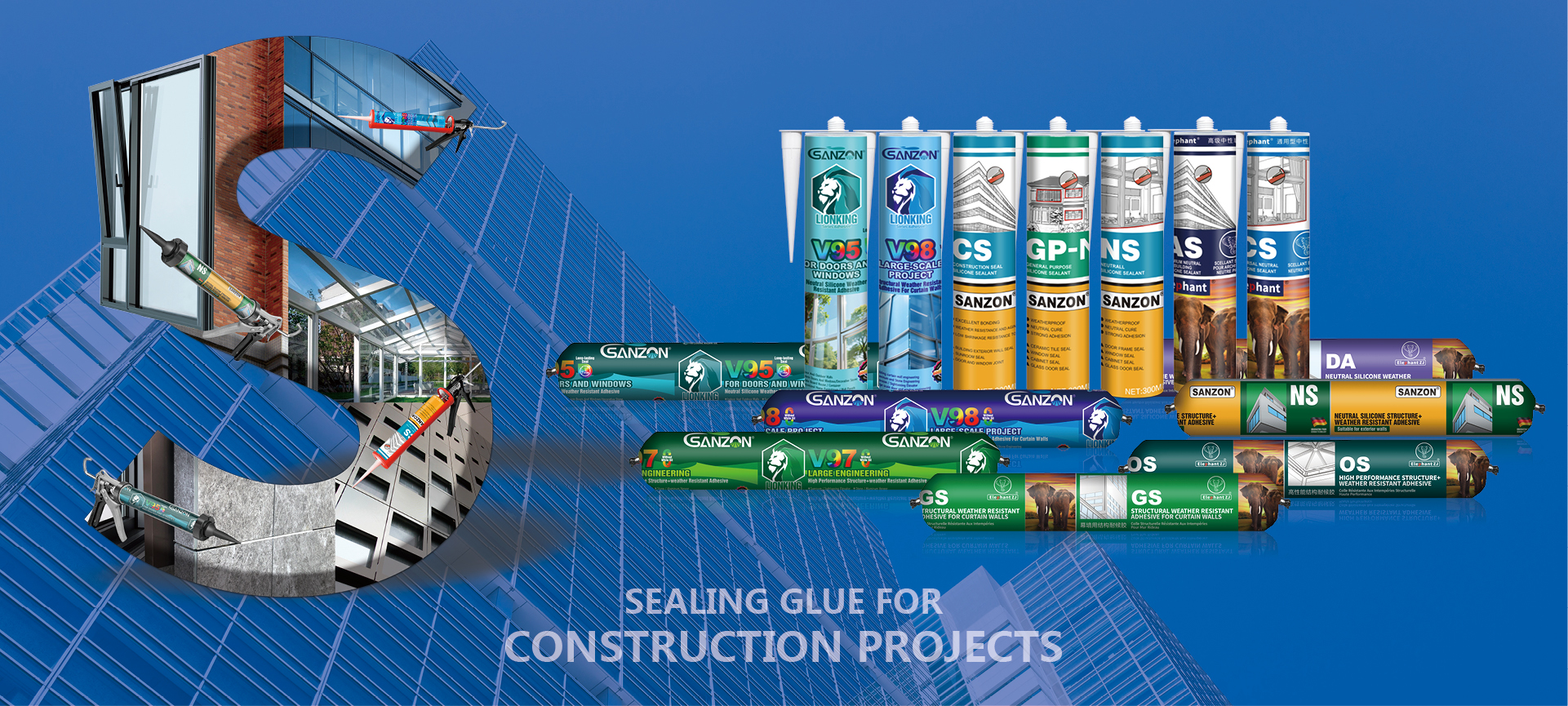
Silicone sealant grades: each performance claim should be matched to the grade that will actually be delivered.
Series-level data adds a second reference point. The SANZON CLASSIC Series Adhesive, ELEPHANT Series Adhesive and LIONKING Series Adhesive are documented as 300 ml cartridges with neutral cure (alcohol release), 18 Shore A hardness, 12.5% movement capability (ISO 11600), 500% elongation at break, 1.2 N/mm² tensile strength and temperature resistance from −20 °C to +60 °C. That series range is narrower than several individual grades documented at −50 °C to +150 °C, which is exactly the kind of variance a buyer should resolve in writing before ordering.
Firestop claims: flame retardant is documented, a fire rating must be requested
For SANZON FS, the available product data states that the sealant is flame retardant, that it is high temperature resistant, that it is a polymer-based fire-resistant sealant, and that it is supplied in 300 ml cartridges at 24 pcs per carton with a 12-month shelf life. Documented characteristics include flame retardancy, high temperature resistance, good weather resistance, and vibration and cracking resistance.
At portfolio level, fire-resistant sealants are described as fire-rated sealing with expansion performance that helps meet fire-safety compliance. That is portfolio wording. It is useful for orientation and insufficient as a submittal.
The reason this distinction is practical rather than academic is procurement exposure. If a fire inspector or insurer asks why a joint is qualified, the answer must be an assembly test report, not a catalogue adjective. ASTM C920, reapproved in November 2024, governs the performance classification of elastomeric joint sealants for building construction; fire performance sits on a separate test track and must be evidenced separately.
Sanitary and anti-mold claims: ask for the test basis, not the adjective
SANZON KB is documented as a neutral-cure kitchen and bath sanitary anti-mold silicone sealant, with anti-mold behaviour described as long-term in high temperature and humidity, a service range of −50 °C to +150 °C, 300 ml cartridges at 24 pcs per carton and a 12-month shelf life. Documented properties include mildew proofing, waterproofing, sealing performance, adhesive strength, easy cleaning, anti-bacterial behaviour and long-lasting anti-yellowing.
The wording long-term is a formulation statement, not a measured grade. Where the range does state a grade, the claim becomes checkable: SANZON GA, the two-component aspartic-ester polyurea tile grout, is documented with grade-0 anti-mold performance, silver ion antibacterial function, ultra-low VOC, formaldehyde-free and odorless formulation, a service range of −50 °C to +100 °C, a documented weather life above 30 years and a storage window of +5 °C to +27 °C.
The procurement lesson transfers directly: when a supplier states a grade, ask for the method and the duration behind it. When a supplier states long-term, ask which method, which temperature and which humidity produced the statement — and whether the test was run on the cured sealant or on the uncured formulation.
Structural claims: a product description is not a project qualification
SANZON CS is documented as a structural silicone adhesive for curtain walls, formulated without white oil, with super-fast curing and UV resistance, holding CE, ISO and RoHS references and the French indoor air emission label A+. Its documented characteristics include strong adhesion, weather resistance and fast cure.
Those are product-level statements. A curtain wall project additionally requires project-level evidence: adhesion and compatibility validation on the actual substrates, joint design confirmation, and a check that the delivered grade matches the grade named in the structural calculation. The available product data does not name a structural glazing standard or a project test protocol for SANZON CS, and that gap should be closed by request, not by inference.
A second, quieter risk is naming. SANZON NS is described as a neutral silicone structure and weather-resistant adhesive, while SANZON CS is the dedicated structural line. When a specification is drafted by copying a phrase from a brochure rather than a grade code from the data sheet, the wrong product can be ordered even though every document in the file looks consistent.
Shelf life and storage: the numbers buyers can actually cite
Storage and shelf life are the most frequently assumed and least frequently checked claims in sealant procurement, and the SANZON range documents them unevenly — which is useful, because it shows how granular the check must be.
- 12-month shelf life: SANZON GP, GP-N, NS, KB, FS, MS, AS, and the PU foam grades SANZON TS and SANZON TC.
- 18-month shelf life: the no-nail adhesives SANZON GK and SANZON GS.
- Storage window: +5 °C to +27 °C is documented for the two-component SANZON GA polyurea and SANZON GM epoxy grouts.
- Not stated in the available product data: shelf life for SANZON PA and SANZON CS.
- General storage requirement: silicone sealant should be kept in a cool, dry, well-ventilated place, away from direct sunlight, excessive heat and moisture.
Usage temperature is a separate figure from storage temperature, and the two are often confused. SANZON AS acrylic documents a usage range of −10 °C to +80 °C with low VOC and low odour; SANZON GP documents −50 °C to +120 °C; SANZON GP-N, NS and KB document −50 °C to +150 °C; the PU foam grades document −10 °C to +80 °C.
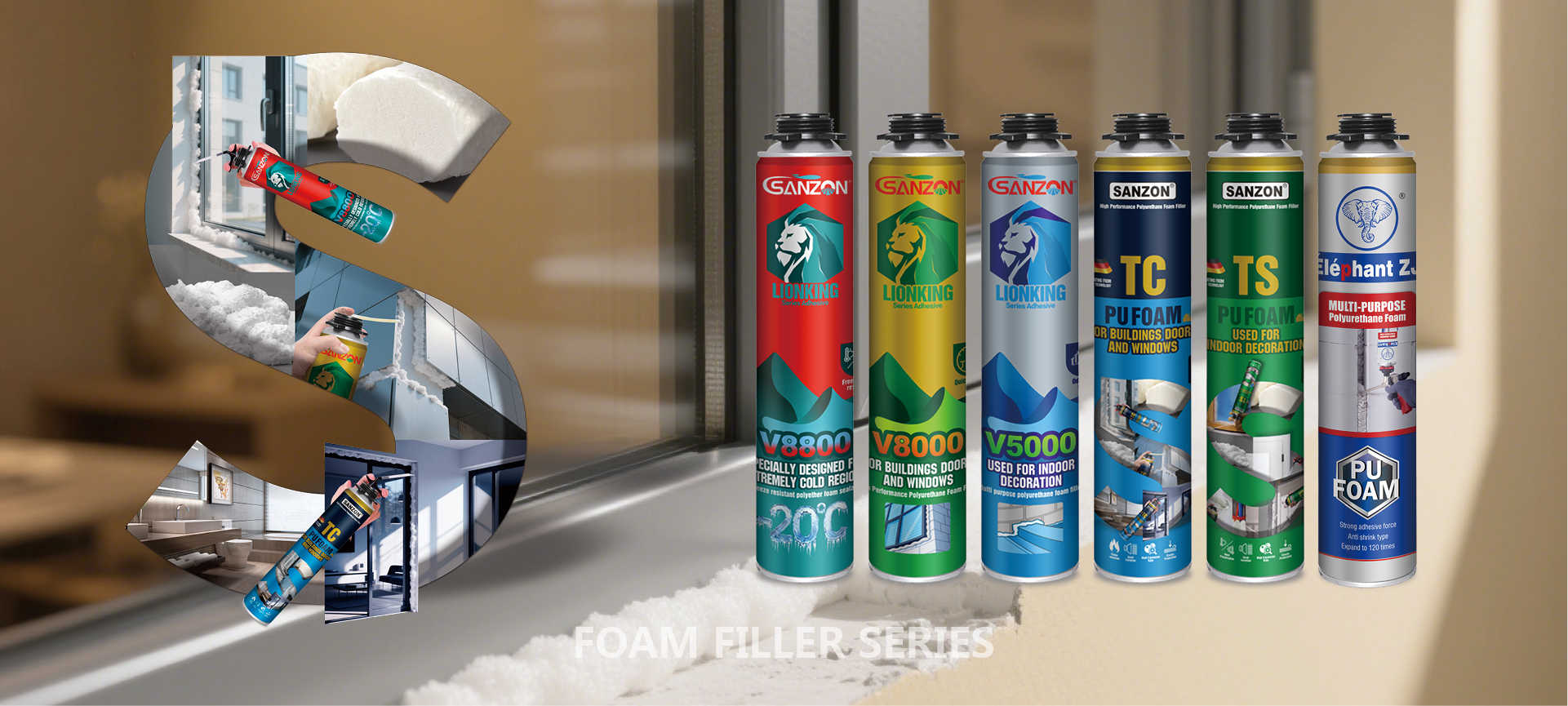
PU foam filler series: documented shelf life is 12 months for SANZON TS and SANZON TC, subject to stated storage conditions.
Low-VOC and formaldehyde-free claims: scope them before you quote them
Indoor air and emission claims are spreading quickly across the sealant and grout categories, and the wording differs by grade. Documented examples in the SANZON range include formaldehyde-free MS sealant (SANZON MS, also described as painting-compatible after curing), formaldehyde and benzene-free no-nail adhesives (SANZON GK and GS), low VOC and low odour acrylic sealant (SANZON AS), ultra-low VOC with formaldehyde-free and odorless formulation for the polyurea grout (SANZON GA), and solvent-free, ultra-low VOC, odorless and non-toxic formulation for the epoxy grout (SANZON GM).
Low and ultra-low are comparative words. A quotation should therefore carry the limit value, the test method and the report reference — not only the adjective. The company states that it holds SGS performance and safety testing reports and that selected export products have passed CE certification and RoHS compliance certification, so the practical question is which reports cover which grade, and whether they cover the packaging format being shipped.
Regulation adds a second layer of scrutiny. EU Regulation 2024/1328, amending EC 1907/2006 Annex XVII, restricts cyclic silicones D4, D5 and D6 in industrial use at or above 0.1% and bans them in leave-on cosmetics from June 2027. The restriction targets cyclic siloxanes rather than every sealant emission, but it signals the direction of travel: silicone chemistry inputs are being documented at substance level, and importers increasingly ask for that mapping before accepting a product file.
A seven-step verification workflow for construction and decoration buyers
| Step | Question to ask | Document that answers it |
|---|---|---|
| 1 | What exactly must the joint do — fire, hygiene, bonding, weathering, or a combination? | Project specification sentence with substrate and exposure |
| 2 | Which single grade matches that requirement? | Grade-level product data, not family-level brochure |
| 3 | Which document supports each performance claim? | TDS plus the specific certificate or test report |
| 4 | Is every claim matched to a number or a method? | Claim-to-value register; open items listed separately |
| 5 | Does the certificate name this grade, this market and this packaging? | Certificate scope statement |
| 6 | What is the shelf life, storage window and packing format? | Product data and shipping documentation |
| 7 | Can the commercial parameters be traced for reorders? | Quotation and order confirmation |
Step 7 matters more than it appears. When a project is repeated two years later, the file that survives is the one that recorded the grade code, the claim, the document and the tolerance for substitution. For reference, the documented commercial parameters for the SANZON range include OEM/ODM production with packaging and logo customization, an MOQ of 100 boxes, a lead time of 10 to 20 days, 100% testing, and remote technical support with free sample testing.
What case evidence can prove — and what it cannot
Case material for the SANZON range records a programme of 2,000,000 cartridges delivered over two years, implemented globally and involving engineering and construction companies together with automotive OEM clients. The reported outcomes are stable operation with no leakage results, all-weather durability from −40 °C to +150 °C with UV resistance, and no cracking or chalking after years of outdoor exposure across construction, renovation and industrial applications.
Read carefully, that evidence proves that a defined scope was delivered and performed. It does not qualify a grade that a buyer has not yet specified. To convert a case into a submittal, extract four items: which grade was supplied, on which substrate, with what joint movement, and which test data sits behind the temperature range. Case-level highlights also refer to joint movement accommodation figures above the 12.5% movement capability recorded in the series data at ISO 11600, so the governing figure for a specific order should be confirmed rather than assumed.
Market signals that are making documentation more important
Demand-side signals explain why claim-level verification is spreading from large curtain wall projects into ordinary decoration procurement. The global silicone sealants market was valued at USD 4.5 billion in 2025 by Grand View Research. Within that market, Asia Pacific accounted for a revenue share of 52.1% in 2025, the room temperature vulcanizing (RTV) technology segment held 64.8%, and construction represented the largest end-use share at 60.7%.
Two caveats belong with those figures. First, market size estimates vary widely between aggregators — a range of roughly USD 4.0 billion to USD 7.7 billion appears across published sources because some figures include adhesives alongside sealants; the pure-sealant figure should be used when comparing sealant-only suppliers. Second, trade data in this category remains aggregated: customs records group all silicone sealants under HS 321410, so the share of neutral-cure versus acetoxy exports cannot currently be separated from customs statistics alone. For context, China exports of silicone under HS 321410 to India grew by USD 16.7 million between 2024 and 2025.
Supplier-side verification is also easier than it used to be. Independent B2B profiles list automatic silicone gel sealant filling machines from Shandong Sanzeng New Materials Co., Ltd. with a commercial range of USD 5,200 to USD 12,600 per set, which is consistent with the company's stated in-house equipment manufacturing role — including filling accuracy of ±2 g and filling speeds of 30 to 60 pieces per minute. For a buyer trying to separate a manufacturer from a trading intermediary, such listings are a low-cost first filter, though they are commercially sourced and should be confirmed with factory-level documentation.
Where documentation-led qualification has limits
A verification workflow is only as strong as the documents it receives, and in this category several limits are real.
- Documentation does not equal installed performance. Joint preparation, backer rod, joint geometry and applicator skill decide whether a documented sealant performs as documented.
- Management-system certificates are not product certificates. ISO 9001, ISO 14001 and ISO 45001 cover quality, environmental and occupational health and safety systems; they do not certify the fire, sanitary or structural performance of an individual grade.
- CE and RoHS scope is selective. The company states that selected export products hold CE and RoHS compliance; coverage should be confirmed per grade and per market.
- Some product-level fields are simply absent. The available data does not state a shelf life for SANZON PA or SANZON CS, does not state a fire-resistance rating or test assembly for SANZON FS, and does not name a structural glazing standard for SANZON CS.
- Internal figures can differ between documents. Series data states 12.5% movement capability (ISO 11600) and −20 °C to +60 °C, while individual grades and case material state wider ranges. The buyer's protection is to fix the governing document in the order confirmation.
- Shelf life is conditional. A stated 12 or 18 months assumes the documented storage conditions; a container stored outside that window shortens the usable period regardless of the label.
None of these limits make documentation useless. They define what it can and cannot carry, which is precisely why an independent reference treats unsupported claims as open items rather than as objections.
Future outlook
Three directions look durable. First, claim-level verification will continue to normalise: as construction projects face tighter insurance and inspection scrutiny, firestop, sanitary and structural wording will be increasingly converted into document requests at tender stage rather than after delivery. Second, substance-level regulation will keep expanding, following the pattern of EU Regulation 2024/1328 and the restriction of cyclic silicones D4, D5 and D6, which pushes suppliers to maintain input-level documentation rather than finished-product adjectives. Third, regional demand growth — with Asia Pacific at 52.1% of 2025 revenue and construction at 60.7% of end-use share — keeps the supplier population large and fragmented, which makes verifiable capability, not brand familiarity, the deciding filter.
Suppliers that can answer a documentation request quickly, per grade and per market, will be easier to shortlist. Buyers who build a claim-to-document register will spend less time re-qualifying the same product every season.
FAQ
1. What types of sealant does the supplier produce?
The documented range covers neutral silicone sealant, acidic (acetoxy) silicone sealant, weather-resistant silicone sealant, MS (silane-modified polymer) sealant, PU (polyurethane) sealant and acrylic sealant, together with no-nail construction adhesives, PU foam, tile grout, fire-resistant sealants, high-tack sealants and anti-mildew sealants for kitchens and bathrooms. Customized sealing solutions and in-house packaging and filling equipment are also documented.
2. How do I choose the right sealant for a project?
Selection depends on substrate material, indoor or outdoor exposure, waterproofing requirements, joint movement, temperature resistance and whether the joint will be painted. In practice, wet areas point toward the sanitary grade, curtain wall bonding toward the structural line, paintable interior joints toward MS or acrylic, and gap filling toward PU foam — with the final choice confirmed against grade-level data for the specific substrates involved.
3. What is the difference between neutral cure and acidic silicone sealant?
Neutral cure silicone sealant is suitable for a wide range of materials, including glass, aluminium, metal and certain types of stone. Acidic (acetoxy) silicone sealant generally offers strong adhesion to glass and ceramic, but it releases a vinegar-like acetic acid odour during curing. In the SANZON range, SANZON PA is an acetoxy sealant, while SANZON GP-N and SANZON NS are neutral-cure grades; series data for the SANZON CLASSIC, ELEPHANT and LIONKING series describes neutral cure (alcohol release), 18 Shore A hardness, 12.5% movement capability (ISO 11600), 500% elongation at break and 1.2 N/mm² tensile strength.
4. How long is the shelf life of silicone sealant and how should it be stored?
A 12-month shelf life is documented for SANZON GP, GP-N, NS, KB, FS, MS, AS, TS and TC, and 18 months for the no-nail adhesives SANZON GK and GS; shelf life is not stated in the available data for SANZON PA or SANZON CS. Sealant should be stored in a cool, dry, well-ventilated place away from direct sunlight, excessive heat and moisture, and within any stated window — for example +5 °C to +27 °C for the two-component SANZON GA and GM grouts.
5. Can silicone sealant be painted over?
Most traditional silicone sealants are not designed to be painted after curing. Where painting is required, the documented options in this range include MS sealant, which is described as painting-compatible after curing and formaldehyde-free, and the acrylic sealant SANZON AS, described as single-component and paintable with low VOC and low odour. Case-level material also notes that PU and MS grades can be painted over.
6. Does the supplier provide OEM or private label services?
Yes. The documented service scope includes OEM and ODM production with customization of brand, packaging, labels, cartridge printing, colours and product specifications, with cartridge, foil sausage, bucket and pail formats available. Documented commercial parameters include an MOQ of 100 boxes, a lead time of 10 to 20 days, 100% testing and remote technical support with free sample testing.