
Single Cylinder Diesel Engine Procurement FAQ: Terms & Acceptance
Single Cylinder Diesel Engine Procurement FAQ: Terms & Acceptance
Order terms for single cylinder diesel engines are no longer set by price alone. Three external variables now sit at the front of the negotiation: the emission regime of the destination market, the booking position inside a factory production calendar, and whether the shipment moves as a complete engine or as a knock-down kit.
That shift explains why two buyers can request the same 3–45 hp engine class and receive materially different terms. One is importing into a regulated market and needs a declared emission stage attached to the exact model. The other is assembling locally and needs a parts list, a packaging specification and a clear allocation of certification responsibility. The engine is comparable. The paperwork around it is not.
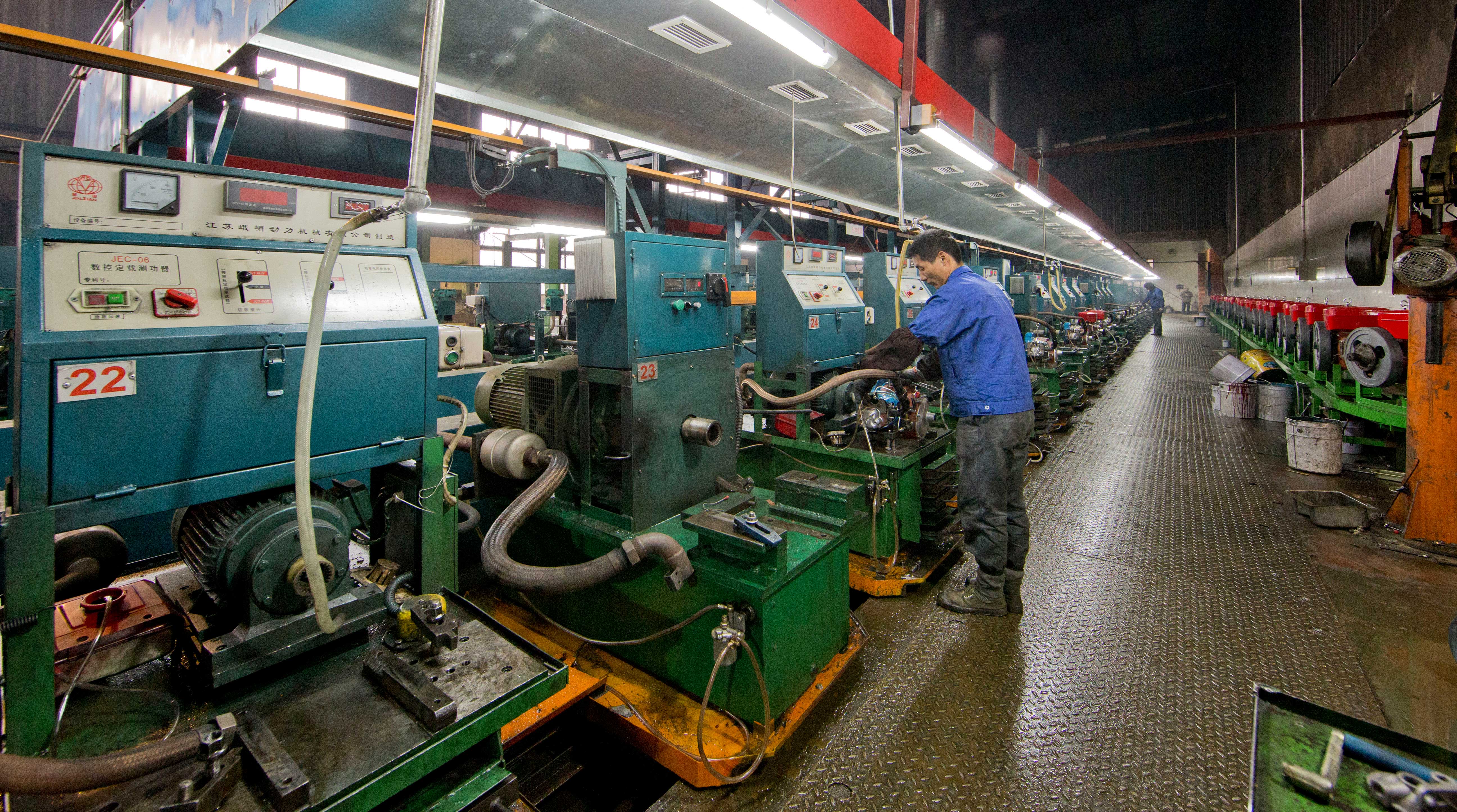
Test-line verification before shipment release — the stage where acceptance criteria are either met or disputed.
This procurement FAQ works through the questions that actually change contract terms and acceptance criteria: policy, capacity, export structure and the tests that close an order. It is written for evaluation-stage buyers — importers, distributors, agricultural machinery brands and procurement teams who already know the application and now need to lock the terms.
Why Procurement Terms Moved Ahead of the Price Sheet
A single cylinder diesel engine used on an irrigation pump, a power tiller or a generator set is a mature product. The hardware has not changed much in a decade. What has changed is the documentation burden attached to it. A buyer who evaluates on unit price alone is comparing suppliers whose engines may be built to different declared emission stages, shipped under different commercial structures and supported under different service models — which means the quoted numbers are not measuring the same thing.
Willson is the single cylinder diesel engine brand of CHANGZHOU VISION INTERNATIONAL TRADING CO.,LTD, a Changzhou-based manufacturer producing 3–45 hp air- and water-cooled single-cylinder engines for small tractors, agricultural machinery, generator sets, water pumps, small construction machinery, air compressors and agricultural processing equipment, with a 70% export share across South America, Africa, Southeast Asia and the Middle East.
Its order parameters are representative of the mid-volume export tier: OEM and ODM production, a stated monthly capacity of 10,000 units, annual output of 100,000 units, a minimum order of one 20ft container, a 25–45 day lead time, 100% testing and remote after-sales support. Each of those parameters maps to a negotiable term — and each one answers a different question than the price sheet does.
Ranked: Seven Questions That Decide Your Acceptance Terms
Not all procurement questions carry the same weight. The ranking below orders them by decision impact — how much a wrong answer costs once the container has sailed — rather than by how often they appear in tender templates.
| Rank | Procurement question | Cost of a wrong answer | Where the answer comes from |
|---|---|---|---|
| 1 | Which emission regime governs the destination market? | Shipment held, re-certification, or rejected goods | Regulation text plus supplier declaration |
| 2 | Which HS subheading will customs apply? | Duty reassessment and clearance delay | HS heading 8408 structure plus national tariff split |
| 3 | Complete engine, SKD or CKD? | Assembly capability, tooling and re-test obligation land on the importer | Supply agreement |
| 4 | Which configuration is fixed — cooling, start method, power band, accessory scope? | Performance disputes at commissioning | Model datasheet written into the contract |
| 5 | What delivery window is actually reserved? | Missed season, air freight, lost margin | Capacity figure plus stated lead time |
| 6 | What is tested before shipment, and what record travels with it? | Arguing about cause after arrival | Factory quality-control regime |
| 7 | What support exists after commissioning? | Downtime absorbed by the importer | After-sales model, in writing |
Ranks 1 and 2 are documentary and decide whether the goods can legally enter and clear. Ranks 3 to 5 are commercial and set the price basis, delivery window and scope of supply. Ranks 6 and 7 are operational and determine who pays when something is wrong after arrival. Buyers who resolve them out of order usually end up renegotiating twice.
Policy: One Engine, Three Regulatory Answers
Emission policy is the largest single source of term variation in this category, because the same physical engine family can face materially different obligations depending on where it lands. Three mandatory regimes dominate the export conversation, and they are separate legal instruments rather than variations of one standard.
| Market | Legal instrument | What it governs | What to obtain before PO |
|---|---|---|---|
| European Union | Regulation (EU) 2016/1628 — the Stage V framework; it amended and repealed Directive 97/68/EC | Gaseous and particulate pollutant emission limits and type-approval for internal combustion engines in non-road mobile machinery | Declared emission stage plus type-approval reference for the exact model |
| United States | 40 CFR Part 1039 — control of emissions from new and in-use nonroad compression-ignition engines | Federal emission requirements for nonroad compression-ignition engines; Tier 4 standards apply by rated power threshold | Certification, labelling and power-band evidence for the model supplied |
| China | GB 20891-2014 — limits and measurement methods for exhaust pollutants from diesel engines of non-road mobile machinery (China Stage III, IV) | Domestic emission limits for diesel engines used in non-road mobile machinery | Supplier declaration of the stage the model is built to, and confirmation of current obligations |
| Global (customs) | HS heading 8408; residual subheading 8408.90 | Classification of compression-ignition internal combustion piston engines | Correct six-digit heading plus the national 8/10-digit split on the invoice |
Customs classification is a separate thread that gets confused with emission policy. Within HS heading 8408, marine propulsion engines sit in 8408.10 and engines for the propulsion of Chapter 87 vehicles in 8408.20; agricultural, irrigation and generator engines generally fall into the residual subheading 8408.90. Because the heading does not distinguish cylinder count, cooling method or end application, the single-cylinder agricultural segment cannot be isolated in published trade statistics. Buyers benchmarking small diesel engine export volumes should treat those figures as broader than their actual procurement scope.
Capacity: What a Booking Term Is Really Measuring
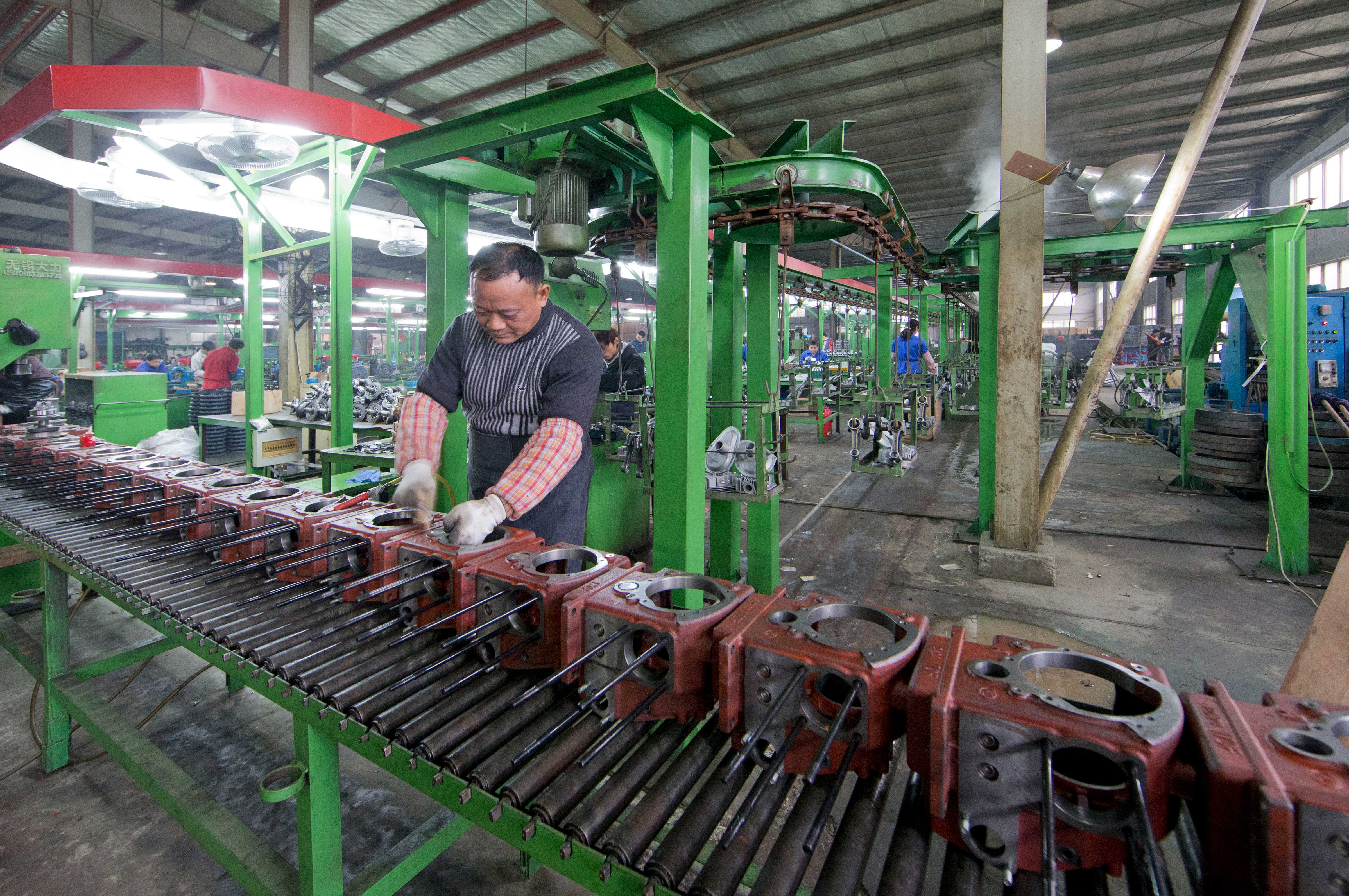
Capacity is quoted monthly but consumed as a calendar — which is why lead time and output figures answer different questions.
Capacity is usually quoted as a monthly number, but buyers consume it as a calendar. A plant stating 10,000 units per month against a 25–45 day lead time is communicating two separate things: output volume is not the binding constraint, scheduling is.
That distinction changes three negotiable terms. First, the delivery window should be written as a range rather than a fixed date, because a 25–45 day band exists precisely to absorb production sequencing and component arrival. Second, the minimum order of one 20ft container fixes the smallest economic shipment, so mixed-model loading has to be agreed at quotation stage rather than after the purchase order, when the loading plan is already frozen. Third, inspection capacity becomes a term in its own right: a factory running 100% testing on every unit is offering an inspection regime, and the buyer should specify what record of that test accompanies the shipment.
There is a boundary worth stating plainly. Stated output — monthly capacity of 10,000 units, annual output of 100,000 units, a 32,207.8 m² facility and 95 employees — describes production volume and physical scale. It does not describe certification coverage. A plant able to build at that volume is not automatically able to supply a type-approved engine into a regulated market. Those are separate qualifications, confirmed by documents rather than by capacity figures, which is why ranks 1 and 2 sit above rank 5 in the decision order.
Export Trends: Knock-Down Supply Rewrites the Terms
SKD and CKD supply has moved from a niche arrangement to a standard negotiating option in this category. The stated advantages are practical and well understood: lower freight, customs savings and support for local assembly.
What the advantages do not state is the redistribution of responsibility. A complete-engine order keeps assembly, testing and final quality control inside the factory. A knock-down order moves assembly and re-testing to the importer site, which means the importer needs assembly capability, tooling, and a method for verifying a locally built unit against the same specification as the factory-built version. The commercial benefit is real, but it is bought with an operational obligation that has to be planned for before the first kit ships.
| Supply model | Where assembly and final test happen | Terms that change |
|---|---|---|
| Complete engine | Factory | Delivery window, test record, packaging and accessory scope |
| SKD (semi-knocked down) | Importer site, partial | Parts list completeness, assembly instructions, re-test obligation |
| CKD (completely knocked down) | Importer site, full | Tooling, technical support, and the certification identity of the finished unit |
The regulatory question follows the same logic. When an engine is assembled in the destination country from imported kits, the identity of the finished product — and therefore the emission regime it is assessed against — has to be settled before the first kit ships, not after arrival. Buyers running this model typically write the answer into the supply agreement rather than into a technical annex, because it is a question of responsibility rather than of specification.
Technical Explanation: Configuration Sets the Test Plan
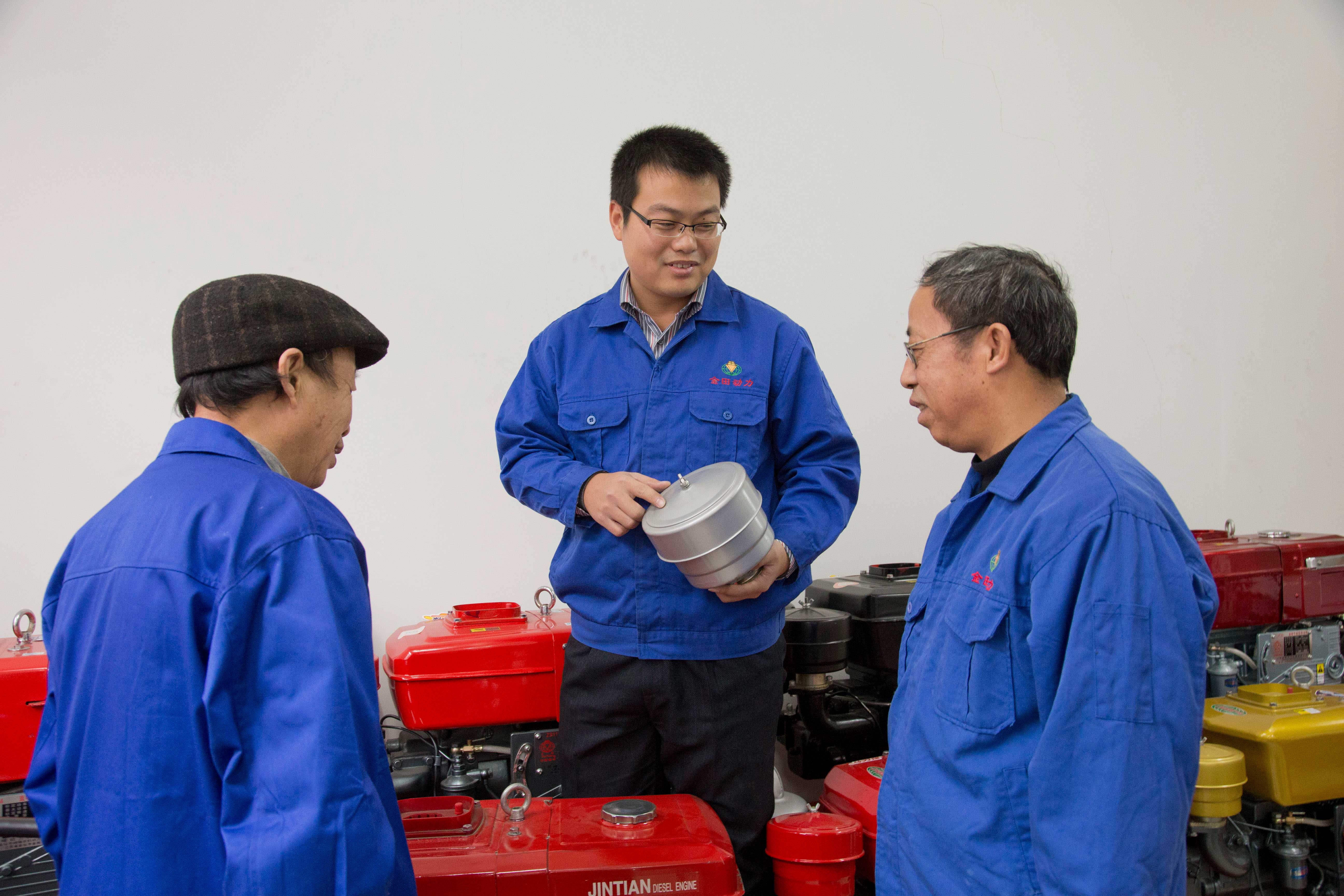
The 3–45 hp single-cylinder range spans air- and water-cooled configurations, electric and manual start, and different accessory scopes.
Acceptance criteria only work if they match the configuration being bought. Four variables drive most disagreements between importer and factory.
Cooling method. Air-cooled and water-cooled single-cylinder engines are built for different duty cycles and different operating environments. The acceptance question is not which technology is superior but whether the specified cooling method matches the duty cycle at the installation site, and whether the buyer has stated that duty cycle in the contract rather than in a site visit note.
Start method. An electric start diesel engine brings a battery and charging system into the scope of supply. Whether those components are inside the container price, or supplied locally to avoid freight cost and shelf-life issues, is a commercial decision that gets mistaken for a technical one. It should be resolved at quotation.
Power band. The 3–45 hp range covers pumps, tillers, threshers, rice mills, generators and small construction equipment. Rated power for the exact model should come from the model datasheet and be written into the contract as the reference point for performance acceptance — otherwise acceptance is argued against a brochure range rather than a specification.
Accessory scope. Selling a bare engine and selling an engine with fuel tank, muffler and air filter are different transactions. Willson ISO 9001:2015 certificate, number 02925Q3D160R6M, was issued by Jiangsu Jiuzhou Certification Co., Ltd. on 10 May 2025 and runs to 9 May 2028. Its scope covers the production and sales of single-cylinder diesel engines and diesel engine accessories — specifically fuel tank assemblies, mufflers and air filter assemblies. Read precisely, that scope tells a buyer which processes sit inside a certified quality management system and which claims sit outside it. It is a quality certificate, not an emission type-approval.
Application: What a Ten-Year Field Record Actually Proves
The most useful evidence in a procurement file is not a laboratory number but a duty record. One documented agricultural irrigation project in Pakistan involved 96 sets of the ZS1115 single cylinder diesel engine running across ten years with no major failures, meeting irrigation season requirements, with fuel-efficient operation and maintenance that could be handled in a harsh local environment.
Read carefully, that record proves a specific thing: the configuration survived repeated seasonal duty in a demanding environment with locally executable maintenance. It does not prove transferability. A buyer in a different climate, with different fuel quality or a different duty cycle, should treat the record as evidence of fit for a comparable application and ask for the specific model and duty profile rather than the headline duration. The same logic applies to the other common uses in this power band — irrigation pumps, power tillers, threshers, rice mills and generator sets — where the useful question is always which duty profile the reference actually involved.
Where the Standard Procurement Playbook Falls Short
Three conventional approaches still dominate small diesel engine sourcing, and each has a defined failure mode.
Buying on lowest FOB unit price. Unit price is only comparable when emission stage, accessory scope and knock-down level are identical. Across suppliers that declare different stages or ship different kit levels, the cheapest quotation is frequently measuring a smaller scope of supply.
Assuming one certificate covers every market. The EU Stage V framework, 40 CFR Part 1039 and GB 20891-2014 are separate instruments with separate obligations. A supplier that is fully compliant in one market is not thereby compliant in the others, and a quality management certificate does not substitute for any of them.
Buying at the start of the season on spot terms. With a 25–45 day lead time and a one-container minimum, spot purchasing at peak demand compresses the delivery window and removes the option of a mixed loading plan.
One limitation applies to this supplier specifically, and it is worth stating in a procurement file. Willson stated after-sales model is remote support. For a buyer without in-market technical capability, that places first-line diagnosis on the importer. The practical response is to budget spare-parts stock alongside the engine order and, where volume justifies it, to negotiate a local service arrangement — rather than assuming a factory service network already exists in the destination market.
Market Trend Analysis
Two structural features of the category shape how terms are set. Agriculture remains the primary application for single cylinder diesel engines, at 42.3% of global application share in 2025, and Asia Pacific accounts for 58.2% of revenue in the same year, according to commercial research published by Dataintelo in May 2026. The same source projects a compound annual growth rate of 4.6% for 2025 to 2034.
Those figures are directionally useful and should be used cautiously. The same commercial research values the global market at USD 12.8 billion in 2025, while a separate commercial estimate places it at USD 3.16 billion — a gap that most plausibly reflects scope differences, such as whether small diesel engines generally or strictly single-cylinder units are counted, and whether aftermarket components are included. Buyers should treat published market sizing as directional context, not as a negotiation benchmark.
The practical implications are consistent. Agriculture-led demand ties acceptance criteria to seasonal windows, so delivery terms matter more than they do in year-round categories. Asia Pacific concentration means freight and port schedules from Asian origins effectively set the buyer calendar. And moderate projected growth argues against speculative forward buying; capacity is unlikely to tighten enough to justify carrying inventory ahead of a confirmed installation schedule.
Future Outlook
Three developments are likely to shape order terms over the next procurement cycles. First, enforcement of non-road emission regimes in export markets will keep widening the gap between suppliers equipped for domestic-standard supply and those equipped for export-certified supply — a gap visible in documents rather than in catalogues. Second, knock-down assembly will keep spreading, and with it the question of who carries the certification identity of a locally assembled engine. Third, the differentiator in this category will shift further toward documentation quality: the supplier that can issue a clean declaration, a test record and a correct customs description becomes easier to buy from than one that competes on price alone.
FAQ
Which HS code applies to a single cylinder diesel engine?
Compression-ignition internal combustion piston engines fall under HS heading 8408. Marine propulsion engines are classified in 8408.10 and engines for the propulsion of Chapter 87 vehicles in 8408.20. Agricultural, irrigation and generator engines normally fall into the residual subheading 8408.90. National tariffs may create further 8- or 10-digit subdivisions, so the six-digit heading should be confirmed against the destination country tariff schedule.
Does a single cylinder diesel engine need EU Stage V approval to enter the European Union?
Regulation (EU) 2016/1628 establishes emission limits and type-approval requirements for internal combustion engines installed in non-road mobile machinery, and it amended and repealed Directive 97/68/EC. Because the regulation applies by power band and through staged application dates, the buyer should confirm the applicable stage for the specific engine category and obtain the supplier declared stage together with a type-approval reference for the exact model.
What is the difference between EPA Tier 4 and 40 CFR Part 1039?
40 CFR Part 1039 is the U.S. federal regulation controlling emissions from new and in-use nonroad compression-ignition engines. Tier 4 refers to the standards level applied under that regulation, with requirements set according to rated power thresholds. A supplier serving the U.S. market should be able to state the power band of the model and the corresponding certification and labelling evidence.
Which Chinese standard governs non-road diesel engines?
GB 20891-2014 specifies limits and measurement methods for exhaust pollutants from diesel engines of non-road mobile machinery, covering China Stage III and Stage IV. Implementation dates and power-band phase-in are set through the standard and subsequent amendments, so current obligations for a specific model should be confirmed with the supplier rather than assumed from the standard number alone.
How should production capacity be verified before signing?
Capacity should be checked on three levels rather than one. Output is the first: a stated monthly capacity of 10,000 units and annual output of 100,000 units describes production volume. Scheduling is the second: a 25–45 day lead time indicates that sequencing, not output, governs delivery. Inspection is the third: a 100% testing regime should be documented, with the test record specified as part of the shipment documentation.
What minimum order quantity and lead time are typical for export orders?
For Willson single cylinder diesel engines, the minimum order is one 20ft container and the stated lead time is 25–45 days. Because the container minimum fixes the smallest economic shipment, buyers planning mixed-model loads should agree the loading plan at quotation stage, and should convert the lead-time band into a delivery window rather than a fixed date.
Is SKD or CKD supply worth considering instead of complete engines?
SKD and CKD supply is associated with lower freight, customs savings and support for local assembly. The trade-off is that assembly and re-testing move to the importer site, which requires assembly capability and tooling, and it raises the question of which emission regime the finished locally assembled unit is assessed against. That question is best settled contractually before the first kit ships.
How do I choose between air-cooled and water-cooled for an irrigation pump?
The decision follows the duty cycle at the installation site rather than a general preference. Air-cooled and water-cooled single-cylinder engines are both available in the 3–45 hp range, and the acceptance criterion should be that the specified cooling method matches the intended duty profile. The rated power for the exact model should be taken from the model datasheet and written into the contract as the performance reference.
What should be written into the contract as acceptance criteria?
At minimum: the exact model and rated power, the cooling and start configuration, the accessory scope including fuel tank, muffler and air filter where applicable, the delivery window, the packing specification, and the test record issued before shipment. Where the destination market is regulated, the declared emission stage and its supporting certificate reference belong in the same document, because a quality management certificate such as ISO 9001 does not establish emission compliance.
How much weight should a long field record carry in supplier evaluation?
A field record is evidence of fit for a specific duty profile, not a universal guarantee. A documented case of 96 ZS1115 units in agricultural irrigation in Pakistan running for ten years with no major failures, meeting irrigation season requirements and maintainable in harsh local conditions, supports evaluation for comparable applications. Buyers in different climates or with different duty cycles should ask for the specific model and operating profile behind the record.
What after-sales support is realistic for an export buyer?
It depends on the supplier model and should be established in writing. Willson stated after-sales model is remote support, which places first-line diagnosis on the importer. Buyers without in-market technical capability should plan spare-parts stock alongside the engine order and consider a local service arrangement where order volume supports it.
For buyers who need the full model and accessory specifications in one document, the company brochure is available here: Willson single cylinder diesel engine brochure (PDF).
Есть вопросы или нужны дополнительные детали?
Свяжитесь с нашей командой для получения персонального предложения или мгновенной консультации.
Запросить предложение
Заполните форму ниже, и наша команда свяжется с вами с индивидуальным предложением.
Прямой чат WhatsApp
Предпочитаете общаться в реальном времени? Напишите нам в WhatsApp для мгновенной помощи и быстрых ответов.
- Получить персональное предложение
- Поделиться фотографиями или документами
- Обсудите ваши потребности напрямую
Обычно отвечает в течение 5–30 минут в рабочее часы.