
Single Pass Printer Qualification Checklist for Packaging Buyers
A single pass printer is qualified on documented operating requirements — supply, noise, environment, media envelope and resolution-linked speed — not on a demonstration print. This checklist converts those requirements into acceptance criteria a packaging buyer can verify before releasing a purchase order.
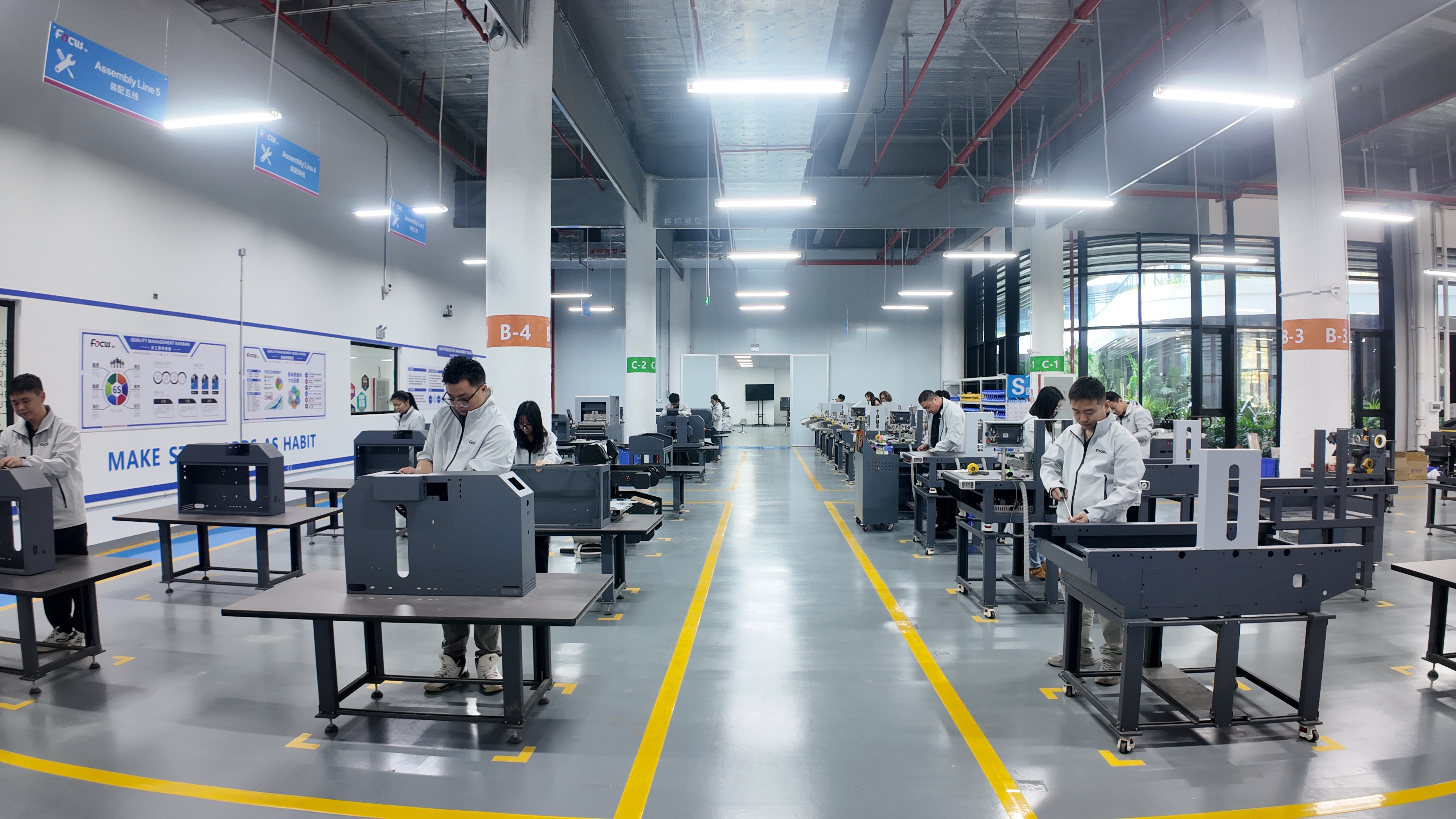
Qualification is a documentation exercise before it is a print-quality exercise
Most single pass printer comparisons collapse into a discussion about colour and dots per inch. That is the wrong starting point for a packaging buyer. A press that produces an excellent sample in a supplier showroom can still fail qualification on site because the incoming supply is 16 A rather than 20 A, because the winter floor temperature falls below the stated operating range, or because the board the buyer actually runs is thicker than the machine's documented maximum.
The three machines referenced throughout this article — the Cobra-1209S, the Cobra-691S AS B and the Viper-391S — are manufactured by Focus Inc. (Shanghai Focus Industrial Co., Ltd.), an industrial digital inkjet printer manufacturer founded in 2008 and operating a 35,000 m² facility with an annual production capacity of 800 units. Their published specification sheets are useful precisely because they state hard numbers for power, noise, temperature, humidity, media thickness, print width and resolution. Those numbers are what a qualification checklist should be built from.
The checklist below covers five acceptance blocks: electrical supply, acoustics, environmental envelope, media envelope, and print performance. Each block has a documented requirement and a verifiable test.
The documented requirement set, side by side
The fastest way to see where qualification decisions actually sit is to place the published figures next to each other. Note how many rows differ between a corrugated sheet machine, a packaging and bag machine, and a roll-to-roll label machine — and how many do not.
| Parameter | Cobra-1209S | Cobra-691S AS B | Viper-391S |
|---|---|---|---|
| Machine class | Single pass packaging printer for corrugated and carton board | Single pass packaging printer for paper bags, cups, sleeves, cartons | Single pass roll-to-roll label printer |
| Power requirement | 20 A, single-phase 220 V, 50 Hz | 20 A, single-phase 220 V, 50 Hz | 9 A, single-phase 220 V, 50–60 Hz |
| Acoustic noise | 75 dB(A) or less | 75 dB(A) or less | 75 dB(A) or less |
| Operating temperature | 59–86 °F (15–30 °C) | 59–86 °F (15–30 °C) | 59–86 °F (15–30 °C) |
| Humidity | 40–80% | 40–80% | 40–80% |
| Maximum print width | 900 mm (1–3 A3 heads) | 210 mm (1 head) / 420 mm (2 heads) | 210 mm (A4 head) / 304 mm (A3 head) |
| Maximum load width | 1230 mm | 600 mm; 1200 mm with side flanks | 320 mm |
| Maximum media thickness | 60 mm | 250 mm | Listed as “≤φ350 mm” — a roll diameter figure |
| Print resolution | 1200×300 / 400 / 600 / 1200 dpi | 1200×300 / 400 / 600 / 1200 dpi | 1200×300 to 1200×2200 dpi |
| Print speed | 10–35 m/min, by resolution and configuration | 10–40 m/min | 10–40 m/min, by resolution |
| Ink system | Aqueous / dye / pigment / edible; CMYK; 1500 ml per colour | Aqueous / dye / pigment; CMYK; 500 ml per colour | Aqueous / dye / pigment / edible; CMYK; 500 ml per colour |
| Print head and nozzles | HP A3/A4 PageWide; 59,136 nozzles per A3 head | HP PageWide; 42,240 nozzles per head | HP PageWide; 42,240 (A4) / 59,136 (A3) nozzles |
| Net weight (main unit) | 1450 kg | 195 kg | 65 kg printer only |
Two observations follow directly from the table. First, the utility requirements are largely identical across three very different machine classes, which makes the electrical and environmental checks reusable across a shortlist. Second, the media rows diverge sharply, which is where most qualification failures originate.
Power and electrical acceptance: 220 V, 50 Hz, single-phase
All three models are specified for single-phase 220 V operation at 50 Hz. The Viper-391S accepts 50–60 Hz. The practical difference is current draw: 20 A for the Cobra-1209S and Cobra-691S AS B, and 9 A for the Viper-391S.
Single-phase supply is a material advantage in qualification because it removes the need for a three-phase distribution upgrade in many packaging plants. It is not, however, a licence to connect the machine to any convenient socket. A 20 A single-phase circuit is a dedicated-circuit decision, and the acceptance protocol should require three things: a photograph of the machine nameplate, confirmation that the nameplate matches the quotation and order, and a signed electrical check by a qualified local electrician confirming breaker rating, cable cross-section and earthing.
There is a documentation trap worth flagging. Focus Inc. does not express power the same way on every sheet. The Cobra-691S Max is published as 220 VAC, 50 Hz, 3 kW, while the Cobra-1209S and Cobra-691S AS B are published as 20 A single-phase. Amperage and kilowatts are not interchangeable without a stated power factor, so a buyer comparing models across the range should request both values in writing rather than converting one into the other.
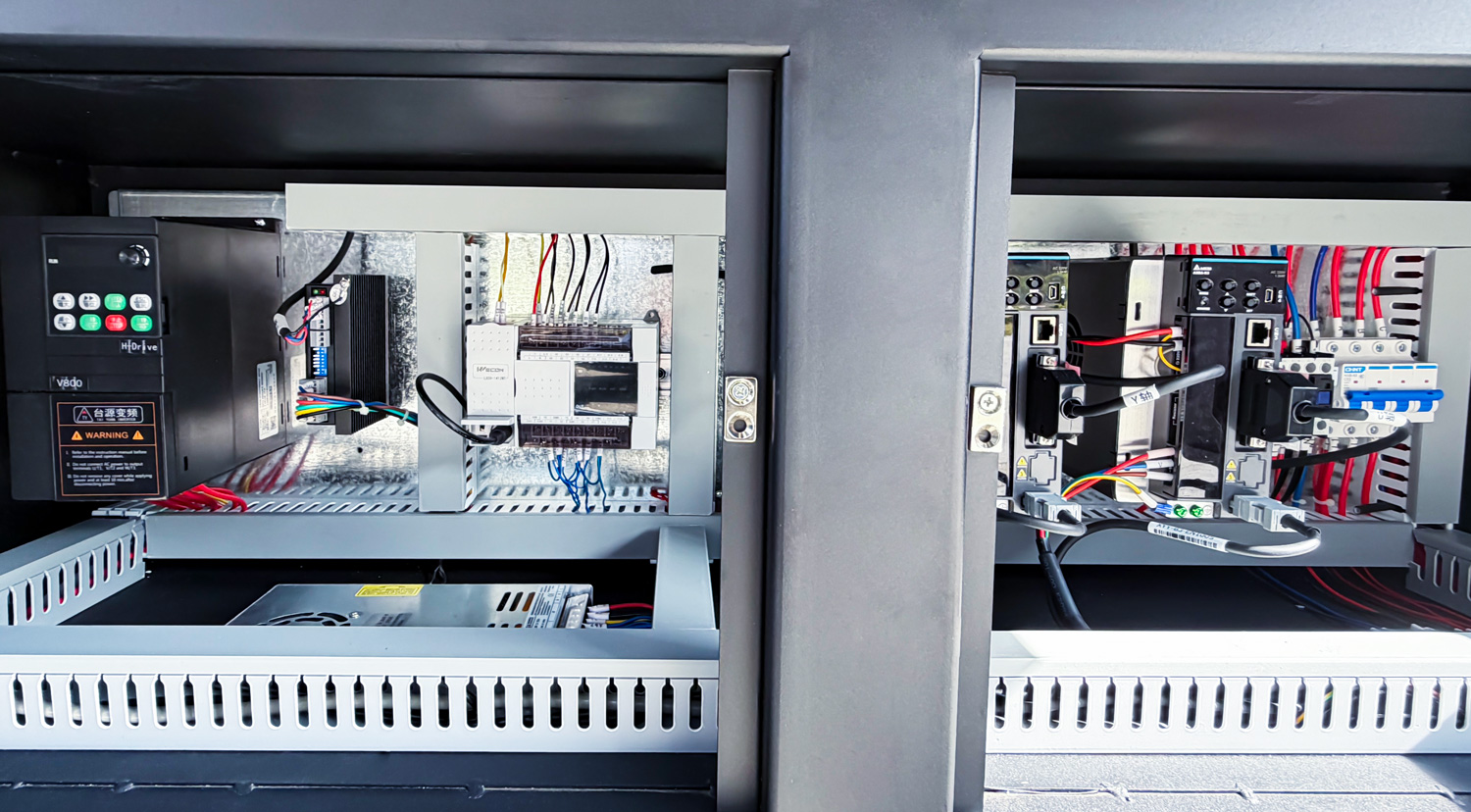
Optional modules belong in the same schedule. The Cobra-691S AS B lists a 420 W vacuum system as an optional purchase, and the Cobra-1209S specifies an adsorption vacuum system as part of the configuration. A buyer who qualifies the base machine and then adds modules after installation is qualifying a different electrical load.
Acoustic acceptance: the 75 dB(A) line
All three models are specified at 75 dB(A) or less. That is a clean, comparable number and it should be written into the acceptance protocol as a pass/fail criterion rather than treated as marketing text.
The gap in the published data is methodological. The sheets state the level but not the measurement distance, the measurement position relative to the machine, or the load condition under which the reading was taken. A buyer who measures at the operator station during a full-speed run and a supplier who measured at a different position can both be truthful and still disagree. The protocol should therefore fix the measurement position, the instrument class and the operating condition before the machine arrives.
For site planning, the number matters in two places: the immediate operating zone, where operators stand for loading and inspection, and the boundary with any adjacent finishing or packing area where verbal communication is required. Local occupational noise rules vary by jurisdiction and should be checked against the measured value rather than assumed from the specification.
Environmental envelope: 59–86 °F and 40–80% relative humidity
All three machines are specified for 59–86 °F (15–30 °C) and 40–80% relative humidity. This is a normal conditioned-production range, and it is narrower than the real conditions in many packaging halls.
Qualification should therefore include a temperature and humidity log taken in the exact intended location, covering the extremes the site actually experiences rather than a mild week in spring. Two scenarios routinely break this requirement: an unheated or lightly heated hall in a cold climate, where winter floor temperatures fall below 15 °C, and a hall with a summer peak above 30 °C near roof-level heat gain or adjacent drying equipment. In both cases the machine is being asked to operate outside its documented envelope, and any resulting print or reliability discussion becomes a commercial argument rather than a technical one.
Relative humidity is the second half of the requirement and the easier one to overlook. A 40–80% band excludes both very dry winter air in heated buildings and saturated monsoon conditions without dehumidification. Recording the site values before signing is significantly cheaper than correcting them afterwards.
Media envelope: print width, load width and thickness are three different numbers
The most common qualification error in single pass packaging printing is treating one width figure as if it covers all three.
- Print width is governed by the number of print heads. On the Cobra-691S AS B it is 210 mm with one HP PageWide head and 420 mm with two. On the Cobra-1209S it is 900 mm with one to three A3 heads. On the Viper-391S it is 210 mm with an A4 head and 304 mm with an A3 head.
- Load width is the widest material the transport can accept. The Cobra-691S AS B accepts 600 mm as standard and 1200 mm when side flanks are fitted; the Cobra-1209S accepts 1230 mm; the Viper-391S accepts 320 mm rolls.
- Media thickness is the vertical clearance for the material itself. The Cobra-691S AS B is specified to 250 mm, the Cobra-1209S to 60 mm.
The side-flank point deserves emphasis. Fitting side flanks on the Cobra-691S AS B extends load width to 1200 mm; it does not extend print width, which remains governed by head count. A buyer who needs 1200 mm of printed image is looking at a different machine class — the Cobra-1815S, for example, is specified with a 1800 mm load width and a 900 mm print area with one to five A3 heads. This distinction should be settled in writing before any sample is requested.
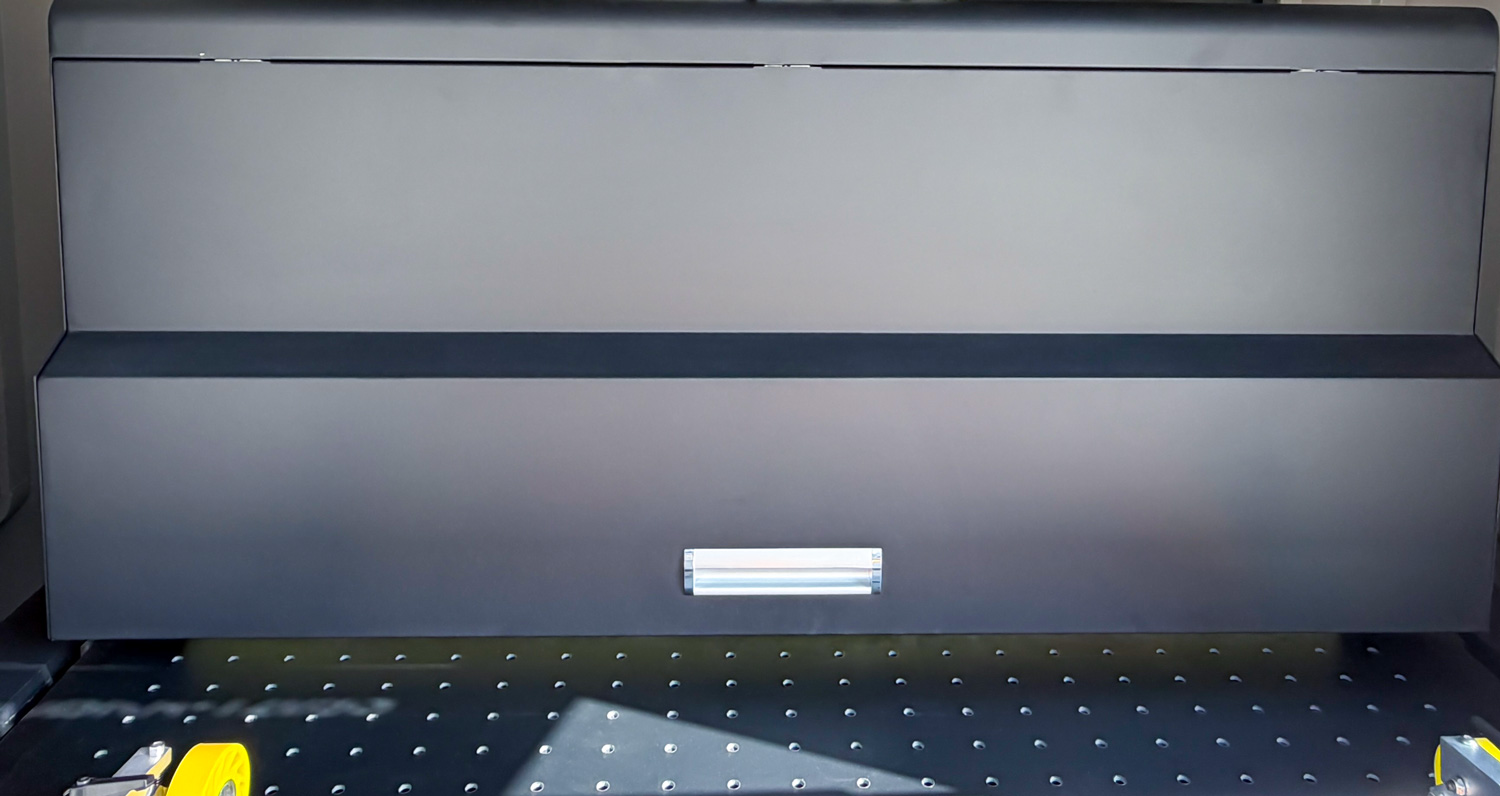
The Viper-391S needs a separate note. Its specification sheet lists “maximum thickness ≤φ350 mm”. The φ symbol indicates a diameter, so this is a maximum roll diameter rather than a sheet caliper. A label converter reading the row literally could mistake it for material thickness. The correct treatment is to request written confirmation of both figures — maximum roll diameter and maximum web caliper — because only one of them is currently stated.
Media type lists should also be checked against the actual job. The Cobra-1209S sheet names corrugated paper, cardboard, cellulose paper, kraft paper, pizza boxes and carton board. The Cobra-691S AS B sheet names corrugated paper, paper bags, cup fans, cup sleeves, postcards, bread, cookie and cake pads, coated paper, pizza boxes, shopping bags, coffee bags, paper cups, envelopes, cards, napkins and tissue. The Viper-391S sheet names inkjet-coated paper and synthetics such as BOPP, vinyl and PET, in glossy or matte finishes. A substrate that is not on the list is not automatically excluded, but it should be treated as an unverified application until tested.
Print performance: tie every speed figure to a resolution
The Cobra-1209S and Cobra-691S AS B both offer 1200×300, 1200×400, 1200×600 and 1200×1200 dpi. The Viper-391S extends to 1200×2200 dpi. Print speed is quoted as 10–40 m/min on the Cobra-691S AS B and Viper-391S, and 10–35 m/min on the Cobra-1209S, in both cases explicitly dependent on resolution and configuration.
This is the single most important acceptance criterion in the whole document set. A quoted maximum speed that is not attached to a stated resolution, head count and image coverage is not an acceptance figure; it is a ceiling that may only be reachable at the lowest quality setting. The protocol should require the supplier to print the buyer's own artwork at each offered resolution and record the corresponding line speed at the moment of printing, so that the accepted productivity figure is the one the buyer will actually run.
Nozzle count supports that verification. The Cobra-691S AS B and Viper-391S use HP PageWide heads with 42,240 nozzles per head; the Cobra-1209S uses A3 heads with 59,136 nozzles each. All three specify a carriage anti-scratch kit as print-head protection, and an anti-scratch kit present at handover is a cheap, objective check that the machine matches the order.
Ink configuration completes the block. All three run CMYK with aqueous, dye or pigment inks; the Cobra-1209S and Viper-391S additionally list edible ink. Tank capacity differs — 1500 ml per colour on the Cobra-1209S, 500 ml per colour on the Cobra-691S AS B and Viper-391S — which affects how often an operator intervenes during a shift and therefore how the crew size should be planned.
A practical acceptance protocol
The following eight checks convert the specification rows into verifiable evidence. Each has an objective pass criterion and a named record, so that acceptance does not depend on recollection.
| Check | Pass criterion | Record |
|---|---|---|
| Nameplate match | Model, voltage, frequency and current match the order | Nameplate photo |
| Electrical sign-off | 220 V, 50 Hz single-phase; breaker and earthing verified for 20 A or 9 A as specified | Electrician certificate |
| Acoustic measurement | 75 dB(A) or less at the agreed position and load condition | Meter printout |
| Environment log | Site stays within 59–86 °F and 40–80% RH during the monitored period | Logged data |
| Media run | Buyer's own board or roll at the declared maximum thickness and width feeds without jamming | Signed sample set |
| Resolution–speed matrix | Each offered dpi printed at its declared line speed, with images retained | Test sheet per setting |
| Nozzle and head protection | Full nozzle test passes; carriage anti-scratch kit fitted | Nozzle printout |
| Documentation and accessories | Print cable, cleaning kit, manuals, installation videos and Ethernet connectivity delivered | Packing list |
The accessory row is not administrative trivia. The three models list print cable, cleaning kit, a USB flash drive of manuals and installation videos, and Ethernet connectivity as included items. Missing consumables or manuals at handover are the most common reason a technically compliant installation still loses its first week of production.
Where single pass inkjet stops: honest boundaries against traditional printing
A qualification checklist is only credible if it also states what the technology does not do well. Single pass inkjet removes plate making and allows artwork to change between jobs through digital typesetting rather than physical plates, which changes changeover economics in favour of short and variable runs. That advantage is real, and it sits alongside four boundaries that buyers should accept before signing.
Speed is mid-range, not web-press range. The three models discussed here run at 10–40 m/min. Smithers, in its packaging print research, describes wide-web single pass inkjet systems for corrugated board achieving speeds up to 400 m/min. Those are different machine classes at very different investment levels, but the comparison matters: a buyer who assumes the 10–40 m/min class will replace a high-volume analog line is likely to be disappointed. The realistic fit is short runs, versioning, proofs, sampling and on-demand work that the analog line cannot economically schedule.
The ink system constrains the substrate. All three models run aqueous, dye or pigment inks. That is appropriate for absorbent paper, board, kraft and coated stock. Where the job requires non-absorbent film, a UV-cured machine class is required instead — Focus Inc.'s Acaleph-891S series and S350 Jetpress are UV single pass systems, and their utility requirements differ accordingly (the Acaleph-891S series is specified at 42 A single-phase 220–240 VAC, not 9 A or 20 A). Ink chemistry should be matched to substrate before any utility planning begins.
The environmental envelope is narrower than a typical hall. A 59–86 °F and 40–80% RH requirement is a conditioning commitment. Plants that cannot hold it should budget for space conditioning rather than assume the machine will cope.
Width and thickness are hard limits. A 900 mm print area on the Cobra-1209S, a 250 mm thickness ceiling on the Cobra-691S AS B and a 320 mm roll width on the Viper-391S are not negotiable through settings. Where the job sits outside those limits, the correct response is a different model in the range — such as the Cobra-1815S for wider corrugated work — not a configuration change to the qualified machine.
What the demand data says — and what it does not say
Buyers usually want a market justification attached to a capital decision. It is worth stating clearly what published data supports and what it does not.
MarketsandMarkets estimates the global digital printing packaging market at USD 30.2 billion in 2024, rising to USD 46.2 billion by 2029, a CAGR of 8.9%. Smithers values the printed packaging and labels market at USD 22.0 billion in 2025 and forecasts the corrugated digital segment to reach USD 8.2 billion by 2030. Fortune Business Insights sizes the adjacent direct-to-shape printer market at USD 3.63 billion in 2026, growing to USD 8.15 billion by 2034 at a 10.65% CAGR. The same source reports that multi-pass machines held 75.4% of that direct-to-shape market in 2025, leaving roughly 24.6% to single pass and other print technologies.
None of these figures sizes the single-pass packaging printer equipment market. The Smithers and MarketsandMarkets values use different scopes and different base years, and the direct-to-shape figure covers a different product boundary again. They should be read as directional evidence that digital packaging print is expanding, not as a market size for the machine on the quotation. A buyer's business case should rest on their own run lengths, changeover frequency and substrate mix, with the published growth data as context rather than as justification.
Future outlook
Three developments are likely to change how this checklist is written over the next procurement cycle.
First, specification transparency will become a purchasing issue in its own right. The inconsistency already visible — amperage on some sheets and kilowatts on others, a “thickness” row that actually states roll diameter — costs buyers real time. Suppliers who publish a standard acceptance data sheet, with measurement conditions for noise and speed, will be easier to shortlist.
Second, the aqueous-versus-UV split will keep defining machine classes. As packaging portfolios mix absorbent board with film and coated stock, buyers are more likely to qualify two machine types against one production plan rather than search for a single machine that covers everything.
Third, the environmental envelope will move up the agenda as energy costs push plants toward less aggressively conditioned space. A machine specified for 15–30 °C becomes a facility decision, not only an equipment decision, and that conversation is better had during qualification than after installation.
FAQ
What electrical supply does a single pass packaging printer require?
The Cobra-1209S and Cobra-691S AS B are specified at 20 A, single-phase 220 V, 50 Hz. The Viper-391S roll-to-roll label printer is specified at 9 A, single-phase 220 V, 50–60 Hz. All three therefore run on single-phase supply, but the current draw differs enough that the circuit must be sized per model rather than per product family.
What noise level should be written into the acceptance protocol?
The Cobra-1209S, Cobra-691S AS B and Viper-391S are all specified at 75 dB(A) or less. The published sheets do not state the measurement distance, measurement position or load condition, so the acceptance protocol should define all three before the machine is measured on site.
What operating temperature and humidity are specified?
All three models are specified for 59–86 °F (15–30 °C) and 40–80% relative humidity. A site that falls outside either bound during normal production is outside the documented operating envelope, and that should be resolved through space conditioning or a different machine selection rather than assumed to be tolerable.
How thick a material can these printers handle?
The Cobra-691S AS B is specified to 250 mm maximum media thickness and the Cobra-1209S to 60 mm. The Viper-391S sheet lists “maximum thickness ≤φ350 mm”, which is a roll diameter figure rather than a web caliper; buyers should request written confirmation of both the maximum roll diameter and the maximum material thickness for that model.
What is the difference between print width and load width?
Print width is set by the number of print heads; load width is the widest material the transport accepts. On the Cobra-691S AS B, print width is 210 mm with one head and 420 mm with two, while load width is 600 mm and extends to 1200 mm with side flanks. The Cobra-1209S prints 900 mm with a 1230 mm load width. The Viper-391S prints 210 mm with an A4 head or 304 mm with an A3 head on 320 mm rolls.
What print resolutions are available?
The Cobra-1209S and Cobra-691S AS B offer 1200×300, 1200×400, 1200×600 and 1200×1200 dpi. The Viper-391S offers the same range and extends to 1200×2200 dpi. Resolution should be recorded together with the line speed achieved at that setting, because the quoted speed range is stated as resolution-dependent.
How should print speed be compared between suppliers?
Only with resolution, head configuration and image coverage attached. The Cobra-691S AS B and Viper-391S are specified at 10–40 m/min, and the Cobra-1209S at 10–35 m/min, in each case depending on resolution and configuration. A maximum speed quoted without those conditions is not comparable and should not be written into an acceptance schedule.
For buyers who want the full background on the manufacturer, models and factory, Focus Inc. publishes a factory introduction document available for public download: FocusInc Factory Intro (PDF).
Есть вопросы или нужны дополнительные детали?
Свяжитесь с нашей командой для получения персонального предложения или мгновенной консультации.
Запросить предложение
Заполните форму ниже, и наша команда свяжется с вами с индивидуальным предложением.
Прямой чат WhatsApp
Предпочитаете общаться в реальном времени? Напишите нам в WhatsApp для мгновенной помощи и быстрых ответов.
- Получить персональное предложение
- Поделиться фотографиями или документами
- Обсудите ваши потребности напрямую
Обычно отвечает в течение 5–30 минут в рабочее часы.