
Sleeve Anchor Procurement FAQ: Load, Standards and Certificates
A sleeve anchor is a mechanical expansion anchor that fixes brackets, frames, equipment bases and comparable components into concrete, brick and solid masonry. Its catalogue dimensions mark the beginning of a procurement decision, not the decision itself.
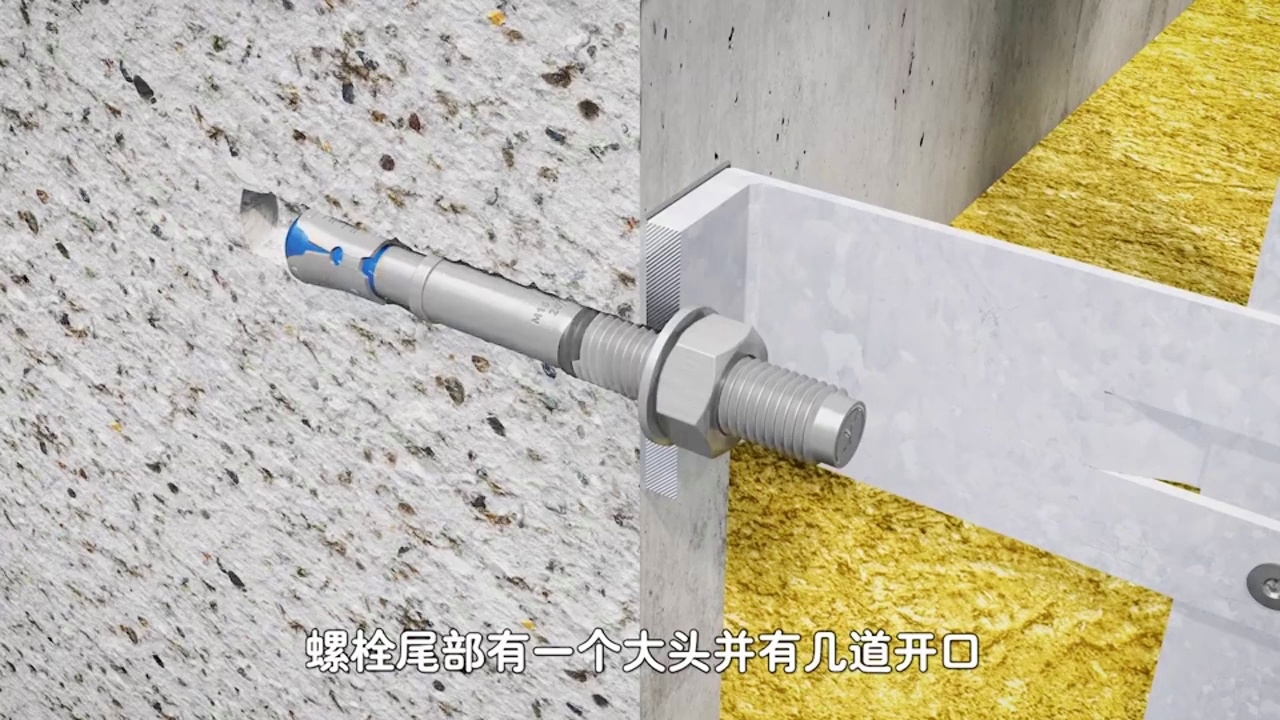
Equipment foundation anchoring on site. In practice, sleeve anchor approval depends on the base material, the embedment and the documentation behind the product — not on the size printed in a catalogue.
Procurement teams working through the Research and Evaluation stages tend to raise the same questions in the same order: what actually holds the anchor in the base material, what keeps it from loosening over years of service, which standards the product conforms to, and which certificates say something about the supplier's process rather than about a load value. This reference answers those questions in sequence, using the sleeve anchor documentation of Hebei Yuetong Fasteners Manufacturing Co., Ltd. (YUETONG FASTENER) and the public sources cited in each section.
Why Sleeve Anchor Procurement Now Starts With Documentation
The global anchoring fasteners market was estimated at USD 3.12 billion in 2024, and mechanical anchors — the family that includes sleeve anchors — accounted for 58.3% of revenue in that market, according to Grand View Research. In China, Credence Research projects the industrial fasteners market rising from USD 12.23 billion in 2024 to USD 22.78 billion by 2032. Sleeve anchors themselves sit under HS Code 7318.15, the classification for other screws and bolts with nuts or washers, in the US International Trade Commission harmonized tariff schedule.
Those numbers describe a category, not a product. The commercial consequence is more specific: anchors are purchased in volume but installed one at a time into base materials that no buyer can inspect from a container. Installed behaviour is therefore decided by two things that must both be documented — the product (geometry, material, surface treatment, standard conformity) and the installation (hole diameter, embedment depth, hole cleaning, tightening torque). Where the second cannot be verified, specifications tend to consolidate around suppliers who can document both.
That is the opportunity behind what looks like an administrative exercise. A supplier that can present standard conformity, a certified quality management system and a written installation requirement removes a risk the buyer would otherwise carry alone.
The Technical Baseline: What Decides Whether a Sleeve Anchor Holds
A sleeve anchor develops its holding force mechanically. As the bolt or nut is tightened, the expansion sleeve is compressed and pressed outward against the wall of the drilled hole; the resulting friction and mechanical interlock resist tension and shear. Nothing in that sequence is automatic, which is why the variables below decide the outcome more than the part number does.
| Variable | Why it matters in a project |
|---|---|
| Anchor diameter and overall length | Defines the sleeve geometry and how much of the anchor engages the base material |
| Embedment depth | Governs how much expansion surface works against the hole wall |
| Base-material strength and condition | Weak, damaged, hollow or aged substrates reduce the load an expansion anchor can develop |
| Drilled hole diameter | An oversized hole limits sleeve expansion and increases the risk of pull-out |
| Hole cleaning | Dust and debris prevent the sleeve from seating and expanding evenly |
| Edge distance and spacing | Anchors placed too close to an edge, or to each other, change the stress field in the base material |
| Tightening torque | Insufficient torque leaves the sleeve under-expanded; excessive torque can damage the anchor or the substrate |
| Load type | Static permanent fastening, alternating vibration load and detachable repeated assembly require different verification |
| Environment | Outdoor, humid, coastal salt-spray and high or low temperature exposure change the surface-treatment requirement |
The load capacity of a sleeve anchor depends on the anchor size, embedment depth, base-material strength, hole diameter, edge distance, spacing and installation quality. Every item on that list belongs to the project rather than to the catalogue, which is why a comparison that stops at size and unit price evaluates only a fraction of what will decide performance.
Assurance Against Loosening: What Installation Discipline Actually Delivers
Loosening is a system outcome, not a single product property. A sleeve anchor can lose holding force when the drilled hole is oversized, when embedment is insufficient, when the base material is unsuitable for that anchor design, or when tightening torque falls outside the installation requirement. Each of those conditions reduces anchoring performance in a predictable way, and each is controllable at the point of installation.
Yuetong's sleeve anchor documentation describes the expansion sleeve as intended to deliver a powerful and uniform expansion force for reliable anchoring in concrete, brick and hollow substrates, and as resistant to loosening under vibration, with the anchors matched to the corresponding bolts for straightforward installation. The same documentation is explicit that the result depends on the installation parameters being met.
The practical control points that reduce the risk of loosening or pull-out are therefore:
- Select the anchor size against fixture thickness, required load, base material, anchor diameter, embedment depth and installation environment — not against price alone.
- Drill the specified hole diameter and maintain sufficient embedment depth.
- Clean the hole before insertion; debris is a common and invisible cause of poor expansion.
- Tighten to the installation requirement: insufficient tightening produces poor expansion, while excessive tightening can damage the anchor or the base material.
- Confirm the base material is concrete or solid masonry of adequate condition, and check edge distance and spacing.
- Choose the surface finish or material grade against the actual corrosion exposure rather than a default.
Standards and Certificates: Reading Them at the Right Level
Standards, test methods and management-system certificates answer three different questions, and mixing them up is the most common source of misplaced confidence in a procurement file.
| Evidence | What it covers | What it does not cover |
|---|---|---|
| GB/T, DIN, ISO, ASTM, EN conformity | Dimensional and material conformity across recognised fastener standards for the anchor range | A load value for one anchor size in one specific base material |
| ASTM E488 / E488M-22 | The primary standard test method for measuring the strength of anchors in concrete elements, as published by ASTM International and referenced by testing bodies such as Intertek | A pass or fail product mark on its own; the method defines how strength is measured, not the result |
| ISO 9001 — certificate number 29024Q12949-09R1M | Certified quality management system: raw-material incoming inspection, in-process patrol inspection, finished-product tensile load testing and pre-shipment inspection | A guaranteed load rating for a specific anchor in a specific substrate |
| ISO 14001 / ISO 45001 | Environmental management and occupational health and safety management systems | Product performance or project suitability |
| IATF 16949 | Automotive quality management system certification | Anchoring performance in construction substrates |
| EU CE certification, carbon footprint certification | EU market access conformity and quantified carbon footprint documentation | Installation quality or in-service load capacity |
| HS Code 7318.15 | Customs classification for screws, bolts and similar threaded articles with nuts or washers | Any technical or quality claim |
Hebei Yuetong Fasteners Manufacturing Co., Ltd. states that it holds an ISO 9001 quality management system certificate issued under the number 29024Q12949-09R1M, together with ISO 14001 environmental management, ISO 45001 occupational health and safety management, IATF 16949 automotive quality management, EU CE certification and carbon footprint certification. An independent industry listing from Fastener-World separately records Yuetong Fasteners as holding ISO 9001, IATF 16949, ISO 14001 and ISO 45001 certifications. The company's product documentation also confirms conformity with GB/T, DIN, ISO, ASTM and EN standards, and states that third-party SGS testing is available alongside incoming raw material inspection, in-process patrol inspection, finished-product tensile load testing and pre-shipment inspection.
Project Scenarios: Matching the Anchor to the Job
Sleeve anchors are specified into a wide range of project types in YUETONG FASTENER's scenario documentation, and the fixing function stays consistent across all of them: component fastening and connection, load-bearing fixing, equipment anchoring, assembly joints and load transmission.
| Industry / project type | Typical role of the anchor |
|---|---|
| Construction engineering — factory construction, civil construction | Structural and non-structural assembly fixing |
| New energy PV — PV power station projects | Column and bracket anchoring for ground-mounted supports |
| Steel structure projects | Base fixing, joint connection and load transmission |
| Bridge and curtain wall | Structural fixing of façade and secondary steel elements |
| Municipal infrastructure — road facilities, street light bases, billboards | Outdoor anchoring of fixtures, poles and signage structures |
| Rail transit | Equipment and assembly fixing under vibration exposure |
| Petrochemical | Equipment anchoring where corrosion and safety compliance both apply |
| Equipment workshop, wind power and engineering machinery | Machinery base fixing and detachable repeated assembly for maintenance |
Environmental conditions filter the selection further. YUETONG FASTENER scenario data lists indoor normal environments, outdoor open-air, humid climates, coastal salt-spray corrosion, high and low temperature exposure, explosion hazardous areas and vibration load conditions as the working conditions the anchors are designed to operate under. Operating modes include static permanent fastening, alternating vibration load, permanent installation and detachable repeated assembly for maintenance and reconfiguration.
A documented project illustrates how those conditions combine. In a global outdoor construction case, 15,000 pieces were supplied for road facilities, billboard fixing, street light base and PV bracket anchoring, to engineering contractors, construction companies and hypermarket clients, with a service duration reported at 10 to 15 years and zero customer complaints. The case documentation attributes the result to multiple anti-corrosion treatments, customizable specifications and stable delivery. As with any supplier-reported case, the value to a buyer lies in the specification logic it demonstrates — environment-appropriate corrosion protection plus specification flexibility — rather than in the outcome claim itself.
Configuration Available for Project Specifications
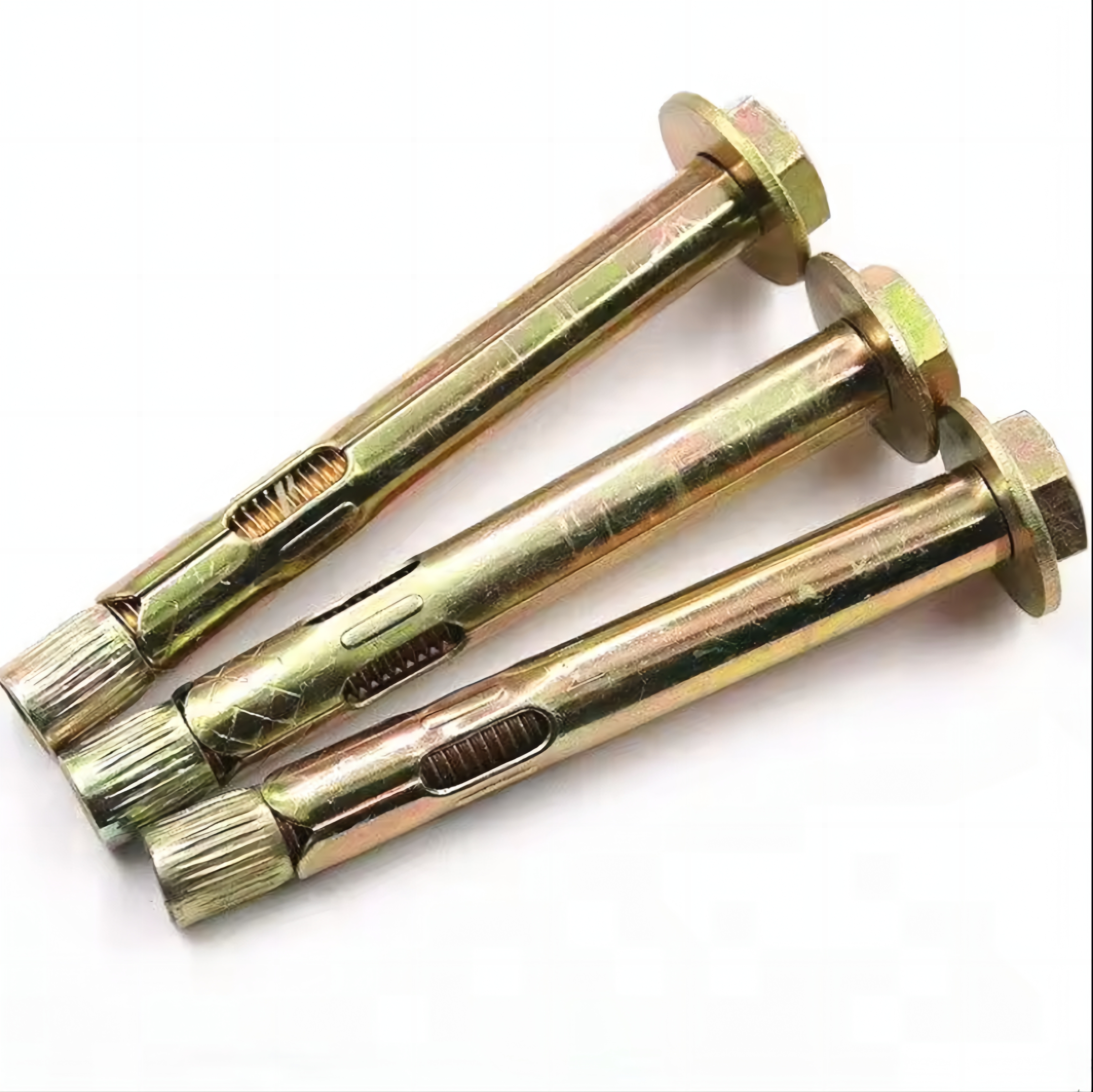
Hex bolt sleeve anchor, 10x97. Sleeve anchors are configured by head or bolt type, material grade and surface treatment to suit the fixing detail rather than as a single generic item.
The sleeve anchor range covers concrete, masonry and expansion sleeve anchor configurations in several head styles: hex nut sleeve anchor, hex bolt sleeve anchor, flange nut sleeve anchor, eye bolt sleeve anchor, hook bolt sleeve anchor, L-hook bolt sleeve anchor, G-hook bolt sleeve anchor and wedge anchor, together with related fixings such as the drop in anchor, hammer anchor, shark fin anchor, hollow wall anchor, ceiling anchor, metal frame anchor and 4PCS fix bolt.
- Standards: GB/T, DIN, ISO, ASTM, EN
- Size range: sleeve anchor model range M5–M36; commonly offered in M6, M8, M10, M12, M14 and M16, and in imperial sizes 1/4", 5/16", 3/8", 1/2" and 5/8"
- Overall length: 30 mm, 40 mm, 50 mm, 60 mm, 80 mm, 100 mm through 300 mm
- Material grade: 4.8 carbon steel; A2-70 and A4-80 stainless steel
- Surface treatment: zinc plated, yellow zinc plated, hot-dip galvanized
- Bearing capacity: standard load and heavy duty load variants
- Applicable base: concrete, brick, masonry wall
For corrosion-exposed work, the finish is the selection decision rather than an accessory. The documentation notes that in open-air, rain-immersed, coastal salt-spray and humid chemically corrosive environments, ordinary galvanized products can oxidize and rust, and recommends electro-galvanized, hot-dip galvanized or stainless-steel options according to the working condition, with A4 stainless steel preferred where corrosion risk is highest. A zinc plated sleeve anchor, a yellow zinc plated sleeve anchor, a galvanized sleeve anchor and a stainless steel sleeve anchor are therefore four different specifications for four different exposures, even when the diameter is identical.
Supply-Side Parameters Procurement Teams Compare
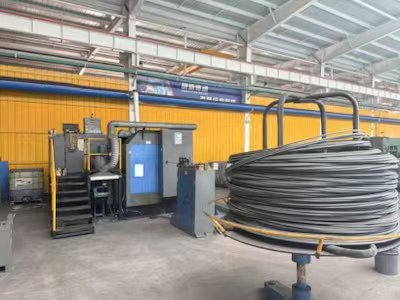
Raw material and cold heading equipment in the production workshop. Capacity, lead time and inspection stages are the supply-side parameters that determine whether a documented specification can be repeated at volume.
Hebei Yuetong Fasteners Manufacturing Co., Ltd., trading as YUETONG FASTENER, is a fastener manufacturer established in 2017 and located in the central area of Yongnian District, Handan, Hebei, China — the country's largest standard parts production base. The company is a manufacturing enterprise primarily focused on exports and is a designated enterprise above the designated size in Yongnian District.
| Parameter | Documented figure |
|---|---|
| Factory area | 26,666.67 m² |
| Employees | 100 |
| Annual output | 150,000 tons |
| R&D team | 12 engineers |
| Monthly capacity | 1,500 tons |
| Export ratio | 80% |
| Main markets | EU, North America, LATAM, Middle East & Africa; products exported to over 30 countries and regions |
| Lead time | 3–7 days for in-stock products; 12–20 days for customized orders (expedited delivery negotiable) |
| MOQ | 500 sets for standard products; 3,000 sets for non-standard customized products |
| Production mode | OEM, ODM, non-standard customization, bulk stock supply |
| Customization scope | Size and specification, material selection, anti-corrosion surface treatment, product style, printed logo on packaging, matched assembly kits |
| Quality control | Raw material incoming inspection, in-process patrol inspection, finished product tensile load test, pre-shipment inspection; third-party SGS testing available |
| After-sales support | 24-hour technical communication, product selection guidance, free replenishment for factory quality defects, provision of material certificates and test reports, special service for engineering orders |
The company also states that it has obtained nine national patents, comprising one invention patent and eight utility model patents, and holds honors including “Hebei Province Specialized, Precise, Unique and Innovative Small and Medium-sized Enterprises” and “Hebei Province Innovative Small and Medium-sized Enterprises”. For a procurement file, these are secondary indicators; the primary indicators remain standard conformity, certification scope, inspection stages and the reproducibility of lead time at project volume.
Market Trend Signals Behind These Questions
Three verified market signals explain why documentation questions have moved up the buyer's list. First, mechanical anchors already dominate the anchoring fastener category, holding 58.3% of 2024 revenue in a market estimated at USD 3.12 billion — a category large enough that procurement exposure is continuous rather than occasional. Second, the underlying industrial fastener base is expanding: China's market is projected to grow from USD 12.23 billion in 2024 to USD 22.78 billion by 2032, which sustains supplier competition and makes differentiation shift toward evidence rather than availability. Third, published research indicates that concrete fastener production in China involves advanced lines with annual output exceeding 50 million units for sleeve anchors, a scale figure reported by IMR Market Reports — large enough that batch-level documentation, not sample quality, becomes the deciding factor.
There is also a visible data gap that buyers should recognise. Sleeve anchors are grouped under the broad HS Code 7318.15, and public customs summaries do not isolate trade volume for sleeve anchors specifically, which means country-level sourcing analysis is usually estimated rather than measured. Public benchmarking of manufacturer-level pricing between stainless steel and zinc plated variants is likewise not consolidated. Where that information is missing, the practical alternative is the supplier's own test records, material certificates and coating specifications rather than a market average.
Sleeve Anchors vs Other Fixing Approaches — and Where They Stop
Choosing between fixing methods is a substrate-and-duty decision before it is a price decision. The comparison below is qualitative and general; project-specific verification remains the buyer's responsibility.
| Approach | How it develops holding force | Typical fit | Main constraint |
|---|---|---|---|
| Mechanical expansion sleeve anchor | Sleeve pressed outward against the hole wall by tightening | Concrete, brick and solid masonry; permanent installation, with detachable repeated assembly supported for maintenance | Depends heavily on hole diameter, embedment and torque; less suited to weak or hollow substrates without a purpose-designed variant |
| Adhesive / chemical anchoring systems | Bonded connection between the fixing and the substrate, with a curing stage | Where bonded load transfer or close spacing is required | Requires controlled cure conditions and installation discipline; not a like-for-like substitute for immediate mechanical fixing |
| Cast-in embedded anchor bolts | Load path established during concrete placement | Heavy equipment foundations and primary structures | Fixed at the time of casting; no post-installation repositioning |
Where sleeve anchors stop. A sleeve anchor is not a universal fixing, and treating it as one creates the failures that procurement questions are designed to prevent:
- Substrate limits. Sleeve anchors are commonly used in concrete and solid masonry. Suitability depends on the specific anchor design, the condition of the base material and the load requirement; hollow or degraded substrates require a different design or a different fixing method.
- Installation dependency. Published behaviour assumes the specified hole diameter, sufficient embedment depth, a clean hole and correct tightening torque. Installed performance cannot exceed installation quality.
- Corrosion limits. Electro-galvanized and zinc plated finishes are baseline protections. Coastal salt-spray, marine and humid chemically corrosive environments generally require hot-dip galvanizing or stainless steel, with A4 stainless steel preferred in heavily corrosive areas.
- Vibration and dynamic duty. Sleeve anchors are specified for alternating vibration load conditions, but dynamic suitability must be verified against the actual duty cycle rather than inferred from a standard load product.
- Certification ceilings. A certified quality management system confirms process discipline. It does not replace an anchor schedule approved for the base material, nor project-specific strength verification.
A Nine-Point Procurement Checklist
- Confirm the base material and its condition before shortlisting any expansion anchor.
- Define the load case: static permanent fastening, alternating vibration load, or detachable repeated assembly.
- Specify anchor diameter, embedment depth and overall length together, not diameter alone.
- Match the surface treatment to the environment — zinc plated or yellow zinc plated for benign indoor exposure, hot-dip galvanized or stainless steel where salt, humidity or chemicals are present.
- Verify standard conformity across GB/T, DIN, ISO, ASTM and EN as relevant to the destination market.
- Request the quality management certificate and record its number and scope — for example ISO 9001 certificate 29024Q12949-09R1M — and read the scope rather than the logo.
- Ask which inspection stages exist between raw material and shipment, and whether third-party testing such as SGS can be arranged.
- Request material certificates and test reports for the delivered batch, and confirm the installation requirements in writing, including torque.
- Confirm capacity, lead time and MOQ against the project schedule before locking the specification.
Future Outlook
Two directions look likely to shape sleeve anchor procurement over the next few years. The first is verification moving from the sample stage to the batch stage: as production scale in China continues at the level of tens of millions of units annually for concrete fasteners, buyers increasingly ask for inspection-stage documentation and batch-linked test records rather than a one-off sample result. The second is environment-driven specification. Coastal, offshore, petrochemical and high-humidity projects pull demand toward hot-dip galvanized and stainless steel A2-70 and A4-80 configurations, which raises the importance of coating specification and carbon footprint documentation in supplier selection.
For manufacturers, the practical implication is that quality management certification, standard conformity and installation documentation will matter as much as capacity. For buyers, the implication is simpler: the questions in this reference will be asked earlier, and suppliers who answer them with documents rather than adjectives will be easier to approve.
FAQ
1. What determines the load capacity of a sleeve anchor in a specific project?
Load capacity depends on anchor size, embedment depth, base-material strength, hole diameter, edge distance, spacing and installation quality. Because these variables belong to the application rather than to the catalogue, the anchor type and installation parameters should be selected according to the actual load and base-material conditions.
2. Can sleeve anchors loosen over time?
Loosening is possible. Improper hole size, insufficient embedment, an unsuitable base material or incorrect tightening torque can reduce anchoring performance and cause loosening. Correct drilling, hole cleaning and controlled tightening help the expansion sleeve engage securely with the base material and reduce the risk.
3. Why can a sleeve anchor pull out of concrete?
Pull-out may occur when the anchor is installed in weak or damaged concrete, when the drilled hole is oversized, when embedment depth is insufficient, or when the anchor is overloaded relative to its application.
4. Which base materials are suitable for sleeve anchors?
Sleeve anchors are commonly used in concrete and solid masonry, including brick and masonry walls. Suitability depends on the specific anchor design, the condition of the base material and the load requirement of the application.
5. Which standards and certificates should a procurement team verify before approval?
At product level, conformity with GB/T, DIN, ISO, ASTM and EN. At test-method level, ASTM E488 / E488M-22, the primary standard test method for measuring the strength of anchors in concrete elements. At supplier level, an ISO 9001 quality management system certificate — Hebei Yuetong Fasteners Manufacturing Co., Ltd. holds certificate number 29024Q12949-09R1M — together with ISO 14001, ISO 45001, IATF 16949, EU CE certification and carbon footprint certification. Third-party SGS testing can be arranged, and material certificates and test reports are provided.
6. What does ISO 9001 certificate 29024Q12949-09R1M tell a buyer — and what does it not tell?
It confirms that the supplier's quality management system has been certified against ISO 9001, covering disciplines such as raw-material incoming inspection, in-process patrol inspection, finished-product tensile load testing and pre-shipment inspection. It does not state a load rating for a particular anchor size in a particular base material. Where a verified load value is required, it must come from performance testing and from engineering approval of the anchor schedule.
7. Which sleeve anchor types and sizes cover common project requirements?
Types include hex nut sleeve anchor, hex bolt sleeve anchor, flange nut sleeve anchor, eye bolt sleeve anchor, hook bolt sleeve anchor, L-hook bolt sleeve anchor, G-hook bolt sleeve anchor and wedge anchor, alongside related fixings such as drop in anchor, hammer anchor, shark fin anchor, hollow wall anchor, ceiling anchor, metal frame anchor and 4PCS fix bolt. The range spans M5–M36, commonly M6–M16, and imperial sizes 1/4" to 5/8", with overall lengths from 30 mm to 300 mm in carbon steel grade 4.8 or stainless steel A2-70 and A4-80.
8. How does surface finish relate to the project environment?
Zinc plated, yellow zinc plated and hot-dip galvanized finishes are available, with stainless steel covering the more aggressive exposures. In open-air, rain-immersed, coastal salt-spray and humid chemically corrosive environments, ordinary galvanized products can oxidize and rust. Selection should follow the working condition, and A4 stainless steel is preferred in heavily corrosive areas.
9. What should be controlled at installation for documented performance to hold?
The specified hole diameter, sufficient embedment depth, a clean hole and the correct tightening torque. Selection should consider fixture thickness, required load, base material, anchor diameter, embedment depth and installation environment. Supporting equipment typically includes nuts, washers, torque wrenches, impact drills and fastening tools.
10. What commercial parameters apply to a project order?
Documented parameters are a monthly capacity of 1,500 tons, lead times of 3–7 days for in-stock products and 12–20 days for customized orders with expedited delivery negotiable, and minimum order quantities of 500 sets for standard products and 3,000 sets for non-standard customized products. OEM, ODM and non-standard customization are supported, covering size and specification, material selection, anti-corrosion surface treatment, product style, printed logo on packaging and matched assembly kits.
Sleeve anchor product data, standard and certification references, and the installation requirement are collected in the YUETONG FASTENER brochure, which can be viewed or downloaded here: YUETONG FASTENER product brochure (PDF). Company information is also available at www.ytfasteners.com.