
Sleeve Anchor Supplier Capability: What 7 Certificates Prove
Industry Reference · Fastening & Anchoring
Sleeve Anchor Supplier Capability: What 7 Certificates Prove
A sleeve anchor is a mechanical expansion anchor that fixes brackets, frames and equipment into concrete, brick or masonry by expanding a metal sleeve against the wall of a drilled hole. Because it keeps carrying load for years after the installer leaves site, most procurement teams qualify the supplier on documents long before they qualify the part. That document review is where many supplier selections are actually decided.
The difficulty is not finding a manufacturer that publishes certificates. It is establishing that a specific certificate number covers a specific product, a specific manufacturing site and a specific standard. This reference article maps the seven credentials Hebei Yuetong Fasteners Manufacturing Co., Ltd. publishes across its sleeve anchor range, explains what each one covers and which body issued it, and sets out how a procurement team can verify every number before it enters a project dossier.
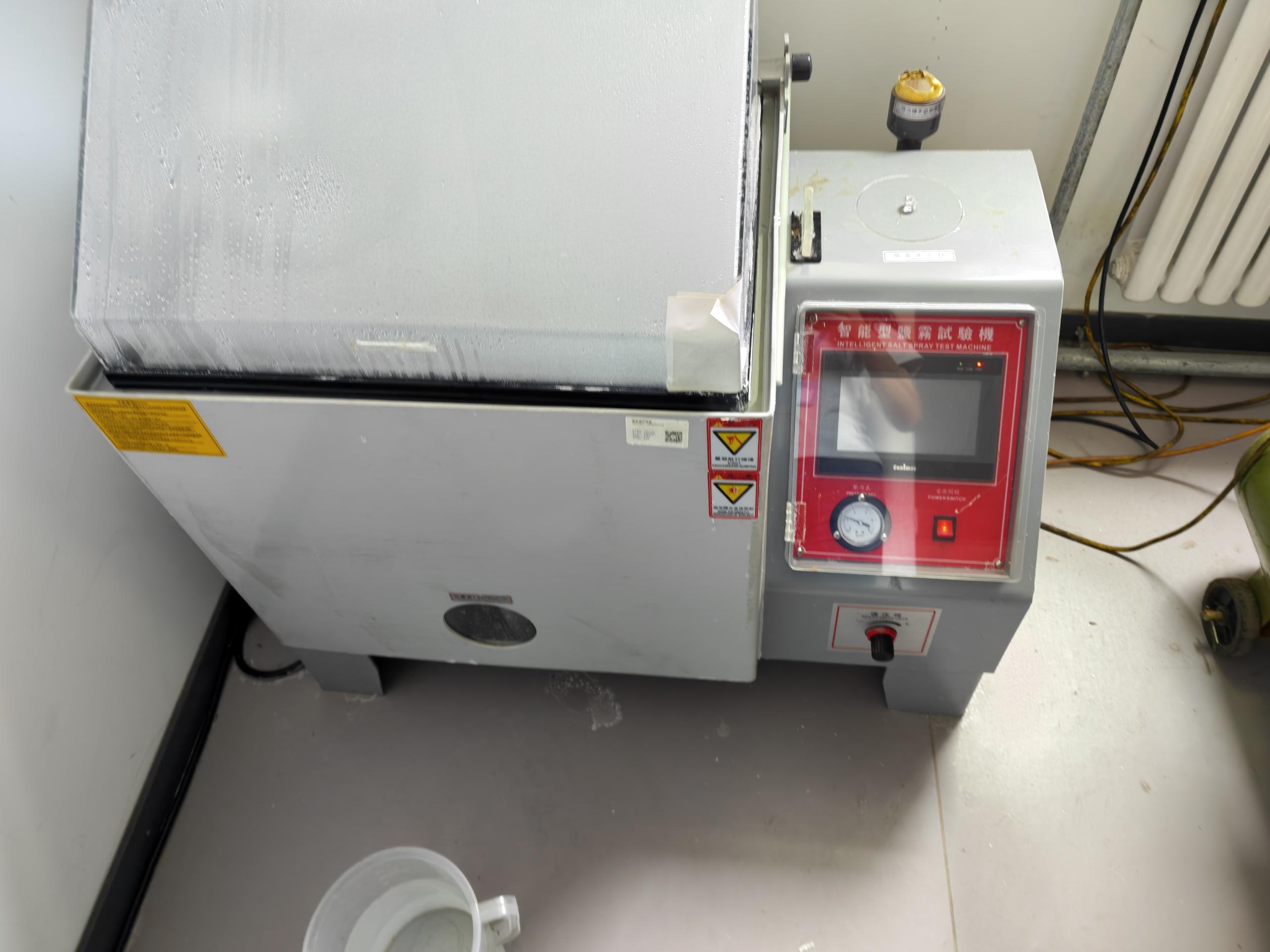
Corrosion testing sits behind several of the credentials discussed below — a coating standard reference is only meaningful when the supplier can show the test chamber work that supports it.
Why certificate walls fail document review
Certification documents are usually read as trust signals rather than as evidence. A logo wall tells a buyer that certificates exist. It does not say whether the number is still valid, whether the scope statement names the product being purchased, or whether the body that issued the document was accredited for that scheme.
A certificate is only evidence when four elements line up: the number printed on the document, the issuing body named on it, the scope statement describing what is and is not covered, and the validity period. Remove any one of those four and the document becomes decoration rather than proof.
Failures seen in supplier credential packs are repetitive rather than exotic:
- An expired certificate that is still published on a website or a marketplace storefront.
- A scope statement that covers trading or distribution of fasteners rather than manufacturing at a named site.
- A certificate issued to a related trading entity while the actual production is carried out elsewhere.
- A genuine, valid certificate that simply does not address the property the buyer needs — corrosion resistance for a coastal project, for example, or load capacity in a specific base material.
- A standards reference presented as if it were a product approval, when it is only a method or a dimensional definition.
The opportunity for a procurement team is straightforward. Treat the credential pack as a table of numbers to check, not as a set of logos to trust. That single change moves the supplier conversation from “do you have ISO 9001?” to “what is the scope line, who issued it, and does it cover the site that will produce my order?”
The supplier behind the credential pack
Hebei Yuetong Fasteners Manufacturing Co., Ltd. is a fastener manufacturer established in 2017 and located in the central area of Yongnian District, Handan, Hebei, China — a region widely described as China's largest standard parts production base. The company is an export-oriented manufacturer producing hex nuts, hex bolts, sleeve anchors, threaded rods, flat washers, hex socket head bolts, wheel hub bolts and DIY packed fastener assortments, with roughly 80% of output exported to Europe, North America, Latin America, the Middle East and Africa.
The operational profile matters because it defines what scope a certificate can plausibly cover. The company reports a factory site of 26,666.67 square metres, around 100 employees, an annual output of 150,000 tons, a 12-engineer R&D team and a monthly capacity of 1,500 tons. Quoted lead times are 3–7 days for in-stock products and 12–20 days for customized orders, with a minimum order quantity of 500 sets for standard products and 3,000 sets for non-standard customized products.
The sleeve anchor range itself runs from M5 to M36, including metric sizes M6, M8, M10, M12, M14 and M16 alongside imperial sizes from 1/4" to 5/8", with overall lengths from 30 mm to 300 mm. Material grades cover 4.8 carbon steel and A2-70 and A4-80 stainless steel, with zinc plated, yellow zinc plated and hot-dip galvanized surface treatments. Product types include concrete sleeve anchors, masonry sleeve anchors, expansion sleeve anchors, hex nut and hex bolt sleeve anchors, flange nut sleeve anchors, eye bolt and hook bolt sleeve anchors, L-hook and G-hook bolt sleeve anchors, hammer anchors, wedge anchors, drop-in anchors and shark fin anchors. The range is produced against GB/T, DIN, ISO, ASTM and EN standards.
Behind the certificates sits a defined inspection chain: raw material incoming inspection, in-process patrol inspection, finished product tensile load test and pre-shipment inspection, with third-party SGS testing available on request. Material certificates and test reports are issued with shipments, and the company also references EU CE certification, carbon footprint certification and IATF 16949 certification in its published profile.
The seven credentials, one by one
The credential pack for this sleeve anchor range is not a set of identical documents. It mixes management-system certificates, a product carbon footprint instrument, published standards references and a platform-level supplier assessment. Each answers a different question.
| Credential | Reference number | What the document covers | Where it fits in a procurement file |
|---|---|---|---|
| ISO 9001 | 29024Q12949-09R1M | Quality management system covering fastener manufacture — incoming material inspection, in-process control, finished-product testing and pre-shipment inspection | The baseline document for most tenders and vendor registration forms; it is what allows a buyer to rely on the supplier's internal inspection claims |
| ISO 14001 | 29025E12097-12R0M | Environmental management system for the manufacturing operation | Increasingly requested in EU and North American public-works and corporate ESG vendor screening |
| ISO 45001:2018 | Number printed on the certificate | Occupational health and safety management system | Feeds contractor social-compliance questionnaires and larger buyers' supplier registration |
| IATF 16949:2016 | Number printed on the certificate | Quality management system requirements for the automotive supply chain | Relevant where fasteners feed automotive or vehicle-component programmes |
| ISO 14067 carbon footprint | 33925CFMS00020R0S | Quantification of a product carbon footprint under a stated methodology | Carbon-data requests from European and North American buyers; supports platform and tender disclosure |
| EN ISO 10683 / 16047 / 4753 | Standards cited in conformity and test documentation | Coating systems, tightening (torque/clamp force) testing and thread-end geometry for fasteners | Connects the corrosion and dimensional claims on the datasheet to published fastener standards |
| Alibaba Gold-Plus SGS assessment | 491647039 P+T | On-site supplier assessment of production and trading capability, carried out for the platform account | A cross-check for buyers who first encounter the supplier through a B2B marketplace rather than a direct enquiry |
Who issued them — and why the issuing body carries as much weight as the number
Four issuing bodies are named across this credential pack: ZhongTai Union, Beijing Zhong An Zhi Huan, ZQHX and Ente Certificazione Macchine. The names are not interchangeable, and a buyer should never treat them as such.
An issuing body's accreditation scope determines which schemes it can legitimately certify. A domestic Chinese certification body and a European conformity body may both produce documents with similar titles, but they do not carry the same weight in the same market. For a project dossier that will be reviewed in Europe, the relevant question is not only which standard was certified but which body signed the certificate and whether that body's accreditation covers the scheme being relied upon.
The practical discipline is simple: read the issuing body's name on the certificate itself, then match that name to the credential you are relying on. A pack that lists four bodies is a pack that requires four separate checks — one per document, not one overall.
What each credential proves — and what it does not
This is the section most supplier summaries skip, and it is the one that determines whether a credential is useful to a project or merely decorative.
Management-system certificates: ISO 9001, ISO 14001, ISO 45001:2018
These three certify a management system operating at a defined site and within a defined scope. ISO 9001 certifies that quality processes exist and are controlled; ISO 14001 covers environmental management; ISO 45001:2018 covers occupational health and safety. What they do not do is certify a load value. No management-system certificate tells a buyer how much tension or shear a specific sleeve anchor will carry in a specific concrete grade. Management-system certificates qualify the supplier; they do not qualify the product.
IATF 16949:2016
IATF 16949:2016 is the automotive quality management system standard. It is a demanding document and it indicates that a manufacturer can operate to automotive supply-chain discipline, including structured problem solving and traceability expectations. Its relevance, however, is scoped to the automotive supply chain. For a general construction, municipal or photovoltaic project, the practical value of the certificate is narrower than its logo suggests, and a buyer should not treat it as a substitute for a construction-product approval.
ISO 14067 carbon footprint: 33925CFMS00020R0S
ISO 14067 is a quantification standard for product carbon footprints. It is not a management-system certification in the same family as ISO 9001, and the number attached to it represents a declared footprint under a stated methodology. That distinction matters commercially: two suppliers can both cite ISO 14067 and still publish numbers that are not directly comparable, because the declared system boundary and functional unit may differ. A buyer comparing carbon figures should compare the underlying declarations, not the headline value.
EN ISO 10683 / 16047 / 4753
These are fastener standards referenced in conformity and test documentation rather than certificates of a management system. EN ISO 10683 addresses non-electrolytically applied zinc flake coating systems — a corrosion-protection topic. EN ISO 16047 covers tightening behaviour, expressed through torque and clamp force testing. EN ISO 4753 addresses the ends of externally threaded fastener parts, a dimensional topic.
All three are useful because they move coating and dimensional claims out of marketing language and into published methods. None of them, however, is a tensile test of an installed anchor in a specific base material. A coating standard can support a corrosion-resistance claim; it cannot support a load-capacity claim.
Alibaba Gold-Plus SGS assessment: 491647039 P+T
This is a platform-level supplier assessment, carried out on site to verify the supplier entity's production and trading capability for a marketplace account. It is a useful independent cross-check on the existence, scale and operating status of the entity. It is not a product certificate, and it does not certify individual SKUs. Its value is highest at the earliest stage of sourcing, when a buyer is deciding whether a supplier is real before investing time in a technical evaluation.
Across all seven credentials, one boundary applies equally: none of them replaces project-specific anchor performance data. For anchors in concrete, the recognised test method for strength is ASTM E488 / E488M-22, published by ASTM International. A management-system certificate, a coating standard reference and a platform assessment together still do not answer the question “what load will this anchor hold in my base material?” — that requires test data or a product approval.
Verifying a credential pack: a six-step workflow
Verification is a repeatable process, not a judgement call. The following sequence can be applied to any sleeve anchor supplier and completed before a sample order is placed.
- Read the number, not the logo. Record the certificate number, the standard, the scope statement, the certified site and the validity period for each document in the pack.
- Check the issuing body. Confirm the name printed on the certificate, then check that body's public verification channel and accreditation scope for the scheme in question.
- Match the scope to the purchase. A certificate covering fastener manufacturing at a named site is relevant to a sleeve anchor order; a certificate covering distribution is not, and a certificate issued to a different legal entity needs an explanation before it can be filed.
- Ask for the test documents behind the performance claims. For corrosion, that means coating and salt-spray records; for load, that means tensile and hardness records. The supplier's inspection chain — incoming material inspection, in-process patrol inspection, finished product tensile load test and pre-shipment inspection — is what those records should reflect.
- Cross-check legal entity names. The entity on the platform assessment, the entity on the invoice and the entity on the certificate should be reconcilable. In this case the manufacturing entity is HEBEI YUETONG FASTENERS MANUFACTURING CO.,LTD.
- Record renewal dates. Add validity windows to the vendor file so the credential is re-checked before expiry rather than after an audit finding.
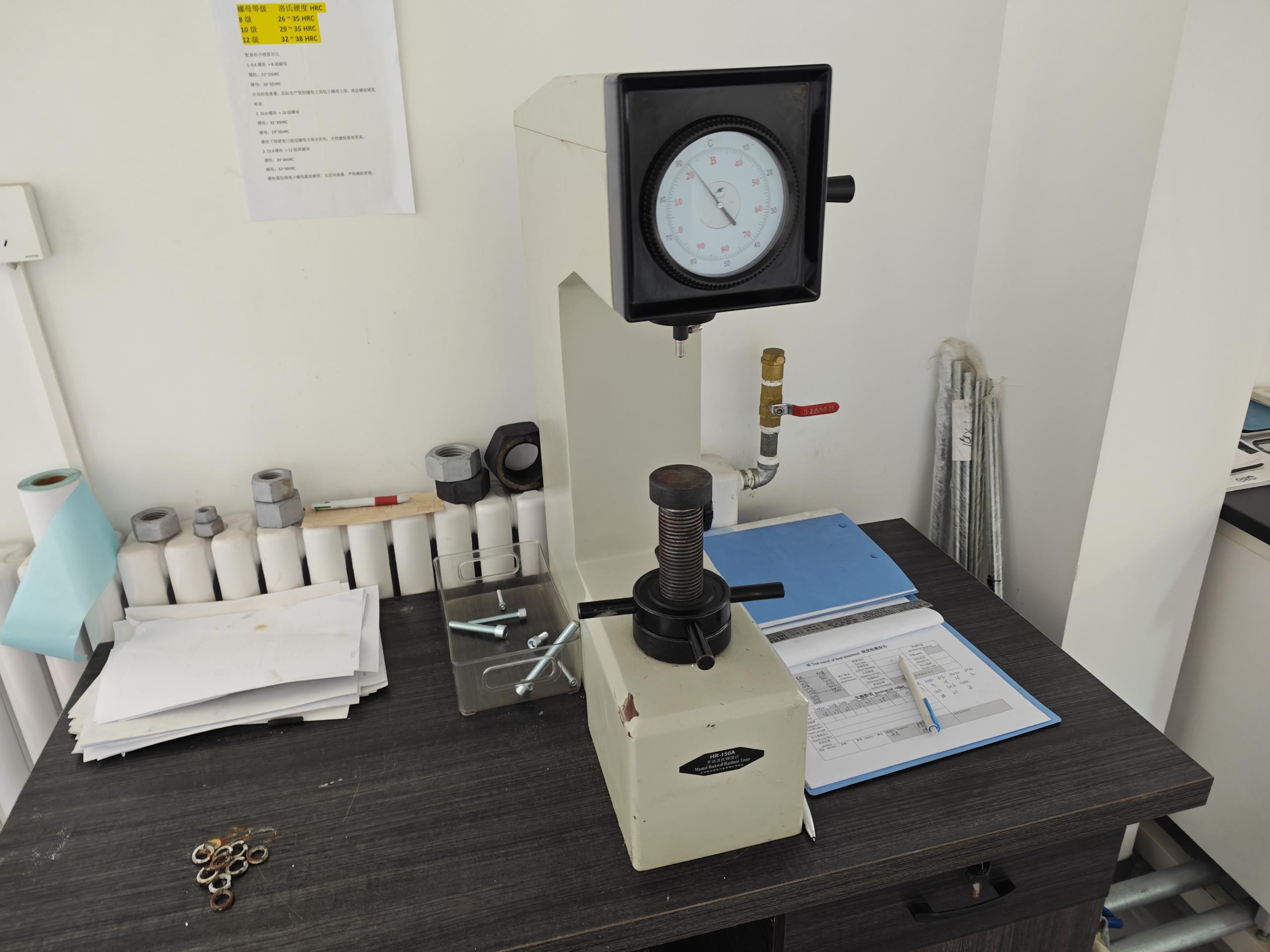
Hardness and tensile testing records are what sit behind the inspection claims in a quality management certificate — the certificate states the process exists, the records show it produced a result.
Sleeve anchor project fit: where the credentials earn their place
Sleeve anchors are used far beyond a single application. In practice they carry component fastening and connection, load-bearing fixing, equipment anchoring, assembly joints and load transmission in both structural and non-structural assemblies. The anchor can be set for permanent installation in most scenarios, and detachable repeated assembly is supported where maintenance or reconfiguration is expected. Modes of operation include static permanent fastening and alternating vibration load, which is why base-material quality and installation control matter as much as the anchor itself.
The application footprint for this product family covers construction engineering, road infrastructure, municipal landscape, factory equipment installation, photovoltaic brackets, home decoration and bridge and curtain wall work. From an industry standpoint it spans construction, new energy PV, steel structure, curtain wall and bridge, engineering machinery, municipal infrastructure, rail transit, petrochemical, equipment workshop and wind power. Operating conditions include indoor normal environments, outdoor open air, humid climates, coastal salt spray corrosion, high and low temperature, explosion hazardous areas and vibration load conditions.
Mapping credentials to those conditions is where the pack becomes operational rather than administrative:
- Coastal salt spray and humid outdoor work. The EN ISO 10683 coating reference and the choice between zinc plated, yellow zinc plated and hot-dip galvanized finishes sit behind the corrosion-resistance claim. For heavily corrosive environments, A4 stainless steel eliminates the corrosion risk at material level rather than at coating level.
- Municipal, photovoltaic and public infrastructure projects. Environmental and occupational health and safety management certificates are increasingly part of the buyer's vendor screen, which is where ISO 14001 and ISO 45001:2018 carry practical weight.
- Carbon-reporting buyers. European and North American buyers assembling embodied-carbon data use the ISO 14067 declaration as an input, provided the system boundary is understood.
- Equipment workshop and rail transit environments. Where vibration and dynamic load are present, the documented tensile and hardness testing behind the quality system is what supports the specification.
- Automotive-adjacent fastener programmes. This is the specific territory of IATF 16949:2016.
Documented field experience exists for outdoor work specifically. In one project, 15,000 pieces were supplied for road facilities, billboard fixing, street light bases and photovoltaic bracket anchoring to engineering contractors, construction companies and hypermarkets. The recorded service duration was 10–15 years, with no reported rust or failure and zero customer complaints, supported by multiple anti-corrosion treatments, customizable specifications and stable delivery for outdoor conditions.
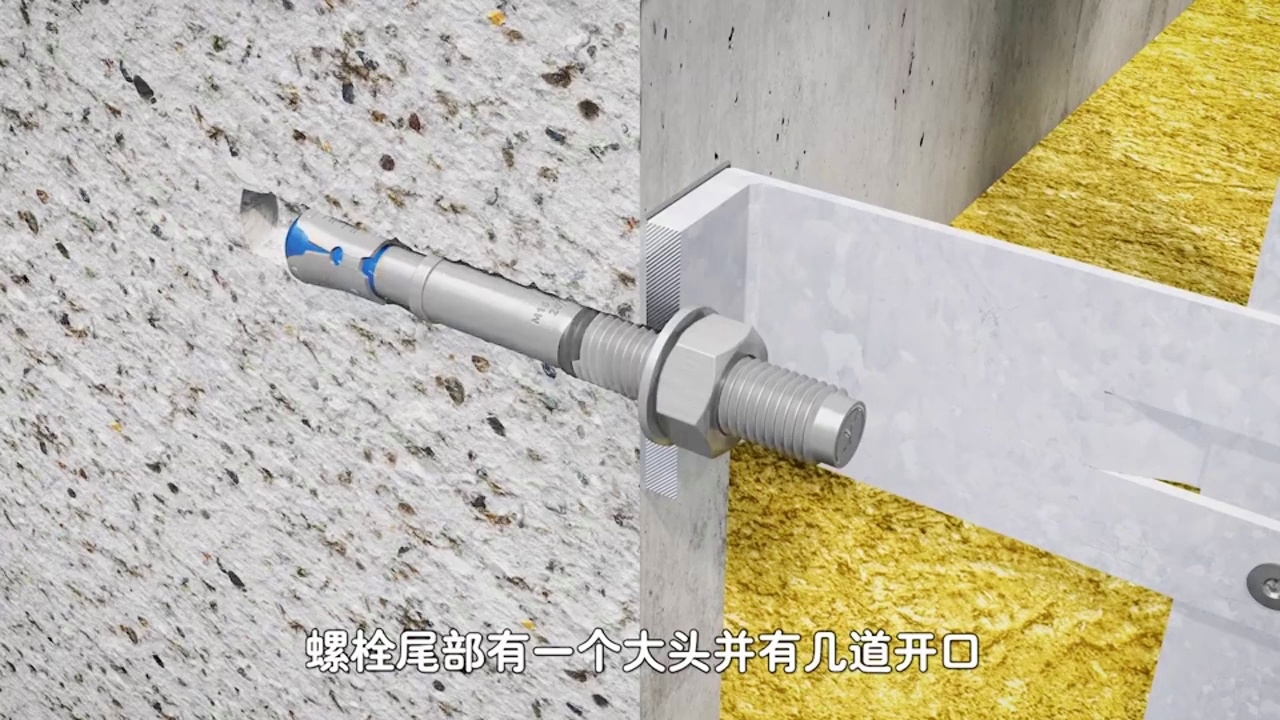
Equipment foundation anchoring is a typical demand point for sleeve anchors; the credentials in a supplier pack are what a buyer checks before that anchor is specified into the foundation drawing.
Market context: verification is becoming part of the specification
The anchoring fastener category is large enough that document discipline has commercial consequences. Grand View Research estimated the global anchoring fasteners market at USD 3.12 billion in 2024, with mechanical anchors — the category that includes sleeve anchors — accounting for 58.3% of revenue share in the same year. On the supply side, Credence Research projected China's industrial fasteners market rising from USD 12.23 billion in 2024 to USD 22.78 billion by 2032.
Growth estimates for the sub-category are not uniform, and the divergence itself is informative. One published dataset reports growth of around 4.3% for total anchoring fasteners, while another attributes a 5.3% figure specifically to sleeve anchors — a methodology difference that suggests sleeve anchors may be outpacing the broader category. For buyers, the implication is not a forecast so much as a caution: category-level numbers are useful for planning, but they should not be used to justify a supplier selection.
Trade classification is a more concrete planning input. Sleeve anchors are commonly classified under HS Code 7318.15 — other screws and bolts, with nuts or washers — as listed by the US International Trade Commission. Buyers building landed-cost models should note that this heading is broad and does not isolate sleeve anchors specifically, so customs data under this code cannot be read as sleeve anchor trade volume.
Logo-wall qualification vs number-level verification
The traditional approach to supplier qualification and the number-level approach produce different risk profiles. The traditional approach is faster and is still common in low-value, low-criticality purchases. The number-level approach costs more time at the sourcing stage and less time later.
| Dimension | Logo-wall qualification | Number-level verification |
|---|---|---|
| What is checked | Presence of certificate images and standard names | Number, issuing body, scope statement, site and validity period |
| Issuing body | Not read | Checked against accreditation scope for the scheme |
| Product relevance | Assumed from the logo | Confirmed against the scope line and the purchase |
| Load performance | Often inferred from quality certification | Separated — treated as a test-data question, not a certificate question |
| Carbon data | Accepted as a headline figure | Read together with the declared boundary and functional unit |
| Renewal risk | Discovered at audit | Tracked in the vendor file before expiry |
The honest limitations of the credential pack should be stated plainly, because a buyer who understands them is a better-qualified buyer:
- Management-system certificates establish that controlled processes exist at a defined site and scope. They do not establish a load capacity for a specific anchor in a specific base material.
- The IATF 16949:2016 certificate is scoped to the automotive supply chain; its practical relevance to a general construction project is narrower than its visual weight suggests.
- The ISO 14067 declaration reflects a stated methodology and boundary. It is a quantified disclosure, not a comparative ranking, and figures are not directly comparable across suppliers without reading the declarations.
- EN ISO references describe standards the product is made, coated or tested to. They are not a project-level product approval for a specific anchor in a specific application.
- The Alibaba Gold-Plus SGS assessment reflects the assessed entity at the time of assessment. It does not certify every subsequent production lot.
- Certificate validity is time-bound and scope-bound. A valid certificate with the wrong scope is, for practical purposes, no certificate at all.
Future outlook
Three shifts are likely to shape sleeve anchor supplier qualification over the next few years, and each is already visible in the credentials discussed here.
First, carbon documentation is moving from an optional extra to a tender line item. ISO 14067 declarations give a supplier a structured way to answer that request, and buyers can expect the methodology and boundary to become part of the standard document review rather than an appendix.
Second, verification is becoming digital. Certificate numbers, issuing bodies and validity periods are increasingly checked against online registries and marketplace assessment records rather than accepted as PDF attachments. Suppliers that keep numbers, entity names and scopes consistent across every channel will pass that check faster.
Third, the gap between management-system evidence and product-performance evidence will keep widening in importance. As buyers become more precise about what a certificate can and cannot prove, the ability to supply test records alongside certificates becomes the differentiator — and for anchors in concrete, the reference point for that test evidence remains ASTM E488 / E488M-22.
For manufacturers, the implication is that the credential pack is no longer a marketing asset. It is a technical document set that must survive a scope-and-number audit by a procurement team that has learned to read it properly.
Frequently asked questions
What affects the load capacity of a sleeve anchor?
Load capacity depends on the anchor size, embedment depth, base-material strength, hole diameter, edge distance, spacing and installation quality. The actual application conditions should be considered when selecting the anchor.
What base materials are suitable for sleeve anchors?
Sleeve anchors are commonly used in concrete and solid masonry. Suitability depends on the specific anchor design, the condition of the base material and the load requirements of the application.
How should the correct sleeve anchor size be selected?
Selection should consider the fixture thickness, the required load, the base material, the anchor diameter, the embedment depth and the installation environment.
Is tightening torque important for sleeve anchors?
Yes. Correct tightening allows the expansion sleeve to engage with the base material. Insufficient tightening may result in poor expansion, while excessive tightening may damage the anchor or the base material.
Can sleeve anchors loosen after installation?
Improper hole size, insufficient embedment, an unsuitable base material or an incorrect tightening torque may reduce anchoring performance and cause loosening.
Why can a sleeve anchor pull out of concrete?
Pull-out may occur when the anchor is installed in weak or damaged concrete, the hole is oversized, the embedment depth is insufficient, or the anchor is overloaded.
How can sleeve anchor failure be reduced?
Use the correct anchor size, drill the specified hole diameter, maintain sufficient embedment depth, clean the hole, and tighten the anchor according to the installation requirements.
Can sleeve anchors be used outdoors?
Yes, but the appropriate surface finish or material should be selected according to the environment. Zinc plating, hot-dip galvanizing or stainless steel may be considered depending on the required corrosion resistance.
A complete product brochure covering the sleeve anchor range, including dimensions, materials, coatings and standard references, is available here: Fastener product brochure (PDF).