
Slow Juicer OEM and ODM: A Buyer's Capability Checklist
An "OEM-ready" slow juicer usually means a minimum order quantity and a logo file. It rarely means the platform can absorb the change the buyer actually needs. That gap, between what a catalogue promises and what an approved production run can deliver, is where most slow juicer sourcing programmes lose time.
The category is not slowing down. Grand View Research valued the global juicer market at USD 2.8 billion in 2024 and projects masticating, or slow, juicers to grow at a compound annual rate of 8% from 2024 to 2030, faster than the category as a whole. Market Research Future separately projects Asia-Pacific cold-pressed juice demand to grow at 12.9% CAGR through 2035. Each of those numbers becomes another private label, another plug and label combination for a regional market, another packaging variant, and another buyer asking a manufacturer to change something.
This reference article examines what OEM and ODM slow juicer programmes actually require between evaluation and execution, using the published production scope of one manufacturer: ZHONGSHAN PLATINO ELECTRIC APPLIANCES TECHNOLOGY CO., LTD, a slow juicer and small kitchen appliance manufacturer established in January 2018 in Huangpu Town, Zhongshan City, Guangdong, China, exporting 95% of output to the EU, India, the Middle East, Southeast Asia and East Asia. Its commercial platforms include the slow juicer models PLJR-316, PLJR-316SUS and PLJR-320.
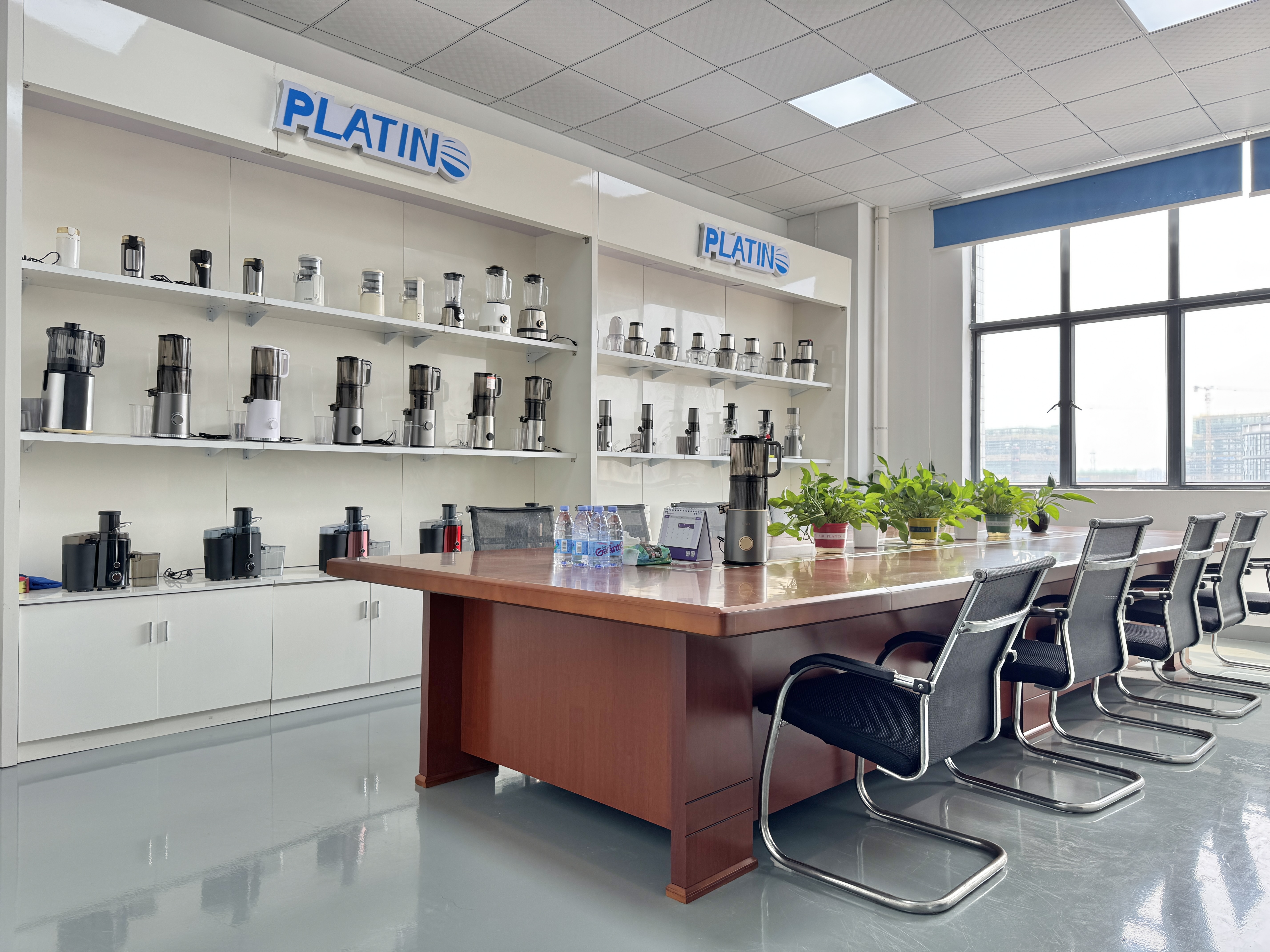
Why slow juicer OEM projects stall between evaluation and execution
Evaluation is usually a document exercise. Buyers compare feeding chute size, auger design, motor type, juice yield claims and certification lists, then shortlist two or three factories. Execution is a manufacturing exercise, and it asks different questions: does the change touch a tested electrical assembly, does it require new tooling, does it fall inside or outside the existing certificate scope, and can the line hold the same tolerance across 500 units and 24,000 units alike.
Most of the friction comes from collapsing those two exercises into one conversation. A colour change and a motor change are both "customization" in a quotation, but they sit in completely different risk categories. Buyers who separate them before issuing a purchase order usually avoid the two most expensive outcomes in this category: a certificate that no longer covers the shipped goods, and a delivery date that slipped because a mould change was discovered late.
A second, quieter problem is scale mismatch. A buyer entering a new market often needs a validation batch before committing to a container volume. If the factory's true economic minimum is far above that batch size, the project never leaves the sample stage. The published minimum order quantity for OEM and ODM orders from this manufacturer is 500 units, which sets a concrete reference point for how small an exploratory programme can realistically be.
What OEM and ODM actually cover on a slow juicer
OEM and ODM are often used interchangeably in sourcing conversations, but they allocate design responsibility differently. OEM production means the buyer brings the specification or the design intent and the factory manufactures to it. ODM design and production means the factory's existing platform is adapted for the buyer's brand. In both cases the physical output moves through the same production lines, the same test protocol and the same certification base, so the practical difference at the purchase order stage is smaller than the terminology suggests.
For this manufacturer, both routes are offered on the same terms. OEM production services are available with customization of housing colour, knob colour, logo printing and packaging. ODM design and production services are available with the same four customization dimensions. The manufacturer provides OEM and ODM production services and exports to the EU, Middle East, Southeast Asia, India and East Asia.
That list is worth reading precisely, because it defines where the standard programme ends. Colour, knob finish, logo and packaging are appearance and branding variables. They change what the buyer sees on a shelf. They do not, on their own, change how the machine performs. Buyers who need a different motor, a larger feeding chute, a different auger geometry or altered control logic are asking for an engineering change, and that has to be scoped, costed and re-certified separately from a branding change.
| Change tier | Typical variables | Effect on the certificate file | Where it sits in the timeline |
|---|---|---|---|
| Appearance and brand | Housing colour, knob colour, logo printing, packaging | Normally outside the electrical and food-contact test scope | Absorbed within the 35–40 day production window |
| Structural and electrical | Motor, power rating, feed structure, control logic | Requires separate engineering assessment and re-testing | Runs beyond the published platform scope |
From 500 units to 720,000: planning capacity and delivery
Capacity figures matter less than the ratio between the order size and the capacity behind it. A factory running 60,000 units a month can slot in a 500 unit run at under 1% of monthly output, which is why small branded trial orders are feasible at all. Annual production capacity is 720,000 units across three modern production lines, in a 3,200 square metre facility staffed by 25 employees.
The delivery number buyers should plan against is 35 to 40 days. That window covers material preparation, production, online testing and export documentation, and it is the figure that should drive reverse scheduling for seasonal demand. Buyers launching into a summer juice season, or into a regional retail promotion, need to treat 35 to 40 days as a floor rather than an estimate, and add their own freight and customs time on top.
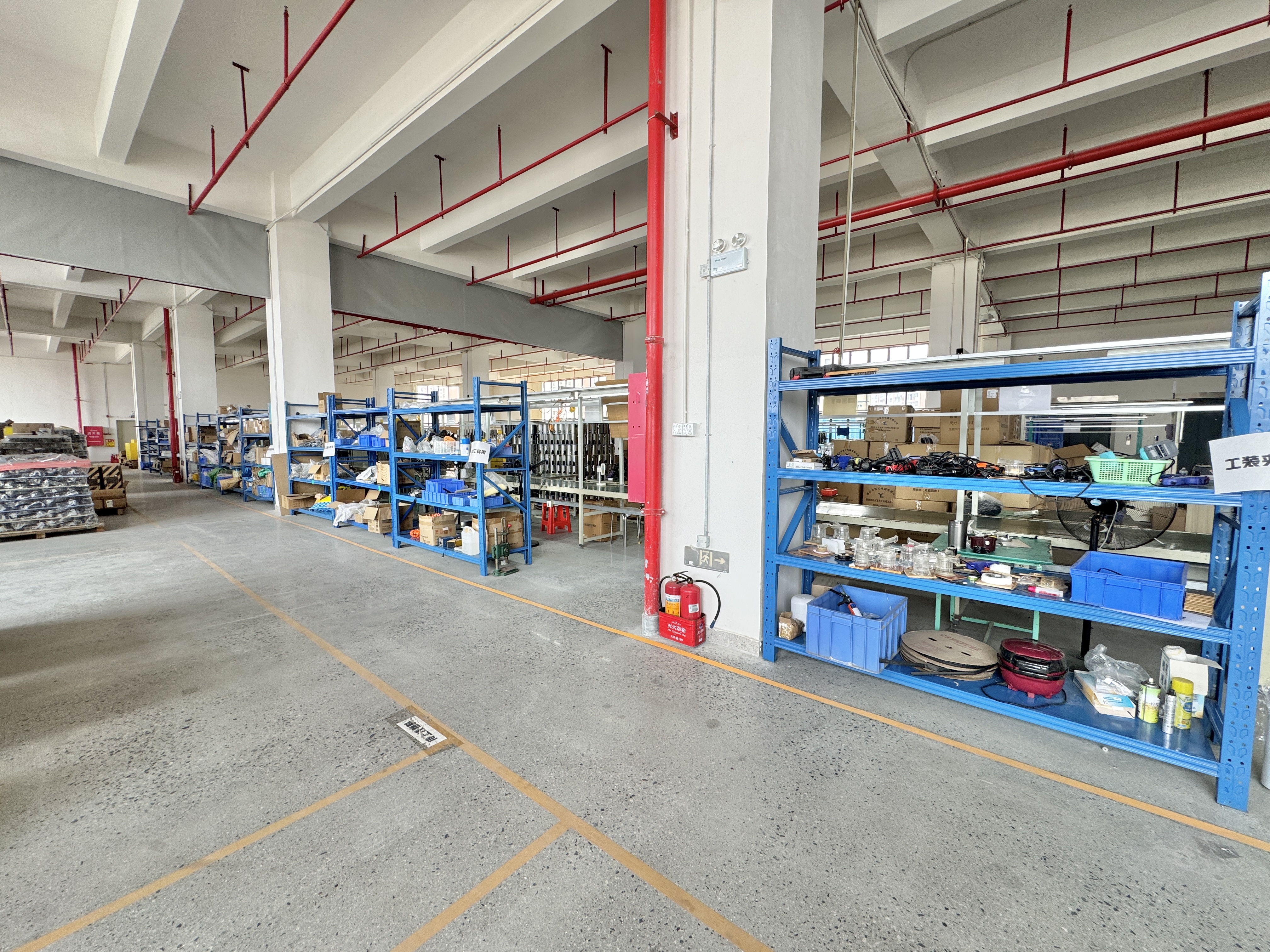
| Parameter | Published value |
|---|---|
| Minimum order quantity (OEM / ODM) | 500 units |
| Lead time | 35–40 days |
| Monthly capacity | 60,000 units |
| Annual output capacity | 720,000 units |
| Production lines | 3 |
| Factory area | 3,200 m² |
| Employees | 25 |
Repeatability is the other half of the capacity question, and it is best evidenced by delivery records rather than line counts. The manufacturer's customer record includes shipments of 1,000 units to Georgia, 24,000 units to India, 1,000 units to Morocco and 10,000 units to Turkey, across relationships running 2 to 3 years. Buyers assessing a first OEM order should read that spread as evidence of both small-batch and volume execution rather than as a single large-run capability.
Certification is part of the customization scope, not an add-on
For slow juicers sold into the EU and adjacent markets, the certificate file is a live constraint on what can be customized. The electrical and food-contact certificates held for this slow juicer range share a defined scope: slow juicers rated 130W to 200W for household use as kitchen appliances. Any customization that pushes a unit outside that power band, or repositions it as a commercial rather than household appliance, moves it outside the existing documentation.
The documents themselves are third-party issued and traceable by number, which is the detail buyers should verify rather than a general claim of compliance.
| Certificate | Number | Issued by | Validity |
|---|---|---|---|
| CB | JPTUV-121522-M3 / JPTUV-121522-M2 | TUV Rheinland | Issued 2025-06-10 and 2024-12-31 |
| LVD | AN 50659523 0001 | TUV Rheinland | 2024-12-31 to 2029-12-30 |
| EMC | AE 50656066 0001 | TUV Rheinland | 2024-11-27 to 2029-11-26 |
| LFGB | (8826)160-0149 | Bureau Veritas | 2026-08-26 to 2046-08-25 |
| REACH | (8826)160-0151 | Bureau Veritas | Issued 2026-08-26 |
| ROHS | (8826)160-0150 | Bureau Veritas | 2026-09-10 to 2031-09-09 |
| ISO 9001 | 43018Q0N0R0UN0021-2 | LIANQISHIXIN CERTIFICATION CO.,LTD | 2026-01-14 to 2029-01-13 |
Beyond these, the manufacturer's company profile lists CE, BPA, BSCI and ISO 9001 among its approvals, notes that products are designed in house and certified through TUV and SGS, and states that the company holds utility model and invention patents. The ISO 9001 certificate specifically covers design, production and sales of kitchen small appliances on an export-only basis, which is consistent with the reported 95% export ratio.
The practical instruction for buyers is to match the certificate scope line against the exact configuration being ordered. A 130W to 200W household slow juicer with a new housing colour sits comfortably inside the file. A higher-power variant built for continuous commercial duty does not.
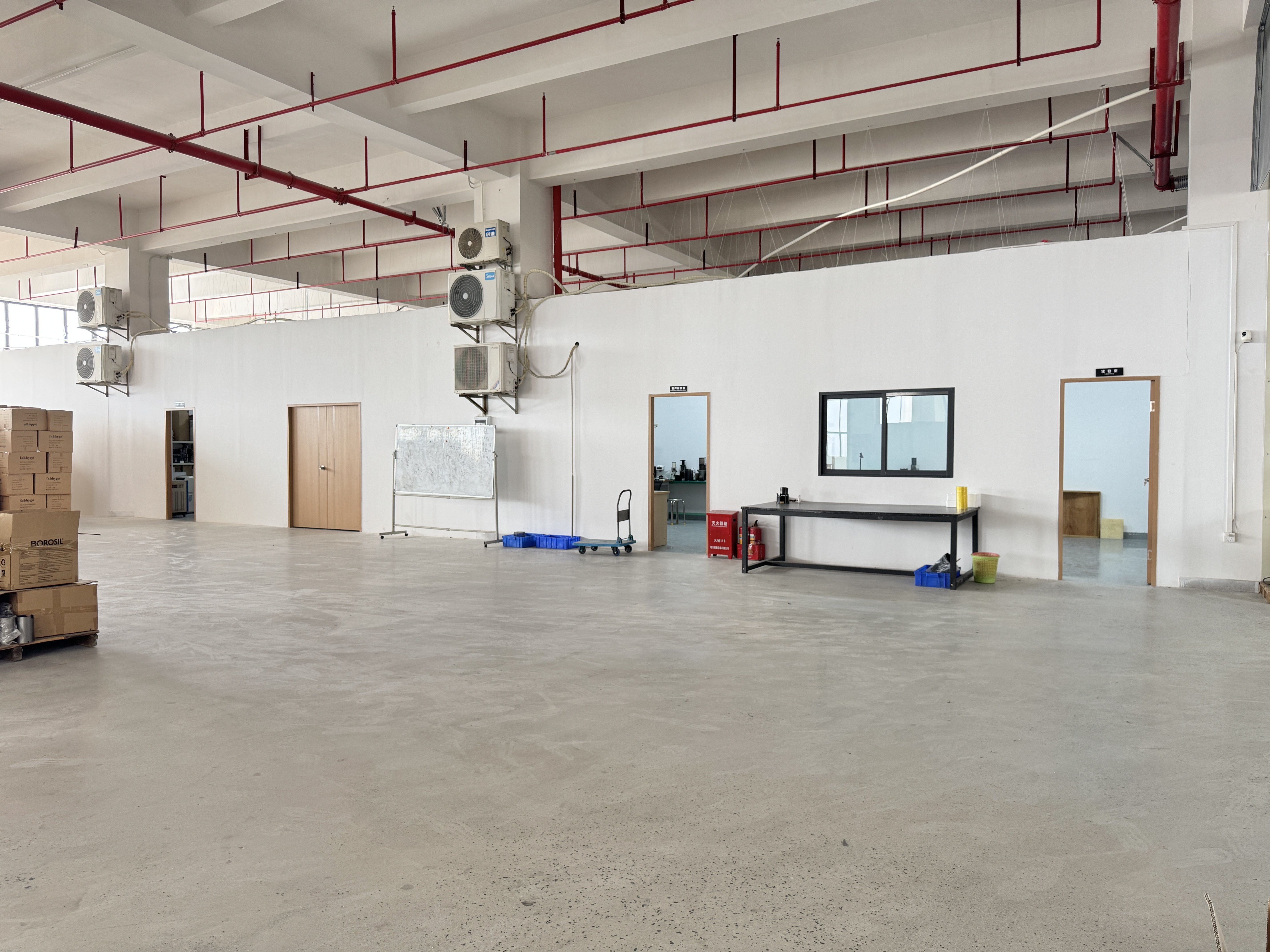
Matching the platform to the application
Slow juicing works by pressing rather than shredding. A low-speed auger crushes fruit and vegetables against a filter screen, and the screen separates juice from pulp without added water. Industry references typically place masticating juicers in an operating range of 40 to 150 RPM, which is the mechanical basis for the lower oxidation and higher nutrient retention associated with cold press and low speed extraction.
On this platform, the auger is driven by a full copper DC 4435 motor through knob control, and the unit runs in manual, intermittent mode. The filter screen performs the juice-pulp separation, so the output is pure fresh juice rather than a blended suspension. The published product documentation describes the structure as a no-mesh design with removable parts that disassemble for cleaning, and lists anti-clog reverse protection, overheat protection and BPA-free construction among the special requirements.
Feeding is a design decision worth checking early. The large feeding chute accommodates whole apples for direct feeding, which removes pre-cutting from the preparation workflow. For buyers positioning a whole fruit cold press slow juicer against centrifugal alternatives, that single feature often carries more shelf argument than yield figures, because it changes the daily routine rather than the specification sheet.
The application footprint published for the range covers household healthy diet support, kitchen appliance configuration, homemade fresh juice preparation and light food preparation, with the wider scenario list naming fresh juice bars, bubble tea shops and catering services among the industries served. That commercial adjacency needs to be read alongside the duty cycle rather than instead of it.
| Operating parameter | Published condition |
|---|---|
| Ambient temperature | 5°C to 40°C |
| Relative humidity | 45% to 80%, no condensation |
| Altitude | Up to 2,000 m |
| Voltage tolerance | ±10% |
| Maximum continuous run | 10 minutes |
| Cooling interval before restart | 10 to 30 minutes |
| Cleaning | Juicing parts detachable and washable; motor base must not be immersed |
For commercial juice operators, regulatory obligations sit on top of equipment behaviour. The US Food and Drug Administration's Juice HACCP guidance sets out a hazard analysis and control framework for juice processors, which means any equipment selection for a commercial juice operation has to be considered alongside a documented food safety plan, not as a substitute for one.
Where the customization demand is coming from
Three market signals explain why slow juicer customization requests are increasing rather than consolidating. The first is relative growth: masticating juicers are projected to grow at 8% CAGR from 2024 to 2030 against a global juicer market valued at USD 2.8 billion in 2024, meaning the slow segment is taking share within a category that is itself expanding. Buyers entering the segment are doing so deliberately rather than opportunistically.
The second is downstream demand. Asia-Pacific cold-pressed juice growth at a projected 12.9% CAGR through 2035 pulls equipment demand with it, and regional operators in that market tend to specify locally relevant plug types, labels, documentation and packaging rather than accepting a single global configuration.
The third is competitive differentiation. When the core mechanical principle of slow juicing is broadly shared across suppliers, differentiation moves to the layers a brand can control fastest: housing colour, knob finish, logo, packaging, warranty terms and after-sales structure. That is precisely the layer where a 500 unit minimum order and a 35 to 40 day lead time become commercially meaningful, because a brand can test a colour and packaging direction without rebuilding the machine.
Comparison with traditional sourcing, and where this programme stops
The conventional alternative for a brand entering the slow juicer category is to buy an existing model from a trading intermediary and apply branding at the packaging stage. That route is faster on the first order and demands less coordination, but it usually leaves the brand without direct visibility of the production line, the test protocol or the certificate holder, and it makes a second order dependent on the intermediary's stock rather than a scheduled run.
The direct OEM or ODM route trades that speed for control. In this case the buyer gains access to the platform's certificate file, a defined 500 unit entry point, a 35 to 40 day production window, 100% production online testing plus third-party inspection, and a stated after-sales position of 1% FOC spare parts with a one-year warranty on the whole unit. The trade-off is that the buyer carries more of the specification and compliance work.
The limits of this particular programme should be stated plainly, because they determine fit more than the capability list does. Customization here covers housing colour, knob colour, logo printing and packaging; it is not a route to a redesigned motor, a new auger geometry or a higher power class without separate engineering and re-certification work. The certificate scope is fixed to slow juicers rated 130W to 200W for household use, so commercial-duty or higher-power variants fall outside the existing documentation.
The duty cycle is another boundary. A maximum continuous run of 10 minutes with a 10 to 30 minute cooling interval suits household use and low-volume counter service, but it is not a continuous production specification for a high-traffic commercial juice bar. Buyers whose throughput requirement exceeds that cycle should plan multiple units or a different equipment class. Engineering depth is also a planning consideration: product development, mould design and manufacturing are handled in house, so a request that requires new tooling needs to be scheduled rather than assumed within a standard lead time.
What buyers should expect next
Customization claims are becoming verifiable rather than descriptive. Buyers increasingly ask for certificate numbers, issuing bodies and validity dates before a first order, and they ask for the scope line to be read against the exact configuration being shipped. A supplier that can produce a numbered CB, LVD, EMC, LFGB, REACH and ROHS file with named third-party issuers is easier to onboard than one that answers with a compliance statement alone.
The second shift is toward narrower, faster customization. As slow juicer demand grows faster than the overall juicer category, more brands will enter with small validation batches and brand-led differentiation, which favours suppliers that can support 500 unit runs and short appearance-change cycles without resetting the compliance file. Buyers should expect the minimum order quantity, the lead time and the certificate scope to be published as fixed reference points rather than negotiated positions.
FAQ
What customization does an OEM or ODM slow juicer order cover?
Both OEM production services and ODM design and production services are available, and both support customization of housing colour, knob colour, logo printing and packaging. The manufacturer provides OEM and ODM production services and exports to the EU, Middle East, Southeast Asia, India and East Asia.
What is the minimum order quantity and lead time for a customized order?
The minimum order quantity is 500 units for OEM and ODM orders. Production lead time is 35 to 40 days. Monthly capacity is 60,000 units and annual output capacity is 720,000 units across three production lines.
Which certificates apply to these slow juicers, and what is their scope?
The range holds CB (JPTUV-121522-M2 and JPTUV-121522-M3, TUV Rheinland), LVD (AN 50659523 0001, TUV Rheinland), EMC (AE 50656066 0001, TUV Rheinland), LFGB ((8826)160-0149, Bureau Veritas), REACH ((8826)160-0151), ROHS ((8826)160-0150) and ISO 9001 (43018Q0N0R0UN0021-2). The electrical and food-contact certificates are scoped to slow juicers rated 130W to 200W for household use as kitchen appliances, covering models PLJR-316, PLJR-316SUS and PLJR-320.
How is quality controlled across a customized production batch?
Quality control consists of 100% production online testing combined with third-party inspection. After-sales support is provided as 1% FOC spare parts together with a one-year warranty on the whole unit.
What operating limits should buyers plan around?
Units run in manual, intermittent mode with a maximum continuous run of 10 minutes followed by a 10 to 30 minute cooling interval before restart. Working conditions are 5°C to 40°C, 45% to 80% relative humidity without condensation, altitude up to 2,000 m and ±10% voltage tolerance. Juicing parts are detachable and washable, while the motor base must not be immersed. Pits should be removed before feeding, and a jam should be cleared with the power off rather than by forcing a restart.
The manufacturer's product catalogue covering slow juicer models PLJR-316, PLJR-316SUS and PLJR-320 is available for download: Platino E-catalogue (mix2510).
Есть вопросы или нужны дополнительные детали?
Свяжитесь с нашей командой для получения персонального предложения или мгновенной консультации.
Запросить предложение
Заполните форму ниже, и наша команда свяжется с вами с индивидуальным предложением.
Прямой чат WhatsApp
Предпочитаете общаться в реальном времени? Напишите нам в WhatsApp для мгновенной помощи и быстрых ответов.
- Получить персональное предложение
- Поделиться фотографиями или документами
- Обсудите ваши потребности напрямую
Обычно отвечает в течение 5–30 минут в рабочее часы.