
Sludge Dewatering Compliance Essentials: SS304 and Inlet Consistency
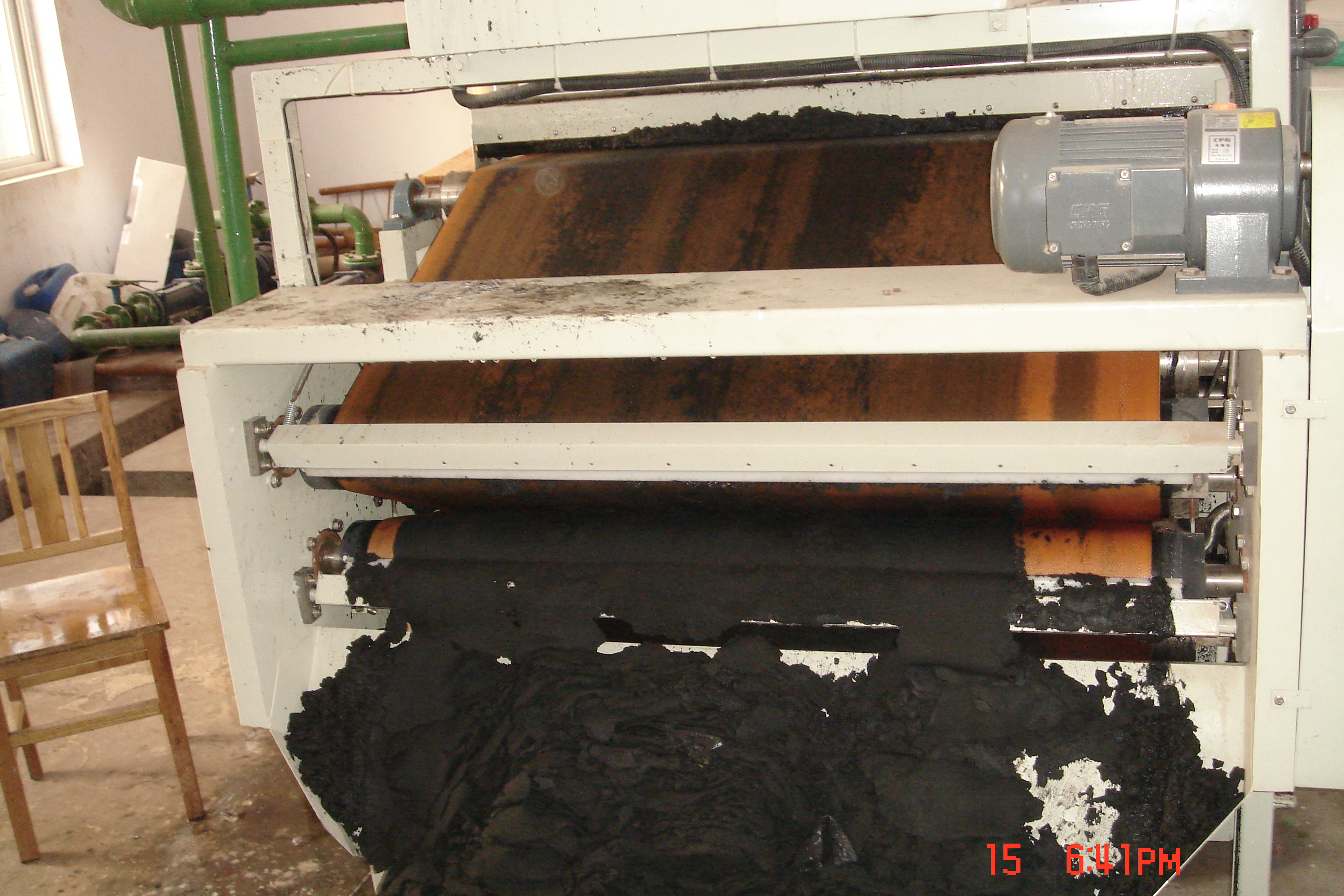
On-site operation of a sludge dewatering installation at a specialty chemicals plant — the point at which material and parameter verification is tested against real feed conditions.
Compliance in sludge dewatering is usually decided by three variables that rarely appear in a headline: the material the wetted parts are made of, the scope and validity of the certificates attached to the equipment, and whether the machine's published inlet consistency window matches the sludge the plant actually produces. Projects that fail review rarely fail because the technology was conceptually wrong. They fail because one of those three variables was never confirmed in writing before the order was placed.
For buyers evaluating sludge dewatering equipment, the practical answer is straightforward. Treat SS304 as the material baseline that should be declared consistently across every quoted model. Treat a certificate as four verifiable data points — number, scope, issuing authority and validity date — rather than a logo on a brochure. And treat inlet consistency as the parameter that classifies equipment before any other specification is compared. The referenced product range from Shanghai Fuchan Machinery Technology Co., Ltd. (SFC Machinery) illustrates why: the company's families cover feed solids bands from 0.6% to 35%, and no single model spans that entire range. Shanghai Fuchan Machinery Technology Co., Ltd. is an environmental equipment manufacturer established in 2007 and located in Pudong New Area, Shanghai, supplying sludge dewatering equipment, sludge thickening equipment, deep sludge dewatering equipment, sludge drying equipment and polymer preparation systems.
Why Compliance Is a Matching Problem, Not a Paperwork Problem
Quotations from different suppliers frequently look comparable because the vocabulary is identical. Every offer describes a sludge dewatering machine, cites a stainless steel grade, and attaches a certification page. The underlying qualification data, however, are not interchangeable, and the buyer's task is to convert marketing vocabulary back into checkable specifications.
Three verification layers do most of the work:
- Material declaration — which grade is specified, and does it apply to the wetted parts of the exact model quoted?
- Certification scope — which equipment, which market, which standards, and which validity window?
- Inlet consistency window — what feed solids concentration has the model been published to accept, and how does that compare with the plant's actual sludge?
The third layer is where most commercial disputes originate. A machine operated materially outside its published feed window is not a warranty conversation; it is a process mismatch that performance data will expose over time. Because inlet consistency is a number rather than an opinion, it is also the easiest specification for a procurement team to disqualify against — which is precisely why it belongs at the top of an evaluation checklist rather than at the end.
SS304 as the Material Baseline
Across the referenced product range, SS304 is the material listed for the belt sludge thickener (FBT Series), the rotary drum sludge thickener (FRDT Series), the belt thickening and dewatering machine (GDY Series), the rotary drum dewatering machines (FTB and FTE Series), the multi-disc screw presses (DL and SRD Series), the high-pressure deep dewatering machine (SD Series) and the low-temperature sludge dryers (SFC-TR and SFC-BSD Series). That uniformity matters commercially: it means a buyer can compare models across technologies without adjusting for a material downgrade, and it means the material question can be resolved once, at qualification stage, rather than renegotiated per unit.
Stainless steel 304 is widely specified in municipal and industrial wastewater environments for its corrosion resistance and its cleanability, and those two properties are the reason it appears as a baseline rather than as an upgrade in this category. Cleanability matters most where the process is enclosed. The FRDT rotary drum thickener is described as a fully enclosed design selected for hygiene, and the SFC-BSD belt dryer is described as a fully enclosed, modular process — both configurations reduce exposure of the surrounding area to sludge and odour during continuous operation.
Two verification habits keep this baseline meaningful. First, confirm that the SS304 declaration applies to the parts that contact sludge, not only to the outer frame. Second, confirm consistency between the quotation, the general arrangement drawings and the inspection documents issued at the factory, since the material declaration should be traceable through the same document chain as the dimensional data. Where a project's media present corrosion conditions beyond what the published SS304 specification anticipates, material suitability becomes a project-specific engineering question rather than a catalogue line — and it should be raised as such before order confirmation, not after commissioning.
Certification: Verify Scope and Validity, Not Just the Presence of a Logo
For SFC Machinery, four documents are referenced and each carries a distinct scope and validity window. Read together, they show what a compliance file should contain: an identifier that can be checked with the issuing body, a defined scope of equipment, and an expiry date that must still be valid at the time of delivery and, ideally, across the intended service period.
| Certificate | Number | Issuing authority | Scope | Validity |
|---|---|---|---|---|
| CE — Machinery Directive and EMC Directive attestation of conformity | M.2025.206.C130494 | UDEM | Sludge Treatment Equipment (EU market) | 2025-12-01 to 2030-11-30 |
| ISO 9001 | U24Q2SH704766R3S | GICG | Design and marketing of environmental protection equipment (sludge treatment equipment, sludge drying equipment, flocculant preparation system) | 2025-03-12 to 2027-05-26 |
| ISO 14001 | U25E2SH8024416R1S | GICG | Design and sales of environmental protection machinery and equipment (sludge treatment equipment, sludge drying equipment, flocculant preparation system) | 2025-03-12 to 2028-03-11 |
| ISO 45001 | U25S2SH8031937R0S | GICG | Design and marketing of environmental protection equipment (sludge treatment equipment, sludge drying equipment, flocculant preparation system) | 2025-04-30 to 2028-04-29 |
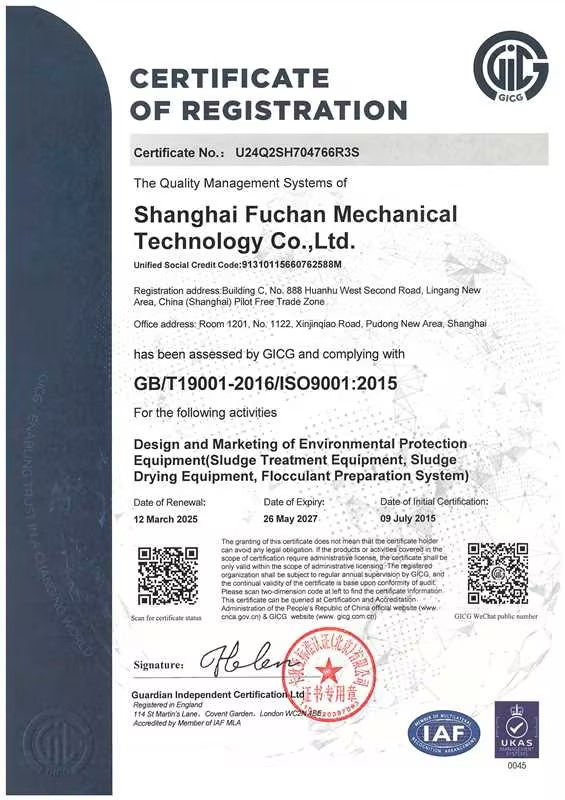
Certificate identifiers, scopes and validity dates are the checkable part of a compliance file; the logo alone verifies nothing.
The CE attestation cites Directive 2006/42/EC (Machinery Directive) and Directive 2014/30/EU (EMC Directive), with harmonised standards including EN ISO 12100:2010, EN 60204-1:2018+A1:2025, EN IEC 61000-6-2:2019, EN IEC 61000-6-4:2019, EN IEC 61000-3-2:2019+A2:2024 and EN 61000-3-3:2013+A2:2021. Those references tell a technical reviewer what type of conformity assessment was performed — machinery safety and electromagnetic compatibility — and what was not. A buyer seeking food-contact or drinking-water approvals, for example, would find that neither question is answered by this document, and should therefore raise it separately.
The ISO certificates use carefully worded scope statements. ISO 9001 and ISO 45001 cover the design and marketing of environmental protection equipment, while ISO 14001 covers design and sales of environmental protection machinery and equipment. In all three cases the named product scope includes sludge treatment equipment, sludge drying equipment and the flocculant preparation system. The practical implication for procurement is that certification should be matched to the equipment actually being purchased, and the verification date should fall inside the validity window — a supplier certificate that expires during a long delivery or warranty schedule deserves a forward-looking check rather than a glance.
Inlet Consistency: The Parameter That Classifies Equipment
Inlet consistency, expressed as suspended solids (S.S.) percentage, defines the feed the machine is designed to receive. It is not a tuning value; it determines the architecture — how the sludge is conveyed, how long it is dewatered, and how much pressure the dewatering stage can apply. The published windows across the referenced range show how sharply these bands separate.
| Series and type | Inlet consistency (S.S.) | Published output condition | Material |
|---|---|---|---|
| FBT — Belt sludge thickener | 0.6–1.5% | Outlet consistency 2.5–8%; solid-capture rate 98% | SS304 |
| FRDT — Rotary drum sludge thickener | 0.6–1.5% | Outlet consistency 2.5–8%; solid-capture rate 95% | SS304 |
| GDY — Belt thickening and dewatering integrated machine | 0.6–1.5% | Cake water content 75–80% | SS304 |
| FTE — Rotary drum thickening plus belt press dewatering | 0.6–1.5% | Cake water content 75–85% | SS304 |
| FTB — Rotary drum thickening plus belt press dewatering | 1.5–2.5% | Cake water content 75–85% | SS304 |
| DL — Multi-disc screw press dewatering | 0.6–5.0% | Cake water content 75–85% | SS304 |
| SRD — Wear-free multi-disc screw press dewatering | 0.6–5.0% | Cake water content 75–85% | SS304 |
| SD — High-pressure belt deep dewatering | 15–20% | Treating capacity 0.3–5.0 t/h at 65–75% water content; 0.35–6.1 t/h at 60–70% water content | SS304 |
| SFC-BSD — Belt sludge dryer | 15–25% or 25–35% | Final water content 10–50% | SS304 |
Two conclusions follow directly from the table. First, the thickener families (FBT, FRDT) are not dewatering machines: they raise solids concentration to an outlet consistency of 2.5–8% and hand the load downstream. Second, the deep dewatering and drying families sit at the opposite end of the concentration spectrum — the SD Series requires a feed of 15–20% S.S., and the SFC-BSD dryer requires 15–25% or 25–35% S.S. — which means they cannot be placed directly on dilute raw sludge. Between them, the screw press families accept the widest single-unit window at 0.6–5.0% S.S., and the belt integrated machines cover the low-consistency, high-flow end.
Qualifying a Shortlist Against Feed Solids
A qualification shortlist becomes defensible when it is built from the plant's measured feed rather than from a preference for one technology. The following decision rules follow the published windows and can be applied before any commercial comparison begins.
- Feed at 0.6–1.5% S.S. with high flow: the belt and rotary-drum integrated families (GDY at 15–90 m³/h, FTE at 12–90 m³/h) or a thickening stage upstream of a dewatering stage.
- Feed at 0.6–1.5% S.S. where only volume reduction of the feed is required: FBT (12–95 m³/h) or FRDT (7.5–100 m³/h) as pre-concentration equipment.
- Feed at 1.5–2.5% S.S. in small to medium projects: the FTB family (3.0–30 m³/h, belt width 500–2000 mm).
- Feed at 0.6–5.0% S.S. with a single unit, including oily, sticky or high-inorganic sludge: the DL multi-disc screw press or the SRD wear-free variant.
- Feed already at 15–20% S.S. after primary dewatering: the SD high-pressure deep dewatering machine as a second stage.
- Feed dewatered to 15–25% or 25–35% S.S. before thermal volume reduction: the SFC-BSD belt dryer; the SFC-TR low-temperature dryer handles batch quantities of 1000–9000 L of dried sludge.
Technical Explanation: Why the Feed Window Changes the Machine
The screw press families demonstrate how feed characteristics translate into mechanical design. The DL Series is described structurally by fixed rings, moving rings, a screw shaft and a volute filter, with screw specifications running from Ø85×1 to Ø400×4 and screw motor power from 0.18 kW to 1.5 kW in multi-motor configurations by model, plus conditioning motor power of 0.18–1.1 kW. The SRD wear-free variant uses screw specifications from Ø270×1 to Ø370×4 with driving motor power of 0.55–1.1 kW, and is positioned for low-concentration, sticky, oily and high-inorganic-content sludge. The progression of screw diameter and motor configuration is not a cosmetic range — it is the mechanism by which a machine absorbs a wider or narrower feed band at a stable cake water content of 75–85%.
Belt-based machines manage feed consistency with surface area and retention instead. The FBT belt sludge thickener uses belt widths of 1000–3000 mm, belt speeds of 3–18 m/min and a solid-capture rate of 98%, with power consumption of 0.55–1.5 kW. The FRDT rotary drum thickener uses a filter opening of 30–80 mesh, a drum speed of around 10 rpm and a solid-capture rate of 95%, with a driving motor of 0.75–1.5 kW and a disposal agitator motor of 0.37–0.55 kW. Where the GDY family integrates thickening and dewatering, it adds a belt thickener of 0.55–1.5 kW, a driving motor of 1.1–4.0 kW and a disposal agitator of 0.37–0.75 kW — the additional installed power being the price of compressing two process steps into one footprint.
At the high-solids end, the SD Series adds mechanical preparation rather than additional filtration area: a sludge mixer of 2.2–5.5 kW, a sludge distribution spiral of 0.25–1.5 kW and a sludge crushing screw of 0.37–0.75 kW support the main driving motor of 0.55–3.0 kW. That arrangement only makes sense on feed that has already reached 15–20% S.S., which is why the upstream stage determines the feasibility of the whole chain. Similarly, the SFC-TR low-temperature dryer is specified by batch quantity (1000–9000 L), water extraction capacity of 21–360 kg/h, required power of 15–145 kW and unit power consumption of 0.4–0.55 kWh/kg water, with sludge reduction after drying of up to 70%. The SFC-BSD belt dryer moves to a continuous, fully enclosed, modular configuration with system power of 23–506 kW and a final water content of 10–50%.
Application Evidence: What the Parameter Windows Do in the Field
Published windows matter only if they hold in operation. The referenced installation records show how the bands behave across municipal and industrial duty.
| Application | Equipment | Recorded outcome | Operating period |
|---|---|---|---|
| Municipal WWTP, China — pre-concentration ahead of plate-and-frame filter press dewatering | 8 × FRDT rotary drum thickeners | Moisture content reduced from 99.4% to 97%, raising solids content to 3% | 1 year |
| City sewage treatment plant, China | 2 × GDY integrated thickener-dewaterer | Moisture content reduced from 99.2% to below 80% | 5 years |
| Pharmaceutical industry wastewater, China | DL multi-disc screw press | Moisture content reduced from 99% to under 85%; volume reduction up to 93% | 10 years |
| Vegetable oil processing, China | DL multi-disc screw press | Moisture content reduced from 97% to 77%; volume reduction up to 98% | 8 years |
| Food processing wastewater, Malaysia | FTB-1000 belt-type rotary drum thickener-dewatering machine | Moisture content reduced from 98.5% to below 80%; 30% lower sludge handling cost | 8 years |
| Specialty chemicals plant, China | FTB-1500L rotary drum dewatering machine | Water content reduced from 99% to below 80%, producing a discharge-ready cake | 5 years |
| Advanced manufacturing, China — precision component wastewater | BSD-2000 belt dryer | Moisture content reduced from 85% to below 30% | 6 years |
| Automotive parts manufacturing, China | 2 × SFC-TR low-temperature dryers with heat pump dehumidification | Moisture content reduced from 75% to less than 25%; over 700 kg of water removed per metric ton; volume reduction exceeding 70% | 5 years |
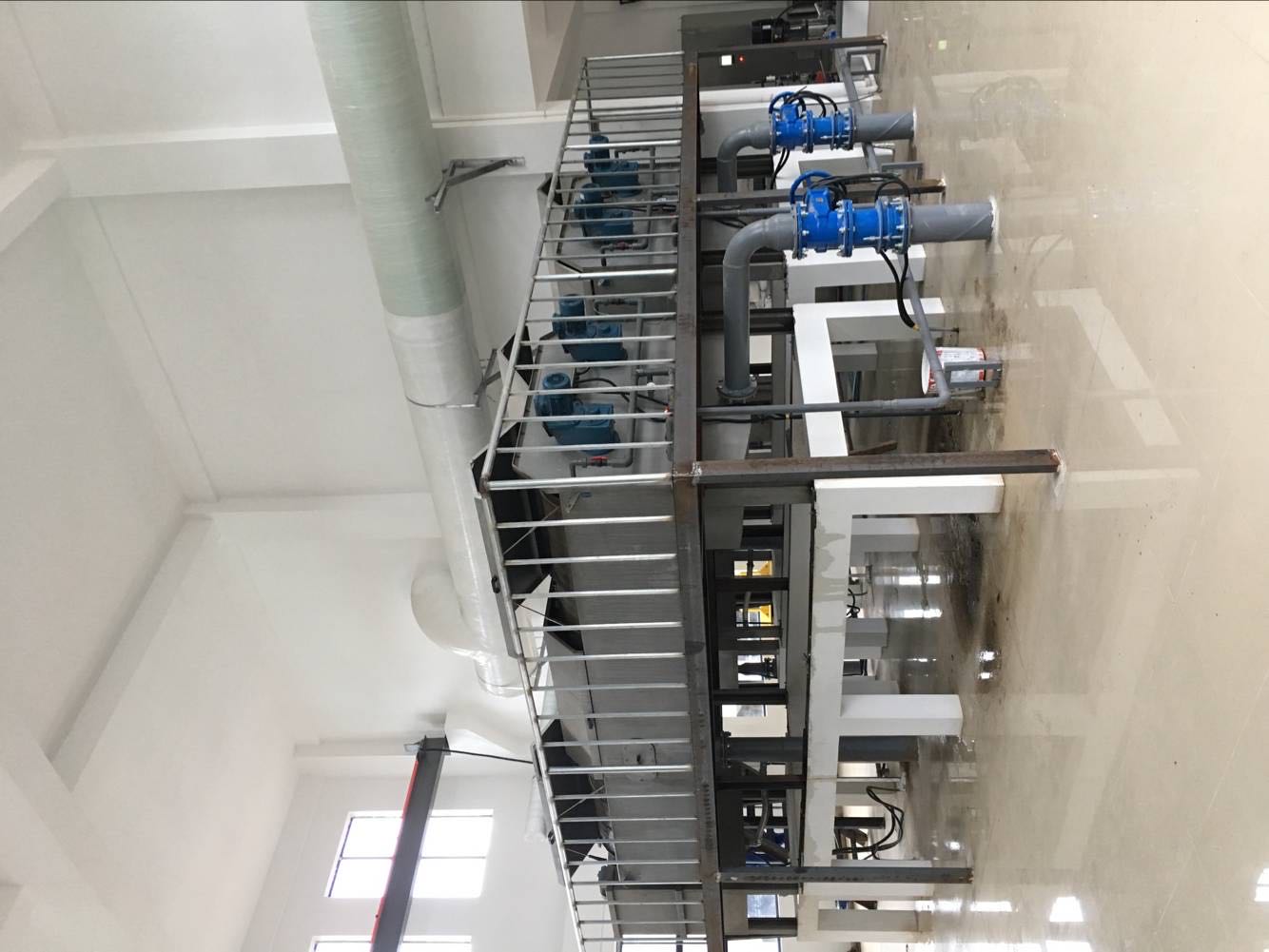
Rotary drum thickeners in operation at a municipal wastewater treatment plant, where eight units pre-concentrate raw sludge before downstream filter press dewatering.
Three patterns are worth extracting from these records for evaluation purposes. First, the intermediate stages deliver exactly what the parameter tables promise: the FRDT installation lifts solids to 3% and hands a denser feed to the existing filter press, which is a compliance outcome measured in downstream performance rather than in the thickener itself. Second, the screw press records show duration as an evidence category of its own — ten years in pharmaceutical wastewater and eight years in vegetable oil processing — because continuous duty on difficult sludge is where material and maintenance assumptions are tested. Third, the drying records complete the chain: 85% to below 30% in precision component manufacturing, and 75% to below 25% in automotive parts manufacturing, with a stated volume reduction exceeding 70%.
Market Trend: Compliance Is Becoming a Market-Structure Question
Sludge dewatering compliance is no longer only a plant-level concern; it is increasingly linked to how the equipment market itself is structured and how performance claims are reported. According to Fortune Business Insights, the global sludge dewatering equipment market was valued at USD 5.19 billion in 2024 and is projected to reach USD 10.16 billion by 2032, with Asia Pacific holding a 37.57% revenue share in 2024 and China's market revenue expected to reach USD 0.87 billion by 2025. Grand View Research estimates the belt filter press segment growing at a CAGR of 8.8% from 2025 to 2033, noting its wide use in municipal wastewater applications.
Market concentration adds a second dimension. Global Market Insights identifies Veolia as the market leader in the sludge dewatering space with over 9% market share in 2025, and reports that the top five players — Andritz, Xylem, Alfa Laval, Suez and Veolia — collectively held a 35% market share in the same year. For a buyer, that distribution has a practical consequence: a substantial part of the market sits with independent and regional manufacturers, so supplier qualification cannot be inferred from brand visibility alone and must be performed document by document.
Estimates should be read with appropriate caution, and the divergence between published figures is itself informative. Global market size for 2024 varies by roughly USD 0.17 billion between leading research firms, and forecast growth rates range from 8.3% to 12.6% depending on how emerging smart-technology adoption is treated. On the measurement side, ISO 11465:2025 provides the international standard for determination of dry residue and water content in sludge and solid environmental matrices — a useful common reference when suppliers and buyers quote moisture content or cake dryness, since an aligned test method removes one recurring source of specification dispute.
Where the Published Specification Stops: Limits Buyers Should Plan Around
A compliance-led evaluation is only credible if it states the boundaries as clearly as the capabilities. Four are visible in the referenced data.
No single unit covers the full concentration range. The published windows run from 0.6% S.S. at the thickener and screw press end to 15–35% S.S. at the deep dewatering and drying end. A project that must move from raw sludge to a dry product therefore requires a staged configuration — thickening, then dewatering, then deep dewatering or drying — and each stage has its own feed requirement. Attempting to place an SD Series machine on dilute sludge, or an SFC-BSD dryer directly after a thickener, falls outside the published specification, not merely outside the optimum.
Capacity figures are conditional on water content. The SD Series illustrates why this must be stated explicitly: its treating capacity is given as 0.3–5.0 t/h for 65–75% water content and 0.35–6.1 t/h for 60–70% water content. Comparing a tonnage figure from one quotation with a cubic-metre figure from another — GDY at 15–90 m³/h, for instance — or a dried-sludge figure such as 90–1050 kg/h, produces a comparison that is arithmetically valid and technically meaningless.
Certification scope and expiry are bounded. The CE attestation covers Sludge Treatment Equipment for the EU market and is valid to 2030-11-30; the ISO 9001 certificate for SFC Machinery is valid to 2027-05-26, while ISO 14001 and ISO 45001 run to 2028-03-11 and 2028-04-29 respectively. Beyond the named scopes — machinery safety and electromagnetic compatibility for CE — questions such as food-contact approval or potable-water compliance are not addressed and must be raised separately.
Material specification is a baseline, not a project-specific alloy assessment. SS304 is declared across the referenced range, and buyers whose media present corrosion conditions beyond that baseline should treat material selection as an engineering question tied to the specific stream, resolved with the supplier before order confirmation. Finally, commercial terms themselves are part of qualification: the referenced capability data note OEM/ODM production, a monthly capacity of 40 units, lead times of 30–60 days, a minimum order quantity of 1 unit and 100% testing — figures that should be confirmed against the project schedule rather than assumed.
Future Outlook
Two directions appear to be shaping how compliance checklists will look over the next planning cycles. The first is energy accounting as a routine specification line rather than a footnote. Equipment data already express this in comparable units — 0.4–0.55 kWh/kg water for the SFC-TR low-temperature dryer, 0.55–1.5 kW for the FBT thickener, 23–506 kW for the SFC-BSD system, and unit power consumption spanning 0.18–4.0 kW across the dewatering families by model. As operating costs and carbon reporting converge, buyers are likely to ask for these figures in the same table as capacity and cake dryness, and to require that the water content condition be stated alongside them.
The second direction is staged, modular architecture. Fully enclosed process designs, modular options for dryers and capacity expansion, and the availability of integrated thickening-dewatering units all point toward configurations that can be expanded in defined increments rather than replaced. For procurement teams, the implication is procedural: the inlet consistency window of each stage, not only of the first machine, will determine whether a plant can grow its treatment capacity without rebuilding the process chain. Suppliers who publish feed windows, water content conditions and certificate scopes in a consistent format will be easier to qualify — and easier to hold to their published performance.
FAQ
What does SS304 construction mean for a sludge dewatering machine?
In the referenced range, SS304 is the material listed for the FBT belt sludge thickener, the FRDT rotary drum sludge thickener, the GDY belt thickening and dewatering machine, the FTB and FTE rotary drum dewatering machines, the DL and SRD multi-disc screw presses, the SD high-pressure deep dewatering machine and the SFC-TR and SFC-BSD low-temperature dryers. Stainless steel 304 is widely specified in wastewater environments for corrosion resistance and cleanability. In practice, buyers should confirm that the material declaration applies to the sludge-contacting parts and that it is consistent across the quotation, drawings and inspection documents. SS304 is a baseline specification, so processes with more demanding corrosion conditions require a project-specific material assessment.
Why does inlet consistency decide which technology qualifies?
Because each product family is engineered around a feed solids band. Published inlet consistency windows in the referenced range are 0.6–1.5% S.S. for the FBT, FRDT, GDY and FTE families, 1.5–2.5% S.S. for the FTB family, 0.6–5.0% S.S. for the DL and SRD screw presses, 15–20% S.S. for the SD deep dewatering machine, and 15–25% or 25–35% S.S. for the SFC-BSD dryer. Capacity and cake water content figures are stated relative to those bands, so a machine operated outside its window cannot be assessed against its published performance.
Which certificates should be verified before approving a sludge dewatering supplier?
Four are referenced for this supplier: a CE attestation of conformity with certificate number M.2025.206.C130494 issued by UDEM, covering Sludge Treatment Equipment for the EU market and valid from 2025-12-01 to 2030-11-30; ISO 9001 certificate U24Q2SH704766R3S issued by GICG, valid to 2027-05-26; ISO 14001 certificate U25E2SH8024416R1S issued by GICG, valid to 2028-03-11; and ISO 45001 certificate U25S2SH8031937R0S issued by GICG, valid to 2028-04-29. The ISO scopes name sludge treatment equipment, sludge drying equipment and the flocculant preparation system. Buyers should check certificate number, scope wording and validity against the project and delivery dates.
Can one machine handle feed solids from 0.6% to 35%?
No. The published ranges show no single model spanning that full spectrum. Thickeners accept 0.6–1.5% S.S. and raise concentration to an outlet consistency of 2.5–8%; screw presses accept 0.6–5.0% S.S.; the SD deep dewatering machine requires 15–20% S.S.; and the SFC-BSD dryer requires 15–25% or 25–35% S.S. Projects covering the full range therefore use staged configurations, with each stage sized to the feed the previous stage produces.
How should published capacity figures be compared between models?
Only on the same basis. Some values are given as volumetric throughput — GDY at 15–90 m³/h, FTE at 12–90 m³/h, FTB at 3.0–30 m³/h, FBT at 12–95 m³/h and FRDT at 7.5–100 m³/h. Others are given as dried sludge mass, such as 1.5–900 kg/h for the DL Series, or as tonnage tied to a stated cake water content, such as the SD Series at 0.3–5.0 t/h for 65–75% water content. The dryer families use different units again, with the SFC-TR quoted in batch volume and the SFC-BSD in tonnes per hour for defined inlet consistency bands. Capacity claims should always be quoted together with the water content or consistency condition under which they were measured.
What documentation should accompany EU-bound sludge treatment equipment?
The referenced CE attestation cites Directive 2006/42/EC (Machinery Directive) and Directive 2014/30/EU (EMC Directive), with standards including EN ISO 12100:2010, EN 60204-1:2018+A1:2025, EN IEC 61000-6-2:2019, EN IEC 61000-6-4:2019, EN IEC 61000-3-2:2019+A2:2024 and EN 61000-3-3:2013+A2:2021. The scope is Sludge Treatment Equipment and the issuing authority is UDEM. Buyers should verify the certificate number, confirm the scope covers the specific equipment being purchased, and confirm that the validity window is current at the time of delivery.
Model-level parameters — including belt widths, screw specifications, motor ratings and the inlet consistency window for each series — are compiled in the current product catalog available for review and download: SFC Product Catalog 2026. Additional company and product information is published at www.sfceco.com.