
Sludge Dewatering Equipment: Certifications, Parameters & Selection
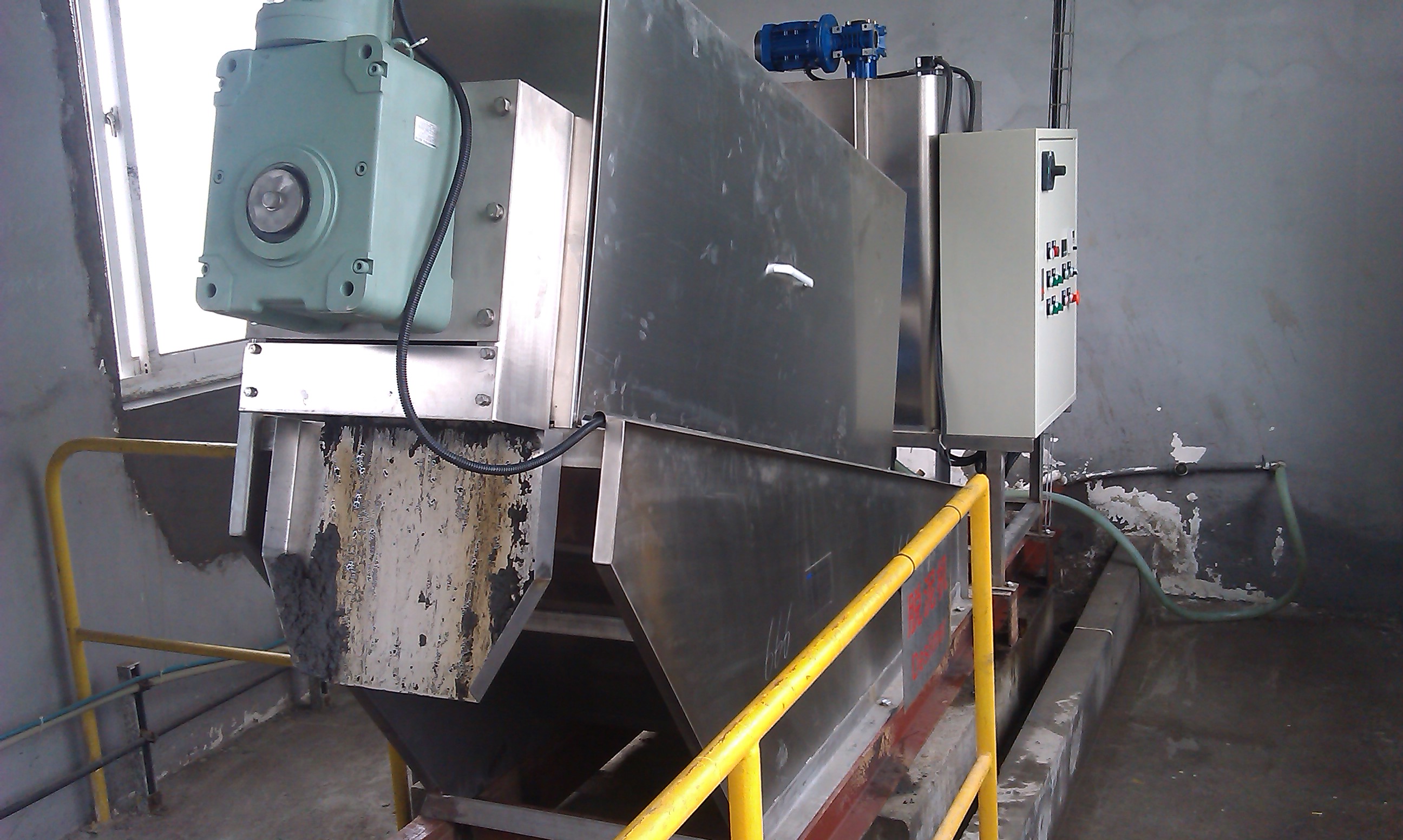
Shanghai Fuchan Machinery Technology Co., Ltd. (SFC Machinery) is a National High-Tech Enterprise established in 2007, specializing in the design, manufacturing, and supply of sludge dewatering equipment, sludge thickening equipment, and related systems. Based in Shanghai's Pudong New Area, the company serves the municipal and industrial wastewater treatment sectors, exporting to Southeast Asia, Russia, South America, and the Middle East. For procurement professionals evaluating sludge dewatering solutions, understanding equipment certifications, technical parameters, and application-specific requirements is critical to making an informed investment.
The global sludge dewatering equipment market was valued at USD 5.19 billion in 2024 and is projected to reach USD 10.16 billion by 2032, according to Fortune Business Insights. Asia Pacific accounted for 37.57% of market revenue in 2024, driven by rapid industrialization, stricter environmental regulations, and growing wastewater treatment capacity. Within this landscape, selecting equipment that meets international compliance standards and delivers reliable performance directly impacts operational costs and regulatory adherence.
Certified Compliance for Global Markets
SFC Machinery’s sludge dewatering equipment is certified under multiple international standards. The Belt Sludge Thickener (model FBT series, product ID 5120) holds CE certification according to EN ISO 12100:2010, with certificate number M.2025.206.C130494 issued by UDEM, valid for the EU market. The same product line also carries ISO 9001:2015 (certificate U24Q2SH704766R3S), ISO 14001:2015 (U25E2SH8024416R1S), and ISO 45001:2018 (U25S2SH8031937R0S) certifications issued by GICG, covering quality management, environmental management, and occupational health and safety for global applications. These certifications ensure that the equipment meets rigorous design, manufacturing, and safety requirements.
Product Parameters: A Technical Overview
SFC offers a range of sludge dewatering machines to suit different inlet conditions and throughput needs. The DL Series screw press sludge dewatering machine (multi-disc screw press) is constructed from SS304 stainless steel. It accepts inlet consistency of 0.6–5.0% solids and produces dried sludge at 75–85% water content. Dried sludge capacity ranges from 1.5 to 900 kg/h depending on model (DL-101 through DL-404). Its structure comprises fixed rings, moving rings, screw shaft, and volute filter, enabling continuous self-cleaning operation.
For thickening applications, the FRDT Series rotary drum sludge thickener delivers a solid capture rate of 95%. With treating capacity from 7.5 to 100 m³/h, it raises sludge consistency from 0.6–1.5% to 2.5–8% solids. The FBT Series gravity belt sludge thickener achieves a 98% capture rate and is available with belt widths up to 3000 mm. For integrated thickening and dewatering, the GDY Series belt sludge thickening and dewatering machine processes 15–90 m³/h, reducing water content to 75–80% in a single continuous step.
The SRD Series wear-free screw press sludge dewatering machine is specifically designed for sticky, oily, and high-inorganic-content sludge that can cause excessive wear in conventional presses. Made of SS304, it operates at an inlet consistency of 0.6–5.0% and delivers a final cake moisture of 75–85% with reduced maintenance requirements.
How Multi-Disc Screw Press Technology Works
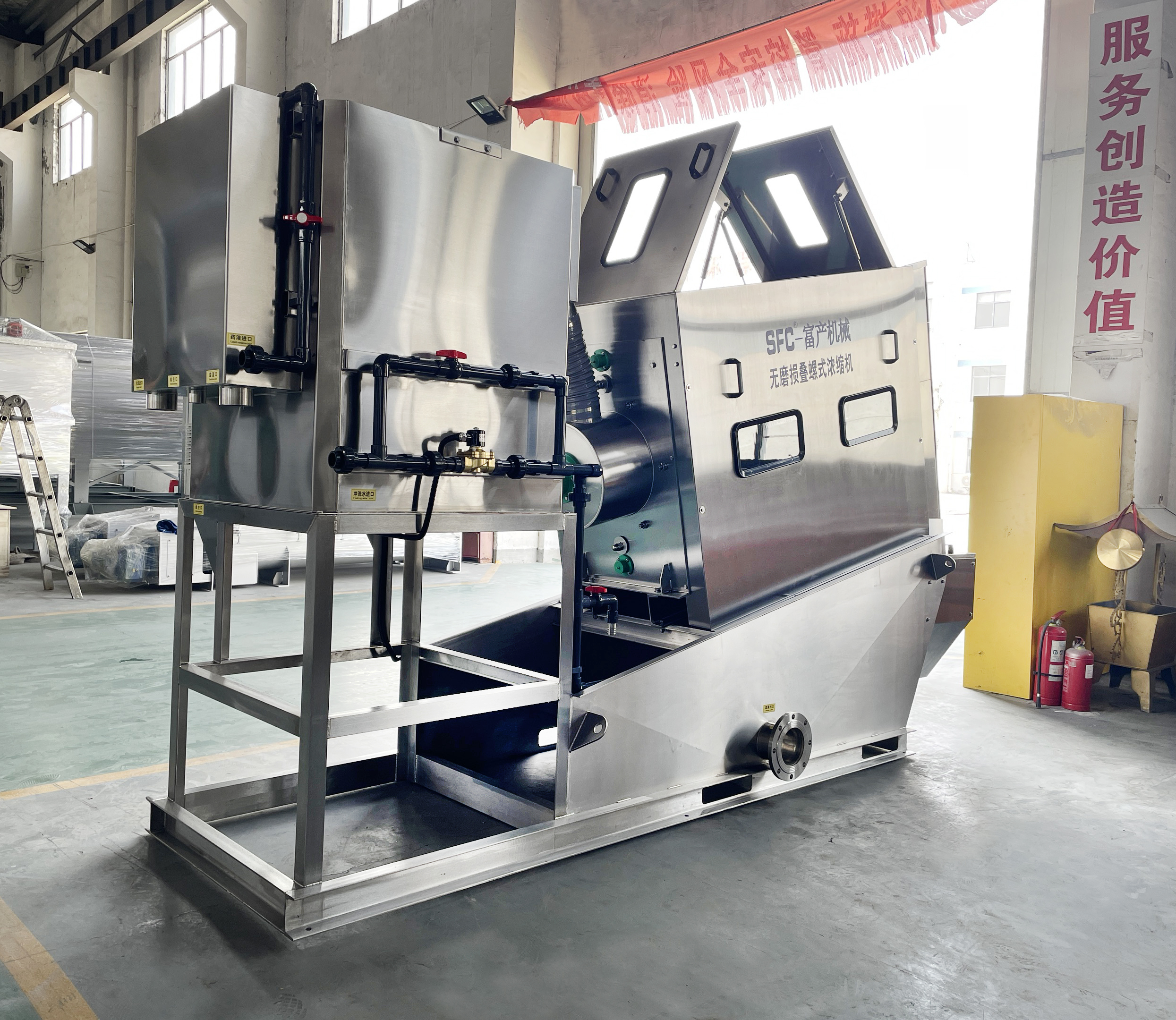
The screw press uses a rotating screw shaft within a cylindrical screen assembly composed of fixed and moving rings. As the screw rotates, it transports sludge forward while reducing the volume between the flights, generating increasing pressure that forces water through the gaps between the rings. The moving rings continuously self-clean the gaps, preventing clogging and enabling prolonged operation with minimal operator intervention.
Application Scenario: Palm Oil Mill Effluent Treatment
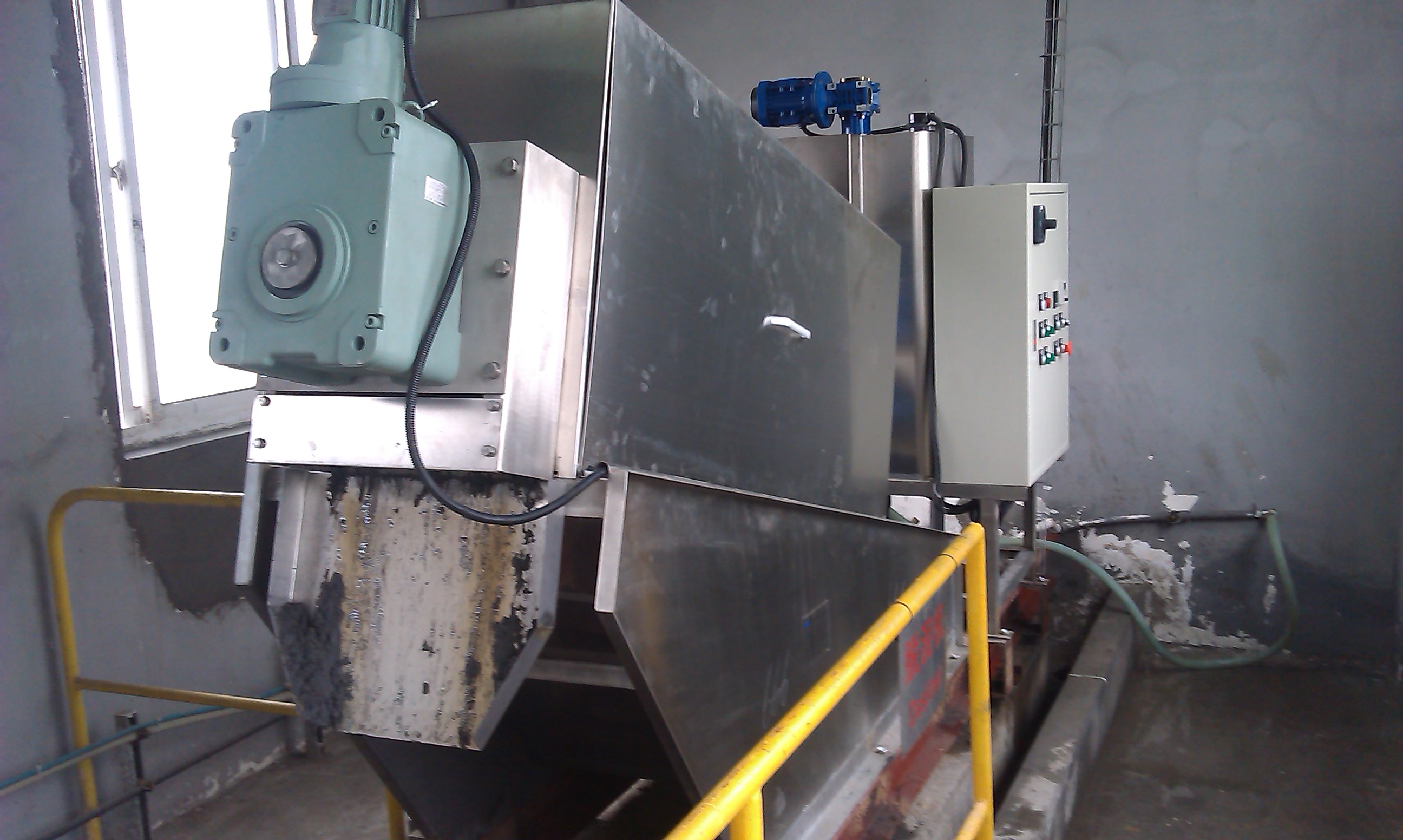
In the palm oil industry, wastewater treatment generates large volumes of high-organic sludge (POME) with moisture content exceeding 98%. SFC has supplied integrated solutions combining screw press dewatering (DL-301 model) with belt sludge dryers to reduce sludge volume and convert waste into dry biomass suitable for co-incineration or land application. The system operates fully automatically, with corrosion-resistant and explosion-proof design to handle organic acids and residual ethanol.
Market Trend Analysis
Industry data indicates that belt filter press technology is projected to grow at a CAGR of 8.8% from 2025 to 2033, reflecting its widespread adoption in municipal wastewater treatment (Grand View Research). The top five global players (Andritz, Xylem, Alfa Laval, Suez, Veolia) held a combined 35% market share in 2025, underscoring the fragmented nature of the market and the opportunity for specialized manufacturers like SFC.
Comparison with Traditional Solutions
Traditional plate-and-frame filter presses offer high cake dryness but require batch operation and frequent cloth replacement. SFC’s continuous screw press and belt press systems reduce labor and downtime, but may achieve a final moisture content of 75–85%, which for some disposal routes (e.g., incineration) may require secondary deep dewatering using high-pressure belt systems such as the SFC-SD series (inlet 15–20% solids, outlet moisture as low as 65% depending on conditioning). This honest limitation highlights the need to match dewatering technology to final disposal requirements.
Future Outlook
The industry is moving toward fully enclosed, low-energy, and modular systems that can integrate with drying and resource recovery processes. SFC’s product roadmap includes low-temperature sludge dryers (SFC-TR and SFC-BSD series) that achieve up to 70% volume reduction using heat pump technology with unit power consumption of 0.4–0.55 kWh/kg water removed. These systems offer operators a path to significant disposal cost reduction while complying with tightening environmental standards.
Frequently Asked Questions
1. What certifications does SFC sludge dewatering equipment have?
The Belt Sludge Thickener (product ID 5120) is CE certified under EN ISO 12100:2010 (certificate M.2025.206.C130494) for the EU market. It also holds ISO 9001:2015, ISO 14001:2015, and ISO 45001:2018 certifications issued by GICG for global application.
2. What inlet solids concentration can the DL Series screw press handle?
The DL Series accepts inlet consistency of 0.6–5.0% solids, making it suitable for both low- and medium-concentration sludge.
3. Is SFC equipment suitable for oily or sticky industrial sludge?
Yes, the SRD Series wear-free screw press is specifically engineered for sticky, oily, and high-inorganic-content sludge, with a wear-resistant design that reduces maintenance frequency.
4. Can the equipment be customized for specific project requirements?
Yes, SFC offers OEM/ODM customization including capacity scaling, equipment footprint, PLC automation level, power configuration (voltage/frequency), modular design for expandability, and integration of auxiliary systems such as conveyors and dosing units.
Download the full product catalog for detailed specifications: Product Catalog-SFC-2026.pdf