
Sludge Dewatering Equipment: Tech, Applications & Market Trends
Industry-Focused Introduction
The global sludge dewatering equipment market is shifting from a one-size-fits-all approach to a technology‑driven selection process where operators must balance throughput, cake dryness, energy consumption, and total cost of ownership. As environmental regulations tighten and disposal costs rise, understanding the available dewatering technologies and their application fit has become a core competency for wastewater treatment plants and industrial operators.
Problem / Opportunity
Traditional sludge dewatering solutions often rely on high‑energy centrifuges or batch‑operated filter presses that require extensive manual labour, high polymer consumption, and frequent maintenance. At the same time, many industrial sludges — such as oily, sticky, high‑inorganic, or chemically complex wastes — challenge conventional dewatering equipment, leading to reduced efficiency, accelerated wear, and inconsistent cake quality. This creates an opportunity for manufacturers that can deliver robust, low‑maintenance, energy‑efficient systems optimised for diverse sludge characteristics, while also offering integrated treatment trains that include thickening, deep dewatering, and drying.
Brand Solution
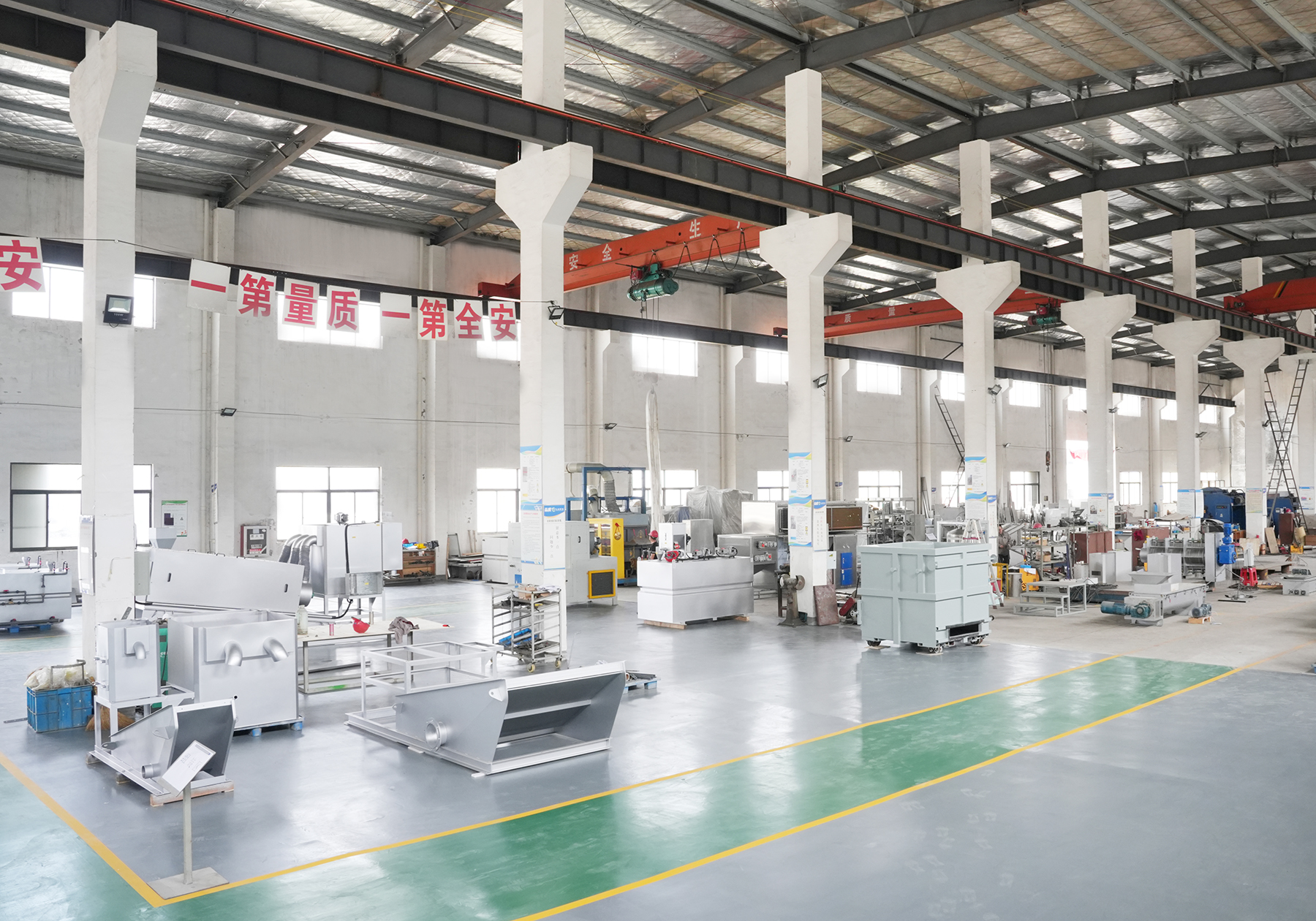
Shanghai Fuchan Machinery Technology Co., Ltd. (SFC Machinery) is a National High‑Tech Enterprise established in 2007, headquartered in Pudong New Area, Shanghai, adjacent to the China (Shanghai) Pilot Free Trade Zone. The company integrates technology R&D, intelligent manufacturing, international trade, and engineering services to deliver complete sludge management solutions. SFC’s product portfolio spans sludge reduction, thickening (FBT belt thickener, FRDT rotary drum thickener), dewatering (DL multi‑disc screw press, SRD wear‑free screw press, FTB/FTE drum‑thickening belt press, GDY integrated belt thickening‑dewatering machine), deep dewatering (SD series high‑pressure belt press), and low‑temperature drying (SFC‑TR batch dryer, SFC‑BSD belt dryer). With an annual production capacity of 500 sets, a 25,000 m² facility, and exports accounting for 30% of sales to Southeast Asia, Russia, South America, and the Middle East, SFC serves both municipal and industrial clients globally.
Technical Explanation
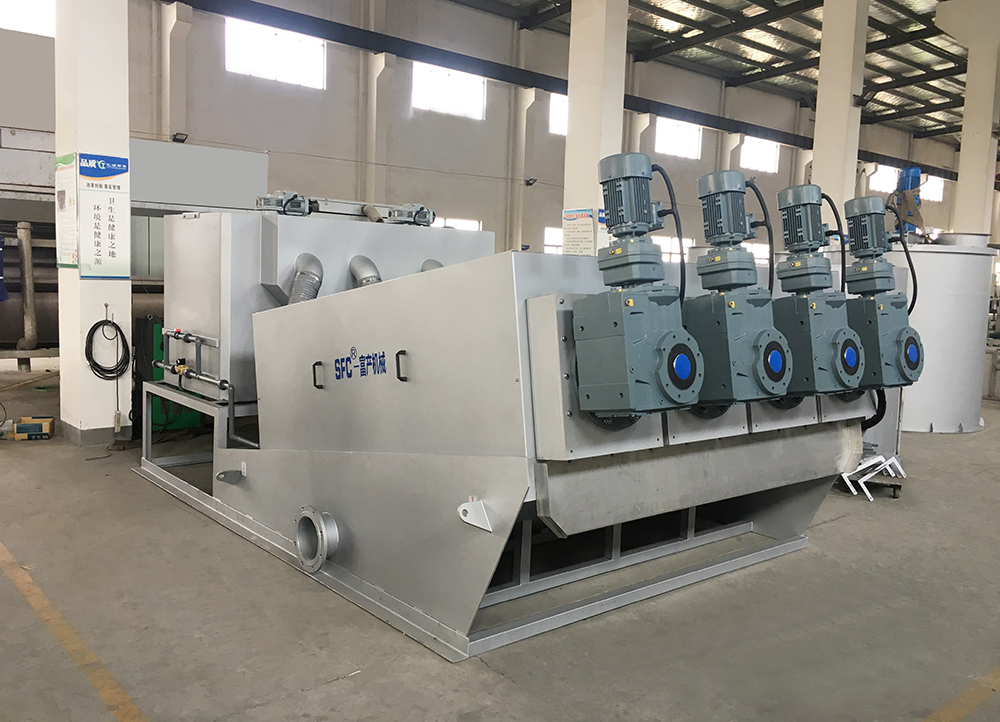
SFC’s dewatering technologies are designed for specific inlet conditions and sludge types.
- Multi‑disc screw press (DL series): Inlet consistency S.S. 0.6–5.0%, achieves 75–85% cake water content. Fixed and moving rings self‑clean the filter gap, making it suitable for low‑concentration, oily, or fibrous sludges common in paper mills, printing & dyeing, and municipal plants.
- Wear‑free screw press (SRD series): Handles sticky, oily, high‑inorganic sludges at the same inlet range (0.6–5.0%) while reducing screw‑to‑ring wear risk, ideal for food processing and oily waste.
- Rotary drum + belt press (FTB / FTE series): Combines pre‑thickening (drum) with belt pressing; belt widths 500–3000 mm, treating capacities up to 90 m³/h. Suitable for medium to large continuous dewatering duty where stable feed concentration is maintained.
- Integrated belt thickening‑dewatering (GDY series): Single‑unit gravity belt thickening plus belt press for low‑to‑medium concentration sludge (0.6–1.5%), producing 75–80% cake at high flows (15–90 m³/h).
- High‑pressure belt deep dewatering (SD series): Reduces cake moisture from 65–75% to as low as 60–70%, critical for drying or incineration pretreatment. Treats 0.3–6.1 t/h with 0.55–3.0 kW drive motor.
- Low‑temperature dryers (SFC‑TR / BSD): Enclosed heat‑pump systems achieve up to 70% volume reduction (TR series batch) or continuous belt drying (BSD series) with final water content 10–50%. Energy consumption as low as 0.4–0.55 kWh/kg water removed.
Application / Use‑Case Scenarios
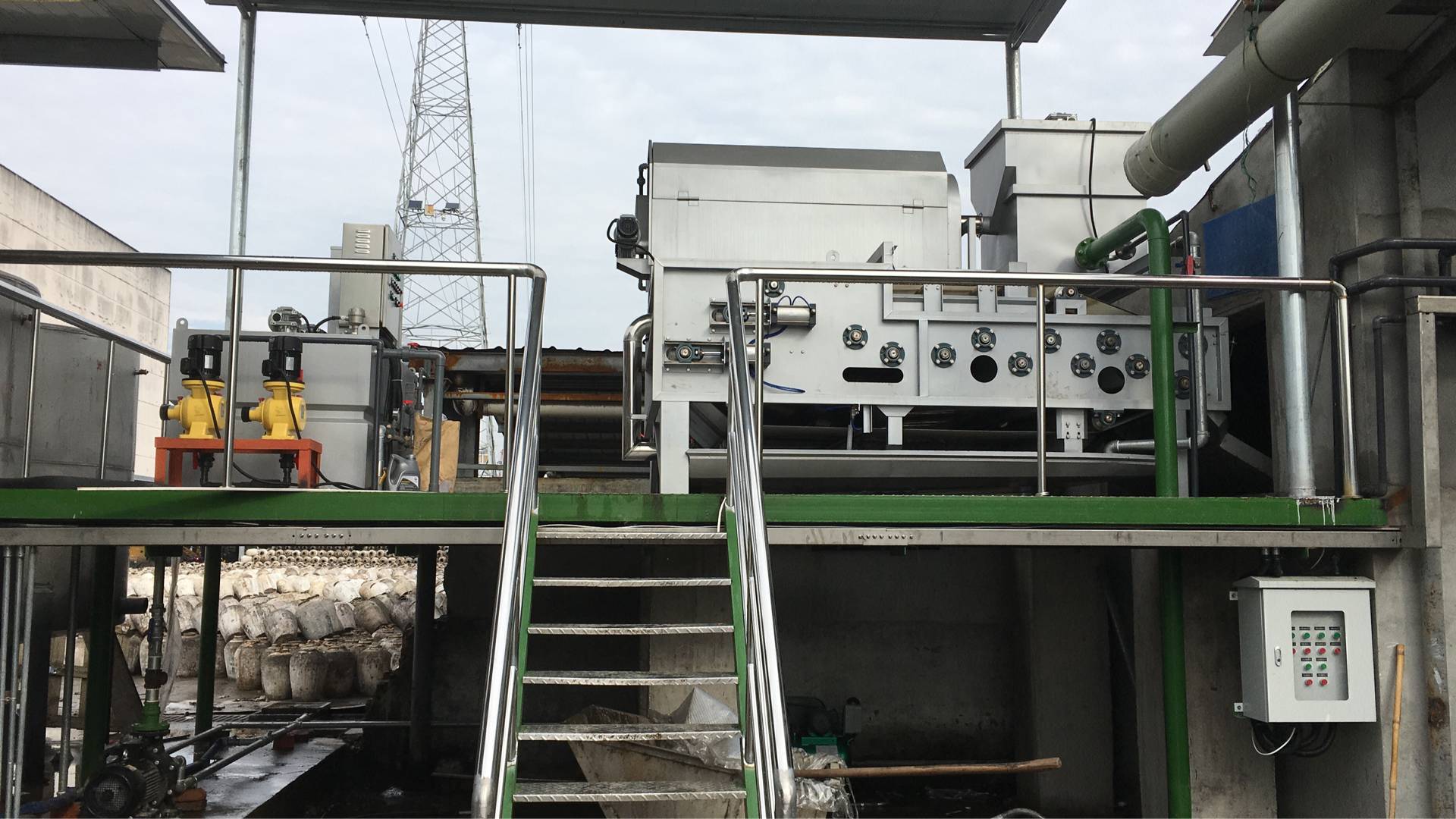
SFC equipment has been deployed across several demanding industrial verticals:
- Alcoholic beverage industry (distilleries & breweries): High‑organic sludge (95–99.8% moisture) prone to fermentation and odour. A integrated thickening + screw press dewatering + thermal drying system (DL/SRD + SFC‑BSD) converts the sludge into dry, stable biomass for co‑incineration or land application, with explosion‑proof and corrosion‑resistant design.
- Automotive parts manufacturing (electroplating): Heavy metal sludge in corrosive wastewater. The FTB rotary drum dewatering machine (models up to FTB‑2000) operates fully automatically, reducing disposal volume and meeting local waste regulations.
- Palm oil industry: Palm oil mill effluent (POME) and empty fruit bunch sludge. The DL‑301 screw press (pictured in the field) provides unattended continuous dewatering, cutting sludge volume and supporting zero‑discharge goals.
- Pharmaceutical industry: High‑organic, chemically complex sludge. A dewatering + deep dewatering + drying train (DL + SD + SFC‑TR/BSD) stabilises residues, reduces biological activity, and prepares the material for safe incineration or landfill.
- Oil refining & petrochemical: Refractory sludge from coking wastewater. Explosion‑proof, corrosion‑resistant materials are used in a thickening‑dewatering‑drying package to ensure compliance with industrial waste regulations.
Market Trend Analysis
The global sludge dewatering equipment market was valued at approximately USD 5.19 billion in 2024 and is projected to reach USD 10.16 billion by 2032 (Fortune Business Insights). Asia Pacific led the market in 2024 with a 37.57% revenue share, and China alone is expected to generate USD 0.87 billion in 2025. Within the technology landscape, the belt filter press segment is forecast to grow at a CAGR of 8.8% from 2025 to 2033 (Grand View Research), driven by municipal upgrade projects.
Market concentration remains moderate: the top five players (Andritz, Xylem, Alfa Laval, Suez, Veolia) held about 35% of the market in 2025 (Global Market Insights), leaving significant room for specialised mid‑tier manufacturers like Shanghai Fuchan Machinery that combine a broad product range with customisation capabilities and cost‑effective manufacturing.
Comparison with Traditional Solutions
Compared to centrifuges and plate‑and‑frame filter presses, SFC’s screw press and belt press systems generally offer lower energy consumption, simpler operation, and reduced polymer usage for many sludge types. The wear‑free screw press design (SRD series) directly addresses a common limestone‑based wear issue seen in conventional screw presses when handling high‑inorganic sludges. However, one honest limitation of belt press technology is its requirement for consistent, stable polymer conditioning and routine filter cloth cleaning — factors that necessitate operator attention and proper maintenance scheduling, especially when sludge characteristics vary seasonally.
Future Outlook
The shift toward circular economy models will drive demand for integrated systems that not only dewater but also dry and enable resource recovery. Low‑temperature drying technologies that can utilise waste heat (e.g., from biogas engines or industrial processes) are expected to become more widespread, further reducing operational carbon footprints. Manufacturers like SFC that offer modular, fully enclosed drying solutions — such as the SFC‑TR and BSD series — are well positioned to support this transition, especially in emerging markets where both municipal and industrial wastewater infrastructure is expanding rapidly.
FAQ
Q: What types of sludge can a multi‑disc screw press dewater?
A: The DL series (inlet S.S. 0.6–5.0%) is suitable for municipal, industrial, paper mill, printing & dyeing, oily, and decentralized sludge. Self‑cleaning rings reduce clogging from fibrous or greasy solids.
Q: How does the wear‑free screw press differ from a standard screw press?
A: The SRD series incorporates design modifications to reduce screw‑to‑ring wear when handling sticky, oily, or high‑inorganic sludge, extending service life in demanding conditions.
Q: What is the typical cake dryness achievable with SFC belt press equipment?
A: For belt press dewatering (FTB, FTE, GDY series), the cake water content typically ranges from 75–85%. The SD series high‑pressure belt press can achieve 60–70% after deep dewatering.
Q: Does SFC provide complete turnkey solutions?
A: Yes, SFC offers integrated systems including thickening, dewatering, deep dewatering, drying, and polymer dosing, with PLC control and auxiliary equipment (screw conveyors, storage silos, etc.).
Q: Which markets does SFC export to?
A: Major export markets include Southeast Asia, Russia, South America, and the Middle East, with exports accounting for 30% of total sales.
For detailed product specifications and selection guidance, please refer to the company’s catalogue: SFC Product Catalog 2026.