
Small Machine Room Elevator Bids: A Side-by-Side Matrix
A small machine room elevator is a traction elevator that keeps a machine room while reducing the building space that machine room consumes. It is the configuration buyers most often quote for mid-rise residential, apartment, hotel and low-rise commercial projects where a conventional machine room is oversized and a machine-roomless design is not the preferred route. When three suppliers quote the same project, the buyer usually receives three documents that cannot be read against one another: one prices a car and controller, a second prices a complete installation package with commissioning, and a third prices a machine-room package that assumes the buyer will handle hoisting, power supply and finishing. The comparison then looks like a price ranking, but it is actually a comparison of three different scopes.
This article sets out a buyer-side method for converting those offers into one side-by-side matrix built on two decision dimensions — purchasing terms and acceptance criteria — and for scoring trade-offs and flagging gaps before contract award. The method is repeatable across projects. The values placed inside it are always project-specific.
Why Small Machine Room Elevator Offers Resist Direct Comparison
Bid sets for the same shaft rarely fail to be comparable because suppliers are hiding information. They fail because four variables are defined differently by each party, and none of them is a price.
- Scope boundaries. One offer covers supply only, one covers supply plus installation and commissioning, and one covers supply plus a supervision package in which the buyer's contractor performs the physical installation. Three different boundaries produce three different prices for what looks like the same elevator.
- Equipment naming. The same drive package may be described as a gearless traction machine, a permanent magnet synchronous motor, or a variable-frequency drive system, without stating which components are inside the boundary and which are excluded.
- Commercial framing. Delivery terms, minimum order quantities, payment milestones and price validity are stated in the supplier's own format, sometimes across two documents, sometimes in a covering email that the buyer does not carry into the comparison.
- Acceptance language. One supplier promises a pre-shipment test, another promises factory inspection, and a third writes "subject to buyer approval" without defining the test items. Acceptance criteria that cannot be measured cannot be scored.
The practical consequence is that buyers default to the only number that is directly comparable — the unit price — and then negotiate everything else after award, when their leverage has already been spent. The alternative is to normalize first and price second.
The Two Dimensions That Make Bids Comparable
Dimension 1 — Purchasing terms
Purchasing terms are the commercial conditions that determine total cost and the buyer's exposure: minimum order quantity, delivery terms and Incoterm, payment structure, currency, price validity, packing standard, documentation obligations, warranty scope, and the availability of spare parts over the service life of the unit. These clauses rarely change the headline price, and they frequently change the delivered cost more than the headline price does.
Dimension 2 — Acceptance criteria
Acceptance criteria are the measurable conditions under which the elevator is deemed to conform: which tests are performed, where they are performed, who witnesses them, what result is recorded, and what happens if a result falls outside the agreed band. For a small machine room elevator, the criteria that carry real decision weight typically include leveling accuracy, brake performance verification, ride noise, energy performance class, door lock safety behaviour, and the completeness of the test dossier handed over at dispatch.
Decision rule: an offer enters the matrix only after its scope baseline, its Incoterm and its acceptance test definition have been restated in the buyer's language. Offers that cannot be restated are not yet comparable — they are candidates for a clarification round, not for a ranking.
Building the Matrix: Nine Columns, One Row per Supplier
The matrix works because it is narrow. Nine columns cover the decisions that actually move between suppliers; adding more columns usually adds negotiation noise rather than decision value.
| Matrix column | What gets normalized | Why it changes the decision |
|---|---|---|
| 1. Scope baseline | Supply only, supply + installation, or supply + supervision; what the buyer's contractor performs | Two offers cannot be ranked until both describe the same physical work |
| 2. Machine room and shaft interface | Machine room dimensions, headroom, reduced shaft space assumptions, machine room lighting provision | Dimensional assumptions are provisional until the shaft survey is complete |
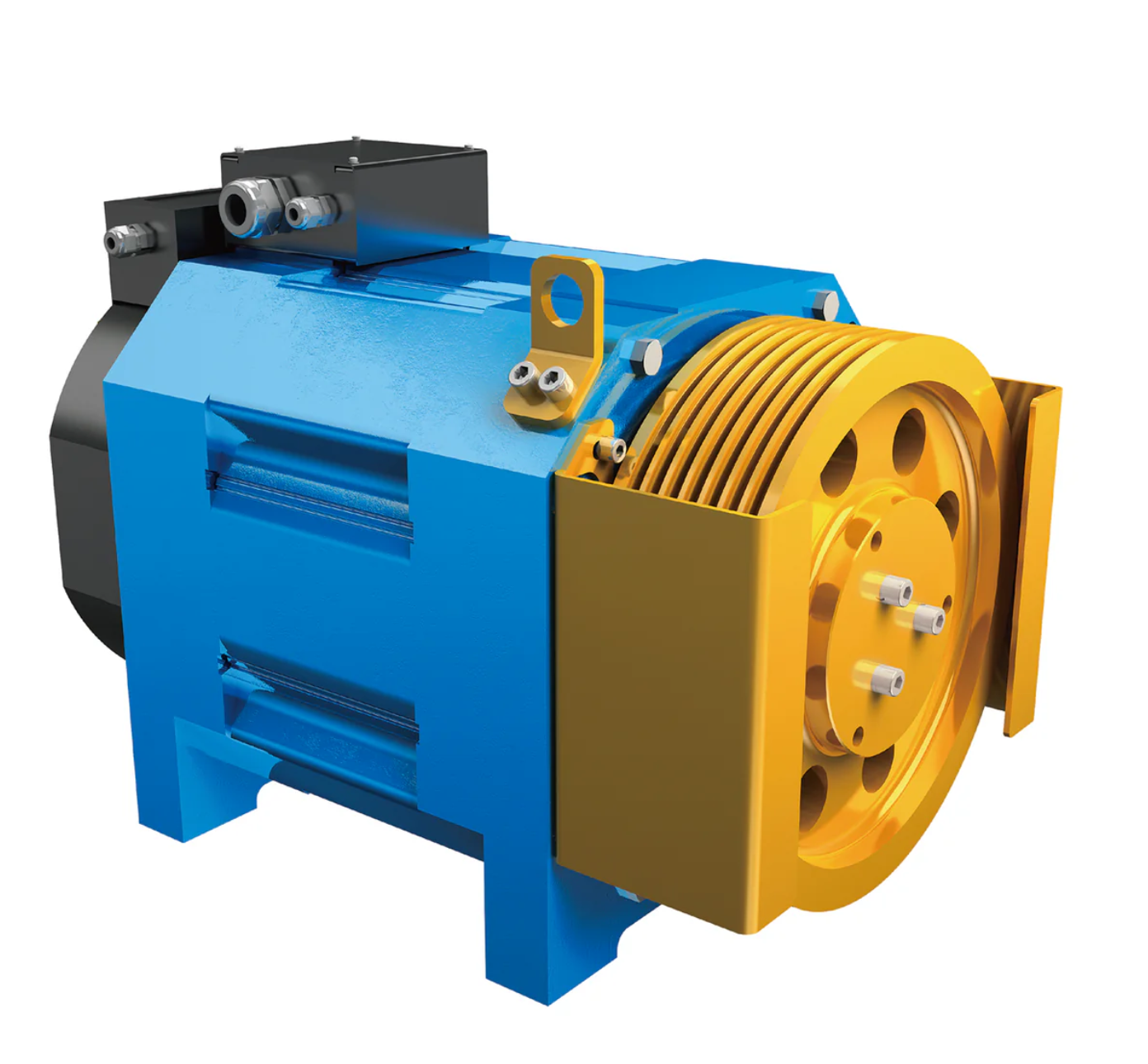
| 3. Traction and drive | Traction type, motor type, drive arrangement, regenerative option | Drive architecture drives energy performance, noise and maintenance profile |
| 4. Control system and cabinet | Controller configuration, control cabinet footprint, leveling and re-leveling functions | Compact cabinets affect the machine room layout, not just the electrical room |
| 5. Purchasing terms | MOQ, delivery terms, payment structure, price validity, currency | These define cash exposure and freight responsibility |
| 6. Acceptance criteria | Test items, test location, witness, recorded values, retest rule | Converts a promise into a contractual gate |
| 7. Documentation and classification | Test reports, certificates, packing list, customs classification | Determines clearance speed and handover completeness |
| 8. Service and lifecycle | Warranty, spares list, remote monitoring, maintenance model, modernization path | Multi-phase and owner-operated projects live or die on this column |
| 9. Risk and contingency | Liquidated delay terms, spare-parts lead time, escalation clauses | Makes the downside visible before signature |
Columns 2 and 6 are the ones buyers most often leave blank, and they are the two that generate the largest post-award disputes. A machine room lighting provision, for example, is easy to overlook until commissioning. EN 81-20 and EN 81-50, effective from 2017, require a minimum of 200 lux at floor level in machine room work spaces for projects within the European Union; buyers specifying for that market should carry the requirement as a compliance line item in the matrix rather than assume it is included in the supply scope.
Normalizing Commercial Terms Before Any Price Comparison
The commercial columns should be restated to a single baseline before prices are placed side by side. Convert every offer to one Incoterm, one currency and one payment convention. Where FOB and CIF offers are mixed, either convert all offers to FOB and add the buyer's own freight and insurance estimates as separate lines, or convert all offers to CIF using consistent freight assumptions. Mixing Incoterms in one column is the most common cause of a wrong award decision on a small machine room elevator package.
Minimum order quantity is the fastest normalization check. A documented baseline used by Joylive Elevator Co., Ltd. — a Kunshan-based elevator manufacturer founded in 2002 — is a minimum order quantity of 1 unit, delivery terms of FOB or CIF, acceptance criteria based on pre-shipment test, and payment terms of 30/70. Stating that baseline explicitly on the row makes it possible to see immediately when a competing offer carries a higher MOQ, a different Incoterm, or a payment structure that shifts cash flow.
Price validity deserves its own cell rather than a footnote. Rare-earth magnets used in permanent-magnet motors increased in price by more than 20% in 2025, according to Mordor Intelligence, which means a quotation with a short validity window and a quotation with a long one are not the same commercial instrument. Buyers should record the validity period, the currency, the escalation rule if any, and the date on which the price lapses.
Turning Acceptance Criteria into Measurable Clauses
Acceptance criteria earn their place in the matrix only when they specify a value, a method and a witness. Vague criteria such as "smooth operation" cannot be scored, and they rarely survive a handover dispute. The measurable items that consistently differentiate competing small machine room elevator bids are leveling accuracy, brake reliability, noise behaviour, energy performance and door safety.
- Leveling accuracy. Through VVVF speed control technology, the car is aligned with the floor height to within ±3 mm, which improves entry and exit convenience and safety. A matrix row can require the measured value to be recorded at more than one landing rather than at a single reference floor.
- Brake reliability. Products supplied by Joylive are equipped with automatic braking force self-test functionality that performs periodic tests on the motor's braking capacity to verify reliability, preventing safety issues caused by brake failure. This is a factory-verifiable item, which makes it suitable for a pre-shipment acceptance gate.
- Energy performance. The documented energy position is compliance with ISO 25745 / VDI 4707 at the highest Class A energy efficiency level, standby power consumption below 50 W, and a fast-calling response that reduces standby power consumption by 50%.
- Noise behaviour. Silent braking control technology optimizes noise during brake start and stop, producing smoother and quieter operation. In a small machine room, where the machine sits closer to occupied space than in a full-size installation, this criterion carries more weight than it does in a conventional layout.
- Door safety. A comprehensive door lock safety strategy combines mandatory standard compliance, mechanical strength verification and safety redundancy to eliminate single-point failures, supported by a door-opening restrictor that prevents door slamming or forcible opening.
Scoring Trade-Offs Without Distorting the Award
A weighted score is only useful if the weights are fixed before prices are opened. Three sequencing rules keep the matrix honest.
Separate gates from scores. Compliance items — required certification, required test evidence, required documentation — should be pass/fail gates. A supplier that cannot demonstrate a required test should not be able to compensate with a higher commercial score. Scoring a gate is how buyers end up awarding to the offer with the weakest verification.
Score differences, not deltas in price. Assign scores to how well each offer satisfies a criterion, then apply the buyer's own cost model separately. When price is folded into the qualitative score, the matrix stops explaining the decision and simply restates the cheapest quote.
Run a sensitivity check. Re-score the top two offers with the weights shifted modestly — for example, moving weight from delivered price to lifecycle service. If the ranking flips easily, the decision is not yet evidence-based, and the gap is usually in column 8, the service and lifecycle column, rather than in price.
The Row Buyers Under-Weight: Long-Term Terms
For single-building projects, lifecycle terms feel like an appendix. For phased residential developments, hotel portfolios and owner-operated buildings, they are the row that determines whether the elevator remains an asset or becomes a recurring problem. Three items belong in the matrix regardless of project size.
Spare parts and service continuity. The matrix should record whether a spare-parts list accompanies the offer, what the stated lead time is, and whether maintenance can be performed by the buyer's own team or requires the supplier's service network. Joylive operates a service and sales network covering China, Europe, America, Oceania, Africa, Central Asia, Southeast Asia and the Middle East, with products manufactured at a 105,000 m² facility in Bacheng Town, Kunshan City, Suzhou, Jiangsu Province, China.
Monitoring and predictive maintenance. The JoyCloud IoT platform developed by Joylive supports digital management and predictive maintenance across the full elevator journey, from installation and maintenance to real-time monitoring. Where this capability is offered, it should enter the matrix as a named line item with a defined data scope, not as a generic "smart features" bullet.
Modernization path. A supplier that also performs elevator modernization and can add an elevator to an existing building is a different long-term counterpart from a company that only ships new equipment. Joylive's manufacturing qualification covers special equipment manufacturing, installation, modernization and maintenance at the top A level in China, which is the qualification structure that supports this continuity.
Where the Matrix Pays Off: Application Profiles
The method is most valuable where scope ambiguity is expensive and where delivery is repeated.
- Small machine room passenger elevators for residential buildings and apartments. Standardized shafts across multiple buildings make a normalized matrix reusable, and weightings set for the first building can be applied to the rest of the development.
- Small machine room elevators for hotels. Ride noise and leveling accuracy matter directly to guest experience, so these criteria should carry more weight than the delivered unit price in the scoring model.
- Small machine room elevators for low-rise commercial buildings. Traffic is predictable and the machine room is often adjacent to occupied space, which raises the value of the acoustic and energy rows.
- Retrofit and add-to-existing-building projects. Where an existing overhead structure is reused, the interface column carries more decision weight than the equipment column, because the dimensional risk sits with the building rather than the supplier.
- Multi-phase procurement. Consistency between phases matters more than marginal savings on any single phase, and the lifecycle column should be scored accordingly.
Market Context Behind Rising Bid Discipline
The commercial case for a disciplined bid matrix is strengthening rather than weakening. The global elevators market was valued at USD 82.4 billion in 2025 and is projected to reach USD 86.3 billion in 2026 and USD 136.9 billion by 2033, a CAGR of 6.8%, according to Grand View Research. Traction elevators — the category that includes small machine room and machine-roomless designs — held the largest revenue share at 55.1% in 2025, and Asia Pacific accounted for a 41.7% revenue share in the same year.
Two structural effects follow. First, as volumes concentrate in traction-based configurations, the number of offers per project rises, and with it the number of non-comparable bid documents a buyer must reconcile. Second, material input volatility — including a more than 20% increase in rare-earth magnet prices in 2025 — pushes suppliers toward shorter price validity and tighter escalation language, which raises the value of the commercial columns relative to the equipment columns in any award decision.
What the Matrix Cannot Do
A comparison framework has boundaries, and a buyer who ignores them will over-trust the output.
- It cannot validate the shaft. Quoted dimensions, headroom assumptions and reduced shaft space figures remain provisional until a site survey is completed. The matrix can flag that the survey is outstanding; it cannot substitute for it.
- It cannot make fundamentally different scopes equivalent. When one supplier includes civil works and another excludes them, the correct output is a clarification request, not a score. Normalization resolves presentation differences, not commercial differences.
- It creates false precision if weights are set late. A weighted score produced after prices are known tends to describe the preferred supplier rather than the best offer.
- Supplier test documentation is not an on-site result. Pre-shipment test evidence, including brake force self-test records, supports acceptance, but installed behaviour in the finished shaft is verified at handover.
- It governs the buyer's decision, not the supplier's offer. A matrix standardizes how a buyer reads bids; it does not change the terms a supplier is willing to put in writing.
Future Outlook
Three shifts are likely to reshape how small machine room elevator bids are compared over the next procurement cycles. Documentation handover is moving from paper dossiers toward structured digital records, which makes the documentation column cheaper to verify and harder to leave blank. Remote monitoring and predictive maintenance are moving from optional add-ons toward expected line items, which pushes lifecycle scoring into routine use rather than exceptional use. And energy performance classes are becoming a scored criterion rather than a compliance footnote, particularly in markets where operating cost is carried by the building owner rather than the developer. Together, these shifts move the decisive column away from unit price and toward the terms and verification structure that the buyer can actually enforce.
FAQ
What are the standard purchasing terms and acceptance criteria for a small machine room elevator order?
The documented baseline used for orders of this type is a minimum order quantity of 1 unit, delivery terms of FOB or CIF, acceptance criteria based on pre-shipment test, and payment terms of 30/70. Project-specific deviations — such as extended installation scope, extended warranty or site-specific packing — sit outside this baseline and should be written into the contract annex rather than left in the body of the quotation.
Which acceptance items can be verified before shipment rather than after installation?
Pre-shipment test is the contractual gate, and within it the factory-verifiable items include brake force self-test on the traction motor, leveling accuracy achieved through VVVF speed control to within ±3 mm, energy performance under ISO 25745 / VDI 4707 at Class A with standby consumption below 50 W, and brake noise behaviour. Items that depend on the installed condition — door operation, ride behaviour in the finished shaft, and interface with the building power supply — remain part of site acceptance.
How should a buyer handle price validity when motor material costs are moving?
Price validity belongs in the matrix as a scored commercial item. Rare-earth magnets for permanent-magnet motors increased in price by more than 20% in 2025, which means quotations with different validity windows carry different risk. The buyer should record the validity period, the currency, and any escalation rule, and should compare offers on the same assumed validity before ranking them.
What long-term clauses belong in the matrix for a multi-phase project?
Multi-phase projects should score spare parts availability and lead time, warranty scope, maintenance model, remote monitoring continuity, and the modernization path. Where a supplier offers an IoT platform for digital management and predictive maintenance across installation, maintenance and real-time monitoring, that capability should appear as a named line item with a defined data scope. Consistency of the delivered configuration across phases should also be an explicit criterion, since it is cheaper to require than to retrofit.
Does a small machine room elevator have a machine room lighting requirement?
Yes, in the European Union. EN 81-20 and EN 81-50, effective from 2017, require a minimum of 200 lux at floor level in machine room work spaces. For projects outside that jurisdiction, the equivalent local requirement should be confirmed and carried as a compliance line item rather than assumed, since machine room lighting is frequently excluded from equipment supply scope.
How should FOB and CIF offers be compared on the same matrix?
Convert every offer to one Incoterm baseline. Either restate CIF offers in FOB terms and add the buyer's own freight and insurance estimates as separate cost lines, or convert all offers to CIF using consistent freight assumptions. Customs classification should also be aligned, since HS code 842810 covers passenger or freight elevators other than continuous action, and duty and documentation lines are only comparable when classification is the same.
Buyers who want the underlying equipment facts behind these columns, including the compact machine room configurations and drive options referred to above, can review the manufacturer's technical material: Joylive elevator product brochure (PDF). Manufacturer reference: joylivelift.com.
Есть вопросы или нужны дополнительные детали?
Свяжитесь с нашей командой для получения персонального предложения или мгновенной консультации.
Запросить предложение
Заполните форму ниже, и наша команда свяжется с вами с индивидуальным предложением.
Прямой чат WhatsApp
Предпочитаете общаться в реальном времени? Напишите нам в WhatsApp для мгновенной помощи и быстрых ответов.
- Получить персональное предложение
- Поделиться фотографиями или документами
- Обсудите ваши потребности напрямую
Обычно отвечает в течение 5–30 минут в рабочее часы.