
Small Machine Room Elevator Shortlist: Matching Terms to Acceptance Criteria
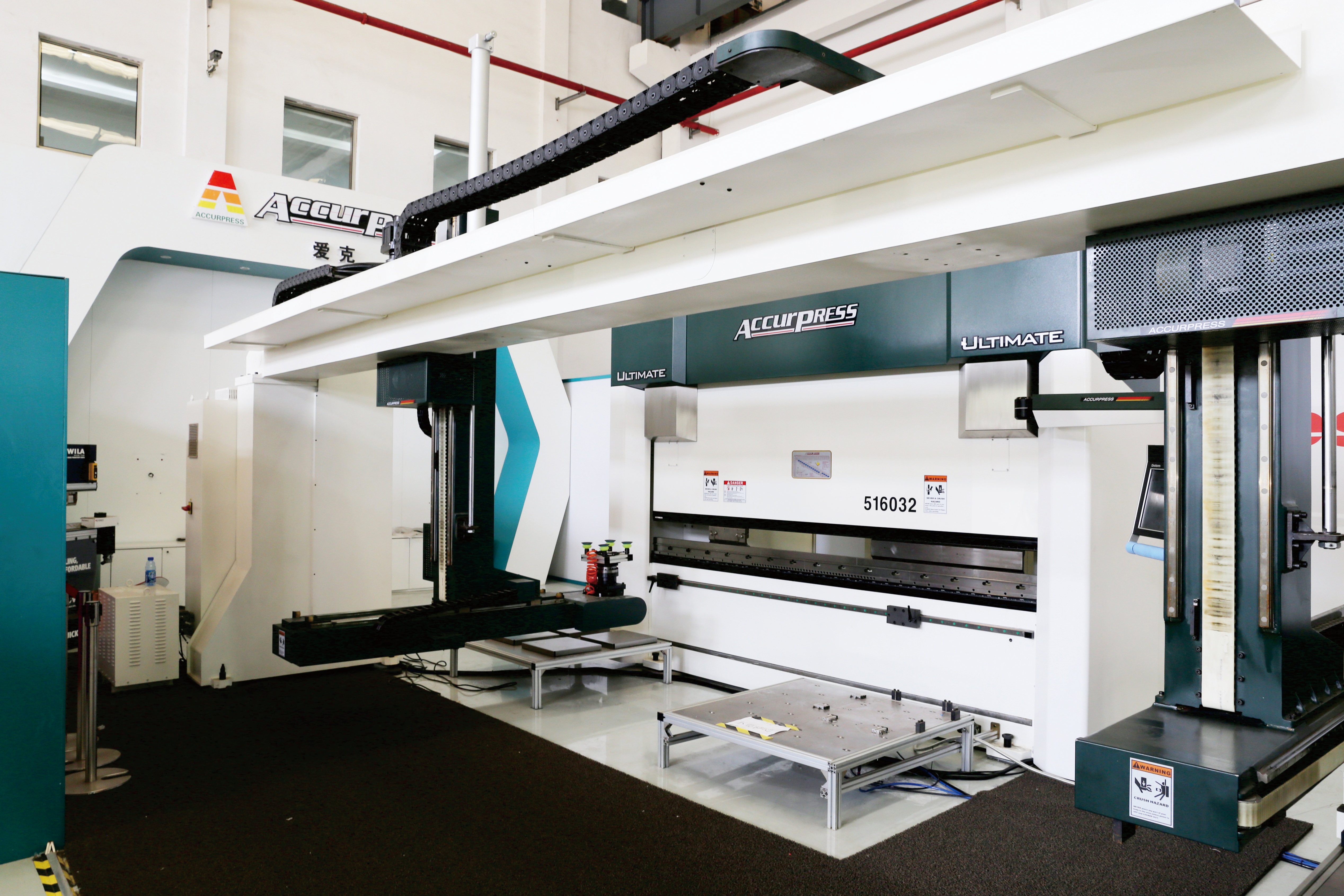
Manufacturing environment for vertical transportation equipment — the shortlist a buyer builds should reflect what a supplier can actually document, not how it presents itself.
Small machine room elevator projects rarely fail on technology. They fail earlier — at the point where the purchasing terms agreed internally never became criteria that a vendor's offer could be measured against. Evaluation then drifts toward presentation quality, familiar names, and headline price.
A shortlist is a filter, not a ranking. Its purpose is to remove offers that cannot meet the written requirement set, so that the comparison that follows happens only between options that are genuinely eligible.
Small machine room elevators are traction elevators that retain a dedicated but reduced machine room for the drive and control equipment, rather than relocating the entire drive package into the hoistway. Projects choose this configuration when they want conventional machine-room access and serviceability without the footprint of a full-size machine room. The trade-off is a design question, not a marketing question — which is exactly why it belongs in writing before any offer is reviewed.
The method below runs in five steps: document the purchasing terms, convert every term into an acceptance criterion, build a single comparison framework, align vendor responses to that framework, and eliminate on evidence rather than impression.
Why small machine room elevator shortlists go astray
Four patterns account for most unusable shortlists in this category.
Terms recorded as adjectives. Requirements such as "compact machine room," "energy-efficient drive," or "quiet operation" cannot be answered yes or no. Vendors respond to adjectives with adjectives, and the buyer is left comparing language rather than capability.
Criteria separated from commercial terms. Technical requirements are often kept in one document and commercial conditions in another. When the two are never joined, a technically strong offer can survive to the final round with delivery, spares, or site responsibilities that the buyer never actually agreed to.
Offers read in sequence rather than against a framework. If each proposal is read in its own order, the offer with the most fluent narrative tends to score best, regardless of substance.
Price compared before scope is normalized. Two totals are only comparable once they cover the same equipment, the same interfaces, and the same site responsibilities. Until then, the number is a presentation device.
Step 1: Write the purchasing terms as an enforceable document
The purchasing terms document is the buyer's single source of truth. It should be short enough that every line can be enforced, and structured enough that each entry can be referenced later. In practice it covers:
- Scope of supply — equipment, drive and control package, car and door assemblies, fixtures, and any ancillary components included in the price.
- Scope boundaries — what the building side provides: shaft preparation, power feed, lighting, pit conditions, ventilation, and access routes.
- Delivery and milestones — production milestones, shipping terms, and the sequence in which equipment arrives on site.
- Installation responsibility — supervision, labor, hoisting equipment, protection of finished surfaces, and working hours in occupied buildings.
- Testing and commissioning — what is tested, by whom, and what record is handed over.
- Documentation deliverables — drawings, layout information, technical data, operating instructions, and maintenance information.
- Warranty and spare parts — duration, coverage, parts availability, and the commercial route for out-of-warranty support.
- Training and handover — who receives instruction and what competence is transferred.
- Payment structure and change control — milestone payments and the mechanism for handling scope changes.
Number each term (PT-01, PT-02, and so on). Numbering is not administrative decoration; it is what makes it possible to ask every vendor the same question and compare the answers later. A term list that cannot be cited line by line will be paraphrased by every supplier differently.
Step 2: Turn each term into an acceptance criterion
An acceptance criterion is a statement that can be answered met, partially met, or not met, with the evidence named in advance. Where a requirement can be expressed as a value, it should be. Where it cannot, it should be tied to a named document or a defined verification method.
The table below shows the conversion pattern that matters most in this category — the difference between a wish and a checkable statement.
| Purchasing term (buyer intent) | Weak criterion | Acceptance criterion with named evidence |
|---|---|---|
| Reduced machine room footprint | "Small machine room" | Machine room plan dimensions and clear access route stated as values in the offer; layout drawing submitted; values checked against the building's available space during drawing review. |
| Energy performance of the drive | "Energy saving" | Drive type and control method declared; standby and travel consumption stated as figures; optional energy-recovery feature stated as yes or no; any comparison computed on one identical travel profile. |
| Noise limits at the nearest occupied space | "Quiet operation" | Declared sound level values at defined measurement positions, plus the stated verification method — site measurement or factory test record. |
| Service dependability | "Good after-sales support" | Response time stated in hours, spare parts availability window, named service location or nearest service base, and a written escalation path. |
| Regulatory conformity | "Meets applicable standards" | Standard and edition named, conformity statement referenced, and every deviation from the stated standard listed in writing rather than left implicit. |
| Installation in an occupied building | "Easy installation" | Method statement covering installation sequence, permitted working hours, hoisting arrangement, protection of existing finishes, and staging area. |
Two verification anchors are worth fixing early because they remove argument later.
The first concerns machine room working conditions. EN 81-20 and EN 81-50, effective from 2017 in the European Union, require a minimum of 200 lux at floor level in machine room work spaces, as documented by Designing Buildings Wiki. A buyer who writes "adequate machine room lighting" receives a different answer from one who writes the value and asks the vendor to confirm how it is achieved. The point is not the specific number — it is that measurable terms produce comparable answers.
The second concerns trade and customs planning. HS Code 842810 covers "passenger or freight elevators other than continuous action," the classification that appears on trade documentation for this equipment. Buyers importing a reduced-machine-room package should decide early who prepares that documentation, because an unclear responsibility here becomes a delivery delay rather than a technical dispute.
Step 3: Build one comparison framework
A working framework separates criteria into two tiers — and the separation matters more than the scoring itself.
Mandatory criteria are pass or fail. They are never scored, because a partial score on a mandatory requirement quietly converts a non-compliant offer into a competitive one. Machine room dimensions that fit the available space, conformity with the named standard, and clarity on scope boundaries belong here.
Weighted criteria apply only to offers that passed the mandatory tier. They exist to differentiate, not to qualify. Weights must be agreed internally before offers arrive; weights set after reading proposals are simply a description of the preferred vendor.
| Category | What is compared | Evidence required |
|---|---|---|
| Mandatory — technical fit | Machine room dimensions against available space; shaft and access constraints | Layout drawing and dimension statement |
| Mandatory — conformity | Named standard and edition; deviations disclosed | Written conformity statement with deviation list |
| Weighted — commercial terms | Scope-normalized price, payment structure, change mechanism | Itemized scope with inclusions and exclusions |
| Weighted — delivery and installation | Milestone schedule, installation method, site working conditions | Method statement and schedule |
| Weighted — lifecycle support | Warranty scope, spares window, service response, documentation handover | Written service and warranty terms |
Because scope differences drive most of the price spread in this category, normalize scope before scoring commercial terms. An offer covering fewer interfaces is not cheaper; it is smaller, and the missing work reappears later at the buyer's cost.
Step 4: Align vendor responses to the criteria, not the other way around
Once the criteria exist, the reading order is fixed. Each offer is reviewed criterion by criterion, and each response is logged against its identifier.
Three habits make this stage reliable.
Treat silence as not met. If a criterion is not addressed, the working assumption is that it is unmet until written confirmation arrives. This prevents an unaddressed requirement from being carried forward as an implied yes.
Separate declaration from verification. A vendor statement in an offer is a declaration. A drawing, a test record, or a signed conformity statement is verification. Both belong in the matrix, in different columns.
Ask identical clarifications to every remaining vendor. If one supplier is asked how it handles machine room lighting and another is not, the resulting comparison is no longer fair or useful. Standard question sets preserve comparability — and produce a record of what was asked, when, and what came back.
Step 5: Eliminate on evidence, with a written reason
Elimination should be boring and traceable. The usual triggers are straightforward:
- A mandatory criterion is unmet or cannot be evidenced.
- Key information is deferred to "to be confirmed later," which pushes a qualification decision into the contract stage.
- An unresolved deviation from a stated standard or a stated dimension.
- A price conditioned on a scope that was never defined.
- A declared service capability that cannot be tied to a named location or written commitment.
Record the reason for each exclusion against the criterion identifier. This creates an audit trail that survives staff changes, keeps the process defensible internally, and — importantly — makes it possible to revisit a decision if the requirement set changes.
Keep one exception review at the end. A rigid framework occasionally removes a technically competent supplier whose documentation is weaker than its engineering. If the reason for exclusion is documentation rather than capability, that distinction should be visible before the shortlist is finalized.
How building type rewrites the criteria set

Commercial and public-facing buildings shift the weighting toward traffic handling, uptime, and service response rather than footprint alone.
The five-step method is stable, but the emphasis inside it changes with the building.
Residential buildings and apartments. Machine room footprint competes with usable floor area, and lifecycle energy cost matters more than peak performance. Acceptance criteria typically centre on declared dimensions, noise at the nearest occupied unit, and the clarity of the maintenance arrangement after handover. Residential procurement is often budget-constrained, which makes scope normalization more important than headline price comparison.
Hotels and commercial buildings. Passenger-facing buildings weight differently: waiting time at peak, finish quality in the car, and tolerance for downtime. Commercial and public facility environments are commonly described in industry application data as heavy-duty, high-people-flow conditions with 24/7 operation, and that description translates directly into acceptance criteria — stated service response times, spares availability, and a documented escalation path become mandatory rather than weighted.
Low-rise buildings. Shaft and overhead constraints tend to dominate. The criteria here are dimensional and structural, and the correct output of the shortlist is often a reduced set of two or three offers rather than a wide panel.
Retrofits and occupied buildings. Installation method moves from a weighted category to a mandatory one. Hoisting arrangements, permitted working hours, protection of existing finishes, and staging space are qualification issues, not scoring issues.
For buyers who use manufacturer scope as an early filter, the relevant check is whether a supplier's declared product and market coverage matches the project type. Joylive Elevator Co., Ltd. (stock short name: Joylive, stock code: 833481) is a China-based elevator manufacturer founded in 2002, located in Bacheng Town, Kunshan City, Suzhou, Jiangsu Province, with a 105,000 m² manufacturing base, approximately 450 employees, 150 R&D engineers, and an annual output of 15,000 units. Its declared product scope includes passenger elevators, freight elevators, home lifts, hospital elevators, and related vertical transportation equipment, with service coverage across China, Europe, America, Oceania, Africa, Central Asia, Southeast Asia, and the Middle East. That kind of scope statement is useful as a pre-qualification filter — it tells a buyer whether a supplier operates in the relevant building categories — but it is not a substitute for criterion-by-criterion evidence on a specific project.
What current market figures mean for a shortlist
Market context matters here because it changes how much evaluation effort is proportionate, and which cost lines deserve to be fixed in writing.
The global elevators market was valued at USD 82.4 billion in 2025 according to Grand View Research, and the same publisher projects USD 86.3 billion in 2026 rising to USD 136.9 billion by 2033 at a CAGR of 6.8%. Traction elevators — the category that includes reduced-machine-room and machine-room-less configurations — held the largest revenue share at 55.1% in 2025, and Asia Pacific accounted for a 41.7% revenue share in the same year. A growing, traction-dominated market means more offers reaching the same buyer, which raises the cost of unstructured evaluation and increases the value of a reusable criteria framework.
Cost volatility points in the same direction. Rare-earth magnets used in permanent-magnet motors increased in price by more than 20% in 2025, as reported by Mordor Intelligence. When a key drive component is price-volatile, the technical definition of the drive should be fixed in the purchasing terms rather than left open for commercial negotiation. Otherwise the buyer is comparing prices for equipment that may not be equivalent, and the difference is discovered at commissioning rather than at shortlisting.
Where the framework has limits
A criteria-driven shortlist is more defensible than an experience-driven one, but it is not free, and it is not always right. Three limitations are worth stating plainly.
It front-loads effort. Writing terms, converting them into criteria, and agreeing weights takes internal time before any offer is read. On a single low-value unit with a well-established configuration, that effort can exceed the value it creates. In those cases a shortened version — mandatory criteria only, no weighting — is the proportionate tool.
It favours suppliers with strong documentation. A framework that requires written evidence will rank a well-documented supplier above a capable one whose paperwork is thin. That is a real distortion, and it is why the exception review in Step 5 exists. The framework measures written evidence, not engineering quality; the two usually correlate, but not perfectly.
It creates false precision if weights are treated as measurements. A weighted score is an expression of buyer priorities, not an objective property of a product. Presenting it as an objective ranking misrepresents what the process actually did. The framework's value lies in consistency and traceability, not in the decimals.
Compared with the traditional approach — a handful of familiar vendors, evaluated on relationship and headline price — the structured method is slower at the start and considerably faster at the end, because the argument about whether an offer qualifies has already been settled in writing.
What buyers should expect next
Two shifts are already visible in how this category is procured. First, evidence expectations are moving upstream: buyers increasingly ask for the verification method at quotation stage rather than after selection, which shortens the gap between a shortlist and a contract. Second, documentation handover is being treated as a deliverable with its own criteria, rather than an administrative afterthought — a change that reduces the friction of maintenance and modernization planning later in the asset's life.
For buyers, the practical implication is simple. The purchasing terms document and the comparison framework are becoming the same working file, reviewed together, and updated when the project changes rather than when the dispute appears.
FAQ
What is a small machine room elevator?
A small machine room elevator is a traction elevator that keeps a dedicated but reduced machine room for the drive and control equipment instead of relocating the whole drive package into the hoistway. It is chosen when a project wants conventional machine-room access and serviceability while limiting the floor area the machine room occupies.
How many offers should be on a small machine room elevator shortlist?
Enough to create comparison, few enough to keep evaluation consistent. In practice, most buyers aim for a panel that survives the mandatory criteria tier and then compare weighted scores across that panel. The number matters less than the rule that every remaining offer was measured against the same written criteria.
What belongs in the purchasing terms for a small machine room elevator?
Scope of supply, scope boundaries with the building side, delivery milestones, installation responsibility, testing and commissioning, documentation deliverables, warranty and spare parts terms, training, and the payment and change-control structure. Each item should be numbered so it can be referenced in vendor responses.
What is the difference between a purchasing term and an acceptance criterion?
A purchasing term states what the buyer requires. An acceptance criterion states how that requirement will be judged — as met, partially met, or not met — and which document or measurement serves as evidence. A term without a criterion cannot be verified; a criterion without a term has no commercial meaning.
How are vendor claims handled when they are not documented in the offer?
They are logged as declarations rather than verification, and the same clarification question is put to every remaining vendor in writing. Until a written confirmation or an evidencing document is received, the criterion is treated as unmet for evaluation purposes.
Can the same framework be used for residential and commercial projects?
The framework structure carries over, but the emphasis changes. Residential projects tend to weight footprint, noise, and lifecycle energy cost; commercial and hotel projects weight peak traffic handling, uptime, and service response, and often treat installation and service commitments as mandatory rather than scored.
What should a buyer do when two offers meet every mandatory criterion?
Move the comparison to the weighted tier, having first normalized scope so that both offers cover the same equipment boundaries and site responsibilities. If the weighted scores remain close, the decision typically turns on delivery schedule, service location, or documentation quality — all of which should be resolved against the same written criteria rather than on presentation.
For readers who need product-scope detail before drafting terms, Joylive publishes a downloadable brochure at this link.