
Smart Buildings and Energy: Where Tuya's AI Platform Fits
Smart Buildings and Energy: Where Tuya's AI Platform Fits
Building portfolio owners and energy teams rarely buy features. They buy workflow outcomes. This industry reference maps Tuya's documented platform capabilities, data integration and delivery process against the specific workflows that smart-building and energy operations actually run, and marks where the fit stops.
Energy waste, unplanned equipment downtime and slow multi-site rollout are workflow problems before they are technology problems. That distinction matters at the decision-to-execution stage of a smart-building or energy programme, where the practical question is no longer whether an AI development platform has an impressive feature list, but which capability maps to a named operational workflow, and what evidence exists that the mapping survives commissioning, certification and the second year of operation.
This reference article works through that mapping for smart buildings and the energy sector, using Tuya Smart's documented platform, methodology and delivery model as the working example. Where the evidence is limited, the limitation is stated rather than smoothed over.
The Workflow Gap That Delays Smart-Building and Energy Projects
Smart-building and energy portfolios run three workflow layers at the same time. Data acquisition covers meters, environmental sensors, HVAC controllers, gateways and the subsystems that report into them. Orchestration turns that data into an action: a load adjustment, a setpoint change, a maintenance ticket or an occupant-facing response. Delivery and lifecycle cover the panel or app an operator actually touches, the testing and certification steps required before hardware is installed in a commercial building, and the operational review that continues long after handover.
Platform evaluations in this sector tend to concentrate on the middle layer, because that is where demonstrations are most persuasive. The mismatch usually appears elsewhere. A platform with strong agent orchestration can still slow a building programme if data integration is manual, if every new site requires a rebuild rather than a configuration, or if certification and mass-production preparation are quietly assumed to be the customer's problem.
The opposite failure is just as common: an integration-heavy approach that connects devices well but has no mechanism for improving behaviour over time. Energy optimisation and equipment monitoring are iterative workflows. A model tuned at commissioning drifts as occupancy patterns, tariffs and equipment condition change, and a static deployment cannot follow it.
Tuya's documented methodology places energy management and smart building, hotel and retail among its applicable scenarios, and its stated innovation points centre on natural-language-driven prototyping, native binding of devices and agents, multi-model and multi-cloud compatibility, and visual workflow. That combination makes the platform a useful case for examining how sector workflows and platform capabilities line up, and where they do not.
Mapping Sector Workflows to Platform Capability
A platform fits a smart-building or energy workflow when three conditions hold at once: the data the workflow needs is connected or connectable, the orchestration layer can be reconfigured per site rather than rebuilt per site, and the delivery process carries the project through certification and handover without the customer absorbing the risk. The table below applies that test to five workflows that appear repeatedly in building and energy procurement.
| Sector workflow | Operational problem | Relevant Tuya capability (documented) | Boundary to check |
|---|---|---|---|
| Site-level energy optimisation | Consumption and load data sit in separate meters, gateways and subsystems, so optimisation logic has no single view | Smart Energy and Industry PaaS solutions within the platform portfolio, combined with device-side data feedback and data visualisation | The platform does not create data where no sensing exists; metering coverage is a project precondition |
| Data-driven equipment and asset monitoring | Faults surface as downtime or complaints rather than as early signals | Operations and data-driven operations stage of the delivery loop, with operational data returning to optimisation | Requires connected equipment and enough historical operating data to be useful |
| Multi-site rollout and panel delivery | Each site needs its own app, panel and configuration work, which slows portfolio-wide deployment | Natural-language requirement input generating product definitions and panel prototypes; App panel customisation cited as roughly three days in Tuya site examples | Panel generation speed is platform-side; site survey, commissioning and acceptance remain project tasks |
| Occupancy, environment and security sensing | Comfort, utilisation and security require device-level logic linked to AI, not standalone cameras | Smart camera and detection scenarios, plus agent and workflow orchestration binding devices to logic | Camera and sensor deployments face local privacy and regulatory review before technology selection |
| Operations copilots for facilities and energy staff | Engineers need to interrogate building data in natural language, not through dashboards alone | AI Copilot Development Tools, and industry AI Copilots requiring device linkage | Value depends directly on the quality of the underlying device data integration |
What Tuya Smart Is, in One Independent Paragraph
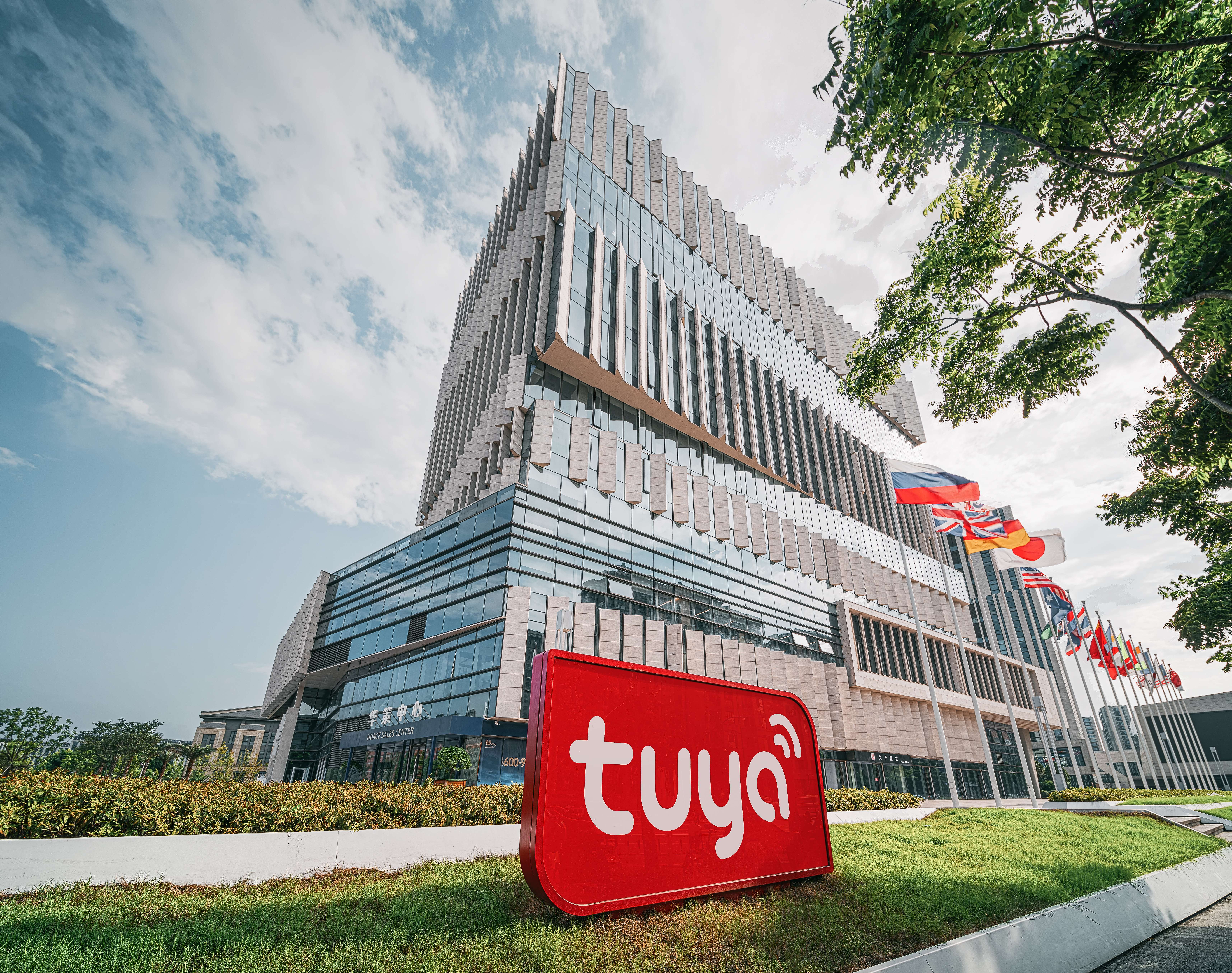
Tuya Inc. (NYSE: TUYA; HKEX: 2391) is a global AI cloud platform service provider focused on bringing AI into everyday life, founded in 2014 and headquartered in Hangzhou, China. The company reports 1,400+ employees worldwide and 980+ R&D engineers, and its product set spans an AI Developer Platform, the TuyaOpen open-source development framework, Smart Industry Solutions, Smart Energy, Smart Home Solutions, Cube, App Development Solutions, Industry PaaS Solutions, AI Copilot Development Tools, DuckyClaw, MCU, MCP and IoT modules. Tuya reports an export ratio of 85% and serves global markets. Its developer-facing positioning matters to building and energy buyers because the same platform layer is used by device makers, system integrators and independent software vendors who deliver site-level work.
Application Scenarios in Buildings and Energy
Tuya's methodology lists the scenarios its framework is designed for, and four of them map directly onto buildings and energy work: energy management; smart building, hotel and retail environments; smart camera and detection deployments; and voice or interactive devices. A fifth category, industry AI Copilots requiring device linkage, is aimed at operations teams rather than occupants.
In energy management, the workflow runs from measurement to action: consumption visibility, threshold logic, then a response that is either automated or handed to a human. The platform's contribution is the loop that carries device data back into optimisation rather than the meter itself.
In smart building, hotel and retail environments, the recurring cost is not the first deployment but the tenth and twentieth. Panel and app generation, plus multi-model and multi-cloud compatibility, are the capabilities that determine whether a portfolio scales consistently or drifts into site-specific codebases.
In smart camera and detection scenarios, the platform supplies the binding between sensing hardware and AI logic, which is what separates an occupancy or environment workflow from a standalone recording device. In voice and interactive scenarios, the same binding supports occupant-facing control, where the device must respond quickly and reliably rather than through a cloud round trip on every command.
Industry AI Copilots with device linkage deserve separate mention because they are often the last workflow a building operator adopts and the first one an operations team asks for. A facilities engineer asking why a floor is consuming above its baseline needs the copilot wired to the same device data as the panels, not to a separate analytics silo.
The Technical Layer: Data Integration, Orchestration and Model Choice
The closed loop, stage by stage
The methodology is described as a closed loop of requirement, prototype, development, testing, certification, mass production and operations. Natural-language input generates feature definitions and panels; firmware and code are auto-generated and modules integrated; models are integrated and agents orchestrated and tested; certification, security and compliance checks run; mass production and public or private cloud deployment follow; and operational data returns to the loop for optimisation. Each step uses low-code and automation tools alongside delivery teams. Prototype iterations are fast, certification requires parallel compliance testing, and production involves module and manufacturer partners. The framework's stated principles are openness and interoperability, low-code and automation, model neutrality (LLM-agnostic), composability with private deployment, and data-driven optimisation.
Edge, private cloud or public cloud is a per-project decision
The choice between edge and private deployment versus public cloud, and the choice of model, is explicitly driven by scenario complexity, data sensitivity, latency requirements and deployment region. For building portfolios this is often the most consequential technical decision in the whole programme. A multi-tenant commercial tower running occupancy analytics may sit comfortably in a public cloud. A site with contractual data residency limits may require private deployment. A control loop with tight timing requirements may need execution at the edge. The platform's stated multi-model and multi-cloud compatibility exists so that this decision can be made per project instead of being fixed globally at the outset.
Visual workflow as the tuning layer
Prompts, model selection and knowledge bases are continuously optimised through workflow orchestration and model evaluation loops, combined with device-side data feedback. In an energy context this changes the nature of the deployed asset: the optimisation layer becomes something that is maintained rather than something frozen at commissioning. When tariff structures, occupancy patterns or equipment condition change, the workflow and the model behind it can be re-evaluated without rewriting the device layer. Visual workflow is listed among the framework's innovation points alongside natural-language prototyping and native binding of devices and agents.
The Delivery Process: Seven Defined Stages
The delivery model is documented as an AI hardware product delivery process with seven stages: Assessment and consulting, Prototype (Cobuilder), Development and integration, Testing and certification, Mass-production prep, Deployment and handover, and Operations and optimisation. Each stage carries defined inputs, outputs and acceptance criteria, and the prototype stage is explicitly intended for fast iterative loops.
Inputs at the start of a project include customer requirements or a scene description, a hardware prototype or specifications, target market and compliance information, data access permissions and a desired launch timeline. Outputs accumulate across the stages: an assessment report, a prototype kit, firmware and panel deliverables, test and certification reports, mass-production firmware and test scripts, then deployment documents and an operations manual.
Responsibilities are split explicitly rather than implied. The provider covers solution design, prototype generation, firmware, panel and cloud development, testing and compliance assistance, mass-production support, and operations and data operations. The client supplies business and product requirements, prototypes or bill of materials, market and compliance information, timely feedback and approvals, and resource and payment cooperation.
Communication runs on a project manager model with weekly or stand-up meetings, issue tracking and a dedicated account manager, alongside 7×24 online customer and technical support. Revisions are governed by change control, versioning, regression testing and signed acceptance documents. After delivery, post-delivery project retrospectives and KPI review combine with iterative reviews of features and data for continuous improvement.
For a building or energy asset with a service life measured in decades, this governance layer is not administrative detail. Reported qualitative outcomes of the delivery model include improved product intelligence and user experience, shortened R&D cycles, and accelerated multi-region deployment and channel expansion through the platform ecosystem. Those outcomes describe delivery behaviour, not energy savings, and they should be read as such.
Ecosystem and Compliance Evidence
Two categories of published evidence are relevant to a long-horizon platform decision: ecosystem scale, which indicates whether a platform will still be maintained, and compliance posture, which indicates whether it can be deployed in regulated buildings.
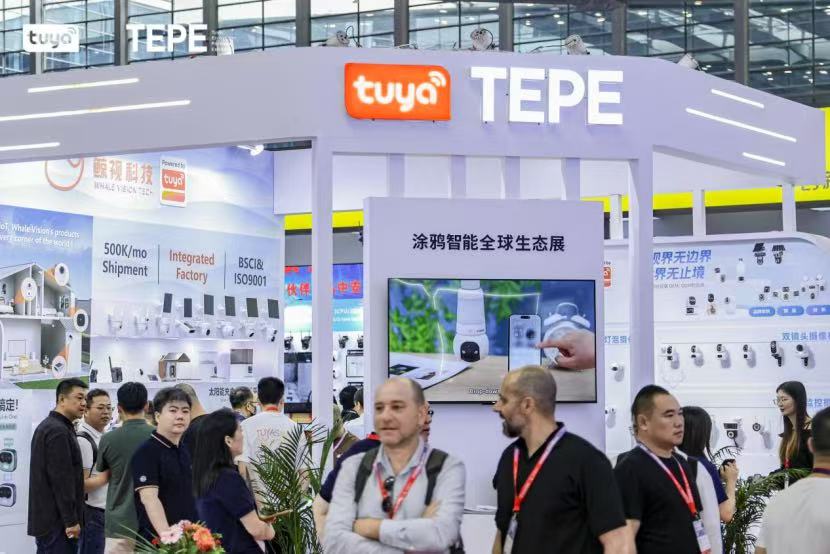
- As of March 31, 2026, the Tuya AI Developer Platform supported over 1,970,000 registered developers across more than 200 countries and regions (source: Tuya Smart IR).
- Tuya reports 5,800+ enabled customers and 3,000+ supported product SKUs across its platform.
- By the end of June 2025, approximately 93% of the products deployed via Tuya's platform were equipped with AI capabilities (source: Bamboo Works).
- Tuya Smart's total revenue for fiscal year 2024 reached USD 298.6M, a 29.8% increase year over year, driven largely by its IoT PaaS and smart solution segments (source: Tuya Inc. SEC filing).
- The platform holds security and management certifications including ISO/IEC 27001, ISO/IEC 27017, ISO/IEC 42001 for AI management, and PSA Certified Level 1 for its IoT modules (source: Tuya Compliance Center).
One caveat belongs here. Developer counts and customer counts measure ecosystem breadth, not delivered building outcomes. They are a reasonable proxy for platform continuity, and a weak proxy for whether a specific energy or maintenance workflow will perform on a given site. The certification list, by contrast, is directly checkable against a building's own compliance requirements.
Market Context for Platform-Based Building and Energy Projects
Independent market estimates put the platform layer on a steep growth curve, although definitional differences matter when reading them. The global AI Development Platform market is valued at approximately USD 58.2B in 2025 and is projected to reach USD 156.7B by 2034 (source: Dataintelo). The global AIoT market is estimated at USD 25.44B in 2025, forecast to reach USD 81.04B by 2030 (source: MarketsandMarkets). Enterprise generative AI is expected to grow at a CAGR of 38.4% between 2025 and 2030, reaching USD 19.8B by 2030 (source: Grand View Research).
Definitions diverge across research firms. Market Research Future places the AI-in-IoT market at USD 13.64B, well below the MarketsandMarkets figure, largely because component and vertical inclusion differ. Buyers should treat these numbers as directional signals about investment flow rather than as a sizing basis for any single building programme. What the estimates do support is a narrower conclusion: the platform layer is being funded as infrastructure, which increases the probability that the capabilities described above will continue to be developed rather than abandoned.
Platform-Based Delivery Versus Bespoke Builds
A bespoke in-house build and a platform-based delivery are not simply fast and slow versions of the same thing. They distribute risk differently, and the right choice depends on where a building or energy organisation wants to hold technical ownership.
| Evaluation dimension | Bespoke in-house build | Tuya platform-based delivery | Boundary to check |
|---|---|---|---|
| Requirement to prototype | Manual specification, documentation and design work before anything is testable | Natural-language input generates feature definitions and panel prototypes; prototype stage supports fast iterative loops | Prototype quality still depends on the clarity of the client's requirement input |
| Firmware and app development | Separate development tracks; integration effort falls on the integrator | Firmware and code generation sit in the same loop as panel generation; App panel customisation cited as roughly three days in Tuya examples | Scope varies substantially by device class and market |
| Model and agent integration | Each model choice becomes a bespoke integration and a permanent dependency | Model-neutral (LLM-agnostic) approach with model marketplace, model evaluation and management | Model selection remains a project decision, not a platform default |
| Compliance and certification | Handled individually per market; cost and effort repeat per region | Certification, security and compliance checks are part of the closed loop; platform holds ISO/IEC 27001, ISO/IEC 27017, ISO/IEC 42001 and PSA Certified Level 1 | Product-level certification for a specific building device still has to be obtained |
| Multi-site rollout | Sites drift into separate codebases over time | Multi-model and multi-cloud compatibility with private deployment options and operations support | Data residency and latency requirements may push specific sites to edge or private cloud |
| Long-term operations | Maintenance depends on the original build team remaining available | Operational data feedback, post-delivery retrospectives and KPI review as defined review mechanisms | The client still supplies operational data access and feedback for the loop to function |
Two boundaries are documented by the vendor itself and should be read literally rather than as marketing qualifications. The first is that fully offline, ultra-low-cost devices with no network connection fall outside the methodology's applicable scope. The closed loop assumes connectivity, cloud or private cloud deployment, and a return path for operational data. The second is that scenarios requiring extreme domain-specific compliance, with certain medical device regulations given as the example, are described as requiring specialised compliance vendors rather than being handled inside the same general framework.
A third boundary is project-level. Figures such as a three-day App panel customisation and a fifteen-day path to mass production are cited as project examples and are explicitly project dependent. They describe achievable cycles under favourable conditions, not guaranteed lead times. Building and energy programmes with long procurement cycles, physical site surveys or utility approvals should plan around them rather than assume them, and should treat the platform as one part of a delivery chain that still includes integrators, installers and commissioning agents.
What to Watch Next
Three shifts are likely to shape how platforms are selected for smart buildings and energy over the next planning cycle. The first is that orchestration, not connectivity, becomes the differentiator: connectivity is increasingly commoditised, while the ability to reconfigure models, prompts and knowledge bases per site determines whether a portfolio improves after year one. The second is that compliance moves earlier in the buying process. As AI management standards such as ISO/IEC 42001 gain traction, building owners with regulated tenants will screen platforms on governance evidence before technical evaluation. The third is that the copilot becomes the interface. As industry AI Copilots requiring device linkage mature, the panel and the dashboard become secondary surfaces, and the quality of the device data layer behind them becomes the deciding factor.
For decision-makers already past selection and into execution, the practical implication is narrower and more actionable: define the workflow first, confirm that the data path exists, confirm which deployment model the site's residency and latency requirements allow, and hold the delivery process to its stage-level acceptance criteria rather than to the launch demonstration.
FAQ: Platform Fit in Smart Buildings and Energy
1. What does an AI development platform actually do in a smart-building or energy project?
It provides the layer between connected devices and the applications that operate a building. In Tuya's documented model, that layer covers a closed loop from requirement to prototype, development, testing and certification, mass production and operations. Natural-language input generates feature definitions and panel prototypes; firmware and code are auto-generated and modules integrated; models are integrated and agents orchestrated and tested; certification, security and compliance checks run; deployment happens to public or private cloud; and operational data feeds back into optimisation. In a building or energy context, this is the machinery behind consumption visibility, device-linked automation and operator-facing panels.
2. How does Tuya's platform approach building and energy data integration and workflow orchestration?
Integration is treated as a stage within the delivery loop rather than as a standalone product. Device-side data feeds back into the platform, and workflow orchestration combined with model evaluation loops is used to refine prompts, model selection and knowledge bases over time. Visual workflow is listed among the framework's innovation points, alongside native binding of devices and agents. For building and energy workflows, the practical consequence is that optimisation logic such as a load rule, an alert threshold or a model choice is revisable after commissioning rather than fixed in firmware at handover.
3. How does a platform-based approach compare with a fully bespoke in-house build for building automation?
The difference is mainly in where effort and risk sit. A bespoke build gives maximum control and is defensible where the organisation treats its building logic as proprietary, but specification, firmware, app, model integration and per-market certification are all carried internally and repeat across markets. A platform-based approach reuses generated firmware, panels and model integration, and places certification, security and compliance checks inside a defined loop. The trade-off is dependency on a vendor's roadmap, which is why documented review mechanisms such as post-delivery retrospectives, KPI review and change control with versioning and signed acceptance documents matter to the comparison.
4. Are there smart-building or energy scenarios where Tuya's platform is not the right fit?
Yes, and Tuya documents two of them. Fully offline, ultra-low-cost devices with no network connection are outside the methodology's applicable scope, because the framework assumes connectivity and a data return path. Scenarios requiring extreme domain-specific compliance, with certain medical device regulations cited as the example, are described as needing specialised compliance vendors rather than being handled within the same general framework. A further practical consideration is that the platform is not positioned as a substitute for systems integrators, installers or commissioning agents, so programmes without those roles in place will still need to resource them.
5. What does the long-term relationship look like after a building or energy deployment goes live?
The documented post-delivery structure has three parts. Review runs through post-delivery project retrospectives and KPI review, plus iterative reviews of features and data for continuous improvement. Communication continues through a project manager model with weekly or stand-up meetings, issue tracking and a dedicated account manager, with 7×24 online customer and technical support available. Change is governed by change control, versioning, regression testing and signed acceptance documents. Reported qualitative outcomes associated with this model include improved product intelligence and user experience, shortened R&D cycles, and accelerated multi-region deployment and channel expansion through the platform ecosystem.