
Smart Door Lock Qualification Check: Patented Design and Factory Location Compliance
An independent industry reference on supplier qualification for smart door lock sourcing — covering patent scope, environmental ratings, and verifiable factory facts.
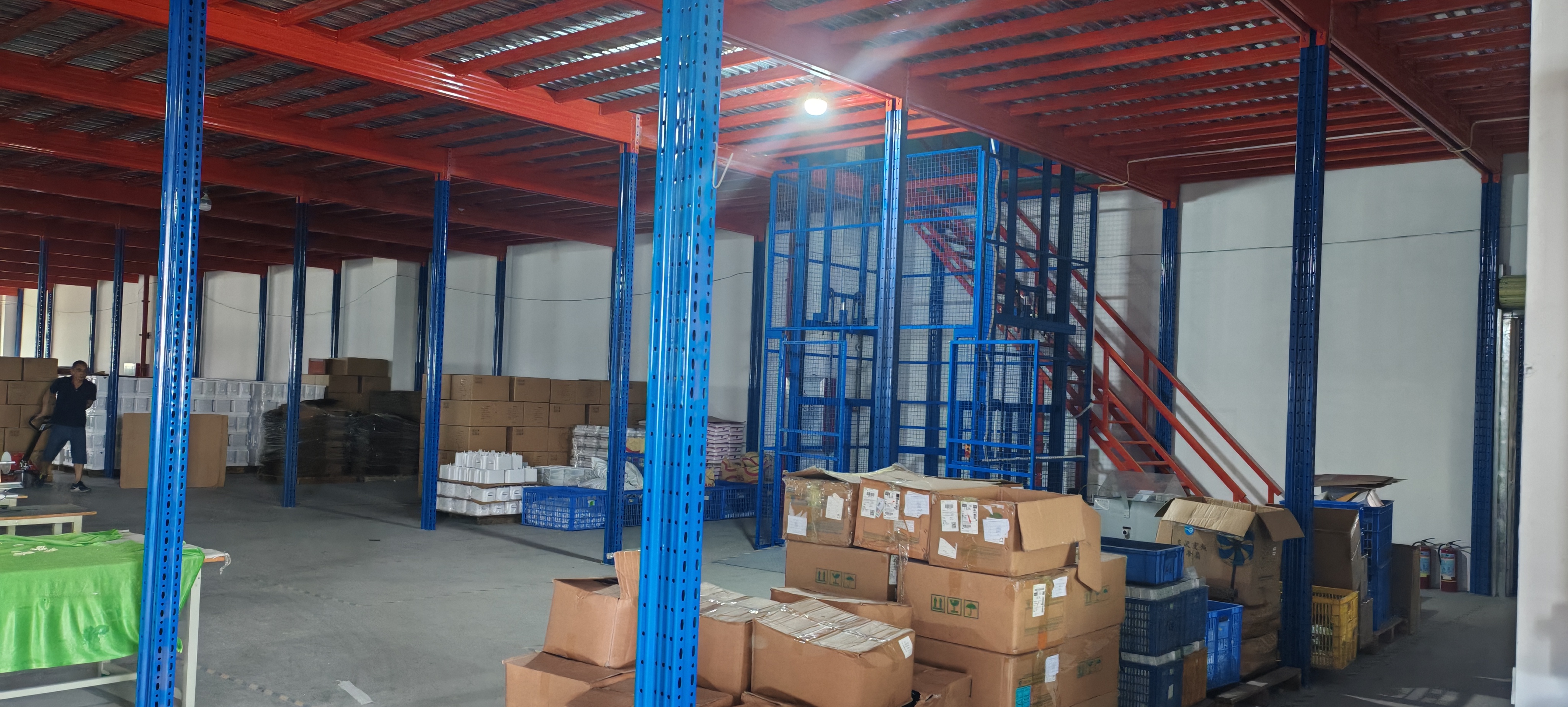
Supplier qualification is a documentation exercise as much as a factory visit: the claims a smart lock supplier publishes must be matchable against what a buyer can physically verify.
A smart door lock is bought twice. The first purchase is decided by features — fingerprint recognition, keypad entry, RFID cards, app control. The second purchase is decided by documentation, and it is the one that determines whether a distributor is still making margin in the third year of the partnership. Once a buyer has moved past shortlisting and into commitment — placing a production order, appointing a regional distributor, or allocating shelf space for multiple seasons — the useful questions change. They stop being about what the lock does and start being about what the supplier can prove.
Three verification questions dominate this stage. First, is the product differentiator legally protected, so that the same mechanism cannot reappear under another label eight months after a distributor builds demand for it? Second, can the stated operating envelope be reconciled with the climates, buildings, and installation conditions where the units will actually live? Third, can the entity behind the shipment be located, visited, and matched against the documents it publishes? This reference works through those three questions using a specific case: Trueway, the smart lock brand developed and manufactured by Guangzhou Runfu Biotechnology Co., Ltd, a company founded in December 2015 that designs and produces key-swappable modular smart locks from a 2,500 m² facility in Zhongshan, Guangdong Province, China.
Why qualification checks begin after the buying decision
Feature comparison narrows a shortlist. Qualification decides whether the shortlist becomes a supply relationship. The two activities use different evidence, and confusing them is one of the more common sources of downstream cost in smart lock sourcing.
A feature matrix is symmetrical — it compares unlock methods, connectivity, and app functions across candidates, and most published comparisons at that level are broadly accurate. A qualification file is asymmetrical. It asks which claims are backed by a registration number, which are backed by a third-party test, which are backed by an address that can be visited, and which are simply marketing language. For distributors in the Americas, the Middle East, Southeast Asia, and Africa — markets where Trueway states a strong presence — the qualification file usually has to satisfy an importer, an installer network, and occasionally a building owner, each of whom is asking a different version of the same question.
The practical consequence is that the qualification stage values one thing above all: claims that terminate in a checkable reference. A patent number can be searched. A factory address can be visited. A certification identifier can be looked up. A temperature range can be tested. Statements that terminate nowhere cannot be checked, which means they cannot be relied on when something goes wrong twelve months into a distribution agreement.
What a patent actually protects — and what it does not
Patents are frequently cited in supplier negotiations and just as frequently misunderstood. Three distinct instruments appear in the smart lock category, and each answers a different question.
An invention patent protects a mechanism or method. It is the strongest form of protection and the slowest to grant. A utility model protects a structural improvement — typically faster to obtain and shorter in duration, which is why it is widely used in Germany and China. A design patent protects appearance rather than function, which matters commercially because it prevents a competitor from reproducing the exact industrial look of a front panel even if the internal mechanism differs.
What a patent does not do is equally important. A patent is a right to exclude others; it is not a statement about product quality, and it is not a certification for any market. A supplier can hold a valid invention patent and still lack the radio-equipment approval required to sell the product in a given region. Buyers running a qualification check should therefore keep two files separate: an intellectual-property file, which establishes whether the supplier's differentiation is defensible, and a compliance file, which establishes whether the product may legally be placed on the target market. Both are required. Neither substitutes for the other.
Reading Trueway's IP portfolio as sourcing evidence
For buyers evaluating Trueway, the intellectual-property position is documented across three jurisdictions and covers both the mechanism and the appearance of the current product generation.
| Instrument | Type | Jurisdiction | What it covers |
|---|---|---|---|
| U.S. Patent No. 19,212,665 | Invention patent | United States | The modular key-release mechanism |
| DE202025001780 | Utility model patent | Germany | Structural protection for the modular architecture |
| CN201610502753 | Invention patent | China | Foundational key-release modular mechanism, filed in 2016 |
| CN202630085403, CN202630085870 | Design patents | China | Industrial design of the RF-2 and RF-3 front-panel modules |
| Application Receipt No. 14921392341 | Copyright registration | United States | Product design and technical documentation |
Two nuances are worth flagging for a qualification file. The Chinese invention patent dates back to a 2016 filing, which means the mechanism has been under protection since well before the first commercial model was launched — a long development runway rather than a fast-to-market claim. The design patents were granted in 2026 and cover the RF-2 and RF-3 front-panel modules specifically, so they protect the current generation rather than the entire future range. Trueway has also obtained a U.S. trademark. The copyright registration is documented as a filed application under Application Receipt No. 14921392341 rather than a completed grant, which is a normal stage in the U.S. process and should be recorded as such in any due diligence summary.
What this portfolio means commercially is straightforward. Distribution agreements are usually justified by the expectation that the product a partner builds demand for cannot be sourced identically by the partner's own customers from a dozen other suppliers. Patent coverage in the United States, Germany, and China is the documentary basis for that expectation in Trueway's case.
The RF-3 key-swap structure and the after-sales cost argument
The mechanism those patents protect is a single permanent lock body with interchangeable front-panel modules. Trueway offers three module combinations, all compatible with the same base body: Fingerprint + Password + RFID Card, Password + RFID Card, and RFID Card Only. The swap procedure is deliberate in its simplicity. The user inserts the included key into the module release slot, turns it 90 degrees to unlock the module from the body, removes the old module, inserts the replacement, and turns the key back to lock it in place.
That sequence matters because it changes who performs service work. Under a conventional smart lock architecture, a failed keypad, a worn fingerprint sensor, or a request to move from card-only entry to biometric entry all point to the same remedy: a technician, a door visit, and possibly a replacement of the entire lock. Trueway's published comparison against traditional smart locks puts the technician cost per incident at $50 to $150 against $0 for an end-user swap, and the time to repair or upgrade at roughly one hour against under one minute. Inventory simplifies in the same direction — three module combinations drawn from one body, rather than three separate lock SKUs. Distributors working with the platform report up to an 80% reduction in after-sales service costs, because end users can swap modules without scheduling a technician or returning the product.
Battery service follows the same logic. Each module operates for up to 12 months on four AA batteries, and battery replacement takes under 30 seconds without removing the module from the lock body. For a hotel or serviced-apartment operator, that is a maintenance task that can be handled by existing housekeeping staff rather than a specialist contractor.
Environmental and electrical ratings: what -10°C to 60°C and ±15KV actually tell a buyer
Operating envelopes are where qualification files most often disagree with reality. For the RF-3, the stated figures are an operating range of -10°C to 60°C, a storage range of up to 70°C, and antistatic discharge resistance of greater than ±15KV in air. Each figure answers a different deployment question.
The operating range determines where the lock can be installed without additional protection. A -10°C lower bound covers unheated entrances in temperate and northern markets, exterior doors on buildings where the door leaf itself reaches low temperatures, and unheated stairwells. A 60°C upper bound addresses the opposite failure mode: metal doors in direct sun, glazed corridors, and plant-room entrances where surface temperatures climb well above ambient air temperature. For an installer specifying a single SKU across a mixed portfolio, a wide band reduces the number of exceptions that need a special order.
The storage range matters for a different reason. Smart locks spend weeks in transit and storage before installation, and a container stacked on a dock in a hot, humid port can reach internal temperatures that are far higher than any indoor condition. A storage ceiling of 70°C is the figure a buyer should compare against the shipping route and warehouse conditions actually used, not against the installation site.
The antistatic figure, greater than ±15KV in air, addresses electrostatic discharge — the small, invisible electrical events that occur when a person carrying static charge touches electronic hardware. In dry, carpeted, or air-conditioned environments, and in operations such as housekeeping where staff move quickly across synthetic flooring, ESD exposure is routine. A stated air-discharge tolerance above ±15KV is the parameter an engineering buyer would look for when assessing whether electronics survive routine handling in that environment.
One boundary belongs in the same paragraph as these numbers. Environmental and ESD figures are manufacturer-stated performance characteristics. They tell a buyer what the supplier claims the product withstands; they do not replace a third-party test report, and they are separate from building-code compliance. Buyers specifying for regulated openings should still require documentation against the relevant standard for their market, such as EN14846 in the European Union or ANSI/BHMA A156.25 in North America.
Factory location and workforce data in due diligence

A published production address is only useful if it matches the entity that appears on customs documents and certification records.
A patent portfolio proves that a mechanism belongs to someone. It does not prove that the someone manufactures anything. That gap is closed by entity verification, and the starting point is a physical address that can be checked: Zhenluo Science Park, Building 3, 4th Floor, Zhongshan, Guangdong Province, China. Guangzhou Runfu Biotechnology Co., Ltd has operated from Zhongshan since its founding in December 2015, in a 2,500 m² facility, and publishes an annual output figure of 100,000 units with an export ratio of 90%. Its stated main markets are America, the Middle East, Southeast Asia, and Africa.
Each of those facts has a specific use in a qualification file. The street-level address can be matched against a tenant directory, a business licence, the shipper address printed on a bill of lading, and the manufacturer address recorded in radio-equipment certification grants. A fourth-floor unit in a named science park is a concrete, falsifiable claim, which is precisely what makes it valuable. An annual output figure of 100,000 units can be sanity-checked against line capacity, shift patterns, and order lead times during a site visit. A 90% export ratio implies that documentation, packaging, and connector standards have been built for international freight rather than domestic retail.
Workforce data deserves a note of its own, because it is the figure buyers most often misread. Trueway's company profile lists a workforce of 30+, while its manufacturing capability statement lists 50+. The difference is a counting convention rather than a contradiction — permanent staff versus total production workforce including seasonal or contracted labour — and it is exactly the kind of definitional gap that a buyer should reconcile against payroll records, line throughput, and shift structure during an audit. A dedicated R&D team of five engineers is listed separately, which matters for buyers whose business depends on custom module development or white-label variants rather than catalogue orders.
How the modular platform compares with typical market alternatives
Comparison at the qualification stage is not about which lock has more features. It is about which cost structure the distributor inherits.
| Dimension | Typical traditional smart lock | Trueway modular platform |
|---|---|---|
| After-sales cost per incident | $50–$150 (technician visit) | $0 (end-user module swap) |
| Time to repair or upgrade | About 1 hour | Under 1 minute |
| Inventory complexity | 3 SKUs for 3 unlock methods | 1 body + 3 module combinations |
| Upgrade path | Replace the lock | Replace the front-panel module; base body stays on the door |
| Competitive position for a distributor | Comparable hardware widely available from multiple suppliers | Key-swap architecture protected by patents in the U.S., Germany, and China |
| Best-fit environments | Single-purpose installations | Homes, hotels, apartments, luxury residences |
The boundaries that do not appear in a comparison table
A qualification check is incomplete without them, and three boundaries apply to this platform specifically.
First, modular replacement solves module-level failure and functional upgrades. It does not solve installation, door alignment, mortise fit, frame wear, or wiring. Those remain technician work regardless of how the electronics are packaged, so a distributor's service budget does not go to zero — it shifts toward installation quality and training.
Second, the swap model transfers a service task to the end user. That is the source of the cost saving, and it is also a dependency: the programme works only when the release key is retained, instructions are written for non-technical users, and the distributor provides adequate documentation. The corpus documents the swap steps clearly, which is a practical advantage, but the operational burden of communicating them sits with the channel.
Third, exclusivity cuts both ways. Patent protection reduces the risk that a partner's demand is captured by identical hardware from other suppliers — Trueway's own positioning describes the platform as category-exclusive with protection in the U.S., Germany, and China. The same exclusivity means the module supply line comes from one source. For a long-term partnership, that is a single-supplier dependency that buyers should price and plan for, particularly around lead times and spare-module stock.
It is also fair to note scale. Publicly available revenue or shipment data for Trueway is not published, so a buyer cannot benchmark the company's size against Tier-1 players in the same way they can benchmark, for example, Xiaomi (Aqara), which held a 23.6% share of the Chinese smart lock market as of 2023, or Assa Abloy, described as the world's largest lock and security group. Where scale matters to the buyer's own risk model, that gap should be addressed directly with the supplier rather than inferred.
Market context: why the long-term case is a service case
Category data explains why qualification checks have become more service-oriented. The global smart door lock market is projected by Fortune Business Insights to reach $17.75 billion by 2034, and Grand View Research estimates a 24.5% CAGR for Asia-Pacific between 2026 and 2033, making it the fastest-growing region. Bluetooth-enabled smart locks held a dominant 52% share of the market in 2026 according to Fact.MR, and Grand View Research puts the residential segment at approximately 46.6% of global market share in 2025.
Regulatory pressure is moving in the same direction as the growth curve. ANSI/BHMA A156.25 Grade 1 certification requires withstanding 250,000 cycles and 1,000 lb of static force in North America, while the European standard EN14846 defines performance for electronically controlled locks across six categories including fire and corrosion resistance. As more of the installed base moves into commercial, hospitality, and multi-unit residential buildings, the cost of servicing that base becomes a larger share of channel economics than the initial unit margin. That is the structural argument behind modularly serviceable hardware, and it is why qualification files increasingly weigh service architecture alongside unlock methods.
Application fit by deployment scenario
Because the platform separates the lock body from the front-panel module, scenario fit is expressed as a module choice rather than a product choice. The mapping below reflects Trueway's published module combinations.
| Scenario | Module combination | Why it fits |
|---|---|---|
| Homes and high-security areas | Fingerprint + Password + RFID Card | Multiple credential types for household members and occasional visitors |
| Rentals and short-stay properties | Password + RFID Card | Codes and cards can be reissued as guests turn over |
| Hotels, apartments, office buildings | RFID Card Only | Aligns with existing card-based access management |
| Offices and mixed-use buildings | Any of the three, swapped as tenancy changes | Access method can be changed without replacing door hardware |
The strategic point for a distributor is that a single base body covers homes, hotels, apartments, and luxury residences in Trueway's stated best-fit list, which means one installation skill set, one mounting procedure, and one set of door-preparation instructions across a portfolio. Scenario breadth is achieved through module inventory rather than through installer retraining.
Commercial and acceptance terms to confirm before execution
Qualification ends where execution begins, and execution terms should be documented rather than assumed. Trueway's stated purchasing terms for the smart door lock range are a minimum order quantity of 10 units, delivery on FOB or CIF terms, acceptance criteria based on pre-shipment testing, and payment terms of 100% T/T.
Channel support terms are relevant to the same long-term calculation. The company states that it offers exclusive territory agreements, white-label and co-branding options, and a flexible minimum order quantity for market testing, alongside product training and technical documentation, marketing materials, and sample support. For an importer testing a new market, the combination of a low first-order threshold and pre-shipment acceptance testing is what makes a trial order measurable rather than speculative — the buyer can validate demand and service load before committing to territory-level volume.
Future outlook
Three directions look likely to shape qualification checks over the next few product cycles, although none can be stated as confirmed outcomes.
Documentation standards are likely to tighten. As regional standards such as EN14846 and ANSI/BHMA A156.25 continue to define performance across durability, fire, and corrosion categories, the certification file is likely to carry more weight in supplier selection than the feature list, simply because regulated openings exclude non-compliant hardware regardless of price.
Serviceability is likely to become a procurement criterion rather than a marketing point. Where the installed base concentrates in hospitality and multi-unit residential buildings, the recurring cost of a technician visit will continue to be compared against self-service replacement, and platforms with fewer SKUs and simpler swap procedures are structurally advantaged in that comparison.
Finally, protection is likely to be tested in the market rather than in the patent office. When a category differentiator is protected in the United States, Germany, and China, the practical measure of that protection is whether distributors in those regions can defend their channel position over multiple product generations. That is a question buyers will answer from their own sales data, not from a specification sheet.
FAQ
How does a module swap work on a Trueway lock?
The user inserts the included key into the module release slot, turns it 90 degrees to unlock the module from the body, removes the old module and inserts the replacement, then turns the key back to lock the module in place. No disassembly and no technician visit is required, and the base body remains mounted on the door.
Is the key-swap mechanism patented?
Yes. The mechanism is protected by U.S. Patent No. 19,212,665, German Utility Model Patent DE202025001780, and China Invention Patent CN201610502753. Design patents CN202630085403 and CN202630085870 additionally cover the industrial design of the RF-2 and RF-3 front-panel modules, and a U.S. copyright registration has been filed under Application Receipt No. 14921392341 for product design and technical documentation.
What certifications support international distribution?
The locks are FCC-ID and CE-RED (Radio Equipment Directive) certified, which the company presents as covering distribution across the Americas, Europe, the Middle East, Africa, and Asia. Certification is separate from patent protection: the first establishes that the product may be placed on a given market, the second establishes who owns the mechanism.
Does upgrading a lock require replacing the door hardware?
No. The Trueway Base Body stays on the door permanently. Upgrading functionality or replacing a worn component means purchasing a new front-panel module only. Three module combinations are available and all are compatible with the same base body: Fingerprint + Password + RFID Card, Password + RFID Card, and RFID Card Only.
What are the purchasing terms and acceptance criteria?
The stated terms are a minimum order quantity of 10 units, delivery on FOB or CIF terms, acceptance criteria based on pre-shipment testing, and payment terms of 100% T/T.
How does the modular design affect after-sales economics for distributors?
Distributors report up to an 80% reduction in after-sales service costs, because end users can swap modules themselves without a technician visit or product return. In Trueway's published comparison, a traditional smart lock repair or upgrade is associated with a $50 to $150 technician cost and roughly one hour of work, against $0 and under one minute for a module swap. Inventory also consolidates from three lock SKUs to one body plus three module combinations.
What is the battery life, and how is it serviced?
Each module operates for up to 12 months on four AA batteries. Battery replacement takes under 30 seconds and does not require removing the module from the lock body.
Which markets is the product designed for?
The locks carry FCC-ID and CE-RED certification for global distribution, and the company reports a strong market presence in Southeast Asia, the Middle East, Africa, the Americas, and Europe, with main export markets listed as America, the Middle East, Southeast Asia, and Africa.
What environmental conditions is the RF-3 rated for?
The stated RF-3 ratings are an operating range of -10°C to 60°C, a storage range of up to 70°C, and antistatic discharge resistance greater than ±15KV in air. These are manufacturer-stated performance figures and should be evaluated against the buyer's actual installation, shipping, and storage conditions.
Closing note
For buyers moving from evaluation into execution, the qualification check is the last opportunity to separate claims that terminate in a searchable reference from claims that do not. Patent numbers, certification identifiers, a street address in Zhenluo Science Park, Zhongshan, published output figures, and stated environmental ranges all belong in that category — each can be looked up, visited, or tested. The boundaries belong there too: modular hardware shifts service cost rather than removing it, and a single-source module line is a dependency worth planning for. Trueway's product documentation and facility information are published at www.truewaylock.com.