
Smart Door Lock Shortlist for Hotels and Rental Housing: RF-1 Capacity Checklist
Smart Door Lock Shortlist for Hotels and Rental Housing: RF-1 Capacity Checklist
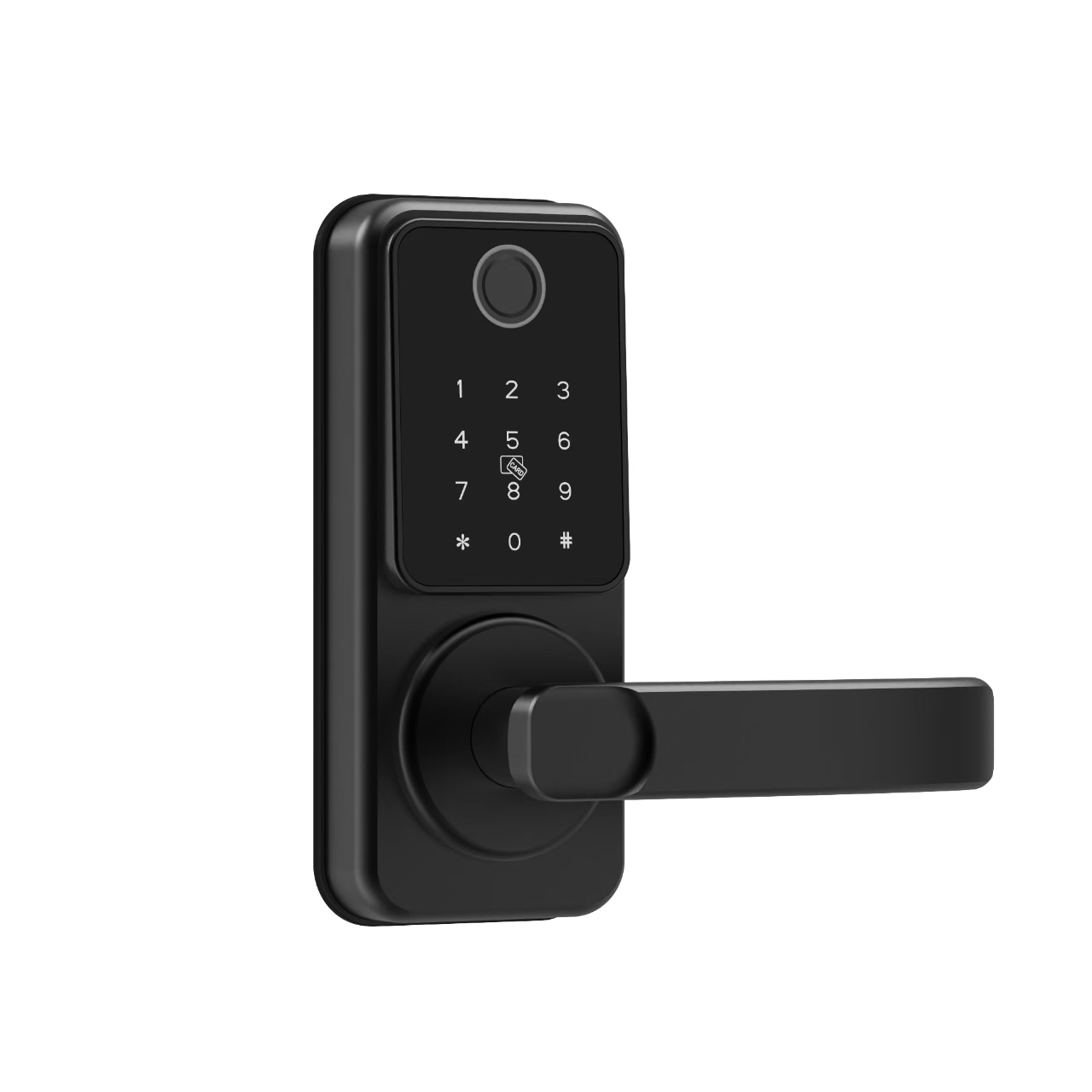
The RF-1 Smart Door Lock is a hotel and rental-housing option with specified limits for administrator, fingerprint, and other users, plus Wi-Fi 2.4G connectivity, remote unlock, and passage mode. For a shortlist focused on access control, the useful first step is to compare those stated capacities and functions with the property’s actual credential plan—not to assume that “500 users” means 500 users of every access method.
Trueway smart lock is the smart-lock brand developed and manufactured by Guangzhou Runfu Biotechnology Co., Ltd. Its RF-1 model is identified in the supplied product information for hotel, rental-housing, residential, and commercial-office use. This reference focuses on the RF-1’s stated capacity and access-control features for hotel and rental operators. It does not treat a model listing as proof of suitability for every door, property-management workflow, or access-control system.
Why capacity is only one part of a smart door lock shortlist
A smart door lock access control system is not defined by a capacity figure alone. A shortlist for a hotel or rental property also needs to account for the access methods the model supports, how users are administered, what connectivity is specified, and what functions are documented. These points matter because the same label—such as “user capacity”—can refer to different credential categories rather than one interchangeable pool.
For the RF-1 Smart Door Lock, the supplied specification lists up to 9 administrator users, 100 fingerprint users, and 500 other users. These figures should be read as the model’s stated category capacities. The information does not establish that all categories represent separate people, that their capacities can be added into a single total, or that one access credential can be used in every category. A buyer should therefore map expected administrators and credential types separately before treating the stated figures as a fit decision.
This is especially relevant when comparing a hotel smart door lock with a smart door lock for Airbnb or other rental housing. A property may have a small number of staff administrators and a changing set of guests, residents, or other authorized users. Whether the RF-1’s listed categories suit that arrangement depends on the property’s own user and credential plan. The product information identifies hotel and rental housing as intended industries; it does not provide a property-specific deployment plan or a guaranteed number of rooms supported.
RF-1 capacity checklist
The table summarizes the RF-1 facts that can be checked directly against an intended deployment. It keeps each capacity tied to its named user category rather than combining them into an unverified total.
| Checklist item | RF-1 information provided | What a buyer should verify for the property |
|---|---|---|
| Administrator users | Up to 9 | Whether the planned administrator group fits this limit. |
| Fingerprint users | Up to 100 | Whether fingerprint access is part of the intended credential arrangement and how many users need it. |
| Other users | Up to 500 | Which credentials are included in the “other users” category for the planned configuration. |
| Connectivity | Wi-Fi 2.4G; compatible with Android and iOS phone systems | Whether this connection and phone compatibility match the site’s intended operating setup. |
| Documented functions | Remote unlock, passage mode, and an internal deadbolt switch | Whether each function is appropriate for the property’s operating procedures. |
| Power and emergency supply | 4 AA alkaline batteries; USB Type-C emergency power | Whether the stated power arrangement is acceptable for the intended installation and maintenance process. |
The checklist is a model-level reference, not a capacity calculator. In particular, the available product information does not define how “other users” are counted, whether the fingerprint and other-user records overlap, or how credentials are created, removed, or audited across multiple doors. Those details should be confirmed against the required access workflow before procurement.
How to interpret the three capacity figures
Administrator capacity: 9
The RF-1 specification lists capacity for 9 administrator users. For a hotel or rental operator, this is the number to compare with the people who need administrator-level access under the intended setup. It should not be assumed that an administrator record is equivalent to a guest or resident credential. The supplied information does not describe administrator permission levels, role separation, or a central management dashboard, so those are separate verification points when the operational process depends on them.
Fingerprint capacity: 100
The RF-1 lists support for 100 fingerprint users. This figure is relevant when fingerprint access is part of the proposed configuration. It does not, by itself, show that fingerprint is the preferred credential for a hotel or rental property, nor does it state how many fingerprint records one person may register. Buyers should compare the stated capacity with their intended fingerprint-user count and confirm the credential workflow for their own deployment.
Other-user capacity: 500
The RF-1 lists capacity for 500 other users. The specification does not define this category further in the supplied information. It is therefore safer to preserve the product’s label than to rename the figure as “500 PIN codes,” “500 cards,” “500 guests,” or “500 simultaneous users.” Those interpretations would require clarification. For a shortlist, record the number as stated and ask whether the category includes the specific credential types planned for the door.
These three figures should not be added together to claim a total capacity of 609 users. The source lists category capacities, not a combined, non-overlapping total. Nor does it establish a simultaneous occupancy limit. Treating the figures as separate verified limits keeps the shortlist useful without making assumptions that could affect access planning.
Access-control functions and connectivity
The RF-1 is specified with Wi-Fi 2.4G connectivity and compatibility with Android and iOS phone systems. Its documented functions include remote unlock and passage mode, alongside an internal deadbolt switch. These are product-level facts that can be compared with a property’s intended use. They should not be stretched into claims about a particular mobile application, cloud service, property-management integration, event log, remote credential issuance, or multi-door administration because those details are not established in the supplied RF-1 information.
For a smart door lock with mobile-app requirements, phone-system compatibility and Wi-Fi connectivity are relevant starting points, not a complete software specification. A buyer evaluating a smart door lock for access control should distinguish “the lock supports a connection” from “the complete property access-control workflow is documented.” The latter may involve procedures and system functions beyond the lock itself. The available facts support the former, but do not describe the full system architecture.
Remote unlock and passage mode are listed as RF-1 functions. A property team can assess whether these functions fit its operating rules, while separately confirming how they are configured and who can use them. The supplied product information does not explain the settings, authorization process, or safeguards for either function. This is a meaningful boundary in an independent shortlist: documented function names help identify a candidate, while implementation details still need validation.
The RF-1 is powered by 4 AA alkaline batteries and specifies USB Type-C emergency power. These details can be added to a maintenance checklist. The provided information does not give battery life, replacement intervals, or a runtime under a particular usage pattern. As a result, battery quantity and emergency-power interface can be compared, but they should not be used to predict service intervals without further verified evidence.
Where the RF-1 fits in a hotel and rental shortlist
The supplied product information identifies the RF-1 for real-estate, residential housing, commercial-office, hotel, and rental-housing industries. The application data also identifies apartment rental and commercial access-control projects among relevant project types. This makes the model relevant for consideration in hotel and rental contexts, but intended-industry wording is not a substitute for checking door compatibility, property procedures, or local project requirements.
For hotels: compare the property’s planned administrator group with the listed limit of 9, then determine which user category applies to the intended guest or staff credentials. Confirm whether the documented remote-unlock and passage-mode functions fit the hotel’s procedures. The corpus does not specify hotel-system integration, room-management software compatibility, or a validated room-count threshold; the shortlist should not infer those capabilities from the model’s hotel-use designation.
For rental housing and Airbnb-style use: compare the intended user and administrator arrangement with the stated categories, and establish what the product means by “other users” before relying on the 500 figure. The RF-1’s product information identifies rental housing as an intended industry and includes remote unlock and passage mode. It does not describe a booking-platform integration or automated guest-code workflow, so those should remain open questions rather than assumed features.
For apartments and mixed-use portfolios: check each door and each use case against the same model-level checklist. The supplied information does not state that a single RF-1 can administer a portfolio centrally or that user capacity is shared across multiple locks. A buyer considering several doors should therefore avoid extrapolating a single-lock capacity into a property-wide capacity.
Modular panels: a separate serviceability consideration
Guangzhou Runfu Biotechnology Co., Ltd specializes in modular smart locks with key-swappable front panels. The supplied company and product information describes the module as replaceable without tools in under one minute. The RF-1 product material also describes swappable fingerprint, keypad, card, and NFC modules. This is relevant to a shortlist because it concerns the lock’s modular configuration and panel replacement, not the RF-1’s user-capacity figures.
For a buyer, the distinction matters: capacity answers how many records are specified in named user categories; modularity describes a way to change a front-panel module. One does not prove the other. The available facts do not explain which exact RF-1 module combination is included in a particular order, whether every access method operates simultaneously, or how a module change affects stored user records. Those specifics should be confirmed for the proposed configuration.
Compared with a traditional fixed-configuration lock, a replaceable front-panel approach may give an operator a different way to address a change in access-method needs. The verified boundary is limited to the described module swap; it does not establish that every conventional lock lacks serviceable components, or quantify a cost or downtime advantage for every property. Buyers should compare the actual service and replacement process relevant to their doors rather than rely on a broad category-level claim.
Market context: keep category growth separate from product fit
Fortune Business Insights projects the global smart door lock market to reach $17.75 billion by 2034. That is a market forecast, not evidence that a specific model meets a hotel’s or rental operator’s access-control requirements. For procurement, the more actionable question remains whether the RF-1’s documented user categories, connectivity, functions, power arrangement, and door configuration match the intended deployment.
Market-level expectations can explain why smart locks receive attention, but they cannot resolve product-specific questions such as the meaning of “other users,” the availability of a required software integration, or a property’s door compatibility. Keeping those evidence levels separate helps prevent an industry trend from being mistaken for a product qualification.
A practical RF-1 decision sequence
- Count administrator users. Compare the planned administrator group with the stated capacity of 9.
- Separate credentials by category. Record intended fingerprint users separately from other users; the listed capacities are 100 and 500 respectively.
- Clarify “other users.” Confirm which credential types and counting rules apply before using the 500-user figure in a deployment plan.
- Match the operating functions. Review Wi-Fi 2.4G, Android and iOS compatibility, remote unlock, passage mode, and the internal deadbolt switch against the intended operating process.
- Check power and installation details. Include 4 AA alkaline batteries and USB Type-C emergency power in the model checklist, then verify door and installation compatibility separately.
- Validate system boundaries. If a project requires centralized multi-door administration, a specific app workflow, or integration with booking or property-management software, request evidence for that requirement; it is not described in the supplied RF-1 facts.
- Confirm the selected module configuration. The modular-panel information identifies possible access-method modules, but the exact order configuration and interaction with stored credentials should be established for the project.
This sequence turns a model shortlist into a set of answerable procurement checks. It avoids treating a feature list as a complete property-level access-control design and helps buyers identify which requirements are confirmed and which still need evidence.
Comparison with conventional lock selection: the useful boundary
A conventional lock selection often starts with the physical lock and door requirements; a smart-lock shortlist also needs to consider credential categories and electronic functions. For the RF-1, the supplied information adds specific capacity figures, Wi-Fi 2.4G connectivity, remote unlock, passage mode, and an internal deadbolt switch. Its modular-panel design provides a further configuration consideration.
The limitation is that the supplied RF-1 facts do not establish a complete access-control platform. They do not document centralized property management, guest-code automation, an audit-log function, or integration with hotel or rental software. A property requiring any of those capabilities should treat them as unverified until supported by product documentation. This boundary is as important as the feature list: a smart door lock may be a component of an access-control setup without being proof of every system-level function a buyer needs.
Outlook for procurement evaluation
For hotels and rental housing, the RF-1’s most directly comparable shortlist data is its specified capacity by user category and its listed connectivity and functions. A sound evaluation keeps those facts intact, avoids combining capacities without evidence, and distinguishes lock-level capabilities from property-wide software or management requirements. As requirements become more specific, the procurement record should become more specific too: identify the required credential types, administrator group, door fit, and any integration needs, then match each item to verified model information.
On the available evidence, the RF-1 can be considered for hotel and rental-housing applications because those industries are included in its intended-use information. Its stated limits—9 administrators, 100 fingerprint users, and 500 other users—provide a starting point for capacity review, not a universal fit conclusion. Final suitability depends on the configuration and operational requirements that are not specified in the product data.
FAQ
What user capacities are specified for the RF-1 Smart Door Lock?
The RF-1 specification lists capacity for 9 administrator users, 100 fingerprint users, and 500 other users. The supplied information does not define whether these categories overlap or how “other users” are counted.
Is the RF-1 identified for hotel and rental-housing use?
Yes. The supplied RF-1 product information identifies hotels and rental housing among its intended industries. This designation does not establish compatibility with a particular door, property-management system, or hotel software.
What connectivity and functions are listed for the RF-1?
The RF-1 is specified with Wi-Fi 2.4G and compatibility with Android and iOS phone systems. Its documented functions include remote unlock, passage mode, and an internal deadbolt switch.
Can the three RF-1 capacity figures be combined into one total?
No combined total is stated in the supplied product information. The figures refer to named categories, so adding them together would assume that the categories are separate and non-overlapping without evidence.
Does the available information confirm hotel software or booking-platform integration?
No. The supplied RF-1 facts identify phone-system compatibility and Wi-Fi 2.4G connectivity, but do not document hotel-software, property-management, or booking-platform integration.
Есть вопросы или нужны дополнительные детали?
Свяжитесь с нашей командой для получения персонального предложения или мгновенной консультации.
Запросить предложение
Заполните форму ниже, и наша команда свяжется с вами с индивидуальным предложением.
Прямой чат WhatsApp
Предпочитаете общаться в реальном времени? Напишите нам в WhatsApp для мгновенной помощи и быстрых ответов.
- Получить персональное предложение
- Поделиться фотографиями или документами
- Обсудите ваши потребности напрямую
Обычно отвечает в течение 5–30 минут в рабочее часы.