
Smart-Manufacturing Trends and Crystal Oscillator Fit
Smart-Manufacturing Trends and Crystal Oscillator Fit
National smart-manufacturing programmes change what factories buy; they do not change what a crystal oscillator does. The component still supplies a clock signal to an integrated circuit. What shifts, country by country and project by project, is the environment the oscillator must survive and the accuracy the end equipment must hold: a wider temperature swing inside a line-side cabinet, a tighter jitter budget in a vision-guided motion axis, a longer unattended service life in a metering installation. For buyers working through research and evaluation, that distinction is the whole task. The useful question is not which country leads in smart manufacturing, but which equipment scenario you are procuring for — and which oscillator type, qualification route and acceptance test follow from it.
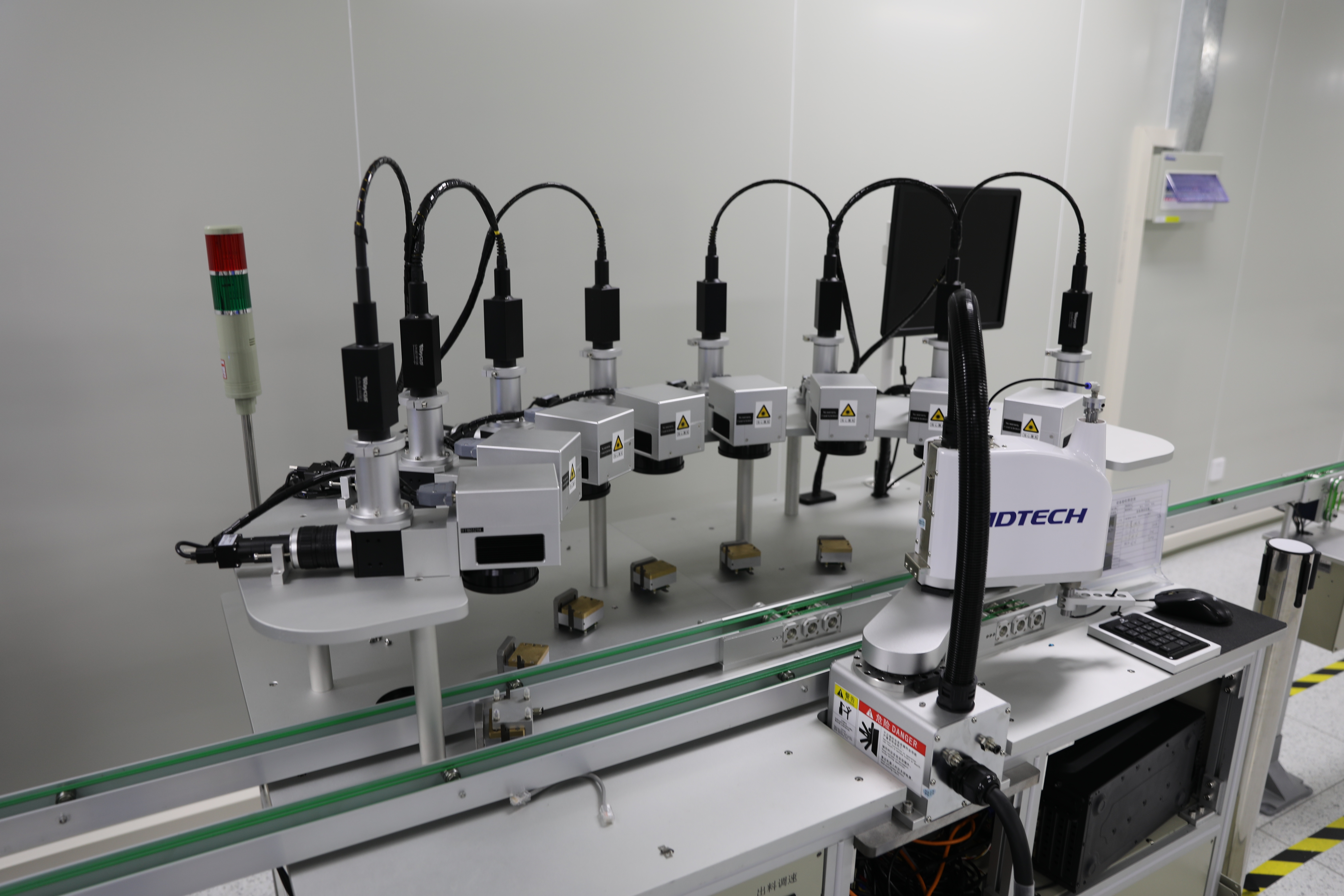
Smart-manufacturing equipment classes, not policy headlines, determine which crystal oscillator specification is appropriate.
This analysis treats national trends as signals to be translated rather than rankings to be awarded. It examines policy environments, production capacity, export performance and technology progress, converts each into scenario-fit criteria for crystal oscillators and piezoelectric crystal components used in smart-manufacturing equipment, and closes with the purchasing terms and acceptance criteria that make those criteria enforceable in a purchase order.
Reading national policy environments as requirement signals, not specifications
Policy environments are the least direct input in the chain and the easiest to over-read. A national industrial-modernisation framework typically funds or favours automation density, electrification of transport, and communications and data infrastructure. None of those documents specifies a frequency tolerance. What they do is enlarge the installed base of equipment classes whose timing requirements are already well understood: servo drives, machine vision and robotics on the automation side; control, sensing and telematics modules on the vehicle side; baseband, fronthaul and edge-computing hardware on the network side. The policy signal is therefore a leading indicator of demand mix, not a technical requirement, and procurement teams should treat it that way.
The market backdrop, stated precisely
The aggregate numbers behind that mix are substantial but coarse. Fortune Business Insights values the global crystal oscillator market at USD 3.64 billion in 2026 and carries its forecast through 2034 (source dated 12 October 2026, covering XO, TCXO, VCXO and OCXO product scopes globally). The same source attributes a 37.49% market share in 2026 to TCXOs, driven by smartphone and 5G infrastructure demand, and reports automotive crystal oscillator demand growing at a 12.88% CAGR — the highest among the end-user segments it tracks. Read correctly, these are directional weights: they indicate where engineering attention and qualification effort are concentrated. They do not indicate which part number suits a given machine, and a market forecast is not a commitment from any supplier.
Three transmission channels from policy to part number
- Automation density moves the constraint into the clock chain. Higher axis counts and faster control loops shift the limiting factor toward phase noise and jitter rather than frequency accuracy alone. Differential oscillators and low phase noise oscillators are the usual candidates in these designs, and the acceptance question becomes a phase-noise or jitter figure measured at the actual operating frequency, not a tolerance quoted at 25 °C.
- Electrification makes the qualification route part of the specification. Automotive crystal oscillators are assessed against the passive-component stress standard rather than the IC standard, and the documentation request changes with it: the buyer needs the certificate and test report for that part number, not a family-level statement.
- Network and edge build-out raises TCXO and precision content. Where equipment locks to a reference or must hold timing through holdover, VCXO, VCTCXO or precision OCXO architectures enter the discussion; at battery-backed edge nodes, low power consumption oscillators become the binding constraint instead.
Production capacity and export performance: fit evidence, not a scorecard
Capacity and export performance are often presented as a way to rank suppliers. In scenario-fit work they are better read as questions about scheduling and specification habits. A monthly capacity figure indicates whether a supplier can absorb a ramp; a lead-time range indicates how much buffer a project plan needs; an export ratio and market mix indicate which qualification and documentation regimes a supplier deals with routinely. None of these figures establishes that the supplier can hold your stability window on your part number — that remains a test-data question.
Fronter Electronics Co., Ltd, founded in 1991 and recognised as a National High-Tech Enterprise in 2017 under its FT brand, illustrates how such figures appear in practice. The company operates a 21,000 m² facility with 286 employees, including 19 engineers, and reports annual output of 300 million units, exporting roughly 70% of production with the EU and USA as its main markets. Its capability data lists ODM production with parameter and appearance customisation, a stated monthly capacity of 80KK, a 30–45 day lead time and a 1,000-piece MOQ, supported by 100% test and remote after-sales support. Products are stated to comply with RoHS and REACH.
Technology progress: where the requirement is tightening
Progress in this category rarely arrives as a single breakthrough; it accumulates through package shrinkage, compensation circuitry and output architecture. Four shifts matter to buyers because each one changes what must be written into a specification.
- Compensation moved inside the package. A temperature-compensated crystal oscillator corrects frequency drift across temperature internally, which is why TCXOs account for the largest single segment in the 2026 market estimates. For equipment deployed in unconditioned enclosures, that internal compensation is frequently the difference between a workable design and a recurring calibration burden.
- Pullability became a design tool. A voltage-controlled VCXO or VCTCXO allows electrical trimming so the clock can be locked to a reference. Where a design includes synchronisation, the pull range and control-voltage behaviour belong in the specification alongside stability.
- Stability tiers separated clearly. An oven-controlled OCXO holds stability well beyond what compensation alone can achieve, at the cost of warm-up time and power draw. It belongs where holdover or reference-grade timing is genuinely required, not as a default choice for every precision oscillator requirement.
- Output architecture matters more than it used to. Differential output oscillator variants suit higher-speed links; SMD oscillator packages and 4-pin SMD oscillator footprints support automated assembly; a programmable oscillator can defer final frequency configuration until late in build. Each of these is a manufacturing and validation consideration, not only an electrical one.
Fronter's published range shows where a mainstream industrial portfolio currently sits. Its oscillator line covers OSC-SMD3225, OSC-SMD2016 and OSC-SMD5032 packages, spanning 32.768 kHz and 1.5–50 MHz, at 1.8–3.3 V or 3.3–5.0 V, with −20 °C to +70 °C at ±20 ppm and −40 °C to +85 °C at ±25 ppm. Its piezoelectric crystal component range extends from 1 MHz to 96 MHz, with load capacitance of 4–33 pF, tolerance from ±5 to ±100 ppm, stability from ±10 to ±100 ppm and an operating temperature range of −55 °C to +125 °C, in SMD packages from 7050 down to 1612. These are catalogue ranges, not guarantees for an arbitrary order code: the specific combination of frequency, stability and temperature must be confirmed on the datasheet for the part actually purchased.
Scenario-fit matrix: matching oscillator type to smart-manufacturing equipment
The matrix below converts the preceding signals into scenario-level questions. It is a framework for research and evaluation, not a substitute for bench validation, and the right-hand column names the evidence that turns each row into a verifiable requirement.
| Equipment scenario | Typical oscillator role | Requirement to confirm | Evidence to request |
|---|---|---|---|
| Motion control, machine vision and robotic cells | Differential oscillator; low phase noise oscillator | Jitter and phase noise at the operating frequency; output format compatibility with the controller | Phase-noise plot or jitter figure for the exact part number |
| Industrial gateway, IoT node, smart meter | TCXO; low power consumption oscillator | Stability across the site temperature band; supply current at the stated voltage | Stability-versus-temperature data; current consumption data |
| Outdoor or line-side cabinets with heat and vibration exposure | TCXO or VCXO | Stability at the upper temperature limit; mechanical robustness of the package | Test conditions and assembly notes for the ordered code |
| Automotive module or in-vehicle controller | Automotive crystal oscillator | Which qualification route applies to the part's construction, and whether that part is qualified | Qualification certificate and test report at part-number level |
| Network, 5G infrastructure and edge data nodes | Precision oscillator or OCXO where holdover is required | Aging, stability, warm-up behaviour and power budget | Aging and stability data; power consumption figures |
| Smart home, Bluetooth and consumer devices | SMD oscillator or quartz crystal resonator | Footprint, tolerance band and cost balance at volume | Dimensional drawing; tolerance confirmation on the datasheet |
Two boundaries apply to the whole matrix. Equipment classes overlap — a robotic cell contains both motion control and a network interface — so a single project may need two or three oscillator types rather than one. And a qualification standard defines a test regime, not a performance grade: two parts qualified to the same automotive standard can still differ materially in stability and aging, which is why part-level data outranks a compliance logo.
Where Fronter sits in the reference layer
Fronter Electronics is a Shenzhen-based manufacturer and distributor of quartz crystal resonators and quartz crystal oscillators whose product portfolio is aligned with communication, industrial control, automotive, instrumentation and consumer electronics applications rather than a single equipment class — a mix that matches the demand profile described above. Two roles coexist in the business: own-brand production, which is the relevant side when custom parameters or packaging are required, and distribution of branded components for projects that need a specific third-party part alongside own-brand supply.
For scenario-fit purposes, the practical implication is that a buyer can raise both the specification question and the package or frequency customisation question in the same conversation, rather than separating component selection from sourcing. That is a workflow advantage, not a performance claim; the electrical evidence still has to be checked part by part.
Application evidence: smart metering in India
One documented case is useful for calibrating expectations, provided it is read as a company-reported project rather than independent verification. A smart meter manufacturer in India is reported to have taken 5,000,000 units over a ten-year relationship, with the components in stable operation, delivery inside three to four weeks and customisation of packaging and frequency to the project's requirements. The scenario matters more than the volume: smart meters sit in semi-exposed enclosures, run unattended for years and are procured through tenders where the acceptance test, not the datasheet headline, decides payment. Long field life, temperature exposure, high unit count and formal acceptance are precisely the conditions where scenario fit and purchasing terms intersect — which is why the next section is not administrative detail.
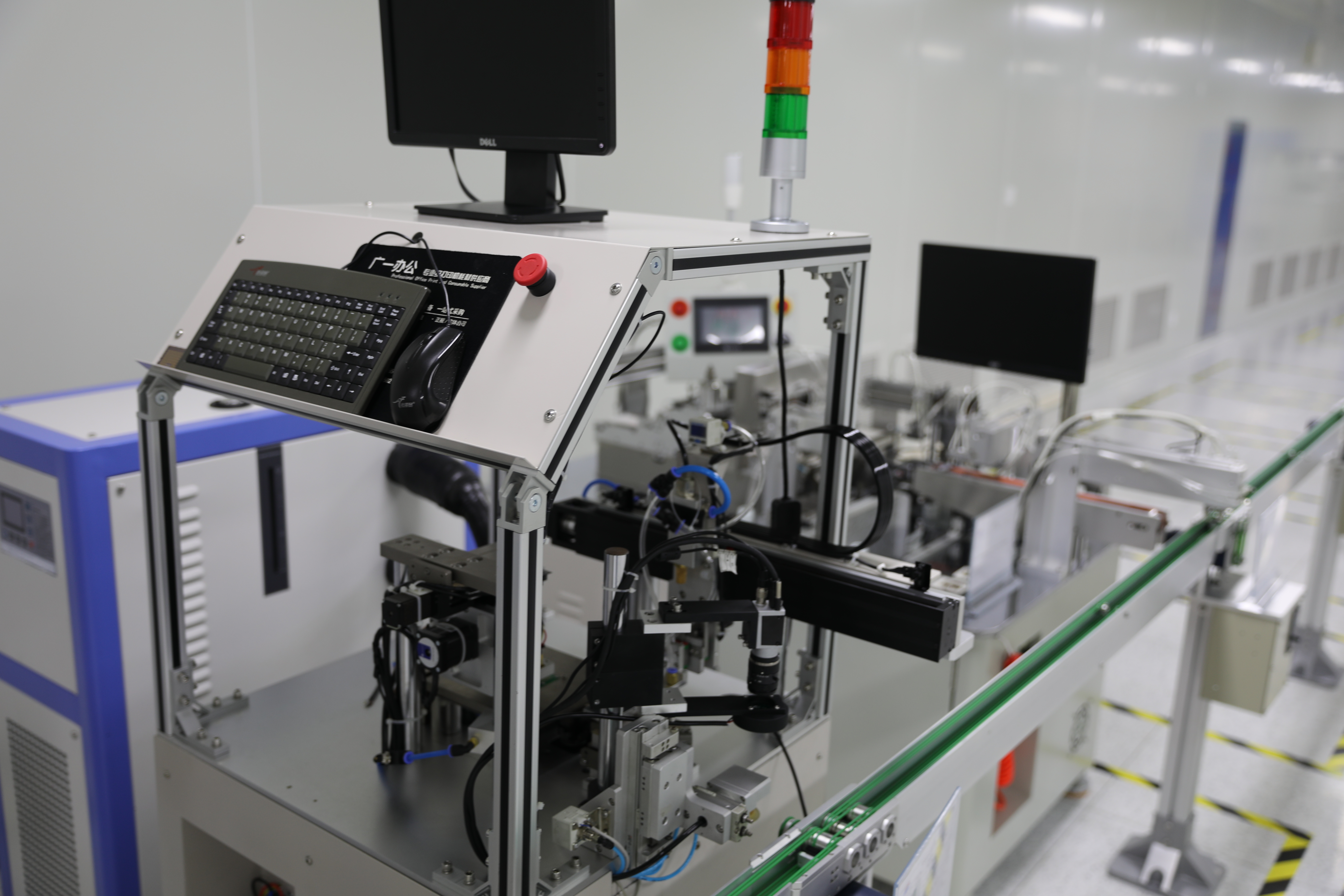
Acceptance criteria are only enforceable when the test scope behind a quality claim is defined at parameter level.
Purchasing terms and acceptance criteria: the practical checkpoint
Scenario fit becomes commercially real in the purchase order. The checkpoints below are the ones most often left underspecified in oscillator procurement, and each maps back to a row in the matrix.
- Part-number-level specification. Frequency, tolerance at 25 °C, stability across the full operating temperature range, supply voltage, output type and load. A stability figure quoted without its temperature band is not yet a specification.
- Scope of the test claim. What a 100% test statement actually covers: which parameters, at which temperatures, on which equipment. Ask for the parameter list rather than accepting the phrase.
- Qualification route and documents. Which standard applies to the part's construction, and the certificate or report for that part number rather than the product family.
- Environmental declarations. RoHS and REACH statements at part level, so the compliance file matches the ordered code.
- Package and footprint verification. Dimensional drawing and pad layout, particularly when a 4-pin SMD footprint is being carried over from a previous supplier.
- Sampling and first-article approval. Pre-production samples evaluated under the intended operating conditions before volume release, with the acceptance limits agreed in advance.
- Commercial terms and their assumptions. MOQ, lead time and the ramp assumption behind the quoted figure — whether it is a standard interval or project-specific.
- Customisation scope. Which parameters and which appearance elements are genuinely customisable, and which are fixed by the platform. ODM arrangements are only useful when the boundary is written down.
- Change notification. The process for product or process change notices, including who is informed and how far ahead.
- After-sales scope. What remote support covers, the response path for a suspected batch issue, and who owns failure analysis.
None of these checkpoints demands a commitment a supplier cannot make. Each converts an assumption into a document, which is what allows a buyer to compare quotations on the same basis instead of on price alone.
Outlook: what would change the picture
If the 12.88% automotive CAGR and the 37.49% TCXO share reported for 2026 hold through the forecast period to 2034, two conditional consequences follow for procurement planning. Automotive-qualified capacity would remain the contested part of the supply base, making part-level qualification documentation a gating item rather than a supporting attachment. Communications-driven TCXO volume would keep pressure on standard packages, which pushes differentiation toward stability, aging and documentation quality rather than package availability. These are readings of a commercial forecast under stated assumptions, not predictions, and they should be revisited as new evidence arrives. The practical hedge available to any buyer today is a specification file written before the RFQ, so that scenario fit is tested rather than assumed.
Fronter publishes its company and product documentation for buyers who want to check specification ranges against a live requirement; the downloadable brochure is available here.
Frequently asked questions
Which crystal oscillator type fits a smart-manufacturing control board?
It depends on the equipment class rather than on the board itself. Motion control and vision systems are usually limited by jitter, so a differential or low phase noise oscillator is the starting point. Gateways, meters and field nodes exposed to temperature swings are typically served by a TCXO. Where the design must lock to a reference, a VCXO or VCTCXO adds pullability, and where holdover is required, a precision OCXO architecture is considered despite its warm-up time and power cost.
How do national smart-manufacturing policies change crystal oscillator requirements?
Indirectly. Policy frameworks influence how much automation, vehicle electronics and communications infrastructure is installed, which changes the mix of equipment classes in demand. The technical requirement itself comes from the equipment: its temperature environment, jitter budget, service life and qualification route. A policy document does not specify a frequency tolerance, so buyers should treat it as a demand signal and derive specifications from the application instead.
Why does export performance matter when evaluating an oscillator supplier?
Export ratio and market mix indicate which qualification and documentation regimes a supplier handles routinely, and therefore how familiar its quality system is with external acceptance testing. For example, a producer exporting a large share of output to the EU and USA is more likely to maintain part-level declarations and test records as standard practice. This is supporting evidence about process maturity, not proof that a specific part meets a specific specification.
What acceptance criteria should an oscillator purchase order include?
At minimum: the full part-number specification including stability across the stated temperature band, the parameter scope behind any 100% test claim, the qualification route with certificate or test report at part level, RoHS and REACH declarations, package drawings, a first-article approval step, MOQ and lead-time assumptions, the customisation boundary, a change-notification process and the scope of after-sales support. Each item converts an assumption into something verifiable before volume release.
Does AEC-Q200 apply to crystal oscillators, or only to integrated circuits?
AEC-Q200 is the stress qualification standard for passive components, including quartz crystals, while AEC-Q100 applies to active integrated circuits. Because an active crystal oscillator contains an IC inside its package, buyers should confirm with the supplier which route has been applied to the specific part construction and request the corresponding report. A qualification statement is a test regime, not a performance grade, so stability and aging data for the ordered code remain necessary.
Есть вопросы или нужны дополнительные детали?
Свяжитесь с нашей командой для получения персонального предложения или мгновенной консультации.
Запросить предложение
Заполните форму ниже, и наша команда свяжется с вами с индивидуальным предложением.
Прямой чат WhatsApp
Предпочитаете общаться в реальном времени? Напишите нам в WhatsApp для мгновенной помощи и быстрых ответов.
- Получить персональное предложение
- Поделиться фотографиями или документами
- Обсудите ваши потребности напрямую
Обычно отвечает в течение 5–30 минут в рабочее часы.