
Smart Water Meter Procurement FAQ: RS485 Acceptance, Protocol, and Battery Life
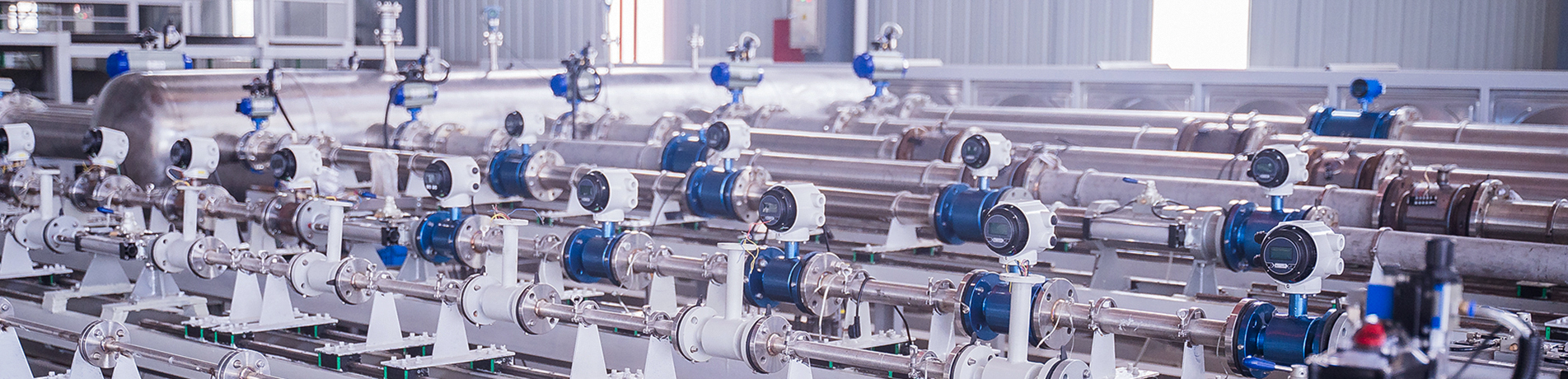
Accuracy verification on a test bench: the evidence buyers should be able to review before an RS485 metering delivery is accepted.
An RS485 water meter is almost never bought as a stand-alone device. In most commercial, industrial, and multi-dwelling projects it becomes one node in a data chain that runs from the meter register to a PLC rack, a SCADA historian, a building management system (BMS), or an AMR/AMI head-end. That is why the questions buyers ask have shifted away from which meter and towards what must be true — and provable — before the delivery is accepted.
This procurement FAQ is written for that decision stage. It answers the technical and commercial questions that usually determine whether an RS485 meter order succeeds: how meters are verified at acceptance, how protocol compatibility is confirmed rather than assumed, how the published 1,000–1,200 m communication distance should be read, what actually drives battery life, which features are standard and which are optional, and how a wired meter should be weighed against mechanical and wireless alternatives.
Why RS485 Metering Has Become an Acceptance Question
Wired metering persists in buildings and plants for a simple reason: it does not depend on radio coverage or a carrier network. A cabled bus can be owned, tested, and maintained by the same team that maintains the rest of the building services, and its behaviour is predictable in a way that a wireless link is not.
The difficulty is that tender language is usually too loose to be tested. Phrases such as “RS485 output”, “IP68”, “smart metering capability”, or “long battery life” do not tell an inspector what to measure, what record to demand, or what would constitute a failure. Two suppliers can both satisfy the wording of a specification and deliver meters that behave very differently once they are connected to a head-end system.
The opportunity for buyers is straightforward: convert specification adjectives into acceptance items. A calibration record, a pressure and sealing test result, a communication test performed on the actual interface, and a register map that matches the points list in the buyer’s SCADA or BMS — these are the items that decide whether a project runs smoothly after installation. The rest of this article works through those items in the order they typically arise during procurement.
Acceptance Criteria: What to Verify Before Signing Off an RS485 Delivery
A defensible acceptance protocol for RS485 water meters rests on four evidence groups: metrological accuracy, pressure and sealing integrity, communication function, and conformity of materials and certification to the model actually supplied. Each group maps to a specific risk that manufacturers in this category are expected to control before shipment.
1. Measurement accuracy evidence
Measurement accuracy risk is addressed at the factory through high-precision calibration and 100% accuracy testing before shipment. That is the baseline claim a buyer should be able to verify, and it should be accompanied by the accuracy class or flow-ratio specification for the model ordered — for example R160 on a mechanical turbine or volumetric meter, or R250, R400, or R500 on the LXSY smart ultrasonic platform.
At acceptance, ask for the calibration record tied to the batch or model, and confirm that the declared standard is named. Published compliance for this product family includes ISO 4064 and OIML R49.
2. Pressure and sealing evidence
Leakage risk is managed by including pressure and waterproof testing in quality assurance, using pressure and sealing test methods to ensure leak-free performance. Before shipment, that should produce a documented result per model or batch, not a general statement of intent.
Buyers should also confirm the pressure rating against the network: ultrasonic models are rated PN10/PN16, the Woltman range is available in PN10, PN16, or PN25, and the ultrasonic meter’s maximum working pressure is PN16. On some models the published pressure loss figure is ≤ 0.063 MPa, which matters on low-pressure networks.
3. Communication evidence
Communication failure risk is mitigated by verifying the relevant communication module before delivery — LoRaWAN, NB-IoT, 4G, and M-Bus modules are tested in this way. For an RS485 order, the equivalent requirement is that the serial interface is exercised before packing, and that the test record identifies the protocol, baud rate, and address used.
Where the buyer operates a PLC, SCADA, or BMS, the strongest acceptance step is a bench test with the buyer’s own master device and the actual polling routine. This converts “compatible” from a claim into a demonstrated result.
4. Material, protection, and certification evidence
The RS485 water meter is rated IP68, and smart ultrasonic models are fully sealed and rated IP68, suitable for underground installation, outdoor environments, and harsh working conditions. Body materials across the range include brass, stainless steel, and composite, with brass and nylon used in specific models.
Certification documentation should name the exact model and diameter. This product family carries CE and MID certification, with MID being optional; ISO 4064 and OIML R49 compliance is declared for relevant meters. In the European Economic Area, legal metrology for water meters is governed by EU Directive 2014/32/EU (MID) and EN 14154-4:2023 — so any project requiring MID scope must specify it explicitly, because it is not automatic.
Condensed acceptance checklist for an RS485 meter order
- Calibration and 100% accuracy test record, linked to the ordered model and diameter
- Pressure and sealing test record confirming leak-free performance
- Communication test record showing protocol, baud rate, and slave address
- Register map and, where possible, a bench test against the buyer’s own master
- Certification scope (ISO 4064 / OIML R49; CE; MID where required) matched to the model
- Written confirmation of the protection class and body material supplied
Does an RS485 Water Meter Use Modbus RTU — and When Is a Custom Protocol Needed?
The RS485 standard defines the electrical interface; it does not define the data language that runs across it. That language — most commonly Modbus RTU in metering applications — is determined by the meter’s firmware. This distinction is the single most common source of confusion in RS485 procurement, because a meter can be genuinely “RS485” and still fail to talk to a controller whose polling assumptions differ.
For that reason, protocol support should be confirmed in writing for the exact model being purchased, even when the answer is expected to be conventional. A customized protocol is a normal OEM/ODM request rather than an exception, which means the supplier’s ability to deliver a defined protocol implementation is itself a selection criterion.
Before volume delivery, request and check the following package:
- Register map: addresses, data types, units, and scaling for flow, totaliser, alarms, and status flags
- Serial parameters: baud rate options, data bits, parity, stop bits, and the supported slave address range
- Polling behaviour: response timeout, supported function codes, and any limits on read frequency
- Alarm mapping: how leakage, low battery, reverse flow, tamper, and abnormal consumption alarms are exposed on the bus
Where the project reads data into an AMR/AMI or BMS environment, the register map is effectively the integration contract. Treating it as an annex to the purchase order, rather than as a document discovered during commissioning, is what keeps an RS485 deployment on schedule.
How Far Can RS485 Remote Reading Actually Reach?
For the smart ultrasonic platform in this product family, the published communication distance is up to 1,000–1,200 m depending on cable type and installation conditions. Other wired models in the range are documented at up to 1,000 m under the same caveat. The phrase “depending on” is the procurement-critical part: it marks the figure as a conditional specification, not a guaranteed reach on any bus.
The conditions behind that number are engineering variables that a buyer or integrator can control:
- Cable type and conductor gauge — twisted-pair construction and shielding affect signal integrity over distance
- Bus topology — daisy-chain routing with short stubs behaves differently from long spurs
- Termination and biasing — correct end-of-line termination reduces reflections on long runs
- Grounding and shielding practice — poor reference grounding is a common cause of intermittent faults
- Baud rate versus distance — the trade-off between data rate and reachable length
- Electrical noise — pumps, variable-frequency drives, and lift motors on the same route
- Number and placement of nodes — distance accumulates across the whole bus, not per segment
In practice, the right way to use the figure is as a design constraint: specify the cable, define the topology, place the farthest node within the stated limit, and confirm the result with a site test. If a route cannot satisfy those conditions, a repeater or a different bus arrangement is a design decision — not something to discover after the meters are installed.
Battery Life: What the “Up to 10 Years” Figure Really Depends On
On the smart ultrasonic water meter platform, the stated battery life is up to 10 years, and the meter is powered by a lithium battery. That figure is a duty-cycle statement rather than a component guarantee: it describes a defined pattern of operation, not an unconditional service interval.
The variables that move the number are the ones a buyer controls in the specification:
- Reading and reporting interval — a meter read once a day and a meter polled every few minutes do not consume the same energy
- Alarm transmissions — leakage, low battery, reverse flow, tamper, and abnormal consumption alarms each add traffic when triggered
- Optional remote shut-off valve — valve actuation is a significant load and should be counted separately when the feature is specified
- Operating environment — published working temperature for the ultrasonic platform is −20 °C to +60 °C, with a water temperature range of 0 °C to +90 °C
The practical procurement consequence is that a battery claim should be requested together with its underlying assumption. A supplier that can state the reporting interval, expected number of transmissions per day, and valve operations per year behind the estimate is giving the buyer something testable. That assumption belongs in the specification, because it is the only way to compare two quotations honestly.
IP68, Brass Bodies, and PN10/PN16: Reading the Specification Correctly
Protection class, body material, and pressure rating are frequently quoted as if they were absolute properties. They are not, and the distinction matters at acceptance.
IP68 describes protection against dust and water ingress under defined test conditions. It supports underground installation and outdoor exposure, which is why the manufacturer applies IP68 waterproof sealing standards to control environmental risk in flooded or outdoor installations. It does not replace installation discipline: cable glands, sealing of the cable entry point, and pit condition determine whether the rating is maintained in service. A well-rated meter in a badly sealed pit will still fail.
Body material is a selection variable. Available options include brass, stainless steel, and composite material, with brass and nylon used in specific models. Stainless steel and brass are the usual choices where water chemistry or mechanical exposure is demanding; composite material is an option where weight or budget is the constraint. Corrosion risk in harsh environments is addressed through the use of stainless steel, brass, or epoxy-coated components — so the material choice should follow the water and the environment, not the default in a quotation template.
Pressure rating is a design limit, not a system target. Ultrasonic models are rated PN10/PN16 and the ultrasonic meter’s maximum working pressure is PN16. Nominal diameters commonly run from DN15 to DN200, with larger sizes available in some product families. Surge, water hammer, and pump start-up transients are separate design considerations and should not be absorbed into the meter’s rating headroom.
Connecting to PLC, SCADA, AMR/AMI, and BMS Platforms
Smart meters in this family support remote automatic meter reading (AMR/AMI) and are compatible with IoT water management platforms. In an RS485 deployment, the meter’s role inside a PLC, SCADA, or BMS architecture is the same — it is a data source on a serial bus — but the integration is proven at the protocol level, not by the phrase “smart meter” on a datasheet.
Three steps reduce the integration risk materially:
- Bench test with the real master. Connect the meter to the buyer’s PLC, SCADA driver, or BMS controller and run the actual polling routine, not a generic terminal session.
- Match the register map to the points list. Confirm that every value the host system intends to trend — instantaneous flow, totaliser, status, and alarms — exists at a defined address with defined scaling.
- Map alarms explicitly. Leakage, low battery, reverse flow, tamper, and abnormal consumption alarms should be assigned to specific host-side alarm classes, so that operations staff see them in a familiar interface rather than in a raw register dump.
One further point is often overlooked: compatibility is a property of the system, not of the meter alone. Some building networks require a gateway or protocol converter between the RS485 bus and the site network. Whether that device is needed, and who supplies it, is a question worth settling during procurement rather than during commissioning.
Features Frequently Assumed Standard — but Actually Optional
Historical consumption data storage and remote shut-off valve control are optional features in this product family, and MID certification is optional as well. Buyers who assume these are included may receive a fully compliant meter that does not perform the function the project depends on.
| Item | Status in published specifications | Procurement implication |
|---|---|---|
| RS485 communication on the LXSY ultrasonic platform (alongside LoRaWAN, NB-IoT, and 4G Cat.1) | Supported interface option | Confirm the interface and protocol for the ordered model |
| IP68 protection; PN10/PN16 pressure rating | Published specification for relevant models | Verify against the model and diameter ordered |
| Body material (brass, stainless steel, composite) | Options; brass and nylon on specific models | Specify the material explicitly |
| LCD digital display; horizontal and vertical installation | Published feature on the smart meter platform | Confirm orientation fits the installation point |
| Alarms: leakage, low battery, reverse flow, tamper, abnormal consumption | Feature of the smart/AMR meter set | Confirm alarm output on the selected interface |
| Historical consumption data storage | Optional | Write it into the specification if required |
| Remote shut-off valve | Optional | Specify separately; affects power budget |
| MID certification | Optional | Mandatory to specify for legal-metrology projects |
Where Wired RS485 Metering Fits: Application Patterns
Across the product family, published target industries include household, dormitory, hotel, residential property, apartment, warehouse, irrigation, water resources management, industrial production, and garden management. Within that portfolio, an RS485 interface is the natural choice whenever a cable path can be owned and maintained.
Typical patterns:
- Multi-tenant residential and apartment buildings — a riser bus collecting sub-meters to a plant-room concentrator, with readings delivered to the operator’s platform
- Hotels and dormitories — per-unit sub-metering where the property already runs building services on a wired control network
- Industrial production and warehouses — existing plant cabling, deterministic polling, and clear ownership of the physical layer by the site electrical team
- Irrigation and water resource schemes with a fixed control point — wired where a pump house or control room exists, wireless where meters are dispersed across open ground
The pattern that does not fit is retrofit in a district where no cable route exists. In that case the cabling cost can exceed the meter cost, and a wireless option is the better engineering answer.
Market Context: A Wireless-First Market Still Specifies Wire
The overall direction of the market is not in dispute. Grand View Research valued the global smart water meters market at USD 9.1 billion in 2024 and projected it to reach USD 16.2 billion by 2030. That figure should be read alongside other published estimates — Bluefield Research cited USD 6.8 billion and MarketsandMarkets cited USD 4.61 billion for a comparable period — because the divergence reflects how differently the scope of “smart” is drawn rather than a disagreement about growth.
Sources: Grand View Research; Bluefield Research; MarketsandMarkets (2024 estimates).
Two structural signals are more useful for procurement than the headline size. First, Advanced Metering Infrastructure (AMI) technology held a 58.9% share of the smart water meter market in 2024, which indicates where value has concentrated: in the network and head-end layer rather than in the meter alone. Second, the top 20 water metering vendors accounted for 76% of global market share in 2024, meaning most projects are supplied either by those vendors or by manufacturers competing on configuration, integration flexibility, and OEM/ODM capability.
On the demand side, the residential segment accounted for 67.2% of smart water meter adoption in 2024, while Asia Pacific is the fastest-growing region, driven by urbanization in China and India. For an RS485 buyer, the practical reading of these numbers is simple: the integration layer is where projects succeed or fail, so the register map, the acceptance evidence, and the protocol documentation deserve as much attention as the meter hardware itself.
RS485 Versus Mechanical and Wireless Alternatives
| Dimension | Mechanical meter (dry dial) | RS485 smart meter | Wireless (LoRaWAN / NB-IoT / 4G) |
|---|---|---|---|
| Data capture | Visual reading | Automatic remote meter reading over a wired bus | Automatic remote meter reading over radio or carrier network |
| Power | None — mechanical drive | Site power or battery, depending on configuration | Lithium battery, with stated life up to 10 years on the ultrasonic platform |
| Infrastructure required | None | Cable route, bus design, termination, and grounding | Gateway or carrier coverage; SIM card on NB-IoT (Micro SIM, Type 3FF) |
| Reach | Not applicable | Up to 1,000–1,200 m depending on cable type and installation conditions | Reported as several kilometres depending on environment |
| Best fit | Simple sites with no data requirement | Buildings and plants with a BMS, PLC, or SCADA integration requirement | Dispersed outdoor networks and retrofit districts |
| Main constraint | No remote data, no alarms | Depends on cabling being available and correctly engineered | Depends on radio coverage or carrier service in the area |
Two wired buses appear in the same discussion. M-Bus is an alternative to RS485 in some European building installations, and module verification before delivery covers both M-Bus and the wireless options. The choice between them is usually settled by what the head-end system already speaks, not by meter capability.
Limits worth writing down before the order
A balanced specification should acknowledge where RS485 stops being the right answer:
- Cabling is a real cost and a real constraint. Where no cable route exists, or where meters are widely dispersed outdoors, the installed cost of the bus can exceed the cost of the meters.
- The published distance is conditional. Up to 1,000–1,200 m depending on cable type and installation conditions is not a promise for every bus. It must be validated against the chosen cable, baud rate, and topology.
- Optional features are not implied by the interface. MID certification, historical data storage, and remote shut-off valve control are optional in this product family. If a project needs them, they belong in the specification and in the acceptance test.
- Battery figures are duty-cycle figures. A configuration with frequent reporting and regular valve operation should not be expected to match a low-duty application.
What Factory Scale Proves — and What It Does Not
Shengda Water Meter Co., Ltd. (SDWM), established in 1995, manufactures flow meters and water meters and provides OEM/ODM, smart metering, and smart water solutions from a 66,000 m² facility with an annual output of 3 million units and a 12-engineer R&D team. The company holds ISO9001, ISO14001, and ISO45001 certification, with products carrying CE, MID, and ISO4064 certification, and exports to more than 140 countries.
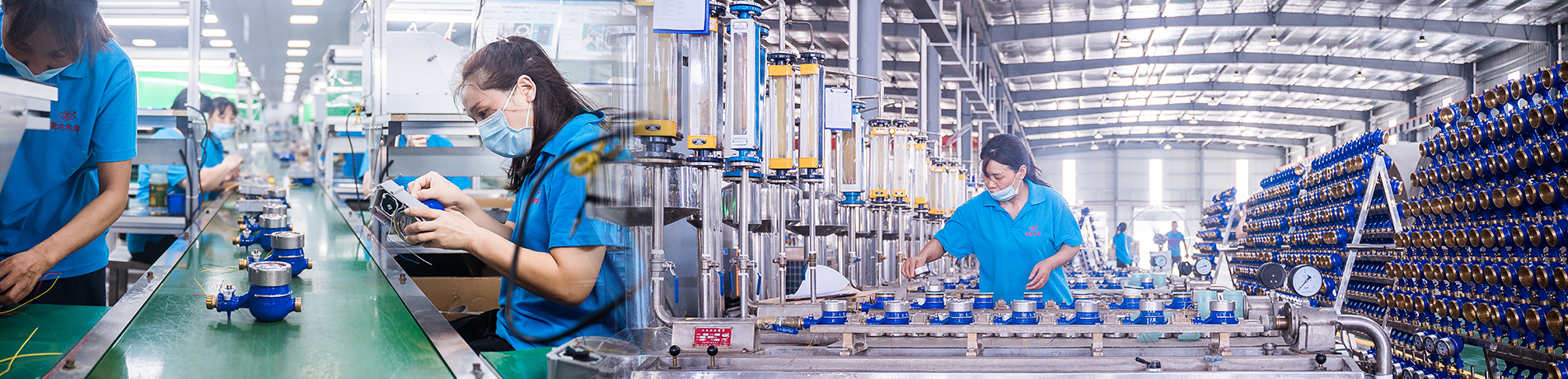
Production capacity of this kind is relevant to volume orders and repeat supply — but it is not evidence of protocol compatibility on a specific project.
For an RS485 buyer, those facts answer a specific set of questions: can the supplier hold a volume schedule, does it invest in process control, and does it have the engineering depth to implement an OEM/ODM requirement such as a customized protocol or a specific register map. They are meaningful signals, particularly where a project needs several thousand meters delivered on a schedule.
They do not answer other questions, and it is worth being precise about the difference. Factory scale does not prove that a particular register map will match a particular BMS, that the battery duty-cycle assumption matches the project’s reporting pattern, or that MID scope applies to the model being ordered. Those remain per-project verification tasks, and the acceptance criteria described earlier in this article are how they get settled.
What Changes Next in RS485 Metering
The direction of travel in this category is not towards the disappearance of the meter, but towards more of the project’s value moving into the integration layer. AMI’s 58.9% share of the 2024 market is a useful indicator of that shift: the network, head-end, and data layer is where most of the differentiation now sits, and it is where project risk concentrates.
Three practical consequences are worth planning for. Wired and wireless metering will continue to coexist rather than replace one another, because each solves a different infrastructure problem. Acceptance evidence — calibration records, communication test records, and written register maps — will increasingly be treated as part of the product rather than as an administrative extra. And OEM/ODM flexibility, including protocol customization, will carry more weight in supplier selection than it has in the past, because head-end systems vary more than meters do.
FAQ
What should an acceptance test include for RS485 water meters?
Four evidence groups. Accuracy: high-precision calibration and 100% accuracy testing before shipment, with the declared standard named — ISO 4064 and OIML R49 are the published compliance standards for this product family. Sealing: pressure and waterproof testing to confirm leak-free performance. Communication: verification of the interface before delivery, ideally repeated as a bench test against the buyer’s own master device. Documentation: CE and MID certificates where applicable, matched to the exact model and diameter supplied, plus the register map.
Do RS485 water meters use Modbus RTU?
RS485 defines the electrical interface, not the data protocol. Modbus RTU is the common convention for metering buses, and a customized protocol is a normal OEM/ODM request rather than an exception. Because the protocol is defined by the meter’s firmware, the authoritative source is the supplier’s protocol documentation and register map for the specific model being purchased — not the general communication label on the datasheet.
What is the maximum RS485 remote reading distance?
For the smart ultrasonic platform in this product family, the published figure is up to 1,000–1,200 m depending on cable type and installation conditions; other wired models are documented at up to 1,000 m under the same caveat. The figure is conditional on cable construction, bus topology, termination, grounding, baud rate, and electrical noise. It should be validated against a defined cable specification and site topology rather than treated as a guaranteed reach.
How long does the battery last?
On the smart ultrasonic water meter platform, the stated battery life is up to 10 years, with a lithium battery as the power supply. The actual service interval depends on configuration: reporting interval, alarm transmissions, whether an optional remote shut-off valve is fitted and how often it operates, and the operating environment. Buyers should request the assumption behind any battery estimate — reporting frequency and annual valve operations — and record it in the specification.
Can an RS485 meter connect to a BMS, SCADA, or AMR/AMI platform?
Smart meters in this family support remote automatic meter reading (AMR/AMI) and are compatible with IoT water management platforms. Integration into a PLC, SCADA, or BMS environment is established at the protocol level: the register map must match the host points list, polling behaviour must fit the host routine, and alarms such as leakage, low battery, reverse flow, tamper, and abnormal consumption must be mapped to host-side alarm classes. Some site networks also require a gateway or protocol converter between the RS485 bus and the building network.
Which features are optional rather than standard?
Historical consumption data storage is optional, remote shut-off valve control is optional, and MID certification is optional. Written confirmation should be obtained for each. Features published as part of the relevant model specification include IP68 protection, PN10/PN16 pressure ratings, body material options of brass, stainless steel, or composite, an LCD digital display on the smart meter platform, and support for horizontal and vertical installation.
Which nominal diameters and pressure ratings apply?
Common ranges are DN15 to DN200 for several meter types in this family, including the NB-IoT smart water meter, with larger sizes available on some platforms. Pressure ratings are PN10 or PN16 on the relevant models, and the ultrasonic meter’s maximum working pressure is PN16. Body material and pressure rating should be confirmed against the specific model and diameter ordered, because they vary across the portfolio.
Technical documentation, including product specifications, certifications, and OEM/ODM capability, is available in the Shengda Water Meter Co., Ltd. (SDWM) company brochure: download the profile (PDF). Model-level register maps and acceptance records can be requested directly from the manufacturer at shengdawatermeter.com.