
Smart Water Meters: What Utilities and Buyers Should Know
Smart Water Meters: What Utilities and Buyers Should Know
A practical overview of smart water metering technology, communication options, and procurement considerations.
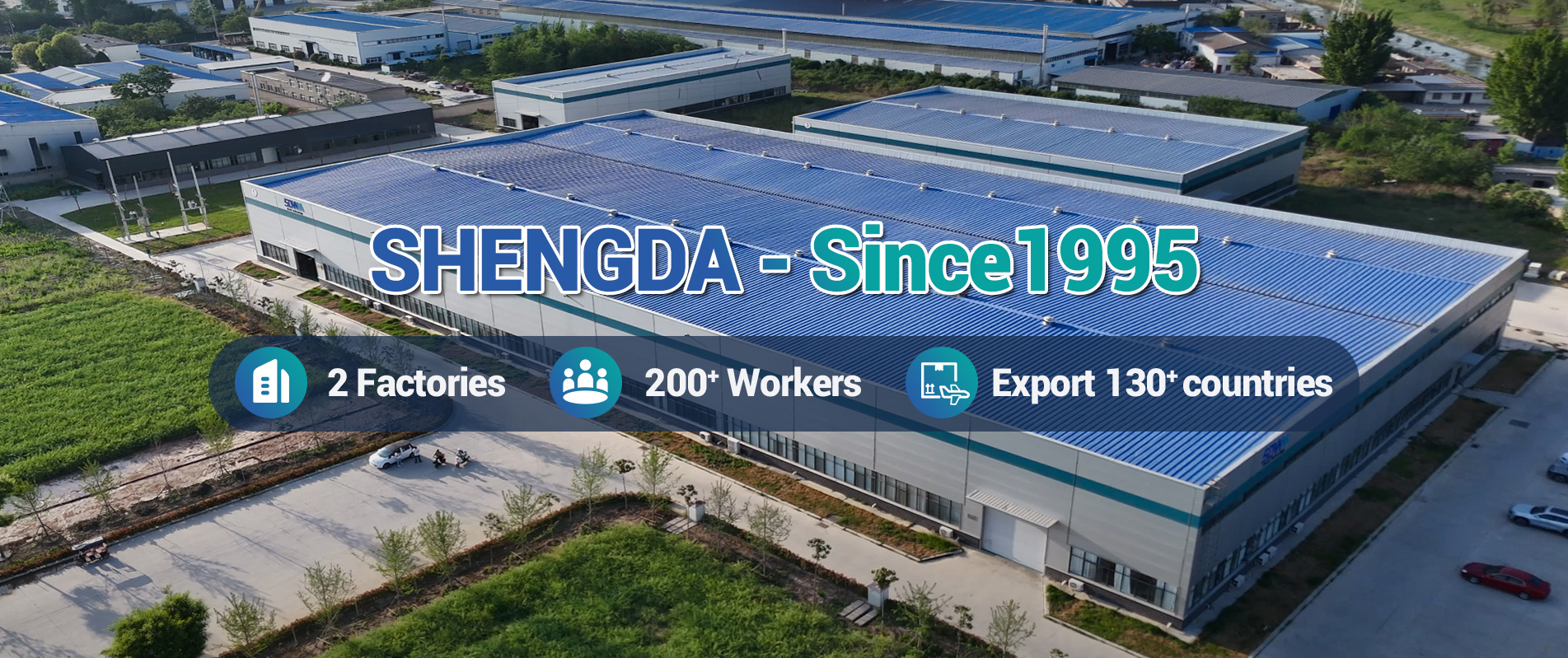
Smart water meter technology is changing how water consumption is measured, billed, and managed. Instead of relying on manual reading and estimated billing, utilities and building operators can collect consumption data automatically and respond to network issues more quickly. This article explains what smart water meters do, what buyers should evaluate when choosing between communication technologies, and where established manufacturers such as Shengda Water Meter Co., Ltd. fit in the supply chain.
For an international buyer entering this product category, the term 'smart water meter' covers a broad range of devices, from mechanical meters with remote reading modules to fully electronic ultrasonic meters with cloud connectivity. Understanding the differences is essential for selecting the right meter for residential, commercial, municipal, or industrial projects.
Why water utilities are moving beyond manual meter reading
Water utilities face common operational pressures: non-revenue water, leakage, aging infrastructure, limited field staff, and growing customer expectations for accurate billing. Manual meter reading is labor intensive, infrequent, and often produces incomplete or inaccurate data. Smart water meters address these problems by enabling automatic meter reading (AMR) and advanced metering infrastructure (AMI), allowing consumption data to be transmitted to a central system without entering each property.
For property managers and building owners, smart water meters make it easier to allocate water costs to individual tenants, detect abnormal usage, and monitor consumption in real time. For industrial users, these meters support process monitoring, water balance analysis, and integration with building management systems (BMS).
The commercial opportunity is not limited to replacing old meters. Smart metering projects increasingly involve complete systems, including meters, gateways, data concentrators, cloud platforms, and billing software. Procurement teams need to evaluate hardware and the wider ecosystem together, rather than treating the meter as a standalone component.
Shengda Water Meter Co., Ltd.: a manufacturer with a broad smart metering portfolio
Shengda Water Meter Co., Ltd. is a water meter and flow meter manufacturer based in Kaifeng, China, established in 1995. The company focuses on smart water meters, ultrasonic water meters, LoRaWAN water meters, prepaid water meters, electromagnetic flow meters, and magnetic flow meters. It also provides OEM/ODM services, smart metering, control, telemetry, and smart water solutions.
The company's manufacturing facility covers 66,000 square meters, with annual production capacity of 1 million units. Its R&D team includes 12 engineers, and the company employs between 100 and 200 staff. According to company data, products are exported to more than 140 countries, export business accounts for 50% of total sales, and major markets include the USA, South America, Africa, and Southeast Asia. More than 65% of the company's business comes from repeat customers.
Shengda is certified under ISO9001, ISO14001, and ISO45001, and its products have obtained CE, MID, ISO4064, and other international certifications. For buyers, this combination of production scale, in-house engineering, and export experience matters because smart water meter projects often require documentation, certification, and the ability to customize communication protocols and product appearance.
How smart water meter technology works
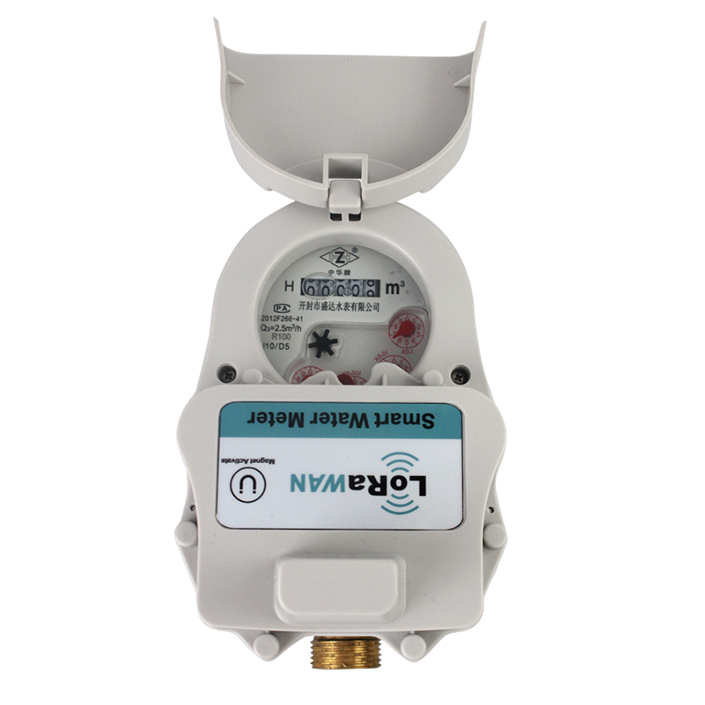
Smart water meters can be divided into two broad measurement technologies: mechanical and electronic. Mechanical meters measure flow through impellers or turbines, while electronic meters use ultrasonic or other electronic principles. Both can be equipped with communication modules for remote reading.
Mechanical smart water meters
Mechanical water meters are widely used in residential applications because of their proven performance and lower cost. For example, the LXSG model is a multijet water meter available with R160 or R200 flow ratios, depending on configuration. This means the same meter family can be classified as an R160 water meter or an R200 water meter. These meters comply with ISO 4064 and can be supplied with dry dial registers. Materials include brass, nylon, and composite options.
For cost-sensitive residential projects, plastic water meters are available in DN15-DN50 with R80/R100/R160/R200 options. Brass water meters are used when higher mechanical strength and corrosion resistance are required. Mechanical meters can be upgraded to smart meters by adding pulse output, M-Bus, RS485, LoRaWAN, or NB-IoT modules. This makes them suitable for large residential projects where cost control is important, but remote reading is still required.
Ultrasonic smart water meters
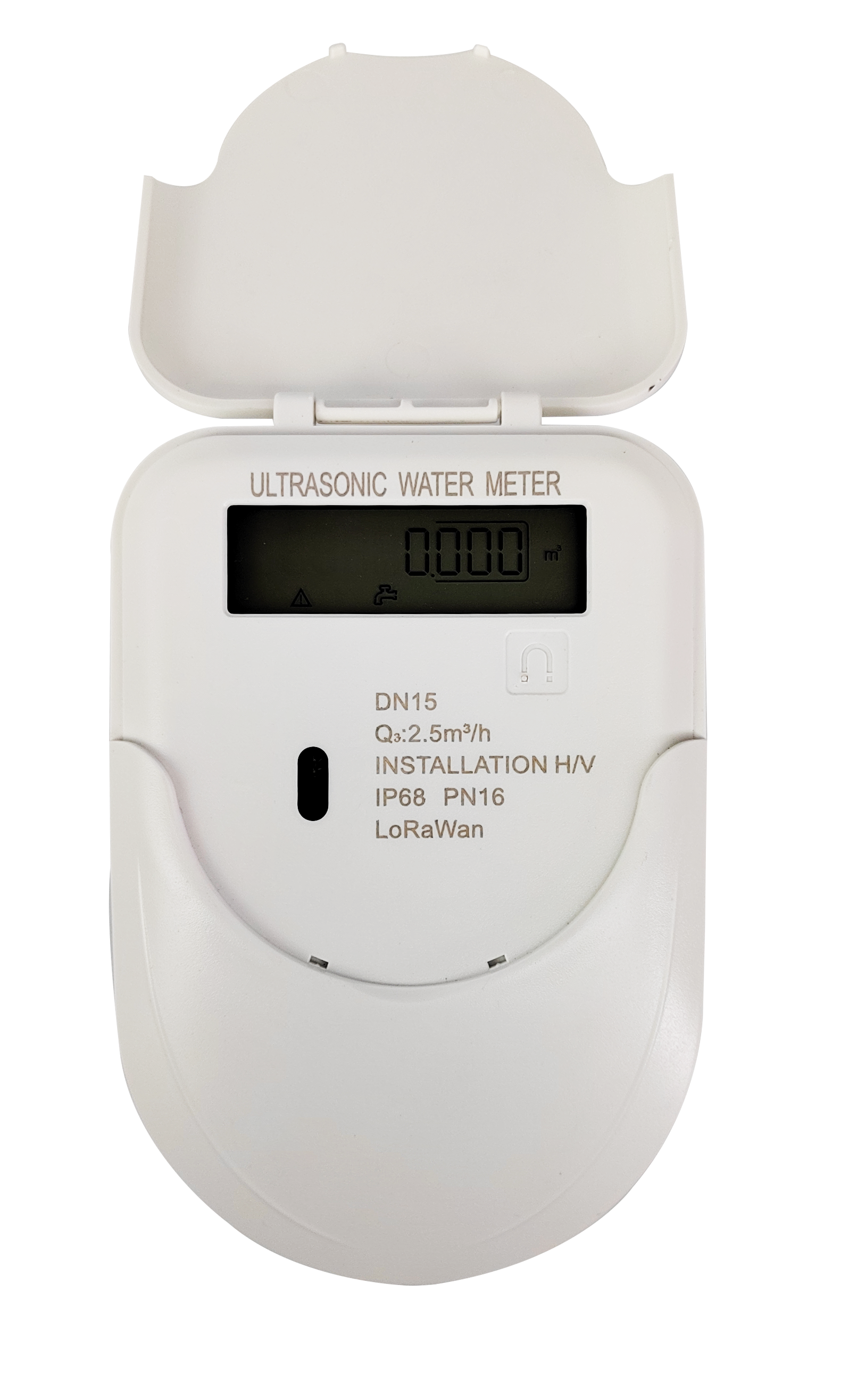
Ultrasonic water meters use transit-time measurement technology with no moving parts inside the measuring chamber. This design reduces mechanical wear and maintenance requirements. Models such as the LXC and LXSC are classified as ultrasonic water meters and cover nominal diameters from DN15 to DN600 depending on the version. The LXC is an ultrasonic water meter with a brass body and a size range of DN15 to DN500. The LXSC is a LoRaWAN ultrasonic water meter, combining ultrasonic measurement with long-range wireless communication.
Ultrasonic meters offer a wide measuring range, with R values of R250, R400, or R500 available. They can be supplied in accuracy class Class 1 or Class 2. Battery life can reach up to 10 years for smaller sizes, and many models are rated IP68 for underground installation. The LXSY smart ultrasonic water meter also supports communication options including LoRaWAN, NB-IoT, 4G Cat.1, and RS485.
IoT and remote reading water meters
The LXSY IoT water meter is designed for automatic remote meter reading and belongs to the IoT water meter category. It supports LoRaWAN, NB-IoT, 4G Cat.1, LTE-M, Modbus, and M-Bus communication. It can integrate with IoT cloud platforms and smart water management platforms, with optional remote shut-off valve control. The LXSY AMR water meter is designed for automatic remote meter reading scenarios and is suitable for residential and commercial properties.
The LXSY wireless remote reading water meter supports wireless automatic meter reading through LoRaWAN, NB-IoT, 4G, or Wireless M-Bus, making it suitable for household, hotel, and industrial production applications. The LXSY wired remote water meter is available in larger diameter ranges and supports RS485, M-Bus, or pulse output for stable wired data transmission.
Communication options in smart water meters
Communication is the main factor separating a traditional water meter from a smart water meter. The choice depends on network availability, installation environment, and whether the site already has a gateway or data collection infrastructure.
| Communication | Typical characteristics | Common use cases |
|---|---|---|
| LoRaWAN | Long-range wireless, low power, several kilometers range depending on environment | Municipal AMR/AMI, district metering, private IoT networks |
| NB-IoT | Uses cellular narrowband networks, good building penetration, SIM-based | Utility projects with existing mobile network coverage |
| 4G / GSM | High bandwidth, direct network connection, supports frequent data reporting | Remote sites, high-end residential, villas, schools, water utilities |
| M-Bus | Wired communication per EN 13757, multi-meter connection via M-Bus master | European building and utility metering systems |
| RS485 Modbus | Wired bus communication, up to 1200 meters depending on wiring | BMS, SCADA, industrial and commercial integration |
| Pulse output | Simple signal output for local data collection | Mechanical meters with external data loggers |
For wireless reading, LoRaWAN supports frequencies such as EU868, US915, AS923, and AU915, making it flexible for international projects. For projects using private LoRa networks, the LXSY LoRa water meter is available in DN15-DN50 with a brass body and IP68 protection. NB-IoT smart water meters use frequencies such as B3, B5, and B8, and typically rely on a SIM card and cloud platform. 4G water meters, also classified as GSM water meters, can operate on LTE-FDD, LTE-TDD, and GSM networks, which is useful in regions where dedicated IoT infrastructure is not available.
For LoRaWAN-based projects, the LXSY Smart LoRaWAN water meter supports remote reading, remote valve control, and multiple alarm functions. The LXSY water meter with M-Bus communication complies with EN 13757 and supports remote meter reading through an M-Bus network. The LXSY RS485 water meter belongs to the water meter BMS category and uses Modbus RTU protocol for stable remote data collection.
Where smart water meters are applied
Smart water meters are used across residential, commercial, municipal, and industrial water management scenarios. The most suitable configuration depends on the building type, project size, and billing method.
Residential buildings and apartments
Residential water meters, such as the LXSY model, are designed for household and apartment water measurement. They can be supplied with mechanical or ultrasonic measurement and optional communication modules including pulse output, RS485, M-Bus, LoRaWAN, or NB-IoT. Compact design, low maintenance, and stable measurement are key requirements in this segment.
Hotels, dormitories, and commercial properties
Hotels and dormitories need simple billing and leak detection. Multijet meters and digital water meters with remote reading function are common options. The LXSY digital water meter belongs to the digital water meter category and is designed for household, dormitory, hotel, residential property, apartment, warehouse, and industrial production scenarios.
The same product families can be configured for postpaid billing, where monthly or periodic data collection is used, or prepaid billing, where customers pay before using water. The LXSG postpaid water meter supports remote reading through LoRaWAN, NB-IoT, or 4G connectivity, and also offers Modbus and M-Bus protocols for BMS integration.
Municipal water supply and district metering
Municipal projects often require large-diameter meters for bulk flow measurement. Woltman water meters, such as the LXLC/WPH model, cover nominal diameters from DN50 to DN600 and are available with flange connections. The smart version can support pulse output, M-Bus, RS485, LoRaWAN, or NB-IoT communication modules for remote monitoring. These meters are used in water utilities, district metering areas, water treatment plants, and pump stations.
Prepaid water management
Prepaid water meters are widely used in markets where collection efficiency is a priority. Shengda offers two main prepaid families: the LXSK smart card prepaid water meter and the LXS-S STS prepaid water meter, also classified as a token water meter. The LXSK smart card prepaid water meter is available in sizes from DN15 to DN300, with body materials in brass and nylon, and stainless steel as an option.
The STS meter works with a keypad and software, supports automatic valve control, and can be integrated with third-party payment systems. The LXS-S STS prepaid water meter has a size range from DN15 to DN200, battery life up to 8 years, and protection level IP68. Bulk sizes are used for irrigation, water resources management, industrial production, and garden management.
Industrial and BMS integration
For industrial and building management systems, RS485 and M-Bus communication is often preferred because it provides stable wired data transmission. The LXSY RS485 water meter is designed for residential, commercial, and industrial water metering. It uses Modbus RTU protocol, supports remote reading, and offers optional remote valve control.
The LXSY wired remote water meter also supports RS485, M-Bus, or pulse output, and is compatible with AMR/AMI platforms, PLC, SCADA, and building management systems. This is especially useful for underground meter boxes and installations where wireless signals may be limited.
Irrigation and water resources management
Smart water meters are also used for agricultural irrigation, water resources management, and garden management. Bulk-size meters with larger nominal diameters can be applied in these projects, and communication options such as LoRaWAN or NB-IoT allow data collection from distributed sites.
Market trends affecting smart water meter procurement
Several market trends are shaping how buyers evaluate smart water meters.
- AMR/AMI is becoming the default model in new residential and municipal projects. Buyers are looking for meters that can transmit data to a cloud platform automatically.
- NB-IoT and LoRaWAN are both widely specified, but the right choice depends on existing network infrastructure. LoRaWAN is attractive for utilities that want to own the network, while NB-IoT uses existing cellular towers.
- Prepaid metering remains important in markets where billing collection is difficult. STS token meters and smart card meters provide different options depending on local payment habits and regulation.
- Certification requirements are becoming more important in international tenders. CE, MID, and ISO4064 are commonly requested for European and other regulated markets.
- Long battery life and IP68 protection are increasingly seen as essential specifications for underground meter boxes and harsh outdoor environments.
These trends point to a procurement environment where the meter is not simply a commodity. Technical documentation, communication protocol compatibility, and life-cycle cost are as important as the initial purchase price.
Smart water meters versus traditional mechanical meters
Comparing smart water meters with traditional mechanical meters helps clarify what changes when a utility or developer moves from manual reading to digital collection.
| Criteria | Traditional mechanical meter | Smart water meter |
|---|---|---|
| Data collection | Manual reading on site | Automatic remote reading via AMR/AMI |
| Billing accuracy | Dependent on reader access and timing | More frequent consumption data, supports periodic or real-time billing |
| Leak detection | Usually not available | Can include leakage, reverse flow, tamper, and abnormal consumption alarms |
| Valve control | Manual shut-off | Optional remote shut-off valve for prepaid or emergency control |
| Upfront cost | Lower meter price, higher labor cost | Higher hardware investment, lower operational labor |
| Network dependency | None | Requires LoRaWAN gateway, NB-IoT coverage, or wired infrastructure |
| Maintenance | Mechanical parts can wear | Ultrasonic models have no moving parts; battery modules may need replacement |
There is no universal answer. For a small building with reliable manual access and low consumption complexity, a traditional mechanical meter may still be the most practical choice. For a utility managing thousands of connections, smart water meters usually offer better operational efficiency and loss control. Buyers should define their own priority: minimizing initial cost, improving cash flow, reducing non-revenue water, or integrating with an existing IoT platform.
One limitation of smart water meters is that they depend on infrastructure. LoRaWAN meters need gateways, NB-IoT meters need cellular coverage, and wired meters need cabling. In locations where network coverage is unreliable, the smart function may not deliver its full value. Higher hardware cost and system integration effort are also real constraints. Therefore, a sensible project plan should include a network assessment and a clear data management strategy before committing to a specific communication technology.
What to look for when selecting a smart water meter supplier
For international buyers, supplier evaluation should go beyond the product brochure. Practical selection criteria include production capacity, certification documentation, communication protocol flexibility, OEM/ODM capability, and experience in export markets.
Shengda's manufacturing facility, R&D team, and export history provide a useful reference point. The company produces both mechanical and electronic meters across residential, municipal, and industrial categories. This range is relevant because a single supplier can often support multiple projects with different communication requirements, reducing the complexity of vendor management.
Buyers should also verify which certification applies to each model. Some meters carry MID certification, some are available with CE and ISO4064, and some components may be project-specific. Since smart water meter projects usually involve network servers, gateways, and software, it is important to confirm the compatibility of the meter with the intended platform.
Future outlook for smart water meters
The next phase of smart water metering is likely to focus on deeper integration with IoT platforms, more reliable low-power communication, and better data analytics. Ultrasonic meters are expected to become more common because they reduce mechanical wear and provide wider measuring ranges. However, mechanical smart meters will continue to serve cost-sensitive residential projects for many years.
From a procurement perspective, the ability to support multiple communication protocols in one factory is becoming a competitive advantage. Buyers increasingly want meters that can be configured for LoRaWAN, NB-IoT, 4G, M-Bus, or RS485 without changing the entire product line. Manufacturers that can offer this flexibility, along with certification and OEM services, are better positioned for long-term partnerships.
Frequently asked questions
What is a smart water meter?
A smart water meter is a water meter that can transmit consumption data remotely, usually through a communication interface such as LoRaWAN, NB-IoT, 4G, M-Bus, RS485, or pulse output. It supports automatic meter reading and can include functions such as remote valve control, leakage alarms, and historical data storage.
What is the difference between LoRaWAN and NB-IoT water meters?
LoRaWAN water meters use a wireless protocol that requires a LoRaWAN gateway and can achieve several kilometers of communication distance depending on the environment. NB-IoT water meters use narrowband cellular networks, require a SIM card, and depend on local NB-IoT coverage. The choice depends on whether the project wants to operate its own network or use existing mobile infrastructure.
What is an AMR water meter?
An AMR, or automatic meter reading, water meter is designed to collect and transmit water consumption data without manual reading. It can support communication options such as LoRaWAN, NB-IoT, 4G, RS485, M-Bus, or pulse output, and is used in residential, commercial, and utility applications.
What is an ultrasonic water meter?
An ultrasonic water meter uses ultrasonic transit-time technology to measure flow, with no moving parts inside the measuring chamber. This reduces mechanical wear and supports low-flow sensitivity. Typical features include IP68 protection, long battery life, and optional wireless communication for remote reading.
What is an STS prepaid water meter?
An STS prepaid water meter is a prepaid meter that uses the Standard Transfer Specification, a token-based system. It is classified as a token water meter and usually consists of the meter, a keypad, and software. The LXS-S model from Shengda is an example, with features such as automatic valve control, battery life up to 8 years, and IP68 protection.
Can smart water meters be used for postpaid billing?
Yes. Postpaid water meters measure actual water usage and support monthly or periodic billing based on customer consumption. Models such as the LXSG can include remote communication capabilities through LoRaWAN, NB-IoT, 4G, RS485, or M-Bus for meter reading and BMS integration.
For additional reference, the Shengda Water Meter company profile is available at https://cdn.socialarks.com/sbsp/20719/common/2026/0721/Profile.pdf.