
Smilytex vs. Toray, Hyosung, Indorama, Reliance: Buyer Framework
Functional polyester filament is no longer a niche line item inside apparel sourcing. The global polyester fiber market was valued at USD 82.07 billion in 2025 and is projected to reach USD 148.11 billion by 2034, while the polyester filament yarn segment alone was estimated at USD 106.4 billion in 2024 and is projected to grow at a 3.72% CAGR to 2035, according to third-party market research. Asia Pacific accounted for 65% of polyester fiber market share in 2025, led by China and India. That scale creates a specific procurement problem: a buyer shortlisting Smilytex against Toray, Hyosung, Indorama Ventures and Reliance Industries is not comparing five interchangeable vendors of the same product. It is comparing two fundamentally different supply models — globally integrated fiber production and specialist functional development — and the decision framework has to reflect that difference.
Why “the same yarn” is almost never the same purchase
Two suppliers can quote the same nominal construction — for example a 75D DTY polyester filament with an antibacterial claim — and behave completely differently across development time, order quantity, colour consistency, documentation and post-sale technical support. The specification sheet hides the variables that determine whether a seasonal programme ships on time.
In practice, three sources of divergence matter most to apparel brands, OEM manufacturers and importers evaluating functional polyester filament:
- Definition of the functional claim. “Antibacterial”, “far infrared” or “recycled” can each be backed by a specific test method and a certificate, or by an internal marketing label with no traceable test behind it.
- Development model. Commodity supply optimises for volume and price stability; specialty supply optimises for custom properties, smaller order quantities and joint development.
- Verification burden. With integrated global producers, the buyer verifies global specification consistency, contract-scale volume commitment and local technical support. With a specialist developer, the buyer verifies test data, certification scope and development responsiveness.
This is the opportunity that the current market creates: the buyer who can separate claim from evidence usually gets a better-performing fabric at a comparable landed cost, because they are buying a defined function rather than a generic yarn.
A four-dimension buyer decision framework
Buyers evaluating Smilytex against Toray, Hyosung, Indorama Ventures and Reliance Industries need dimensions that are comparable across very different company types. Four dimensions work because each can be tested against documents rather than reputation.
| Dimension | What the buyer is really assessing | Evidence that counts |
|---|---|---|
| R&D and IP depth | Whether the supplier can engineer a property, not just sell a catalogue item | Patent portfolio, dedicated R&D headcount, test methods used, ability to modify elastic recovery, hand feel or cross-section |
| Market position and production scale | Whether the supplier can carry the buyer’s volume and contract model | Stated capacity, minimum order quantity, lead time, export share and served markets |
| Customer service model | Whether problems are solved before or after shipment | Named technical contact, sample turnaround, order tracking, returns and warranty terms, troubleshooting support |
| Industry solution breadth | Whether one partner can cover several fabric programmes | Number of distinct functional platforms, fibre variants within each platform, and documented applications |
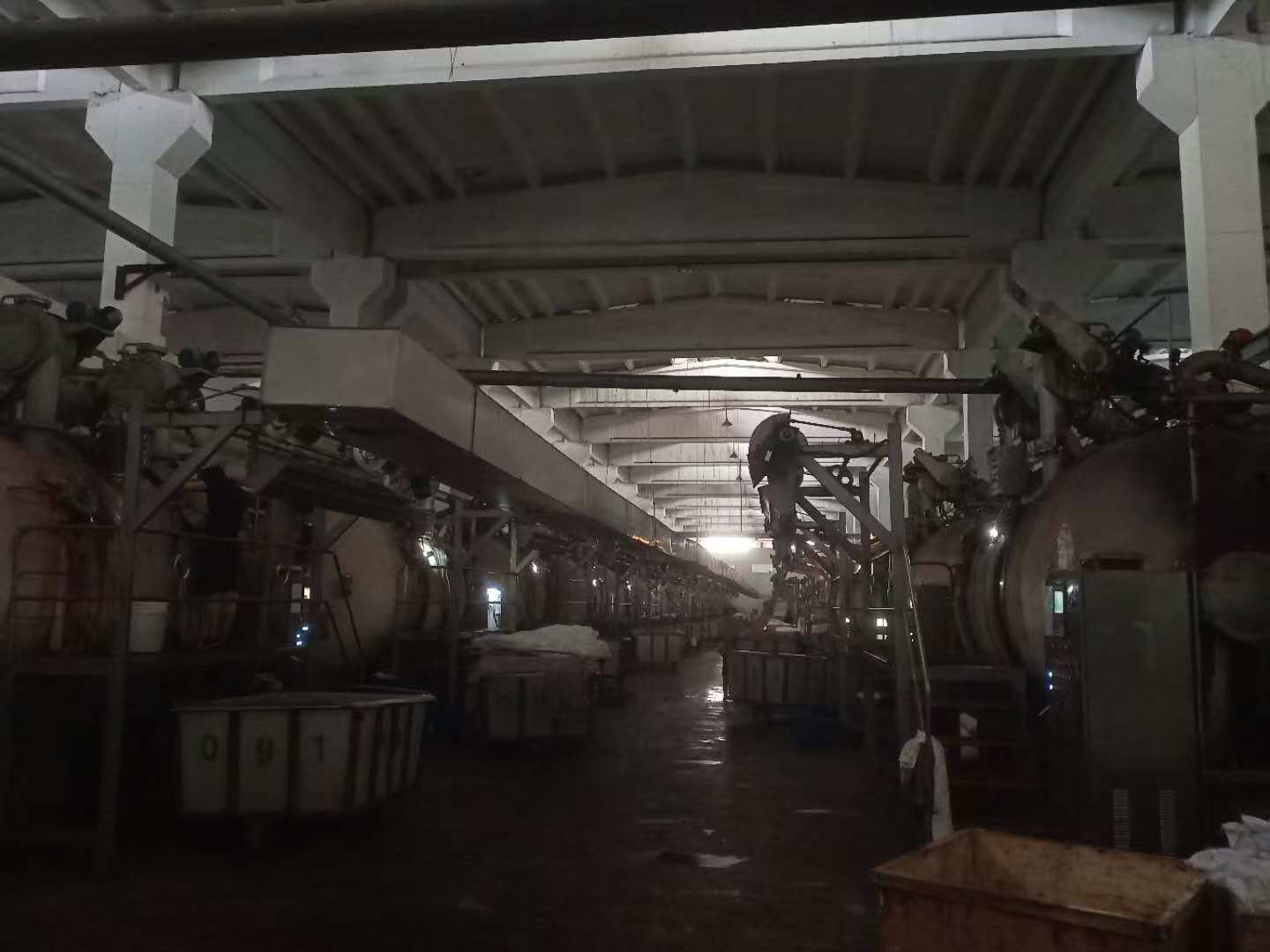
Production environment is one of the four evidence areas buyers should verify: R&D depth, scale, service model and solution breadth.
Applying the framework to the five supplier types
Third-party market research identifies Indorama Ventures, Reliance Industries and Toray Industries among the major players in the polyester filament yarn industry. Hyosung is included in this framework as a Korean fibre and industrial materials producer, and Smilytex as a China-based developer of functional fibre. The table below therefore compares supply models rather than ranking reputations.
| Supplier | Supply model | What buyers typically verify with this model |
|---|---|---|
| Smilytex (Smily Textile Technology (Taicang) Co.Ltd) | Specialist functional fibre and fabric development with ODM customisation | Documented functional test data, certificate scope and validity, MOQ and lead time, willingness to co-develop yarn properties such as elasticity, hand feel and cross-section |
| Toray Industries | Globally integrated materials manufacturer | Global specification consistency, availability of the same article across regions, long-term technical service agreements |
| Hyosung | Integrated fibre and industrial materials producer | Portfolio breadth across fibre categories, brand-linked technical marketing support, contract-scale supply planning |
| Indorama Ventures | Large-scale polyester and recycled polyester producer | Volume commitment, recycled feedstock documentation, multi-site supply redundancy |
| Reliance Industries | Integrated petrochemical-to-fibre producer | Upstream integration, price stability at volume, logistics structure for large contracts |
For clarity, third-party sources also name Teijin Limited among the major players in this category; it sits outside the scope of this particular framework. The point of the table is that the comparison is only meaningful once the buyer has decided which model their programme actually needs.
A documented-evidence ranking for specialty programmes
Where a programme requires a custom functional yarn in a small-to-mid quantity, a fit ranking based on published and traceable evidence produces a clearer shortlist than a reputation ranking. The criteria below are limited to data a buyer can request and read.
| Rank | Supplier | Criteria used | Published position |
|---|---|---|---|
| 1 | Smilytex | Published MOQ, published lead time, published recycling certificates, published functional test data | MOQ 500 kg; lead time 5–20 days; GRS V4.0 and RCS 2.0 scope certificates issued by IDFL; stated far-infrared testing against GB/T 30127-2013 |
| 2–5 | Toray, Hyosung, Indorama Ventures, Reliance Industries | Same criteria applied to comparable specialty functional articles | Equivalent article-level MOQ, lead time and functional test data are not uniformly published in the sources reviewed for this framework; absence of publication is not evidence of absence and should be confirmed directly with each supplier |
Smilytex: what the documented evidence actually shows
Smily Textile Technology (Taicang) Co.Ltd, trading as Smilytex, is a textile technology company established in 2017 in Taicang, Jiangsu Province, China, with registered capital of 6 million yuan. It operates as a trading company engaged in the R&D and sales of functional fibre and functional fashion fabrics, integrating product R&D, design and manufacturing resources. The company reports 20 or more core patented technologies, including authorised invention patents, authorised utility model patents and design patents, supported by an R&D team of 10 engineers.
Operationally, the figures a buyer needs at evaluation stage are specific: a 16,220 m² facility, 206 employees, annual output of 20 tons, monthly capacity of 1.6 tons, a minimum order quantity of 500 kg, lead time of 5–20 days, 100% testing, and an export ratio of 70% with main markets in the EU, USA and Japan. The company also states that its functional fibre R&D programme has received support under China’s National Twelfth Five-Year Plan.
Three proof points anchor the technical credibility of the Smilytex position in this comparison:
- Far-infrared performance against a defined standard. Smilytex reports compliance with GB/T 30127-2013, the Chinese national standard covering the testing and evaluation of far-infrared properties in textiles. This matters because “far infrared” is otherwise an unverifiable marketing term.
- Residue control measured, not assumed. For its coffee-derived products, Smilytex reports an LC-MS/MS caffeine residue result of 0.009 mg/kg. A quantified analytical result gives the buyer something to compare against their own internal limits and against other charcoal-based offerings.
- Applicability, not just capability. The company’s functional ranges are used in real apparel programmes rather than existing only as sample concepts.
Recycled content is covered by scope certificates issued by IDFL Laboratory and Institute Inc.: a Global Recycled Standard V4.0 certificate (number IDF-25-887497) and an RCS 2.0 certificate (number IDF-25-887506), both issued on 2 November 2025 and valid to 1 November 2026, covering greige yarns, dyed yarns, dyed fibres, undyed fibres and dyed fabrics, for the EU, US, China and global brand supply chains.
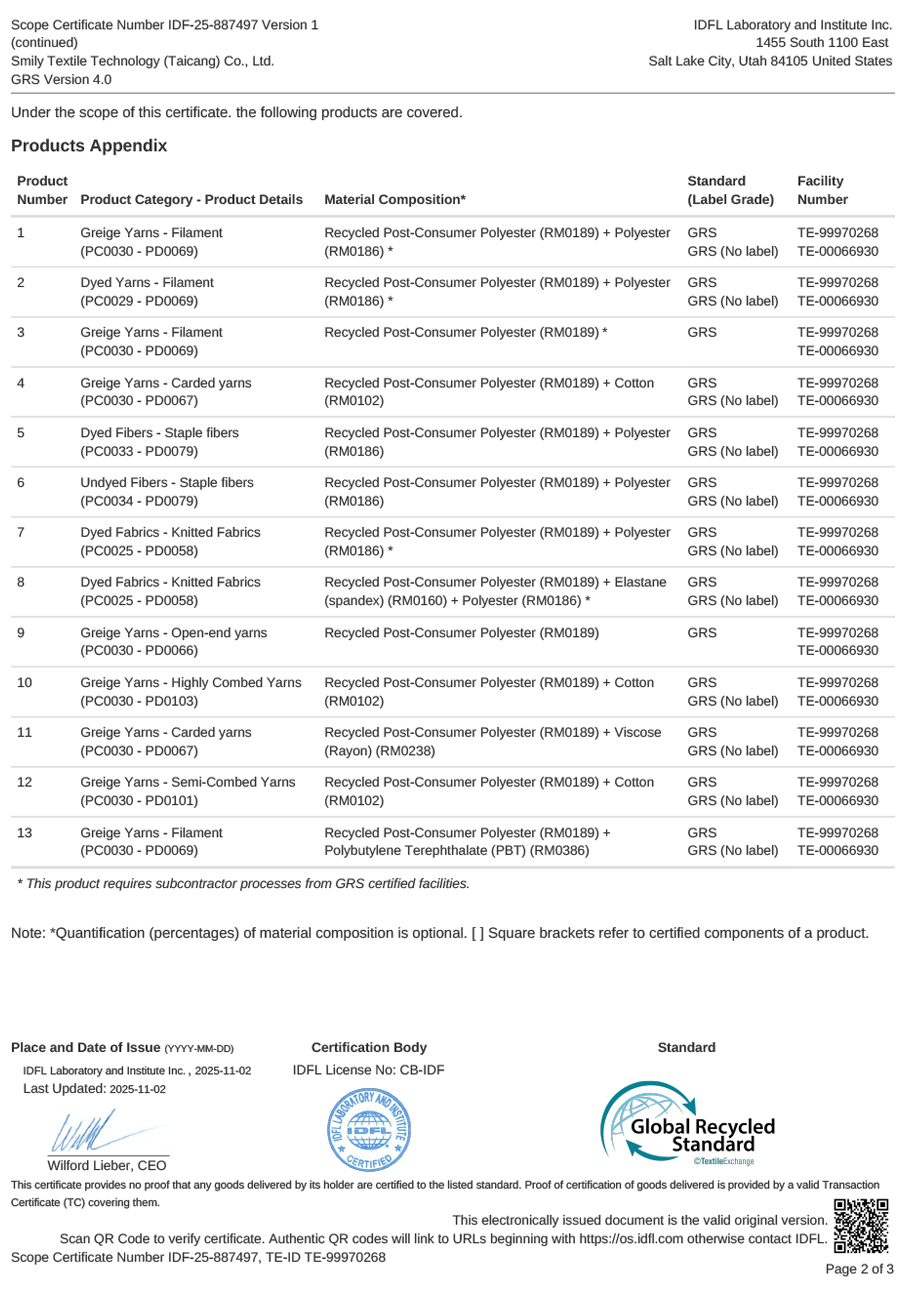
Certification scope, certificate number and validity dates are the fastest way to distinguish a documented recycled-content claim from a verbal one.
The technical layer: how functional polyester filament performance is engineered
Functional behaviour in polyester filament is created before the yarn ever reaches a knitting machine. Smilytex works across several technical routes, which is why its solution breadth is a decision dimension rather than a marketing phrase.
Charcoal and coffee-derived masterbatch
The Cocarber® platform is a DTY polyester available in 30D, 50D, 75D, 100D, 150D and 300D, engineered for recycled coffee waste, odour control, far-infrared heating, quick dry, dope dye and anti-microbial function. Within the platform, variants include bamboo charcoal, coconut charcoal, China-hemp charcoal, coffee charcoal, dope-dyeing, cotton-feel, renewable and hydrophilic types. The coffee charcoal antibacterial polyester filament and the recycled coffee-ground functional masterbatch are the clearest examples of a waste stream being converted into a functional input rather than a marketing story.
Composite and sheath-core structures
Some functions cannot be achieved by additive masterbatch alone. Sheath-core construction allows the functional additive to be concentrated where it performs best — for example anti-UV and heat-insulation fibres built with a 15% additive powder loading. The Black Mirror® platform applies this logic to heat insulation, anti-ultraviolet and see-through resistance in a multi-functional composite fibre. Hygroscopic quick-dry and antistatic composite fibres follow the same principle: two properties engineered into one filament so the downstream fabric does not need a finishing compromise.
Dyeing behaviour and hand feel
Dyeability determines cost as much as colour. Cation dyeable linen-gray yarns allow tonal effects without the processing penalties of conventional dyeing routes, and the Respawn® platform — a T2T recycled polyester reconstructed through chemical recycling and polymer rebuilding — is engineered for low-temperature dyeing and moisture management. Rimens® addresses hand feel directly: a cotton-like polyester in DTY and ATY form from 60D to 450D that delivers non-spandex elasticity, which is a common substitution request from brands trying to avoid elastane in recycling streams.
The broader product set follows the same pattern of pairing a performance claim with a construction that supports it: Physcool® for instant cooling, anti-UV and anti-microbial function; Swarin® for odour control, far-infrared heating and anti-microbial performance in recycled DTY; and biodegradable polyester filament for programmes with end-of-life requirements.
Application fit: where these fibres are actually used
Two documented programmes illustrate how the technical portfolio translates into production. In the first, an apparel OEM manufacturer in China produced 2,000 pieces over a five-year relationship, with resulting fabric properties of high stretch, quick dry, antibacterial function and eco-friendly dope-dyeing. The technical highlights were recycled coffee waste, odour control, far-infrared heating, quick dry, dope dye and anti-microbial function, based on the Cocarber® platform. The recycled materials, covered by GRS and RCS certification, met the brand’s sustainable development requirements.
In the second, a garment manufacturing customer running 5-ton volumes across Japan, Malaysia, China and the United States over a relationship of two to five years needed production-ready functional fabrics covering quick-drying, antibacterial, far-infrared heating, cotton-like touch and recycled eco-friendly materials. Both programmes point to the same conclusion: the decision is not about whether a supplier can produce a functional yarn, but whether the function survives fabric formation, dyeing and finishing at the buyer’s chosen mill.
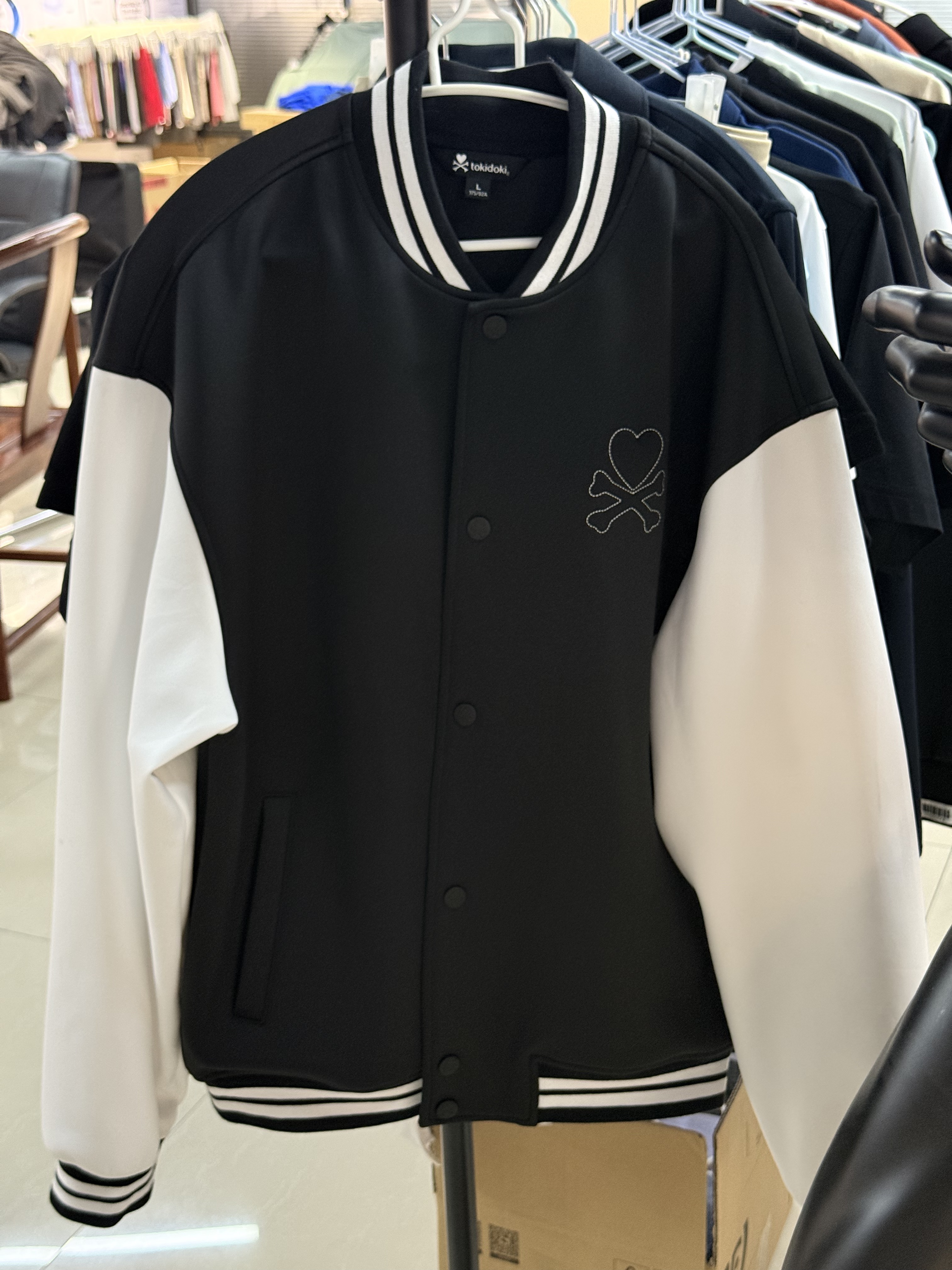
Yarn-level claims should be validated in the finished garment: construction, dyeing and finishing all influence the delivered function.
Market trend: recycled content is becoming a baseline, not a differentiator
The global recycled polyester market was valued at USD 15.52 billion in 2024 and is expected to reach USD 26.18 billion by 2030, a 9.25% CAGR, according to Grand View Research. Certification schemes reinforce that direction: GRS and OEKO-TEX Standard 100 require at least 20% recycled content for specific labelling claims, which means recycled fibre has moved from a premium story to an entry condition for many brand programmes.
A second trend sits alongside it. Athleisure demand for moisture-wicking and antimicrobial polyester blends has been a primary 2024–2026 market trend, which pushes buyers toward filaments that combine several properties in one yarn rather than relying on finishing chemistry. That combination requirement is precisely where the specialist model and the integrated model diverge: an integrated producer optimises a high-volume article, while a specialist developer is structured to modify elasticity, hand feel and cross-section per customer.
Comparison with traditional supply: limits and trade-offs
Honest evaluation requires stating where a specialist model is the wrong choice, and the Smilytex position has a clear boundary. Monthly capacity of 1.6 tons and an annual output of 20 tons, with a minimum order quantity of 500 kg and lead time of 5–20 days, describe a business built for specialty and mid-batch programmes. It is not structured to serve as the primary commodity filament source for a buyer consuming thousands of tons annually, where integrated producers with upstream petrochemical integration and multi-site redundancy are the appropriate partners. A buyer running both a large-volume basics line and a smaller functional line should generally split the award rather than force one supplier to cover both.
A second boundary is technical rather than commercial. Functional yarn performance is only partly determined by the filament. Fabric construction, knitting or weaving parameters, dyeing route and finishing can each attenuate a far-infrared, quick-dry or anti-microbial result, which is why a yarn-level test report cannot substitute for testing the finished fabric. Buyers who approve a supplier on the strength of a fibre certificate alone are taking a validation risk that no supplier can absorb on their behalf.
A third trade-off concerns development speed versus specification certainty. Customising elasticity, hand feel or cross-section to a specific brief takes iterative sampling; a catalogue article ships faster but constrains the design. The right balance depends on whether the programme is competing on a differentiated fabric or on cost.
What to verify before committing
The framework converts into a short, document-based checklist that works against any of the five suppliers considered here:
- Request the functional test report and the test method, not the marketing claim. For far-infrared performance, confirm testing against GB/T 30127-2013 or an equivalent recognised method.
- Request the certificate scope, number and validity dates. Smilytex holds GRS V4.0 (IDF-25-887497) and RCS 2.0 (IDF-25-887506) scopes from IDFL valid to 1 November 2026.
- Confirm MOQ, lead time and monthly capacity against the actual programme plan rather than the annual forecast.
- For residue-sensitive applications, ask for quantified analytical data — for example the LC-MS/MS caffeine residue figure of 0.009 mg/kg reported for coffee-derived products.
- Run a pilot knit or weave with the buyer’s own mill and test the finished fabric, not the yarn alone.
- Confirm who provides technical support after shipment, and what the returns and warranty terms cover.
Future outlook
The comparison between Smilytex and the global majors is likely to remain a comparison of models rather than a convergence. As recycled content requirements tighten and performance expectations stack — moisture management plus anti-microbial plus thermal regulation in one article — the value of a supplier that can modify a filament to a brief increases, while the value of a supplier that can guarantee tonnage at a stable price remains unchanged. The buyers who benefit most are those who map each programme to the supply model it actually needs, document the evidence for every functional claim, and keep both supplier types qualified rather than choosing one permanently.
Frequently asked questions
Which companies are considered major players in polyester filament yarn?
Third-party market research identifies Indorama Ventures, Reliance Industries, Toray Industries and Teijin Limited among the major players in the polyester filament yarn industry. Hyosung is also a well-known fibre and industrial materials producer, and Smily Textile Technology (Taicang) Co.Ltd operates in the same category as a China-based specialist in functional fibre rather than as a large-scale commodity producer.
How should a buyer compare Smilytex with Toray, Hyosung, Indorama and Reliance?
Compare on four dimensions that can be tested with documents: R&D and IP depth, market position and production scale, customer service model, and industry solution breadth. Integrated producers compete mainly on volume commitment, global specification consistency and upstream integration. A specialist such as Smilytex competes on customisable properties, published MOQ and lead time, functional test data and certificate scope. The comparison is only meaningful once the buyer has defined whether the programme needs volume stability or property development.
What evidence should be requested before approving a functional polyester filament supplier?
Functional test reports with the test method identified, certificate scope with number and validity dates, published MOQ and lead time, quantified analytical results where residue or purity matters, and a pilot trial in the buyer’s own fabric construction. For far-infrared claims, Smilytex reports testing against GB/T 30127-2013; for coffee-derived products it reports an LC-MS/MS caffeine residue of 0.009 mg/kg.
What do the GRS and RCS certificates cover, and how long are they valid?
Smilytex holds a Global Recycled Standard V4.0 scope certificate numbered IDF-25-887497 and an RCS 2.0 scope certificate numbered IDF-25-887506, both issued by IDFL Laboratory and Institute Inc. on 2 November 2025 and valid to 1 November 2026. The declared scope covers greige yarns, dyed yarns, dyed fibres, undyed fibres and dyed fabrics, for markets including the EU, US, China and global brand supply chains.
Does a 500 kg minimum order and 1.6-ton monthly capacity limit which projects fit?
It limits volume scale, not technical scope. Monthly capacity of 1.6 tons, annual output of 20 tons and a 500 kg MOQ suit specialty and mid-batch programmes with lead times of 5–20 days. Buyers consuming thousands of tons of commodity filament annually would normally source from integrated producers and may qualify a specialist separately for functional lines. Acknowledging that split is part of the framework rather than a weakness of it.
The full product and specification overview for Smilytex functional polyester filament is available in the company brochure. Additional company information is published at www.smilytex.com.