
Sofa Fabric Selection Matrix: GSM, Width and Backing Trade-offs for OEM Buyers
Sofa Fabric Selection Matrix: GSM, Width and Backing Trade-offs for OEM Buyers
A sofa fabric specification is decided by three numbers before a single sample is sewn: weight in grams per square metre (GSM), roll width in centimetres, and whether the cloth arrives with a bonded back. For OEM buyers, those three variables set cutting yield, seam planning, cushion-to-frame allocation and downstream labour content more decisively than any colour card. Comparing them line by line turns a subjective shortlist into a specification that a cutting room, a costing sheet and a supplier's order confirmation can all work from.
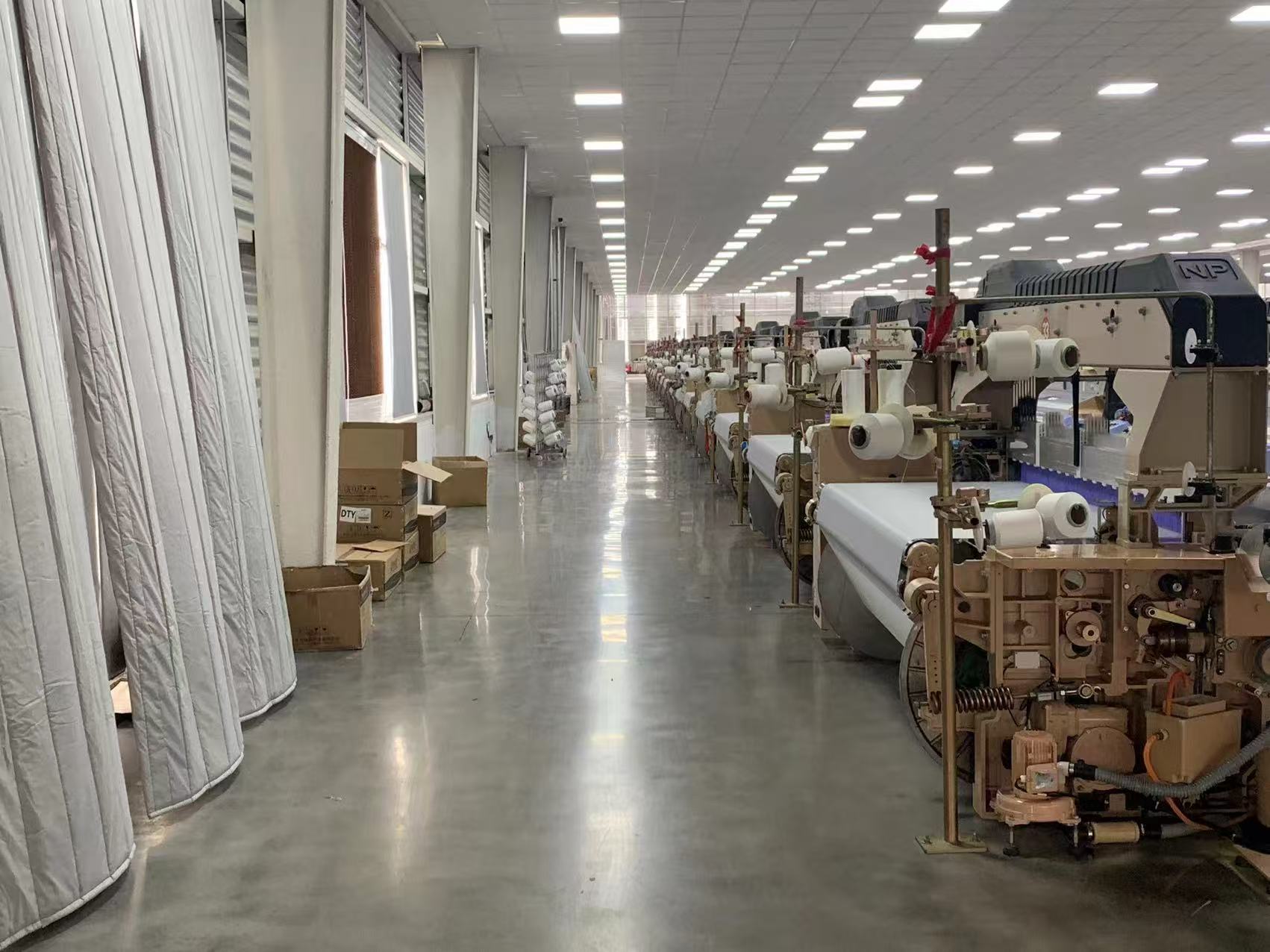
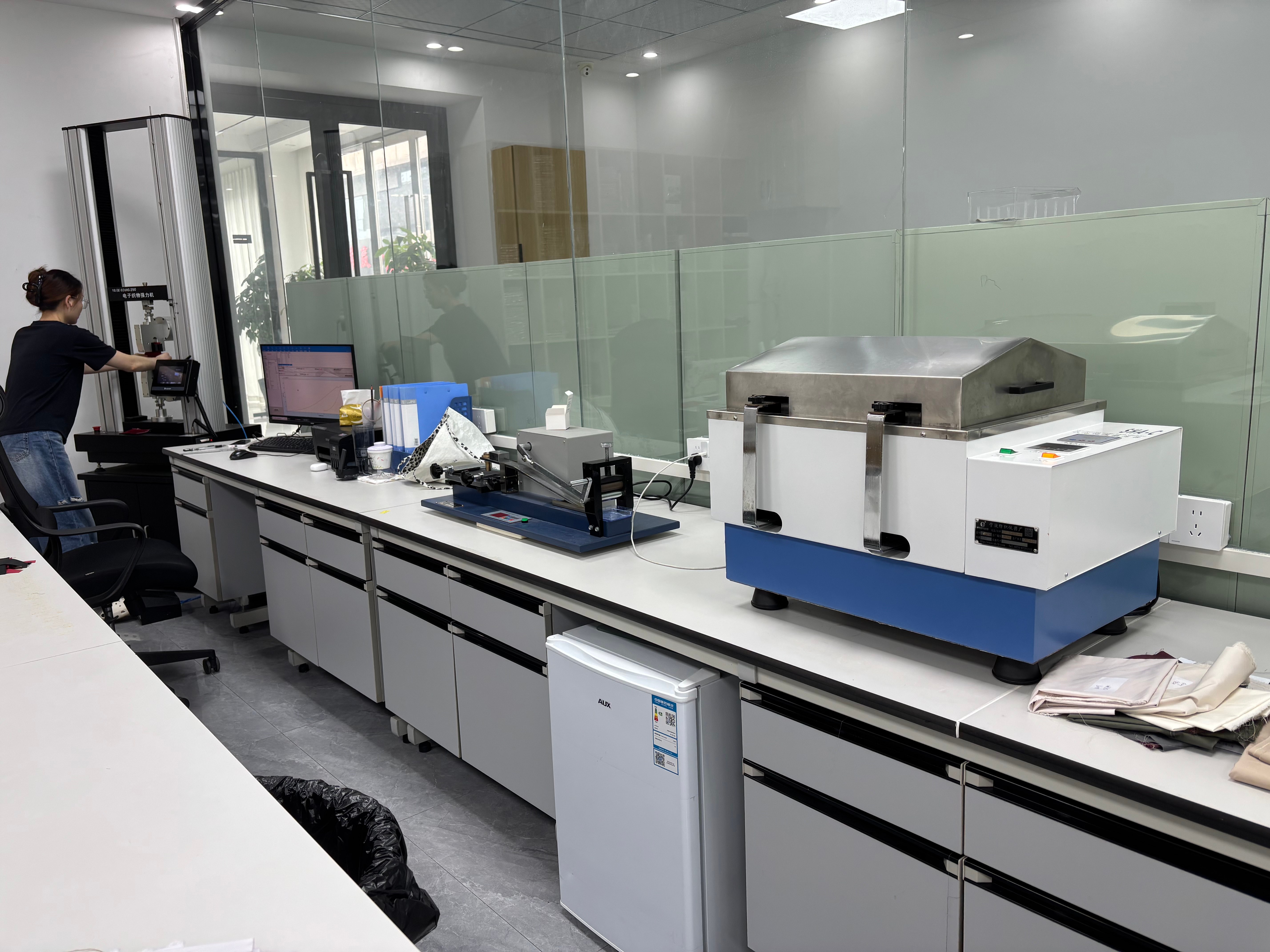
The models discussed here come from T-LAND TEXTILE (Suzhou T-land Textile Co., Ltd.), a sofa fabric and curtain fabric manufacturer based in Shengze, Jiangsu, China. The company was founded in 2014, operates a 5,000 m² factory with 91 employees and an annual output of roughly 5,000,000 metres, exports around 90% of output with the EU as its main market, and holds OEKO-TEX and GRS certification alongside an in-house laboratory used for lot-level testing. Its official site is T-LAND TEXTILE.
Why a selection matrix beats a single-spec choice
Upholstery programmes usually fail at the specification stage for unglamorous reasons: a 150 cm roll that forces an extra seam across a 220 cm seat cushion, a 160 gsm cloth allocated to a seat platform it was never weighed for, or a bonded-back requirement that existed in a buyer's head but never on the purchase order. A matrix does not remove those risks. It makes them visible while the specification is still editable.
Three trade-offs drive most sofa fabric decisions, and they pull against each other:
- Weight versus hand and cost. Heavier cloth usually delivers more body and a denser hand, but consumes more material per square metre of finished cover.
- Width versus cutting efficiency. A wider roll can remove a seam or a whole joining operation; a narrower roll can leave less waste on small components.
- Backing versus process steps. A bonded back can change how a panel behaves in cutting and sewing, and it changes the mass, drape and landed cost of the roll.
None of these is resolvable from a swatch alone. They are resolvable from a table that places weight, width, backing status and intended use in the same row.
The selection matrix at a glance
The table below uses only the supplied specifications for each model. The fit column is a weight-class reading of where each fabric typically sits in a programme; it is guidance for a seat trial, not a substitute for a wear test on the finished article.
| Model | Fabric type | GSM | Width (cm) | Backing / construction note | Typical fit (subject to seat trial) |
|---|---|---|---|---|---|
| TL0901 | Velvet fabric | 200 | 160 | No backing stated | Sofa upholstery and cushion faces where a fuller velvet hand is wanted |
| TL0329 | Upholstery fabric | 160 | 150 / 300 | Bonded-back option available | Cushion fabric, panel work and mixed programmes; 300 cm reduces seams on wide parts |
| TL0415 / TL0469 / TL0484 | Poly linen fabric | 230 | 150 | Bonded back | Sofa frames, arms and seat platforms in linen-look programmes |
| TL07242 | Velvet fabric | 220 | 150 | Yarn construction 150D×320D+200D | Heavier velvet upholstery on sofa bodies and statement pieces |
| Curtain / upholstery fabric | Curtain fabric and upholstery fabric | 280 | 300 | No backing stated | Full-width curtain panels and heavier upholstery components |
Weight class: what 160, 200, 220, 230 and 280 GSM actually change
GSM is a mass per unit area, not a durability grade. It tells a buyer how much material sits behind the hand-feel, and therefore how a cloth is likely to behave on a cushion crown, a seat platform or a tailored arm panel. It does not by itself certify abrasion performance, and treating a heavier number as an automatic quality upgrade is one of the most common sourcing errors in upholstery purchasing.
160 gsm — TL0329 at the light end
At 160 gsm, TL0329 is the lightest fabric in this set. In weight-class terms it belongs with cushion faces, decorative panels and constructions where the foam core or a bonded back supplies the body that a heavier face would otherwise provide. Where the same cloth is proposed for a seat platform, the deciding evidence is the abrasion result for that specific model and colour, not the GSM figure. This is exactly the point at which buyers should ask for a test report rather than accept a swatch.
200 and 220 gsm — the velvet pair
TL0901 velvet at 200 gsm and TL07242 velvet at 220 gsm sit in the middle of the range. Twenty grams per square metre is a modest difference in isolation, but the two models are not otherwise identical: TL07242 also carries a defined yarn construction of 150D×320D+200D. For an OEM programme that must be re-ordered across multiple seasons, a documented yarn construction is worth more than a generic "velvet" description, because it gives the mill and the buyer the same reference point when a colour or finish has to be redeveloped.
230 gsm — poly linen for sofa bodies
TL0415, TL0469 and TL0484 are poly linen fabrics at 230 gsm and 150 cm width with a bonded back. Of the fixed-width upholstery models here, this is the heaviest group, which is consistent with frame work: seat platforms, arms and outside panels where a linen-look surface is wanted and the panel will be handled repeatedly on the line.
280 gsm at 300 cm — the curtain and heavy upholstery position
The heaviest entry in the matrix is the 280 gsm fabric supplied at 300 cm, positioned across curtain fabric and heavier upholstery use. Weight and width rise together here, and that combination is what makes it structurally different from the sofa-only models rather than simply "better".
Width economics: 150 cm, 160 cm and 300 cm
Width is where the cheapest-looking decision becomes the most expensive. A 150 cm roll and a 300 cm roll can carry the same GSM and the same colour, yet produce different cutting yields, different seam counts and different labour hours for the same finished sofa. Estimating fabric cost per kilogram instead of per cut component is the fastest way to lose margin on an OEM contract.
150 cm: the default for four models
TL0415, TL0469 and TL0484 at 150 cm, TL07242 at 150 cm, and TL0329 in its 150 cm option all share the standard upholstery width. For most sofa components — arms, inside backs, small cushions — 150 cm is sufficient and produces little waste. The constraint appears on wide seat cushions and full-width outside panels, where a single piece runs past the roll and a seam must be introduced deliberately rather than accidentally.
160 cm: a marginal gain that occasionally decides a cut
TL0901 velvet is supplied at 160 cm. On a straight arithmetic basis, 160 cm delivers about 6.7% more width per linear metre than a 150 cm roll at the same specified weight (160 ÷ 150 = 1.067). That margin is irrelevant on narrow components and decisive on a piece that sits just above the 150 cm threshold, where it can eliminate a seam and an alignment operation entirely. The calculation is a planning aid only: usable width after finishing, selvedge and shrinkage allowance must be confirmed with the mill before it is written into a cost model.
300 cm: seam reduction as a cost line
Two entries offer 300 cm — the TL0329 bonded-back option and the 280 gsm curtain and upholstery fabric. For curtain programmes, a 300 cm width allows most domestic and contract drops to be cut as a single panel, which removes a join and keeps colour and pattern alignment continuous across the window. For upholstery, the same width permits wide seat platforms and outside backs to be cut in one piece. The trade-off is handling: wide rolls are heavier, demand suitable spreading and cutting tables, and can raise waste on small components that a narrower roll would cover efficiently. Width should be chosen per component family, not per collection.
Backing readiness: what a bonded back changes
Backing is the least visible variable in the matrix and the one most likely to be assumed rather than specified. Two positions exist in this set: TL0329 offers a bonded back as an option, while TL0415, TL0469 and TL0484 are supplied with a bonded back.
Bonding is an established finishing route in which a second layer is joined to the reverse of the fabric. Its general purpose is to add body and dimensional stability rather than to change the face appearance, and for an OEM buyer that translates into three practical effects:
- Panel behaviour in cutting and sewing. A backed panel is less likely to distort under its own weight on the cutting table, which matters on long runs where a small shift compounds across hundreds of pieces.
- Fewer downstream operations. Where the backing already supplies the body a lining would have provided, the sewing room may remove an operation — a labour decision that belongs in the quotation, not in the post-mortem.
- Added mass and changed hand. A bonded fabric weighs more and drapes differently from the same face cloth unbacked. That is a real cost and a real design change, so the bonded-back version of TL0329 should be quoted and sampled as a separate specification, not as an assumed default.
One boundary is worth stating plainly, because it sits in the same conversation as backing and is often confused with it. A bonded fabric backing is not the same thing as a functional coated fabric. T-LAND TEXTILE's own comparison material states that intrinsic flame-retardant and woven blackout properties retain their performance after washing, whereas coated treatments can degrade after repeated washing. Coating durability depends on the specific finish, substrate and wash regime, so buyers with a washability or blackout requirement should verify the claim per model rather than transfer it across a family.
Mapping models to cushion, sofa frame and curtain
The matrix becomes a decision tool only when each model is attached to a component family. The mapping below follows the supplied specifications and weight classes; the seat trial remains the final test.
Cushion fabric
TL0329 at 160 gsm is the natural cushion-fabric candidate in this set. Its bonded-back option gives the buyer a way to increase body without moving to a heavier face cloth, and its 300 cm width allows a full cushion cover set to be cut across the roll. Where a velvet surface is required on cushions, TL0901 at 200 gsm provides a heavier alternative at 160 cm.
Sofa frame and body panels
Poly linen TL0415, TL0469 and TL0484 at 230 gsm with bonded back are positioned for frame work: seat platforms, arms and outside panels. TL07242 velvet at 220 gsm covers the same weight band in a velvet surface, with the added advantage of a documented yarn construction for redevelopment. The choice between them is a surface decision — linen-look versus velvet — rather than a weight-class decision, since both sit in the 220–230 gsm band.
Curtain and heavy upholstery
The 280 gsm, 300 cm fabric sits across curtain fabric and heavier upholstery applications, and is the only entry in the matrix built for full-width drops. Buyers running a coordinated sofa-and-curtain programme should note that mixing it with a 150 cm upholstery model means two different width logistics, two cutting plans and two waste profiles, even where the colour story is aligned.
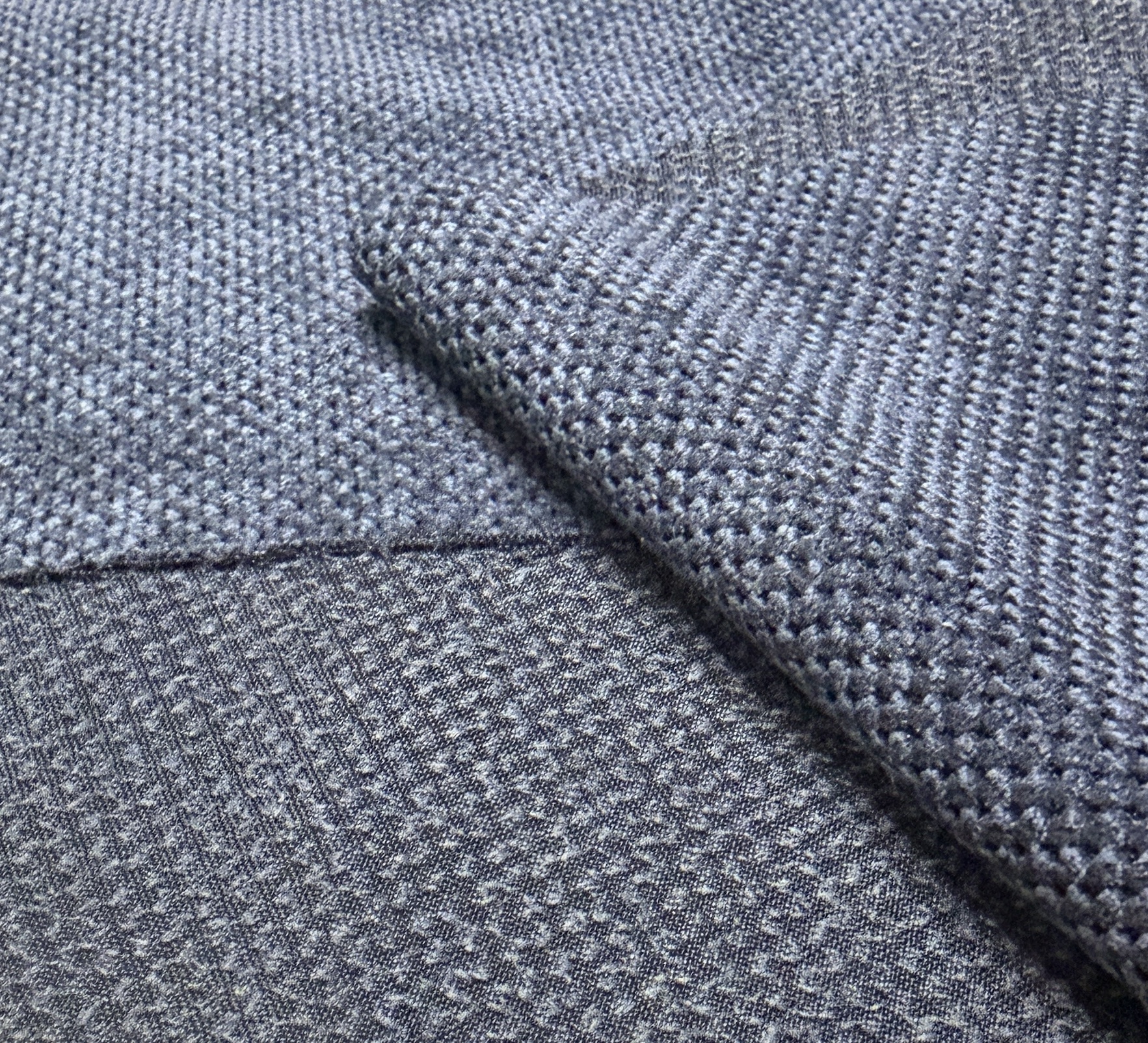
For buyers developing a new item rather than reordering an existing one, T-LAND TEXTILE states that it accepts small sample orders to support new item development, and that it will protect the rights of any new item developed for a client. In practice that means the sampling stage can be used to test width and backing decisions on the actual pattern pieces before a bulk commitment is made.
Where cotton-linen and low-cost fabric genuinely fit — and where they do not
Comparison data supplied by T-LAND TEXTILE sets its high-performance sofa and curtain fabrics against cotton-linen and against competitors' ordinary products. The figures below are supplier-reported and apply to the product families described, not to every colourway; they should be matched to the exact model and test method before being used in a tender response.
| Dimension | Supplier-reported performance (T-LAND TEXTILE fabrics) | Cotton-linen | Competitors' ordinary fabrics |
|---|---|---|---|
| Martindale wear resistance | ≥20,000–45,000 cycles | 10,000–15,000 cycles | 8,000–15,000 cycles |
| Pilling-resistance grade | Grade 4–5 | Grade 2–3 | Grade 2–3 |
| Light fastness | ≥ Grade 4 | Grade 2–3 | Grade 2–3 |
| Shrinkage rate | ≤3% | 5–8% | Up to 8–10% on low-cost goods |
| Expected service life | 8–12 years home use; 5–8 years commercial use | 4–6 years home use | 3–5 years |
The commercial framing matters as much as the technical framing. The same comparison states that these fabrics cost 15–35% higher upfront than ordinary competitors' goods while offering approximately 80% longer service life, which the supplier presents as a lower total-life-cycle cost. Read it as a claim to be validated against a specific programme: a hotel refurbishment with a defined replacement cycle, or a high-traffic living-room sofa, is a reasonable place to test that arithmetic. A short-term rental fit-out with a planned two-year refresh is not, and cotton-linen still holds a legitimate position where natural texture, low sunlight and low traffic dominate the brief. The limitation is real: the upfront number is higher, and it only pays back if the programme actually runs long enough.
Pilling as a risk checkpoint, not a promise
Almost all fabrics may pill. Pilling forms when surface short fibres are pulled out of yarns by repeated friction, then tangle and knot into visible pills; looser yarns and higher short-fibre content increase the possibility, and it is a physical fibre phenomenon rather than automatically a product defect. That mechanism is why the question belongs in a specification review as a checkpoint tied to construction and finish, not as a blanket reassurance.
The practical reading is this: ask for the pilling-resistance grade of the exact model, colour and finish being quoted. The supplier-reported grade for its upholstery fabrics is Grade 4–5, against Grade 2–3 for cotton-linen and competitors' ordinary fabrics. A grade describes a tested specimen under a defined method; it does not guarantee identical behaviour on a different colourway or after a different finish, and it should sit alongside the abrasion and light-fastness data rather than replace it.
Verification points before a purchase order
Five checks close most of the gap between a fabric matrix and a workable OEM contract.
- Model-level confirmation. Restate GSM, width and backing status for the exact model numbers on the order — TL0901 at 200 gsm and 160 cm, TL0329 at 160 gsm and 150/300 cm with bonded back specified or excluded, TL0415/TL0469/TL0484 at 230 gsm and 150 cm bonded, TL07242 at 220 gsm and 150 cm with the 150D×320D+200D construction noted, and the 280 gsm, 300 cm fabric for curtain or heavy upholstery use.
- Test evidence behind the claims. Request the reports supporting the Martindale, pilling, light fastness and shrinkage figures, matched to model and colour.
- Certification scope. OEKO-TEX and GRS certification held by the supplier should be checked for which products and production sites are covered, rather than assumed to apply to every line item.
- Market-specific obligations. For domestic upholstered furniture sold in the United Kingdom, the Furniture and Furnishings (Fire) (Safety) Regulations 1988 remain the core regime in 2026; EU General Product Safety Regulation 2023/988 governs safety for home textiles in the Union, with Digital Product Passports expected for textiles by 2027; BS 5867 is the established UK fire safety standard for curtains and drapes. Fabric availability is not the same as compliance — the obligation sits with the finished product and the buyer's declaration.
- Width and seam plan. Walk the cutting room through the pattern layout against the supplied roll widths before approving the specification, and confirm the measurement method used for width on each roll.
Market context, and what it does not tell you
Published estimates put the global home textile market at USD 144.76 billion in 2025 (The Business Research Company), with Asia Pacific holding 44.17% of the market in 2025 (Fortune Business Insights), and value the upholstery fabric segment at USD 44.5 billion in 2023 (Verified Market Research). Market-size estimates vary widely between sources because the scopes differ — some include floor coverings and hard home décor, others exclude them — so these figures are useful for orientation, not for forecasting a specific programme.
What market data cannot do is tell an OEM buyer whether 160 gsm is right for a particular seat cushion or whether 300 cm saves more in seam labour than it costs in waste. Those answers live in the model specification, the cutting plan and the wear test. Macro figures belong in a category strategy; the matrix belongs in the purchase order.
Five decision rules for the shortlist
- Start from the largest pattern piece, not from the colour card. Width and seam count follow the component, and the component decides which models are even eligible.
- Match weight class to component role. Cushion faces and panel work tolerate lighter cloth; seat platforms need evidence of abrasion performance, not a heavier number alone.
- Specify backing explicitly. Treat the TL0329 bonded-back option and the TL0415/TL0469/TL0484 bonded back as separate specifications with their own cost and hand-feel consequences.
- Separate velvet and poly linen by surface intent, not by grams. TL0901, TL07242 and the poly linen group overlap in weight band; the deciding difference is the surface and the construction reference.
- Price the full cycle, then test the assumption. The supplier's 15–35% upfront premium against roughly 80% longer service life is a proposition, not a conclusion, until it is applied to your replacement cycle.
Outlook
For OEM buyers, the direction of travel in home textile sourcing is toward specifications that can be audited: a model number, a GSM, a width, a backing status and a test report, all consistent across reorders. The matrix format supports that because it forces the trade-offs into the open before the first roll ships. A fabric that is heavier, wider or backed is not automatically the better purchase — it is a different set of costs and constraints, and the value only appears when those constraints match the programme they were chosen for.
FAQ
Does a higher GSM always mean a more durable sofa fabric?
No. GSM measures mass per unit area, while durability is usually assessed through abrasion testing such as Martindale cycles, plus pilling and light-fastness results for the specific fabric. The 280 gsm fabric in this set is the heaviest, but its suitability for a given seat still depends on the component it covers and on test evidence for that model, colour and finish.
How should an OEM buyer choose between 150 cm and 300 cm fabric width?
Begin with the largest pattern piece in the furniture design. If it fits inside 150 cm with a sensible seam position, a 150 cm roll such as TL0415, TL0469, TL0484 or TL07242 usually produces less waste on small components. If the piece exceeds that width — a wide seat platform, an outside back, or a full-length curtain drop — the 300 cm option on TL0329 or the 300 cm curtain and upholstery fabric removes the join and the labour that goes with it. Width should be decided per component family and confirmed against the measured roll width.
What changes when a sofa fabric is supplied with a bonded back?
A bonded back adds a second layer joined to the reverse of the fabric, which generally increases body and dimensional stability and may remove a downstream lining operation. It also adds mass and can change hand, drape and landed cost. In this set the bonded back is an option on TL0329 and a supplied feature on TL0415, TL0469 and TL0484, so the two versions should be quoted and sampled separately.
Will these sofa fabrics pill?
Almost all fabrics may pill, because pilling forms when surface short fibres are pulled out by repeated friction and tangle into visible pills; looser yarns and higher short-fibre content raise the possibility, and it is a physical phenomenon rather than automatically a defect. The supplier reports a pilling-resistance grade of Grade 4–5 for its upholstery fabrics, against Grade 2–3 for cotton-linen and competitors' ordinary fabrics. Buyers should confirm the grade for the specific model, colour and finish being ordered.
Is 160 gsm upholstery fabric heavy enough for sofa seats?
Weight alone does not answer that. TL0329 at 160 gsm sits at the light end of this matrix, which aligns it with cushion fabric and panel work, or with constructions where a bonded back supplies additional body. Where it is proposed for a seat platform, the decision should rest on the abrasion and pilling results for that exact model and colour, assessed against the wear expectation of the end use.
For buyers who want the full specification set alongside the matrix, T-LAND TEXTILE's company brochure is available for download.
Есть вопросы или нужны дополнительные детали?
Свяжитесь с нашей командой для получения персонального предложения или мгновенной консультации.
Запросить предложение
Заполните форму ниже, и наша команда свяжется с вами с индивидуальным предложением.
Прямой чат WhatsApp
Предпочитаете общаться в реальном времени? Напишите нам в WhatsApp для мгновенной помощи и быстрых ответов.
- Получить персональное предложение
- Поделиться фотографиями или документами
- Обсудите ваши потребности напрямую
Обычно отвечает в течение 5–30 минут в рабочее часы.