
Soft Magnetic Alloy Supplier Evaluation: A Decision-Stage Checklist
The Buying Problem Shifts from Material Grade to Supplier Capability
Precision electronics, audio equipment, and new-energy vehicle platforms place strict demands on soft magnetic components. As a result, procurement teams now face a decision that goes beyond chemical composition and datasheet values: how to choose a soft magnetic alloy supplier capable of delivering consistent performance over multiple orders, years, and product generations.
This article offers a decision-stage checklist for that choice, using Cheng Yuan Alloy (Shijiazhuang Cheng Yuan Alloy Material Co., Ltd.) — a Chinese manufacturer specializing in permalloy strips, bars, wires, and related soft magnetic alloy forms — as a working example of the specialized supplier model. The company operates from Shijiazhuang City, Hebei Province, exports approximately 50% of its output, and regularly serves buyers in Russia, Germany, France, Italy, the United States, Canada, South Korea, Japan, Brazil, and India.
Why Supplier Reliability Is the Key Risk in Soft Magnetic Alloy Procurement
Soft magnetic alloys are not a commodity input. Their magnetic performance — initial permeability, maximum permeability, coercivity, core loss, and saturation magnetostriction — depends heavily on chemical composition, cold-rolling reduction, annealing cycles, and final surface condition. Two batches produced to the same nominal grade can behave differently if the supplier's process control is inconsistent. That is why, at the decision and execution stage, supplier reliability can matter more than the grade name printed on the certificate.
The market context makes this risk more visible. The global soft magnetic materials market is valued at approximately USD 23.0 billion in 2025 and is projected to reach USD 33.9 billion by 2033 (Grand View Research). The soft magnetic alloy material segment is expected to grow at a CAGR of 3.1% from 2024 to 2030, reaching USD 4.14 billion (QY Research). Asia Pacific holds the largest market share, accounting for 41.0% to 49.37% of global volume in 2025, with China as the leading producer.
For a buyer, three conclusions follow. First, demand for precision magnetic alloys is growing steadily, which increases competition for reliable supply. Second, supply is geographically concentrated in Asia Pacific, making supplier qualification a structured risk-control exercise rather than a routine purchasing step. Third, while the most established global brands — including Vacuumschmelze (VAC), Proterial, Carpenter Technology, and Arnold Magnetic Technologies — dominate high-value specialized segments, the mid-tier precision permalloy strip and bar market is served largely by specialized manufacturers whose capabilities must be assessed individually.
What a Long-Term Soft Magnetic Alloy Supplier Should Demonstrate
When evaluating a supplier for long-term soft magnetic alloy supply, buyers should look for verifiable evidence in five areas.
1. Grade Coverage Across the Permalloy Family
A wide grade portfolio reduces qualification workload and simplifies long-term vendor management. Cheng Yuan Alloy's permalloy product line includes 1J22 (including HiperCo50, 1J22MS, and 1J22HS), 1J79 (including Ni79Mo4), 1J50 (including FeNi50), 1J85, 1J54, 1J27, 1J34, 1J46, 1J30, 1J31, 1J32, 1J33, and 1J38. This range spans high-saturation cobalt-iron alloys, high-permeability nickel-iron alloys, and intermediate precision grades. For a buyer, this means multiple magnetic-component requirements — transformer cores, EMI shielding, high-speed motor laminations, sensor cores — can be sourced from one qualified supplier instead of several.
2. Material Forms and Dimensional Range
Magnetic components are manufactured from different physical forms. Cheng Yuan Alloy supplies wire, strip, sheet, bar, wire mesh, powder, tube, stamping, and strand wire. Strip and bar are the most common forms for transformer cores, shielding parts, and precision instruments; wire and stamping are frequently used in sensors, relays, and small magnetic circuits.
3. Production and Inspection Capability
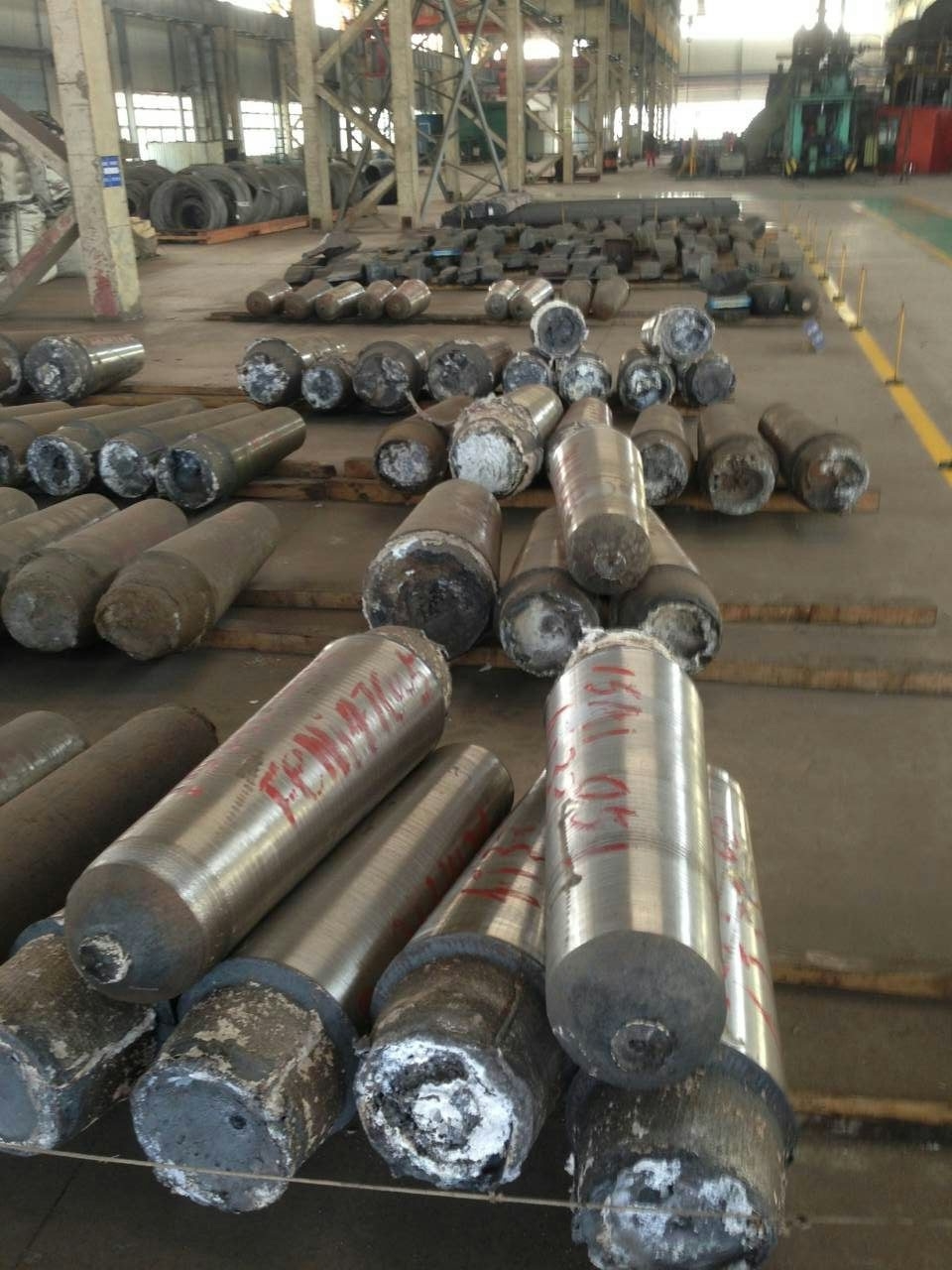
The company reports an annual output of USD 10–15 million, a team of approximately 20 employees, and 5 R&D engineers. Its production includes vacuum heat treatment equipment and forging machinery — both directly relevant to magnetic consistency. Vacuum annealing is essential for achieving high permeability in nickel-iron alloys, and controlled forging affects grain structure uniformity in higher-saturation grades such as 1J22.
4. Export and Documentation Experience
With roughly 50% of output exported to Europe, North America, South America, Asia, and Africa, Cheng Yuan Alloy has experience with international packaging, export documentation, and cross-border logistics. For long-term supply, this reduces the risk of shipment delays and customs-related issues.
5. Commercial Flexibility
Long-term programs require predictable commercial terms. Cheng Yuan Alloy offers a minimum order quantity of 50 kg, delivery under FOB, FCA, DAP, CIF, or CPT, and payment on a 30/70 schedule with the balance paid before shipment. Acceptance can be conducted by video, third-party inspection, or photo documentation, giving buyers a transparent verification path.
Batch Consistency and the ±0.001mm Tolerance Question

In soft magnetic alloys, geometry is not a secondary characteristic — it is a magnetic one. A strip with uneven thickness creates inconsistent air gaps in a laminated core, directly degrading permeability and increasing core loss. Some precision applications require thickness tolerance of ±0.001mm and uniform grain structure. These are demanding limits that place strict requirements on rolling precision, slitting quality, and annealing control.
Other applications require an extremely high magnetostriction coefficient and high saturation magnetic flux density, typically for transducer and high-flux components. A supplier that can satisfy both families of requirements must maintain disciplined process control across the entire production chain.
The typical parameter range for permalloy products helps buyers set realistic expectations. Initial permeability ranges from 10,000 to 200,000; maximum permeability from 150,000 to 450,000; saturation magnetic flux density from 0.6 to 2.35 T; coercivity from 0.4 to 8.0 A/m; saturation magnetostriction coefficient from 0.5 to 30 ppm; core loss at 1 kHz and 0.2 T from 8 to 35 W/kg; and effective operating frequency from 50 Hz to 1 MHz. Strip and wire thickness range from 0.01 to 2.0 mm; strip width from 2 to 300 mm (customizable); wire diameter from 0.03 to 1.5 mm; lamination factor from 0.88 to 0.94; and surface roughness Ra ≤ 0.8 μm. Resistivity ranges from 40 to 130 μΩ·cm, Curie temperature from 380°C to 950°C, and tensile strength from 750 to 1200 MPa.
A supplier that can hold tolerances at the tighter end of these ranges — and document the results — is structurally more reliable for long-term projects than one that only ships to nominal grade chemistry.
Application Readiness: What the Buyer Is Really Buying
Soft magnetic alloy is almost never a final product. It is an input to a transformer, an EMI shield, a motor core, a current sensor, or a transducer. The buyer is therefore not simply purchasing metal; they are purchasing the ability to integrate that metal into a manufacturing process with predictable results.
For precision applications, the required supporting equipment often includes precision alloy-strip slitting dies, magnetostriction parameter testers, electromagnetic-coil winding jigs, sealed protective housings, miniature-transducer assembly fixtures, and precision-instrument internal mounting brackets. A soft magnetic alloy supplier should understand these downstream processes, even if it does not perform them, because packaging, flatness, edge quality, and surface condition all affect how the material behaves in the customer's equipment.
The end-application list for permalloy is well established:
- Transformer cores and magnetic shielding: isolation transformers for weak-signal processing, precision measurement, and high-frequency operation.
- Audio equipment: audio isolation transformers, audio coupling transformers, and audio transformers, where low distortion and faithful signal transmission are critical.
- Power and electronic measurement: current and voltage transformers, earth leakage circuit breakers, and current sensors.
- High-frequency electronics: high-frequency transformers and chokes, and common-mode inductor cores.
- Magnetic amplifiers and modulators: weak-signal processing circuits.
- New-energy vehicles: high-frequency, low-loss cores for drive motors and on-board chargers, enabling a 40% reduction in component size on 800V high-voltage platforms.
- Remote sensing devices: precision magnetic components for measurement and sensing.
How the Market Is Reshaping Soft Magnetic Alloy Supply

Market trends are reinforcing the value of qualified, long-term supply relationships. Demand is growing across the soft magnetic materials sector, while the performance gap between precision nickel-iron alloys and conventional electrical steel is widening the consequences of a poor sourcing decision.
Compared with silicon steel sheets, common low-grade nickel-iron soft magnetic alloys, and ordinary electromagnetic shielding steel, high-performance permalloy offers a saturation flux density 2–3 times higher, initial permeability 15–120 times higher, high-frequency core loss reduced by 65%–90%, and magnetic performance fluctuation below 3% within -60°C to 150°C. It also provides a stable magnetomechanical service life of 8–15 years under standard working conditions, with no regular demagnetization or magnetic calibration maintenance.
These performance characteristics have direct procurement implications. Higher efficiency enables smaller equipment volume — up to 40% reduction in some configurations — which lowers structural and assembly cost. Reduced heat generation cuts auxiliary cooling requirements. The raw material cost of permalloy is higher than silicon steel, but total lifecycle economics can offset that difference through smaller system size, lower energy loss, and longer service life. Buyers should therefore evaluate total system cost rather than alloy price per kilogram alone.
Comparing Supplier Models: Specialized Manufacturer vs. Large Mill
At the decision stage, the practical comparison is not only between materials but between types of suppliers. Large integrated mills offer scale and cost advantages on standardized volume. Specialized alloy manufacturers offer flexibility, multi-grade coverage, and closer technical communication.
| Criterion | Large Integrated Mill | Specialized Alloy Manufacturer (e.g., Cheng Yuan Alloy) |
|---|---|---|
| Scale for standard grades | Very large; cost advantage on high-volume orders | Medium; MOQ from 50 kg |
| Grade coverage in permalloy family | Usually limited to standard commercial grades | Broad coverage: 1J22, HiperCo50, 1J79, Ni79Mo4, 1J50, FeNi50, 1J85, 1J54, 1J27, 1J34, 1J46, 1J30–1J38 |
| Dimensional customization | Possible but often requires large minimums | Strip width 2–300 mm customizable; thickness from 0.01 mm |
| Quality verification | Mill certificates; less flexible inspection workflow | Full inspection before delivery; test photos and videos; acceptance by video, third party, or photo |
| Delivery terms | Typically FOB or CIF | FOB, FCA, DAP, CIF, CPT |
| Payment flexibility | Standard trade terms; rigid for small orders | 30/70 with balance before shipment |
| Best fit | Large standardized orders | Multi-grade, small-to-medium volume, precision tolerance, repeat business |
The boundary conditions should be stated clearly. A specialized manufacturer with an annual output of USD 10–15 million and a factory of roughly 200 m² is not positioned to compete for multi-thousand-ton commodity orders. Buyers requiring very large tonnage of a single standard grade may find better economics at a large mill. The specialized model is strongest when the requirement involves multiple grades, precise tolerances, smaller batches, and the need for direct technical communication.
Future Outlook: Supply Relationships Based on Proof, Not Promises
The direction of soft magnetic alloy procurement is toward more verifiable, longer-term relationships. Buyers are increasingly expecting full inspection before delivery, documented by test photos and videos; third-party or video-based acceptance procedures; and clear liability handling if non-conforming material is received.
Cheng Yuan Alloy's stated quality-risk policy is an example of the type of commitment that matters at the execution stage. If customers receive non-conforming products, the company will conduct on-site verification and take samples for domestic testing. Once liability is confirmed on the supplier's side, it provides free replacement of qualified products or a full refund directly.
For distributors, OEMs, and engineering teams planning multi-year programs, the practical takeaway is to evaluate each supplier against a documented checklist:
- Grade coverage — can one supplier support multiple magnetic-component requirements?
- Dimensional tolerance evidence — can the supplier hold thickness tolerance as tight as ±0.001mm with uniform grain structure?
- Heat treatment capability — is vacuum annealing available in-house?
- Inspection workflow — is there full pre-delivery inspection with photo or video evidence?
- Commercial flexibility — do MOQ, delivery terms, and payment terms fit the project rhythm?
- After-sales liability mechanism — is there a clear process for quality disputes?
The supplier that can answer all six with verifiable proof is the one worth building a long-term relationship with.
Frequently Asked Questions
What is the minimum order quantity when buying permalloy strips or bars from a specialized manufacturer?
A minimum order quantity of 50 kg is typical for specialized soft magnetic alloy manufacturers such as Cheng Yuan Alloy. This threshold is designed to support both prototyping and production while keeping batch control manageable.
What delivery and payment terms apply to soft magnetic alloy purchases?
Common delivery terms are FOB, FCA, DAP, CIF, and CPT. A typical payment schedule is 30% deposit and 70% balance before shipment. Acceptance can be conducted by video, third-party inspection, or photo documentation.
How can a buyer verify magnetic performance before accepting delivery?
The supplier is expected to conduct full inspection before delivery and provide test photos and videos for review. Buyers may also choose video, third-party inspection, or photo-based acceptance. For reference, high-permeability materials similar to 1J79 and 1J85 (mu-metal type) can exhibit a relative permeability of around 100,000 at 1 kHz, which is a practical benchmark when reviewing test reports.
What should the buyer do if received soft magnetic alloy does not meet the agreed specification?
Standard practice is to notify the supplier and request verification. In the case of Cheng Yuan Alloy, the procedure involves on-site verification, sampling for domestic testing, and — once liability is confirmed on the supplier's side — free replacement of qualified products or a direct full refund.
Which standards apply to common permalloy grades?
Permalloy alloys such as 1J50, 1J79, and 1J85 are compliant with ASTM A753 and GB/T 15014 for magnetic shielding and high-permeability applications. HiperCo 50 (1J22) type alloys, containing approximately 49% cobalt, are governed by ASTM A801 Type 1 specifications, commonly applied to high-speed rotors and stator laminations.
What capabilities matter most for long-term soft magnetic alloy supply?
The most relevant capabilities are multi-grade coverage, dimensional tolerance control (including thickness tolerance as tight as ±0.001mm and uniform grain structure where required), vacuum heat treatment capability, full pre-delivery inspection, documented test data, and a transparent quality-liability policy. Together, these reduce the operational risk of repeat orders.