
Soft Shell, Portable or Hard Shell? Choosing a Hyperbaric Oxygen Chamber
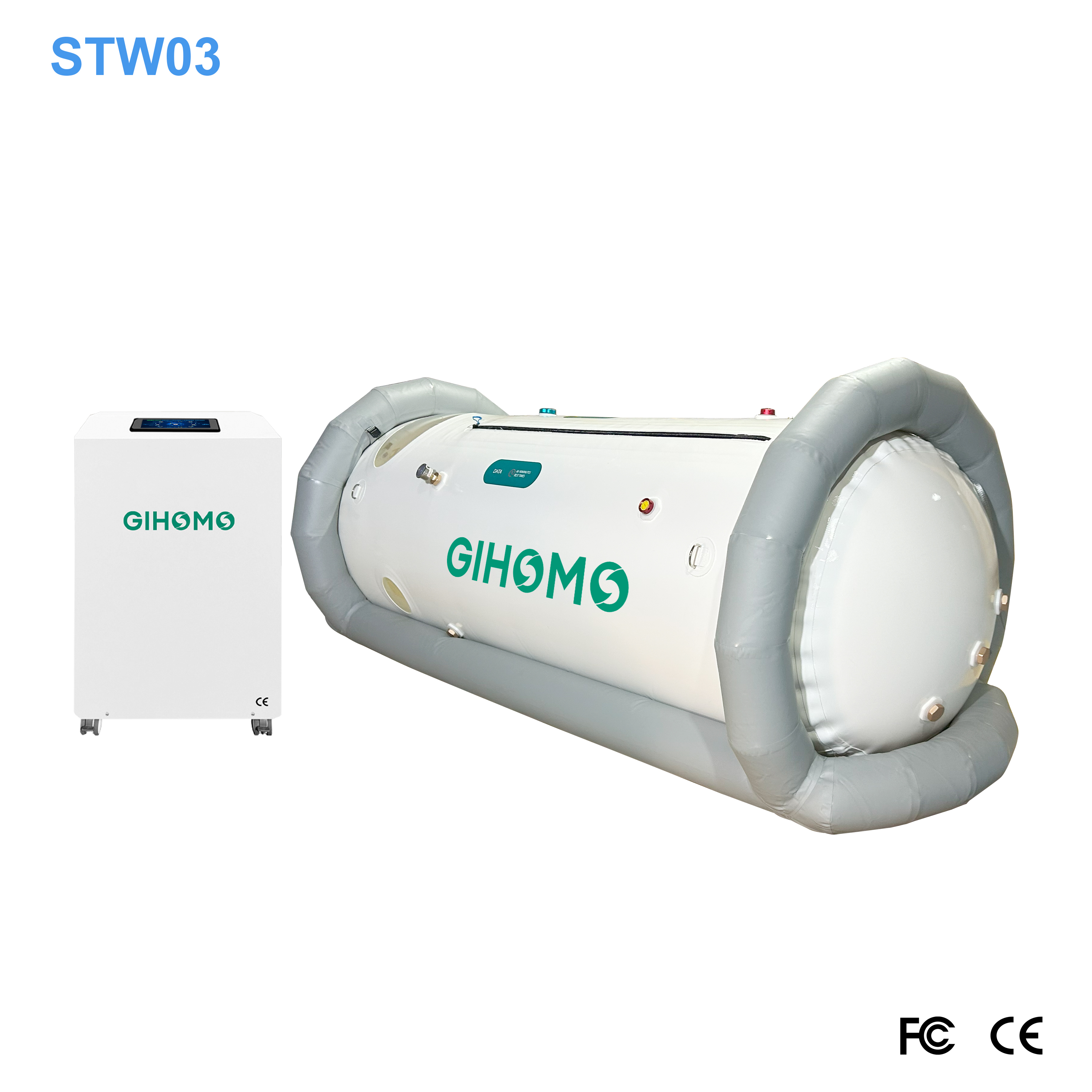
For many first-time buyers, the terms soft shell, portable and hard shell are used interchangeably, but they describe different engineering choices that affect pressure, occupied position, room space, installation, long-term care and total cost. This independent buyer comparison explains how these oxygen chamber formats differ and how to evaluate published specifications such as operating pressure, oxygen concentrator flow, oxygen purity and physical configuration.
The hyperbaric oxygen chamber market includes products aimed at home wellness, sports recovery, rehabilitation centres and commercial lounges. Market research is growing: one widely cited estimate valued the global hyperbaric oxygen therapy market at USD 3.71 billion in 2024 and projected USD 5.19 billion by 2030, while another source placed 2024 market size near USD 4.44 billion. Estimates vary because researchers use different definitions and include different clinical and wellness segments, but the direction is consistent: HBOT equipment is becoming more visible beyond traditional hospital departments.
Understanding the Three Naming Systems
Hyperbaric chamber categories are not always mutually exclusive. A product can be both soft shell and portable, or both hard shell and a two-person fixed unit. Understanding the differences starts by separating construction, mobility and posture.
Soft shell hyperbaric oxygen chamber
A soft shell hyperbaric oxygen chamber uses a flexible fabric enclosure, usually TPU, instead of a rigid metal pressure vessel. In published product lines, soft shell models are described by position: sitting type or lying type. For example, the product catalogue includes the sitting type soft shell hyperbaric oxygen chamber model STW01 and the lying type soft shell hyperbaric chamber model STW03. A softer shell usually makes transport easier because the chamber can be folded or stored after a session, but it still has to operate within its designed pressure limits and should be inspected carefully for seal integrity, zipper wear, material fatigue and cleaning requirements.
Portable hyperbaric chamber
Portable describes mobility more than material. In practical terms, a portable hyperbaric chamber is a unit designed to be moved between rooms, homes or facilities more easily than a fixed hard shell chamber. Most small portable hyperbaric chambers in catalogues use TPU soft shell construction. For instance, the portable hyperbaric chamber model SS002 is a two-person TPU unit, model SH001 is a lying type portable hyperbaric chamber, and model STW02 is a portable TPU chamber with a Built-In Breathing System, or BIBS. Portable does not automatically mean less capable: some portable models are published with operating pressures up to 2.0 ATA, such as model SH001.
Hard shell hyperbaric oxygen chamber
A hard shell hyperbaric oxygen chamber has a rigid pressure vessel. Hard shell models can be built from steel, aluminium, carbon fibre or other rigid materials. Some are small single-person units with a sofa and oxygen outlet; others are larger multi-person chambers with interior lighting, air conditioning, call bells and multiple oxygen terminals.
In general, hard shell chambers demand more floor space and more disciplined installation, but they can offer a room-like interior that some wellness and commercial operators prefer. For instance, the model C900 is described as a lying type hyperbaric oxygen chamber with a hard shell design, aluminium construction and dimensions of Φ900mm x 2100mm. Larger steel hard shell models such as the four-person Y3000 are specified with sofas, four oxygen absorption terminals, carpet, lighting, wireless intercom and a water-cooled air conditioner.
Why Construction Matters: Pressure, Oxygen Flow and Layout
Buyers should read the technical table published with each chamber rather than relying on category names alone. Pressure, oxygen pure flow, oxygen purity, rated power and chamber size matter more than whether the product is called soft shell or portable.
| Type / model | Construction & position | Operating pressure | Oxygen concentrator flow | Rated power |
|---|---|---|---|---|
| Sitting soft shell STW01 | TPU, sitting | 1.5 ATA | GH15A, 15 L/min, oxygen purity >90%, 100 KPa | ≈850 W |
| Lying soft shell STW03 | TPU, lying | 1.5 ATA | GH15A, 15 L/min, oxygen purity >90%, 100 KPa | ≈850 W |
| Sitting soft shell SC001 | TPU, sitting | 1.3 ATA | GH10S-10A, 10 L/min, oxygen purity >90%, 100 KPa | ≈850 W |
| Portable two-person SS002 | TPU, two persons | 1.3 ATA | GH15S-10A, 15 L/min, oxygen purity >90%, 120 KPa | ≈1100 W |
| Lying portable SH001 | TPU, lying | 2.0 ATA | GH15S-12A, 15 L/min, oxygen purity >90%, 120 KPa | ≈1100 W |
| Hard shell one-person Z0780H | Steel, sitting | 1.3-1.5 ATA | GH15A-12A, 15 L/min, oxygen purity >90%, 120 KPa | ≈850 W |
| Hard shell four-person Y3000 | Steel, seated / multi-user | 1.3 ATA | GH30S-12A, 30 L/min, oxygen purity >90%, 120 KPa | ≈2500 W |
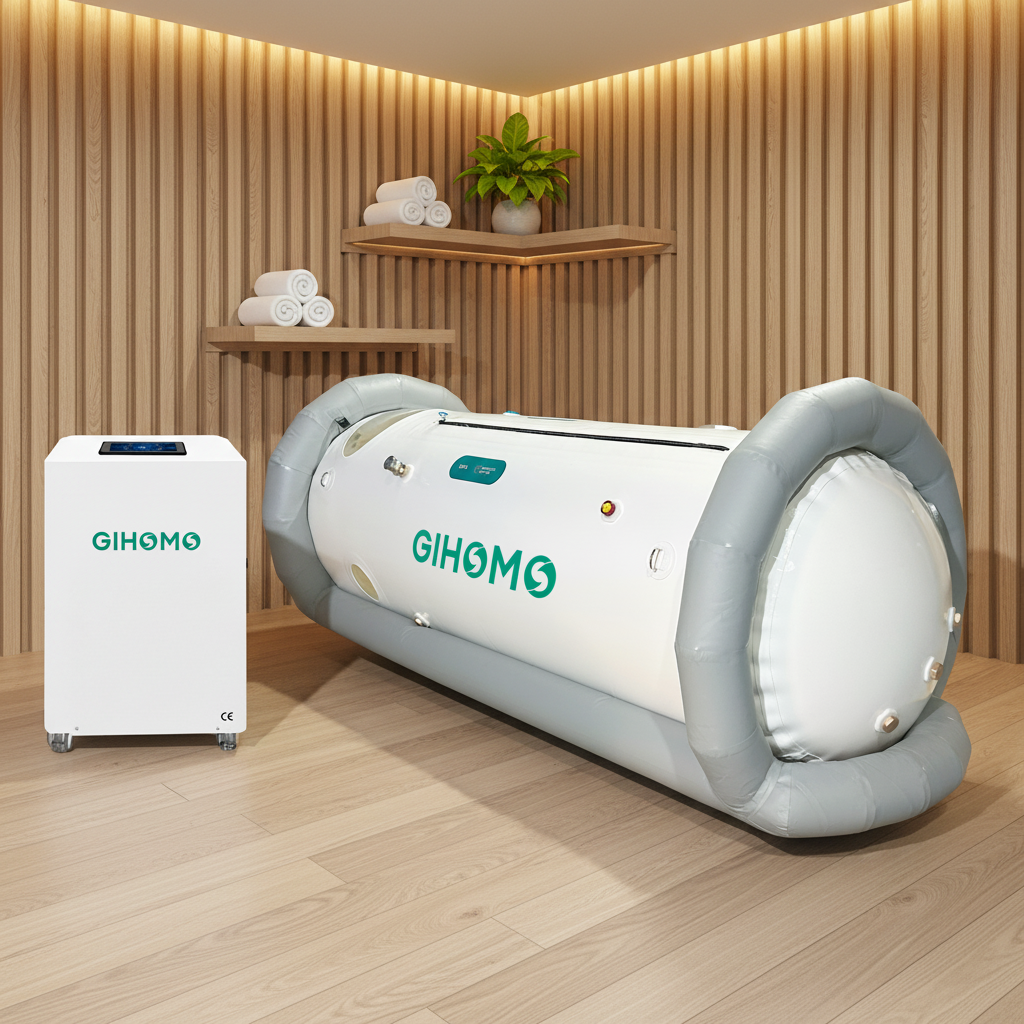
The 1.5 ATA pressure point and 15 L/min oxygen flow appear frequently in the soft shell segment because 1.5 ATA is a common mild-pressure target for wellness and sport-oriented products, and a 15 L/min oxygen concentrator supports the typical airflow specification found in these systems. That does not mean every model is identical. The compact 1.5 ATA soft shell model SSL001, for instance, is paired with a GH05A concentrator at 5 L/min; model STW02 with BIBS uses a higher 20 L/min concentrator and 1.5 ATA. In other words, each SKU has its own limits.
Sitting Type vs Lying Type: What Buyers Should Consider
Within soft shell and portable hyperbaric chambers, the main body positions are sitting type and lying type.
A sitting type soft shell hyperbaric oxygen chamber keeps the user in a seated/reclined position. Published sitting-type models include STW01, SC001 and ST001. STW01 has a chamber size of 1820mm x 820mm x 1500mm and is described in product application data as suitable for wellness and sport recovery. SC001 has a chamber size of 1400mm x 1600mm x 1000mm, operates at 1.3 ATA and is intended for rehabilitation. Sitting-type chambers often take up less longitudinal floor space than a full-length bed-style chamber, which can make them more practical for clinics, beauty rooms or compact home spaces.
A lying type soft shell hyperbaric chamber requires a full-length space, usually with a bed-style entry. Lying-type models include STW03, SL001 and the portable model SH001. SL001 is a lying type soft shell TPU chamber operating at 1.3 ATA with a chamber net weight of about 20.5Kg. For users who prefer a flat body position for sleep, relaxation or recovery, lying type is the more natural format. The trade-off is space: a lying chamber needs a room that can fit its full length and provide suitable clearance for entry and exit.
Use-Case Matching: Wellness, Sport and Rehabilitation
Once a buyer accepts that category labels alone are insufficient, the next step is to match the product format to the intended use case.
Wellness and anti-aging
In the beauty and anti-aging industry, published application descriptions highlight benefits such as collagen regeneration, skin-tone brightening and accelerated skin repair. The operating environment is typically an indoor cool and ventilated area, and some installations are designed to run in 24/7 mode. For this use case, a compact sitting-type soft shell chamber with 1.3-1.5 ATA pressure is often the entry-level choice, while facilities with more space or higher visitor flow may prefer a hard shell chamber with more comfortable furniture and cabin cooling. Buyers in the EU, USA and other regulated markets should also verify classification because wellness claims and medical claims are treated differently.
Sport recovery
Sports recovery users are looking for rapid recovery after exercise, improved training efficiency and enhanced athletic performance. Many 1.5 ATA soft shell and portable models are positioned for gyms, recovery studios and sports facilities. The smaller footprint of a sitting or portable soft shell chamber is convenient for training facilities; a 1.5 ATA system with 15 L/min oxygen flow addresses the typical specification level used in this segment. Hard shell chambers are also installed in sport clubs when the owner wants a more premium room experience or requires a multiple-user model.
Rehabilitation and disease-related recovery
In rehabilitation use, corporate application data describes the product role as providing adjuvant therapy for postoperative wound healing, diabetes, brain injury and other diseases. These are regulated phrases in many markets, so buyers should not interpret them as simple health claims. The safe approach is to separate intended marketing statements from the legal medical classification in the destination country. In the United States, for example, hyperbaric chambers are regulated as Class II medical devices requiring 510(k) clearance for permitted indications, and the FDA has noted that soft-shell chambers are primarily cleared for altitude sickness. In the European Union, hyperbaric chambers that make medical claims must comply with the Medical Device Regulation 2017/745 as Class IIb devices. A soft shell chamber used for rehabilitation should therefore be evaluated through a regulatory lens before purchase.
Hard Shell vs Soft Shell: Installation and Comfort Limits
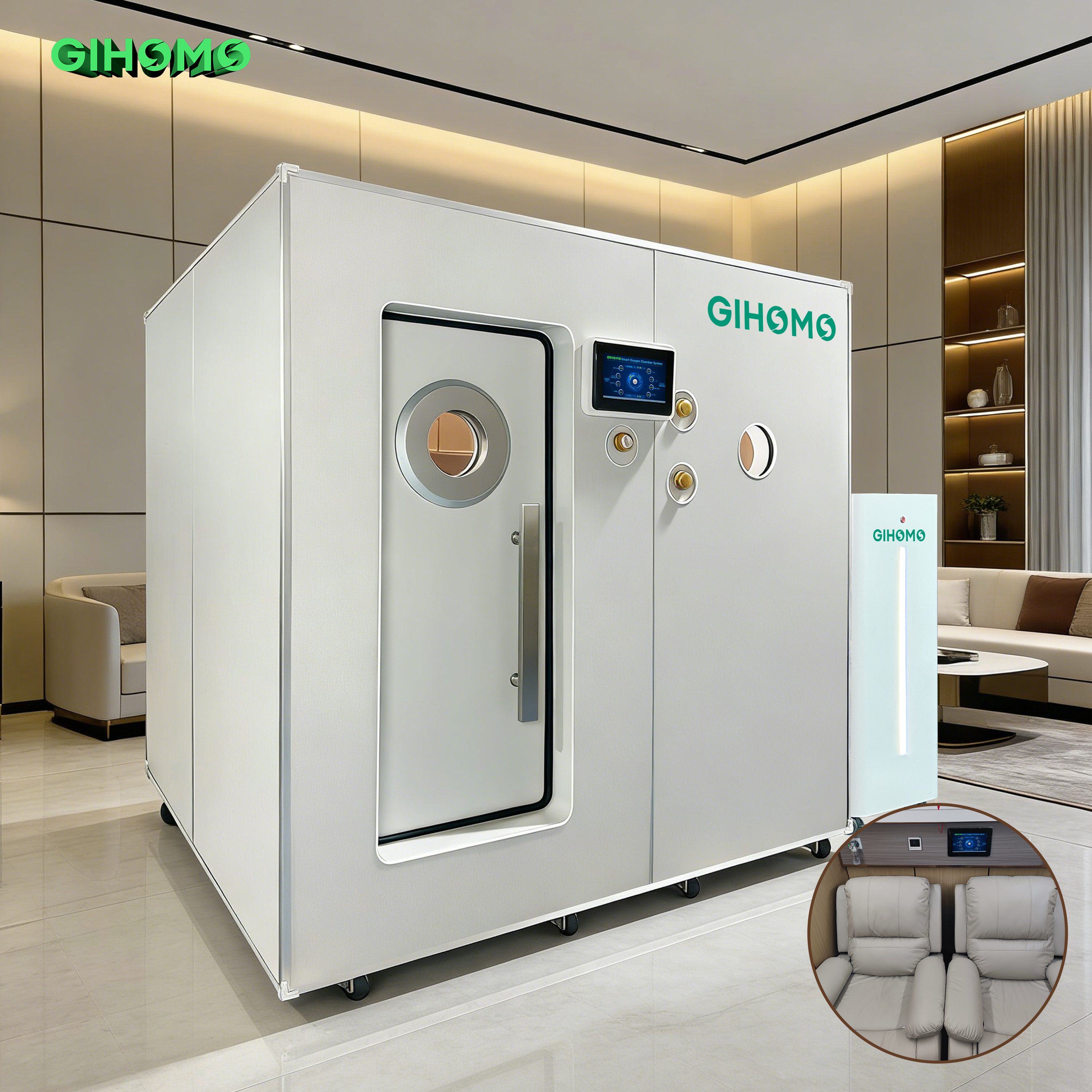
Hard shell chambers are often bought by commercial wellness centres, rehab clinics, sports facilities and medical tourism providers rather than by individual households. Their published specifications include features that are less common on soft shell units, such as sofas, oxygen absorption terminals, interior soft decoration, carpet, lighting, wireless intercom, call bell and water-cooled air conditioning. The main drawback is obvious: hard shell chambers are larger, heavier and more difficult to place in a normal home. Delivery through doors, floor loading, ceiling height, ventilation and building access all have to be considered.
Soft shell chambers have their own limitations. Their fabric construction may be comfortable and transportable, but the life of zippers, TPU material and airtight seals depends heavily on careful operation and cleaning. A flexible chamber is not a substitute for a clinical multiplace hyperbaric chamber. Traditional clinical multiplace systems, designed for higher pressure and simultaneous patient treatment, face stricter pressure-vessel rules and fire-safety requirements. In the EU, multiplace chambers must also follow standards such as EN 14931 and EN 16081. A buyer comparing a compact mild-pressure soft shell unit with a hospital-grade hard shell system is comparing two different product categories, not just two materials.
Market Context and Regulatory Signals
Independent market data helps explain why these different chamber formats coexist. Monoplace hyperbaric chambers accounted for approximately 57% of global revenue in 2024, in part because single-user operation is simpler for wellness and clinical workflows. North America was the largest region by revenue in 2024, while Asia Pacific, including China, is projected to be the fastest-growing region.
The rise of soft shell and portable units is also visible in Asia Pacific, where soft-shell portable chambers accounted for more than 18% of regional sales according to one market report, driven by wellness and athletic recovery trends. At the same time, regulatory bodies are tightening product expectations. The FDA classifies hyperbaric chambers as Class II medical devices requiring 510(k) clearance when used for approved medical indications. In Europe, all hyperbaric chambers, mild or clinical, must comply with EU MDR 2017/745 when making medical claims, and multiplace models face additional pressure-vessel and fire-safety rules from EN 14931 and EN 16081.
The future will likely bring better documentation, more sophisticated concentrator integration and more pressure in both directions: manufacturers pushing compact easy-to-use chambers for wellness, while regulators require clearer distinction between wellness products and medical treatment devices. For buyers, this means a chamber spec sheet should never be accepted at face value. Request certificates, verify the legal manufacturer identity, check the intended indication and compare the complete system, chamber plus oxygen concentrator plus accessories, not just the shell.
How to Use Factory Data in a Buyer Comparison
This guide uses only published technical data and application data from the supplied corpus so that the comparison remains independently verifiable. Published equipment ranges from different manufacturers use similar words but different actual specifications. To make the comparison concrete, the table uses one manufacturing company as a reference: Guangdong GIHOMO Medical Technology Co., Ltd., which lists hard shell hyperbaric oxygen chambers and portable hyperbaric oxygen chambers among its main products. The same company reports an annual output of about 1000 units, a 2000 square metre facility, 50-100 employees and export sales of roughly 60%, with major markets in the EU and USA.
This reference does not make GIHOMO the recommended choice for any buyer. It simply demonstrates the type of data a serious manufacturer should be able to provide: model number, construction material, pressure, concentrator model, flow rate, oxygen purity, rated power and dimensions. When comparing soft shell, portable or hard shell chambers from different suppliers, ask every supplier for the same factual format. If one vendor cannot provide the same level of transparency, that is a practical signal in the evaluation process.
Key Decision Rules for First-Time Buyers
The following decision framework is not a ranking list; it is intended to guide a first-time buyer through increasingly specific questions:
- Start with the intended use. If the deployment is a commercial wellness or sports recovery space, a sitting/lying soft shell chamber may be enough. If the facility has a stable room and expects multiple users, a hard shell multi-person chamber may be more appropriate.
- Define the pressure requirement. Read the actual ATA value. Some soft shell portable chambers are designed for 1.3 ATA, others for 1.5 ATA and some TPU portable models for 2.0 ATA. Do not assume that hard shell always means higher pressure, or that soft shell always means lower pressure.
- Check the complete oxygen supply chain. The stated model of oxygen concentrator, concentration flow in litres per minute, oxygen concentration pressure and oxygen purity above 90% are part of the system. A chamber without its matching concentrator is only half the product.
- Match body position to user profile. Lying-type models make it possible to rest flat; sitting-type models use less length and may be easier for a small room. Wheelchair-accessible and two-person models also exist for specific facilities.
- Understand certification boundaries. Local medical-device rules apply when disease-related claims are made. For unregulated wellness use, confirm that no prohibited medical claims are being made by the supplier.
- Plan for the physical space. A 1.5 ATA lying soft shell chamber needs a full-length footprint; hard shell steel models need more delivery and installation planning.
Limitations Buyers Should Not Ignore
The most important boundary in this comparison is that mild-pressure soft shell and portable chambers are not a direct replacement for hospital-style hyperbaric oxygen therapy. They operate in a different pressure range, use an oxygen concentrator rather than a medical gas system in most cases, and are marketed for wellness, recovery or certain low-pressure applications. Even when a soft shell product lists 1.5 ATA or 2.0 ATA, it is not automatically approved for the same disease-related indications as a clinical hyperbaric chamber.
Another practical limitation is inspection and maintenance. Soft shell TPU chambers are less mechanically complex than hard shell chambers, but zippers, fabric seams, connectors and oxygen ports require routine checks. Hard shell systems reduce some of the fabric-related risks but introduce higher installation, electrical and room-ventilation needs. Both technologies should be purchased only from a manufacturer that documents safety certifications and after-sales support.
Frequently Asked Questions
Q: What is a soft shell hyperbaric oxygen chamber?
A soft shell hyperbaric oxygen chamber is a hyperbaric system whose main enclosure is made of flexible material, usually TPU, rather than a rigid pressure vessel. It can be designed as a sitting type or a lying type model.
Q: What is a portable hyperbaric chamber?
A portable hyperbaric chamber is a unit designed for easier movement between rooms or facilities. Many portable models use soft shell TPU construction, and published product lines include both two-person portable chambers and lying-type portable chambers.
Q: What is a hard shell hyperbaric oxygen chamber?
A hard shell hyperbaric oxygen chamber has a rigid shell made from materials such as steel or aluminium. Some hard shell chambers are configured as single-person units with sofas and oxygen outlets, while larger models can seat four or more persons and include interior lighting, call bells and air conditioning.
Q: Is portable the same as soft shell?
Not exactly. Soft shell describes the material; portable describes mobility. Many portable chambers are soft shell TPU products, and some hard shell models may also be designed with transport in mind, but the two terms should not be treated as identical.
Q: What does 1.5 ATA mean?
ATA means absolute atmospheres. 1.5 ATA refers to a pressure about 50% above normal atmospheric pressure at sea level. It is a common rated pressure on many soft shell and portable hyperbaric chamber systems.
Q: What does 15 L/min oxygen flow mean?
The value refers to the oxygen concentrator output flow. In the 1.5 ATA sitting and lying soft shell models in the published catalogue, the concentrator is listed at 15 L/min with oxygen purity greater than 90%.
Q: Which type of oxygen chamber is best for home use?
No single type is best for every home. A compact sitting-type soft shell portable chamber uses less length, while a lying-type chamber allows the user to rest flat. Buyers should compare pressure, flow, available floor space and local certification rules.
Q: Can a soft shell hyperbaric chamber be used for rehabilitation or disease-related conditions?
Manufacturer application data mentions rehabilitation uses such as postoperative wound healing, diabetes and brain injury as adjuvant therapy. However, if these claims are made, the product must comply with the medical device regulations of the destination country. Buyers should verify FDA, EU MDR or other applicable requirements before purchase.
This article is for independent buyer education only. It is not medical advice and does not rank or endorse any specific hyperbaric oxygen chamber manufacturer. Every purchase decision should be based on verified specifications, local regulation and the intended use environment.
Есть вопросы или нужны дополнительные детали?
Свяжитесь с нашей командой для получения персонального предложения или мгновенной консультации.
Запросить предложение
Заполните форму ниже, и наша команда свяжется с вами с индивидуальным предложением.
Прямой чат WhatsApp
Предпочитаете общаться в реальном времени? Напишите нам в WhatsApp для мгновенной помощи и быстрых ответов.
- Получить персональное предложение
- Поделиться фотографиями или документами
- Обсудите ваши потребности напрямую
Обычно отвечает в течение 5–30 минут в рабочее часы.