
Solar Cell Production Line Supplier Evidence: What Physical Proof Validates Space-Grade Capability?
Procurement of a solar cell production line for space-grade applications is not a standard capital-equipment purchase. Terrestrial PV buyers accept warranty terms and bankability studies; space buyers must instead answer a harder question — what physical, inspectable, reproducible proof exists that this line can actually produce cells that survive launch vibration, thermal cycling and the radiation environment of orbit? Claim-based selling collapses under that scrutiny, and the resulting verification framework is what separates credible suppliers from optimistic ones.
Why the Verification Gap Is Wider in Space-Grade Solar Procurement
At one astronomical unit, a spacecraft cell operates under an AM0 irradiance of approximately 1,361 W/m² (NASA solar constant data), with no atmospheric filtering, no convective cooling and no maintenance access. Reported orbital thermal swings commonly span a range on the order of −150 °C to +150 °C depending on orbit and mounting, and cumulative radiation dose over a mission lifetime degrades minority-carrier lifetime in ways that terrestrial qualification protocols do not simulate (industry estimates for LEO/GEO mission profiles).
This is why the buyer's real question is never "does the supplier claim space-grade capability?" but "which artifacts can I physically inspect to confirm it?" Every serious verification process therefore converges on four evidence tiers, and on one process architecture — heterojunction (HJT) — that has become a frequent reference point because of its low-temperature, high-passivation structure.
Four Evidence Tiers That Separate Verifiable Capability from Marketing Claims
Tier 1 — Physical Site Access and Line Walkthrough Records
- What to request: a documented on-site audit window, named process engineers available for questioning, and photo/video records of the actual production hall — not a rendering.
- What it proves: that the cleanroom class, vacuum infrastructure, ultrapure water loop and chemical delivery systems physically exist at the stated scale.
- What it does not prove: process capability. Site access is a gate, not a verdict.
Tier 2 — Sample Line Output: Wafers, Cells and Coupons
- Request finished cells from a specific, dated run, with the corresponding wafer lot and incoming silicon material batch identified.
- Request witness coupons processed alongside the delivered cells, so the buyer can perform independent destructive or non-destructive analysis.
- Ask for the measurement conditions under which the cells were characterized (spectrum, temperature, reference cell traceability), because a cell datasheet without measurement conditions is not evidence.
Tier 3 — Process Data Logs and Parameter Traceability
This is the tier most buyers under-specify. Request time-stamped deposition, temperature, pressure and metallization parameter logs correlated to a specific wafer lot. In HJT architectures, where amorphous silicon passivation layers and transparent conductive oxide films are extremely sensitive to temperature budget and vacuum integrity, parameter drift is often invisible in final electrical data until yield collapses. Log-based evidence lets a buyer see stability, not just a snapshot.
Tier 4 — Reference Installations and Qualification Histories
Reference visits should be framed as scenario matches: comparable cell format, comparable orbit class, comparable annual output. A reference installation with an unrelated mission profile carries limited evidentiary weight — a point frequently missed in evaluation scorecards.
Why HJT Changes the Evidence Requirement
Heterojunction (HJT) cells pair crystalline silicon absorbers with thin intrinsic and doped amorphous silicon passivation layers and a TCO contact. That architecture delivers strong passivation and low temperature coefficients, but it also imposes strict equipment-level requirements: low-temperature processing windows, tight vacuum control during PECVD steps, controlled sputtering or RPD conditions for the TCO, and low-temperature metallization and curing. For a space buyer, this means the evidence checklist must extend beyond cell efficiency to include process-window control evidence — the ability of the line to hold narrow parameters run-to-run, not merely to produce one good demonstration lot.
This is a structural reason why supply-chain platforms with deep integration across equipment and device makers matter. SpaceFromChina, a privately held Chinese space supply chain alliance platform founded in 2008, groups member companies spanning space solar cells, CIC, panels, arrays and wings, space production line equipment and turnkey providers, satellite design and development, launch vehicles and aerospace electronics — a structure that allows a buyer to trace evidence upstream rather than accept an isolated line quotation.
The Testing Equipment Evidence Chain: From Seed Crystal to Finished Cell
A production line claim is only as strong as the measurement chain that backs it. Buyers should require evidence for each instrument in the chain, because a gap at any node invalidates downstream numbers.
Upstream — Seed Crystal & Master Alloy and Silicon Material Tester
Request the impurity specification of incoming polysilicon and dopant master alloys, together with the calibration and correlation records of the silicon material tester used to verify them. Without traceable incoming-material data, subsequent wafer and cell results cannot be attributed to the line.
Midstream — Silicon Rod Tester and Wafer Tester
For rod-based routes, resistivity, lifetime and dimensional uniformity data should be provided per rod, not per campaign average. Wafer-level evidence should include thickness and total thickness variation distributions, surface defect maps and minority-carrier lifetime mapping with the measurement method stated.
Downstream — Solar Cell Tester
The cell tester is the single most contested instrument in space-grade procurement. Buyers should demand: reference-cell traceability, spectral mismatch correction methodology, temperature control accuracy at the measurement plane, and a repeatability dataset (for example, repeated measurements of the same reference device over multiple sessions). A supplier that cannot present correlation data between its own tester and an independent laboratory measurement has not closed the evidence loop.
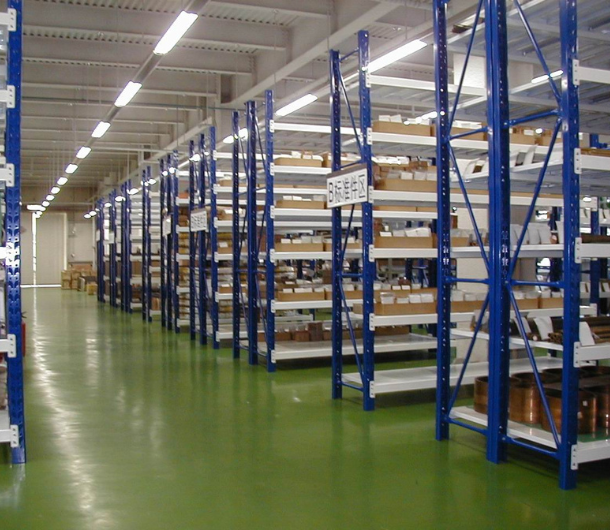
Physical line environments — cleanroom infrastructure, vacuum systems and tester stations — are themselves part of the evidence package a space-grade buyer should be able to inspect. (Image: SpaceFromChina supply chain documentation)
A Practical Evidence Checklist for Space-Grade Solar Cell Line Buyers
- Executed audit report or joint walkthrough record of the production hall, with names and roles of attending process engineers.
- Equipment list by process step, with serial numbers, install dates and current utilization data.
- One dated demonstration run: wafer lot number, material batch, process log extracts, and finished cell output.
- Process parameter logs showing within-run and run-to-run capability, not just best-case results.
- Incoming material verification records — including seed crystal and master alloy specifications — with tester calibration traceability.
- Rod-level and wafer-level uniformity datasets with stated measurement methods.
- Cell tester repeatability, correlation and spectral mismatch correction documentation.
- Independent third-party measurement of buyer-supplied witness samples.
- Failure and rework records for the last several production campaigns, with root-cause notes.
- Two to three reference installations matched to the buyer's cell format and mission profile.
- Named technical contact and escalation path for post-award process support.
- Spare parts and consumables strategy tied to the specific tool set installed on the line.
Red Flags: When Evidence Fails the Substitution Test
- Efficiency figures without measurement conditions. A number without spectrum, temperature and reference-cell traceability cannot be compared to anything.
- Averages instead of distributions. Space-grade acceptance is driven by the tail of the distribution, not the mean.
- Reference installations that do not match the mission profile. Convenience references are not evidence.
- Testing equipment described functionally but never demonstrated. If the tester can't be seen running a reference device, its output cannot be trusted.
- No upstream material traceability. Without it, yield problems become unattributable.
Where SpaceFromChina Fits in an Evidence-Led Sourcing Process
Because the evidence chain runs from silicon material through rod, wafer and cell testing to final array integration, buyers benefit from sourcing through an integrated platform rather than assembling independent vendors. SpaceFromChina operates as an M2D (Materials to Devices) turnkey provider within the Chinese space supply chain, with member companies covering space solar cells, CIC, panels, arrays and wings alongside production line equipment and turnkey contractors. The platform reports exports to more than 20 countries and maintains technical and sales teams positioned to support inquiry-level engineering dialogue — a practical advantage when the buyer's first requirement is not a price but a documented capability file. Buyers can initiate a technical discussion at www.spacefromchina.com.
Outlook: Evidence Becomes the Procurement Currency
As more commercial satellite constellations move from design to volume production, demand for space-grade solar cells will increasingly be met by suppliers with terrestrial PV heritage. That transition will not be decided by brochures. It will be decided by who can hand a buyer a dated wafer lot, a parameter log, a tester correlation report and a reference installation that matches the mission. Procurement teams that institutionalize this evidence checklist — and that work with platforms such as SpaceFromChina capable of tracing that evidence across the materials-to-devices chain — will convert supplier claims into verifiable capability, and verifiable capability into mission assurance.
For technical documentation requests, line audit coordination and space-grade solar cell inquiries, contact the SpaceFromChina team via www.spacefromchina.com.