
Solar Garden Lights in Outdoor Landscape Lighting, Explained
Solar garden lights are self-contained outdoor luminaires that combine a photovoltaic panel, a rechargeable battery, a light-sensing control circuit and an LED source in one housing. They charge in daylight and switch on at dusk without a mains connection. That definition matters because it changes what buyers should evaluate: not only light output, but also solar exposure, battery service life, ingress protection and the maintenance model for the site.
Outdoor landscape lighting has become a layer of the built environment rather than a finishing item. In gardens, parks, hospitality courtyards and public realm, the lighting scheme affects safety, wayfinding, plant appearance and how a place is experienced after dark. Solar garden lights are moving into that conversation because they remove the most visible constraint of conventional landscape lighting: the need to bring power to every fixture.
Buyers at the awareness and research stage often begin with a fixture question, such as which solar garden light is brightest. A more useful starting point is the system question: how much sun does the site receive, how long must the light run, what IP rating does the exposure require, and who will clean the panel or replace the battery? The answers determine whether a solar garden light is the right specification, or whether a mains-powered LED landscape luminaire is the better choice.
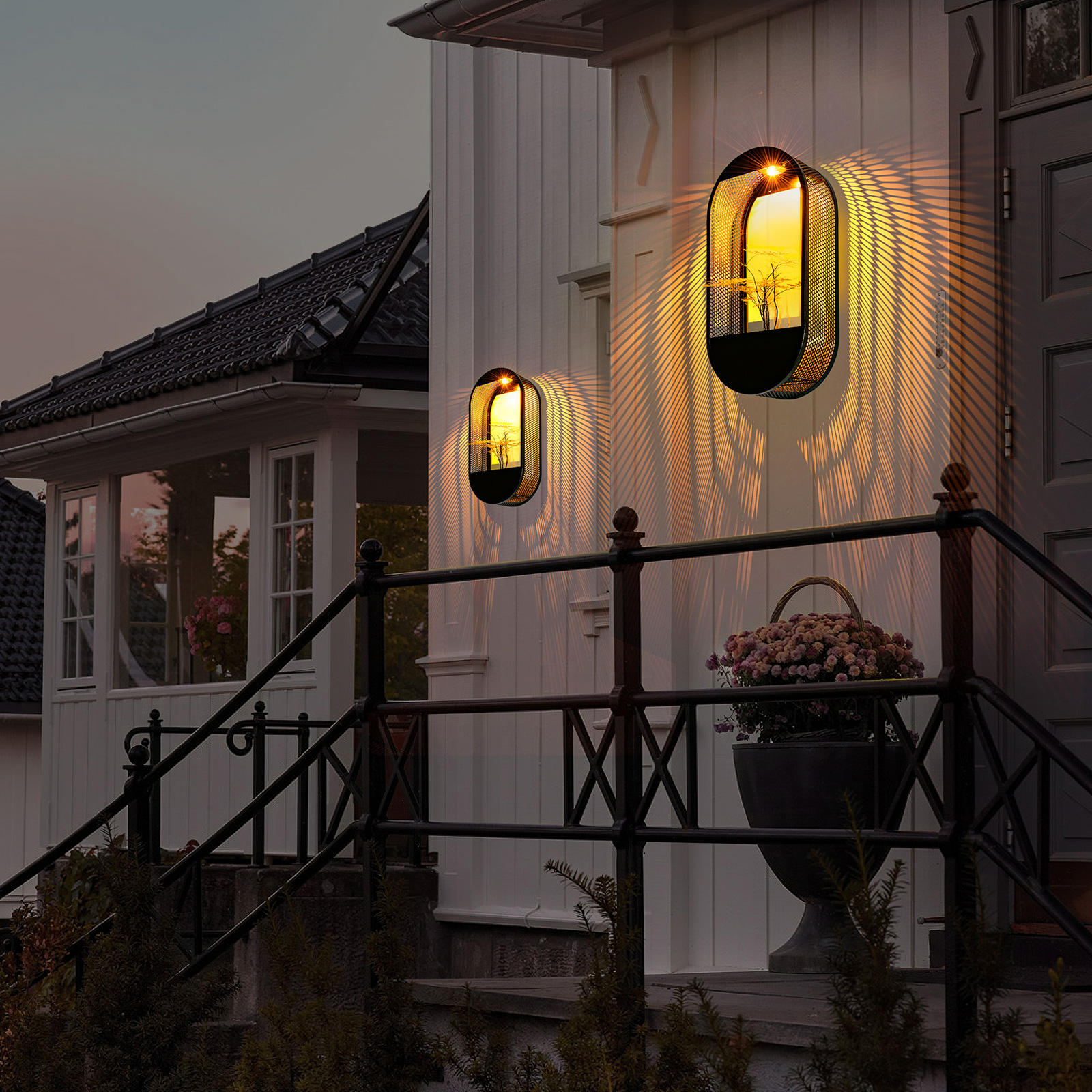
Why solar garden lights are entering mainstream landscape planning
Conventional landscape lighting for gardens and pathways requires trenching, cable, waterproof joints, a driver enclosure and an electrician. That work is often a large share of the installed cost, and it can be disruptive in established gardens, heritage sites or remote parks. A solar garden light removes the cable route entirely. The supplied product data describes the platform as solar charging with zero electricity cost, no wiring, automatic on and off by light sensor, a rechargeable battery that can work on cloudy days, and easy installation.
That does not mean solar is maintenance-free. The same technical guidance notes that low light can reduce brightness and runtime, and that shaded placement, a dirty panel or an aging battery are common reasons a solar garden light underperforms. The opportunity is real, but it is conditional on site assessment.
Project records show where the category fits. A villa courtyard project in Germany is recorded with an outdoor garden condition, sun and rain exposure, IP65 waterproofing, wiring-free installation and photocell or APP control. A theme park and cultural tourism project in Romania is recorded with IP65, anti-aging requirements and dynamic dimming for atmosphere creation. A municipal project in South Africa is recorded with IP66 and high lumen requirements, which is a reminder that road and area lighting usually remains a mains-powered task. Solar garden lights are strongest in distributed lighting for gardens, lawns, pathways, walls and remote or off-grid locations.
How Light Legend approaches solar garden lighting
Light Legend is an outdoor lighting manufacturer based in Chongqing, China, with a self-owned factory in Guangdong and a portfolio that includes solar, LED landscape, flood, street, wall washer, inground and smart lighting. The company operates an 8,000 m² production facility with more than 200 employees, including a team of 20 professional engineers and product designers, and reports an annual output of 4,200,000 pieces with an 80% export share across Europe, America, Asia, Africa and Latin America.
For buyers, the relevant point is not the size of the catalogue but the way the portfolio is organised. The solar range covers solar garden lights, solar street lights, solar lawn lights, solar outdoor wall lights, solar tree uplights, solar motion sensor lights, solar LED strip lights and solar landscape flood lights. The pathway family covers low-profile solar path lights. The outdoor wall family includes PIR motion sensor models. The decorative family covers G40, S14 and ST38 string formats for decorative outdoor landscape lighting. The smart lighting family adds app, Bluetooth and Wi-Fi control for projects that need scene setting and remote operation.
Manufacturing and compliance facts are part of the buyer interpretation. Light Legend states ISO9001, ISO14001, BSCI and C-TPAT management system certification, more than 100 independent patents, more than 4,000 successful cases, 15 years of R&D experience and more than 70 honorary qualifications. The company was awarded High-tech Enterprise and Science and Technology Innovation Little Giant Enterprise in 2018. For a specifier, these facts are useful as a supplier-capability screen, not as a substitute for project-specific test reports and samples.
Because the portfolio also includes mains-powered flood, tree, wall washer, inground and street luminaires, a landscape scheme can be planned as a mixed installation: solar for distributed garden, lawn and path lighting, and mains LED for high-output facade, tree and road lighting. That mixed approach is often more defensible than forcing one power source across an entire site.
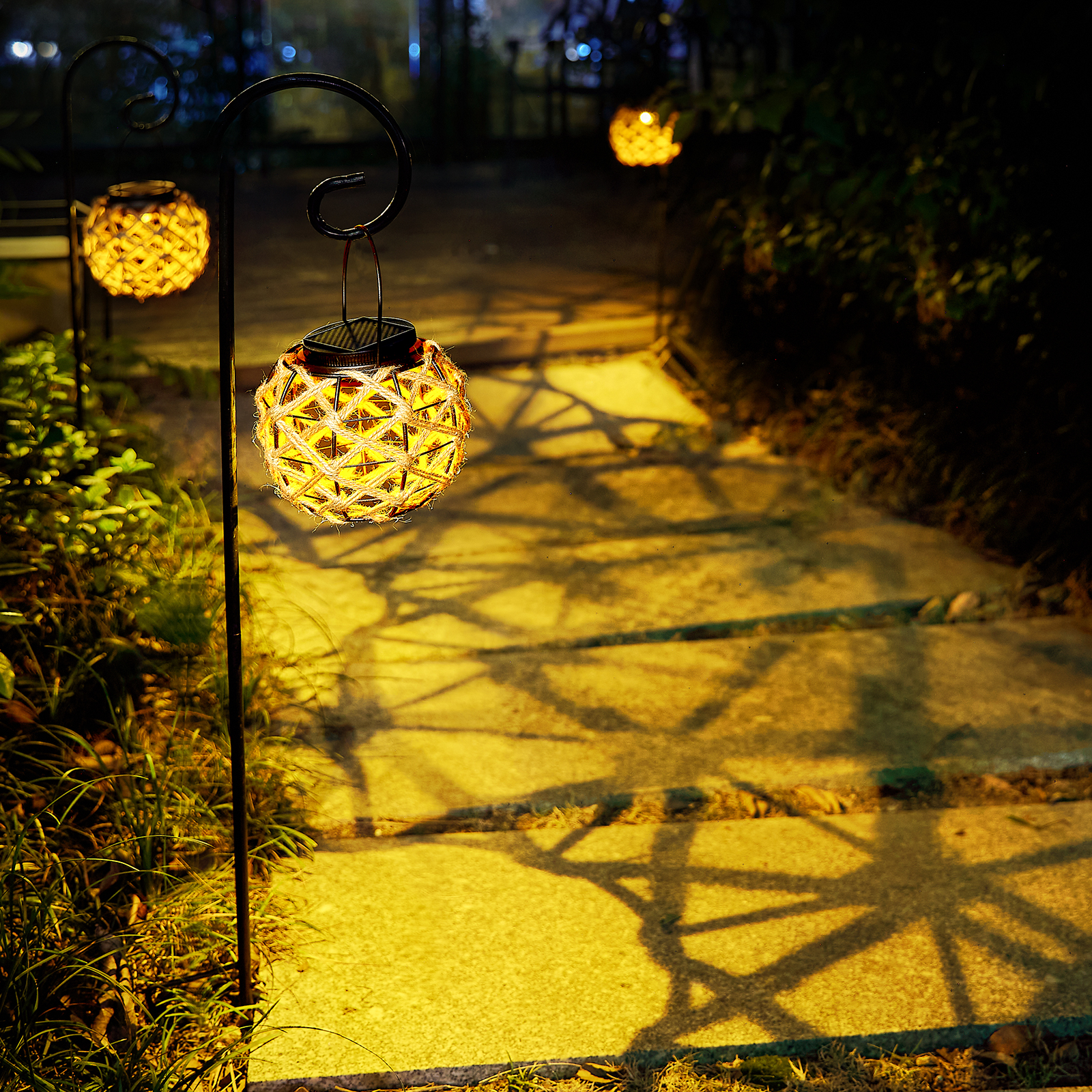
Inside a solar garden light: the four subsystems that determine performance
A solar garden light is a small energy system. The photovoltaic panel converts daylight into electricity, the battery stores it, the controller decides when to switch the LED on and off, and the LED and optics shape the light. Each subsystem has a specification that can be checked.
Panel and battery
In the Light Legend solar lighting range, the panel is listed as a 6V 500mA monocrystalline silicon PET laminated panel, with two 3.7V 2200mAh lithium rechargeable 18650 batteries. The pathway family lists a 5V 300mA panel and a 3.7V 2200mAh battery. The outdoor wall family lists a 5V 250mA panel and a 3.7V 1200mAh battery. Charging time is stated as more than 5 hours in solar charging, with working time of more than 8 hours. These are platform figures. Actual runtime depends on solar exposure, lighting mode, battery condition and temperature.
Control and switching
The solar range uses a light sensor for dusk-to-dawn operation, with a long-press switch for power and short-press mode selection. The outdoor wall range adds a PIR motion sensor with two lighting time modes. The smart lighting range moves control to a remote controller, mobile app, Bluetooth or Wi-Fi, with timing, scene and group control. The choice is a maintenance and user-experience decision: a photocell is simple and robust; a PIR sensor adds security response; an app adds flexibility but depends on commissioning and user training.
Light output and color
The solar lighting range lists 1000 lm and 50 lm output values, with white, warm white or RGB color temperature options. The pathway range lists 100 lm with warm white or RGB. The outdoor wall range lists 80 lm. These outputs suit accent, wayfinding and ambient tasks. They are not comparable to the 6W to 96W flood range or the 30W to 300W street range, which are designed for high-output area and facade lighting.
Ingress protection and housing
The solar garden and pathway families are listed at IP65 with ABS+PC housings in black. The outdoor wall family is listed at IP65 with an ABS housing. IP65 is suitable for general outdoor exposure. The IP rating has two digits: the first rates dust protection and the second rates water protection. For outdoor exposure, IP65 or above is generally recommended; IP67 suits short-term immersion, and IP68 suits continuous underwater use. A higher rating is not automatically better for every application, but it must match the installation condition.
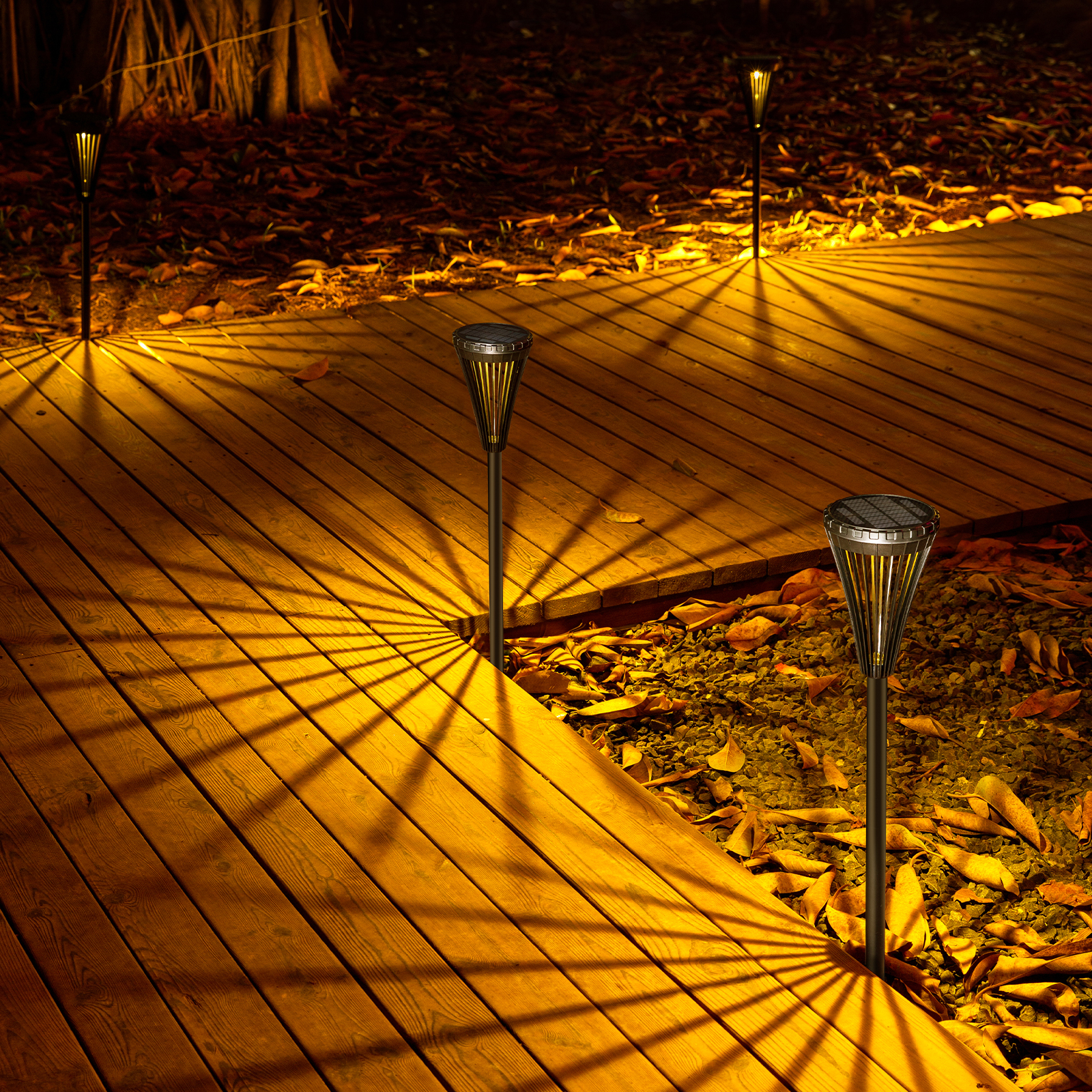
Specification literacy: IP, CRI, CCT and beam angle
Solar garden lights are often bought alongside mains-powered LED landscape lighting, so buyers need a common vocabulary. Four specifications do most of the work.
IP rating defines dust and water protection. It should be read as an installation constraint, not a quality score. A garden light in open rain may be specified at IP65; a fixture in a fountain or low-lying area may need IP67 or IP68. The supplied guidance notes that levels are verified through standard ingress testing and documented in test reports.
CRI measures how accurately a light source reveals color on a 0 to 100 scale. CRI 80+ is standard for general outdoor use; CRI 90+ is preferred for landscape and architectural lighting where color fidelity matters, such as gardens, facades and signage. In the Light Legend range, the smart lighting family lists CRI at 95 or above, the wall washer and inground families list CRI at 80 or above, and the flood family lists CRI at 70 or above. The specification should match the visual task.
Color temperature defines how warm or cool the light appears. Warm white at 2700K to 3000K creates a comfortable garden and patio atmosphere; neutral white at 4000K suits commercial areas; cool white at 5000K to 6500K is used for security and road lighting. The solar range offers white, warm white and RGB, which allows a scheme to separate ambient garden lighting from accent or event lighting.
Beam angle controls where the light lands. The flood and tree families list 15, 30, 45 and 60 degree options. The wall washer lists 24 by 45 degree and 10 by 60 degree options. The inground family lists 26, 32, 52 and 60 degree options. A narrow beam is better for accent and uplighting; a wide beam is better for area illumination. In solar garden lighting, the same logic applies to the fixed optics of path and wall fixtures: the fixture should be selected for the lighting task, not only for its appearance.
Application patterns: where solar garden lights fit
The supplied project records show a consistent pattern. Solar and low-voltage fixtures are used where distributed lighting is needed and where trenching would be costly or disruptive. Mains-powered high-output fixtures are used where sustained lumen output, long throw or DMX synchronization is required.
| Project context | Lighting function | Requirement recorded | Relevant product family |
|---|---|---|---|
| Villa courtyard, Germany | Ambient garden and wall lighting | IP65, wiring-free, photocell or APP | Solar wall, garden and pathway |
| Theme park and cultural tourism, Romania | Atmosphere and decoration | IP65, anti-aging, dynamic dimming | Decorative, solar and smart |
| Municipal engineering, South Africa | Road and area lighting | IP66, high lumen | Mains street and flood |
| Culture, sports and entertainment, Korea | Tree illumination | IP67, anti-corrosion | Tree and flood |
| Construction, Vietnam | Bridge and contour lighting | IP66, impact resistant | Wall washer and flood |
| Commercial real estate, Azerbaijan | Building facade | IP68, low voltage, DMX synchronous | Wall washer |
For landscape lighting for gardens, parks and pathways, the solar opportunity is strongest at the distributed layer: path edges, lawn markers, courtyard walls, pergolas, remote trails and temporary event areas. These are the places where a cable route is least attractive and where an 80 lm to 1000 lm fixture can do the job. For buyers searching for solar garden spotlights or solar landscape spotlights, the relevant formats in the range are the solar tree uplight and solar flood models, which are directional rather than omnidirectional. For facade floodlighting, tall tree uplighting, road lighting and large commercial landscape lighting, the mains-powered range is the appropriate tool.
Market trend analysis: what current project requirements reveal
The project records point to a set of buyer priorities rather than a single market-size claim. First, ingress protection is now a baseline question: IP65 for general outdoor exposure, IP66 for municipal and construction, IP67 for tree and water-adjacent work in the project records, and IP68 for low-lying or continuously wet locations. Second, wiring-free installation is a design requirement in courtyard and renovation projects where trenching is not practical. Third, anti-aging and UV stability are asked for in theme parks and cultural tourism projects where fixtures remain installed for long event cycles. Fourth, control is moving from a simple photocell to app, remote, PIR and DMX512, depending on the scale of the scheme. Fifth, color quality is being specified more explicitly through CRI and CCT rather than left to the supplier.
Taken together, these requirements suggest that procurement is shifting from fixture price to installed cost and service access. A solar garden light that avoids trenching but needs frequent battery service is not a saving. A mains fixture with a long life but a difficult cable route is not a saving either. The practical trend is toward mixed schemes and toward suppliers who can document the specification, provide test reports and support installation and after-sales questions.
Solar garden lights compared with traditional wired landscape lighting
The comparison is not solar versus LED. Both use LED sources. The comparison is self-contained solar versus mains-powered LED, and the differences are concentrated in power, installation and output ceiling.
| Dimension | Solar garden light | Mains-powered LED landscape light |
|---|---|---|
| Power source | Photovoltaic panel and rechargeable battery | AC110-220V or DC24V driver |
| Installation | Stake or wall mount; no trenching or cable route | Cable, conduit, waterproof joints and driver enclosure |
| Operating energy | Zero electricity cost during operation | Grid or system power |
| Listed output in the Light Legend range | 80 lm to 1000 lm across solar wall, pathway and solar families | Flood 6W to 96W; street 30W to 300W; wall washer 6W to 72W |
| Weather dependency | Charging depends on sunlight; low light can reduce brightness and runtime | Not solar dependent; ingress protection and driver quality govern |
| Control | Photocell, PIR, remote or APP | ON/OFF, DMX512, timer, photocell |
| Maintenance focus | Panel cleaning, battery replacement, mounting check | Driver and LED service, wiring and joint inspection |
| Best fit | Distributed garden, lawn, path, wall and remote lighting | Facade, road, tall tree, large commercial and high-output area lighting |
The main limitation is energy density. A self-contained solar garden light is not a direct substitute for a 96W flood light or a 300W street light, and it should not be specified where continuous high-lumen output is required through long periods of low sunlight. Shade, a dirty panel and an aging battery are the common causes of underperformance. The supplied troubleshooting guidance recommends moving the fixture to full sun, cleaning the panel, charging fully for one to two sunny days and replacing the battery if needed. IP65 also does not mean continuous immersion. These boundaries should be written into the lighting design, not discovered after installation.
A buyer's selection framework for solar garden lighting
A defensible selection process can be reduced to nine checks. The order matters because it prevents a fixture-first decision.
- Define the lighting task: wayfinding, accent, security, ambiance or event decoration.
- Map solar exposure across the site, including shade from buildings, trees and seasonal changes.
- Choose the installation format: path, lawn, wall, tree uplight, flood or decorative string.
- Set the IP rating from the exposure: IP65 for general outdoor, IP67 for short-term immersion, IP68 for continuous underwater.
- Set the light quality: CCT for atmosphere, CRI for plant, material and facade appearance.
- Choose the control mode: photocell, PIR, remote, APP or DMX512.
- Verify panel and battery configuration against the required runtime, and ask for a site-specific recommendation where sunlight is marginal.
- Request test reports, certification files, export documents and warranty terms before the order.
- Plan maintenance: panel cleaning access, battery replacement path and mounting inspection.
For projects that combine solar and mains lighting, the framework should be applied per zone rather than per product. A garden may use solar path and wall lights, while the facade and road edge use mains flood and street lights. That zoning approach keeps the energy budget, the maintenance plan and the visual hierarchy aligned.
Where solar garden lights are not the right specification
Solar garden lights are a poor fit where the site is heavily shaded, where the fixture must deliver high lumen output for many hours, or where continuous operation through winter is critical without a maintenance plan. They are also a poor fit where the client expects zero maintenance. The battery is a service item, and the panel needs cleaning. A solar garden light can be the lowest-installed-cost option and still be the wrong lifecycle choice if access for service is difficult.
The correct specification is therefore a balance: solar where distributed, low-to-moderate output and no-cable installation create value; mains LED where output, throw, DMX synchronization or all-weather continuity dominate. The mixed approach is not a compromise. It is the normal way professional landscape lighting is planned.
Future outlook
The direction visible in the product data is convergence. Solar fixtures are adding RGB, motion sensing and app control. Mains landscape fixtures are adding DMX512 and high CRI. Smart luminaires combine IP67, CRI 95 and app or voice control. For buyers, the boundary between solar and connected lighting is likely to become a control and energy-budget question rather than a product-category question. Battery serviceability, panel access and documented ingress protection will remain the practical differentiators, because they determine whether the installed scheme still performs in year three, not only on the day of commissioning.
For landscape architects and procurement teams, the useful next step is to treat solar garden lighting as a zone-level decision. Define the task, measure the sun, set the IP and light-quality thresholds, and then choose the power source that meets those thresholds at the lowest lifecycle cost. That is a more durable approach than selecting a fixture by catalogue image or by a single lumen figure.
FAQ
How do solar garden lights work?
During the day, the solar panel converts sunlight into electricity through the photovoltaic effect and stores it in a battery; at night, a light-sensing control circuit (dusk-to-dawn sensor) automatically switches on the LEDs. Key factors are panel efficiency, battery capacity and the control circuit. Buyers should select panel size and battery configuration according to local sunlight conditions.
How to install solar garden lights correctly?
Place the light in a full-sun location away from shade, charge for 6 to 8 hours in direct sunlight before first use, insert the stake firmly or mount securely, then turn on and test the dusk-to-dawn function. Keep the solar panel clean and do not immerse the light body. For bulk buyers, multilingual installation guides and mounting accessories can be provided per project.
What does the IP rating mean for outdoor lights?
The IP rating has two digits: the first (0 to 6) rates dust protection and the second (0 to 8) rates water protection. For outdoor exposure, IP65 or above is generally recommended; IP67 suits short-term immersion, and IP68 suits continuous underwater use. Outdoor series cover IP65, IP66 and IP67 with standard ingress test reports.
Why is my solar garden light not working?
Most common causes are insufficient charging, shaded placement, a dirty panel, an aging battery, or the switch being off. Move the light to full sun, clean the panel, turn the switch off and charge fully for one to two sunny days, and replace the battery following supplier guidance if needed. Battery replacement guidance and spare parts are part of warranty support.
For a detailed view of the solar decorative garden light range, the product catalogue can be downloaded here: Light Legend solar decorative garden light catalogue.
Есть вопросы или нужны дополнительные детали?
Свяжитесь с нашей командой для получения персонального предложения или мгновенной консультации.
Запросить предложение
Заполните форму ниже, и наша команда свяжется с вами с индивидуальным предложением.
Прямой чат WhatsApp
Предпочитаете общаться в реальном времени? Напишите нам в WhatsApp для мгновенной помощи и быстрых ответов.
- Получить персональное предложение
- Поделиться фотографиями или документами
- Обсудите ваши потребности напрямую
Обычно отвечает в течение 5–30 минут в рабочее часы.