
Solar Street Light Manufacturer Selection by Road Scenario
Solar Street Light Manufacturer Selection by Road Scenario
Road lighting is a site-specific engineering decision. The same solar street light that performs well on a rural road can leave dark gaps on a six-lane highway if pole height, spacing and storage capacity are not matched. For procurement teams, the first question is not only which solar street light manufacturer to use, but which product architecture fits the project scenario.
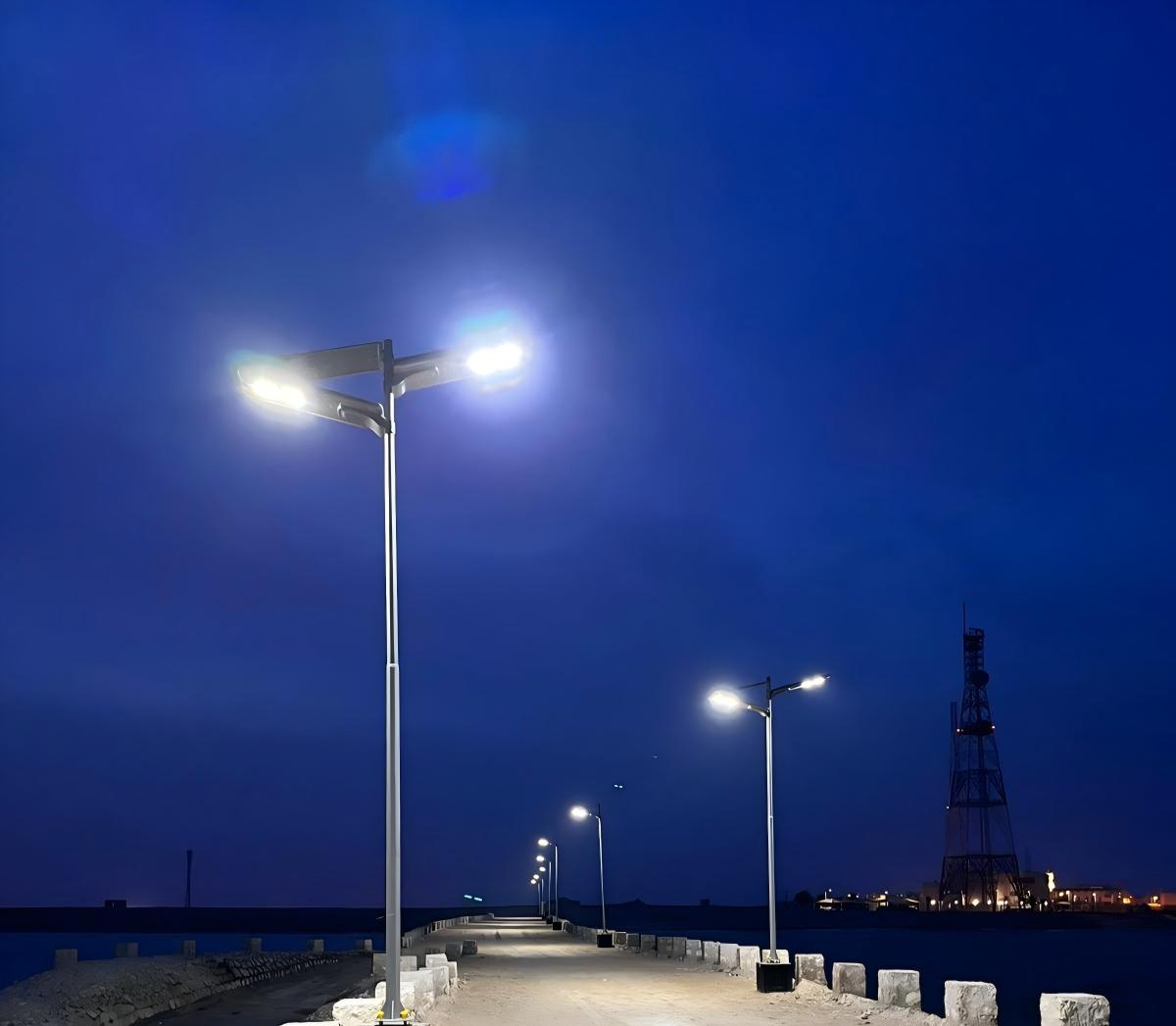
A solar street light project on a major road: mounting height, spacing and environmental conditions determine the right product architecture.
The global solar street lighting market was valued at USD 5.0 billion in 2024 and is projected to grow at a compound annual growth rate of 7.4% through 2034, according to Global Market Insights. Asia-Pacific holds approximately 40% of the regional market, according to P&S Intelligence. China’s solar product exports also reached a record 68 GW in March 2026, driven by demand in Africa and Asia, based on data from Ember and Mongabay. These signals point to a market where procurement decisions are moving beyond basic wattage into site-specific selection.
Road Scenarios Create Different Lighting Requirements
Municipal engineering projects, highway service areas, urban main roads, rural roads and road construction zones place different demands on solar lighting. A highway requires consistent illumination over a wide carriageway from a mounting height of roughly 9–10 metres. An urban main road may need controlled cutoff optics and predictable spacing to avoid dark zones. A rural road may value low installation complexity and simple maintenance. A dusty coastal or industrial site may need a self-cleaning surface on the solar panel.
These differences matter because solar street lights are not purely luminaires. They are energy systems with a solar panel, battery, controller and LED light source. The product architecture must balance solar gain, battery autonomy, optical output and mechanical strength.
Cmoonlight’s Product Range Covers Multiple Project Architectures
Shenzhen Moonlight Technology Co., Ltd., which sells under the Cmoonlight brand, was founded in 2010 and operates a 20,000 m² factory with 245 employees and 25 R&D engineers. The company produces about 120,000 units per year and exports 100% of its output. Its main markets include the Philippines, South America, Thailand, Malaysia, the Middle East and Africa, and its products are used in more than 120 countries.
For road projects, Cmoonlight offers integrated or all-in-one solar street lights, split solar street lights, all-in-two solar street lights, vertical solar wrapped light poles, auto-cleaning solar street lights and smart solar street light systems. The portfolio also includes LED street lights and solar garden lights for peripheral applications such as parking lots, parks and residential areas.
On the manufacturing side, Cmoonlight supports OEM and ODM customization. The factory has a monthly capacity of 8,000 units, an MOQ of 2 units and a lead time of 45–150 days. Every unit is tested before delivery, and the company offers a 5-year warranty with replacement for damaged products within that period.
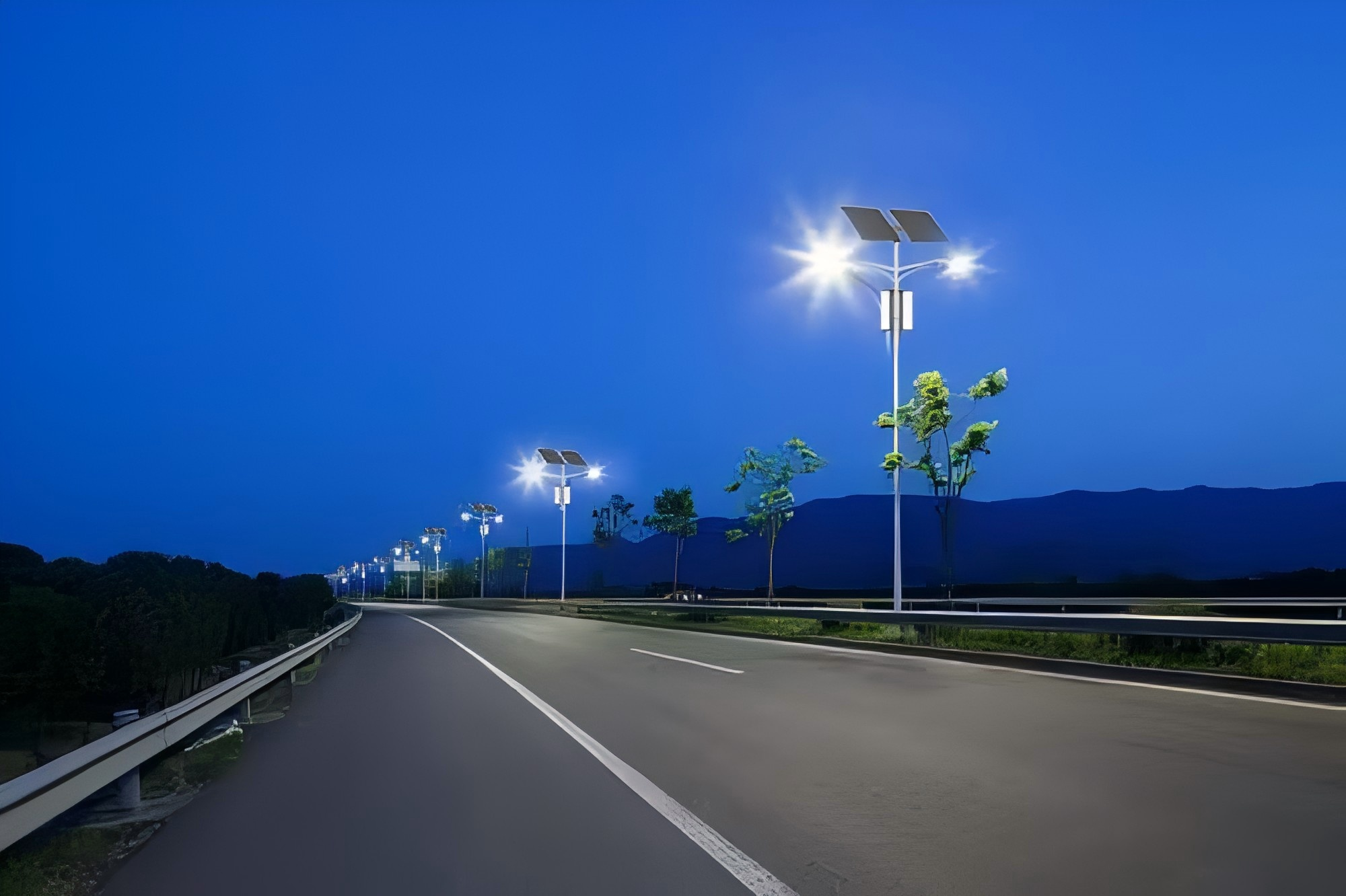
Split solar street lights allow the solar panel to be mounted separately from the LED luminaire, which is useful on wider roads.
How Product Architecture Affects Road Adaptation
Integrated or all-in-one solar street lights combine the solar panel, battery, LED module and controller in one housing. This reduces field wiring and shortens installation time. Split solar street lights separate the panel from the luminaire, which gives installers more freedom to angle the panel toward the sun. Vertical solar wrapped light poles integrate photovoltaic modules into the pole structure, allowing a larger total PV area without a separate top-mounted panel.
The table below shows how Cmoonlight’s product families map to typical road scenarios using data from the manufacturer’s published specifications.
| Product Family | Architecture | Key Published Specifications | Typical Road Scenario |
|---|---|---|---|
| ML-ST-120 | Adjustable all-in-one / integrated solar street light | 150W monocrystalline panel, 120W LED, LiFePO4 45Ah 12.8V battery, 12V15A controller, recommended mounting height 8–9m, spacing 30–35m | Urban main roads and highway sections |
| ML-PALM-100 | Foldable all-in-one solar street light | 140W double-sided panel, 100W LED, LiFePO4 45Ah 12.8V battery, MPPT controller, recommended height 8m, spacing 25–30m | City roads, coastal roads and parking lots |
| ML-PALM-64 | Foldable all-in-one solar street light | 80W double-sided panel, 64W LED, LiFePO4 30Ah 12.8V battery, MPPT controller, recommended height 6m, spacing 20–25m | Rural roads, narrower municipal streets and parks |
| ML-Split-200 | Split solar street light | 200W DC36V panel, 80W LED, LiFePO4 45Ah 25.6V battery, recommended height 9–10m, spacing 30–35m | Highways and main roads where panel orientation flexibility is important |
| ML-CL-60 | Auto-clean all-in-one solar street light | 80W DC18V panel, 60W LED, LiFePO4 30Ah 12.8V battery, auto-clean system, recommended height 6–7m, spacing 20–25m | Dusty municipal roads and industrial environments |
| ML-VSWLP-10 | Vertical solar wrapped light pole | 6×120W PV modules, total 720W, LiFePO4 84Ah 12.8V battery, dual steel arms, total height 10.27m, MPPT controller | Highways and wide urban roads where pole-mounted PV is acceptable |
These published specifications are useful as a starting point for project planning. They do not replace a site-specific lighting calculation, but they show how a solar street light manufacturer can align product family with road class.
Documented Road Applications Across Markets
Application records from Cmoonlight’s project history show the same product families being used in different road contexts. These references are reported as stable operation with maintained brightness and long nighttime lighting hours.
- 2,280 units of the 10m Vertical Solar Wrapped Light Pole were supplied for highway lighting in the UAE, with a reported 10-year project duration.
- 2,080 units of the ST Series 120W integrated solar street light were used for highway road lighting in Chile.
- 1,800 units of the Palm Series 120W foldable all-in-one solar street light were supplied for city road lighting in Peru.
- 380 units of the Palm Series 120W foldable all-in-one solar street light were installed for seaside road lighting in Qatar.
- 500 units of the Palm Series 100W foldable all-in-one solar street light were supplied for road lighting in Nigeria.
- 380 units of the 10m Vertical Solar Wrapped Light Pole were supplied for road lighting in Saudi Arabia.
- 980 units of the Violet Series solar garden light were used for road lighting outside gardens in Australia, showing that solar lighting also extends to lower-height public areas.
In the road lighting application records, Cmoonlight’s project conditions include a wide ambient temperature range from -20°C to 60°C and an IP66 waterproof rating for outdoor use. Road surveillance projects also use solar-powered 4G CCTV cameras mounted on light poles, which can be relevant when a road project combines lighting and monitoring.
Market Signals for Solar Street Lighting
Verified third-party data supports the view that solar street lighting is now a mainstream procurement category rather than a niche product.
- The global solar street lighting market was valued at USD 5.0 billion in 2024 and is projected to grow at a CAGR of 7.4% through 2034.
- Asia-Pacific holds approximately 40% of the regional market share as of 2024/2025.
- China’s solar product exports reached a record 68 GW in March 2026, driven by demand in Africa and Asia.
For buyers, the practical implication is that product availability is no longer the bottleneck. The selection challenge is matching a specific solar street light architecture to the road class, climate and installation constraints of each project.
Comparing Solar Architectures with Traditional Road Lighting
Traditional grid-connected street lights remain common in many urban areas because grid power is stable and the lighting design process is well established. The main trade-off is cost: trenching, cabling, electricity consumption and grid dependency can make them difficult to deploy in new or remote road sections.
| Approach | Strengths | Constraints |
|---|---|---|
| Grid-connected LED street lights | Familiar infrastructure, stable supply, well-known maintenance model | Requires trenching, cabling and electricity supply; less practical for off-grid or temporary road projects |
| Split solar street lights | Flexible panel orientation, larger panel options, easier to adapt to shading conditions | More field wiring and separate components to install |
| Integrated all-in-one solar street lights | Factory integration, fewer cables, easier installation, compact appearance | The panel and battery are fixed inside or on the luminaire, which limits flexibility when a project needs more PV capacity than the housing can carry |
| Vertical solar wrapped light poles | High total PV capacity on the pole, integrated aesthetic, good for wide roads | More structural material than a conventional arm; requires project-specific approval for pole strength and wind load |
A real limitation of integrated solar street lights is design flexibility. In a project with low solar irradiance, heavy shading or an unusually wide carriageway, the integrated form may require a larger model or a shift to a split system. This is not a defect of the integrated architecture; it is a boundary condition that should be evaluated during the technical stage.
Future Outlook: From Wattage to Fit
The product direction visible in Cmoonlight’s portfolio shows a shift from simple wattage specifications toward systems designed for specific operating conditions. Foldable all-in-one solar street lights improve PV area and transport convenience. Auto-clean solar street lights address a maintenance problem that is common in dusty or high-pollution environments. Smart solar street lights and hybrid solar-grid functions give project owners more control over lighting modes and energy reliability.
Future road lighting procurement is likely to place more weight on energy yield per pole, battery autonomy and maintenance cost, rather than only LED wattage. For a solar street light manufacturer, the value lies in translating project conditions into a workable system specification.
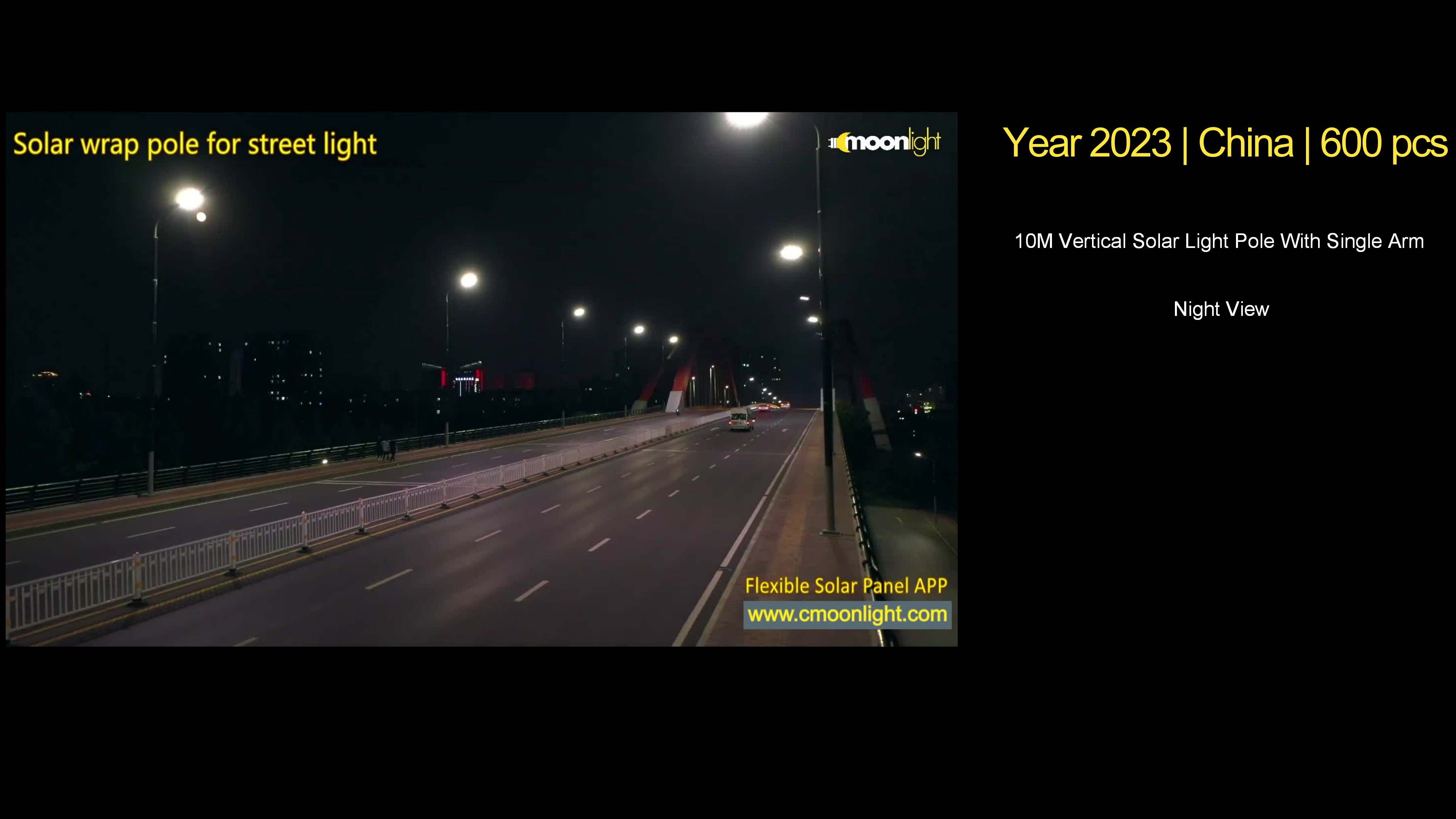
Vertical solar wrapped light poles provide a larger PV surface along the pole itself, which suits highway applications with high energy demand.
Frequently Asked Questions on Solar Street Light Selection
What is the difference between all-in-one and split solar street lights?
An all-in-one solar street light integrates the solar panel, battery, LED module and controller in a single housing. A split solar street light keeps the solar panel separate from the luminaire, which allows installers to angle the panel independently. Integrated systems are easier to install; split systems offer more design flexibility when a project needs a larger panel or a specific mounting orientation.
Which solar street light is suitable for a 10-metre highway pole?
For a 10-metre pole height, Cmoonlight’s ML-Split-200 split solar street light is recommended for 9–10m installation heights. The ML-VSWLP-10 vertical solar wrapped light pole is also designed for highway applications, with a total height of 10.27m and a 720W PV array.
What installation height and spacing are recommended for a 120W integrated solar street light?
According to Cmoonlight’s specification for the ML-ST-120, the recommended installation height is 8–9 metres and the recommended installation distance is 30–35 metres. Project-specific lighting calculations may adjust these values based on road width and required illuminance.
How many rainy days can these solar street lights operate continuously?
Several Cmoonlight models, including the ML-ST-120, ML-PALM-100 and ML-Split-200, are specified to work continuously for 3–5 rainy days and 12 hours per night. This depends on actual solar irradiance, load settings and battery health.
What does the IP66 waterproof rating mean for outdoor road lighting?
An IP66 rating means the product is protected against powerful water jets and is designed for outdoor use. Cmoonlight’s road lighting equipment is also designed for a wide temperature range from -20°C to 60°C, which covers most municipal and highway installation environments.
How does motion-sensitive control work in solar street lights?
Many Cmoonlight solar street lights support light control, time control and microwave sensor control. A common sensor mode is 100% brightness when a person or vehicle is detected, followed by a lower output level when the area is empty. This reduces energy consumption while maintaining visibility when needed.