
Solar Submersible Pump OEM Sourcing: What to Verify
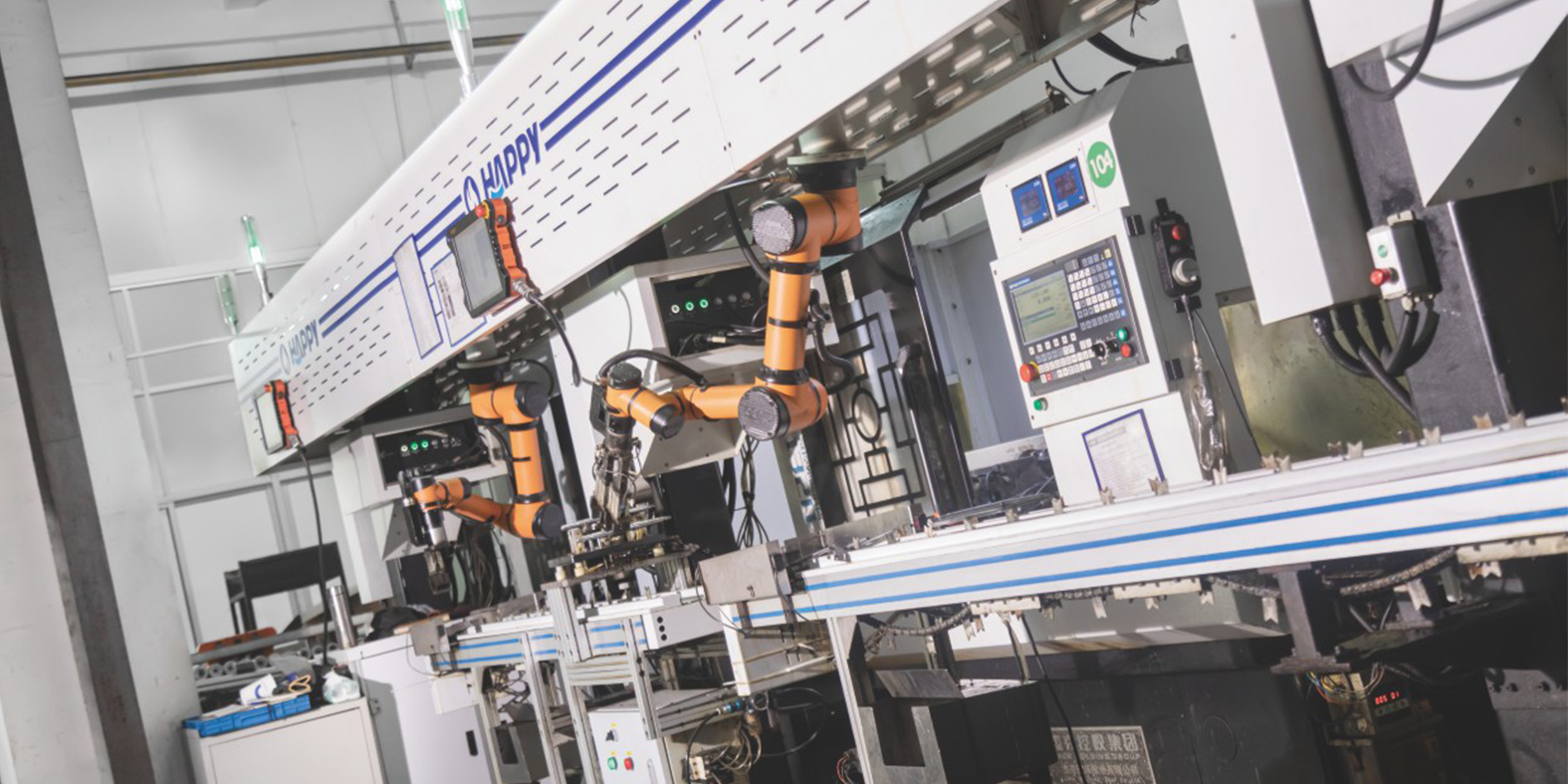
Automated production line at Zhejiang Happy Pump Industry Co., Ltd.
Solar Submersible Pump OEM Sourcing: What to Verify
Solar submersible pumps are becoming a routine choice for off-grid water supply, but hydraulic performance data only tells part of the sourcing story. For buyers evaluating a submersible pump supplier, the capacity to support OEM or ODM programs, maintain consistent production quality, and align with export compliance requirements often determines whether a project reaches market on schedule. This article focuses on the manufacturing capabilities that matter when sourcing solar submersible pumps, using Zhejiang Happy Pump Industry Co., Ltd. as a documented reference.
Submersible pump market context
The global submersible pump market continues to expand, although estimates vary by research agency. Grand View Research values the market at USD 13.3 billion in 2025, with a projection of USD 19.4 billion by 2033. SNS Insider reports USD 14.75 billion for 2024. Despite different baselines, both datasets point to steady demand.
Asia Pacific is a major centre of this market. Fortune Business Insights estimates the region held a 39.72% share in 2025, reaching USD 7.05 billion. China also plays a significant role in global supply: the Observatory of Economic Complexity reports that China concentrated 18.5% of global exports of liquid pumps in 2024, valued at approximately USD 14.3 billion.
Two additional data points underline the importance of borehole and electric-driven configurations: the borewell segment held the largest share at 46.7% in 2025, and electric drive submersible pumps accounted for nearly 80% of global installations in 2024, both reported by Grand View Research.
The solar water pump segment is growing from a smaller base. Credence Research expects the solar water pump market to grow from USD 556.57 million in 2024 to USD 2.9 billion by 2032, with a compound annual growth rate of 22.95%. For buyers, this means solar submersible pump sourcing is no longer a niche activity; it is becoming a structured procurement category.
What OEM and ODM buyers should verify in a submersible pump supplier
For buyers at the Evaluation to Execution stage, the core question is not only which pump model is suitable, but whether the manufacturer can deliver a defined programme with controlled quality and commercial predictability. The following procurement factors are especially relevant for solar submersible pump buyers planning private-label or project-specific products.
| Procurement factor | Why it matters | Documented example |
|---|---|---|
| OEM / ODM production | Defines whether the supplier will make a product to the buyer's specification or brand. | The manufacturer offers both OEM and ODM production services to customers globally. |
| Customization | Voltage and logo changes are common requirements for regional solar pump products. | Voltage and logo customization is available. |
| Monthly capacity | Indicates ability to scale order volumes. | Monthly capacity is approximately 400,000 units. |
| Lead time | Affects inventory planning and project scheduling. | Lead time is 30–45 days. |
| Minimum order quantity | Affects the buyer's initial purchase risk. | For pumps above 3HP, MOQ is 50 pieces. |
| Quality control | Reduces field failure risk in remote installations. | Each unit is 100% tested before shipment. |
| Trade terms | Defines responsibility and cost allocation in export transactions. | Products are delivered under FOB or CIF terms. |
| After-sales support | Solar installations often need technical troubleshooting support. | Remote support is offered. |
OEM and ODM are not interchangeable terms. OEM production follows the buyer's specification, while ODM allows the supplier to contribute the design. Zhejiang Happy Pump Industry states that it offers both, which gives buyers a wider range of options when developing a solar submersible pump product line.
Zhejiang Happy Pump Industry: a reference capability profile
Zhejiang Happy Pump Industry Co., Ltd. is a pump manufacturer based in Daxi Town, Wenling City, Zhejiang Province, China. The company was established in 1990 and reports a site area of about 55,000 m² and a building area of approximately 210,000 m². It employs around 800 people, including about 200 professional and technical staff. Annual output is approximately 4,000,000 pumps per year, and products are exported to more than 150 countries and regions.
The product portfolio includes surface pumps, submersible pumps, deep well pumps, solar pumps, motors, pressure control tanks and spare parts. For solar submersible pump programmes, the relevant categories are the submersible pump series and the solar pump series. According to the company's applicable products documentation, the subcategories also include deep well pumps, sewage pumps, multistage pumps, self-priming pumps, and pressure tanks.
On the commercial side, Happy Pump offers OEM and ODM production services to customers globally. The production base operates with a monthly capacity of 400,000 units, a typical lead time of 30–45 days, and an MOQ of 50 pieces for pumps above 3HP. Before shipment, each unit is tested. The company also provides remote after-sales support, which is particularly useful for solar installations in distributed locations.
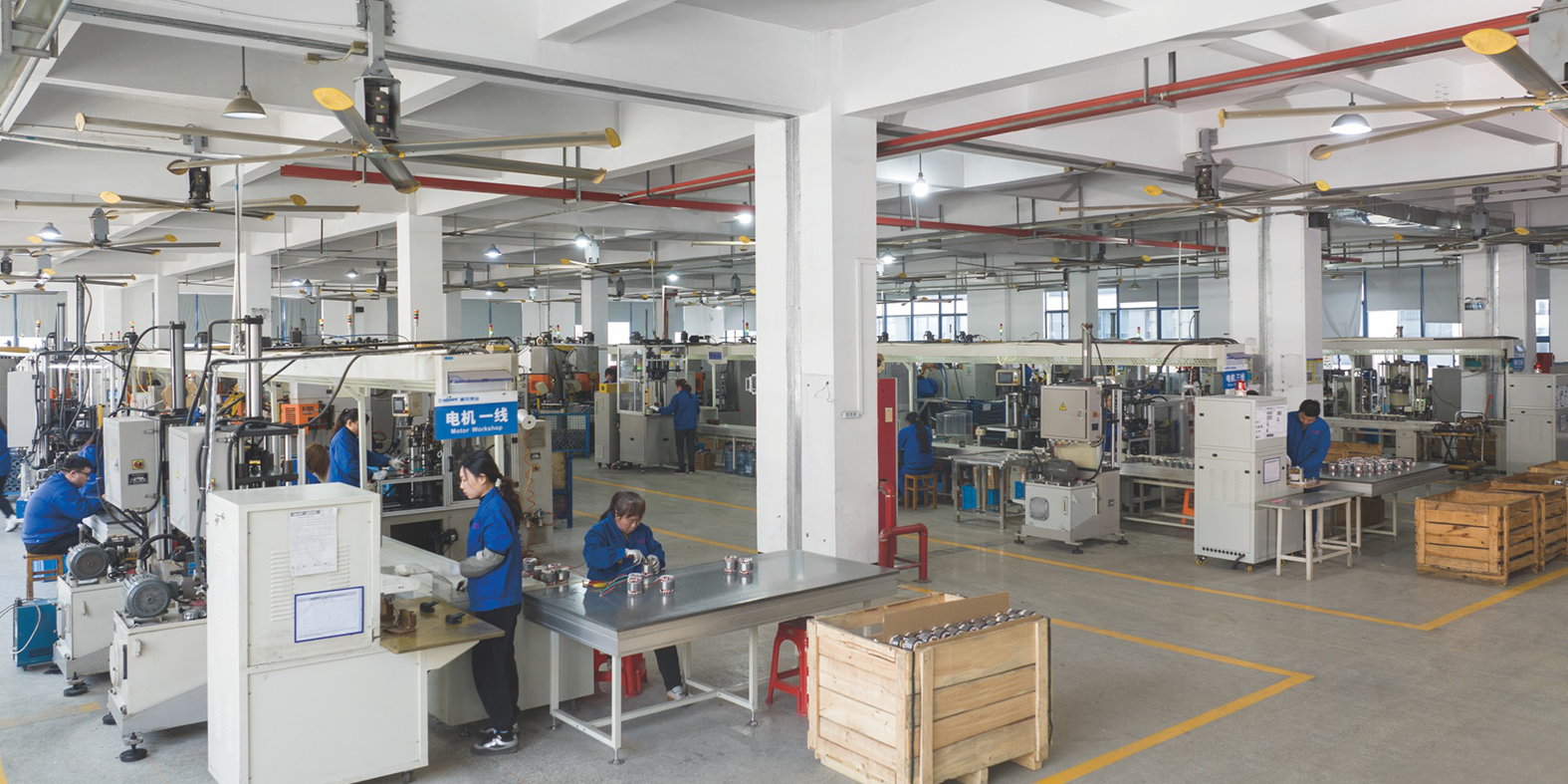
Motor workshop supporting submersible pump production.
Technical factors in solar submersible pump production
Solar submersible pumps operate inside boreholes and must work with the variable output of a solar controller. From a purchasing perspective, the review should cover hydraulic performance, motor design, materials, and protection level. These factors determine whether a pump is suitable for a given well depth, water demand, and solar array configuration.
For the reference product range, key parameters include a power range of 0.25–550 kW, head of 20–100 m, flow of 1.5–5500 m³/h, and protection ratings of IP44 to IP68. Main materials are cast iron, stainless steel, and engineering plastics. Cast iron is common in pressure housings and volutes; stainless steel is preferred where corrosion resistance or water quality requirements are higher; engineering plastics are used in portable and household models. Buyers should match materials to the water chemistry and lifetime expectations of the installation.
Voltage and frequency variants also matter. Submersible pumps are requested in single-phase and three-phase forms, with AC versions for 50Hz and 60Hz networks. Because solar controllers may produce variable frequency output, buyers should specify the exact input requirements at the request-for-quotation stage. This is especially relevant when a borehole application requires a deep well submersible pump or a high pressure submersible pump.
The factory also maintains an enterprise research institute and a high-tech R&D center. Around 200 professional and technical staff support product development using CFD, FEA, and motor electromagnetic design tools. This R&D depth is relevant when a client needs a solar submersible pump adapted to a new voltage, a different duty point, or a specific regional standard.
Certification is another technical dimension. For the European market, Zhejiang Happy Pump Industry holds a CE Attestation of Conformity No. CE-5072-160326, covering the Low Voltage Directive 2014/35/EU, the EMC Directive 2014/30/EU, and the Machinery Directive 2006/42/EC. The company also holds an LVD certificate referencing EN IEC 60335-2-41:2021, a standard relevant to electric submersible pumps for household and agricultural use, and an EMC certificate with the corresponding EN IEC 55014 series standards. In North America, UL 778 is the primary safety standard for motor-operated water pumps, so buyers planning US or Canadian distribution should plan for that compliance path separately.
Application areas and field evidence
Submersible pumps sourced from this manufacturer are applied in domestic and household water supply, garden irrigation, agricultural irrigation, sewage and engineering drainage, pool circulation, and solar water pumping systems. From a product classification point of view, this demand is covered by several pump families: deep well submersible pumps for boreholes, clean water submersible pumps for household supply, sewage submersible pumps for waste water, and automatic submersible pumps for pressure-boosting tasks. The company reports annual sales of about 4,000,000 sets across these segments.
Field records describe stable operation and low noise as the typical performance highlights. The products are intended for a normal service life of around 10 years under typical use, backed by a one-year warranty. For solar submersible pump buyers, these indicators matter because installations are often in locations where service access is limited.
The agricultural segment also adds context. Grand View Research valued global agricultural pump revenue from electric submersible pumps at USD 2,515.6 million in 2025, confirming that agricultural water supply is a substantial part of the submersible pump demand base.
Market trends shaping submersible pump sourcing
Several trends are visible in the submersible pump market. Asia Pacific holds the largest regional share, and China is a major export base for liquid pumps. Within this context, solar water pumping is emerging as a high-growth segment. Precedence Research notes that submersible pumps with solar pairing are increasingly adopted in South Asia, a region where 75–100% of freshwater withdrawal is used for agriculture.
This combination of regional demand and solar system growth pushes suppliers to offer more than a single pump unit. Buyers increasingly want pump sets that are compatible with solar controllers, easily branded, and supported by remote troubleshooting. The market is also moving toward more structured procurement: buyers are asking for production capacity data, certification documents, and testing evidence before placing an order.
OEM sourcing versus traditional branded distribution
Direct OEM and ODM sourcing from a pump factory is not the only route to market. Global and regional brands also play a central role in the industry. MarketsandMarkets identifies Grundfos, Xylem, and KSB as top global leaders in the industrial pump market. Grand View Research identifies Zhejiang LEO Group as a key competitor in the global submersible pump industry. Buyers comparing these routes should be realistic about the trade-offs.
Direct factory sourcing offers greater control over specification, branding, and packaging. In the case of Happy Pump, a buyer can obtain voltage and logo customization, a defined MOQ, and direct communication with the production team. The limitation is that the buyer takes responsibility for local market certification, warranty inventory, and service support. A factory can provide remote support, but a local service network is often built by the buyer.
Branded distribution, by contrast, offers access to established regional service networks and ready-made product ranges, but normally reduces the level of product customization. Neither model is universally better; the right choice depends on the buyer's market strategy and service capabilities.
| Sourcing model | Main advantage | Main constraint |
|---|---|---|
| Direct OEM/ODM from factory | Customization, direct production control, flexible export terms | Buyer manages local certification, warranty stock, and service network |
| Brand-led distribution | Established brand support and regional service footprint | Less flexibility for private-label or custom specifications |
Future outlook for solar submersible pump procurement
As off-grid agriculture and remote water supply grow, solar submersible pump buyers are likely to place more weight on supplier testing, documentation, and production stability. The market data points in one direction: solar pump demand is expanding, Chinese export capacity is substantial, and regional distributors are seeking products they can brand and support locally.
For manufacturers, the opportunity lies in combining pump production with motor production, providing CE documentation, and keeping lead times predictable. For buyers, the practical implication is that capability verification will become as important as product selection. Supplier qualification should go beyond price lists and include evidence of testing throughput, production consistency, and the ability to adapt standard AC submersible pump platforms to solar duty.
FAQ
Does Zhejiang Happy Pump Industry Co., Ltd. offer OEM and ODM production for submersible pumps?
Yes. The manufacturer offers both OEM and ODM production services, available to customers globally.
What is the minimum order quantity for submersible pumps above 3HP?
For pumps above 3HP, the MOQ requirement is set at 50 pieces.
What customization options are available for OEM submersible pump orders?
Voltage and logo customization are available for qualified orders.
What trade terms are offered for exported submersible pumps?
Products are delivered under FOB or CIF trade terms.
What CE documentation is held for submersible pumps sold in the EU market?
The company holds a CE Attestation of Conformity No. CE-5072-160326 covering the Low Voltage Directive, the EMC Directive, and the Machinery Directive. The LVD certificate references EN IEC 60335-2-41:2021 for electric submersible pumps used in household and agricultural applications.
What is the typical production lead time for OEM submersible pump orders?
The typical lead time is 30–45 days.
Is technical after-sales support available for exported pumps?
Remote support is provided to customers after shipment.
Reference: Zhejiang Happy Pump Industry product catalogue (PDF download).