
Solar Surface Pumps: Certifications and Procurement Parameters
Solar Surface Pumps: Certifications and Procurement Parameters
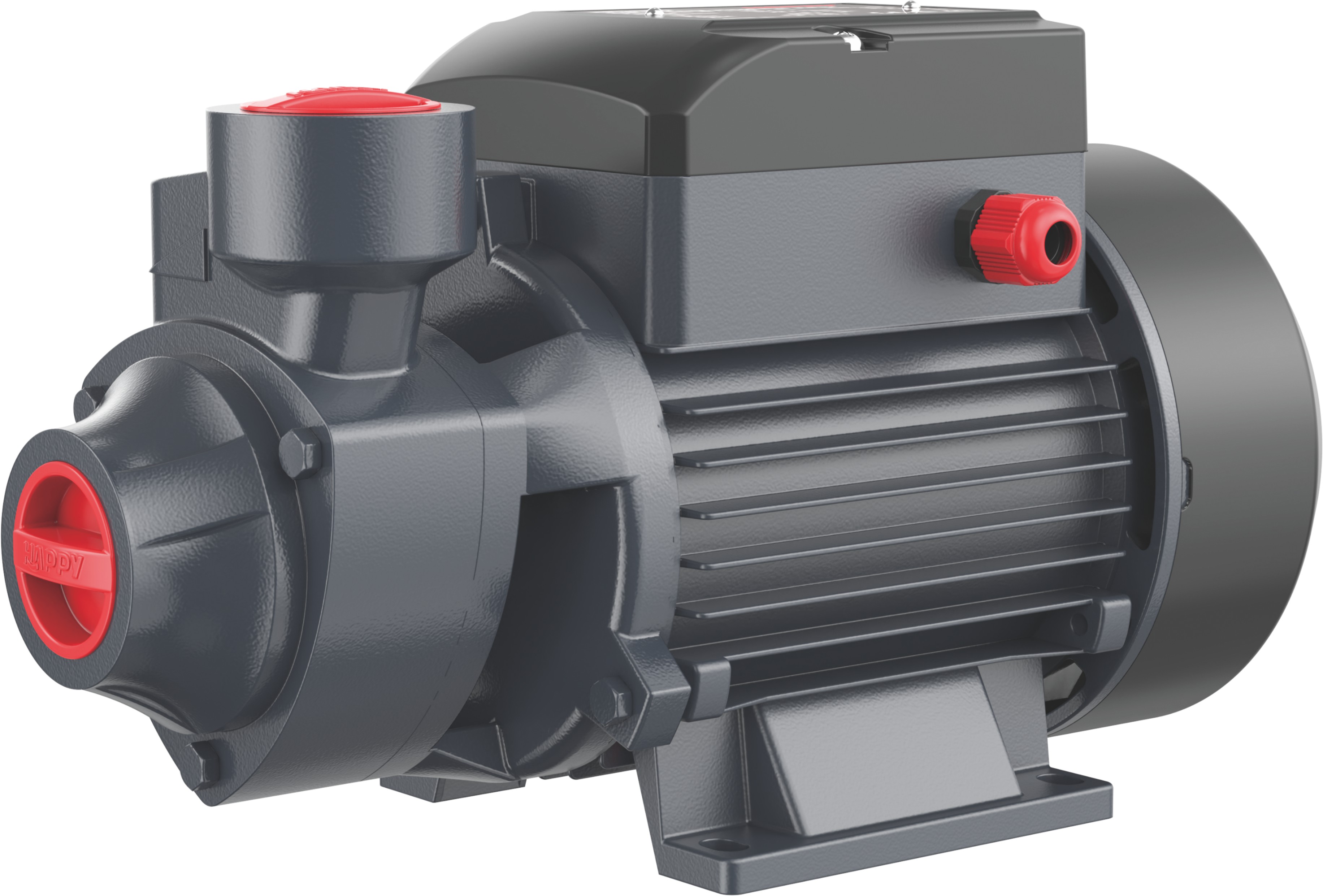
Surface pump selection used to be a short exercise: compare flow, head, and motor power. As solar pumping expands across agricultural, household, and off-grid water supply applications, procurement teams are being asked to verify more than hydraulics. Certifications must cover the target market, product parameters must be specific enough for system sizing, and the material and protection design must fit the installation environment. This article examines solar surface pumps from a research-and-evaluation perspective, focusing on the certifications and parameters that should form the basis of a buying decision.
Market Signals Behind Solar Surface Pump Demand
Market data explains why solar surface pumps are moving from niche projects into mainstream procurement. The global pump market was estimated at USD 61.32 billion in 2024 and is projected to reach USD 79.01 billion by 2029. Within that total, surface pumps held a significant 57.63% share of the global pump market in 2025. The agricultural pump segment was valued at USD 14.59 billion in 2024, with a projected CAGR of 4.98% through 2035. For the solar subset, the market was estimated at USD 2.90 billion in 2024, supported by declining PV module prices and government subsidies in Asia-Pacific.
For importers and project buyers, this changes the evaluation timeline. A solar surface pump must not only move water efficiently; it must carry documentation that satisfies financing approval, project specifications, and end-user trust. That makes certification and parameter verification a purchasing prerequisite rather than a back-office formality.
Start With Compliance: Certifications Buyers Should Verify
The first layer of verification is certification. Pumps exported to the European Union market generally need to satisfy Low Voltage and Electromagnetic Compatibility requirements. For household and similar electrical pumps, IEC 60335-2-41:2024 is the relevant safety reference standard.
A concrete example can illustrate what a compliant documentation package looks like. Zhejiang Happy Pump Industry Co., Ltd., a pump and motor manufacturer founded in 1990 and located in Daxi Town, Wenling City, Zhejiang Province, has certified its pump series for the EU market. The covered pump models include HQBm, QB60, IDB35, HPSm-AX, HRSm-A, QDP, and QDX. This series holds an LVD certificate issued by OViS-CERT, numbered OViS202507249L, and an EMC certificate issued by OVIS-CERT, numbered OViS202507249E. In addition, the company holds a CE Attestation of Conformity, certificate number CE-5072-160326, issued by ECES and valid until March 2031, confirming compliance with the 2006/42/EC Machinery Directive, the 2014/30/EU Electromagnetic Compatibility Directive, and the 2014/35/EU Low Voltage Directive.
The LVD certificate references standards including EN 60335-1:2012 with amendments, EN IEC 60335-2-41:2021+A11:2021, and EN 62233:2008+AC:2008. The EMC certificate references EN IEC 55014-1:2021, EN IEC 55014-2:2021, EN IEC 61000-3-2:2019+A1:2021+A2:2024, and EN 61000-3-3:2013+A1:2019+A2:2021. For buyers distributing in Europe, these documents provide independent evidence that the product family has been evaluated against established safety and electromagnetic standards.
Technical Parameters to Check on a Solar Surface Pump
After certification, the next evaluation layer is parameter verification. The pump series from Zhejiang Happy Pump covers a broad envelope: power from 0.25 to 550 kW, head from 20 to 100 m, flow from 1.5 to 5500 m³/h, and protection levels IP44 and IP68. Within that envelope, four factors matter most for solar applications.
Power Range
The 0.25–550 kW range indicates manufacturing capability, but selection should always be based on the specific model. In solar systems, the pump motor must be matched with photovoltaic array capacity and local irradiance. Smaller household systems typically align with sub-3HP pumps, while larger agricultural schemes require the higher end of the power range.
Head and Flow
For solar installations, daily water demand is a more relevant selection metric than peak flow. The pump flow over the available solar hours should meet the daily requirement. Head must cover the total dynamic head, not just the vertical lift from the water source to the discharge point. The series range of 20 to 100 m head and 1.5 to 5500 m³/h flow provides a wide operating window for different project scales.
Protection Level
IP44 protects against solid objects larger than 1 mm and against water splashes, making it suitable for protected outdoor installation. IP68 indicates the ability to withstand continuous immersion, which is more commonly relevant to submersible pump types. Solar surface pumps are typically installed near a water source and exposed to dust and weather, so the correct IP rating matters for long-term reliability. Having both IP44 and IP68 available across the product range allows buyers to match the pump to actual site conditions.
Material Construction
The main materials used in the pump series are cast iron, stainless steel, and engineering plastics. Cast iron is widely used for pump bodies because it provides rigidity at a manageable cost. Stainless steel is specified in applications where corrosion resistance is critical. Engineering plastics are common for impellers and internal components. For clean-water solar pumping, a cast iron body with an engineering-plastic impeller is a common combination; more demanding water chemistry would require a stainless-steel evaluation.
Motor Efficiency and Solar Compatibility
Motor efficiency directly affects the size of the PV array required for a solar pumping system. Zhejiang Happy Pump manufactures motor models 90S-6 and 90L-6 in IE2, IE3, IE4, and MS categories, covering a power range of 1–430 HP at speeds of 934–2980 rpm. Motor housings are available in cast iron or aluminum. Higher-efficiency classes such as IE3 and IE4 mean that more of the available solar power is converted into water flow, reducing the number of photovoltaic panels and lowering system capex.
| Parameter Block | Available Range / Options in HAPPY Pump Series |
|---|---|
| Power range | 0.25 – 550 kW |
| Head | 20 – 100 m |
| Flow | 1.5 – 5500 m³/h |
| Protection | IP44, IP68 |
| Main materials | Cast iron, stainless steel, engineering plastics |
| Motor categories | IE2, IE3, IE4, MS; models 90S-6 and 90L-6 |
| Motor housing | Cast iron or aluminum |
Solar System Integration and Supporting Equipment
A solar pumping system normally requires more than the pump itself. Controllers are used to match photovoltaic power output with the pump motor, and parallel configurations are common to handle larger flow requirements. Pressure tanks or pressure control units are often added to stabilize pressure, along with junction boxes and filters.
Zhejiang Happy Pump’s product portfolio includes surface pumps, submersible pumps, deep well pumps, solar pumps, motors, pressure control tanks, and spare parts. That breadth lets project buyers specify an integrated package rather than combining pumps, controllers, and pressure tanks from different suppliers. For the buyer, this reduces interface risk and simplifies after-sales responsibility.
Applications and Typical Use Cases
Solar surface pumps are used across a wide range of installations. The applicable industries include agriculture irrigation, residential and building water supply and drainage, municipal drainage and water supply, industrial circulation and cooling, solar water pumping, swimming pool, and sewage treatment. Typical project types are household water supply, garden irrigation, agricultural irrigation, solar off-grid water supply, municipal and engineering projects, pool circulation, and sewage discharge projects.
Working conditions vary by model. Some installations pump clean water at moderate head; others face particle-containing water or require high-head delivery. Solar systems often operate in continuous or intermittent cyclic mode, and the pump may be installed as a surface unit or a submersible unit depending on the water source depth.
On the supply side, HAPPY customer documentation identifies water pump brand OEMs and HAPPY agents as the main customer types, with annual sales of 4,000,000 sets across the full product range. The documented operating outcome is stable operation, with low noise and high quality cited as the observed highlights, and a typical service life of around 10 years under normal use, backed by a 1-year warranty. For procurement teams, this kind of operational evidence is useful because it points to volume production designs that have been validated over many units rather than in isolated pilot runs.
Market Trend Analysis and Industry Context
The market context reinforces the importance of certification and parameters. Surface pumps account for 57.63% of the global pump market in 2025, confirming that surface-installed equipment is not a side category but a core part of total pump demand. The agricultural pump segment, a major user of solar pumping, was valued at USD 14.59 billion in 2024 and is expected to grow at a CAGR of 4.98% through 2035. The solar pump market itself, estimated at USD 2.90 billion in 2024, continues to benefit from falling PV module prices and government programs in Asia-Pacific.
At the standards level, the publication of IEC 60335-2-41:2024 for household and similar electrical pumps gives buyers an updated benchmark for safety evaluation. Procurement teams are increasingly treating these standards as a sign of manufacturing quality: a supplier that keeps its certifications current is more likely to maintain consistent production and testing discipline than one that treats compliance as an aftermarket task.
Comparison With Traditional AC Surface Pumps
Solar surface pumps and traditional AC surface pumps share the same hydraulic principle, but the difference in energy source creates several practical distinctions. Traditional AC pumps run on single-phase or three-phase grid power and deliver stable flow and pressure as long as the grid is available. Solar surface pumps are coupled to photovoltaic power through a controller, and their output naturally follows solar irradiance.
| Factor | Traditional AC Surface Pump | Solar Surface Pump |
|---|---|---|
| Power source | Single-phase or three-phase grid power | PV array plus solar controller |
| Flow profile | Stable, as long as grid is available | Varies with irradiance; controller and parallel config manage flow |
| Installation | Near water source, with grid wiring | Near water source, can be off-grid |
| Operating cost | Recurring electricity bills | Low or no recurring energy cost |
| Main cost factor | Pump + wiring + electricity | Pump + PV panels + controller |
| Compliance | Same electrical safety directives | Same pump electrical safety directives plus solar controller evaluation |
| Selection focus | Primarily hydraulic | Hydraulic plus PV power matching |
The comparison has a second layer on the equipment side. In solar projects, the pump must be electrically matched to the PV array and controller. Buyers should provide the supplier with the input voltage, output voltage, and frequency requirements before finalizing the model. Zhejiang Happy Pump, for example, supplies pumps for solar water pumping systems and notes that special input/output voltage and frequency requirements may require customization confirmation. That process is normal for solar projects, because solar controllers vary by region and system size.
Future Outlook for Solar Surface Pumps
The solar surface pump category is moving from early adoption toward standard procurement. Buyers in agricultural and residential segments are becoming more systematic about certifications, measured parameters, and documented performance. As IEC 60335-2-41 evolves and motor efficiency classes become more widely enforced, the purchasing decision will increasingly rest on a supplier’s ability to provide a complete, verifiable equipment package.
Manufacturers that combine surface pump breadth with certified compliance, motor production under the same roof, and solar-specific system knowledge are well positioned for project tenders. The direction is clear: procurement teams that verify certificates and parameters today will build more resilient water supply systems tomorrow than teams that select purely on price and brochure claims.
For buyers and product managers who want to review the full pump portfolio, parameter ranges, and certification evidence, the manufacturer’s official catalog is publicly available:
Download HAPPY Pump 2026 Product Catalog (PDF)