
Solid Dry Strength Agent Production: JHDA's JH-1699 and JH-1697
Solid Dry Strength Agent Production: JHDA's JH-1699 and JH-1697
Solid dry strength agents are cationic, water-soluble polymer powders that paper mills dissolve and dose into the wet end to raise fiber-to-fiber bonding, tensile strength, ring crush and burst resistance in paper made from recycled or mixed fiber. Qingzhou Jinhao New Material Co., Ltd., trading as JHDA, is a papermaking fine chemicals manufacturer founded in 2005 and based in Mihe Industrial Park, Qingzhou City, Shandong Province, China. It produces two powder-form dry strength grades, JH-1699 and JH-1697, inside a portfolio that also includes liquid dry strength agents, AKD and styrene-acrylic sizing agents, PAE wet strength resin, retention aids, defoamers and sludge encapsulants.
For procurement and technical teams at the evaluation stage, the useful question is not whether a supplier lists a powder grade. It is which specification lines, declared formulation components, quality-control tests and boundary conditions sit behind that grade. This article works through what JHDA publishes about JH-1699 and JH-1697 — appearance, active ingredient content, solubility, ionic type, shelf life and material composition — and translates those lines into the checks a mill can run before committing to a trial order.
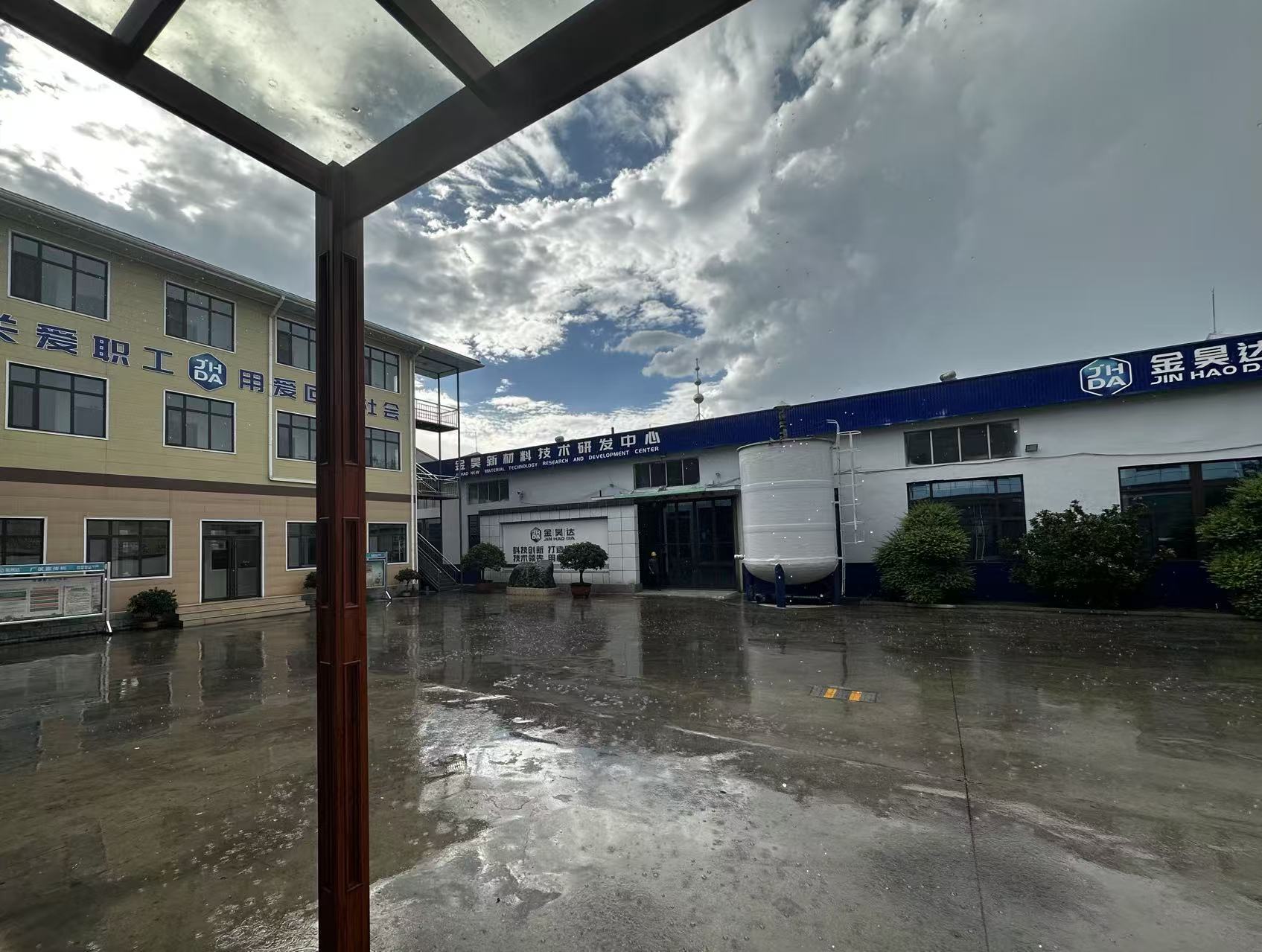
JHDA operates solid and liquid papermaking chemical production from its Qingzhou, Shandong base, with a supporting production entity in Vietnam for ASEAN delivery.
Why Solid Dry Strength Agents Compete for Wet-End Budget
Dry strength chemistry competes for the same wet-end budget as retention aids, sizing agents and defoamers. In recycled packaging grades it is usually judged on ring crush and burst results rather than on appearance alone. Market research published by Intel Market Research values the global paper dry strength agent market at approximately USD 864 million in 2024, with Asia-Pacific accounting for roughly 40% of that value. Fact.MR's segmentation of the dry strength resin category estimates that polyacrylamide resins hold about 40.0% of the market and that packaging and containerboard grades represent 38.0% of paper-grade usage — the same segment where JHDA positions JH-1699 and JH-1697.
Fiber supply reinforces that demand. The American Forest & Paper Association reports that recycled paper reached 44.4% of all fiber used at U.S. mills in 2024. Recycled fiber is shorter and has already been dried at least once, so it forms fewer hydrogen bonds per unit mass than virgin fiber. Dry strength additives are the standard route by which mills recover lost bonding without changing furnish. Published estimates for this category diverge — Fact.MR projects the dry strength resin market reaching USD 1.4 billion by 2026 with a 4.8% CAGR through 2036, while other researchers publish lower base-year figures — so buyers should read any single number as directional rather than exact.
JH-1699 and JH-1697: What the Specification Lines Say
JHDA publishes two powder-form dry strength products. JH-1699 is listed under the product name Paper Tensile Strength Enhancer. JH-1697 is listed as Solid Dry Strength Agent. Both are described as white powder, both are specified at ≥95.0% active ingredient, both are soluble and cationic, and both carry a 12-month shelf life.
| Parameter | JH-1699 | JH-1697 |
|---|---|---|
| Listed product name | Paper Tensile Strength Enhancer | Solid Dry Strength Agent |
| Appearance | White powder | White powder |
| Active ingredient (%) | ≥ 95.0 | ≥ 95.0 |
| Solubility | Soluble | Soluble |
| Ionic type | Cationic | Cationic |
| Shelf life | 12 months | 12 months |
| Declared materials | Polyacrylamide, polyamine, polyamide epichlorohydrin resin, starch derivatives | Cationic polyacrylamide, polyamide epichlorohydrin resin, modified cationic starch, amphoteric polymeric reinforcing monomer |
| Applicable industry | Papermaking | Papermaking / pulp molding |
Two lines deserve attention at the evaluation stage. First, both grades are cationic, which means they are designed to adsorb onto negatively charged fiber and fines surfaces rather than remain in solution — the basis of their retention and bonding function. Second, both are specified at the same active content and the same solubility statement, so the practical difference between JH-1699 and JH-1697 sits in the declared material composition and in the application labels attached to each product, not in the headline datasheet.
Reading the ≥95% Active Ingredient Line: What It Says About Water Content
Water content is not printed as a separate line on the JH-1699 and JH-1697 datasheets. The active ingredient specification does bound it. If active content is ≥95.0%, then everything else in the delivered bag — residual moisture, processing residuals and minor inorganics — cannot exceed 5% of the mass. That is the working definition of a solid dry strength agent as opposed to a liquid grade, and it drives three practical consequences.
- Freight per active kilogram. A powder shipment moves roughly 95% active material. A liquid grade specified at 15–20% solids moves mostly water, so the same delivered active mass requires several times the shipping weight and container volume.
- Storage and shelf life. Both powders carry a 12-month shelf life, compared with 6 months for JHDA's liquid JH-D726. Powder grades still need dry, sealed storage, but they are less exposed to freeze-thaw and microbial degradation than liquid emulsions.
- Dilution becomes the mill's variable. A powder must be dissolved before metered dosing, so the final working concentration is set on site rather than supplied in the drum. That gives a mill control over dosing strength, but it also means dissolution equipment and operator discipline become part of the chemistry.
The document that confirms actual moisture and active content for a given delivery is the certificate of analysis, not the datasheet. Buyers should request a batch COA with the trial shipment and treat the datasheet figure as the specification window the supplier commits to.
Formulation Chemistry: Polyacrylamide, PAE Resin and Modified Cationic Starch
JH-1699 is declared as a blend of polyacrylamide, polyamine, polyamide epichlorohydrin resin and starch derivatives. JH-1697 is declared as cationic polyacrylamide, polyamide epichlorohydrin resin, modified cationic starch and an amphoteric polymeric reinforcing monomer. Read as a group, the two formulations share a polyacrylamide backbone and a polyamide epichlorohydrin (PAE) resin component, and each adds a starch-based bonding component.
In wet-end terms, those component families do different jobs. Polyacrylamide provides the high-molecular-weight bridging structure that adsorbs onto fiber and fines and contributes to fines retention as well as bonding. PAE resin is a long-established strength chemistry that develops crosslinked networks at the fiber interface, which is why it appears in both dry strength blends and dedicated wet strength products. Modified cationic starch is the lower-cost bonding component; its cationic substitution keeps it attached to the fiber surface instead of accumulating in the white water. The amphoteric polymeric reinforcing monomer declared in JH-1697 indicates a charge-balance design intended to operate across a wider charge window than a purely cationic system — a relevant point for mills running high-anionic-trash recycled OCC furnish, though that tolerance should be confirmed by a charge-demand test on the mill's own stock rather than assumed from a material list.
The application labels attached to the item descriptions matter more than the generic category name when screening grades against a product mix. JH-1699 is described under labels including recycled paper dry strength agent, corrugated paper strength enhancer, box board dry strength agent, testliner paper strength agent, fluting paper strength additive and waste paper pulp reinforcing agent. JH-1697 carries solid paper dry strength agent, solid recycled paper strengthener, solid molded pulp strength additive and solid cationic dry strength resin among its labels, with papermaking and pulp molding listed as applicable industries.
Performance Claims and How to Verify Them on a Mill's Own Furnish
According to JHDA, applying its additives improves ring crush strength, water resistance and paper brightness for paper mill projects, while lowering wastewater treatment operating costs for clients. JHDA also states that its in-house pilot laboratory supports targeted formula customization and free sample trials, enabling on-site technical tuning that reduces chemical consumption per ton of paper. These are supplier claims drawn from the company's own application experience. They are not third-party benchmark results, and the honest way to treat them at evaluation stage is as hypotheses to be tested on the buyer's furnish, machine and water system.
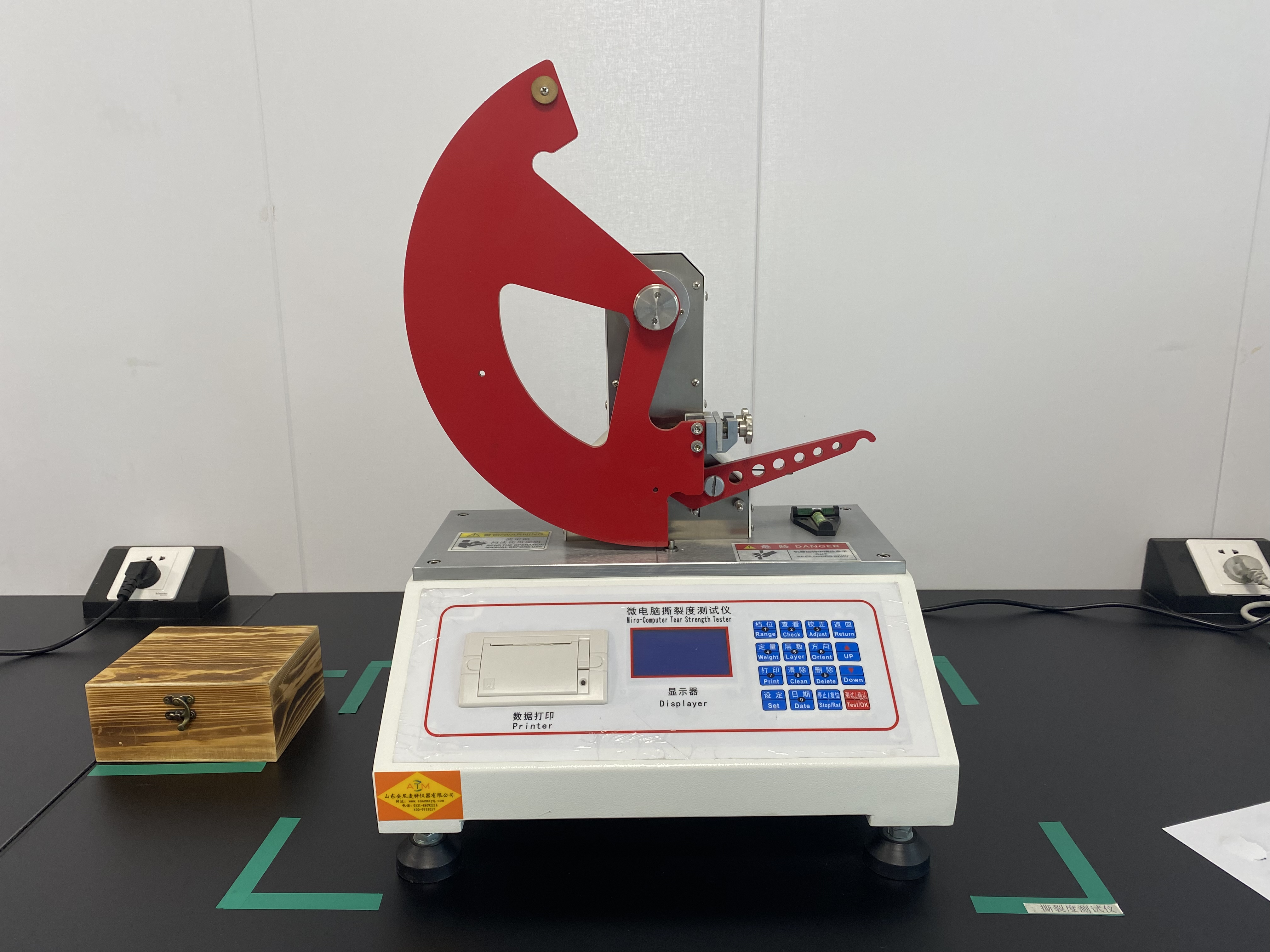
Strength testing of treated stock is the evidence step that converts a datasheet claim into a mill-specific number.
A workable verification protocol looks like this:
- Fix the baseline. Record current ring crush, burst, tensile, Cobb, ash content and first-pass retention under normal production before any trial.
- Define a dose ladder. Because powder grades are dissolved on site, the trial should test at least three addition rates expressed as kilograms of dry product per ton of paper.
- Hold conditions constant. Same furnish mix, machine speed, headbox consistency and white water closure for each rung of the ladder, so the result is attributable to the additive rather than to the schedule.
- Request batch documentation. Active content, moisture, appearance, particle size, prepared-solution solids, pH and viscosity should come from the COA, not from a verbal assurance.
- Use the supplier's on-site support where it is offered, and document the outcome. Tuning that reduces chemical consumption per ton is only verifiable if the dosing record is written down.
- Decide on cost per ton of paper, not price per kilogram. A higher-priced grade that reaches target strength at a lower dose can be the cheaper input.
Production and Quality-Control Evidence Behind the Two Grades
Capacity and lead time are part of the evidence for a powder grade, because a mill switching grades usually needs continuity rather than a one-off shipment. JHDA states a monthly production capacity of 8000 MT and a production lead time of 4 working days, with an MOQ of 1 MT and free trial samples. Customization is offered as OEM/ODM with formulation, label and packaging options to be confirmed with sales. Cumulatively, the company states it has supplied 100,000 metric tons of papermaking chemicals to paper mills and traders in more than 20 countries, including Germany, Brazil, China, India and Turkey, and that it has been supplying papermaking chemicals for over 10 years.
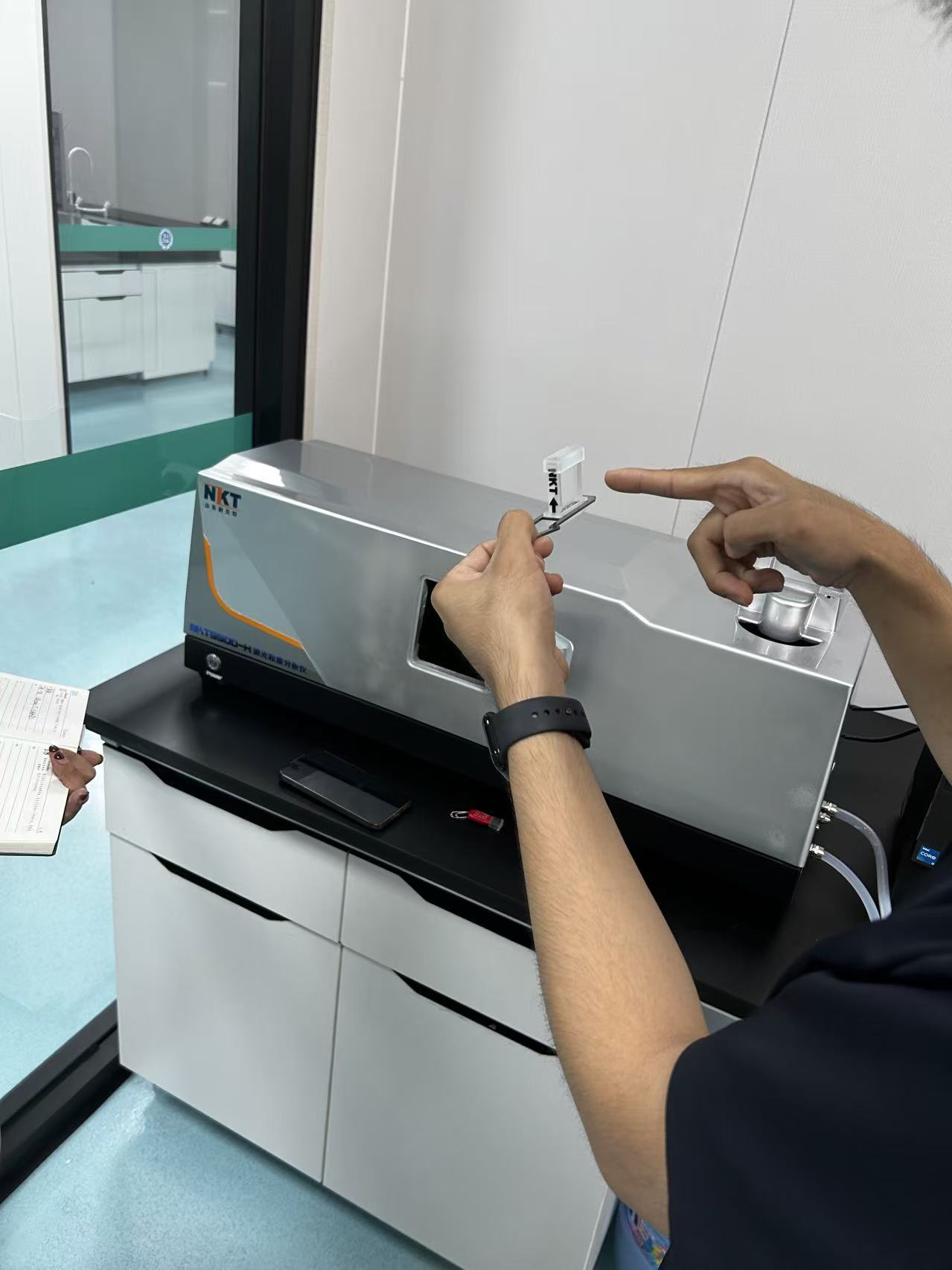
Particle size analysis is one of the routine QC measurements that determines how quickly a powder dry strength agent dissolves in the make-down tank.
On quality control, JHDA states that typical QA tests cover particle size, appearance, solids, pH, viscosity and functional tests, with specific QC procedures and reports provided per order. Two of those measurements matter most for a powder dry strength agent. Particle size affects dissolution time and dusting behaviour in the make-down tank. Viscosity of the prepared solution affects pumping and dosing accuracy at the wet end. A supplier that can issue those values per batch is giving a mill something it can trend, which is more useful than a single release specification.
For ASEAN delivery, JHDA operates CRM Chemical Technology Co., Ltd. in Long An Province, Vietnam, as an overseas supporting production entity intended to shorten delivery cycles for regional customers. For mills in Southeast Asia, that is a lead-time consideration rather than a product claim, but it is a legitimate question to raise during supplier evaluation.
Certification and Food-Contact Documentation: What to Request
Certification status is one of the few supplier attributes that can be checked independently of a trial. JHDA holds a quality management system certificate (number 10423Q01592R1S) issued by Shandong Seatone International Certification Co., Ltd. against GB/T 19001-2016 / ISO 9001:2015, covering the production of papermaking additive, and an environmental management system certificate (number 10423E01032R2S) issued by the same body against GB/T 24001-2016 / ISO 14001:2015. Both were issued on 16 August 2023. The certificate versions on file show an expiry date of 18 August 2026, so buyers evaluating in the second half of 2026 should request the current renewal documents rather than accepting an archived copy.
On halal compliance, JHDA holds certificate 6637250000 issued by Shandong Halal Certification Service (SHC) against Indonesia Halal Law and Regulations and MS1500:2019, scoped to paper-making industry additives, issued on 29 August 2025 and valid to 28 August 2028, for Indonesia and global halal-compliant markets. JH-1697 and JH-1699 both appear in the product lists attached to JHDA's management-system and halal documentation, which tells a buyer that the two powder grades sit inside the certified scope rather than outside it.
Food-contact suitability needs more careful handling, because the relevant evidence is product-specific. JHDA states that it holds SGS food contact safety testing for packaging paper chemicals, and its published answers state that part of its product range meets food-grade standards. JH-1697 is listed with papermaking and pulp molding as applicable industries. For a food-contact packaging project, the document that matters is the test report or declaration that names the grade — not a general company statement. Where the finished board is destined for European food packaging, the frameworks commonly cited in the industry are BfR Recommendation XXXVI and the EN 645, EN 646 and EN 648 test series for paper and board in food contact; registration and migration data should be requested from any supplier, domestic or imported.
Where Solid Grades Fit — and Where They Do Not
The fit is clearest in recycled packaging grades. JH-1699's application labels point at testliner, fluting, corrugated paper, box board and waste paper pulp, and JH-1697 adds pulp molding to its applicable industries. Mills running kraft linerboard, corrugated medium, carton board and molded pulp tableware are the natural evaluation group, particularly where ring crush, burst and tensile targets are the constraint on how much recycled fiber the mill can use.
The limits are equally specific, and buyers should weigh them before a trial:
- Dissolution equipment is required. Powder grades are prepared as a solution before metered dosing, which in practice means a mixing tank, metering pump and an operator routine. A mill with no make-down capacity is usually better served by a liquid grade such as JH-D726, which can be diluted and dosed with simpler equipment.
- Dust and moisture control. Powder handling requires dry, sealed storage and dust management around the make-down area. These are standard housekeeping requirements rather than technical barriers, but they belong in the cost comparison.
- Charge interaction with the existing wet end. A cationic or amphoteric strength chemistry interacts with sizing agents, retention aids and the anionic trash load of the furnish. A mill running a strongly anionic system may need a different addition point, a different dose, or a different grade, and only a charge-demand test will show which.
- Solid grades are not a universal substitute for imported specialty products. JHDA's own conversion guidance is explicit on this point: for ultra-high-grade virgin pulp specialty paper with fixed certification specifications, retaining the original imported product is the recommended route, while recycled packaging mills are the intended conversion case.
- Datasheets do not replace machine trials. Nothing in a specification table predicts how a specific furnish, white water closure or retention system will respond on a given machine.
A Shortlisting Checklist for Evaluation-Stage Buyers
When two suppliers present similar powder grades, the difference usually lies in the documentation and service layer rather than in the appearance specification. The following criteria convert the evidence above into questions that can be asked directly.
| Evaluation criterion | What to request |
|---|---|
| Active content and moisture | Batch COA showing active ingredient and moisture, not only the datasheet window |
| Ionic type and charge fit | Charge-demand test result on the mill's own furnish or a documented trial at the mill |
| Dissolution behaviour | Recommended make-down concentration, dissolution time, temperature and water quality, plus particle size data |
| Application match | Grade labels covering the mill's grades — testliner, fluting, corrugated medium, box board or pulp molding |
| QC documentation | Routine test list (particle size, appearance, solids, pH, viscosity, functional tests) and per-order reports |
| Certification currency | Current ISO 9001 and ISO 14001 certificates, plus halal or food-contact documents that name the grade |
| Supply terms | MOQ, production lead time, sample policy, packaging and shelf-life confirmation |
| Technical service | On-site tuning, pilot lab access and who is accountable for the trial outcome |
| Supplier type and continuity | Own production capacity versus trading margin, plus delivery route for the buyer's region |
Outlook
Three forces are shaping how solid dry strength agents are evaluated. Recycled fiber continues to take a larger share of packaging furnish, which keeps bonding chemistry on the critical path for ring crush and burst targets. Packaging and containerboard remain the largest paper-grade segment for dry strength additives, so grades tailored to testliner, fluting and box board will continue to attract supplier attention. And polyacrylamide-based formulations already hold a substantial share of the category, which means differentiation is shifting toward charge tolerance, dissolution behaviour, documentation quality and service response rather than toward the base chemistry alone.
For buyers, the practical implication is that powder-form grades should be shortlisted on evidence rather than on category claims: a batch COA that states active content and moisture, a particle size figure that predicts dissolution, an application label that matches the mill's grades, and a certification set that is current at the time of purchase. Company statements about performance, including JHDA's reported improvements in ring crush strength, water resistance and brightness, become decision-grade information only after a mill-specific trial has tested them against a measured baseline.
FAQ
What is the difference between JH-1699 and JH-1697?
Both are white, water-soluble, cationic powders specified at ≥95.0% active ingredient with a 12-month shelf life. JH-1699 is listed under the product name Paper Tensile Strength Enhancer and is declared as a blend of polyacrylamide, polyamine, polyamide epichlorohydrin resin and starch derivatives. JH-1697 is listed as Solid Dry Strength Agent and is declared as cationic polyacrylamide, polyamide epichlorohydrin resin, modified cationic starch and an amphoteric polymeric reinforcing monomer, with papermaking and pulp molding listed as applicable industries. The selection question is which declared composition and application list matches the mill's furnish and paper grades.
Are solid dry strength agents suitable for recycled pulp?
JH-1699's application labels include recycled paper dry strength agent, waste paper pulp reinforcing agent, testliner paper strength agent and fluting paper strength additive. Recycled fiber loses bonding potential through repeated drying and reuse, and dry strength additives are typically dosed to restore ring crush and burst performance. Suitability still depends on the mill's specific furnish mix and wet-end charge, so a pilot trial on production stock is the evidence that settles the question.
How should a mill interpret the ≥95% active ingredient figure in terms of water content?
Water content is not listed as a separate datasheet line for JH-1699 or JH-1697. The active ingredient specification bounds it: at ≥95.0% active content, all other material in the delivered product — residual moisture, processing residuals and minor inorganics — accounts for no more than 5% of the mass. The batch certificate of analysis is the document that confirms the actual moisture and active content of a specific delivery.
Can JH-1697 be used for food-contact paper?
JHDA states that it holds SGS food contact safety testing for packaging paper chemicals and that part of its product range meets food-grade standards. JH-1697 appears in the product lists attached to JHDA's management-system documentation, and the company's halal certificate (number 6637250000, valid to 28 August 2028) is scoped to paper-making industry additives for Indonesia and global halal-compliant markets. For a specific food-contact project, buyers should request the test report or declaration that names the grade, and check it against the destination market's requirements; BfR Recommendation XXXVI and the EN 645, EN 646 and EN 648 test series are commonly cited for European food-contact paper and board.
What are the MOQ, lead time and sample terms for JHDA's solid dry strength agents?
JHDA states a minimum order quantity of 1 MT with free trial samples, a production lead time of 4 working days, and a monthly production capacity of 8000 MT. Customization is offered as OEM/ODM covering formulation, label and packaging, with specific options confirmed with the sales team. QA tests for these products typically cover particle size, appearance, solids, pH, viscosity and functional tests, with per-order QC reports available.
How does a powder grade compare with a liquid dry strength agent for a mill without a make-down system?
JHDA's liquid dry strength agent JH-D726 is specified as a colorless semi-transparent liquid at 15.0/20.0 ± 1.0% solids, pH 3.0–6.0, viscosity 4000–12000 cps at 25 °C, amphoteric ionic type and a 6-month shelf life; it can be diluted and dosed with relatively simple equipment. Powder grades such as JH-1699 and JH-1697 deliver far more active material per kilogram of freight and carry a 12-month shelf life, but they require dissolution equipment, dry storage and a defined make-down routine. The choice is therefore a plant configuration decision as much as a chemistry decision.
Technical documentation for these grades, including TDS and MSDS, is issued with export orders, and the corporate brochure covering the wider papermaking chemical range is available for download: JHDA corporate brochure.