
Solid State Relay Sourcing Trends for Consumer Electronics
Solid state relay procurement for consumer electronics has become a regional comparison exercise rather than a single-supplier purchase. The global solid state relay (SSR) market was estimated at USD 1.74 billion in 2025 and is projected to reach USD 2.36 billion by 2030, according to MarketsandMarkets, while Mordor Intelligence estimates that Asia-Pacific held a 42% share of that market in 2025, supported by electric-vehicle charger deployment and photovoltaic inverter manufacturing in China and Japan. For a buyer at the decision stage, those figures describe a sourcing map rather than a demand forecast: the certificates, capacity structures, export behaviour and technical trade-offs a procurement team encounters depend substantially on which region the supply base sits in.
A solid state relay is a semiconductor switching device that opens and closes a load circuit without moving mechanical contacts. Instead of an armature and a contact set, an SSR uses an input isolation stage and a solid-state output stage, so switching is silent, contact-free, and limited mainly by thermal and electrical stress rather than by mechanical wear. That construction is what makes the category relevant to consumer electronics production: appliance heating elements, HVAC and ventilation control, lighting and driver circuits, and electronics test and burn-in fixtures all involve repeated switching of low-voltage AC loads.
This article compares how national and regional industry trends are reshaping SSR sourcing for consumer electronics along four buyer-relevant axes: policy environment, production capacity, export performance and technology progress. It does not rank or endorse named suppliers. XURUI (Zhejiang Xurui Electronic Co., Ltd.), a Chinese manufacturer of industrial switches and solid state relays founded in 2002, appears only where its published company facts illustrate a regional sourcing pattern.
Why Regional Differences Have Moved Into the Procurement Decision
Three structural changes explain why region now belongs on the comparison sheet. First, standards fragmentation: IEC/EN 60947-4-3, which covers contactors and motor-starters, and UL 508, which covers industrial control equipment, define different test and listing expectations, so a single relay construction may require different documentation for different destination markets. Second, capacity concentration: Asia-Pacific is estimated to hold 42% of the global SSR market in 2025, which means a large share of European and North American demand is met through imported supply. Third, technology progress: DIN-rail mount designs are the fastest-growing mounting configuration with a forecasted 7.11% CAGR, which signals a shift toward modular, control-cabinet-based switching rather than fixed panel wiring.
None of these changes makes one region inherently better. What they change is the evidence a buyer must request before awarding a program.
Four Axes Buyers Can Actually Compare Across Regions
- Policy and standards environment. IEC/EN 60947-4-3 and UL 508 define the test expectations that industrial SSR programmes are measured against. The procurement question is which test evidence and which listing must travel with the exact configuration being purchased.
- Production capacity and supply structure. This covers volume assembly depth, engineering headcount, inspection discipline and customization capability. The procurement question is whether the supplier can hold volume and consistency across a multi-year consumer electronics programme.
- Export performance and market access. This is where a supplier already ships, and which destination certifications it maintains. The procurement question is whether the supplier already carries the documentation the buyer's destination market expects.
- Technology progress. This includes thermal design, zero-crossing switching, surge and EMC practices, and mounting-format trends. The procurement question is whether the part will still be the right engineering choice when the platform is refreshed.
Asia-Pacific: The Capacity and Cost Centre of Gravity
Asia-Pacific's position is the most consequential regional fact in SSR sourcing: an estimated 42% of the 2025 global market, per Mordor Intelligence, with electric-vehicle charger deployment and photovoltaic inverter manufacturing in China and Japan cited as the drivers. Consumer electronics programmes draw on the same component, assembly and test base, which is why regional capacity depth affects appliance and lighting platforms as much as it affects energy hardware.
Within China, the supply base spans a wide capability range. A mid-sized specialist such as XURUI illustrates what a single-site manufacturer can document: a production site of more than 5,000 square metres in Wenzhou, Zhejiang, roughly 150 employees and an annual output of 20 million units, supported by an in-house engineering team of more than 24 engineers and more than 60 national independent patents. Its published profile states ISO 9001 quality system certification, mainstream product certification covering CCC, CE, TUV SUD, UL, KC and RoHS, a 40% export ratio and long-standing shipments to the United States, Germany, Japan, South Korea, Turkey, Belgium and Egypt. The company also states that it performs 100% inspection before delivery and supports OEM and ODM customization.
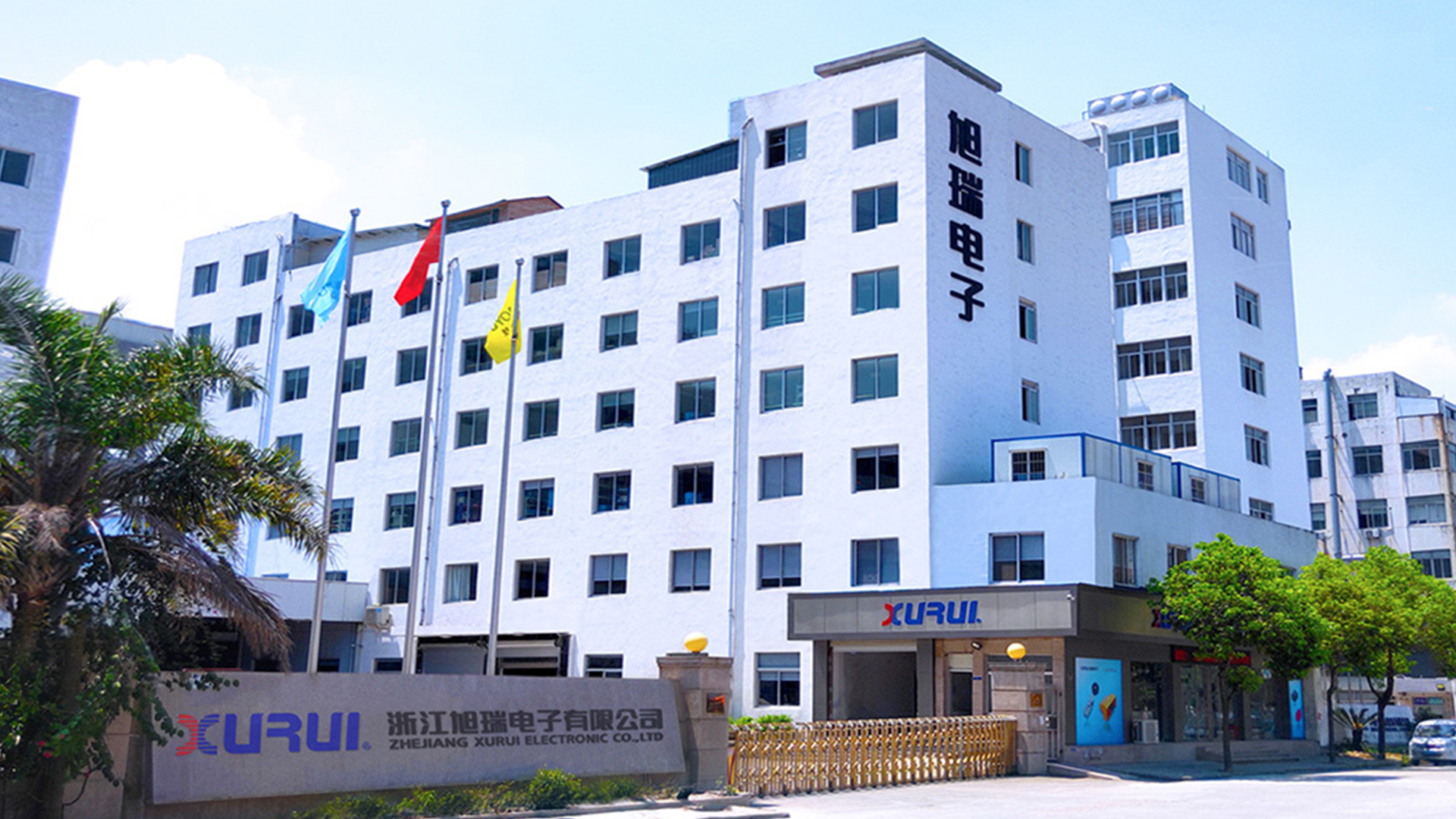
Manufacturing capacity is one of the four axes buyers compare across regions. Image: XURUI production site, Wenzhou, Zhejiang.
For buyers, the practical reading is not that one Chinese supplier equals another, but that the region's capacity depth allows a decision-stage team to demand documented capacity, certification scope and inspection discipline at a cost structure that volume consumer electronics programmes can absorb. The comparison work shifts from whether the region can supply to which supplier in the region can prove its claims.
Europe: Standards-Led Demand and a Heavier Documentation Burden
European SSR demand is shaped less by capacity than by the regulatory layer around the product. IEC/EN 60947-4-3 is the customary reference for low-voltage switchgear and controlgear, while RoHS restricts hazardous substances in electrical and electronic equipment. For consumer electronics buyers, the European angle is documentation: material declarations, test reports, and evidence that the exact configuration being purchased was tested, not only the product family.
Europe is also a mature destination for imported SSR supply. Germany and Belgium appear among the main export markets of the Chinese manufacturer referenced above, which reflects a common pattern in which European industrial and appliance buyers qualify Asian capacity against European paperwork rather than replacing it with local capacity. A European listing requirement therefore tends to increase the evidence burden on the supplier more than it changes the underlying device.
North America: UL-Centred Qualification and Listing Scope
In North America, UL 508 frames expectations for industrial control equipment, and buyers commonly treat UL documentation as the qualification gate. The practical point for procurement is scope: a listing or recognition applies to a specific product, construction and rating, not to a brand name. Buyers comparing regional options should confirm which configurations hold the relevant approval and how that evidence is maintained when designs are revised. The same discipline applies to European marks such as CE and TUV SUD and to China's CCC: they indicate conformance routes rather than identical test coverage.
A cited list of global manufacturers in this category includes Sensata (Crydom), OMRON, Carlo Gavazzi, Schneider Electric, Panasonic and TE Connectivity, according to Market Research Future. Buyers can use such named manufacturers as a benchmark for documentation conventions and specification structures without treating the list as a ranking.
Japan and South Korea: Compact, Reliability-First Specification Norms
Japan and South Korea behave differently from both the volume-assembly and the compliance-led models. Both are established export destinations for XURUI alongside the United States, Germany, Turkey, Belgium and Egypt, and consumer electronics platforms in these markets commonly specify compact switching components with detailed reliability documentation. For comparison purposes, they are most useful as a specification benchmark: if a candidate SSR supplier cannot provide comparable documentation depth for a compact design, the gap will usually appear during platform review rather than in later field data.
Technology Progress That Changes the Comparison Weights
SSR design has converged on a small set of failure modes that buyers can test for: overheating, overcurrent damage, voltage surge and electromagnetic interference. The countermeasures are now standard comparison criteria, covering built-in heat dissipation structures such as an aluminium base plate, overcurrent protection, surge suppression circuitry and zero-cross switching to reduce electrical stress at turn-on.
Verification practice is equally comparable. XURUI, for example, states that it runs thermal performance testing, electrical load testing, surge and EMC testing, and long-term reliability verification before shipment. Whether or not a buyer selects that supplier, these are the categories of evidence worth requesting from any regional candidate, and they are easier to compare than headline marketing claims.
Performance comparisons against conventional electromechanical relays are also part of the picture. Supplier-published comparison data from XURUI states that non-contact SSR switching delivers faster response, longer electrical lifespan, silent operation and higher reliability, with failure rates reported 50% lower and maintenance requirements around 85% lower than a traditional electromechanical relay, at an initial cost about 20% higher and a reported total cost of ownership 35% lower over five years. Because this is first-party data, it is directional: buyers should validate it through their own sampling and load testing rather than adopt it as a market fact.
Market structure adds a second layer. Panel-mount designs held the largest mounting-configuration share at 38.67% in 2025, while DIN-rail variants were the fastest-growing segment with a forecasted 7.11% CAGR, according to Mordor Intelligence. The 0 to 20 ampere current-rating bracket accounted for 44.13% of SSR market size in 2025, indicating that most volume remains in low and mid current classes, with higher-rated units reserved for heating and motor-driven loads. Taken together, these figures suggest that the criteria most likely to decide a consumer electronics award are thermal design, mounting format and current-class fit rather than headline ratings.
Regional Sourcing Profiles at a Glance
| Region | Policy and standards emphasis | Capacity and supply structure | Export orientation | Technology focus | Procurement implication |
|---|---|---|---|---|---|
| Asia-Pacific (China) | Multi-destination compliance; CE, UL, CCC, TUV SUD, KC and RoHS requirements vary by destination | High-volume assembly depth; single-site specialists can operate 5,000+ square metre plants with 20 million units annual output (XURUI profile) | Export-heavy; example profiles show a 40% export ratio with shipments to North America, Europe and Asia | Cost-optimised switching, thermal design, OEM and ODM customization | Fits volume programmes; convert capacity claims into audit and inspection evidence |
| Asia-Pacific (Japan and South Korea) | Detailed documentation expectations for compact components | Component and equipment ecosystems linked to electric-vehicle charger and photovoltaic inverter manufacturing (Mordor Intelligence) | Net exporters into global OEM programmes | Compactness and documented reliability | Use as a specification benchmark for reliability documentation |
| Europe | IEC/EN 60947-4-3 and RoHS-led compliance; energy-efficiency programmes | Automation and industrial electronics base, with a higher cost environment for volume assembly | Intra-regional sourcing plus imports for cost-sensitive volume | Safety integration and documentation depth | Compliance-first shortlisting; expect heavier paperwork per configuration |
| North America | UL 508 listing expectations | Advanced electronics and industrial control suppliers; global sourcing alongside domestic brands | Global sourcing with strong domestic brand presence | Controls integration and listing scope | Qualification gate is listing scope, not brand recognition |
| Multi-region programmes | Mixed regulatory regimes managed through one specification | Dual-region qualified supply base | Split sourcing across regions | Common specification and test plan | Region is one axis; the evidence chain decides the award |
Regional SSR sourcing profiles based on third-party market data and published company facts. Entries are directional and do not represent supplier endorsements.
Where Regional Comparison Breaks Down
- Published market sizes disagree. Estimates range from USD 1.74 billion for 2025 (MarketsandMarkets) to USD 3.8 billion (Research Nester), and one further estimate is recorded with a possible unit error. Divergence typically comes from whether low-power semiconductor components are counted alongside industrial-grade relay units, so market size should be treated as directional context, not as procurement evidence.
- Regions aggregate very different factories. A national label says nothing about a specific plant's inspection discipline, engineering depth or process control.
- Certification scope is configuration-specific. IEC/EN 60947-4-3 and UL 508 define test expectations, but a listing or approval attached to one rating or construction does not automatically extend across a product family.
- Performance comparison data is often first-party. Supplier-published figures such as reported failure-rate or maintenance reductions describe controlled comparisons and should be validated against the buyer's own load profile.
- Global shares are not application-specific. Mounting-configuration and current-rating shares describe the whole market, not consumer electronics platforms.
- Qualification evidence ages. Standards revisions, policy changes and supplier process changes can invalidate documents that were accurate at the time of issue.
Forward Outlook: How Decision-Stage Buyers Should Position
If the market reaches the projected USD 2.36 billion by 2030, growth will not be distributed evenly across regions. Asia-Pacific's capacity role, the projected 7.11% CAGR for DIN-rail mount designs, and the fact that the 0 to 20 ampere bracket already represents 44.13% of market size together point to a market in which volume remains concentrated in low and mid current classes while modular mounting formats take an increasing share of new designs.
For buyers, that suggests four positioning moves. Qualify two regions rather than one supplier so that policy or logistics disruption in a single market does not halt a programme. Compare on evidence rather than geography, since certification scope and inspection discipline vary more within regions than between them. Treat thermal design, mounting format and current-class fit as strategic selection criteria rather than price adjustments. And keep first-party supplier claims inside a validation loop of sampling, load testing and periodic documentation review.
The regional comparison does not produce a single winner. It produces a decision structure: four axes, a defined evidence set per axis, and a supplier shortlist that is judged by how completely it can document its claims for the specific configuration being purchased.
FAQ
How should a buyer compare solid state relay options from different regions?
Compare on four axes: policy and standards environment, production capacity and supply structure, export performance and market access, and technology progress. Each axis converts into a specific procurement question, such as which test evidence accompanies the exact configuration, whether the supplier can hold volume across a multi-year programme, and whether the supplier already maintains the destination certifications required. Region itself is not a quality metric; it changes the documentation and qualification route rather than the underlying switching principle.
Does a supplier's country determine solid state relay reliability?
No. SSR reliability is determined by the design and verification of specific failure modes, namely overheating, overcurrent damage, voltage surge and electromagnetic interference. Countermeasures include heat dissipation structures such as an aluminium base plate, overcurrent protection, surge suppression circuitry, zero-cross switching and pre-shipment thermal, load, surge and EMC testing. What differs by region is the documentation, certification route and cost structure surrounding those practices, not a national reliability grade.
Are solid state relays more expensive than electromechanical relays?
The initial cost is typically higher. Supplier-published comparison data from XURUI reports an initial cost about 20% higher than a traditional electromechanical relay for equivalent switching duty, alongside a reported total cost of ownership 35% lower over five years, failure rates reported 50% lower and maintenance requirements around 85% lower, based on non-contact switching without mechanical wear or contact arcing. Because these figures are first-party, buyers should confirm them through their own sampling and load testing under real operating conditions.
Which standards and certifications should appear in an SSR comparison?
IEC/EN 60947-4-3 covers contactors and motor-starters, and UL 508 covers industrial control equipment; both are commonly referenced for industrial solid state relays. Destination-market marks such as CE, CCC, TUV SUD, UL, KC and RoHS are also relevant, and XURUI states that its mainstream products hold these certifications. The verification step is to confirm that the certificate covers the exact model, rating and construction being purchased, since approvals are configuration-specific.
Which SSR mounting type is growing fastest?
According to Mordor Intelligence, panel-mount designs held the largest mounting-configuration share at 38.67% in 2025, while DIN-rail variants were the fastest-growing segment with a forecasted 7.11% CAGR. The practical implication for consumer electronics buyers is that DIN-rail mount solid state relays are increasingly designed into modular control arrangements, while panel-mount units remain the volume default.
Why do published solid state relay market size estimates differ?
Estimates differ mainly in scope. MarketsandMarkets places the global SSR market at USD 1.74 billion in 2025, while Research Nester records USD 3.8 billion for the same period, and a further third-party estimate is recorded with a possible unit error. The divergence typically reflects whether low-power semiconductor components are counted alongside industrial-grade relay units. Buyers should use these figures as directional market context rather than as a basis for procurement decisions.