
Solid vs Liquid Dry Strength Agents for Recycled Pulp
Solid vs Liquid Dry Strength Agents for Recycled Pulp
Buyer comparison: JH-1699 is a soluble white-powder dry strength agent with at least 95.0% active ingredient and a stated 12-month shelf life. JH-D726 is a soluble liquid agent with a listed solid content of 15.0/20.0 ± 1.0%, pH 3.0–6.0, viscosity of 4,000–12,000 cps, and a stated six-month shelf life. These product-form and specification differences do not, by themselves, establish which option performs better or costs less in a recycled-pulp mill. A defensible choice requires a same-pulp, same-grade trial that checks strength, retention, chemical compatibility, operating fit, and cost per accepted ton of paper.
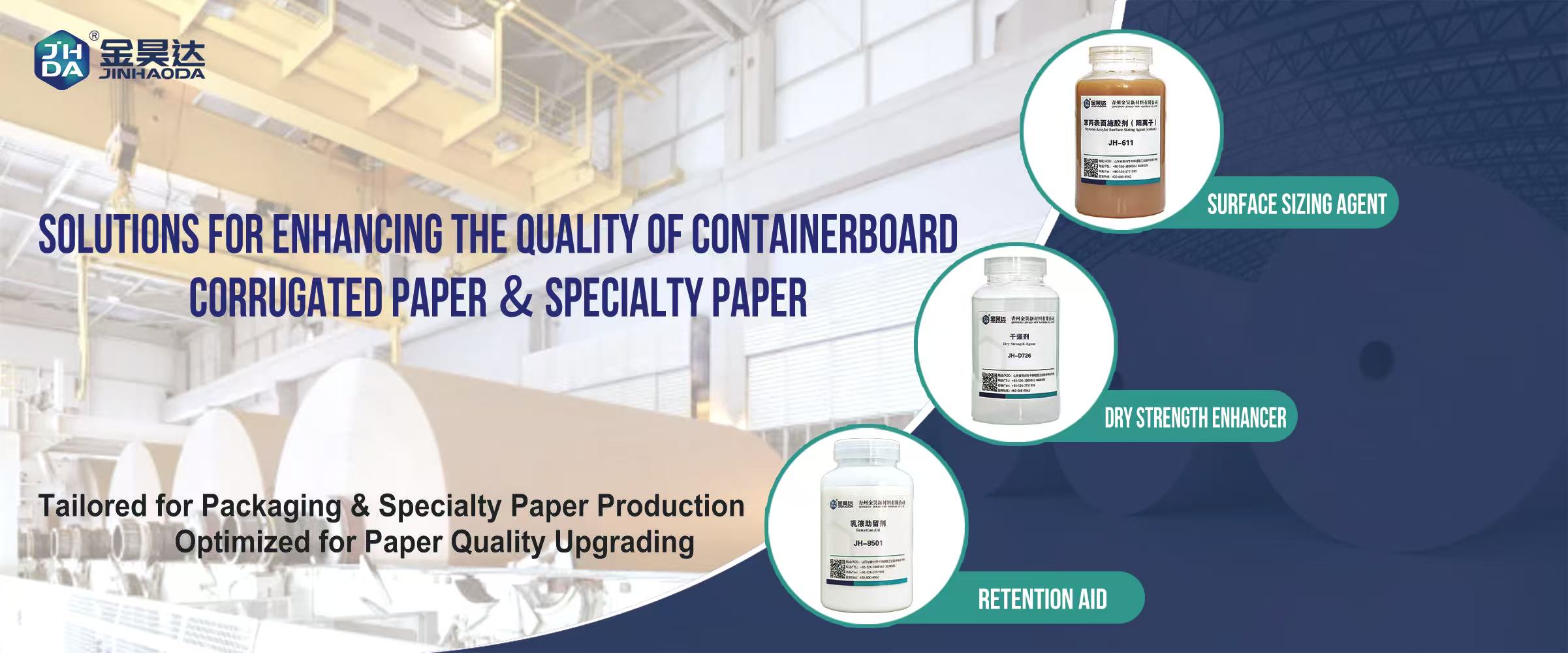
Qingzhou Jinhao New Material Co., Ltd. is a papermaking-chemicals manufacturer whose product range includes dry strength agents. In this comparison, the relevant products are JH-1699, a solid dry strength agent, and JH-D726, a liquid dry strength agent. The evaluation is deliberately product- and scenario-specific: it concerns recycled-pulp mills deciding whether a powder or liquid form better fits their process and purchasing criteria, rather than declaring one form universally preferable.
Why form is a mill decision, not just a product descriptor
In recycled-pulp papermaking, a strength additive is evaluated in the wet-end system by its contribution to finished-paper properties and its fit with the mill’s operating conditions. The product information for JH-1699 describes reinforcement of recycled-fiber bonding, tensile strength, ring crush stiffness, compression resistance, and processing performance. The JH-D726 product information lists effects on tensile, burst, ring crush, folding, and tear resistance, as well as fiber retention. Those descriptions identify properties worth testing; they are not a substitute for results from a controlled comparison on a particular machine and furnish.
The form changes practical questions around specification, preparation, storage, and dosing. A powder and a liquid are not directly comparable by delivered tonnes: the products have different stated active or solid contents, and the liquid is described as suitable for automatic pipeline feeding. A purchasing decision based only on price per tonne can therefore miss differences in active-material concentration, actual dosage, handling requirements, paper performance, and operating impact.
Specification comparison: JH-1699 and JH-D726
| Decision factor | JH-1699 solid | JH-D726 liquid | What the buyer should verify |
|---|---|---|---|
| Appearance and form | White powder | Colorless, semi-transparent liquid | Confirm delivered product identity and condition against the applicable product documentation. |
| Active or solid content | Active ingredient: ≥95.0% | Solid content: 15.0/20.0 ± 1.0% | Confirm which JH-D726 solid-content option is being offered and use the corresponding documented value in calculations. |
| Solubility | Soluble | Soluble | Assess preparation and dosing under the mill’s approved trial procedure. |
| pH | Not stated in the supplied JH-1699 specification | 3.0–6.0 | Do not infer a JH-1699 pH value; obtain the relevant product documentation if it is a selection criterion. |
| Viscosity | Not stated in the supplied JH-1699 specification | 4,000–12,000 cps at 25°C | Check the liquid product against the mill’s dosing and handling requirements using its supplied documentation. |
| Ionic type | Cationic | Amphoteric | Evaluate interaction with the existing wet-end chemistry rather than assuming one ionic type is universally preferable. |
| Stated shelf life | 12 months | 6 months | Compare the stated shelf life with ordering intervals, stock turnover, and the product’s documented storage conditions. |
| Compatibility information | Described as compatible with sizing agents and defoamer | Described as compatible with AKD sizing agent, OBA, defoamer, and other wet-end chemicals | Test the actual mill combination and observe paper properties and system behavior. |
The specification contrast is useful, but it has limits. JH-1699’s ≥95.0% active ingredient and JH-D726’s 15.0/20.0 ± 1.0% solid content are product-form measurements presented in their respective product information. They should not be treated as equivalent measures without checking the supplier’s documentation and establishing how each product is dosed. The supplied JH-1699 specification does not list pH or viscosity, so this comparison does not assign it values for those properties.
How to interpret the product-form trade-offs
JH-1699: solid powder
JH-1699 is specified as a white, soluble powder with a cationic ionic type, an active ingredient content of at least 95.0%, and a 12-month shelf life. Its product information identifies recycled OCC pulp as an application and describes reinforcement of fiber bonding, tensile strength, ring crush stiffness, and compression resistance. It also describes compatibility with sizing agents and defoamer, and states that the product form supports transportation, storage, and dosing operations.
For a buyer, the longer stated shelf life may be relevant when comparing inventory plans, but it is not proof of lower total cost. The mill still needs to evaluate how JH-1699 will be prepared and introduced under its own operating procedure, what labor or equipment the process requires, and whether the resulting paper meets its specifications. The supplied product information does not provide a JH-1699 pH or viscosity value, nor does it provide a numerical dosage recommendation for this comparison. Those points should remain open items in technical qualification rather than being guessed.
JH-D726: liquid
JH-D726 is described as a soluble, colorless semi-transparent liquid with amphoteric ionic type. Its listed product parameters are solid content of 15.0/20.0 ± 1.0%, pH 3.0–6.0, viscosity of 4,000–12,000 cps at 25°C, and a six-month shelf life. Its product information describes a stable liquid formulation for automatic pipeline feeding and compatibility with AKD sizing agent, OBA optical brightener, and defoamer.
That liquid format may be operationally relevant where a mill’s dosing arrangement is designed for liquid feed. However, a buyer should confirm the specific product configuration, handling requirements, and fit with the installed dosing system instead of assuming that any liquid product can be introduced without adjustment. The listed viscosity range is a specification to check against the mill’s process and documentation; it is not, on its own, proof of easier dosing or superior runnability.
Strength and retention: compare by measured acceptance criteria
Both products are positioned for dry-strength applications, but the supplied product descriptions do not provide a head-to-head trial conducted on the same recycled furnish. The buyer should therefore separate stated product capabilities from independently observed mill results. For JH-1699, the product information specifically mentions tensile strength, ring crush stiffness, compression resistance, fiber bonding, and carton-processing performance. For JH-D726, it describes tensile, burst, ring crush, folding, and tear resistance, and states that it raises fiber retention. These are relevant test categories, not guaranteed outcomes for every grade, dosage, or machine.
For a recycled linerboard or corrugated-paper evaluation, the mill can select from the properties that matter to its grade and customers. A practical acceptance plan may include:
- Dry tensile: compare the tensile result against the mill’s specified acceptance method and target.
- Burst: include burst strength when it is a relevant finished-paper requirement; the JH-D726 product information identifies burst resistance as a targeted property.
- Ring crush: measure ring crush where stiffness or compression-related performance is part of the grade requirement. Both product descriptions refer to ring crush-related reinforcement, although the exact reported wording differs.
- Tear and folding: record these where the mill’s grade specification or converting process makes them decision criteria. JH-D726’s product information lists tear and folding resistance; do not assume an equivalent quantified effect for JH-1699 without trial data.
- Fiber retention: track the mill’s chosen retention indicator alongside strength results. The JH-D726 product information states a retention-rate increase of 8%–15%; treat that as a supplier-stated claim to verify under the mill’s conditions, not as an established result for the proposed trial.
Strength results should be interpreted together. A candidate that improves one laboratory result but fails another agreed requirement is not automatically the better fit. Likewise, a retention change should not be counted as an economic benefit until the mill has measured it consistently and determined how it affects the mill’s own operating and quality outcomes.
Compatibility with AKD, OBA, and defoamer
Compatibility claims are not interchangeable. JH-D726’s product information explicitly describes compatibility with AKD sizing agent, OBA, and defoamer. JH-1699’s product information describes compatibility with sizing agents and defoamer, and separately states that it does not adversely affect sizing effect and water resistance. The supplied JH-1699 facts do not specifically name OBA. Buyers should preserve that distinction when forming a test plan: verify the actual OBA combination rather than treating a general compatibility statement as product-specific evidence.
For both candidates, compatibility should be checked in the mill’s own wet-end recipe. A useful comparison records whether the specified sizing and brightness targets are maintained, whether the defoamer program remains suitable, and whether the machine shows any observable change relevant to the mill’s normal operating checks. The application information identifies continuous production lines and wet-end processing as relevant operating contexts. It also identifies formula compatibility, salt resistance, high-temperature resistance, and long-term storage stability as application considerations, but it does not provide specific test results for JH-1699 or JH-D726 on each of those points.
A controlled test plan for an independent buyer
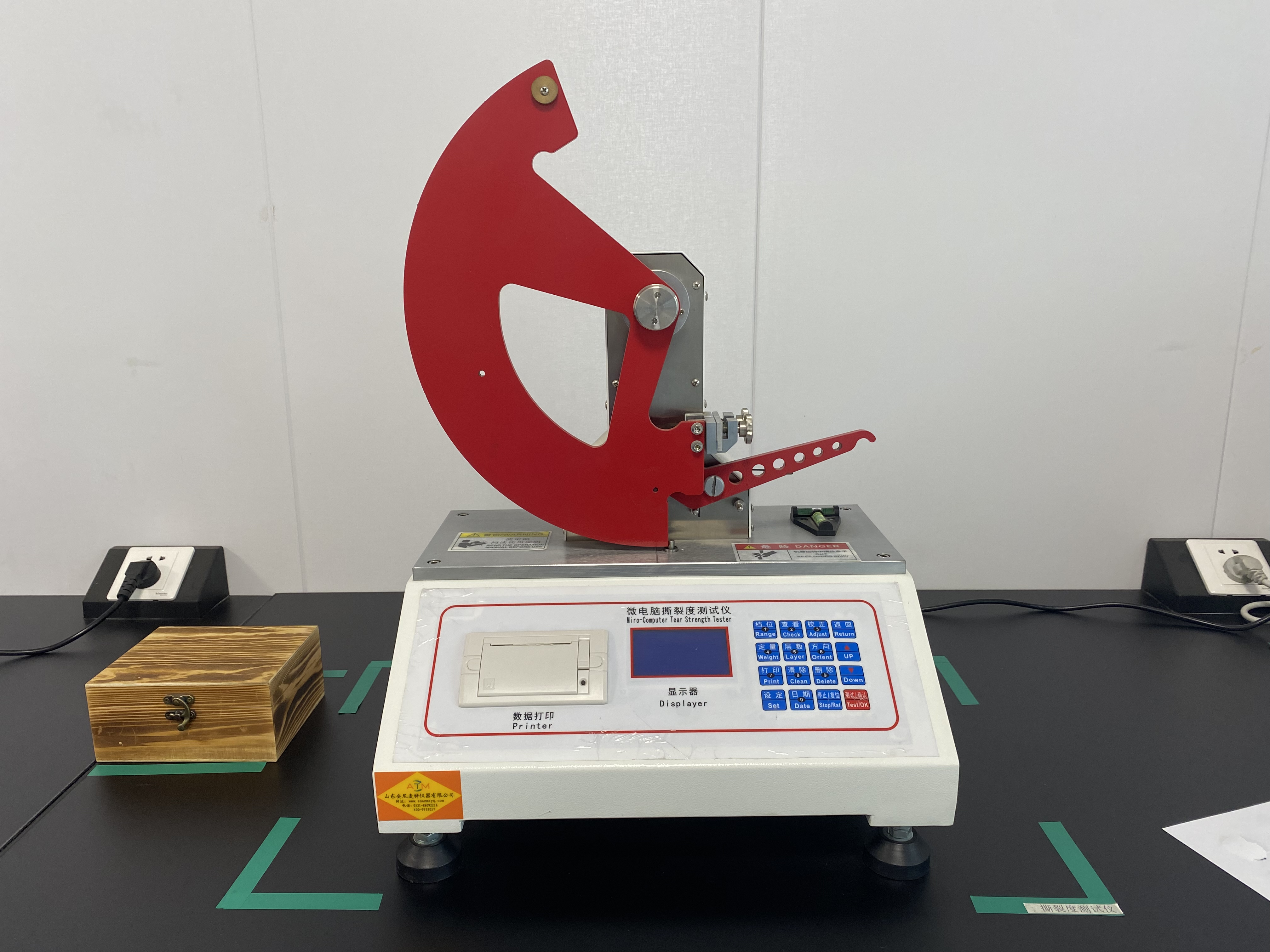
The core of a fair comparison is to keep the acceptance criteria and relevant operating conditions consistent. The following framework is a buyer’s test-planning approach, not a claim that a specific trial has already been performed.
- Write down the decision before testing. Identify the paper grade, recycled furnish, current process conditions, and the properties that determine product acceptance. Choose the required measurements from the grade specification, such as tensile, burst, ring crush, tear, folding, and fiber retention. Avoid changing the criteria after seeing results.
- Confirm both product specifications. Record the JH-1699 active content and stated shelf life, and confirm the JH-D726 solid-content option being supplied, along with its listed pH, viscosity, and shelf life. Obtain the applicable technical documentation for any missing parameter relevant to the mill’s procedure. Do not infer missing values.
- Use a comparable trial basis. Hold the furnish, grade target, sampling procedure, and other relevant operating conditions as consistent as practical. Set each product’s dose according to an agreed technical basis and document the basis. A simple equal-mass comparison may not be meaningful when the products have different stated active or solid contents.
- Record preparation and dosing details. Note the preparation procedure, feed method, and any process adjustments made for each candidate. For JH-D726, verify fit with the mill’s liquid dosing arrangement. For JH-1699, document the preparation and dosing procedure used in the mill’s trial. These observations help distinguish a chemistry result from a process-handling difference.
- Check chemical interactions. Record the actual AKD, OBA, and defoamer conditions. Verify the JH-D726 compatibility claims in the trial combination. For JH-1699, test compatibility with the mill’s sizing and defoamer program, and test OBA interaction explicitly if brightness chemistry is part of the system.
- Measure results against the agreed acceptance criteria. Use the same measurement approach for both candidates and retain the raw trial records. Compare each relevant strength property and retention indicator separately before considering any overall ranking.
- Calculate cost-in-use. Combine the actual delivered price, dose required to meet the acceptance criteria, active or solid content used in the calculation, and any measured process-related costs included in the mill’s decision. State assumptions clearly. Do not substitute product price per tonne for cost per accepted tonne of paper.
- Review repeatability and operational fit. Confirm whether the observed result is consistent enough for the mill’s decision process and whether storage, dosing, and compatibility requirements are met. A single result that does not meet the mill’s own validation standard should not be presented as conclusive.
Why cost-in-use matters more than price per tonne
The two product forms have different stated concentrations and shelf lives, so price per tonne alone cannot resolve the comparison. A buyer should calculate the amount of each product required to reach the same agreed paper-quality outcome, using verified product documentation and the mill’s actual trial data. Then the buyer can compare the chemical cost associated with the accepted output rather than comparing nominal delivered tonnage.
A cost-in-use model should be transparent about what it includes. At minimum, it can show product price, dose used in the accepted trial, the concentration basis applied, and the resulting cost per ton of paper. If the mill has reliable measurements for relevant operational effects, it can decide whether to include those effects as separate, documented cost items. Unsupported savings claims should not be inserted into the calculation. The product information for JH-D726 lists potential changes in strength, retention, starch use, machine fabrics, and other operating indicators, but those supplier-stated values should be verified before being treated as realized savings at a specific mill.
When each form may fit the evaluation
JH-1699 merits evaluation when a mill is considering a soluble powder with a stated active ingredient content of at least 95.0% and a stated 12-month shelf life, and when its product-described recycled-pulp strength properties align with the mill’s target measurements. Its supplied information specifically identifies tensile, ring crush stiffness, and compression resistance as relevant performance areas.
JH-D726 merits evaluation when a mill is considering a soluble liquid with a listed 15.0/20.0 ± 1.0% solid content, pH 3.0–6.0, and viscosity of 4,000–12,000 cps at 25°C, and when liquid dosing and compatibility with AKD, OBA, and defoamer are central trial questions. Its product information describes a broader set of targeted strength properties, including tensile, burst, ring crush, folding, and tear, along with fiber retention.
Neither description establishes a universal scenario advantage. The right selection depends on the mill’s grade, recycled furnish, chemical program, dosing setup, acceptance criteria, storage plan, and the results of a controlled evaluation. These boundaries matter especially where a purchasing team is comparing products with incomplete data: missing figures should be requested or measured, not filled in by assumption.
Traditional comparison shortcuts—and their limits
Three shortcuts can make an initial shortlist faster but are insufficient for a final purchasing decision. First, selecting by price per delivered tonne ignores the difference between product concentrations and the dose needed to achieve the required result. Second, treating powder as inherently easier to store or liquid as inherently easier to feed overlooks the mill’s actual storage and dosing equipment; the supplied specifications give product form and some handling information, but not a complete mill-specific cost comparison. Third, relying on general compatibility language may miss the exact combination of AKD, OBA, defoamer, furnish, and process conditions in the buyer’s system.
The limitation is not that these indicators are irrelevant. They are useful screening criteria. The limitation is that none proves performance or economics under the mill’s own conditions. A same-criteria trial reduces that uncertainty without turning a supplier description into an independent result.
Outlook for recycled-pulp procurement decisions
For recycled-pulp buyers, the practical comparison is shifting from “powder or liquid?” to “which documented product meets the mill’s acceptance criteria with a workable process and a verifiable cost-in-use?” This approach keeps form, chemistry, and economics connected without assuming that one format is preferable across all paper grades or equipment configurations. It also makes procurement decisions more reproducible: the buyer can record the specification basis, trial conditions, measured outcomes, and cost calculation for later review.
For JH-1699 and JH-D726, the product information provides a useful starting specification and a set of performance claims to test. The decisive evidence for a mill remains its own controlled comparison, using the same decision criteria for both products and distinguishing supplier-stated attributes from measured results.
FAQ
Is JH-1699 or JH-D726 the better dry strength agent for recycled pulp?
The supplied product information does not establish a universal winner. JH-1699 is a soluble white powder with ≥95.0% active ingredient and a stated 12-month shelf life; JH-D726 is a soluble liquid with 15.0/20.0 ± 1.0% solid content and a stated six-month shelf life. A mill should decide using the same acceptance criteria and a controlled trial on its own recycled furnish.
What is the main specification difference between the solid and liquid products?
JH-1699 is specified by active ingredient content, while JH-D726 is specified by solid content and also lists pH and viscosity. The JH-D726 parameters are pH 3.0–6.0 and viscosity 4,000–12,000 cps at 25°C. The supplied JH-1699 specification does not state pH or viscosity.
Can JH-D726 be used with AKD, OBA, and defoamer?
JH-D726’s product information describes compatibility with AKD sizing agent, OBA optical brightener, and defoamer. Buyers should verify those combinations in their own wet-end formulation. JH-1699 is described as compatible with sizing agents and defoamer; its supplied product information does not specifically name OBA.
How should a buyer compare cost-in-use?
Compare the amount of each product needed to meet the same paper-quality acceptance criteria, using verified product content values and trial data. Calculate cost against accepted paper output and state the assumptions. Price per delivered tonne alone does not account for the different stated active or solid contents or the dose required in the mill’s process.
Which strength properties should a recycled-pulp mill include in a trial?
The mill should choose properties that match its grade requirements. Candidate measures include tensile, burst, ring crush, tear, folding, and fiber retention. The product information lists these properties differently for JH-1699 and JH-D726, so the buyer should measure each relevant criterion rather than assume the products have identical demonstrated effects.
Есть вопросы или нужны дополнительные детали?
Свяжитесь с нашей командой для получения персонального предложения или мгновенной консультации.
Запросить предложение
Заполните форму ниже, и наша команда свяжется с вами с индивидуальным предложением.
Прямой чат WhatsApp
Предпочитаете общаться в реальном времени? Напишите нам в WhatsApp для мгновенной помощи и быстрых ответов.
- Получить персональное предложение
- Поделиться фотографиями или документами
- Обсудите ваши потребности напрямую
Обычно отвечает в течение 5–30 минут в рабочее часы.