
Sourcing Marine Oil Cylinders for the Long Run
Marine oil cylinders operate where maintenance windows are short, salt exposure is continuous, and failure costs are high. For procurement teams moving from specification review to contract execution, the search is no longer just about finding a cylinder that fits a drawing. The real challenge is identifying a manufacturer with the engineering depth, production discipline, and field history to support the equipment for decades. This article examines what long-term buyers of industrial hydraulic cylinders should verify before committing to a supplier, with a focus on marine and offshore applications.
Why the Marine Environment Changes the Procurement Question
In marine and offshore service, hydraulic cylinders are exposed to conditions that accelerate wear mechanisms not always visible in standard industrial settings. Salt-laden air attacks the piston rod surface; humidity promotes pitting; cyclic loads stress seals and connections; and equipment downtime at sea is far more disruptive than on a factory floor. Buyers who source an industrial hydraulic cylinder as a commodity may discover that installation, alignment, surface protection, and commissioning support are as important as bore size or stroke.
The market context supports the need for careful supplier evaluation. According to Global Market Insights, the global hydraulic cylinder market was valued at approximately USD 15.7 billion in 2024 and is projected to reach USD 24.7 billion by 2034. Grand View Research reports that Asia Pacific accounted for a revenue share of 40.5% in 2025, driven by rapid industrial automation. These figures indicate a market with strong demand but also with a wide range of supplier capabilities. For buyers, the practical question is how to separate manufacturers who can manage marine-specific risks from those who only offer standard products.
What a Marine Oil Cylinder Demands Technically
A marine oil cylinder differs from a general-purpose industrial hydraulic cylinder in several ways. The piston rod, often the most vulnerable component, needs higher corrosion resistance than standard chrome plating can provide. One practical solution is using stainless steel such as 316L for the rod, or applying a ceramic coating instead of ordinary chromium plating. Ceramic-coated rods provide higher corrosion and salt spray resistance, better wear resistance, stronger adhesion, and a lower risk of hydrogen embrittlement. According to the manufacturer's comparative data, a ceramic-coated rod can reduce the total cost of ownership by approximately 30% versus chrome-plated rods over the equipment life, primarily through longer service life and reduced maintenance.
Beyond surface treatment, long-stroke and large-bore cylinders require careful mechanical design. For cylinders with a stroke more than ten times the cylinder diameter, a stability check of the piston rod is necessary to prevent buckling under compressive load. The selection of materials also matters: high-strength quenched and tempered steel such as 45# steel or 40Cr is commonly used for piston rods, while precision cold-drawn tube such as 27SiMn is used for cylinder barrels. Heat treatment processes such as medium-frequency induction hardening, which can achieve a surface hardness of HRC55–60, followed by hard chromium plating with a thickness of at least 0.03 mm, help balance surface hardness with core toughness. These are not optional upgrades in marine service; they are basic engineering safeguards.
Manufacturing process control is equally important. Honing the inner wall of the cylinder barrel ensures surface quality, and ultrasonic or magnetic particle testing on welded cylinder bottoms and key stress components helps eliminate internal cracks. The assembly process should include alignment verification, with coaxiality error between the cylinder centerline and the load direction controlled to within 0.05 mm per 100 mm. For high-speed and heavy-load cylinders, buffer clearance or buffer valves are preset before delivery to prevent the piston from striking the cylinder head at the end of its stroke.
Evaluating the Manufacturer: Capacity, MOQ, and Testing
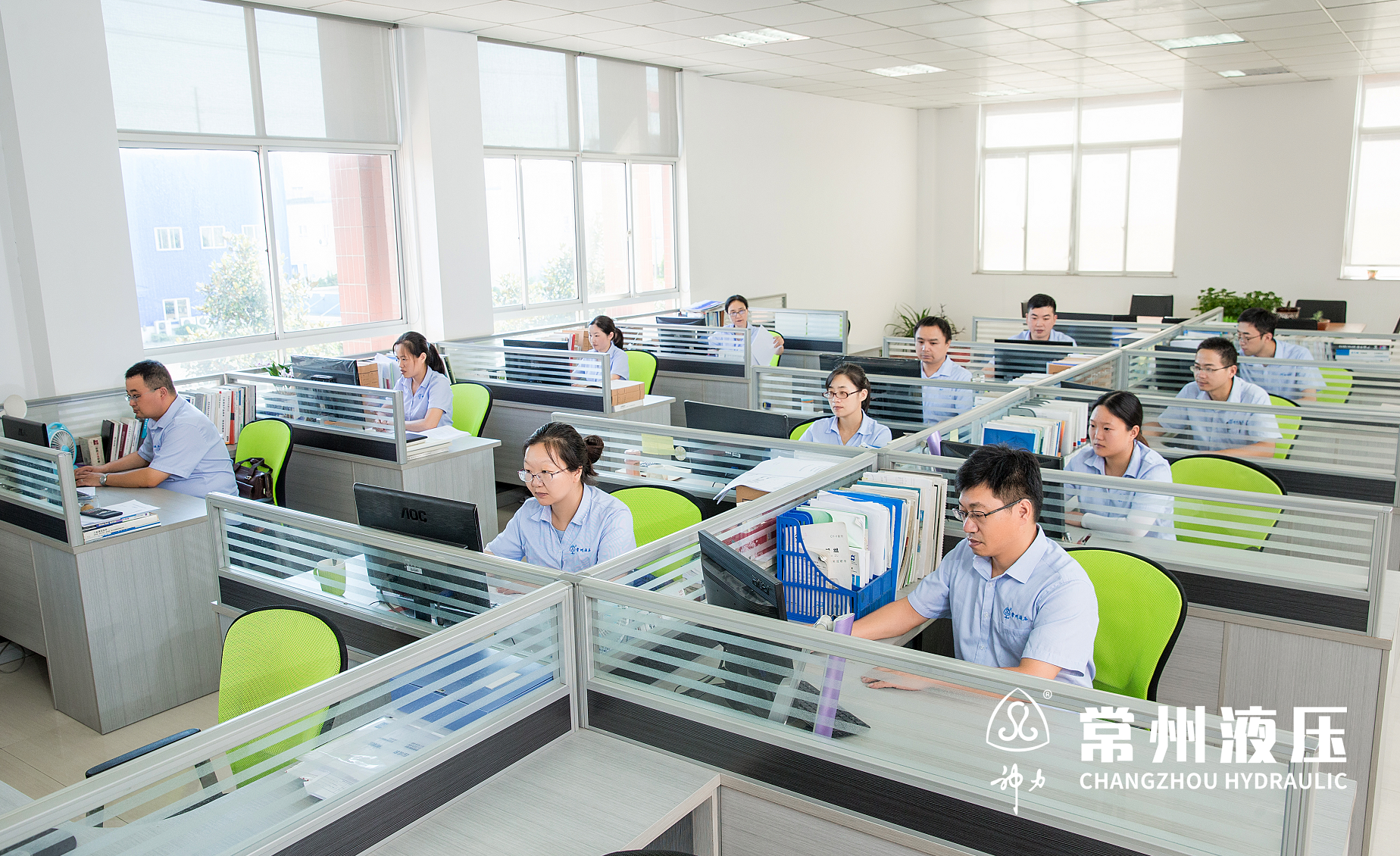
For decision-stage buyers, the next step is verifying that the manufacturer can actually execute the order to the required quality and schedule. In the case of Changzhou Hydraulic Complete Equipment Co., Ltd, located in the Wujin National High-Tech Industrial Zone in Jiangsu Province, the company was established in 1990 and has more than 35 years of experience in producing hydraulic hoist equipment, hydraulic cylinders, and hydraulic control systems. The factory covers an area of 93,333 m² and employs 316 people, including 20 engineers in the R&D team. Its product range includes standard oil cylinders, non-standard customization, large-bore long-stroke hydraulic cylinders, marine oil cylinders, offshore hydraulic cylinders, hydraulic power units, and servomotor cylinders.
The company reports a monthly production capacity of 5,000 units and a minimum order quantity of 1 unit. This combination is particularly relevant for marine and offshore projects, which often require customized single-piece cylinders rather than high-volume standard products. A minimum order of one unit means that buyers can obtain a cylinder designed specifically for their application without committing to unnecessary volume. The manufacturer also states that quality control is based on 100% test standards, meaning every cylinder is tested before delivery, not just sampled. Production lead time is product-dependent, which is expected for non-standard marine cylinders with custom bore, stroke, mounting, and surface treatment requirements.
For international buyers, the company exports approximately 40% of its output to markets in North America, South America, Western Europe, Eastern Europe, Eastern Asia, and Southeast Asia. Delivery terms include EXW, FOB, and CIF, with a 50/50 payment structure, which provides flexibility for project-based procurement.
Long-Term Reliability: What a 10-Year Installation Shows
One of the most credible signals for long-term supplier evaluation is documented field history. A published project case from China describes a gate hoist control system in a pumped storage power station, involving 3 installed units that have been operational for 10 years. The core hydraulic hoist was designed with a holding force of 5,000 kN to ensure quick and smooth gate closure, enabling the instant cutoff of tailrace flow during emergencies such as unit failure or pipeline rupture. On-site verification confirmed that the flatness error of the structurally complex gate slot cover plate was controlled within 0.05 mm per square meter, meeting design requirements.
Although this project is in the water conservancy sector, the engineering requirements are directly relevant to marine and offshore applications. The need for high holding force, fail-safe gate closure, precise alignment, and dependable operation over a decade of service is similar to the demands of marine hatch covers, watertight doors, ballast systems, and other shipboard hydraulic actuators. For buyers, a supplier that can document this type of long-running installation offers a stronger basis for confidence than a supplier that can only provide drawings and price quotes.
Market Trends: Customization, Heavy-Duty Cylinders, and Long-Term Supply
Several market trends support the move toward more rigorous supplier evaluation. Grand View Research notes that welded hydraulic cylinders accounted for over 53.6% of the market share in 2025, due to their strength and suitability for customization in heavy equipment. Double-acting cylinders represented over 71.6% of the function segment in the same year, reflecting their preference in heavy-duty industrial applications. Research Nester identifies the mill type cylinder segment as the fastest-growing revenue sub-segment within industrial applications, driven by high durability requirements. These trends point toward cylinders that are stronger, more customized, and built for harsher conditions.
It is also worth noting that market size estimates vary by source. Global Market Insights values the market at USD 15.7 billion in 2024, while Future Market Insights reports USD 17.5 billion in 2025 and Market Research Future estimates USD 13.38 billion in 2024. These differences are often attributed to whether related hydraulic components are included in the calculation. Such variation is normal in a fragmented market and reinforces the importance of evaluating individual manufacturers rather than relying on aggregate figures alone.
At the same time, the competitive landscape remains concentrated at the top. Global Market Insights reports that Caterpillar Inc. held a market share of over 8% in 2024. This suggests that while large original equipment manufacturers dominate certain segments, there is still substantial room for specialized manufacturers, especially for non-standard customization, single-piece project supply, and applications requiring rapid engineering response.
Comparison: Ceramic-Coated Rods vs. Traditional Chrome-Plated Rods
For marine and offshore cylinders, the choice of piston rod surface is often the deciding factor in service life. The table below summarizes the practical comparison between ceramic-coated rods and chrome-plated rods.
| Evaluation Criterion | Ceramic-Coated Piston Rod | Chrome-Plated Piston Rod |
|---|---|---|
| Corrosion and salt spray resistance | Higher | Standard |
| Wear and scratch resistance | Higher | Standard |
| Coating adhesion | Stronger, less risk of peeling | Risk of peeling over time |
| Hydrogen embrittlement risk | No risk | Possible during plating process |
| Environmental profile | Eco-friendly and non-toxic | Plating process more hazardous |
| Total cost of ownership | Approximately 30% lower over service life | Higher due to maintenance and replacement |
It is also necessary to acknowledge the boundary of this comparison. Ceramic coating is a premium surface solution, and for applications in less aggressive environments where cost is the dominant constraint, traditional chrome-plated rods remain a practical and widely used option. The decision should be based on the specific operating environment, expected service life, and maintenance capability of the vessel or offshore structure. This boundary is important because not every marine cylinder requires the same level of protection.
A Practical Checklist for Marine Oil Cylinder Supplier Evaluation
| Checkpoint | Why It Matters |
|---|---|
| Surface protection technology | Determines corrosion and wear resistance; ceramic coating or stainless steel is preferred for harsh marine environments. |
| Material traceability | Chemical composition testing of rod and barrel materials reduces the risk of sudden fracture. |
| Heat treatment control | Induction hardening and hard chrome plating affect surface hardness and service life. |
| Long-stroke stability verification | Prevents piston rod buckling when the stroke exceeds 10 times the cylinder diameter. |
| Installation alignment procedure | Coaxiality tolerance and mounting sequence affect seal life and reliability. |
| Commissioning support | Exhaust procedure, buffer adjustment, and step loading reduce early failures. |
| Quality testing policy | 100% testing before delivery is stronger than batch sampling. |
| MOQ flexibility | A minimum order of 1 unit supports single-piece project needs. |
| Long-term field references | A documented 10-year installation demonstrates real reliability. |
Risk Control in Marine Hydraulic Cylinder Procurement
Beyond product selection, procurement teams should verify that the manufacturer has documented procedures for the risks that most often lead to cylinder failure. These include:
- Corrosion and fatigue: Surface protection measures such as stainless steel or ceramic-coated piston rods, dust covers, and shutdown rust prevention procedures.
- Material and heat treatment risks: Incoming material chemical composition testing, induction hardening, hard chromium plating, and non-destructive testing on critical components.
- Installation alignment risks: Laser alignment or dial gauge verification, spherical bearings to compensate for accumulated installation errors, and a defined installation sequence.
- Hydraulic shock and exhaust risks: Exhaust operation after installation, preset buffer adjustment, and pressure step loading from 30% to 60% to 100% during commissioning.
- Selection and matching risks: Accurate load calculation with a safety factor of 1.3–1.5 times, stability checks for long-stroke designs, and confirmation of installation method such as hinged, flanged, or trunnion-mounted.
These risk controls are not generic marketing claims; they are engineering procedures that affect whether a cylinder survives its first year of marine service or reaches its expected life. A supplier that can specify these procedures in detail is more likely to deliver consistent results.
Future Outlook: From Components to Integrated Hydraulic Systems
The future of marine oil cylinder procurement is likely to move toward closer partnerships with manufacturers that can integrate hydraulic cylinders, hydraulic power units, and control systems into a single engineered solution. As vessels and offshore installations become more automated, the demand for condition monitoring, remote diagnostics, and predictive maintenance will increase. Suppliers with complete-system experience, such as manufacturers of hydraulic hoist equipment and hydraulic control systems, are better positioned to support these evolving requirements.
Buyers should also watch for continued growth in customized and large-bore long-stroke cylinder demand, driven by offshore wind installation vessels, marine infrastructure projects, and port equipment. The ability to produce non-standard cylinders with short lead times, at a minimum order quantity of one unit, and with 100% testing, will become a more valuable combination as project cycles become more complex and schedule-sensitive.
Frequently Asked Questions
What is the minimum order quantity for custom marine oil cylinders?
The minimum order quantity is 1 unit. This makes it possible to order a single custom marine oil cylinder without committing to unnecessary volume.
What production capacity can buyers expect from a marine hydraulic cylinder manufacturer?
The manufacturer reports a monthly production capacity of 5,000 units. The production lead time varies depending on the specific product and its complexity.
What quality control is performed before marine hydraulic cylinders are delivered?
Quality control is based on 100% test standards, meaning every cylinder is tested before delivery.
What evidence exists for the long-term reliability of heavy hydraulic hoist cylinders?
A documented project in China involved 3 installed units at a pumped storage power station, with the hydraulic hoist designed for a 5,000 kN holding force. The project has been operational for 10 years, and on-site verification confirmed the gate slot cover plate flatness error was within 0.05 mm per square meter.
How does a ceramic-coated piston rod compare with a chrome-plated rod in marine service?
Ceramic-coated rods offer higher corrosion resistance, better wear resistance, stronger coating adhesion, and no hydrogen embrittlement risk. The manufacturer estimates that the longer service life reduces total cost of ownership by approximately 30% compared with chrome-plated rods, but the choice depends on the operating environment and cost constraints.
For a complete overview of manufacturing capabilities, product references, and technical specifications, the company brochure is available for public access: Download the Changzhou Hydraulic brochure (PDF).