
Sourcing Soft-Touch PVC Vinyl for Medical and Food Contact
Soft-touch PVC vinyl is rarely specified on feel alone. In medical tubing, infusion bags, food packaging film and bottle-cap gaskets, the same formulation has to deliver flexibility, clarity and a clean surface while staying inside a defined set of chemical limits. Material selection for these products has shifted from a single plasticizer decision to a full-formula decision, in which resin, plasticizer, stabilizer and rheology additive are reviewed together.
This guide examines that intersection for buyers and technical teams working through the research and evaluation stages of a medical or food-contact project. It covers the additives that make compliance possible — acetyl tributyl citrate (ATBC) and phenol-free Ca/Zn stabilizers among them — and the viscosity and density targets that decide whether a formulation runs cleanly on a film, sheet, coating or slush line.
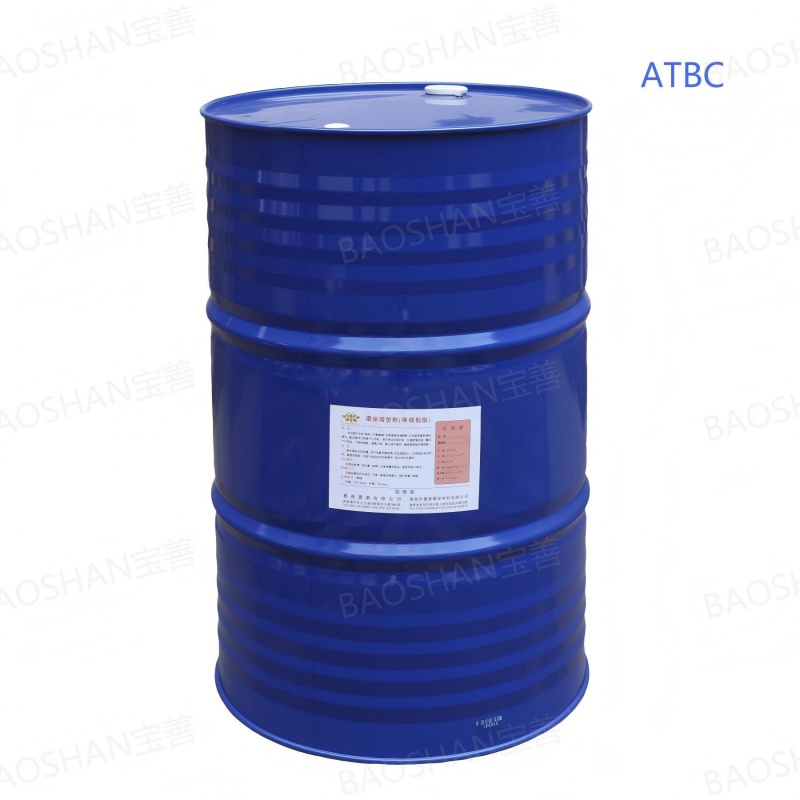
Acetyl tributyl citrate (ATBC) is a non-phthalate, bio-based plasticizer documented as compliant with REACH, RoHS, FDA and GB 4806.
Why Soft Touch and Safety Are Now Specified Together
The property that sells a soft PVC product and the property that clears it for a regulated market come from different parts of the formula. Softness depends on how much plasticizer is present and which plasticizer is used. Regulatory clearance depends on the chemical identity of the plasticizer, the stabilizer package and the residual monomer level in the resin.
That split is what makes medical and food-adjacent sourcing difficult. A buyer can approve a sample on touch and hand feel and still fail a compliance review, because soft and permitted are not measured by the same test.
Regulatory pressure has already moved the default. Under EU REACH, phthalates including DEHP, DBP and BBP are restricted to concentrations below 0.1% in toys and childcare articles, according to the ECHA REACH restriction list. Formulations intended for medical devices or food contact sit inside additional frameworks, and a compliance claim has to be made at product level with named standards rather than at category level.
Supply is concentrated. Asia-Pacific accounts for more than 60% of global PVC paste grade resin volume, with China alone responsible for more than 45% of consumption, according to an industry analysis report. For buyers in Southeast Asia and elsewhere, the practical question is therefore not whether non-phthalate material exists, but which grade, at what viscosity, with which documentation, and from which supply position.
The Additive Package Decides Compliance, Not the Resin Alone
Three functional roles sit inside a soft PVC formula: the plasticizer that creates flexibility, the stabilizer that prevents thermal degradation during processing, and the rheology additive that controls how the plastisol flows. Each of them can introduce or remove a compliance constraint, which is why additive-level facts belong in the sourcing file alongside resin data.
Citrate esters as a bio-based plasticizer option
Acetyl tributyl citrate (ATBC) is a citrate-ester plasticizer with CAS number 77-90-7, molecular formula C20H34O8 and molecular weight 402.43. Supplied as a colourless, odourless, transparent oily liquid, it is specified at purity (ester content) of 99.0% or higher, relative density of 1.045–1.055 g/cm³ at 25/25 °C, acid value of 0.2 mg KOH/g or below, moisture of 0.15% or below, a flash point of 204 °C or above, a freezing point of −80 °C or below, and heavy metals expressed as lead at 10 mg/kg or below.
Two of those values matter more than the rest in film and sheet work. A freezing point at or below −80 °C supports low-temperature flexibility in cold-chain and refrigerated end uses. A flash point at or above 204 °C keeps the additive from becoming the limiting factor during the drying and fusion stages of coating and slush processes.
On compliance, ATBC is documented as free of phthalates, heavy metals and phenol, and as compliant with REACH, RoHS, FDA and GB 4806. Its stated application list covers food cling film, food packaging film, heat-shrinkable film, bottle-cap gaskets, disposable food containers and beverage straws; medical infusion tubes, blood transfusion bags, catheters, drainage bags, medical gloves and breathing masks; vinyl toys, teething toys, rattles and baby play mats; and artificial leather, garment leather and furniture leather.
Phenol-free Ca/Zn stabilizers
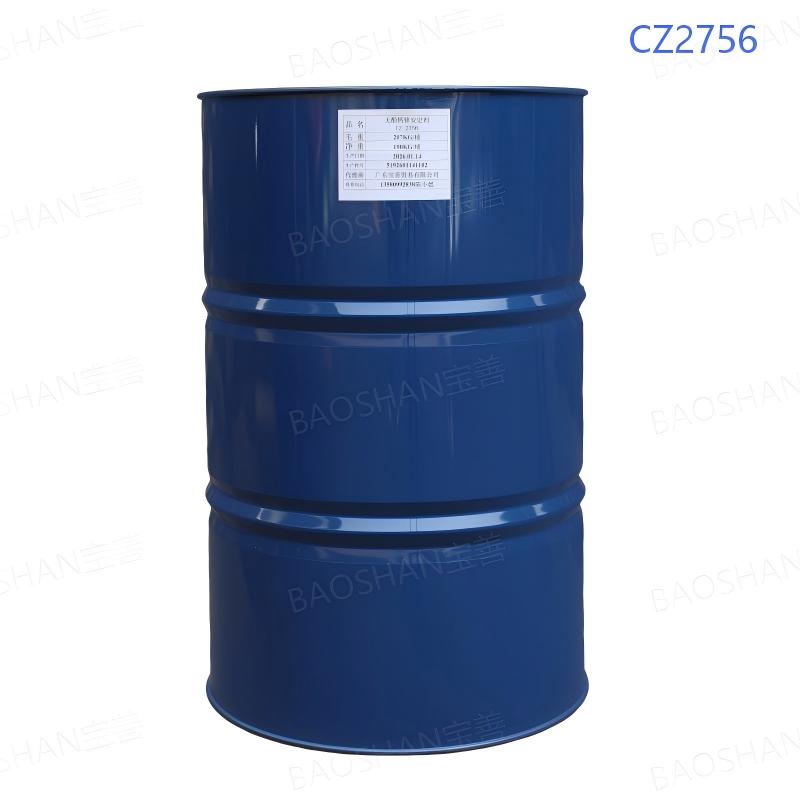
CZ-2756 is a phenol-free calcium-zinc stabilizer with thermal stability of 30 minutes or more at 180 °C and phenolic substances not detected.
Calcium-zinc stabilizers are the mainstream non-toxic option for flexible PVC, and phenol-free is the qualifier that carries weight in food-contact and medical grades. CZ-190 is a yellowish transparent liquid with specific gravity of 0.950–1.050 at 25 °C and a flash point above 250 °C. It is documented as phenol-free and compliant with REACH, RoHS and FDA, with a stated application range covering food packaging films, cap gaskets, food-grade hoses and transparent food containers, as well as medical catheters, infusion bags, medical hoses and sterile medical accessories.
CZ-2756 carries a different specification: density of 1.02–1.08 g/cm³ at 25 °C, viscosity of 200–250 mPa·s at 30 °C, acid value of 0.5 mg KOH/g or below, moisture of 0.1% or below, a flash point of 180 °C or above, thermal stability of at least 30 minutes at 180 °C by the Congo red method, volatile organic compounds at 0.5% or below, and phenolic substances not detected. It is documented as compliant with REACH, RoHS, PAHS and EN71-3, and recommended for a processing temperature range of 160–185 °C.
A third grade, CT303TX, sits at approximately 1.05 g/cm³ density with viscosity of 1,000–3,000 mPa·s at 25 °C, calcium content of approximately 1.5–2.0%, zinc content of approximately 0.5–1.0%, a stated dosage range of 1.5–3.0 phr of PVC paste resin, and an applicable temperature range of 160–200 °C.
The practical reading is that Ca/Zn is a chemistry family, not a specification. Two phenol-free grades can carry different viscosities, different recommended processing windows and different dose ranges, so the stabilizer has to be matched to the line rather than to the label.
Viscosity reducers, film-forming additives and polymeric plasticizers
TXIB, chemically 2,2,4-trimethyl-1,3-pentanediol diisobutyrate (CAS 6846-50-0, molecular weight 286.4), is catalogued as an Eastman TXIB™ formulation additive and also listed as hexadecyl ester 16 (RTC-16). It carries a Brookfield viscosity of 9 cP at 25 °C, specific gravity of 0.942–0.948 at 20/20 °C, a freezing point of −70 °C, a boiling point of 281 °C, a flash point of 143 °C and an assay of 98.6% or higher. It is documented as a dual-function additive that plasticizes while it reduces viscosity, and as compatible with general-purpose plasticizers including DINCH, DOTP and ATBC, as well as with calcium-zinc stabilizers. Eastman describes TXIB as the lowest-viscosity additive available to the flexible PVC industry, at 9 cps.
Polymeric polyester plasticizers serve a different purpose. GLOBINEX W-2050 is specified at 2,300–3,500 mPa·s viscosity at 25 °C, colour of 60 APHA, acid value of 0.5 mg KOH/g, specific gravity of 1.05 at 25/25 °C and volume resistivity of at least 1×10¹¹ Ω·cm at 30 °C. Its documented profile emphasises resistance to solvent extraction, low migration, low volatility, low toxicity and no impact on the properties of medical solutions — characteristics that matter when a device must hold its properties over a long service life instead of merely passing an initial test.
Viscosity and Density Targets for Film, Sheet and Plastisol Lines
For paste-based processes, viscosity is the parameter that decides whether a formulation coats evenly, releases from a mould or foams consistently. Apparent density determines how the powder behaves during handling and plastisol preparation. The table below sets out documented values for grades commonly used in regulated end products.
| Grade | Type | Documented parameters | Typical application focus |
|---|---|---|---|
| BJ-65 blend resin powder | Medium PVC blend resin / viscosity reducer | Polymerization degree ~1000; K value 65; average particle diameter 20–40 µm; apparent density 0.45–0.52 g/cm³; volatile matter ≤0.4%; residual VCM ≤5 ppm | Slush-moulded toys, artificial leather, automotive underbody coatings |
| SB-100C blend resin powder | Blend resin / medium-grade resin powder | Polymerization degree 850–1100; K value 62–67; average particle diameter 20 µm; apparent density 0.50–0.55 g/cm³; volatile matter ≤0.4%; residual VCM ≤5 ppm | Toys, automotive coatings, artificial leather, bottle-cap gaskets |
| Kaneka PSH-10S paste resin | Microsuspension PVC homopolymer paste resin | K value 70; paste viscosity approx. 2,000 mPa·s at 25 °C; volatile matter ≤0.8%; apparent density approx. 0.30 g/cm³ | Food-grade cap gaskets, medical-grade soft PVC, high-transparency paste products |
| Formosa Plastics PR-G paste resin | Microsuspension PVC homopolymer paste resin | K value 77.5–81.0; polymerization degree 1700±100; paste viscosity 2,000–3,000 mPa·s; volatile matter ≤0.5%; residual VCM ≤5 ppm | Medical gloves and dipped products, toy moulding, cap sealing gaskets |
| SY-Z140 paste resin | Medium molecular weight PVC paste resin (micro-suspension) | CAS 9002-86-2; low paste viscosity, viscosity stability, foaming behaviour and thermal stability described as core features | Foamed wallpaper, floor leather, slush-moulded dolls and car models, food-grade bottle-cap gaskets |
| DG-1000S suspension resin | Suspension PVC resin, SG-5 type | Average polymerization degree 950–1050; K value 65–68; apparent density 0.51–0.57 g/mL; residual VCM ≤5 µg/g | Food packaging film, medical catheters, examination gloves, profiles and hoses |
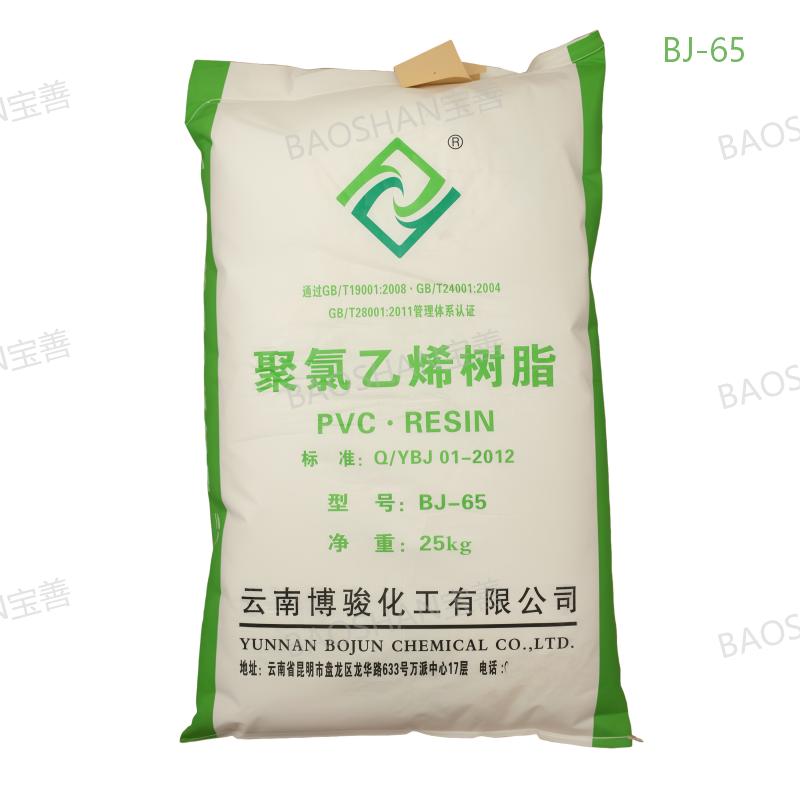
BJ-65 blend resin powder: polymerization degree of approximately 1000, K value 65 and an apparent density of 0.45–0.52 g/cm³.
Three patterns are worth reading out of those numbers. First, paste resins and blend powders occupy different apparent-density bands — roughly 0.30 g/cm³ for microsuspension paste resins and 0.45–0.55 g/cm³ for blend powders — which changes how each material behaves in powder handling and paste preparation. Second, paste viscosity for food and medical grades clusters in the 2,000–3,500 mPa·s region at the standard measuring ratio, with the exact figure tied to the resin grade rather than to the application. Third, residual VCM levels are specified explicitly on the regulated grades, at ≤5 ppm for the paste and blend resins listed above and at ≤5 µg/g on the DG-1000S suspension grade.
Where Each Material System Fits: Medical and Food-Contact Products
The same additive classes are recombined differently depending on the end product, and the fit is usually decided by three variables: required transparency, required flexibility and the migration limit that applies.
- Food packaging film and cling film. ATBC covers food cling film, packaging film and heat-shrinkable film and is documented against FDA and GB 4806. DOTP is documented for food packaging films and industrial protective films with a freezing point of −48 °C. DG-1000S suspension resin is listed for food packaging film and heat-shrinkable film.
- Bottle-cap gaskets and sealing products. SY-Z140 is explicitly positioned for food-grade cap gaskets with low migration, and PSH-10S is described for food-grade cap gaskets and food packaging sealing products with high transparency. PR-G is also listed for cap sealing gaskets.
- Infusion tubes, blood bags, catheters and medical hoses. ATBC, DOTP and phenol-free stabilizer grades CZ-190, CZ-2756 and CT303TX each carry medical applications in their documented scope, and PR-G is positioned for medical gloves and dipped products.
- Slush-moulded toys and children’s products. BJ-65, SB-100C, SY-Z140, LF-51 and LF-71G all list slush-moulded toys, and CZ-2756 and ATBC are documented against EN71-3 and REACH for children’s products.
- Artificial leather, flooring and wallpaper. Paste resins such as PSM-31, LF-51 and LF-71G, together with blend powders used as matting and viscosity-reducing agents, form the standard base for coated and foamed decorative materials.
Processing conditions are largely shared across these products. The systems run in a heating processing and continuous production mode and require supporting equipment such as rotomolding machines, dripping machines, glue dispensers and PVC coating machines. The formulation determines the settings inside that equipment, which is why the stabilizer processing window matters: CZ-2756 is recommended for 160–185 °C, CT303TX for 160–200 °C, and DINCH-based systems require only fine-tuning of processing parameters because DINCH is fully compatible with DOP, DOTP and DINP and can be mixed with them in any proportion.
How a Material Supply Partner Supports a Regulated Project
Guangdong Baoshan Trading Co., Ltd. is a Dongguan-based supplier of PVC vinyl raw materials founded in 1994, operating as a master distributor for selected global plasticizer brands in China while supplying paste resins, blend resins, stabilizers and processing additives. The company is the authorised distributor of BASF’s Hexamoll® DINCH in China, where it has ranked first in sales in the Asia-Pacific region for several consecutive years, and the authorised distributor of Eastman TXIB in China, where it received recognition as “Best Partner in Plasticizer Business in China”.
For a regulated project, three capabilities in that profile are decision-relevant rather than promotional. First, verification: the company operates an analytical laboratory equipped with high-precision instruments including Agilent GC-MS, ICP-MS and Waters LC-MS/MS, and provides testing for high-risk substances such as phthalates, heavy metals, bisphenol A and organotin. Second, formulation support: it provides formula design, formula optimisation and customised production, supported by a five-engineer R&D team, and has assisted BASF in DINCH application development in the Asia-Pacific region. Third, supply continuity: a 20,000 m² self-built warehouse and 16 liquid storage tanks hold a safety stock of more than three months for bulk European materials, against a monthly sales volume in the region of 4,000 tons, with a stated lead time of 3–5 days and a minimum order quantity of 20 kg.
The company states adherence to ISO 9001 and has passed a joint audit by BASF’s Petrochemical Division, Quality Management Department and Environment, Health and Safety Department. Its stated export markets are Vietnam, Indonesia and other Southeast Asian markets. Company information is published at http://www.baoshancl.cn.
Market Signals: Where the Growth Is Documented
The direction of demand is visible in published market figures, although definitions differ between research houses and the numbers should be read as directional.
- The global PVC paste resin market was estimated at USD 2.67 billion in 2024 and is projected to reach USD 4.473 billion by 2035, according to Market Research Future.
- Asia-Pacific accounts for more than 60% of global PVC paste grade resin volume, with China responsible for more than 45% of consumption, per an industry analysis report.
- The global eco-friendly plasticizers market was valued at USD 5.03 billion in 2024 and is projected to reach USD 7.55 billion by 2030, a 7.0% CAGR, according to MarketsandMarkets.
- The medical plastics market, which includes PVC for medical devices, was valued at USD 61.4 billion in 2025 with a projected 6.0% CAGR, according to Grand View Research.
- Market Research Future, BASF, Eastman and ECHA data also confirm that Hexamoll® DINCH is approved for medical devices and food contact materials, and that the REACH restriction on DEHP, DBP and BBP sits below 0.1% in toys and childcare articles.
The common thread is that growth is concentrated in exactly those segments where documentation is mandatory. Volume growth in paste PVC and eco-friendly plasticizers is not separate from compliance pressure; it is partly produced by it, because a formulation change forced by regulation creates new resin, stabilizer and rheology demand.
Non-Phthalate Systems Against Traditional Phthalate Systems
| Dimension | Conventional phthalate systems | Documented non-phthalate alternatives |
|---|---|---|
| Regulatory position in toys and childcare | DEHP, DBP and BBP restricted under EU REACH to concentrations below 0.1% | Outside that specific restriction, but compliance is still assessed against the requirements of each end market |
| Low-temperature behaviour | DOP pour point −20 °C, as referenced in DINCH documentation | DINCH pour point −54 °C; ATBC freezing point ≤−80 °C; DOTP freezing point −48 °C |
| Odour profile | Grade-dependent | DINCH documented as almost odourless; ATBC documented as odourless |
| Viscosity behaviour in plastisols | Baseline for comparison | DINCH documented to reduce initial viscosity by 10–20% and extend storage period by 20–30% in paste resins such as Kaneka EH251 and Shenyang PSH-10 |
| Blending flexibility | Established processing practice | DINCH fully compatible with DOP, DOTP and DINP and mixable in any proportion; TXIB compatible with DINCH, DOTP and ATBC |
| Plasticizer demand | Baseline for comparison | Blend resins such as BJ-65 documented to reduce plasticizer consumption by 10–20% when blended with paste resin |
Boundaries Buyers Should Verify Before Committing
A balanced sourcing decision depends on understanding the limits of these systems, not only their strengths.
- Non-phthalate is not the same as food-contact approved. Food contact and medical suitability are product-level claims tied to named standards such as REACH, RoHS, FDA, GB 4806, PAHS or EN71-3. A general non-phthalate statement does not carry a particular grade into a particular market.
- Viscosity-reducing blend resins are partial replacements. BJ-65 is documented to partially replace high-cost paste resin while reducing plasticizer consumption, and the recommended dosage for equivalent viscosity-reducing powders such as PB-1000 is 20–30%. Treating a blend powder as a full substitute for paste resin changes the mechanical and surface profile of the finished article.
- Stabilizer performance is bounded by a processing window. CZ-2756 is recommended for 160–185 °C and CT303TX for 160–200 °C, with a stated dosage range of 1.5–3.0 phr for the latter. Where a line runs outside the documented range, the thermal stability data no longer apply and the formulation needs re-validation.
- Low-temperature performance differs materially between plasticizers. ATBC, DINCH and DOTP are all non-phthalate, but their freezing or pour points sit at ≤−80 °C, −54 °C and −48 °C respectively — a difference that becomes visible in cold-flex testing rather than on a datasheet summary.
- Market figures are definition-dependent. Published estimates for paste grade PVC vary between research houses because the boundary between paste grade and emulsion PVC is drawn differently, so a single figure should not be treated as a precise market measure.
What Changes Next in Soft-Touch Regulated PVC
Three developments look set to shape the next procurement cycle. The first is additive-level documentation. As eco-friendly plasticizers move toward a projected USD 7.55 billion market by 2030 at a 7.0% CAGR, the competitive difference between suppliers shifts from having a non-phthalate grade in the catalogue to being able to show test evidence for that grade against a specific regulation.
The second is the growing weight of supply certainty as a compliance argument. With more than 60% of paste grade volume concentrated in Asia-Pacific and a large share of it in China, a sourcing plan that assumes availability without stock depth carries regulatory risk as well as commercial risk, because a substituted grade usually means a re-qualification cycle.
The third is the gradual merging of material roles. Additives such as TXIB already combine plasticizing and viscosity-reduction functions, and blend resins combine viscosity control with matting and plasticizer reduction. As formulation complexity rises, buyers are less likely to approve a system on a single-parameter comparison and more likely to require a formula-level evaluation that includes processing window, migration profile and low-temperature behaviour together.
Frequently Asked Questions
Which PVC vinyl materials are typically used in medical and food-contact products?
Documented material types include PVC paste resins such as Kaneka PSH-10S, Formosa Plastics PR-G and SY-Z140; suspension resins such as DG-1000S; blend and viscosity-reducing powders such as BJ-65 and SB-100C; non-phthalate plasticizers including HEXAMOLL® DINCH, DOTP, ATBC and polymeric polyester plasticizers such as GLOBINEX W-2050; phenol-free Ca/Zn stabilizers including CZ-190, CZ-2756, CT303TX and SC-135; and rheology additives such as Eastman TXIB. The specific combination is set by the end product, its transparency requirement and the applicable migration limit.
What makes ATBC suitable for food-contact and medical PVC formulations?
ATBC, CAS 77-90-7, is a citrate-ester plasticizer with purity of 99.0% or higher, density of 1.045–1.055 g/cm³ at 25/25 °C, a flash point of 204 °C or above and a freezing point of −80 °C or below. It is documented as free of phthalates, heavy metals and phenol, and as compliant with REACH, RoHS, FDA and GB 4806, with applications listed across food packaging film, bottle-cap gaskets, infusion tubes, blood bags, medical gloves, vinyl toys and teething toys.
Why is a phenol-free Ca/Zn stabilizer preferred for medical and food-contact PVC?
Phenol-free grades are specified where the presence of phenolic substances would be a compliance concern. CZ-2756, for example, is documented with phenolic substances not detected, VOC at 0.5% or below, thermal stability of at least 30 minutes at 180 °C and compliance with REACH, RoHS, PAHS and EN71-3. CZ-190 is documented as phenol-free with REACH, RoHS and FDA compliance. Both grades list food packaging films, cap gaskets, medical catheters and infusion bags within their application scope.
What viscosity and density values should be verified for PVC film and sheet?
For paste resins, the relevant figure is paste viscosity at the standard measuring ratio: approximately 2,000 mPa·s at 25 °C for Kaneka PSH-10S, 2,000–3,000 mPa·s for Formosa Plastics PR-G and approximately 3,500 mPa·s for Kaneka PSM-31. For blend powders, apparent density is the handling-relevant value, at 0.45–0.52 g/cm³ for BJ-65 and 0.50–0.55 g/cm³ for SB-100C, against approximately 0.30 g/cm³ for microsuspension paste resins.
How does a blend resin with a polymerization degree of about 1000 affect a plastisol formulation?
BJ-65 blend resin powder has a polymerization degree of approximately 1000, a K value of 65 and an average particle diameter of 20–40 µm. When blended with paste resin it lowers paste viscosity and improves processing flow, and it is documented to reduce plasticizer consumption by 10–20%. It also delivers a matte finish and is compatible with paste resins, plasticizers and stabilizers without impairing the physical and mechanical properties of the finished product. It functions as a partial replacement for paste resin rather than a complete substitute.
What equipment and processing conditions do these PVC systems require?
The systems operate in a heating processing and continuous production mode and require supporting equipment such as rotomolding machines, dripping machines, glue dispensers and PVC coating machines. Recommended stabilizer processing temperatures are documented at 160–185 °C for CZ-2756 and 160–200 °C for CT303TX. Plasticizers such as DINCH are fully compatible with commonly used PVC plasticizers including DOP, DOTP and DINP and can be mixed in any proportion, requiring only fine-tuning of processing parameters.
What should buyers confirm before approving a non-phthalate PVC system for a regulated application?
Four checks are decisive. Confirm that compliance is claimed at product level against the standards that apply in the destination market, such as REACH, RoHS, FDA, GB 4806, PAHS or EN71-3. Confirm that test evidence exists for the specific grade, covering phthalates, heavy metals, bisphenol A and organotin where relevant. Confirm the processing window and dosage of the stabilizer against the actual line settings. And confirm whether any blend or viscosity-reducing resin is a partial substitution for paste resin, since that changes the mechanical and surface profile of the finished article.
Material selection for medical and food-adjacent PVC depends on matching additive chemistry, resin grade and processing window to the specific end product and its destination market. Companies evaluating that match typically begin with the standards list, then work back to the formula.