
Spec Sheets vs. Claims: Qualifying Custom Outdoor Products
Spec Sheets vs. Claims: Qualifying Custom Outdoor Products
Compliance in custom outdoor products is not a property of a fabric. It is the link between three things a buyer can actually check: a named material, a stated intended use, and an acceptance criterion that can be repeated at inspection. When a supplier documents all three, a purchase order can describe what will be delivered. When any one of them is missing, the word compliant carries no verifiable meaning — and no amount of product photography closes that gap.
Zhuhai Star Canopy Co., Ltd. (StarCanopy) is a French-owned and managed manufacturer established in 2005 in Zhuhai, China, operating hardware, sewing and inflatable workshops for buyers in the EU, USA, Canada, Japan, Australia and New Zealand. Its published product parameters make a useful test case, because they show what a specification looks like when it is detailed enough to audit — and where a buyer still has to ask a further question.
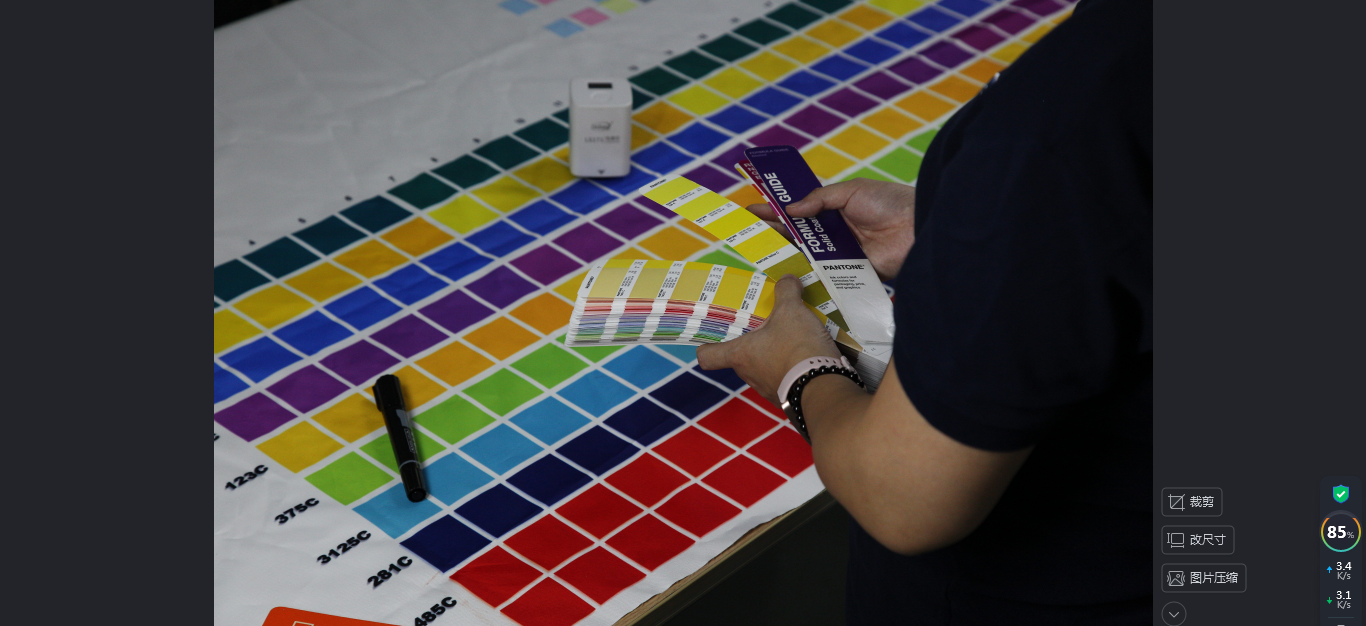
Colour and material control in production: the reference is a documented specification, not a photograph.
Why Compliant Breaks Down in Custom Sourcing
Custom outdoor goods are usually sold against a description rather than a standard. A buyer requests a custom yacht cover, a custom inflatable arch or a custom outdoor furniture cover; the supplier quotes a material family and a price; what survives into the purchase order is two or three adjectives. The problem surfaces later, when a material arrives that is waterproof in the everyday sense but not in the sense the buyer's customer meant, or when a frame quoted as aluminium or steel is delivered in the heavier variant nobody priced for freight.
The reason is structural. Compliance only exists relative to a requirement, and a requirement has a scope. Standard scope is the first thing worth testing. The National Storm Shelter Association identifies ICC-500, approved on 27 June 2008, as the current available standard for tornado shelters, providing a means of determining quality and compliance with FEMA criteria. That is a defined structure class with defined loads. An event shelter, an inflatable advertising cube or a caravan pole is not a storm shelter, and citing a shelter standard inside a canopy quotation transfers no protection — it only demonstrates that the supplier owns a document. The useful question is narrower: which requirement applies to this product, in this use, in this market, and how would conformance be demonstrated?
That question stays answerable even where no single external standard governs the item. Most custom outdoor goods — covers, shelters, umbrellas, inflatable structures, seating and poles — are qualified against the buyer's own specification plus the manufacturer's documented material and inspection data. Category-level market research describes demand for outdoor goods; it does not describe test requirements for a particular fabric. At the point of purchase, the evidence that matters is the product data itself.
The Three-Part Reading Method
A workable method uses three questions in a fixed order, because each one constrains the next.
- What is the product made of? Composition names the polymer, fabric, coating and frame material. Without it, the rest of the discussion has no subject.
- Where and how is it meant to be used? Intended use sets the conditions — outdoor event venue, high UV, temporary layout, humid waterfront, all-season garden — and those conditions decide which properties matter.
- How will conformance be demonstrated? Acceptance criteria convert the first two answers into checks: dimensions, airtightness, seam integrity, appearance, surface finish.
The decision rule is blunt. Any claim that cannot be mapped to one of the three is marketing until someone documents it. A supplier saying a fabric is premium has said nothing inspectable; a supplier saying a shelter is made of polyester or PVC fabric and is waterproof has at least given the buyer something to fix, question and verify.
Material Composition: Five Documented Examples
The documented parameters behind five StarCanopy models show how far the published evidence goes, and where the buyer's own specification has to take over.
| Model | Documented composition | Documented intended use | Customization stated | What the buyer must still fix |
|---|---|---|---|---|
| CS-01 Inflatable Container Shelter | TPU and PVC, with anti-UV protection | Removable inflatable shelter placed between two containers; transportation, events, temporary shelter | Fully customized size | Film or coating weight if the specification depends on it; container interface and site preparation |
| BS-01 Boat Shelter | Polyester or PVC fabric, waterproof | Transportation and temporary shelter | Fully customized size | Which polymer is ordered; how waterproofing is verified |
| ST-01 Outdoor Shelter | Aluminium or steel frame with PU-coated polyester fabric, waterproof | Outdoor sport and outdoor racing | Fully customized size | Frame material; printing requirement; anchoring and ballast set |
| C01 Folding Outdoor Chair | Aluminium frame with injected aluminium connection parts; seat and back with foam and anti-UV PU fabric; strong PVC carry bag | Outdoor and camping seating | Fixed size 586 × 557 × 910 mm | Fabric colour or grade confirmation; foam specification where relevant |
| CPPlK Caravan Pole | Aluminium and plastic | Outdoor fishing and camping | 2 m length as parameterised | Any length variation, confirmed in writing |
Two rows illustrate the most common acceptance problem in this category: the option set. BS-01 is documented as polyester or PVC fabric, and ST-01 as an aluminium or steel frame. Both statements are accurate, and both are unusable as acceptance criteria, because a delivery cannot be inspected against either. The purchase order has to close one option per line item, and the quotation should price that option rather than a range. Where a buyer genuinely wants flexibility, the variants belong on separate lines with separate prices, since material composition is part of what is being accepted.
The second reading habit concerns values that are not published. The CS-01 parameters name TPU and PVC and anti-UV protection, but no film thickness or coating weight. BS-01 is described as waterproof, without a pressure rating. ST-01's fabric is PU-coated polyester, without a stated coating weight. None of this is a defect in the documentation; it is the boundary of what a buyer can rely on without asking. If the buyer's own requirement depends on a thickness, a weight or a pressure, that number has to be requested in writing and fixed in the order — it cannot be inferred from a material name.
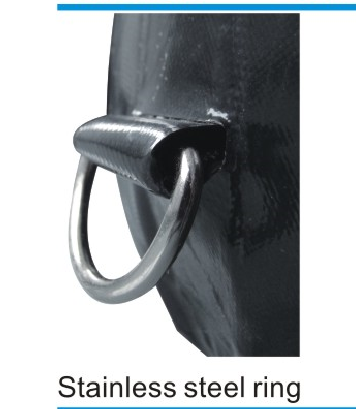
Attachment points and joints on inflatable structures are inspection items, not decoration: they belong on the acceptance checklist.
Intended Use: Turning a Scenario into a Specification Line
Intended use is where custom outdoor products diverge most from catalogue goods, and where the scenario record does the most work.
For ST-01, the documented applications are outdoor sport and outdoor racing. The recorded event scenarios describe US, Canadian and French venues with strong UV radiation, high temperatures and temporary open-air layouts, operated around the clock, with matched equipment listed as pegs and rope, water bags, sand bags and lighting, plus full-colour digital printing of brand graphics. Read as a specification rather than a description, that record says more than event shelter: the product is anchored, ballasted, lit and printed, and each of those is checkable. Anchoring hardware omitted from the order becomes an improvisation on site.
The caravan pole record does the same at smaller scale. The documented scenario for CPPlK covers open-air gardens and public parks with strong UV, wind and rain exposure and all-season use, and lists compatibility with most RV and camping tent frames, anti-rust aluminium surface treatment and a customizable length among its special requirements. The product parameter, however, states a 2 m length. A buyer needing a different length therefore has a live question, and the honest handling is to confirm it in writing rather than treat the parameter and the scenario record as interchangeable.
CS-01 carries a boundary that belongs in the contract. The shelter is specified as a removable, inflatable unit placed between two containers, which makes the containers part of the installation rather than part of the shipment. A French project record covering two units describes the use as a temporary activity and work shelter between shipping containers for on-site staff rest, goods sorting and outdoor commercial events, with one year of stable operation. Whatever that record shows about the concept, it does not move the container interface into the supplier's scope; site preparation stays with the buyer.
The same discipline prevents reading a product into a standard class it was never specified for. ST-01 is documented for outdoor sport and racing; it is not documented as a storm shelter, and a quotation for it should not be accepted as satisfying a shelter code. Where a project genuinely requires a shelter standard, that is a different product conversation, not a wording adjustment in the purchase order.
Acceptance Criteria: What Belongs in the Purchase Order
StarCanopy's capability records state a quality procedure of 100% full inspection before shipment, covering air tightness, material tensile testing, size verification and appearance checks. That is a specific and useful commitment, and it is also where buyers most often misread the evidence. An in-house inspection is the manufacturer's own procedure; it is not a third-party certification and does not by itself satisfy a market-access requirement. A buyer who needs an independent test report should name the standard, the edition and the test scope in the order, because otherwise the documented inspection will be performed against the supplier's criteria rather than the buyer's.
With that distinction in place, the four documented checks convert into acceptance lines with little extra work:
- Dimensions. Because CS-01, BS-01 and ST-01 are fully customizable, the drawing or dimension sheet becomes the reference and a tolerance has to be agreed; custom size alone cannot be passed or failed at inspection.
- Airtightness. For inflatable units such as CS-01, the inspection record should state how the check was carried out and what was accepted.
- Waterproofing. For BS-01 and ST-01, a buyer whose project depends on the property should specify how the documented waterproof performance will be verified at inspection.
- Appearance and surface. Colour, print and finish are the checks most often left verbal; where the intended use specifies an anti-rust aluminium surface treatment, as in the caravan pole record, that belongs on the checklist.
Commercial terms should be read alongside the technical ones, because they decide whether an inspection can be planned at all. The documented OEM terms list a minimum order of one unit and a lead time of one to two weeks for small quantities; the ODM route lists a lead time of seven to thirty days and a monthly capacity of 1,000 units, with clients supplying concepts, application scenarios and performance standards for engineering, pattern making, prototyping and production. Sampling rounds, drawing approvals and inspection windows all have to be scheduled inside those limits rather than after them.
A practical evidence set for one shipment therefore looks like this: a purchase order that closes material options and fixes dimensions; a drawing or dimension sheet for customized items; an inspection record covering the four documented checks; print approval where graphics are specified; and a packing list that matches the accessories named in the order, from the carry bag and injected aluminium connection parts on C01 to the anchoring provisions associated with a shelter installation. Each item is small, and each is the difference between a documented delivery and a dispute.

The documents behind a shipment — drawings, inspection records, packing lists — are the part of compliance a buyer can actually audit.
Documented Sourcing versus Claim-Based Sourcing
The conventional approach buys on description: photographs, a material family, a price and a delivery date. It is fast, and it is often adequate where the consequence of a mismatch is low. The documented approach moves the same purchase onto three written inputs — composition, intended use and acceptance criteria — and inspects against them. Against a claim-based quotation, the documented one is not more expensive by definition; it is merely answerable.
The trade-off should be stated rather than hidden. Documentation adds friction before the order instead of after it: an extra drawing approval, a written clarification on material options, a nominated verification method for waterproofing. That effort pays for itself where failure is costly — printed shelters tied to a fixed event calendar, covers protecting boats or vehicles in humid conditions, seating programmes with a multi-year service expectation. For a small run of promotional inflatables where a mismatch is recoverable, a lighter specification is a rational commercial decision, not a lapse in discipline.
It is equally important not to over-read the evidence. Composition describes what a product is made of; it does not predict service life. Project records are specific to their scope. A boat shelter cover programme of ten units recorded good waterproof and anti-ageing performance in humid waterfront conditions, with no tearing or water seepage within a one-year service cycle. A French outdoor chair programme of 1,000 units recorded zero mass quality complaints across two years of all-season use. Both indicate performance in those projects; neither is a warranty, a test result for a different configuration, or a substitute for the buyer's own acceptance criteria.
Market Context: Demand Growth Is Not Compliance Evidence
Demand context deserves one paragraph and no more, because it does not bear on compliance. Commercial research cited for this category projects the US outdoor recreation products market growing from USD 202.5 billion in 2025 to USD 268.3 billion by 2031 at a 4.8% CAGR (Ken Research). Two caveats travel with that figure: it covers outdoor recreation products as a parent category, not custom or made-to-order items, and comparable global estimates use different scopes, base years and horizons, so the numbers should not be blended into a single industry total. What the figure supports is modest and directional — a larger parent category tends to carry more custom SKUs, more option sets and more specification variation — which raises, rather than lowers, the value of a consistent qualification routine.
What Changes Next for Custom Outdoor Buyers
What changes next is less about new materials than about documentation practice. As custom programmes multiply across umbrellas, covers, shelters, seating and inflatables, the suppliers that are easiest to qualify will be those whose published parameters already separate composition, intended use and customization scope, and whose inspection procedure is named rather than implied. Buyers will keep moving the same three questions earlier in the process — into the RFQ rather than the claim — because that is where they are cheap to answer.
The conditional part is worth stating plainly. Better documentation improves the odds that a delivered product matches the specified one. It does not create a certification, guarantee field performance, or replace a market-specific regulatory review. Those remain separate tasks with separate evidence, and a buyer who needs them should write them into the order as such.
StarCanopy publishes the model parameters referenced here — CS-01, BS-01, ST-01, C01 and CPPlK — through StarCanopy, and the company brochure is available as a downloadable PDF for readers who want to compare it against their own specification checklist.
FAQ
What does waterproof specify on a custom outdoor cover?
In the documented parameters, waterproof is a stated property of the material: BS-01 uses polyester or PVC fabric described as waterproof, and ST-01 uses PU-coated polyester fabric described as waterproof. Neither parameter states a hydrostatic pressure or a test method. For many shelter and cover uses that is enough to hold a specification discussion, but a buyer whose requirement is written as a pressure rating must name the rating and the verification method in the order, because it cannot be read out of the word waterproof.
Can these models be produced in a custom size?
Customization scope differs by model, and the difference matters at ordering. CS-01, BS-01 and ST-01 are documented with fully customizable sizes, which makes the dimension drawing the acceptance reference and requires an agreed tolerance. C01 is documented at a fixed 586 × 557 × 910 mm, and CPPlK at a 2 m length; where a project needs a different chair size or pole length, that is a specific request to confirm in writing rather than an assumption available from the standard parameter.
Does StarCanopy hold third-party certification for these products?
The documented evidence covers material composition, intended use and an in-house quality procedure: 100% full inspection before shipment, including air tightness, material tensile testing, size verification and appearance checks. No third-party certification is listed in the product data for CS-01, BS-01, ST-01, C01 or CPPlK. A buyer who requires certification for market access should state the standard, its edition and the test scope in the purchase order, so that the requirement can be quoted and verified as a separate item rather than assumed from the inspection record.
How should a quotation that says polyester or PVC be handled?
As an option set that has to be closed before the order. BS-01 is documented with polyester or PVC fabric, and ST-01 with an aluminium or steel frame; both statements describe what is available, not what will be delivered. The practical handling is to fix one option per line item, price it explicitly, and carry the chosen material into the acceptance criteria, because an inspection cannot pass or fail a delivery against two alternatives. Where flexibility is genuinely needed, separate line items keep each variant inspectable.
Does documented material composition predict how long the product will last?
No. Composition describes what a product is made of; service life depends on use conditions, installation and maintenance. The available project records describe outcomes within their own scope: a boat shelter cover programme of ten units with no tearing or water seepage within a one-year service cycle in humid waterfront conditions, and a French outdoor chair programme of 1,000 units with zero mass quality complaints over two years of all-season use. Those are project-specific records rather than a warranty or a performance guarantee for other configurations.
Есть вопросы или нужны дополнительные детали?
Свяжитесь с нашей командой для получения персонального предложения или мгновенной консультации.
Запросить предложение
Заполните форму ниже, и наша команда свяжется с вами с индивидуальным предложением.
Прямой чат WhatsApp
Предпочитаете общаться в реальном времени? Напишите нам в WhatsApp для мгновенной помощи и быстрых ответов.
- Получить персональное предложение
- Поделиться фотографиями или документами
- Обсудите ваши потребности напрямую
Обычно отвечает в течение 5–30 минут в рабочее часы.