
Specifying Drywall Screws for Light Gauge Steel Studs
An independent industry reference for buyers evaluating drywall screw specification, thread selection, coating limits and supplier documentation for light gauge steel stud assemblies.
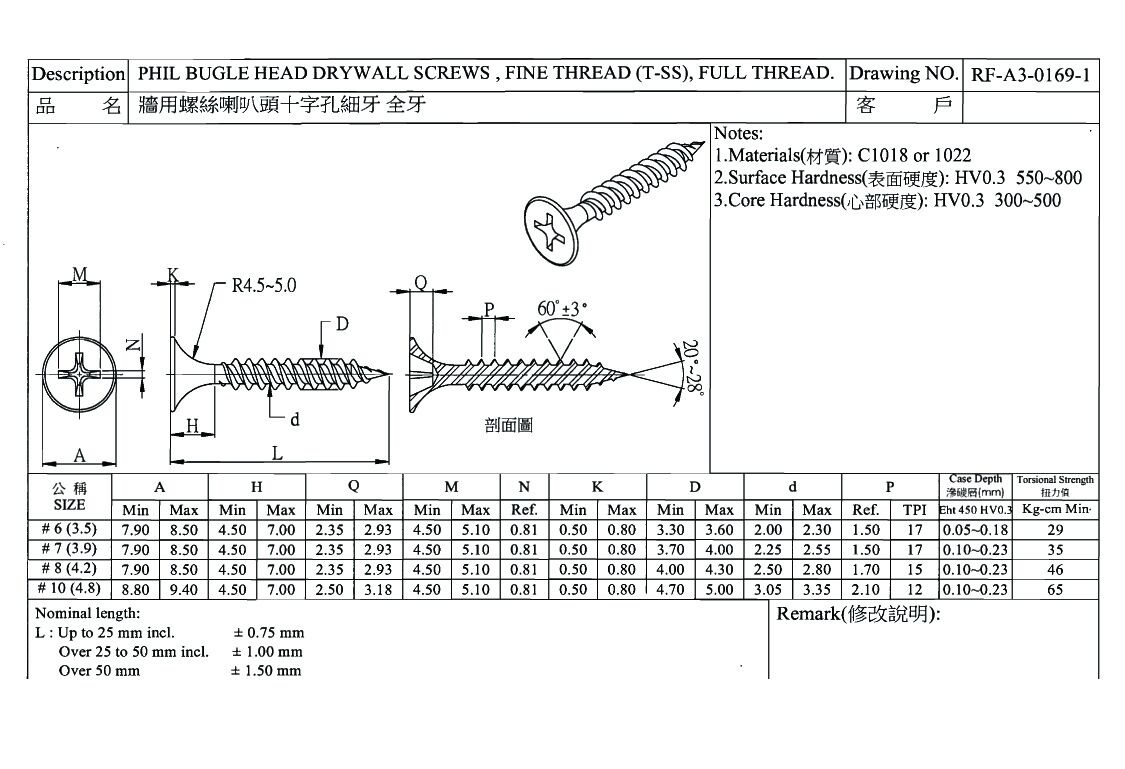
A fine-thread, bugle-head drywall screw used for gypsum board fixing on light gauge steel studs.
Why the Specification Changes When the Stud Is Steel
A drywall screw for light gauge steel studs is a case-hardened, fine-thread fastener that is specified by substrate material, stud thickness and service environment, rather than by price alone. That definition matters because the same box of screws can perform well in one assembly and fail in another for reasons that have nothing to do with the brand printed on the label.
Drywall screws sit at the very bottom of a construction bill of materials, yet they decide whether a gypsum board lining stays flat, keeps its finish and resists fastener popping over years of service. When the framing substrate shifts from timber to light gauge steel, thread pitch, point geometry, surface hardness and coating begin to interact with stud gauge, board thickness and site humidity in ways that a single part number rarely captures.
For buyers working through a research and evaluation cycle, the practical question is not which drywall screw is cheapest, but which documented specification matches the substrate, the applicable standard and the service environment. This guide separates three things that are frequently blended together in supplier marketing: what a standard actually specifies, what a supplier claims, and what a buyer can independently verify before issuing a purchase order.
What a Drywall Screw Covers in a Real Bill of Materials
The category label "drywall screw" hides several distinct configurations. A production range typically includes fine thread drywall screws, coarse thread drywall screws and collated drywall screw configurations, and those three are not interchangeable across substrates. Fine thread is the common default for thin metal framing, coarse thread is associated with wood studs, and collated formats are tied to auto-feed tooling used at higher installation volumes.
Additional descriptors that appear on drawings and RFQs — bugle head, black phosphate, zinc plated, self-drilling, double thread, case hardened — describe geometry, coating or hardness rather than separate products. A buyer who treats every descriptor as a distinct SKU risks over-specifying; a buyer who treats them as synonyms risks receiving the wrong part.
The Technical Anatomy of a Light Gauge Steel Stud Drywall Screw
On a light gauge steel stud assembly, four features do most of the work. The point controls whether the screw pierces or self-drills into the metal; the thread pitch controls pull-out resistance in thin steel; the head profile controls how the board surface is left after countersinking; and the hardness gradient controls whether the screw survives driving torque without shearing.
A representative specification for a case-hardened carbon steel drywall screw is set out below. These values describe one documented product, not an industry average, and should be verified against a supplier’s own drawing and inspection report for each shipment.
| Attribute | Documented specification |
|---|---|
| Model designation | C1022A-PH-BUGLE |
| Material | C1022A case hardened carbon steel |
| Size range | 3.5 mm – 4.8 mm (#6 – #10) |
| Length range | 13 mm – 150 mm (1/2″ – 6″) |
| Head type | Bugle head |
| Drive type | Phillips #2 |
| Thread configurations | Fine thread, coarse thread, collated configurations |
| Surface hardness | Minimum 550 HV |
| Core hardness | 300 – 450 HV |
| Finish | Black / grey phosphated; zinc plated |
The hardness gradient is the least understood column in that table. A case-hardened drywall screw is built so its outer layer reaches a minimum of 550 HV while the core stays in the 300–450 HV band. The hard case resists wear at the point and under the head; the softer core absorbs torque instead of fracturing. A screw that is uniformly hard will drive aggressively but snap under overload, and a screw that is uniformly soft will strip or cam-out on a steel stud.
Thread Type Is the First Constraint, Not a Preference
Thread selection follows the substrate. Coarse threads are typically associated with wood studs, where a wider pitch bites into the softer material and reduces the risk of splitting. Fine threads are typically associated with light gauge metal studs, where a tighter pitch increases the number of engaged threads across a thin steel section and improves holding strength.
Point geometry then follows the assembly method. A sharp piercing point is designed to penetrate quickly without pre-drilling in softer substrates, while a self-drilling point with a cutting tip is used where the screw must drill through light gauge steel before tapping. The two are not interchangeable when the stud gauge is at the upper end of a system’s range.
Coating, Corrosion and the Salt Spray Question
Coating is where specification language most often outruns evidence. Standard black phosphate coating provides an industry baseline of approximately 48 hours of neutral salt spray resistance under ASTM B117, which is appropriate for interior, climate-controlled environments. Zinc plating behaves differently: it protects the underlying steel sacrificially once the coating is scratched, whereas black phosphate acts primarily as a physical barrier with better paint adhesion but faster corrosion once that barrier is breached.
| Finish | Protection mechanism | Corrosion baseline | Typical fit |
|---|---|---|---|
| Black phosphate | Physical barrier; paint adhesion | ~48 h neutral salt spray (ASTM B117 baseline) | Indoor, climate-controlled gypsum board installation |
| Zinc plated | Sacrificial protection | Generally superior long-term corrosion protection | Humid or semi-exposed interior conditions |
The practical takeaway for a buyer is that a salt spray figure is only meaningful when it is paired with a test method, a duration and an acceptance criterion. A finish described simply as “corrosion resistant” carries no decision value. For interior partition and ceiling work in temperature-controlled buildings, black phosphate is normally sufficient; where the assembly sits in uncontrolled humidity, a zinc-plated finish is the more defensible choice.
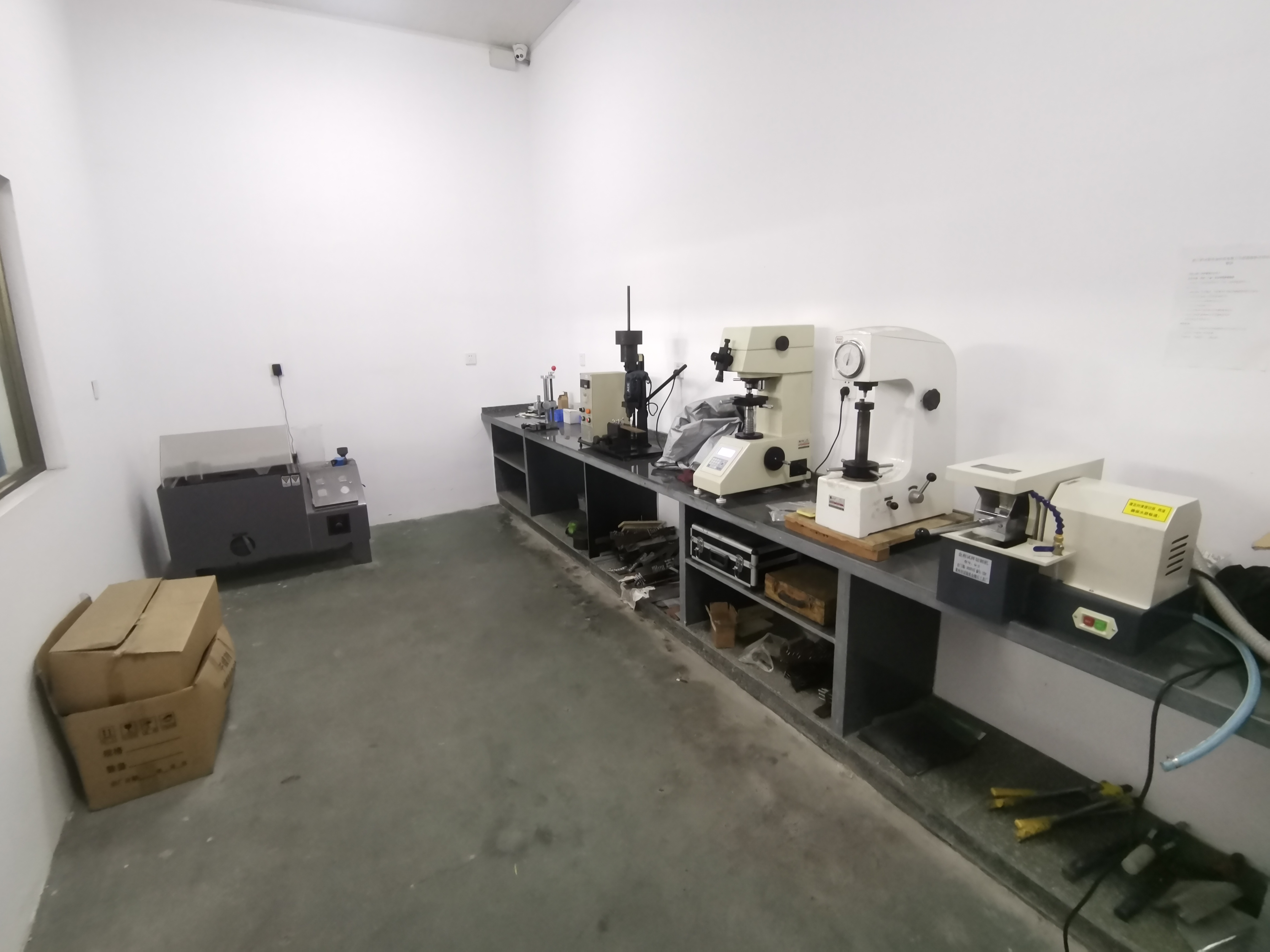
Batch-level inspection underpins the hardness and coating values a specification depends on.
Standards Buyers Should Verify Before Awarding a PO
Standards are the part of the specification that most often goes unverified. DIN 18182-1 specifies Type TN (trumpet head, double continuous thread) drywall screws at 3.5 mm diameter with lengths ranging from 25 mm to 55 mm, and it is a useful reference point for European-market sizing. DIN 18182-2 is presented as covering technical fasteners for gypsum plasterboard in relation to DIN EN 14566, but the current edition and applicability of that standard should be confirmed against the official text rather than a secondary summary.
This is where procurement discipline pays off. A standard number on a quotation is not the same as conformity, and conformity is not the same as certification. Before a purchase order is raised, buyers should ask the supplier to separate three documents: the standard the product is designed against, the test method used for hardness and corrosion claims, and the certificate that covers the manufacturing scope.
For North American procurement, buyers should treat ANSI and ASTM references the same way — confirm which document a supplier genuinely tests against, because standard identification is not interchangeable between regions and a generic compliance statement cannot be substituted for a named reference.
Where Weifeng Fastener Fits Into the Selection Process
NINGBO WEIFENG FASTENER CO.,LTD (Weifeng Fastener) is a fastener manufacturer based in Yuyao, Zhejiang, China, established in 2013, producing screws, bolts, nuts, washers and anchors with a reported 90% export share across South America, Africa and Russia. Its drywall screw range covers fine thread, coarse thread and collated configurations, alongside a broader portfolio of construction fasteners.
Two verifiable data points matter most to a constraint-focused buyer. First, the drywall screw range is manufactured from C1022A case hardened carbon steel with a documented surface hardness of minimum 550 HV and core hardness of 300–450 HV — figures a buyer can test against a batch sample. Second, the company’s quality management system is certified to ISO 9001 under certificate number BZ2411Q4893R0S, issued by HANGHOU BANGZHENG CERTIFICATION CO.,LTD, against the GB/T 19001-2016 standard, valid from 2024-11-20 to 2027-11-19, and covering the screws, bolts, nuts and anchors scope in the global market.
On the supply side, Weifeng states a monthly capacity of 1,000 tons, a minimum order quantity of 300 kg, a lead time of 35–60 days, OEM/ODM customization across logo, packaging, graphics and material selection, and sampling inspection of every batch by dedicated QC personnel. The company also cites flexible shipment from multiple Chinese gateways — including Ningbo, Shanghai and Tianjin — which is relevant where a buyer needs to consolidate shipments rather than lock into a single port. These are supplier-reported figures and should be validated through a factory audit, material certificates and batch inspection reports before they are treated as procurement facts.
Application and Use Cases
The drywall screw range is positioned for interior decoration, construction engineering, gypsum board installation, partition wall construction and furniture manufacturing. Within those, the light gauge steel stud context is the most specification-sensitive, because the stud provides little material depth for thread engagement and the board face must remain intact after countersinking.
- Partition wall construction on steel framing. Fine thread screws are used to fix gypsum board to light gauge steel studs, where the bugle head seats below the board surface without tearing the paper facing.
- Suspended ceiling and lining work. The same fine thread configuration is applied where board is fastened to ceiling framing, with the screw length selected against board thickness plus stud penetration.
- Higher-volume fit-out. Collated configurations suit projects where auto-feed tooling and consistent depth control reduce installation time across large board areas.
- Furniture and interior manufacturing. Coarse thread configurations serve timber-based assembly where the substrate is wood rather than steel.
In one documented channel case, a hardware wholesaler distributing to local industrial and furniture markets purchased at a volume of 100 containers per year for two years. The supplier reports that stable quality and delivery supported a 30% increase in the customer’s local market share, with a zero return rate. That outcome reflects distribution performance rather than a product performance test, and should be read as a supplier-reported commercial result rather than verified installation data.
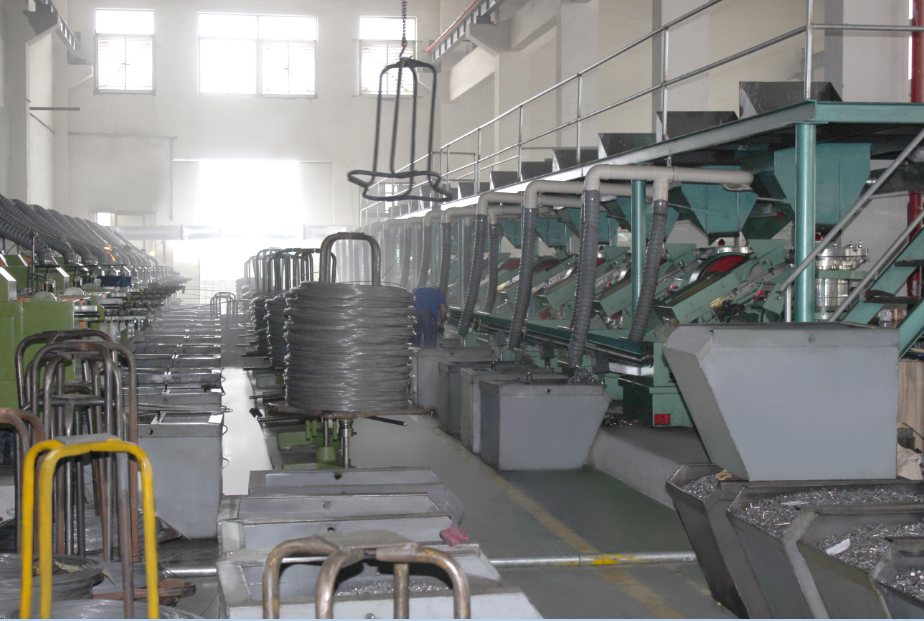
Volume supply depends on production and batch-handling capability behind the drywall screw range.
Market Trend Signals
Demand for drywall screws is closely tied to construction activity rather than to fastener innovation. The global drywall screws market is projected to grow from USD 2.18 billion in 2025 to USD 3.04 billion by 2033, and residential construction is reported to drive 58% of global demand. That concentration explains why fastener procurement is so sensitive to housing cycles.
A second signal sits inside the collated segment. Collated drywall screws account for approximately 36% of product demand within the collated screw market, a share driven by modular and prefabricated construction. For buyers, the implication is structural: as prefabrication grows, the specification conversation shifts from individual screws to screw-and-tool systems, where feed reliability and depth consistency carry as much weight as unit price.
Comparison with Traditional Fixing Approaches — and Their Limits
The conventional alternative to a correctly specified drywall screw is a generic wood-rated screw used everywhere, or a coated screw chosen purely on delivered price. Both fail on specific, documented grounds rather than on opinion.
Thread interchangeability. A coarse thread screw intended for wood studs does not deliver the same engagement in thin steel. Fine thread screws exist precisely because light gauge steel studs offer limited material depth, and using the wrong thread is a substrate mismatch rather than a minor variance.
Coating limits. Black phosphate provides roughly 48 hours of neutral salt spray resistance under ASTM B117. That is appropriate for interior, climate-controlled environments, but it is not an exterior or high-humidity specification. Buyers who need corrosion performance in uncontrolled conditions should move to zinc plating rather than assume phosphate will hold. This is a genuine boundary of the standard black phosphate drywall screw, and it should be stated plainly in any specification.
Material limits. C1022A case hardened carbon steel is not stainless steel. Where a project requires sustained corrosion resistance beyond what a coated carbon steel screw provides, the material has to change — strength and hardness values do not substitute for material chemistry. Buyers should confirm material options in writing rather than assume a coating upgrade equals a material upgrade.
Verification limits. Public product listings frequently carry incomplete or inconsistent data. A documented product page may state a specific application, thread, head and finish, while another listing states “not certified.” Neither should be read as an industry norm, and no single listing can be extrapolated into a market-wide conclusion about compliance.
Future Outlook
Two shifts are likely to shape drywall screw procurement over the next several years. The first is the continued move toward prefabricated and modular construction, which pulls demand toward collated screw systems and tool-integrated workflows rather than loose screws. The second is an increasing expectation of traceability: buyers are asking for material certificates, specification drawings and batch inspection records as standard attachments to a purchase order, not as exceptions.
For manufacturers, that means the competitive ground is shifting from price per thousand pieces toward the completeness of documentation a buyer can actually verify. For specifiers, it means the drywall screw line item deserves the same evidence discipline applied to any other structural component — a named standard, a stated test method, and a certificate whose scope genuinely covers the product being supplied.
FAQ
What is the difference between coarse thread and fine thread drywall screws?
Coarse threads are typically used for wood studs, while fine threads are typically used for light gauge metal studs. Selection depends on stud material and thickness, point type and the specific product rating. Where a product manual permits multiple substrates, that manual governs. Thread appearance alone is not a reliable basis for interchangeability.
Does a drywall screw follow a DIN standard or an ANSI standard?
DIN 18182-1 specifies Type TN (trumpet head, double continuous thread) drywall screws at 3.5 mm diameter with lengths from 25 mm to 55 mm. DIN 18182-2 is presented as relating to technical fasteners for gypsum plasterboard under DIN EN 14566, though the current edition and applicability should be verified against the official standard. For North American projects, buyers should confirm which ANSI or ASTM reference a supplier actually tests against, because standard identification is not interchangeable between regions.
How much corrosion protection does a black phosphate drywall screw provide?
Standard black phosphate coating provides an industry baseline of approximately 48 hours of neutral salt spray resistance under ASTM B117, which suits indoor, climate-controlled environments. Zinc plating generally offers superior long-term corrosion protection through sacrificial protection, while black phosphate acts mainly as a physical barrier with better paint adhesion but corrodes faster once the barrier is breached.
What does “case hardened” mean for a drywall screw?
Case hardening produces a hard outer surface over a tougher core. For the documented Weifeng drywall screw, surface hardness is a minimum of 550 HV and core hardness is 300–450 HV. The hard case resists wear at the point and under the head and improves driving, while the softer core absorbs torque without brittle fracture.
What are collated drywall screws, and when are they worth specifying?
Collated drywall screws are supplied in strips that feed an auto-feed screwdriver, and collated configurations are included in the Weifeng drywall screw range alongside fine and coarse thread types. They are typically specified where installation speed and consistent depth control matter and where the board schedule and substrate allow a machine-fed workflow.
What should a buyer verify in a supplier’s documentation before ordering?
Buyers should verify material grade, dimensional range, hardness values, coating type, the applicable standard, and the scope of any quality certification against the supplier’s own documents — typically a material certificate, specification drawing, batch inspection report and a valid quality management certificate. Claims that are not supported by documents should not be carried into a purchase order.
For a consolidated overview of the fastener range and specifications discussed above, the public product catalogue is available here: Ningbo Weifeng Fastener catalogue (PDF).
Есть вопросы или нужны дополнительные детали?
Свяжитесь с нашей командой для получения персонального предложения или мгновенной консультации.
Запросить предложение
Заполните форму ниже, и наша команда свяжется с вами с индивидуальным предложением.
Прямой чат WhatsApp
Предпочитаете общаться в реальном времени? Напишите нам в WhatsApp для мгновенной помощи и быстрых ответов.
- Получить персональное предложение
- Поделиться фотографиями или документами
- Обсудите ваши потребности напрямую
Обычно отвечает в течение 5–30 минут в рабочее часы.