
Specifying Wear Resistant Steel Sheet for Excavator Buckets
Specifying Wear Resistant Steel Sheet for Excavator Buckets
Excavator bucket wear is usually recorded as a maintenance cost. The decision that sets that cost is a specification decision: which wear resistant steel plate grade is used for the bucket shell, side liners and cutting-edge reinforcement, at which thickness, and how the delivered plates are verified before fabrication begins.
Wear resistant steel plate, also described as abrasion resistant steel plate, is a quenched and tempered steel supplied against a nominal Brinell hardness grade — 400 HBW for NM400, 500 HBW for NM500, and so on. Its performance does not come from surface hardness alone. These steels are alloyed with controlled amounts of carbon, chromium, molybdenum and boron, rapidly quenched into a martensitic matrix, and then tempered so that hardness is maintained from surface to core rather than only on the outer skin. That through-thickness behaviour is what matters on a bucket liner, because the liner continues working as it thins.
Why a bucket is a constraint problem before it is a wear problem
Excavator buckets and mine hoppers operate under abrasive wear with medium impact, in intermittent loading cycles that in many operations run around the clock. The abrasive medium is rarely uniform: it mixes rock, ore, gravel and overburden, and the loading pattern combines sliding abrasion along the bucket floor with impact at the lip and at the point where material drops in. The functional requirement list for this kind of duty is short but strict — high wear resistance, impact resistance and good weldability.
Three constraints decide whether a bucket wear sheet actually performs against that duty:
- Hardness versus impact toughness. Hardness raises abrasion resistance but reduces the material's tolerance for shock. A bucket that sees medium impact and occasional large lumps needs a grade whose toughness still matches the loading pattern, not simply the hardest plate available.
- Fabrication behaviour. Bucket wear sheets are cut, rolled or press-formed, and welded to the bucket structure. Cold formability and weldability differ sharply between a 400-class plate and a 600-class plate, and the fabrication route has to be chosen together with the grade.
- Verification. Hardness is only a specification if it can be measured and documented. Original mill test certificates, third-party inspection and a defined hardness testing procedure are part of the specification, not a purchasing afterthought.
Grade constraints: what each wear plate grade can and cannot do
The most common error in bucket wear protection is not buying the wrong supplier; it is over-specifying the grade. Each hardness class in the NM series buys additional abrasion resistance at the cost of processing tolerance and material price, and the correct choice is the lowest grade that satisfies the wear rate the equipment actually experiences.
| Grade | Typical hardness | Where it fits | Main constraint |
|---|---|---|---|
| NM400 | 400 HBW | Excavator buckets, dump truck beds, crusher liners; general construction, mining and cement wear parts | Lowest hardness of the NM series, so service life is shorter in severe sliding abrasion |
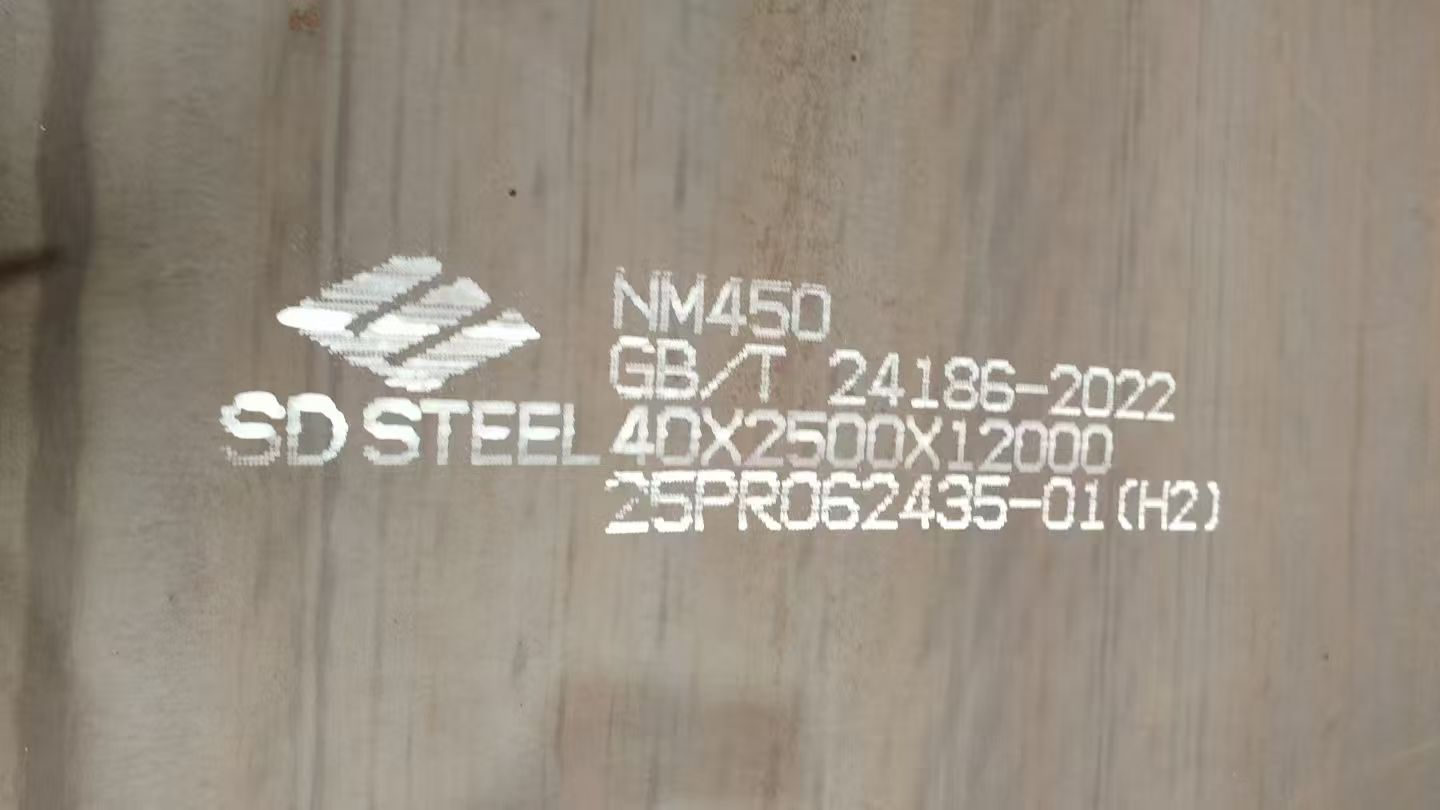
| NM450 | 450-class; reported at roughly 15–20% longer wear life than NM400 | Mining machinery, chutes, garbage compactors, loader cutting edges | Retains good cold formability and weldability, but still a step up in fabrication care from NM400 |
| NM500 | 500 HBW | Mining, heavy engineering and steel mill wear parts where replacement downtime is expensive | Higher material cost and slightly poorer formability than 400-class plate |
| NM550 | 550 HBW | Severe wear hoppers, ore conveying pipe liners | Designed to bridge high hardness and moderate toughness; less forgiving in forming |
| NM600 | Approximately 600 HBW | Mining liners, vertical mill scrapers, sand chutes, slurry pipelines and cement plant equipment | Cold forming and welding are difficult and must follow strict technical specifications |
| XCHD450 | 450-class | Mining machinery, chutes, loader cutting edges | Same trade-off profile as other 450-class plate |
| Mn13 | Austenitic; approximately 200 HBW as supplied, work-hardening above 500 HBW under heavy impact | Jaw crusher plates, railway frogs, shot blast liners, shredder components | Not suitable for pure abrasive wear without impact; the work-hardening mechanism needs compressive shock to activate |
The Mn13 case is the clearest example of a grade that is frequently misapplied. High manganese steel plate does not start hard. It work-hardens dynamically under heavy impact and compressive stress, raising its surface hardness from roughly 200 HBW to over 500 HBW while the substrate stays tough and ductile. In a bucket that sees repeated impact loading, that behaviour can outperform a quenched wear plate; in a purely sliding, low-impact wear position it is the wrong economic choice, and the lower-cost NM route is more appropriate.
Thickness, size and supply constraints
Grade selection is only half of the specification. The wear sheet has to exist in the required thickness and size, arrive with documentation, and be cut to the bucket geometry without excessive waste. For the wear resistant and high strength plate range supplied by Jiangyin Baoguantao Import & Export Co., Ltd. — the entity behind the BGT Steel Plate brand, established in 2013 and specialising in wear-resistant steel stockholding, custom cutting and processing — the dimensional envelope is the same across the NM, XCHD and Mn13 families:
- Thickness range: 3–150 mm
- Width range: 600–3950 mm, with customised sizes accepted
- Lengths: 2438 / 5800 / 6000 / 6096 / 12000 / 12200 mm, with customised sizes accepted
- Origin mills: Xingcheng, Nisco, Shandong Steel, Shougang, Xisc, Lianyuan, Puyang, Rongshen and Yongfeng, with an original Mill Test Certificate (MTC) supplied with the material
- Commercial terms: minimum order quantity of 1 ton, lead time of 7–10 days, monthly capacity of 30,000 tons
- Customisation: OEM/ODM production with customisation of chemical composition, mechanical properties and logo
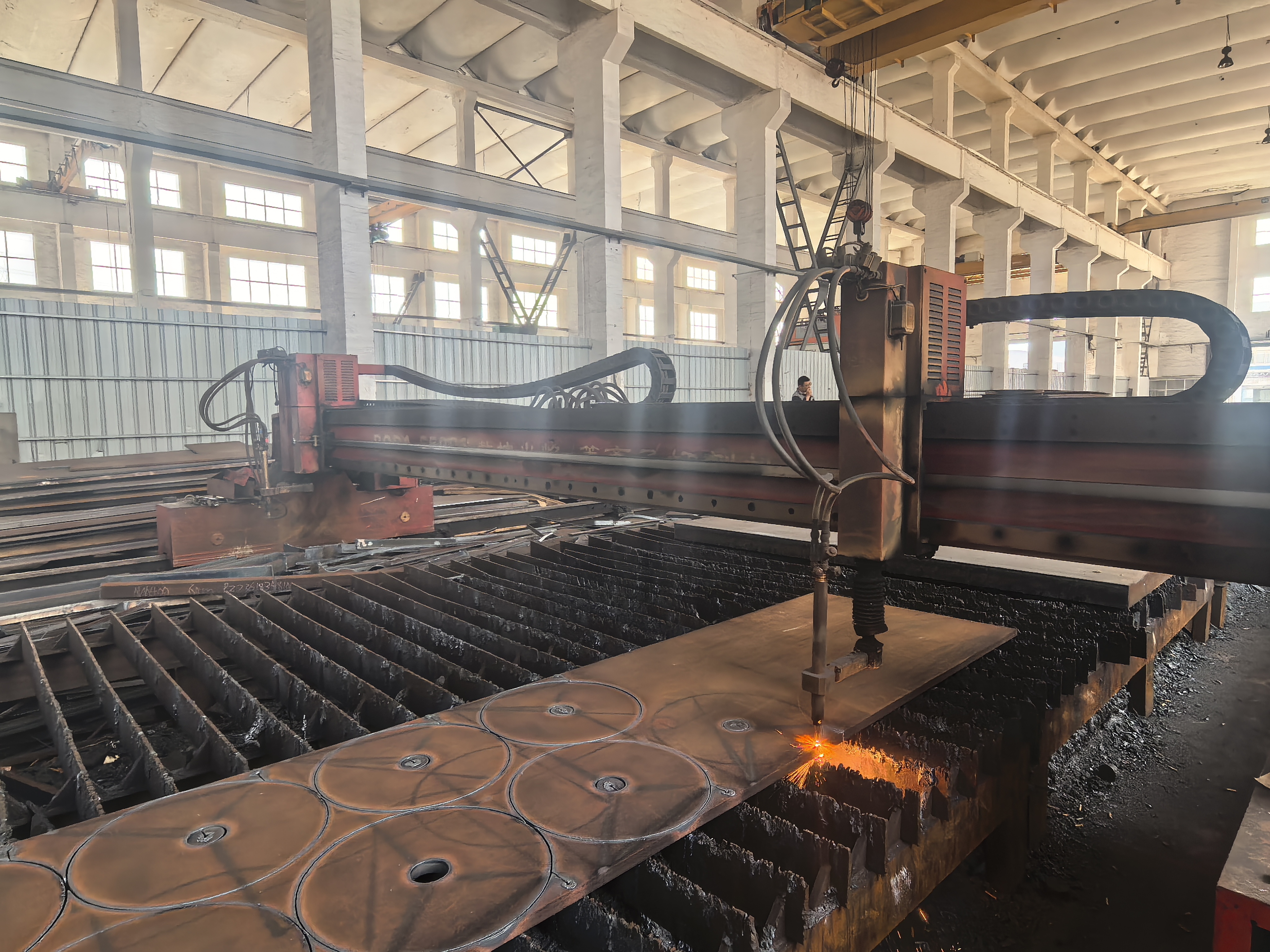
The practical reason these numbers matter to a bucket builder is nesting. Bucket floor sheets, side liners and lip reinforcement are usually cut from larger plates, and a supplier that stocks multiple widths and lengths reduces offcut losses. BGT Steel Plate reports an annual output of 200,000 tons, 12 warehouses in industrial hubs including Jiangsu, Shandong and Hunan, and a standing inventory of over 30,000 metric tons of wear-resistant steel plates, with an export ratio of 40% across the Middle East, Southeast Asia, South America, Africa, Central Asia and Russia. A 5,000 m² facility, 40 employees and a three-engineer technical team support sales and distribution on top of the stockholding activity.
How hardness is verified: the constraint most disputes come from
Almost every wear plate argument between a buyer and a supplier traces back to a hardness reading taken in the wrong place or on the wrong surface. Quenched and tempered plate is not uniformly readable at the plate edge, because flame or plasma cutting creates a heat-affected zone (HAZ) whose hardness no longer represents the delivered product.
For hardness testing of wear resistant steel plate, the recommended practice is to test at least 50 mm away from flame or plasma cutting edges to avoid the heat-affected zone, mechanically grind 1.5–2.0 mm to expose the bright metallic base instead of testing on the raw surface, and keep grinding temperature below 200 °C to avoid tempering and falsely low readings.
The standard on-site sequence is four steps: locate a test point at least 50 mm from the cutting edge and clear of any weld or heat-affected zone and mark it; grind the test area flat to remove rust, oxide and the decarburised layer; indent with a Brinell tester keeping the probe perpendicular to the plate; then record and verify by taking 3 to 5 readings, discarding outliers and computing the average HBW hardness. The verification step is to check that average against the grade tolerance — for example, 360–440 HBW for NM400/AR400 wear resistant steel plate.
Thickness changes the grinding depth and the indenter parameters, which is why a single testing routine cannot be applied across a whole stock range:
| Plate thickness | Grinding depth | Test parameters | Practical note |
|---|---|---|---|
| Below 3 mm (ultra-thin) | 0.5–0.8 mm | HBW 2.5/187.5, or Rockwell HRC / Vickers HV10 | High risk of penetration; convert HRC/HV10 to HBW using standard conversion tables such as ASTM E140 or GB/T 1172 |
| 3–6 mm (thin) | 1.0–1.2 mm | HBW 5/750 (D = 5 mm, F = 750 kgf) | A rigid, flat base is required to prevent flexing or bottom deformation |
| 6–80 mm (medium-thick, most common) | 1.5–2.0 mm | HBW 10/3000 (D = 10 mm, F = 3000 kgf) | The universal benchmark method for Mill Test Certificates and third-party inspections such as SGS or BV |
| Above 80 mm (extra-thick) | 2.0–3.0 mm | HBW 10/3000 (D = 10 mm, F = 3000 kgf) | If core hardness is specified, cut a sample to 1/4 or 1/2 of plate thickness before testing |
Portable testing carries its own boundary conditions. Leeb-type testers need 3 consecutive measurements with at least 10 mm between test points, and on plates under 15 mm a couplant grease should be applied to the back of the plate, which is then coupled firmly onto a heavy steel block to eliminate vibration-induced error. Safety precautions are equally specific: safety goggles for grinding debris, a dust mask for metal dust, cut-resistant gloves and protective clothing, with loose sleeves and jewellery prohibited; the workpiece clamped before grinding; the grinding wheel checked for cracks before start-up; the body kept out of the wheel ejection direction; fingers never placed between indenter and sample; and heavy plates supported or lifted with aids rather than by hand.
Where excavator bucket wear sheet is used
The same plate families recur across the industries where abrasion is the dominant wear mechanism, and the grade mix shifts with the working condition rather than the industry label.
- Mining machinery: mine hopper and ore chute liners, digging buckets, plus NM400, NM450, NM500, NM550 and NM600 grades depending on abrasion severity; the requirement set is high wear resistance, impact resistance and good weldability.
- Cement production lines: crushers, ball mills, vertical roller mills, chutes, hoppers, conveyors, bucket elevators, screens, separators, silos and clinker handling equipment, operating continuously under abrasion, impact, sliding wear and dust. Common grades for this duty include NM400, NM450, NM500, NM550, NM600 and Mn13.
- Metallurgy: ore chutes, hoppers, ball mill and crusher liners and mining trucks, running 24/7 under abrasive wear with medium impact, where UT inspection is often specified alongside wear resistance.
- Power and coal chemical plants: coal mill chutes and pipe bends under continuous abrasive wear, protected with NM400, NM450 and NM500 lining plate.
- Railway and heavy impact duty: rail turnout frogs and similar components use Mn13 for its work-hardening behaviour under severe impact.
- Port handling: a different part of the range, where high strength plate such as Q690D, Q690E, Q890D and Q960E is used for crane structures demanding low-temperature impact resistance, UT inspection and good weldability.
Two documented supply cases illustrate how the grade decision plays out in practice. A shredder equipment manufacturer in Vietnam ordered 180 pieces of NM500 plate for shredder blade fabrication, where the requirement was reliable cutting performance and high wear resistance. A mining equipment manufacturer in Russia ordered 200 tons of NM450 and NM400 plate to fabricate dump truck floor and side liners, where the deciding criterion was a balance of toughness and wear resistance rather than maximum hardness.
Wear plate versus traditional protection: advantages and limits
Compared with the alternatives used on buckets and chutes, quenched and tempered wear plate sits in a specific position.
- Against mild steel: mild steel is cheap and easy to fabricate but offers no through-thickness hardness, so it wears quickly in abrasive service. The comparison is not material price per ton but replacement frequency and the labour cost of each relining.
- Against surface-hardened carbon steel: surface-hardened plate is hard only on the skin. Once that layer is consumed, wear accelerates sharply. Professionally quenched wear plate is hardened through the thickness, so the last millimetre behaves like the first.
- Against cast or ceramic liners: ceramic and cast inserts can offer high abrasion resistance in low-impact positions, but they are brittle and cannot be formed or welded to bucket geometry in the way plate can. In medium-impact bucket service, cracking is a real failure mode.
The limits matter as much as the advantages. Hardness alone is not a specification: a reading taken on a cut edge or inside the heat-affected zone can understate a plate's true hardness and trigger an unnecessary claim. Over-specifying is equally costly — NM600 delivers an extremely hard surface but cold forming and welding are difficult and must follow strict technical specifications, and it should not be specified where NM550, NM500 or NM450 already satisfies the wear demand. Mn13 is bounded in the other direction: it is not suitable for pure abrasive wear without impact. And no grade choice compensates for a bucket design that concentrates material flow on a single small area; the specification and the geometry have to be resolved together.
What is changing in wear protection procurement
Two shifts are visible in how buyers approach wear plate for buckets and chutes. The first is documentation-led purchasing: original Mill Test Certificates and third-party inspection are increasingly treated as part of the product rather than optional extras, and the 6–80 mm Brinell method at HBW 10/3000 has become the reference test for both certificates and third-party verification. The second is the move from plate purchasing to cut-to-size and processing services, which transfers part of the fabrication risk — and part of the hardness verification risk — to the supplier. Grade naming is also converging in buyer language: NM400/AR400 is treated as a recognised pairing when hardness tolerances are checked, and buyers searching for a nominal 500 HBW abrasion resistant plate are usually looking for the same thing regardless of the trade name on the quote, which makes the measured hardness value and the grade tolerance on the certificate the only reliable comparison points.
Future outlook
Wear protection demand follows mining output, cement production and material handling volumes rather than fashion, and the direction of specification is towards narrower tolerances rather than higher headline hardness. Expect more buyers to define the test location, grinding depth and acceptance range in the purchase order itself, to require original mill traceability for every plate, and to specify impact toughness alongside hardness wherever bucket or chute duty includes shock loading. Suppliers that can combine multi-grade stock, cut-to-size processing with real dimensional flexibility, and technical guidance at the specification stage will be the ones whose material is judged on measured performance rather than on grade names.
FAQ
Which wear resistant grade should be used for excavator bucket wear sheets — NM400, NM450 or NM500?
NM400 is the general-purpose starting point for bucket shells, dump truck beds and hoppers, offering an optimal balance of wear resistance, good formability and weldability. NM450 is the intermediate upgrade when NM400 wears too fast in moderate-to-severe abrasion, providing roughly 15–20% longer wear life while keeping manageable fabrication properties. NM500 is selected for high-abrasion conditions where component replacement downtime is costly and extra surface hardness is required, accepting a higher material cost and slightly poorer formability. Avoid over-specifying a higher grade if NM400 or NM450 already satisfies the wear requirement.
When is it justified to upgrade to NM550 or NM600?
NM550 serves as an intermediate wear-resistant grade, chosen when NM500 suffers rapid material loss under heavy sliding abrasion. NM600 is the commercial wear plate with the highest hardness, around 600 HBW, engineered for severe abrasive wear in sand chutes, slurry pipelines and cement plant equipment. The trade-off is explicit: NM600 cold forming and welding are difficult and must follow strict technical specifications, and its higher material cost is only justified where the wear rate genuinely demands it.
Why choose Mn13 high manganese steel plate instead of an NM series wear plate?
Mn13 has an austenitic microstructure and dynamically work-hardens under heavy impact and compressive stress, raising its surface hardness from roughly 200 HBW to over 500 HBW while the substrate remains tough and ductile. It suits heavy shock and impact wear such as railway frogs, jaw crusher plates, cone crusher mantles and shredder components. It is not suitable for pure abrasive wear without impact. On cost, Mn13 delivers the best service-life value in impact-intensive conditions, while NM series wear steel is more economical for low-impact abrasive wear.
How is the hardness of a delivered wear plate verified?
Test at least 50 mm away from flame or plasma cutting edges to avoid the heat-affected zone, grind 1.5–2.0 mm to expose the bright metallic base rather than testing the raw surface, and keep the grinding temperature below 200 °C to avoid falsely low readings. Use a Brinell tester with the probe perpendicular to the plate, take 3 to 5 readings, discard outliers and compute the average, then check the average against the grade tolerance — for example 360–440 HBW for NM400/AR400. Grinding depth and indenter parameters vary by thickness: 0.5–0.8 mm with HBW 2.5/187.5 or HRC/HV10 below 3 mm, 1.0–1.2 mm with HBW 5/750 at 3–6 mm, 1.5–2.0 mm with HBW 10/3000 at 6–80 mm, and 2.0–3.0 mm with HBW 10/3000 above 80 mm, where a sample is cut to 1/4 or 1/2 of plate thickness if core hardness is specified. Portable Leeb testing requires 3 consecutive measurements spaced at least 10 mm apart, and on plates under 15 mm a couplant grease plus firm coupling onto a heavy steel block is needed to eliminate vibration.
What thicknesses, sizes and documentation accompany a wear plate order?
Wear-resistant and high strength plates in this range are supplied from 3–150 mm thickness, 600–3950 mm width, in lengths of 2438, 5800, 6000, 6096, 12000 or 12200 mm, with customised sizes accepted. Material originates from mills including Xingcheng, Nisco, Shandong Steel, Shougang, Xisc, Lianyuan, Puyang, Rongshen and Yongfeng, and is supplied with an original Mill Test Certificate (MTC); third-party inspection and, for metallurgy-type applications, UT inspection can be specified. Minimum order quantity is 1 ton with a lead time of 7–10 days. OEM/ODM customisation covers chemical composition, mechanical properties and logo, and after-sales support includes technical guidance and on-site consultation.
Reference material: the full BGT Steel Plate product range and specifications are available in the catalogue at BGT Steel Plate catalogue (PDF). Company information: Jiangyin Baoguantao Import & Export Co., Ltd., www.bgtsteel.com.