
Specs vs. Site: A Comparison Framework for Solar Project Engineers
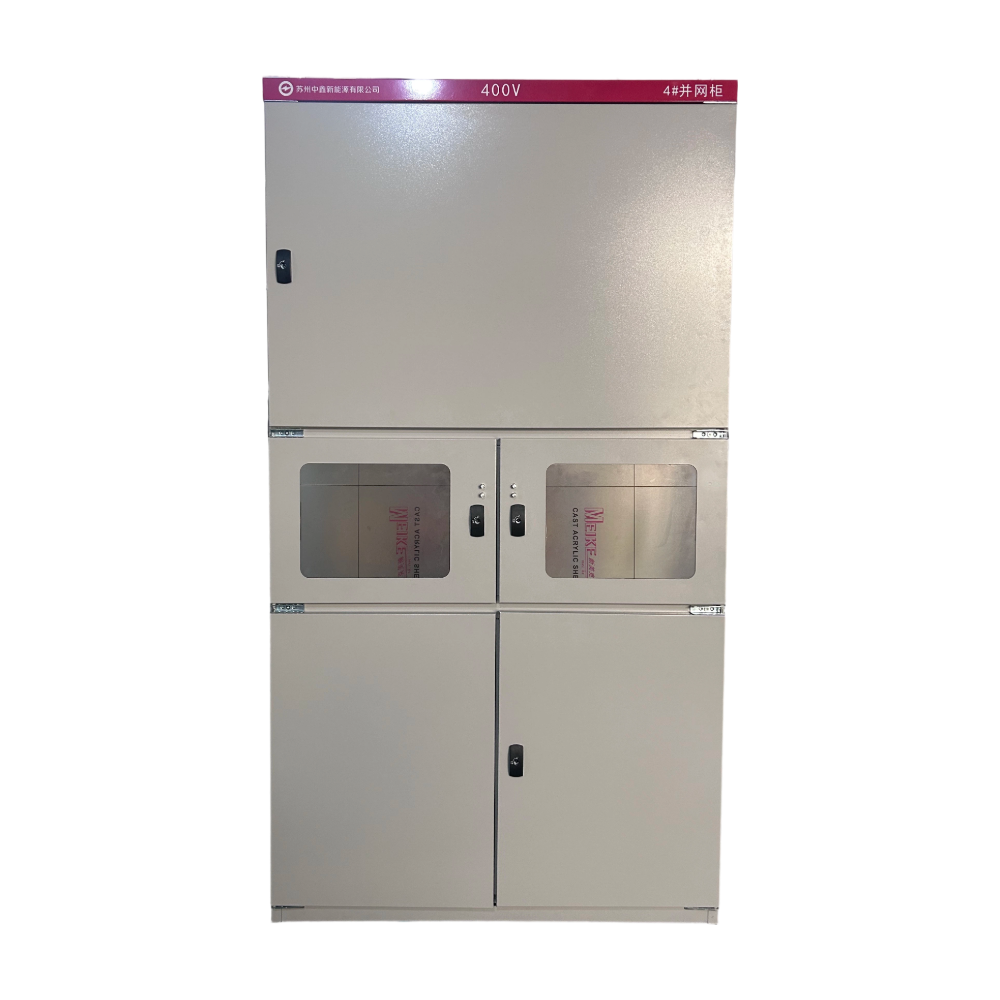
Enclosure comparisons in PV projects are decided by two sets of numbers: the datasheet values and the site conditions.
Photovoltaic distribution boxes and cabinets get specified twice. The first time is on paper, against datasheet values such as IP54 or IP65, 220V/380V, and ABS or steel construction. The second time is on site, against condensation cycles, dust load, salt air, and temperature swings that never appear in a specification table. Solar project engineers are the people who have to reconcile the two, and the gap between them is where enclosure-related rework, premature replacement, and inspection findings usually begin.
This article sets out a comparison framework rather than a product ranking: four axes that can be applied to any distribution box or cabinet, a mapping between environmental conditions and enclosure priorities, and the points where the framework itself stops being useful.
Why a datasheet value is always a conditional statement
An ingress protection rating, a rated voltage, or a material callout describes behaviour inside stated conditions. IP54 is not a description of a box in general; it is a description of a closed, correctly installed box with intact gaskets and properly glanded cable entries. Once a door is opened monthly for inspection, once a cable gland is re-terminated on site, or once an enclosure sits through a year of daily condensation, the protection actually present during service life becomes a function of installation discipline as much as of the printed rating.
Two standards frameworks frame the comparison for PV assemblies. IEC 61439-2:2020 defines specific requirements for power switchgear and controlgear assemblies used in photovoltaic installations, including dedicated annexes for those applications. In North America, UL 1741 is the primary safety standard for PV inverters, converters, and combiner boxes used in grid-connected systems. Establishing which framework a project will be inspected against is the first step of any enclosure comparison, because the standard determines which characteristics of an enclosure are auditable and which remain commercial claims.
The four comparison axes for PV distribution enclosures
Most enclosure comparisons fail because they compare a single headline number. A more useful approach separates four axes, each of which can be checked against a datasheet and then re-checked against a site survey.
| Comparison axis | What the engineer is comparing | Distribution Box, PZ30 Series | Distribution Cabinet, GGD/GCS/MNS Series |
|---|---|---|---|
| Ingress protection | Dust and water behaviour of the closed enclosure under site exposure | Protection class IP40/IP54 | Protection class IP54/IP65 |
| Electrical rating | Rated voltage and the current ceiling of the enclosure family | Rated voltage 220V/380V; rated current up to 125A | Rated voltage 380V/220V; rated current up to 6300A |
| Enclosure material | Mechanical strength, corrosion behaviour, weight, and field modification | High-quality ABS plastic; cold-rolled steel plate; stainless steel optional | High-quality cold-rolled steel plate; stainless steel optional |
| Intended placement | Indoor versus indoor/outdoor use and the environment class the enclosure is designed for | Residential, commercial, and industrial electrical systems | Indoor and outdoor industrial, commercial, and infrastructure applications |
Read as a set, these two product families are not competing options for the same slot. They cover different current ranges and different exposure levels, which is precisely why an enclosure comparison has to start with the project rather than with the product.
Reading the IP number the way an engineer has to
The IP code carries two digits. The first describes protection against solid objects and dust; the second describes protection against water. IP54 means the enclosure is dust protected, with limited dust ingress that does not interfere with operation, and is protected against splashing water. IP65 means the enclosure is dust tight and protected against water jets.
Three consequences follow for PV work. First, the step from IP54 to IP65 changes the dust criterion as much as the water criterion, which matters on inland ground-mount sites where fine dust is the dominant load. Second, neither rating describes behaviour under condensation, because condensation forms inside a closed volume and does not arrive through the gasket. Third, IP says nothing about ultraviolet exposure, salt-laden air, or repeated thermal cycling of seal material. Those are handled separately, through material choice, drainage and ventilation design, and corrosion resistance requirements.
Mapping site environment to enclosure specification
The practical question is not which IP rating is better, but which set of specifications absorbs the dominant stress of a given site. The table below is the mapping step of the framework.
| Site condition | Dominant stress | Specification priority | Enclosure direction |
|---|---|---|---|
| Indoor utility area, residential rooftop | Occasional moisture, physical contact | IP40 to IP54, standard material | PZ30 Series distribution box, ABS or cold-rolled steel |
| Sheltered commercial rooftop | Splash and accumulated dust | IP54, door sealing quality | PZ30 distribution box or compact cabinet in cold-rolled steel |
| Exposed inland ground-mount, high dust | Fine dust ingress | IP65, gasket quality, dust-tight doors | GGD/GCS/MNS distribution cabinet; stainless steel optional |
| Coastal or persistently humid site | Corrosion and condensation | Corrosion resistance, material grade, drainage | Stainless steel optional; sealing and ventilation planning |
| Wide day-night temperature swing | Seal fatigue, internal condensation | Material stability, thermal planning | Metal enclosure preferred; cooling fans and ventilation considered as supporting equipment |
| High ambient temperature | Heat accumulation inside the enclosure | Airflow planning and component derating | Ventilation with filters; cooling fans as supporting equipment |
Because 24/7 continuous operation is normal in PV power distribution, an enclosure has to hold its protection level across years of cycling, not merely at commissioning. That is why the material axis carries more weight in PV than in most low-voltage applications: a metal enclosure and an ABS enclosure can carry identical IP numbers and still diverge after two or three years of exposure.
Electrical fit: the comparison that comes before environment
Environmental fit cannot be assessed until electrical fit is settled. The PZ30 Series distribution box is rated 220V/380V with a rated current of up to 125A. The GGD/GCS/MNS Series distribution cabinet is rated 380V/220V and supports a rated current of up to 6300A. For an engineer, that difference decides which layer of the system the enclosure belongs to, before IP rating or material is discussed at all.
A workable order of operations is: establish the combined current and voltage at the point of installation; select the enclosure family whose current ceiling covers that load with margin; then apply the environmental axes to choose ingress protection and material within that family. When the sequence is reversed — choosing a box because it looks appropriately rated for outdoor use, then discovering the load exceeds its ceiling — the project ends up with a cabinet-sized solution installed late, or with an undersized enclosure that will be replaced.
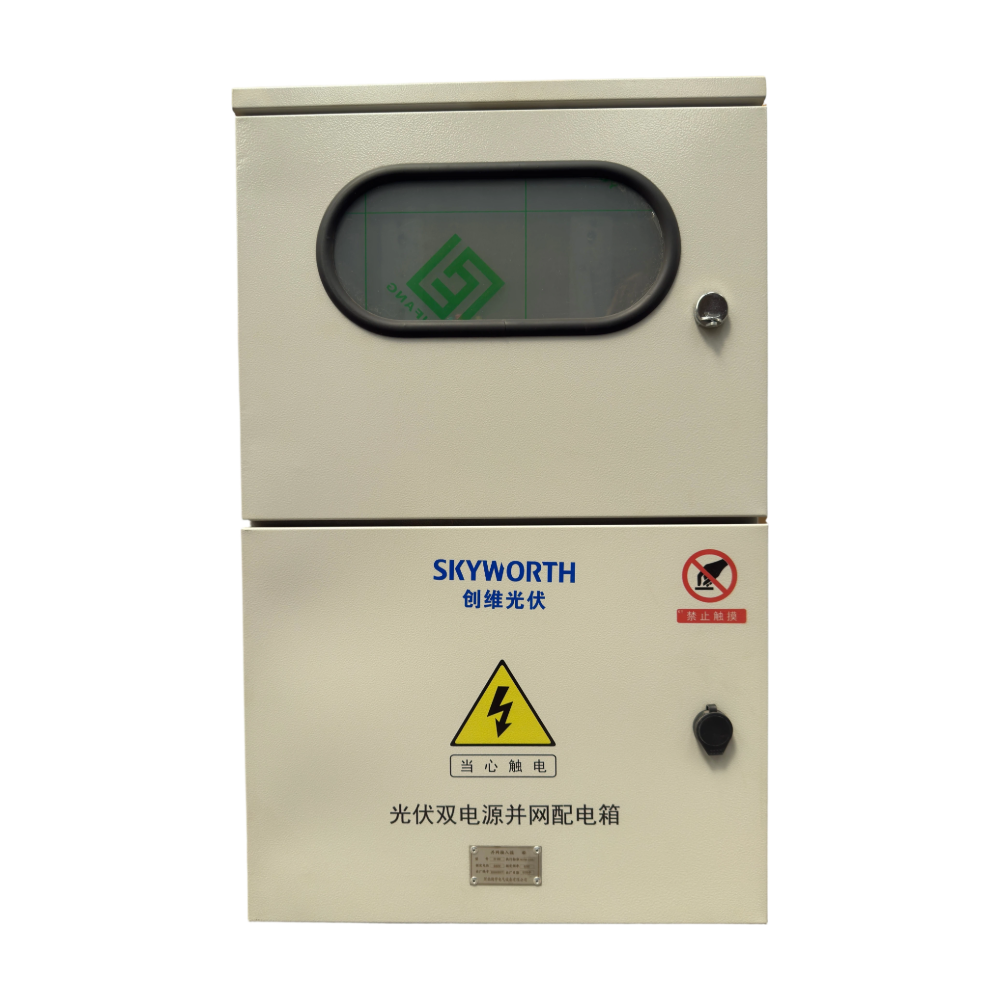
Distribution box enclosures: material and ingress protection together determine which site conditions the assembly can absorb over time.
Where Kuoyu Electrical fits in this framework
Hebei Kuoyu Electrical Technology Co., Ltd. is an electrical equipment manufacturer headquartered in Shijiazhuang, Hebei Province, China, founded in 2017, producing distribution boxes, distribution cabinets, transformers, electric wires, cables and other power equipment for power distribution systems, including solar PV, wind power, transport, medical, education, industrial manufacturing, commercial and civil construction applications. The company operates sheet metal processing and high- and low-voltage complete equipment assembly workshops, with a stated facility size of 9,000 m², 80 employees, 10 R&D engineers, and an annual output of 30,000 sets; approximately 30% of output is exported, with Southeast Asia and Africa listed among its main markets.
Applied to the four axes above, the company's published product data reads as follows:
- Distribution Box, PZ30 Series — an industrial and residential distribution box with rated voltage 220V/380V, rated current up to 125A, protection class IP40/IP54, and a choice of high-quality ABS plastic, cold-rolled steel plate, or optional stainless steel.
- Distribution Cabinet, GGD/GCS/MNS Series — a waterproof distribution cabinet with rated voltage 380V/220V, rated current up to 6300A, protection class IP54/IP65, and a body in high-quality cold-rolled steel plate with stainless steel optional.
- Transformers — the Oil Immersed Transformer, S11/S13 Series (voltage class 10kV–35kV; capacity 10kVA–31500kVA) and the Pad Mounted Transformer, ZGS11 Series (10kV/0.4kV; 100kVA–2500kVA) — cover the grid-side element of the same distribution chain.
On the manufacturing side, Kuoyu operates an OEM production model with customization available on voltage and logo, a monthly capacity of 8,000 units, a stated lead time of 30 days, a minimum order quantity of 2 units, and 100% testing in quality control. After-sales support is provided remotely. The company passed ISO9001 three-system certification in 2017.
Two field examples show how the environmental axes resolve in operational terms rather than in specifications. An automotive manufacturer installed 15 units for safe power distribution and circuit control on industrial production lines; the reported result after three years of continuous operation was zero circuit failure, with equipment operation stability reported to have increased by 30%, in an environment requiring waterproof and dustproof protection, corrosion resistance, strong protection, and a customized internal structure. A real estate developer installed 30 units for power transmission, distribution, voltage conversion and circuit control; the reported result after five years was zero safety accidents with a power supply reliability rate of up to 99.99%, in a configuration described as compact, easy to install, low-maintenance, and customizable.
Application scenarios: what the framework produces in practice
Across residential, commercial, and industrial PV power distribution engineering, the operating profile is consistent: 24/7 continuous operation in indoor and outdoor conditions that include high and low temperatures, humidity, and dust. The supporting equipment inside these enclosures is equally consistent — circuit breakers, contactors, relays, busbars, grounding devices, indicator lights, and cooling fans — and it is the interaction between that internal equipment and the enclosure environment that shapes service life.
Three configurations follow from the framework:
- Residential and small commercial installations, where the enclosure sits in a utility area or a sheltered rooftop position, are typically served by a PZ30 Series distribution box in the IP40/IP54 range, with ABS or cold-rolled steel selected according to mechanical exposure and whether the position is fully protected.
- Commercial and infrastructure installations with outdoor exposure, where splash and dust are both present, move up the range to IP54 or IP65 and toward metal construction, with corrosion resistance specified where humidity is persistent.
- Coastal, high-humidity, or heavily dust-loaded sites put the material axis first: stainless steel optional construction, corrosion resistance, drainage, and installation practice that protects gasket integrity become the deciding factors, with IP rating treated as a baseline rather than the objective.
All three configurations share a common requirement set: waterproof and dustproof protection, corrosion resistance, high mechanical strength, flame retardant behaviour, and a customizable structure that allows the internal layout to match the site's protection scheme.
Market signals behind the framework
The photovoltaic combiner box market was valued at approximately USD 2.8 billion in 2024, and the solar combiner boxes segment is projected to grow from USD 1.2 billion in 2026 to USD 2.1 billion by 2035 at a CAGR of 6.2%. Within that market, DC smart PV combiner boxes are expected to hold a 62.5% share by 2035, and Asia-Pacific accounted for 54.0% of solar market revenue in 2023, driven primarily by installations in China and India. Publicly identified participants in the category include Schneider Electric, Eaton, ABB, Sungrow, and Weidmüller.
Two observations matter for engineers. First, market sizing in this category diverges substantially depending on whether an estimate covers full distribution boards or only string combiner components — published figures range from roughly USD 139.3 million to USD 1.2 billion for overlapping periods — so procurement should treat any single market number as context rather than as a planning input. Second, the drift toward smart combiner boxes means more electronics inside enclosures, which raises the weight of the thermal and ingress axes: an enclosure that houses passive components has a different margin than one housing active monitoring electronics.
Comparison with conventional solutions, and the limits of the framework
Conventional low-voltage assemblies are designed around indoor switch rooms, where temperature, humidity, and dust are controlled and the enclosure is rarely the weak point. PV installations invert that assumption: the same distribution function is often moved outdoors, into an environment that supplies dust, moisture, and thermal cycling continuously.
PV-oriented enclosures answer that with higher ingress protection and more durable materials, and they carry real costs for doing so:
- Higher ingress protection raises unit cost and demands stricter installation discipline. An IP65 cabinet installed with poor gland sealing performs below its rating, and the failure tends to surface as a warranty dispute rather than as an obvious installation error.
- Sealed enclosures retain heat. Moving from IP54 to IP65 removes some of the paths by which heat escapes, so thermal planning — ventilation, filtered airflow, or cooling fans, which are standard supporting equipment in these assemblies — has to be designed at the same time as the sealing, particularly where ambient temperature is already high.
- Material choice is a trade-off rather than a ladder. ABS enclosures are lighter and can be appropriate in protected positions, but they offer lower mechanical strength than steel where impact or heavy handling is expected. Stainless steel optional construction improves corrosion behaviour in coastal and high-humidity sites, but it increases cost and can extend delivery.
- IP ratings do not cover every failure mode. Condensation, ultraviolet exposure of seals and plastics, and salt corrosion are addressed through design and material selection, not by the two digits of the IP code.
- Rated current ceilings define the boundary of the framework itself. An enclosure family rated up to 125A is not a candidate for a high-current distribution point regardless of how strong its environmental case appears; the GGD/GCS/MNS cabinet family, rated up to 6300A, exists for that reason.
The framework also has a data limitation worth stating plainly: it depends on site information that is frequently incomplete at the comparison stage. Microclimate within a single PV site — a shaded, north-facing wall versus an exposed roof edge — can produce different enclosure stresses inside the same project. Where that level of site data is unavailable, the practical response is to specify for the harsher of the plausible conditions rather than to average them.
Future outlook
If DC smart combiner boxes move toward the majority share projected for 2035, the enclosure stops being passive housing and becomes a component with a thermal and ingress budget of its own. That suggests three shifts for project engineers. Enclosure selection will increasingly be evaluated alongside the electronics it contains rather than after them. Corrosion and sealing specifications are likely to become more explicit in tender documents, particularly in the high-humidity markets that account for a large share of global solar deployment. And standards frameworks — IEC 61439-2:2020 in IEC markets and UL 1741 in North America — will keep determining which enclosure characteristics are treated as verifiable evidence rather than as marketing statements.
FAQ
How should an engineer decide between IP54 and IP65 for a PV distribution cabinet?
Start from the dominant stress at the installation point. IP54 means dust protected and resistant to splashing water; IP65 means dust tight and resistant to water jets. IP65 is the more appropriate baseline where fine dust accumulates or where directed water is likely, such as exposed ground-mount positions. IP54 can be sufficient where the enclosure is sheltered from direct spray. The decision also has a thermal consequence: a more tightly sealed enclosure retains more heat, so ventilation or filtered airflow has to be planned together with the higher rating.
Does a 220V/380V rated distribution box cover the voltage requirements of a PV project?
Voltage rating alone does not qualify an enclosure. The PZ30 Series distribution box is rated 220V/380V with a rated current up to 125A, while the GGD/GCS/MNS Series distribution cabinet is rated 380V/220V with a rated current up to 6300A. Matching a project requires checking both the voltage level and the combined current at the point of installation against the current ceiling of the enclosure family, then applying environmental criteria within that family.
Which enclosure material is appropriate for humid or coastal PV sites?
The PZ30 Series distribution box is available in high-quality ABS plastic, cold-rolled steel plate, or optional stainless steel; the GGD/GCS/MNS Series distribution cabinet uses high-quality cold-rolled steel plate with stainless steel optional. In humid and coastal conditions, corrosion resistance becomes the leading criterion, which generally points toward stainless steel optional construction at a higher cost. Material selection does not by itself resolve condensation, which forms inside a closed volume and requires separate drainage, ventilation, or installation practice.
Can a PZ30 Series distribution box serve a commercial rooftop PV array?
It depends on current and exposure. The PZ30 Series is an industrial and residential distribution box rated 220V/380V up to 125A with protection class IP40/IP54, intended for residential, commercial, and industrial electrical systems. It can serve commercial installations where the combined current and the environmental exposure fall inside that rating. Where the installation requires higher current or sustained outdoor exposure at IP65, the comparison normally moves to the GGD/GCS/MNS distribution cabinet family, which is rated up to 6300A and IP54/IP65.
What site data should be collected before comparing PV distribution enclosures?
At minimum: whether the mounting position is indoor, sheltered, or fully exposed; dust load; humidity and whether the site is coastal; the ambient temperature range and daily swing; how often the enclosure will be opened for inspection; the voltage and combined current at the installation point; the inspection standard that applies, such as IEC 61439-2:2020 or UL 1741; and any space or weight constraints. Microclimate variation within one site should also be recorded, because different mounting positions can produce different stress levels.
Do IP ratings cover condensation inside a PV enclosure?
No. The two digits of an IP code describe protection against solid objects, dust, and water entering from outside the enclosure. Condensation forms inside a closed volume when temperature changes drive moisture out of the air, and it is unaffected by the external ingress rating. Reducing condensation risk is a matter of enclosure material, drainage and ventilation design, installation practice, and the temperature profile of the site rather than of the IP number.
Reference materials
Kuoyu's product brochure, covering distribution boxes, distribution cabinets, and transformers with their published specifications, is available for download: Kuoyu Electrical product brochure (PDF). Additional technical detail is published at kuoyuelectricity.com.
Есть вопросы или нужны дополнительные детали?
Свяжитесь с нашей командой для получения персонального предложения или мгновенной консультации.
Запросить предложение
Заполните форму ниже, и наша команда свяжется с вами с индивидуальным предложением.
Прямой чат WhatsApp
Предпочитаете общаться в реальном времени? Напишите нам в WhatsApp для мгновенной помощи и быстрых ответов.
- Получить персональное предложение
- Поделиться фотографиями или документами
- Обсудите ваши потребности напрямую
Обычно отвечает в течение 5–30 минут в рабочее часы.