
Speed vs Flexibility in Pharma Blister-Cartoning Investments
Speed vs Flexibility in Pharma Blister-Cartoning Investments
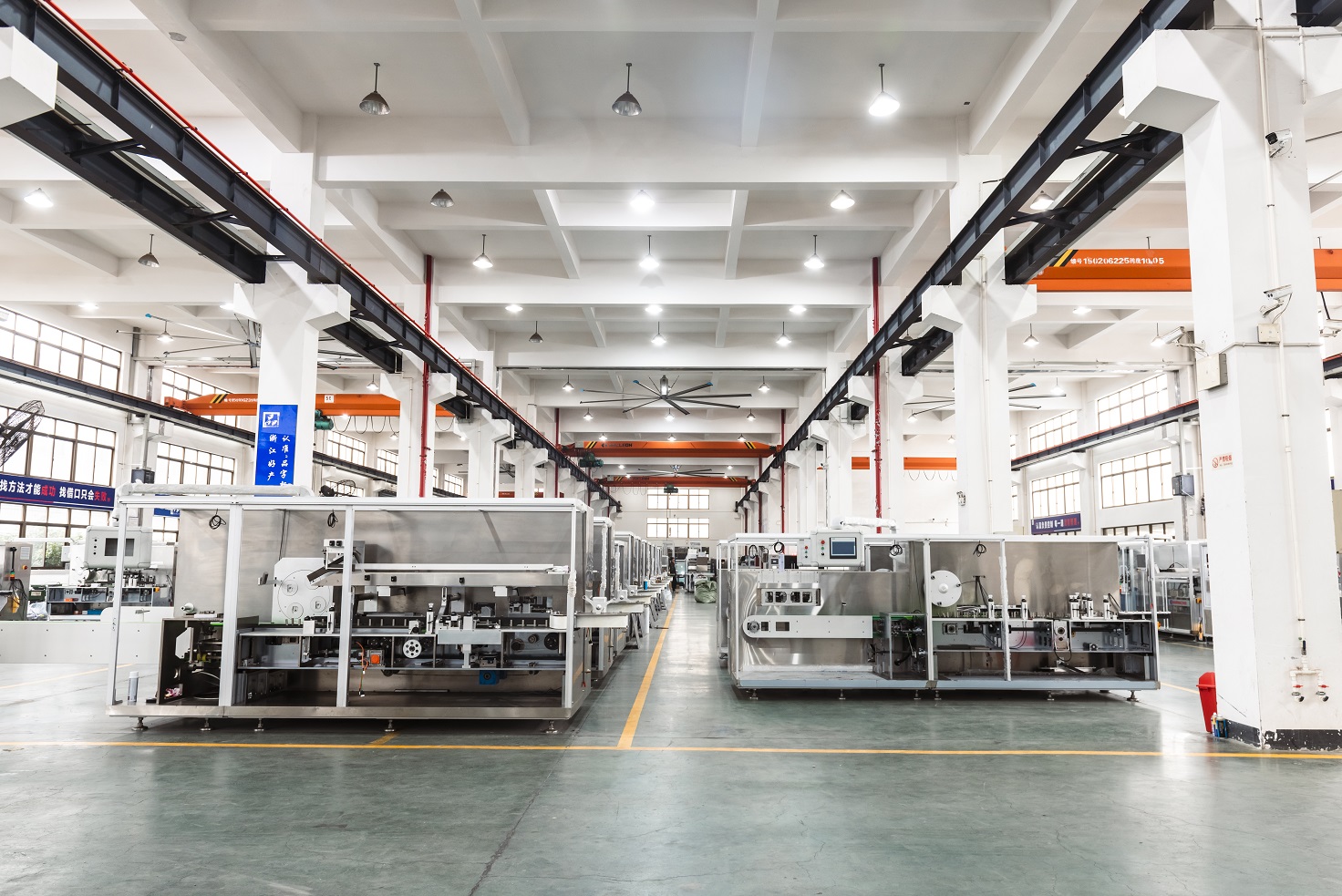
Solid-dosage plants rarely face a clean choice between output and adaptability. One site may run a single high-volume tablet SKU across three shifts and measure performance in blisters per minute. Another may pack tablets, capsules and soft capsules into several carton formats every week and measure performance in changeover hours. Both are evaluating the same equipment category — an integrated blister-cartoning line — and both are frequently told the same thing: pick one orientation.
That framing is too binary for a capital investment. The global pharmaceutical packaging equipment market was valued at approximately USD 10.71 billion in 2024 (SkyQuest Technology), and the pharmaceutical blister packaging machine segment alone is projected to reach USD 2.57 billion by 2025 with a CAGR of 2.8% (Custom Market Insights). Buyers working through the Research and Evaluation stages need a repeatable way to compare lines that are marketed on different strengths.
This article builds a comparison framework around four variables — effective output, changeover load, material supply continuity and downstream integration scope — and examines how two specific design features, preset memory and independent servo replenishment, move a line away from the speed-versus-flexibility trade-off instead of simply choosing a side. The DHL8005H blister-cartoning line from Zhejiang Hoping Machinery Co., Ltd. is used as a reference configuration because its published specification, up to 800 blisters/min and 500 cartons/min with intelligent servo handling, sits between dedicated high-output machines and general-purpose flexible lines.
Why speed and flexibility pull in different directions
A speed-led configuration is specified around a narrow product envelope. Tooling, transfer timing and carton handling are optimized for one blister format and one carton size, so the line can hold its rated maximum for long uninterrupted periods. Flexibility-led configurations invert that priority: the line is specified so that blister format, carton size, leaflet format and feeding method can be changed between batches without rebuilding the machine.
Modern pharmaceutical packaging lines are increasingly specified for both conditions at once. Hoping describes the operating environment of its blister-cartoning application as continuous high-speed operation combined with multi-batch, multi-format production, under GMP-oriented cleanroom or pharmaceutical packaging workshop conditions, with a fully servo-linked operating mode, PLC/HMI interface and synchronized multi-station control. Those requirements are not contradictory on paper, but they compete for the same mechanical and control resources.
- Speed-side demands: short transfer times, stable forming and sealing at high cycle rates, uninterrupted material feed, and limited false rejection at full rate.
- Flexibility-side demands: repeatable changeover, stored parameters, accessible tooling, cleaning-friendly surfaces and documented changeover procedures for qualification.
- Shared demands: GMP-oriented design, cleanability, maintainability, and connection to banding, case packing and palletizing equipment downstream.
The practical consequence is that a line quoted at the highest blister rate is not automatically the highest-throughput asset in a multi-product plant. If each format change consumes a full shift of manual adjustment, the effective output of a faster machine can fall below that of a slower line that changes over in a fraction of the time.
A four-variable comparison framework
The framework below converts the speed-versus-flexibility argument into four variables that can be evaluated from a technical quotation, a factory acceptance test and a reference visit. It is intended to be applied before commercial comparison, because the same rated output figure can hide very different operating realities.
| Framework variable | Speed-led orientation | Flexibility-led orientation | What to verify in the quotation |
|---|---|---|---|
| Effective output | Rated blister and carton rates sustained over long single-format runs | Rated rates sustained across mixed batches with limited warm-up loss between formats | Rated maximum versus expected output for the confirmed formats, materials and shift pattern |
| Changeover load | Few format changes, adjusted manually at long intervals | Frequent format changes supported by stored parameters and accessible tooling | Whether format parameters are stored and recalled, and which adjustment steps remain manual |
| Material supply continuity | Material splice and reload accepted as planned stops | Material replenishment designed to continue during running | Number of independent replenishment channels and the auto-splicing scope for PVC and aluminium foil |
| Downstream integration scope | Line ends at carton discharge or simple accumulation | Line connects to banding, case packing and palletizing with format-independent buffering | Interface definition, buffering capacity and confirmed rates of downstream equipment |
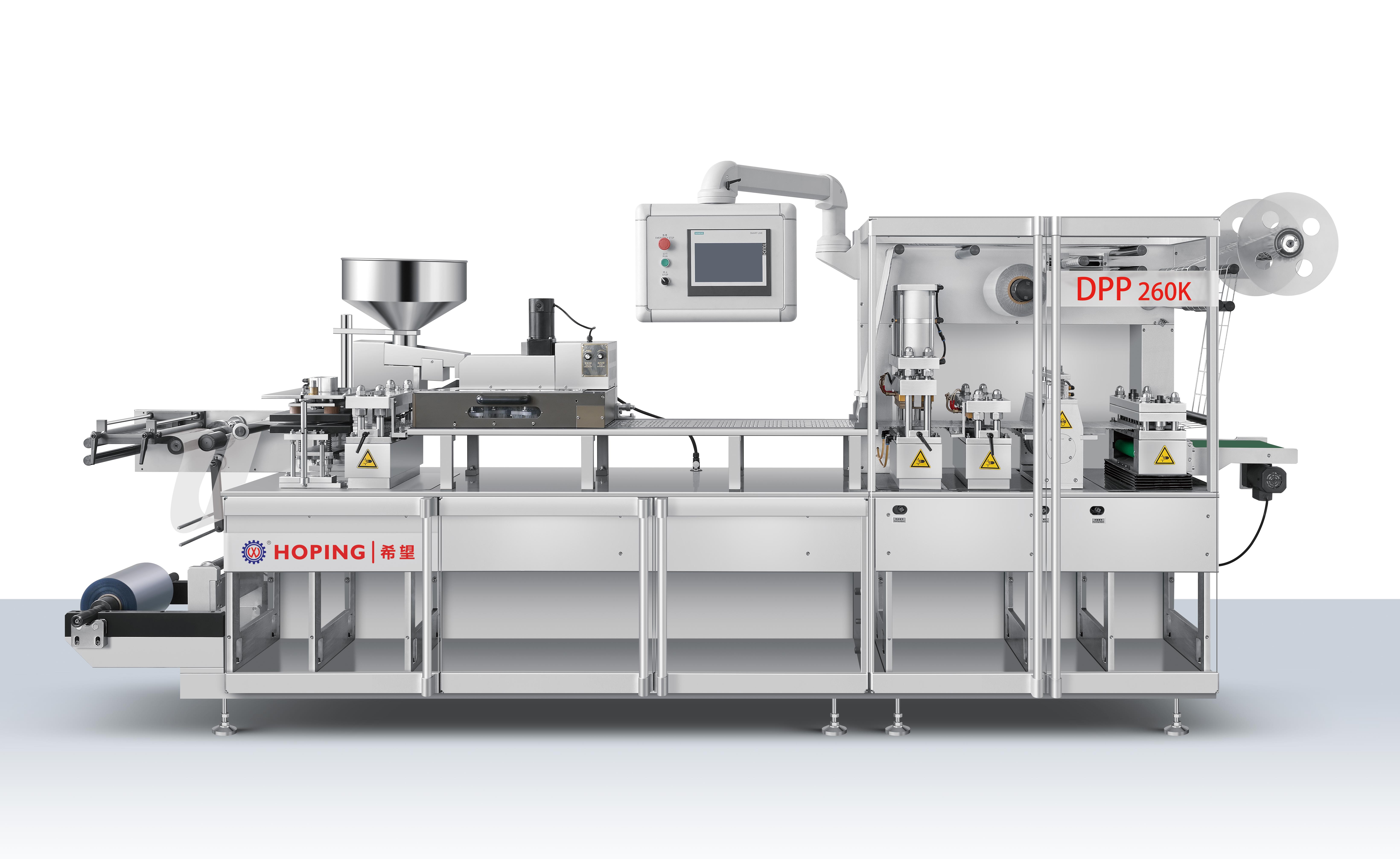
Applying the framework usually produces a clearer answer than asking for the fastest machine available. A plant with two or three product families and weekly batch changes will weight changeover load and material continuity heavily. A plant with one dominant SKU and a stable forecast will weight effective output and cost per carton. Many solid-dosage sites sit between those extremes, which is why the middle of the market has moved toward servo-driven integrated lines rather than either extreme.
Two mechanisms that narrow the trade-off
Preset memory: converting changeover from adjustment to recall
Preset or recipe memory stores the machine parameters associated with a validated format — forming, sealing, transfer and cartoning positions — so that the next batch of the same format can be recalled through the human-machine interface instead of being re-established by hand. On the DHL8005H blister-cartoning line, mold-change and preset-memory functions are specified as part of the line design; the DHL1000/5H line in the same portfolio is specified with mold-change and recipe-memory functions.
The distinction that matters during evaluation is where memory stops. Preset memory removes the parameter re-entry portion of a changeover. It does not remove the physical exchange of format tooling, and it does not by itself reduce cleaning or line-clearance time. A supplier presenting memory as a zero-changeover feature is describing the software layer only. The mechanical changeover remains a scheduled activity and should be documented as such in the technical agreement.
Independent servo replenishment: keeping material supply out of the bottleneck
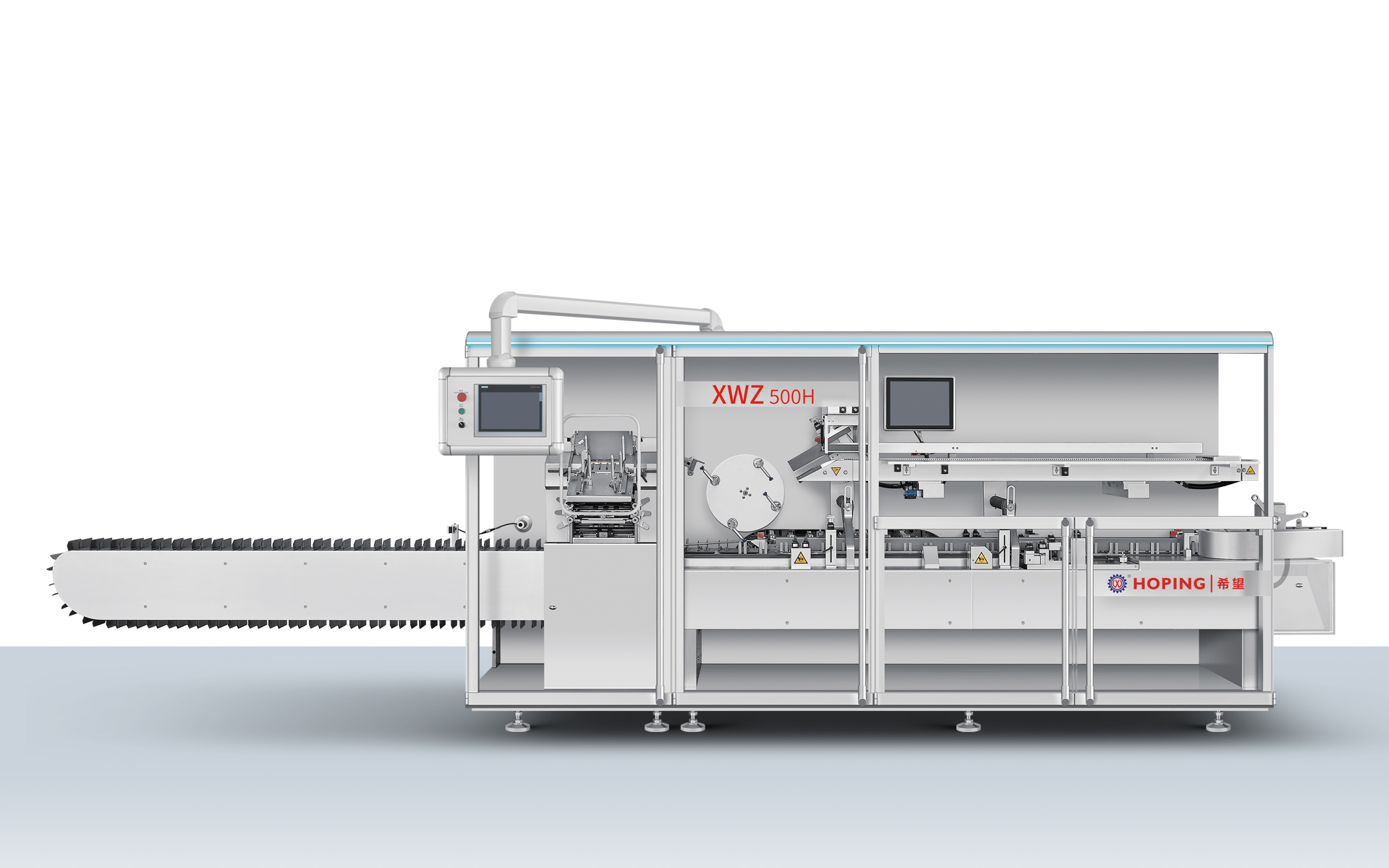
At high cycle rates the second common source of lost output is packaging material supply, because film and foil rolls must be spliced and the material path must remain tensioned and aligned. Independent servo-driven replenishment separates this function from the main drive so that material channels can be replenished with less disruption to the running cycle.
Channel count is an indicator of how much parallelism the design provides. The DHL8005H line is specified with a three-channel servo-driven independent replenishment system; the higher-capacity DHL1000/5H line is specified with four channels; the DHL6004 line is specified with servo-driven independent replenishment. Both the DHL8005H and the DHL1000/5H include automatic splicing for PVC and aluminium foil. Higher channel counts increase operational resilience and also increase the number of components that maintenance planning must cover — a trade-off that belongs in the total cost discussion, not only in the speed column.
Transfer and control architecture
Between the blister and the carton, the transfer system determines how much of the line's rated speed survives into carton output. The DHL8005H and DHL1000/5H lines use a D3 intelligent top-loading parallel tracking transfer system; the DHL7004 and DHL7005H lines use the self-developed IRB24 intelligent transfer robot. Control architecture is specified as a Beckhoff motion controller with a CP9315 industrial PC on the DHL8005H and DHL6004 lines, while the DHL7004 and DHL7005H lines use a Siemens motion controller with TP900 HMI. For a buyer, the control platform matters mainly for spare-part strategy, in-house engineering familiarity and data-interface planning.
Where the DHL8005H line sits in the framework
Zhejiang Hoping Machinery Co., Ltd. is a Chinese manufacturer of pharmaceutical packaging machinery, established in 2001, operating a 28,800 ㎡ facility with more than 300 employees, an annual output of approximately 500 units and a 56-engineer R&D team. Its main product groups are blister packing machines, cartoning machines, case packing machines and end-of-line packaging machines; exports account for about 25% of business, with Southeast Asia, the Middle East, Eastern Europe, South America and Africa listed as main markets. The company states CE and ISO 9001/14001 certification for its pharmaceutical packaging machinery.
Within that portfolio, the DHL8005H is an integrated blister-cartoner specified at up to 800 blisters/min and 500 cartons/min. Its published specification lists a D3 intelligent top-loading parallel tracking transfer system, multiple feeding methods, PVC/Alu foil auto splicing, a three-channel servo-driven independent replenishment system, a Beckhoff motion controller with CP9315 industrial PC, mold-change and preset-memory functions, and a GMP-oriented line design. Read against Table 1, it keeps a high output ceiling while retaining parameter recall and multi-channel material supply — the two mechanisms described above.
| Model | Rated maximum blister output | Rated maximum carton output | Transfer technology | Material replenishment | Control platform and memory |
|---|---|---|---|---|---|
| DHL6004 | Up to 600 blisters/min | Up to 400 cartons/min | High-speed transfer and cartoning linkage | Servo-driven independent replenishment | Beckhoff motion controller, CP9315 industrial PC; convenient mold change |
| DHL7004 | Up to 700 blisters/min | Up to 400 cartons/min | IRB24 intelligent transfer robot | Servo-driven independent replenishment | Siemens motion controller, TP900 HMI; mold-change support |
| DHL7005H | Up to 700 blisters/min | Up to 500 cartons/min | IRB24 intelligent transfer robot | Independent replenishment | Siemens motion controller, TP900 HMI; mold-change support |
| DHL8005H | Up to 800 blisters/min | Up to 500 cartons/min | D3 intelligent top-loading parallel tracking transfer system | Three-channel servo-driven independent replenishment | Beckhoff motion controller, CP9315 industrial PC; mold-change and preset-memory functions |
| DHL1000/5H | Up to 1000 blisters/min | Up to 500 cartons/min | D3 intelligent top-loading parallel tracking transfer system | Four-channel servo-driven independent replenishment | Beckhoff motion controller, high-bus industrial control system; mold-change and recipe memory |
Two positional observations follow. First, carton output does not scale linearly with blister output across the range: from 600 to 1000 blisters/min, published carton capacity moves only from 400 to 500 cartons/min. The cartoning stage, leaflet handling and transfer system, not the blister stage, are the practical ceiling in this family. Second, replenishment parallelism appears to be scaled to demand rather than maximized in every model, with the DHL8005H pairing 800 blisters/min with three channels and the DHL1000/5H pairing 1000 blisters/min with four.
Where secondary flow wrapping is required before cartoning, the same portfolio offers the IXW600 line at up to 600 blisters/min, 300 packs/min and 300 cartons/min, and the IXW800 at up to 600 blisters/min, 600 packs/min and 500 cartons/min. Liquid dosage formats are addressed separately by the IXW400, specified at up to 400 blisters/min and 150 cartons/min for pre-filled syringes, ampoules and cartridges. These are different process routes rather than higher or lower specifications, and they should be compared only after the packaging process route has been fixed.
Application fit: which project types match which orientation
The scenario data associated with these lines lists five project types: new solid dosage blister packaging lines, existing packaging line upgrades, high-capacity expansion, intelligent packaging workshop retrofit, and blister-cartoning-bundling or case-packing downstream integration. The same source describes the line's role as completing blister packaging, leaflet folding, carton opening, blister insertion, batch and date coding, inspection and rejection, and downstream connection in order to improve automation and reduce manual transfer.
- New high-capacity lines: effective output dominates; changeover load is secondary because the product mix is usually defined at the design stage.
- Upgrades of existing lines: changeover load and interface compatibility dominate, because new equipment must operate alongside existing assets and validated procedures.
- High-capacity expansion: a mixed case, where output must rise without proportionally increasing changeover time — the point at which preset memory and multi-channel replenishment contribute.
- Intelligent workshop retrofit: control architecture, data interface and inspection/rejection integration dominate; ERP/MES data interfaces are listed among optional modules depending on project configuration.
- Downstream integration projects: buffering and rate matching dominate, because banding, case packing and palletizing operate on grouped output at rates different from the cartoner.
Representative projects in this category involve large pharmaceutical manufacturers, solid dosage production companies and pharmaceutical engineering contractors, with quantities in the range of five to ten lines and applications covering tablets, capsules and other solid dosage forms in new line construction, capacity expansion or upgrade programs. Stated project objectives include improving packaging automation, reducing manual transfer, improving blister-to-carton connection efficiency, reducing wrong-insertion and missing-leaflet risks, and supporting downstream automation integration. Customer names are disclosed only with authorization, so evaluation teams should request authorized references rather than assuming a published project list.
Matched equipment in the same scenario specification includes the blister packing machine, cartoner, a D3 intelligent top-loading parallel robot, leaflet folder, coding machine, vision inspection, checkweigher, stretch bander, case packer, palletizer and ERP/MES data interface, depending on project configuration. Special requirements include GMP-oriented production management, cleanability and maintainability, reduced false rejection and downtime where configured, non-standard customization, and defined capacity, blister format, carton size, leaflet format and downstream connection.
Market signals behind the decision
Three market facts belong in the business case. Asia Pacific held the largest revenue share of the pharmaceutical packaging equipment market at 40.7% in 2025 (Grand View Research), which explains the depth of supplier choice available to buyers sourcing from the region. The pharmaceutical cartoning machinery segment was valued at USD 1.46 billion in 2024 (Fortune Business Insights). And the top three suppliers in the blister packaging machine market — Uhlmann, IMA and Marchesini — collectively hold approximately 29% of market share, leaving most of the market to regional and specialist manufacturers.
Published market size estimates for the total equipment category diverge, which is itself a useful evaluation signal: SkyQuest Technology values the market at approximately USD 10.71 billion for 2024, while Grand View Research reports USD 7.0 billion for 2025. The difference largely reflects whether secondary packaging and end-of-line equipment are counted alongside primary packaging. Buyers should treat any single market figure as a directional input and anchor decisions in their own validated format list, shift pattern and downstream configuration.
Compliance requirements constrain the specification independently of throughput. Pharmaceutical packaging machines are commonly aligned with ISO 15378, which integrates GMP requirements for primary packaging materials, and EU pharmaceutical equipment safety is governed by the Machinery Directive 2006/42/EC together with the EN 415 series of standards for packaging machines. These are entry conditions for a regulated market rather than differentiators, but they determine which verification documents a buyer should request.
What traditional and dedicated configurations still do better
An integrated servo-driven blister-cartoner is not automatically the right answer. A mechanically linked or single-format dedicated line can be preferable when the product mix is fixed for the life of the equipment, when the site engineering team prefers a simpler mechanical drive system, when floor space is constrained, or when the format-part inventory required by a multi-format line cannot be stored and controlled under the site documentation system.
A conventional line end also carries a different risk profile. Where blister output is transferred manually into cartoning, the line depends less on a single integrated control architecture; the counter-argument is the risk the same manual step introduces. Hoping's own project objectives include reducing manual transfer, reducing wrong-insertion and missing-leaflet risks, and improving blister-to-carton connection efficiency — which identifies the manual step as the point of risk rather than the point of advantage.
Boundaries and limits of the specifications
- Rated maximum is not effective output. The figures in Table 2 are published maximum capacities. Actual output depends on the confirmed blister format, carton size, leaflet format, packaging material, component feed stability and the line configuration as ordered. Quotation comparison is valid only when both suppliers quote against the same format list.
- Preset memory reduces, but does not remove, changeover work. Tooling exchange, cleaning and line clearance remain scheduled activities, and changeover time should be agreed and documented for each validated format.
- Downstream rates are not directly comparable to line output. Within the same portfolio, published rates are about 30–60 bundles/min for stretch banders, about 30–60 bundles/min for overwrappers, and about 5–12 cases/min for case packing equipment. Each bundle or case contains multiple cartons, so these figures cannot be read as percentage losses against carton output — but accumulation and buffering between cartoning and case packing must be confirmed in the project design.
- Utilities and site conditions are fixed inputs. Integrated lines in this range operate on 380V 50Hz supplies with clean compressed air at 0.5–0.7 MPa, and higher-output models require correspondingly higher installed power and air consumption.
- Delivery conditions are project-dependent. Hoping indicates a typical lead time of 60–120 days after technical confirmation, subject to model, configuration, project complexity and contract terms, with a minimum order quantity of one set or one complete line. Quality control is described as a sequence covering incoming material inspection, key component inspection, assembly inspection, electrical safety check, no-load trial run, material trial, factory acceptance test, customer witness acceptance and pre-shipment inspection.
- Flexibility has a floor-space and inventory cost. Additional format parts, larger magazines and multi-channel material paths consume workshop area and documentation effort — a real cost that rarely appears beside a speed figure.
Future outlook
The direction of travel in this equipment category is toward configurations that make the speed-versus-flexibility choice less binding rather than toward pure output records. The features driving that shift are already visible in current specifications: servo-driven motion architectures, stored-parameter format management, multi-channel material replenishment with automatic splicing, robot-based transfer between stages, and inspection and rejection integrated into the line rather than added downstream.
Two expectations follow for procurement teams planning several years ahead. Data interfaces, including ERP/MES connections where configured, will increasingly be specified alongside mechanical requirements as traceability expectations rise in regulated packaging. And because Asia Pacific carries the largest revenue share of the market, supplier comparison will remain a multi-region exercise in which documentation quality and qualification support become as decisive as rated output. Teams that evaluate against the four variables in Table 1, and verify which parts of a format change are handled by stored parameters and which remain manual, will be better placed than teams comparing headline capacities alone.
FAQ
What is the difference between a speed-led and a flexibility-led blister-cartoning line?
A speed-led line is specified around a narrow product envelope so it can sustain its rated blister and carton rates over long single-format runs. A flexibility-led line is specified so that blister format, carton size, leaflet format and feeding method can be changed between batches with limited manual adjustment. The difference is not only rated output; it appears in how much of a format change is handled by stored parameters, accessible tooling and documented changeover procedures.
How much flexibility does a high-output line such as the DHL8005H retain?
The DHL8005H is an integrated blister-cartoner specified at up to 800 blisters/min and 500 cartons/min, with a D3 intelligent top-loading parallel tracking transfer system, multiple feeding methods, three-channel servo-driven independent replenishment, and mold-change and preset-memory functions. Those features support multi-format production, but the specification does not state a changeover time per format. Buyers should request changeover documentation for each validated format rather than inferring flexibility from the feature list.
What role does preset memory play during a format changeover?
Preset or recipe memory stores the machine parameters associated with a validated format — forming, sealing, transfer and cartoning positions — so they can be recalled through the human-machine interface instead of being re-established manually. On the DHL8005H line this function is combined with mold-change capability; the DHL1000/5H line is specified with mold-change and recipe-memory functions. Preset memory removes the parameter re-entry part of a changeover. It does not remove tooling exchange or reduce cleaning and line-clearance time.
Why does independent servo replenishment matter at high speed?
At high cycle rates, packaging material supply is a frequent cause of lost output, because film and foil rolls must be spliced and the material path must stay tensioned and aligned. Independent servo-driven replenishment separates this function from the main drive so material channels can be replenished with less disruption to the running cycle. The DHL8005H line uses a three-channel system, the DHL1000/5H uses four channels, and PVC/aluminium foil auto splicing is included on both. A higher channel count increases resilience and also increases the number of components covered by maintenance planning.
What site conditions and utilities does an integrated blister-cartoning line require?
These lines are specified for GMP-oriented cleanroom or pharmaceutical packaging workshop conditions and for continuous high-speed, multi-batch and multi-format production, with a fully servo-linked operating mode, PLC/HMI interface and synchronized multi-station control. Utility requirements in the published specifications are 380V 50Hz power supplies and clean compressed air at 0.5–0.7 MPa, with installed power and air consumption increasing at higher output levels. Depending on configuration the line may also connect to banding, case packing, palletizing and ERP/MES data interfaces.
How should an evaluation team compare quoted capacities between two suppliers?
Quoted capacities are comparable only when both suppliers quote against the same confirmed format list, packaging materials and downstream configuration. A practical sequence is to fix the format list first, then compare rated maximum capacity, the portion of changeover handled by stored parameters, the number and scope of material replenishment channels, the buffering between cartoning and case packing, and the verification documentation offered — factory acceptance testing, material trials and customer witness acceptance are listed among Hoping's quality control steps. Market context such as the approximately 29% combined share held by the three largest blister packaging machine suppliers indicates how much of the market is served by specialist manufacturers, so documentation depth often differentiates suppliers more clearly than output figures.
Reference material: the manufacturer's catalogue covering blister packing machines, cartoning machines, case packing machines and end-of-line packaging equipment is available at Hoping Machinery Catalog.