
Sprinkler Procurement FAQ: Pressure, Nozzle, Flow, Connections
Most sprinkler procurement delays are hydraulic rather than commercial. Before price, delivery terms or payment schedules are discussed, buyer and supplier usually have to settle four questions: what pressure the system can actually deliver at the nozzle, what nozzle diameter that pressure will support, what flow the pump must therefore supply, and which connection will physically mate with the pipework already on site. In rain gun projects, those four answers determine whether a specification is workable at all, and they are also the questions most often answered vaguely in a first quotation.
This reference answers the recurring pressure, nozzle, flow and connection questions in sprinkler and rain gun procurement using concrete operating points published for the FOISON Sprinkler range: the FSN50 rain gun at 0.5 MPa with a 20 mm nozzle and at 0.7 MPa with a 26 mm nozzle, the FSC50 at 0.15 MPa with a 14 mm nozzle, and the connection conventions that appear most often in enquiries — 2" thread, 1-1/2" female thread and 80 flange. FOISON Sprinkler is the brand identity of Xuzhou Foison Sprinkler Irrigation Equipment Co., Ltd, a manufacturer of irrigation spray guns and irrigation equipment founded in 2013 and located in Pei County Industry Area, Xuzhou City, Jiangsu Province, China, a region recognised as an irrigation equipment base.
.jpg)
Why pressure, nozzle and connection questions decide a sprinkler order
Three specification failures account for most sprinkler disputes, and all three are visible before an order is placed.
Under-pressure at the nozzle. If the pump cannot hold the nozzle pressure the gun was specified for, the jet loses velocity, the throw shortens and the distribution pattern becomes uneven. The buyer then measures a coverage problem, while the actual cause is a pressure problem several hundred metres upstream at the pump or in undersized laterals.
Nozzle diameter out of step with the water source. A larger nozzle delivers more flow at the same pressure. Where the water source, storage or pump capacity is limited, an oversized nozzle empties the buffer faster than it refills and the system cycles rather than irrigates.
Connection mismatch. A gun specified with the wrong inlet interface — a threaded inlet where the line ends in a flange, or the wrong thread size — becomes a site-fabrication problem. Adapters are usually available, but they add a leak path, a pressure loss and a delivery delay.
The opportunity is straightforward: a specification written around an operating point (pressure plus nozzle plus connection) travels cleanly through quoting, tendering, installation and repeat orders. A specification written around a model name alone does not. This is also why buyers moving away from surface or flood irrigation tend to ask pressure questions first — FOISON Sprinkler's comparison material for sprinkler irrigation against normal irrigation records a stated performance gap of at least 50% in energy and cost, a cost difference of 20% lower, a low failure rate with easy installation and maintenance, and high water-spray efficiency with uniform coverage.
How nozzle diameter and pressure interact on a rain gun
On any rain gun, the nozzle sets the flow area and the pressure sets the energy available to push water through it. Two consequences follow. First, at a constant pressure, a larger nozzle passes more water per hour, because flow scales with the cross-sectional area of the orifice. Second, at a constant nozzle, raising the pressure increases the exit velocity of the jet, which generally lengthens the throw and produces finer atomisation — but also raises the load on the pump and increases losses in the pipework.
Because of that relationship, manufacturers publish matched pressure and nozzle combinations rather than single figures. In the FOISON Sprinkler range, two documented FSN50 operating points illustrate the pattern: the FSN50 is used at 0.5 MPa with a 20 mm nozzle, and at 0.7 MPa with a 26 mm nozzle. The FSC50 is documented at a distinctly lower band — 0.15 MPa with a 14 mm nozzle. Read together, these three points describe a usable ladder from a low-head configuration to a higher-pressure, larger-nozzle configuration.
| Operating band | Reference configuration | Nozzle | What it implies for the system |
|---|---|---|---|
| 0.15 MPa (about 1.5 bar) | FSC50 | 14 mm | Fits layouts with limited pump head; a smaller nozzle at a lower pressure carries the lightest flow demand of the three reference points. |
| 0.5 MPa (about 5 bar) | FSN50 | 20 mm | A mid-band working point for farm and industrial layouts where a mid-head pump and adequate main line diameter are available. |
| 0.7 MPa (about 7 bar) | FSN50 | 26 mm | The higher-pressure, larger-nozzle pairing; it demands the most pump output of the three and should be specified only when the source can sustain it. |
The practical rule for buyers is simple: never quote a nozzle diameter without stating the pressure it is paired with, and never quote a pressure without stating the nozzle. A 26 mm nozzle at a pressure the pump cannot hold will not reproduce the performance of the documented FSN50 pairing, and a 14 mm nozzle at 0.7 MPa is not the same configuration as the documented FSC50 point at 0.15 MPa.
Turning a sprinkler pressure band into a pump requirement
A pressure band is only a buying criterion once it is converted into a pump duty. The conversion is not a single number, because nozzle pressure is only one of three components of the head the pump has to supply.
Required head = nozzle pressure + friction loss in pipes and fittings + elevation lift.
A system running FSN50 guns at 0.5 MPa at the nozzle therefore needs more than 0.5 MPa at the pump outlet. On a flat layout with short laterals the difference may be modest; on a long run, with several guns operating at once, or where water is lifted from a sump or a low reservoir, friction and elevation can dominate the calculation. The same logic applies in reverse to the low band: a line built around the FSC50 at 0.15 MPa is attractive precisely because the pump duty is smaller, but it has less margin to absorb avoidable friction losses.
Two mistakes recur in pump selection. The first is sizing the pump from the data sheet pressure of the gun and ignoring the losses between pump and nozzle, which produces a system that runs just under its documented operating point. The second is sizing a pump for a single gun and then operating three, which drops the pressure at every nozzle simultaneously. Both are avoidable when the pressure band, the nozzle and the number of simultaneous outlets are stated together at the quotation stage.
Connection types: 2" thread, 1-1/2" female thread and 80 flange
Connection questions rarely appear in marketing material, yet they account for a large share of pre-shipment correspondence. Rain gun inlets in this category generally appear in three conventions: a 2" thread, a 1-1/2" female thread, and an 80 flange. Each implies a different installation approach and a different set of items to verify before the order is confirmed.
| Connection convention | Typical mating arrangement | What to verify before ordering |
|---|---|---|
| 2" thread | Threaded inlet sized for a 2-inch line or hose fitting; commonly used on portable and semi-portable gun stands. | Confirm the thread form and sealing method, and whether a swivel or quick-coupling is fitted so the gun can be repositioned without stressing the joint. |
| 1-1/2" female thread | Accepts a matching male nipple or adapter; a smaller interface that suits lighter gun assemblies and lower-flow configurations. | Confirm that the mating nipple matches the thread size exactly, and that the reduced bore does not become the limiting pressure loss on the line. |
| 80 flange | Bolted flange joint, typically on fixed installations where the gun is mounted on a riser or a permanent main line. | Confirm bolt pattern, gasket type and tightening sequence, and allow for the flange joint position during installation planning. |
The safest procurement habit is to send the supplier a photograph and a measurement of the existing outlet on site, together with the intended mounting arrangement. Where a project uses a mix of portable guns and fixed risers, it is worth stating the connection for each position separately rather than ordering a single interface across the whole site.
What an operating point means for distributor and long-term supply planning
For a distributor, a pressure and nozzle configuration is not a one-off purchase decision — it is a stock-keeping decision. The same operating point has to be repeatable across shipments, and the connection interface has to stay consistent so that the accessories sold alongside the gun continue to fit.
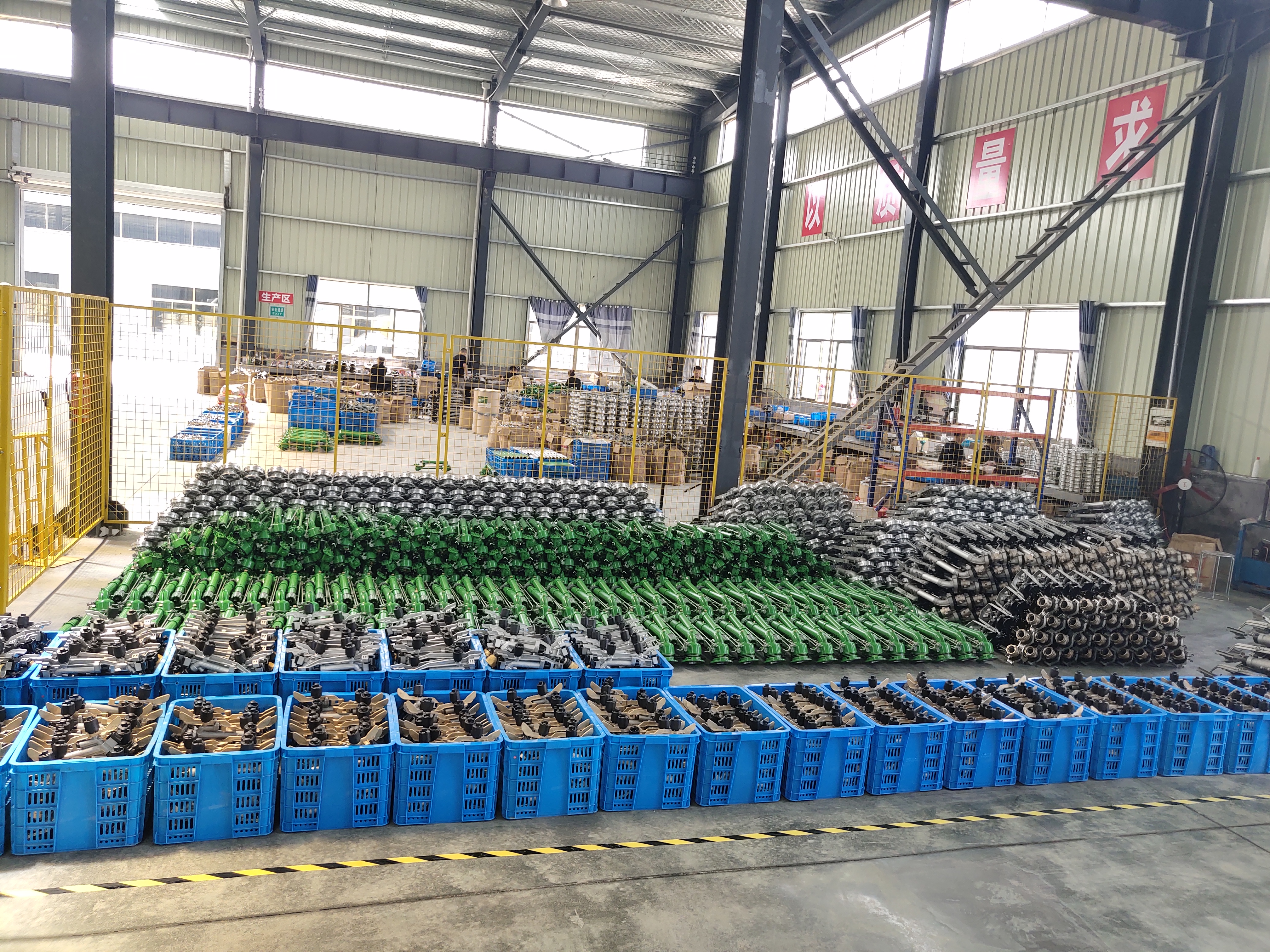
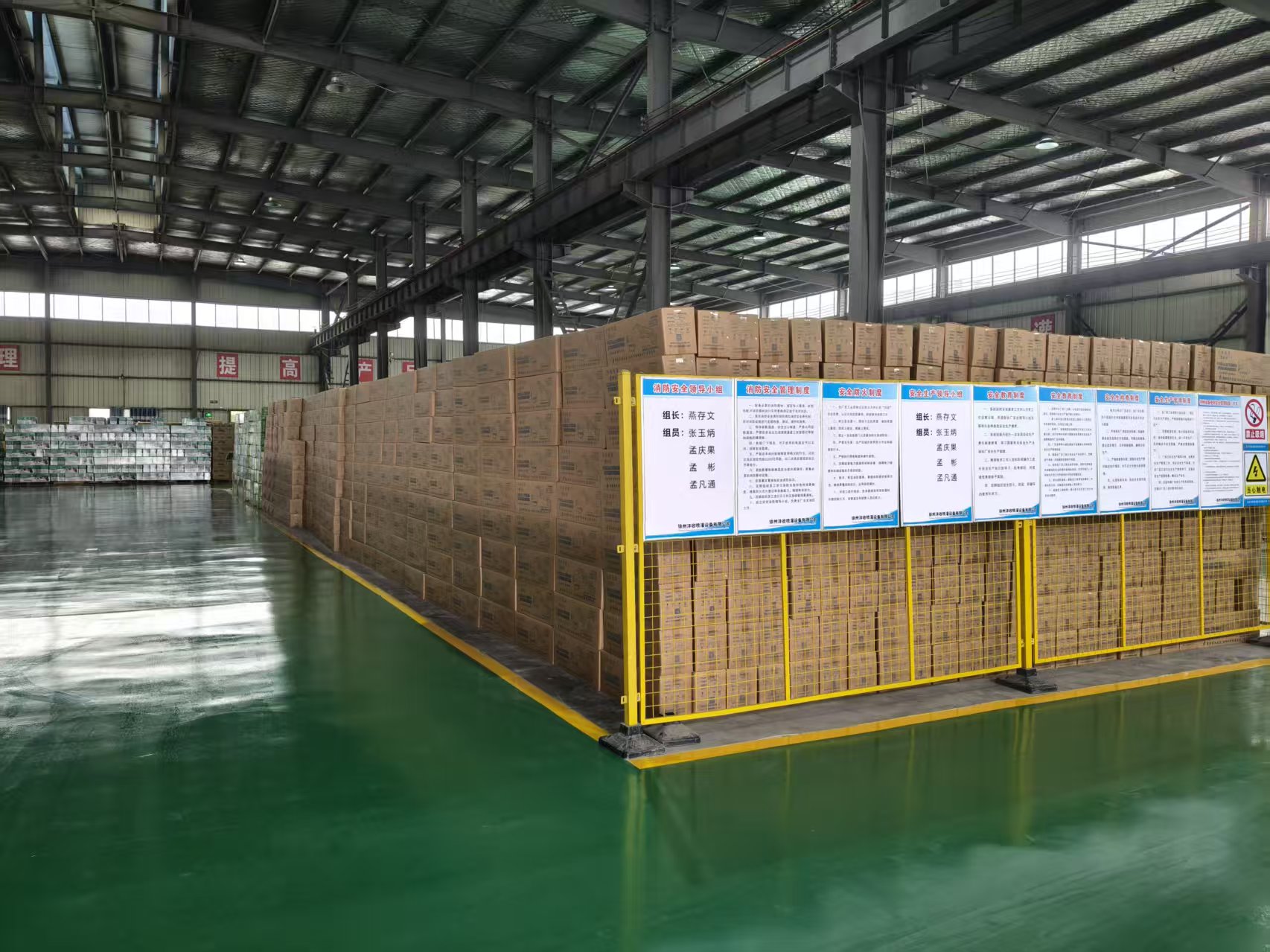
FOISON Sprinkler's production and export profile is relevant here. The company was founded in 2013, providing more than 12 years of industry experience, operates a 30,000 m² factory supporting large-scale orders, employs 135 staff, and reports an annual output of 200,000 units meeting wholesale demands. Its main products are farm and industrial sprinklers suitable for distributor ranges, and it serves global distributors in major markets including the EU, Africa, Australia, New Zealand, South East Asia, Mid Asia, Mid East and South America. With a 70% export ratio, the company is experienced in international trade.
On the engineering side, FOISON Sprinkler specialises in irrigation spray guns and equipment, and its 12-engineer R&D team supports OEM and custom designs. The company develops its own products and its design work covers the turbine spray gun, an adjustable nozzle angle and adjustable speed. It also reports the ability to design irrigation systems according to a customer's requirement.
The commercial framework that governs repeat supply is stated plainly: the MOQ requirement is set at 20 units; delivery is arranged through FOB, CIF or DDP methods; products are accepted through a pre-shipment test procedure; and accepted payment methods are a 30% deposit with the remaining 70% before shipment. For a distributor building a long-term range, these terms matter as much as the hydraulics, because they define how flexibly a mixed container can be assembled and how much cash is committed before goods sail.
Where each configuration fits: farm, plantation, greenhouse and dust control
Configuration choice follows the water source and the crop, not the other way round. The low-pressure FSC50 point at 0.15 MPa with a 14 mm nozzle suits layouts where the available head is modest and where the gun does not have to throw across a wide spacing. The FSN50 pairings at 0.5 MPa with a 20 mm nozzle and 0.7 MPa with a 26 mm nozzle sit in the mid and higher bands, and are appropriate where the pump, main line and water source can sustain the higher flow and where longer throw or finer atomisation is required.
Field experience recorded in FOISON Sprinkler's own selection guidance points in the same direction as general practice. Sprinkler irrigation is described as best suited to vegetable and fruit farms, plant farms and tea farms. Within protected cultivation, the recommendation differs: for greenhouses, a small plastic sprinkler or micro spray pipe is preferred, while for outdoor farms a metal sprinkler is recommended. That single distinction — protected versus open field — resolves many of the questions buyers raise about plastic sprinklers versus metal gun bodies.
Outside agriculture, the same guns are used for spray atomisation and dust removal on sites where material handling generates airborne dust, and for irrigation of urban greening and forestry planting. In those applications, throw distance, droplet size and the ability to reposition the gun typically matter more than the fine irrigation uniformity that matters to a vegetable grower.
Market trend: what the irrigation numbers say
Sprinkler procurement sits inside a market that third-party research houses size consistently in the billions of dollars. Grand View Research valued the global sprinkler irrigation market at USD 3.04 billion in 2025. IMARC Group estimated the global smart irrigation market at USD 2.2 billion in 2025 and projected it to reach USD 6.2 billion by 2034.
The regional picture is equally relevant to sourcing decisions. Grand View Research reported that Asia Pacific held the largest revenue share of 36.2% in the agricultural irrigation machinery market in 2025, with China as a leading country — consistent with the concentration of irrigation equipment manufacturing in provinces such as Jiangsu.
Forecast growth rates should be read with care. Published estimates differ: one research house projects a 6.5% CAGR for the sprinkler irrigation market over 2026–2033, while another reports a lower 3.04% CAGR over 2025–2035. The gap is best explained by methodology and scope, particularly how much smart or connected functionality is included in each definition, rather than by a disagreement about direction. For a buyer, this is a reminder that market forecasts are context, not specification input.
Sprinkler irrigation compared with normal irrigation — and where it does not fit
The comparison that matters in most tenders is sprinkler irrigation against normal irrigation, and the second comparison is sprinkler against drip and micro-spray. The first favours sprinklers on open ground; the second does not, and buyers who treat sprinkler irrigation as universally superior end up with an over-specified system.
| Dimension | Sprinkler irrigation (stated comparison) | Normal irrigation |
|---|---|---|
| Energy and cost | Stated saving of at least 50% in energy and cost; cost difference of 20% lower | Baseline for comparison |
| Coverage and efficiency | High water-spray efficiency with uniform coverage | Less uniform where land is uneven |
| Maintenance | Low failure rate, easy installation and maintenance | Field-dependent |
| Best-suited settings | Vegetable and fruit farms, plant farms, tea farms | Where water and pumping are not constrained |
The boundaries deserve to be stated as clearly as the advantages. Sprinkler irrigation depends on a pressure source that can hold the operating point; where no reliable head is available, the system will not perform as specified. In protected cultivation, the guidance is explicit that a small plastic sprinkler or micro spray pipe is preferred in greenhouses rather than a full rain gun layout, because the throw and droplet characteristics of a large gun are not the right fit for an enclosed space. Wind also affects distribution uniformity on open ground, and a larger nozzle increases the flow a water source must sustain. Buyers should treat the 0.7 MPa / 26 mm FSN50 configuration as a demanding specification rather than a default, and confirm water availability before committing to it.
Future outlook
Two forces are likely to shape sprinkler procurement over the next decade. The first is the shift of irrigation budgets toward systems that use less energy and less water per hectare, which is the same logic that underpins the sprinkler-versus-normal-irrigation comparison and the growth projected for smart irrigation as a category. The second is the standardisation pressure that comes with larger projects: rotating sprinklers used in agricultural irrigation are already addressed by an international design and operational standard, ISO 7749-1:1995, and mechanically sprayed agricultural appliances fall under trade classification HS code 842482. As projects become larger and more formal, specifications that cite an operating point, a connection interface and a reference standard will be easier to approve than specifications built on model names alone.
For distributors, the practical implication is that documentation quality becomes a commercial asset. A range whose pressure and nozzle points are published, whose connection options are clearly defined, and whose supply terms are stable is easier to sell into a tender than a range that requires a technical exchange before every order. That is also where a mature manufacturing base helps: a supplier with a 30,000 m² factory, 135 staff, a 12-engineer R&D team and a 70% export ratio is structured to hold configurations steady across repeat shipments rather than to change them between orders.
FAQ: common sprinkler procurement questions answered
1. What operating pressure does a FOISON Sprinkler rain gun need?
It depends on the model and nozzle. Documented reference points in the range are the FSN50 at 0.5 MPa with a 20 mm nozzle, the FSN50 at 0.7 MPa with a 26 mm nozzle, and the FSC50 at 0.15 MPa with a 14 mm nozzle. Each is a matched pressure and nozzle pairing, not a stand-alone figure.
2. How does nozzle diameter affect flow and throw distance?
At a given pressure, a larger nozzle passes more water because flow scales with the cross-sectional area of the orifice. Raising pressure at a fixed nozzle increases exit velocity, which generally extends throw and refines atomisation while increasing the load on the pump. This is why a 20 mm nozzle at 0.5 MPa and a 26 mm nozzle at 0.7 MPa are treated as different configurations rather than interchangeable options.
3. How do I translate a sprinkler pressure band into a pump requirement?
The pump must supply the nozzle pressure plus friction loss in pipes and fittings plus elevation lift. A system requiring 0.5 MPa at the nozzle therefore needs more than 0.5 MPa at the pump outlet. If several guns run simultaneously, the pressure at each nozzle drops unless the pump and main line are sized for the combined flow.
4. Which connection should I specify: 2" thread, 1-1/2" female thread or 80 flange?
Match the interface that already exists on site. A 2" thread suits threaded lines and portable stands, a 1-1/2" female thread suits lighter gun assemblies accepting a matching male nipple, and an 80 flange suits bolted fixed installations on risers or permanent mains. Confirming the thread form, gasket type and bolt pattern before ordering avoids adapters and leak paths.
5. Can an FSC50 and an FSN50 run on the same system?
They are documented at different pressure bands — the FSC50 at 0.15 MPa with a 14 mm nozzle and the FSN50 at 0.5 MPa or 0.7 MPa with 20 mm or 26 mm nozzles. Running both from one pump would mean operating at least one of them away from its reference point, unless the system is designed with pressure regulation for the lower band.
6. Is sprinkler irrigation better than drip or micro-spray irrigation?
Not universally. FOISON Sprinkler's selection guidance recommends a small plastic sprinkler or micro spray pipe for greenhouse use, and a metal sprinkler for outdoor farms. Sprinkler irrigation is described as best suited to vegetable and fruit farms, plant farms and tea farms, and as saving at least 50% in energy and cost compared with normal irrigation — but the choice depends on the enclosure, the water source and the required coverage.
7. What are the purchasing terms and acceptance criteria?
The MOQ requirement is 20 units. Delivery is arranged through FOB, CIF or DDP methods. Products are accepted through a pre-shipment test procedure, and accepted payment methods are a 30% deposit with the remaining 70% due before shipment.
8. Can a distributor order customized or OEM sprinkler configurations?
Yes. The company supports long-term supply partnerships and OEM or custom designs through its 12-engineer R&D team. Its own design work covers the turbine spray gun, an adjustable nozzle angle and adjustable speed, and the company reports the ability to design irrigation systems according to a customer's requirement.
9. What supports long-term supply continuity?
FOISON Sprinkler has operated since 2013, providing more than 12 years of industry experience, with a 30,000 m² factory, 135 staff and an annual output of 200,000 units. It serves distributors across the EU, Africa, Australia, New Zealand, South East Asia, Mid Asia, Mid East and South America, and reports a 70% export ratio.
10. What standards and trade classification apply to sprinkler imports?
ISO 7749-1:1995 specifies the design and operational requirements for rotating sprinklers used in agricultural irrigation. Mechanically sprayed appliances for agricultural or horticultural use, including equipment for projecting, dispersing or spraying liquids, are classified under HS code 842482. Both are useful reference points when preparing import documentation.
For distribution and long-term supply enquiries, FOISON Sprinkler can be reached at sales@foison-irrigation.com or +86 186 5822 6303. The company has a showroom and workshop demonstrating production capabilities at its facility in Xuzhou City, Jiangsu Province, China.