
Sprinkler Scenario Fit: FSW40 Pro for Urban Greening and Forestry Irrigation
Sprinkler Scenario Fit: FSW40 Pro for Urban Greening and Forestry Irrigation
Urban greening and forestry irrigation place sprinklers where a bad coverage decision becomes visible quickly — municipal green belts, park lawns, roadside planting strips, nursery rows and young plantation blocks. The procurement question on these sites is rarely “which sprinkler is strongest,” but “which sprinkler matches this water source, this spacing and this operating budget.” The FOISON FSW40 Pro turbine sprinkler is aimed at that second question.
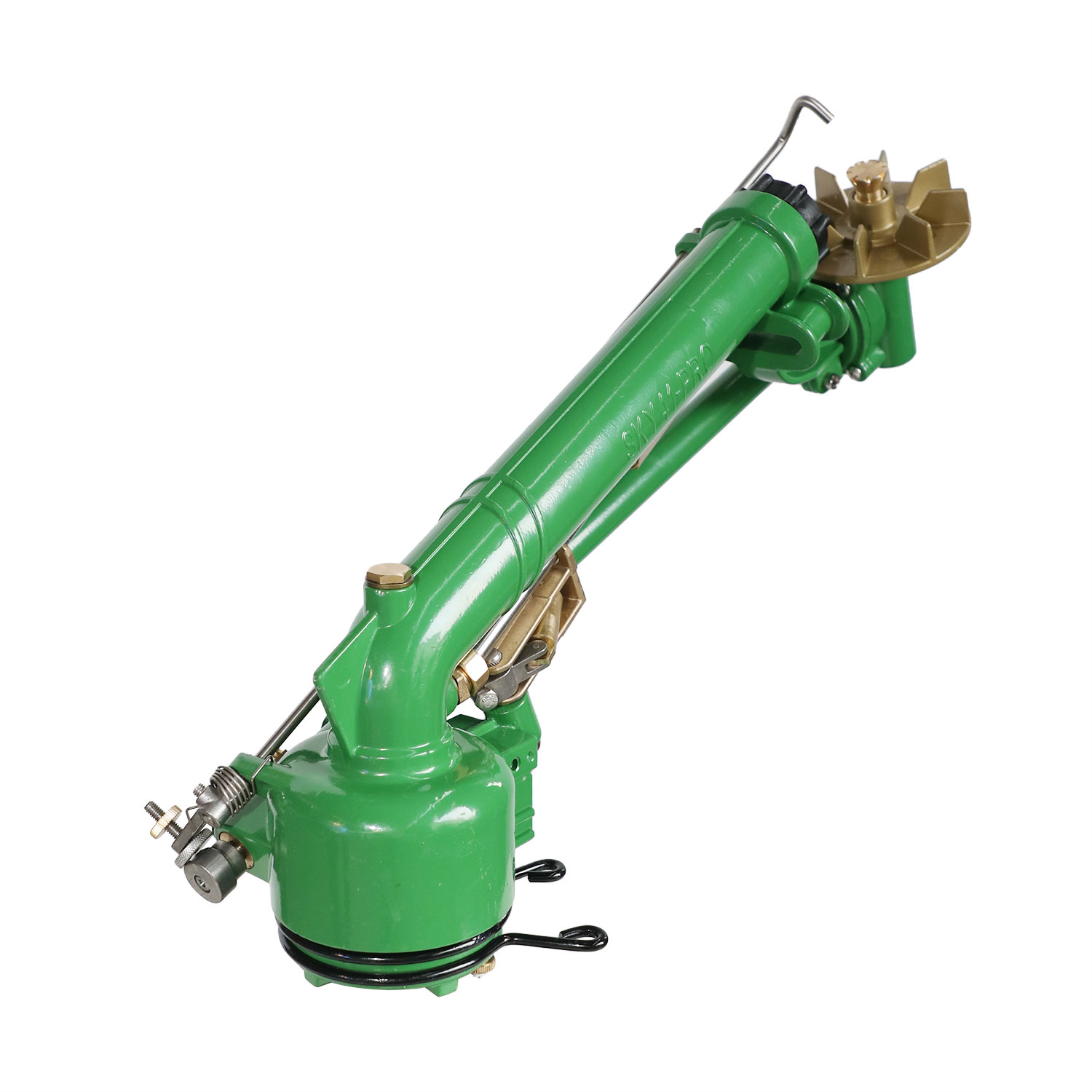
The FOISON FSW40 Pro turbine sprinkler, rated for 0.2–0.5 MPa working pressure and a 22–41 m spray radius.
Xuzhou Foison Sprinkler Irrigation Equipment Co., Ltd. (FOISON Sprinkler) is a Chinese sprinkler and irrigation equipment manufacturer founded in 2013, located in Pei County, Xuzhou City, Jiangsu Province, producing sprinklers for farm and industrial use. The company states that it operates a 30,000 m² facility with 135 employees and a 12-engineer design team, and that roughly 70% of its output is exported to markets including the EU, Africa, Australia, New Zealand, Southeast Asia, Central Asia, the Middle East and South America.
Within that range, the FSW40 Pro is a scenario-specific answer rather than a general-purpose catalogue item: the manufacturer lists its use scope as agriculture, forestry, urban greening and industrial dust removal, and states a working pressure of 0.2–0.5 MPa, a flow of 9.5–37 m³/h, a spray radius of 22–41 m, a 24° spray angle and a 1-1/2″ female thread connection.
Why Scenario Fit, Not Raw Specification, Drives Sprinkler Selection
For green-space and forestry projects, three site variables decide whether a sprinkler works in practice long before price is discussed.
- Water source and available pressure. A sprinkler only delivers its rated throw when the pump can hold the sprinkler inside its working pressure band. A fixture rated for 0.2–0.5 MPa behaves differently on a low-head surface pump than on a correctly matched set.
- Coverage geometry. Radius, connection size and spacing determine how many hydrants a block needs, and therefore pipe length, trenching and fittings.
- Operating environment. Outdoor installations face heat, dust and continuous mechanical duty. Foison states that its sprinkler applications require an adequate water resource and supporting equipment such as a pump and hose, and that the equipment can work in conditions up to 50°C.
The practical consequence for buyers is that a large-throw metal sprinkler can be the right choice for an open roadside strip and the wrong choice for a small garden bed or a polytunnel. That is why scenario fit — not headline specification — is the first filter in this category.
What the FSW40 Pro Is
The FSW40 Pro is a turbine-driven sprinkler, also described in the trade as a turbine gun or rotating sprinkler. Water pressure drives an internal turbine, which rotates the unit through a 360° adjustable pattern, distributing water across a circular area from a fixed riser position.
| Parameter | Stated value |
|---|---|
| Product type | Turbine sprinkler (turbine gun) |
| Connection | 1-1/2″ female thread |
| Working pressure | 0.2–0.5 MPa |
| Flow rate | 9.5–37 m³/h |
| Spray radius | 22–41 m |
| Spray angle | 24° |
| Spray type | 360° adjustable |
| Materials | Aluminum alloy, copper, stainless steel, nylon |
| Stated use scope | Agriculture, forestry, urban greening, industrial dust removal |
How the Turbine Mechanism Turns Pressure into Coverage
Understanding the mechanism helps explain why pressure, flow and radius are quoted as ranges rather than single figures. A turbine sprinkler converts hydraulic energy into rotation: water entering the body spins a turbine, the rotation sweeps the nozzle, and the water leaves through a fixed nozzle aperture. Because the rotation and the jet both depend on supply conditions, a sprinkler quoted at 0.2–0.5 MPa will produce a smaller throw and lower flow at the low end of that band and its full quoted throw, up to 41 m, at the upper end.
Pressure, flow and radius move together
Within the FSW40 Pro's stated envelope, flow spans 9.5–37 m³/h while radius spans 22–41 m. For designers, that means pump selection should target the operating point where the required radius is reached — not simply the highest available pressure. Oversizing the pump does not extend coverage beyond the sprinkler's stated band, and it raises pipe and fitting requirements accordingly.
Spray angle and pattern
The model is quoted with a 24° spray angle and a 360° adjustable pattern. A defined spray angle gives the designer a predictable relationship between throw and trajectory, which matters when the objective is to keep water inside a planted strip rather than on a paved surface. The adjustable rotation covers a full circle, and the pattern can be set rather than being fixed at delivery.
Connection and structure
The 1-1/2″ female thread is the interface between the sprinkler and the riser or pipework. Riser height and support are therefore part of the specification decision, not an afterthought: a metal-bodied, turbine-driven unit is a load on the riser, and the hydrant position determines the coverage centre. The materials list — aluminum alloy, copper, stainless steel and nylon — reflects a mix of structural, sealing and moving-part functions rather than a single-material body.
Scenario Fit: Urban Greening
Urban greening is usually a fixed-irrigation problem. Municipal green belts, park lawns, roadside planting strips and landscaped slopes are watered from permanent pipework with defined hydrant positions, and they are often inaccessible to manual watering once the planting is established.
Two characteristics of the FSW40 Pro suit that setting. First, a 22–41 m radius allows a designer to cover a long planting strip from relatively few hydrant positions, which reduces pipe runs and trenching compared with short-throw garden sprinklers. Second, a stated spray angle of 24° gives a controlled jet geometry, which matters where planted areas sit alongside footpaths, kerbs or roads and where overspray becomes a service complaint rather than an irrigation outcome.
The limitation is equally clear: urban greening installations are public-facing, so operating windows, pressure stability and surface runoff all need to be planned before installation, not corrected afterwards.
Scenario Fit: Forestry Irrigation
Forestry is listed by the manufacturer as a use scope for the FSW40 Pro, alongside agriculture and urban greening. Forestry irrigation is typically organised in larger blocks with wider spacing than horticultural beds — nursery seedling areas, plantation establishment and tree-line planting — where the cost of moving water across distance is the dominant design constraint.
The long-throw capability of the model is the reason it appears in that context: a 22–41 m radius reduces the number of hydrant points needed per hectare of block. As with any sprinkler in this class, the practical requirement stated by the manufacturer applies — an adequate water resource, plus a pump and hose to deliver water to the sprinkler, with spraying achieved by water pressure rather than by any onboard power source.
Scenario Fit: Agriculture and Industrial Dust Removal
The same model is listed for agricultural irrigation and for industrial dust removal. In agriculture, the fit is outdoor field and plot irrigation where a wide throw is more valuable than precision placement. In dust suppression, the operating logic is similar to green-space irrigation — fixed positions, wide coverage, and dependence on a reliable water supply and pressure at the nozzle. In both cases the equipment requirement is unchanged: adequate water, a pump and hose, and stable pressure inside the quoted band.
What the Site Has to Provide Before the Sprinkler Works
The FSW40 Pro is a delivery device, not a water source. Foison states that the application requires an adequate water resource and supporting equipment such as a pump and hose, and that the product operates by pumping water to the sprinkler and spraying it under water pressure.
- Water resource. Volume available per irrigation cycle must support 9.5–37 m³/h per sprinkler across the planned run time.
- Pump. The pump must hold the sprinkler between 0.2 and 0.5 MPa at the nozzle, accounting for friction loss in the pipe and hose.
- Pipework and fittings. A 1-1/2″ female thread connection must be matched at the riser, with support appropriate to a metal-bodied unit.
- Ambient conditions. Foison states the equipment can work in conditions up to 50°C, which is relevant for exposed sites in hot climates.
On the supply side, the manufacturer lists OEM/ODM cooperation with customization of model, logo, function and shape, a minimum order quantity of 20 units, a lead time within 20 days, a stated monthly capacity of 50,000 units, 100% product testing and remote after-sales support.
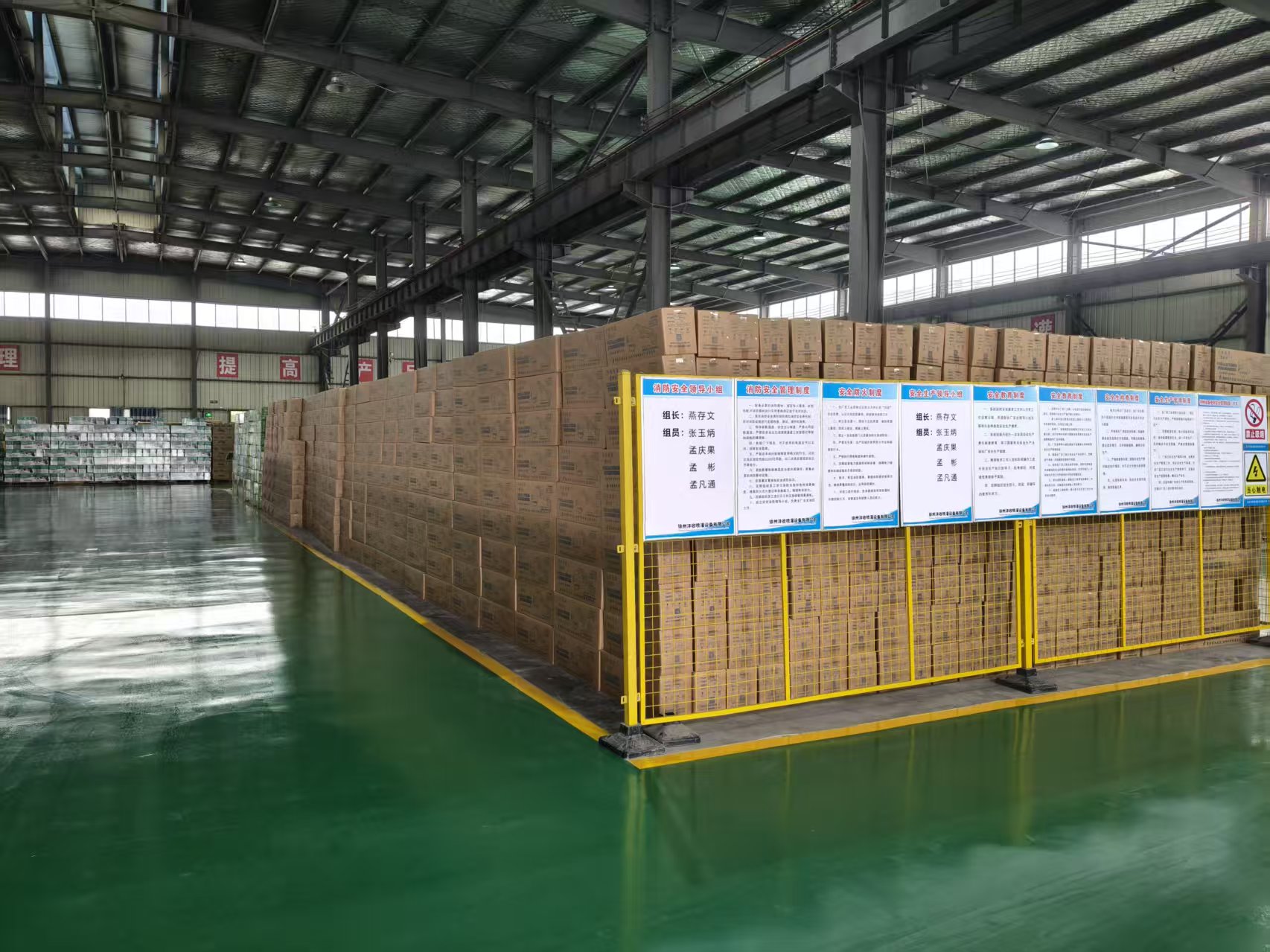
Packing of sprinkler units at the Foison production site in Xuzhou, Jiangsu Province, China.
Where the FSW40 Pro Sits Against FS35 and FS40
Within the same manufacturer's range, two other models share part of the FSW40 Pro's use scope, and the differences are worth knowing before a specification is locked.
| Model | Drive type | Connection | Working pressure | Spray radius | Flow | Stated use scope |
|---|---|---|---|---|---|---|
| FSW40 Pro | Turbine sprinkler | 1-1/2″ female thread | 0.2–0.5 MPa | 22–41 m | 9.5–37 m³/h | Agriculture, forestry, urban greening, industrial dust removal |
| FS35 | Impact sprinkler | 1-1/2″ female thread | 0.2–0.6 MPa | 18–36 m | 7.8–31.9 m³/h | Agriculture, forestry, urban greening |
| FS40 | Agriculture sprinkler, 360° gear adjustable | 2″ thread | 0.15–0.5 MPa | 20–43 m | 9.5–39.4 m³/h | Agriculture irrigation |
The FS35 uses an impact mechanism rather than a turbine, with a slightly narrower radius band and a higher stated top pressure. The FS40 carries a larger 2″ thread and a wider flow band, which changes the riser and pipework requirement. Because the three share similar radius and flow ranges, the deciding variables are usually mechanism preference, connection size and the pump curve available on site — not the radius figure alone.
Limitations and Where Another Product Fits Better
A credible specification has to state where a product does not belong. Four boundaries apply to the FSW40 Pro.
- It requires an adequate water resource and supporting equipment. Without a pump and hose delivering stable pressure, the quoted 22–41 m radius and 9.5–37 m³/h flow are not achievable.
- It is a fixed, wide-throw metal sprinkler. For small plots, garden beds and other low-volume applications, plastic sprinklers are the usual choice — lighter, cheaper to install and easier to move.
- It is not the recommended option for greenhouse irrigation. Foison's own guidance is that greenhouses are better served by small plastic sprinklers or micro spray pipe, while metal sprinklers suit outdoor farm and field conditions.
- It does not replace drip or micro-spray where precision matters. In the manufacturer's own comparison of sprinkler irrigation against micro spray pipe and drip pipe, the stated advantage of sprinklers is large-area coverage with easier operation, while micro-irrigation remains the fit for confined, high-precision environments.
None of these boundaries are unusual for a long-throw turbine sprinkler. They matter because they define the point at which a buyer should stop evaluating the model and look at a different class of equipment.
Field Evidence and Market Direction
For buyers assessing fixed sprinkler irrigation, one documented reference point exists in the manufacturer's records: a common customer in New Zealand installed 500 units of FS35 impact sprinklers for farm irrigation over a two-year project period. The reported outcome was fixed sprinkler irrigation covering a 150,000 m² vegetable farm, with reported water savings of 55% and labor savings of 60%, and a stated highlight of about 50% energy and labor savings from fixed irrigation. The sprinklers in that project were FS35 impact units rather than FSW40 Pro turbine units; the reference is relevant as evidence of how fixed sprinkler irrigation is deployed at scale, not as a performance claim for the FSW40 Pro specifically.
Several qualitative market conditions continue to push fixed irrigation in green-space and forestry work. Labor availability for manual watering is tightening in many regions, water allocation is under closer scrutiny, and municipal and industrial sites increasingly specify dust suppression alongside planting irrigation. Foison's stated export ratio of about 70%, across the EU, Africa, Australia, New Zealand, Southeast Asia, Central Asia, the Middle East and South America, is consistent with a market where irrigation equipment is sourced internationally and evaluated on documentation, consistency and after-sales reach rather than on proximity alone.
Future Outlook
The direction of this segment is toward better scenario documentation rather than higher headline specifications. Buyers increasingly ask for pressure–flow relationships, connection standards, material composition and installation requirements before they ask for price, because mismatched pressure is the most common cause of underperforming fixed irrigation. For manufacturers, that shifts competition toward engineering clarity — stated operating bands, test coverage and service — and toward OEM/ODM flexibility, where customized model, logo, function and shape can shorten the distance between a standard sprinkler and a specific project requirement. For the FSW40 Pro, its position is defined by the combination of a 22–41 m radius, a 0.2–0.5 MPa pressure band and a 1-1/2″ female thread: a wide-throw turbine unit for outdoor green-space, forestry and agricultural irrigation, and not a universal solution for every water-delivery problem.
FAQ
Which irrigation scenarios is the FSW40 Pro turbine sprinkler designed for?
Foison lists the use scope as agriculture, forestry, urban greening and industrial dust removal. In practice that means fixed, outdoor installations where water is delivered to the sprinkler under pressure and wide circular coverage is required, such as green belts, nursery and plantation areas, and field irrigation. It is a turbine-driven sprinkler with a 360° adjustable pattern.
What water pressure and flow does the FSW40 Pro require?
The stated working pressure is 0.2–0.5 MPa and the stated flow is 9.5–37 m³/h. Because flow and radius change across that pressure band, the pump should be selected to hold the sprinkler at the pressure that produces the required spray radius, allowing for friction loss in the pipe and hose.
What connection does the FSW40 Pro use, and what should be prepared for installation?
The connection is a 1-1/2″ female thread. Installation therefore requires a matching riser or pipe fitting, plus support appropriate to a metal-bodied unit, and a hydrant position planned around the 22–41 m spray radius so that coverage overlaps correctly across the irrigated area.
What supporting equipment and site conditions does this sprinkler need?
Foison states that the application requires an adequate water resource and supporting equipment such as a pump and hose, and that the product operates by pumping water to the sprinkler and spraying it using water pressure. The equipment is stated to work in conditions up to 50°C. Without sufficient water volume and stable pressure at the nozzle, the quoted flow and radius are not reached.
How does a turbine sprinkler differ from an impact sprinkler in the same range?
Both are 360° sprinklers with wide throw. In this manufacturer's range, the FSW40 Pro is a turbine sprinkler quoted at 0.2–0.5 MPa with a 22–41 m radius and 9.5–37 m³/h flow, while the FS35 is an impact sprinkler quoted at 0.2–0.6 MPa with an 18–36 m radius and 7.8–31.9 m³/h flow. Both use a 1-1/2″ female thread, so the choice usually comes down to mechanism preference and the available pump curve.
Is the FSW40 Pro the right choice for greenhouse irrigation?
Not according to the manufacturer's own guidance. Foison recommends small plastic sprinklers or micro spray pipe for greenhouse applications, and metal sprinklers for outdoor farm conditions. The FSW40 Pro is specified for outdoor agriculture, forestry and urban greening, where its wide throw and metal construction are appropriate; confined indoor growing environments typically call for a different equipment class, such as drip or micro-spray systems.
For readers who want the full product and specification range from this manufacturer, the Foison catalogue is publicly available: Foison product catalogue (PDF).