
Stacked Storage in Telecom & IDC: Sizing MF-5K+10KWh Backup Duty Cycles
Stacked Storage in Telecom & IDC: Sizing MF-5K+10KWh Backup Duty Cycles
A duty-cycle view of LiFePO4 stacked storage for remote telecom shelters and edge data rooms — where the documented MF-5K + 10KWh window fits, and where site conditions exceed it.
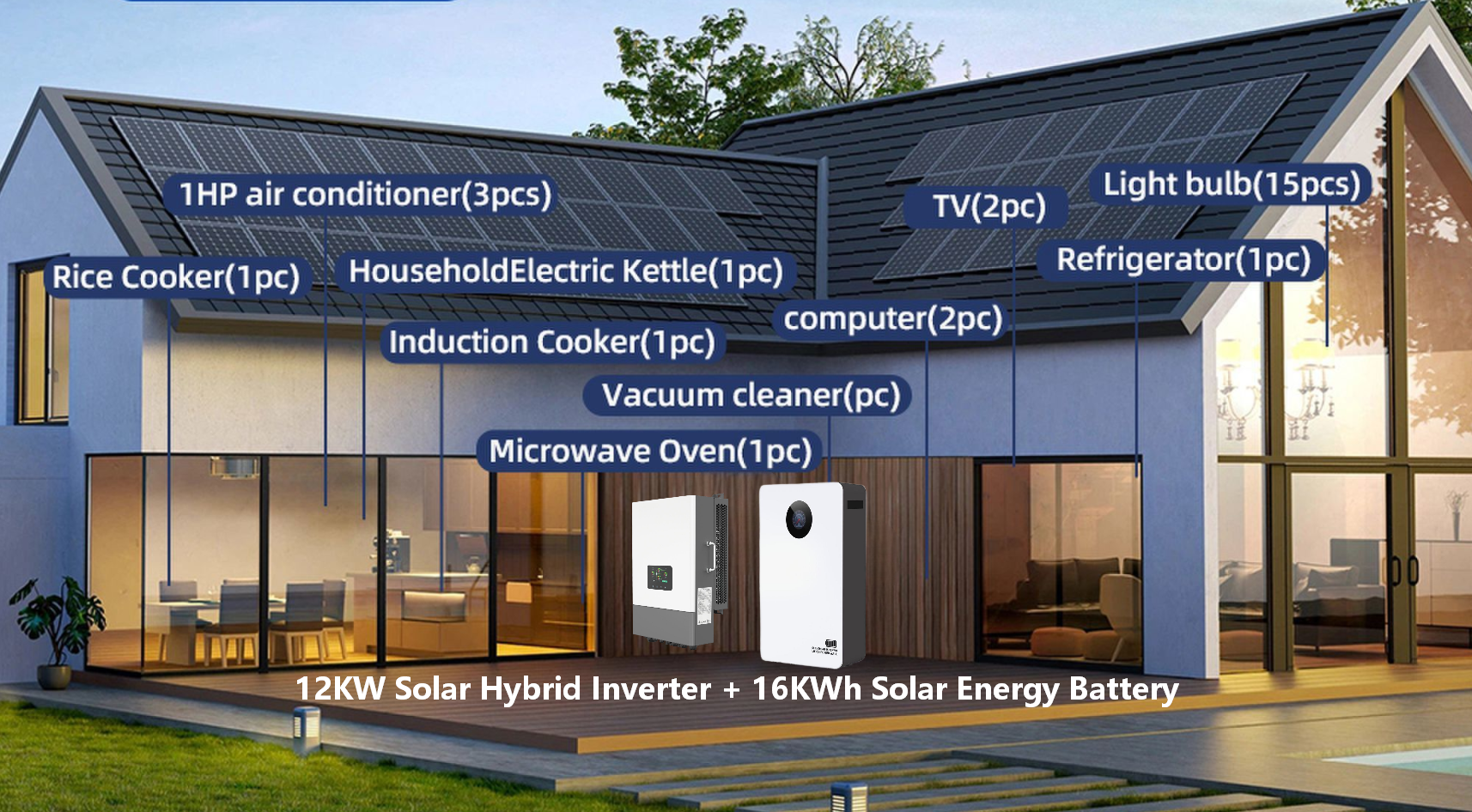
Inverter-and-battery pairing of the type used to build backup capacity in constrained equipment rooms. Image: Yeyanghong Energy.
Telecom and edge data-centre backup power is usually specified as a duration requirement: how many hours a site must survive without the grid. In practice, the variable that decides whether a battery asset survives five years or fifteen is the duty cycle — how deeply the battery is discharged, how often, at what rate, and at what ambient temperature. Two sites with an identical runtime target can require entirely different storage architectures once duty cycle is taken seriously.
This analysis examines one candidate configuration for that job: the MF-5K + 10KWh stacked storage system, a lithium iron phosphate (LiFePO4) platform built in an aluminium housing, documented with a 6,000-cycle life at 90% depth of discharge (DOD), a 180 V–270 V output window and a 0–55 °C charging range. The purpose is not to promote the platform, but to test where those documented characteristics align with telecom and IDC backup duty — and where site conditions will exceed them.
The platform belongs to the stacked home energy storage range of Guangdong Yeyanghong Energy Technology Co., Ltd., a China-based power electronics and storage manufacturer whose portfolio also includes on-grid inverters, off-grid inverters, micro inverters, all-in-one energy storage systems, BESS, wall-mounted and floor-standing batteries, and PCBA. The business is export-oriented, serving the USA, the EU, Southeast Asia, the Middle East, Australia, Africa, and Central and South America, with roughly 90% of output exported.
Documented platform characteristics at a glance
| Parameter | Documented value |
|---|---|
| Battery chemistry | LiFePO4 (lithium iron phosphate) |
| Enclosure | Aluminium housing |
| Cycle life | 6,000 cycles at 90% DOD |
| Nominal stack energy | 10 KWh |
| Output voltage window | 180 V – 270 V |
| Charging temperature range | 0 °C to 55 °C |
| Configuration | Stacked, vertically modular |
Why duty cycle, not just runtime, decides the sizing
Runtime is an energy question. Duty cycle is a life question. Telecom macro sites typically see many shallow discharges and a small number of deep ones; edge data rooms and containerised IT spaces generally see fewer events but at a higher discharge rate. Each of those patterns consumes a different amount of battery life per event.
The 6,000-cycle figure at 90% DOD is the most demanding corner of the platform's documented cycle life. That matters because cycle consumption scales with depth of discharge: a site that regularly discharges to 30% consumes far less life per event than one that runs the stack down to 90%. Design conservatively on the deep-discharge case, because the deep events are the ones that set the replacement date.
Some arithmetic helps frame the energy side. A 10 KWh stack discharged to 90% DOD yields roughly 9 KWh of usable energy per cycle before conversion and cable losses. A shelter drawing 1 kW of average load therefore has on the order of 9 hours of coverage from one full cycle; a 500 W load roughly double that. These are illustrative calculations based on the documented nominal energy, not measured site results, and real autonomy will be lower once inverter efficiency, thermal derating and end-of-life capacity fade are applied.
There is a counter-intuitive point that procurement teams often miss: in a grid-connected telecom shelter with only a handful of outages per month, annual cycle counts stay low, and calendar ageing and ambient temperature — not cycle count — usually govern replacement. Cycle life becomes the binding constraint mainly where the battery is cycled nearly every day, such as solar-heavy off-grid sites or locations using storage for daily load shifting.
Electrical integration: matching a 180 V–270 V window to the site
The single most common integration error in repurposing any high-voltage storage stack into a telecom or IDC environment is assuming that the voltage ranges will overlap. They must be checked explicitly.
- Site-side input range. The rectifier, inverter or DC bus that the stack feeds must accept the full 180 V–270 V band, or the usable portion of the stack's window is reduced to the narrower of the two ranges. A stack that cannot deliver below 180 V effectively loses the bottom of its capacity curve.
- Low-voltage disconnect settings. Protection thresholds must sit above the stack's minimum output voltage, otherwise the site will cut off while usable energy remains.
- Legacy 48 V plants. A conventional 48 V telecom DC plant will not accept a 180 V–270 V source directly; a DC-DC conversion stage is required. The platform is not a drop-in replacement for a 48 V battery string.
- Current and conductor sizing. Higher-voltage architectures deliver a given power at lower current than low-voltage DC systems, which generally means smaller conductor cross-sections and lower resistive losses over the same cable run — a practical advantage in shelters where cable routing space is limited.
Thermal envelope: what a 0–55 °C charging range means in the field
The documented charging range of 0 °C to 55 °C is a design boundary, not a footnote. It directly determines which remote sites can host the platform as-is and which need an enclosure strategy.
Below 0 °C, charging must be inhibited or the cells warmed before charging begins. In cold-climate shelters, an unheated cabinet is therefore insufficient on its own — the enclosure plan needs either active heating, insulation, or a control strategy that blocks charging until the pack is back in range. Above 55 °C, charging must be interrupted or limited, which is a realistic constraint in Middle East and African deployments where shelter interiors can exceed ambient temperature during the day.
The aluminium housing contributes structural rigidity and spreads heat across the enclosure surface, which supports passive thermal behaviour in moderate climates. It is not an active thermal management system, so cabinet ventilation, shading and orientation remain part of the engineering scope. Note also that the documented band applies to charging: discharge behaviour outside that range should be confirmed project by project rather than assumed from the charge specification.
Where the stacked format earns its place
The stacked configuration — modules growing vertically rather than across a rack — is the feature that makes this platform interesting for constrained sites. Three application patterns are worth evaluating.
Remote and off-grid telecom shelters. Sites in Africa, Southeast Asia and the Middle East that currently rely on diesel generation for autonomy face high servicing cost and fuel logistics. A stacked LiFePO4 system paired with a solar array and an off-grid or hybrid inverter reduces routine maintenance compared with engine-driven backup, and the vertical stack fits into a small equipment footprint.
Edge and containerised data rooms. Where autonomy requirements are measured in tens of minutes rather than hours, a 10 KWh stack covers short, moderately high-rate discharges. Stacking allows capacity to be added module by module as the IT load grows, without a new rack footprint.
Solar-paired hybrid sites. The same manufacturer builds on-grid, off-grid, hybrid and micro inverters, which simplifies sourcing a matched conversion stage for a solar-plus-storage shelter rather than mixing vendors across the DC and AC sides of the site.
Where it does not fit. A home-format stacked system is not a mission-critical DC power plant. Tier III/Tier IV data-centre continuity designs rely on N+1 string redundancy, long-established telecom type approvals, and deep integration with the site's 48 V infrastructure. The stacked platform should be engineered alongside such a plant, not treated as a substitute for it.
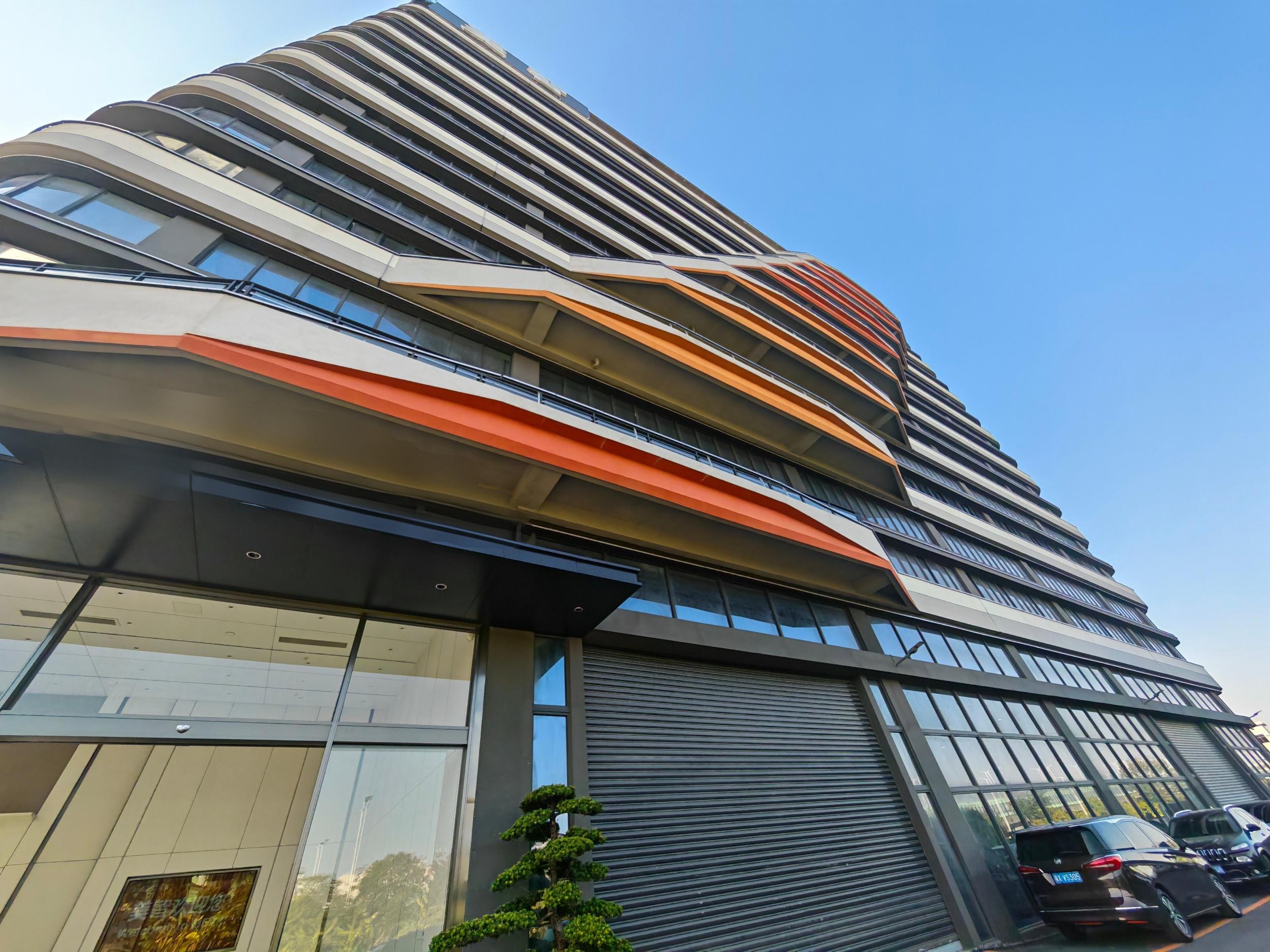
Production and test area. All units in this manufacturer's output undergo 100% testing before shipment. Image: Yeyanghong Energy.
Manufacturing and procurement considerations
For a telecom or IDC rollout, the supply-side questions matter as much as the datasheet. Guangdong Yeyanghong Energy Technology Co., Ltd. provides OEM, ODM and SKD production services, with customization covering WIFI, Battery, 4G/5G, IP Rating and Power. Minimum order quantity is 2 pieces, typical production lead time is 30 to 45 days, and monthly production capacity reaches 100,000 sets. All products undergo 100% testing for quality control.
Commercial terms documented for buyers include EXW, FOB, CIF and LC delivery arrangements, 30/70 payment terms, and pre-shipment test as the acceptance criterion. After-sales provisions cover replacement of accessories, extended warranty, and remote installation services.
Three of those terms are directly relevant to a shelter deployment. First, a minimum order quantity of 2 pieces makes it practical to run a single-site pilot — including a winter cycle test in a cold climate — before committing to a fleet rollout. Second, IP rating is listed as a customization axis, which matters where a stacked unit must sit in a dusty or humid shelter rather than a clean equipment room. Third, a 30 to 45 day lead time allows a staged rollout where capacity is added site by site rather than in one capital block.
One caveat for specifiers: the platform documentation used here does not include telecom-specific battery certification scope. Certification and grid-code requirements must be confirmed against the project's own compliance register before the platform is written into a bill of materials.
Market and compliance context
Storage-backed backup sits inside a hybrid inverter market that Grand View Research sized at USD 10.7 billion in 2024. That headline number deserves a caution: Precedence Research places the comparable figure at USD 2.88 billion, most likely because it applies a narrower definition that excludes parts of the full energy storage system. Buyers comparing market reports should check the scope definition before using either figure in a business case.
Within the hybrid segment, on-grid hybrid inverters accounted for 59% of revenue in 2024, according to Precedence Research — a reminder that most hybrid demand remains grid-tied, where storage performs load shifting and outage support rather than full islanding. Supply is also concentrated: Wood Mackenzie reports that Huawei and Sungrow together accounted for 55% of global solar inverter shipments in 2024, while S&P Global Commodity Insights ranked Growatt as the No. 1 global residential PV inverter supplier and a Top 3 hybrid inverter supplier in the same year. China shipped over 330 GW of inverters in 2024, again per Wood Mackenzie, making it the dominant export hub for power electronics.
On the compliance side, hybrid inverters for PV systems in Europe must meet IEC 62109-1 for general safety and IEC 62109-2 for inverter-specific safety to carry CE marking. In North America, UL 1741 (including Supplement SB) is the mandatory safety standard for hybrid inverters connecting to the grid. Separately, Benchmark Mineral Intelligence has reported that the US is considering potential restrictions on Chinese-made inverters on grid-security grounds — a policy signal that is medium-reliability and flagged as requiring verification, but one that argues for keeping a second qualified source in any multi-year telecom procurement plan.
Comparison with conventional telecom DC backup
Lead-acid DC plants remain the incumbent technology at most telecom sites. The table below compares general, widely recognised characteristics of VRLA and flooded lead-acid plants against the documented characteristics of the MF-5K + 10KWh class of stacked LiFePO4 storage. The lead-acid column reflects general industry practice rather than any specific product.
| Criterion | Lead-acid DC plant (general practice) | MF-5K + 10KWh class LiFePO4 stack |
|---|---|---|
| Cycle tolerance | Generally lower under repeated deep discharge; replacement commonly driven by cycling and heat | Documented at 6,000 cycles at 90% DOD |
| Footprint per usable kWh | Larger; horizontal racking and ventilation space | Vertical stacking; capacity added upward |
| Cold-weather charging | Widely regarded as tolerant of charging at low ambient temperatures | Charging limited to 0–55 °C; heating or charge inhibit needed below 0 °C |
| Integration voltage | Native fit with 48 V telecom DC plants | 180–270 V window requires a matching bus or a DC-DC stage |
| Routine maintenance | Periodic inspection; electrolyte management on flooded types | No electrolyte maintenance |
| Certification maturity | Long-established telecom type approvals | Project-level certification scope must be confirmed per site |
| Redundancy design | N+1 string architectures are standard | Parallel units required if redundancy is specified |
Read honestly, the comparison does not produce a winner. It produces a boundary. The stacked LiFePO4 platform is attractive where footprint, cycle tolerance and maintenance cost dominate; lead-acid retains an advantage where sub-zero charging is routine and where an existing, type-approved 48 V plant is already in place. The documented 6,000 cycles at 90% DOD is a design condition, not a guarantee under all operating profiles — discharge rate, ambient temperature and end-of-life capacity fade all influence real service life, and the specification should be validated against the specific duty cycle of the target site.
Future outlook
Three trajectories are worth watching. First, the 59% revenue share held by on-grid hybrid inverters in 2024 suggests that the volume market will remain grid-tied, where storage is bundled for self-consumption and outage support rather than for islanded operation — which in turn means backup sizing will increasingly be a secondary outcome of an energy-management decision, not a standalone procurement. Second, as supply concentration persists at the top of the inverter market, qualification of smaller, export-oriented manufacturers will hinge on documented test regimes and certification scope rather than brand visibility. Third, grid-security policy scrutiny of inverter origin — still an unverified policy signal at the time of writing — is likely to push multi-year telecom programmes toward dual-sourced, regionally compliant architectures.
For specifiers, the practical implication is that storage selection will be driven less by headline cycle counts and more by the intersection of four conditions: the site's voltage interface, its ambient temperature band, its actual discharge depth, and the certification scope the project requires.
Frequently asked questions
What is the MF-5K + 10KWh stacked storage system, and what backup duty is it built for?
It is a LiFePO4 storage platform in an aluminium housing, documented at 6,000 cycles at 90% DOD, with a 180 V–270 V output window and a 0–55 °C charging range, paired with MF-5K class conversion. The stacked format means capacity grows vertically, which suits sites with limited floor area. It is best matched to light-to-moderate backup duty — daily cycling at solar-paired sites, or intermittent grid-outage support — rather than to continuous high-rate UPS duty in mission-critical facilities.
How does the 180 V–270 V output window affect integration with a telecom DC bus or inverter?
The window must overlap the receiving equipment's input range. The usable portion of the stack's output is determined by the narrower of the two ranges, so a rectifier or inverter that accepts only part of the band will reduce available capacity. Protection thresholds such as low-voltage disconnect must also be set above the stack's minimum output voltage. A conventional 48 V telecom DC plant cannot accept a 180 V–270 V source directly and requires a DC-DC conversion stage; the platform is not a drop-in replacement for a 48 V battery string.
What does a 6,000-cycle rating at 90% DOD mean for replacement planning?
It defines the cycle-limited life at the most demanding depth of discharge documented for the platform. In a grid-connected shelter with infrequent outages, annual cycle counts are low and calendar ageing plus ambient temperature usually govern replacement instead. Where the system is cycled almost daily, cycle count becomes the binding constraint: one full 90% DOD cycle per day corresponds to roughly 6,000 days of cycle life, on the order of sixteen years. Actual throughput depends on the real depth of discharge, discharge rate and operating temperature.
What installation limits does the 0–55 °C charging range create for remote shelters?
Charging must stay within 0 °C to 55 °C. Where shelter ambient falls below 0 °C, the pack must be warmed or charging inhibited until it is back in range, which means an unheated cabinet is insufficient in cold climates. Above 55 °C, charging must be interrupted or limited, a realistic condition in hot-climate shelter interiors. The aluminium housing spreads heat passively but is not an active thermal system, so insulation, ventilation and shading become part of the enclosure design. Discharge behaviour outside the charge band should be confirmed per project rather than assumed.
Can the platform be adapted for OEM or ODM telecom projects, and what are the order terms?
The manufacturer provides OEM, ODM and SKD production services with customization covering WIFI, Battery, 4G/5G, IP Rating and Power. Minimum order quantity is 2 pieces, typical lead time is 30 to 45 days, and monthly capacity reaches 100,000 sets, with 100% testing applied to all products. Documented commercial terms include EXW, FOB, CIF and LC delivery, 30/70 payment terms, and pre-shipment test as the acceptance criterion. After-sales provisions cover replacement of accessories, extended warranty and remote installation services. The low minimum order quantity supports a single-site pilot before volume commitment.
Is a stacked home-format storage system a substitute for a conventional telecom DC power plant?
No. Conventional DC plants are built around N+1 string redundancy, long-established telecom type approvals and native integration with 48 V site infrastructure. A stacked storage platform can provide backup energy and reduce footprint, but it must be engineered into the site — parallel units where redundancy is required, a matching voltage interface, and a thermal enclosure suited to the climate. In mission-critical continuity designs it sits alongside the plant rather than replacing it. The platform documentation used in this analysis does not include telecom-specific battery certification scope, which must be confirmed against each project's compliance register.
Closing note
The MF-5K + 10KWh stacked platform is a credible candidate for telecom and edge backup where footprint, cycle tolerance and low routine maintenance carry weight, and where the site's DC bus window and climate fall inside its documented 180 V–270 V output and 0–55 °C charging envelope. Outside those conditions, the engineering answer is a different architecture — not a different marketing claim. For buyers who want to review the full capability and specification set before a site pilot, the manufacturer's product brochure is available here: Yeyanghong Energy product brochure (PDF).