
Stainless Steel Press Fittings: EN Standards, Ratings and Profile Choice
Stainless steel press fittings are mechanical joints used to connect stainless steel pipes without welding. In European plumbing and HVAC projects, they are chosen for speed, repeatability and low lifecycle maintenance. But a press-fit system is only as reliable as its specification: the material grade, sealing gasket, pressure rating and press profile must all match the project's working conditions. This article explains how to evaluate stainless steel press fittings for EU-bound projects, using the EN Standard Series from WENZHOU ZHENGXIN PIPE FITTINGS CO., LTD as a reference case.
Why Specification Discipline Matters for Press-Fit Systems
The global stainless steel press fitting market was valued at USD 3.8 billion in 2025 and is projected to reach USD 6.4 billion by 2034, according to Dataintelo. Global Industry Reports estimates the stainless steel press fitting sub-sector at roughly USD 1.03 to 1.30 billion for 2024. These figures indicate a mature, growing category rather than a niche product.
For procurement teams, this growth creates a practical problem. Many stainless steel press fittings look similar at a distance, but the geometry of the pressing groove, the sealing ring material and the tool jaws are not universal. A project that accidentally combines an M-profile fitting with a V-profile tube can leak or even separate under pressure. The same risk applies when a sealing ring designed for water is used on a gas line. Therefore, the specification must be based on documented parameters, not general appearance.
Manufacturer Background and the EN Standard Series
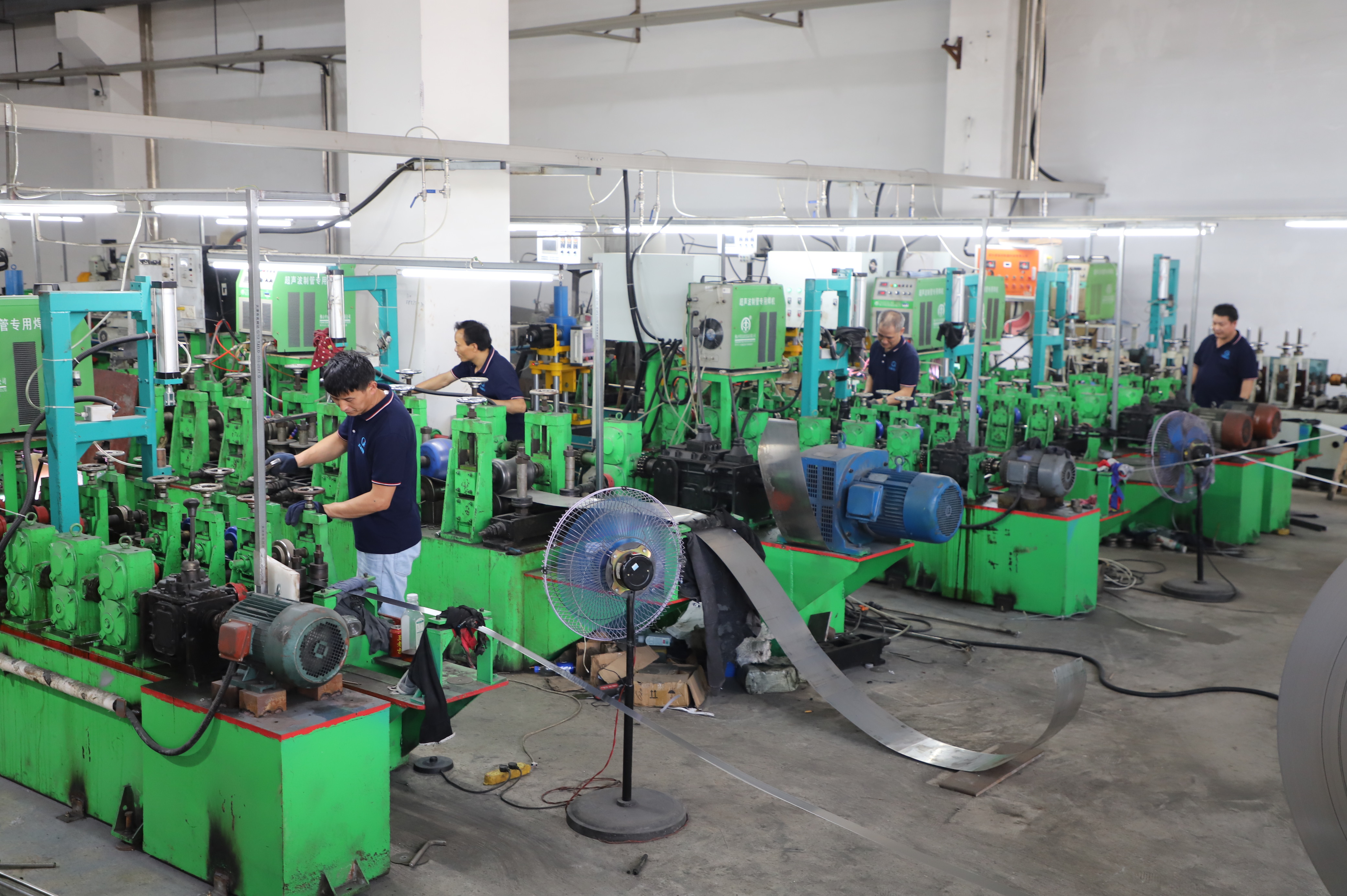
WENZHOU ZHENGXIN PIPE FITTINGS CO., LTD is a manufacturer of press-fit pipe fittings based in Wenzhou, China. Founded in 2013, the company operates a 9,000 m² facility with approximately 70 employees and an annual output of 1,000,000 units. Around 70% of production is exported, with Europe as the main market.
For the European market, the company offers the EN Standard Series, described as European standard press fittings. The range includes press-fit elbows, couplings and tees, and is produced in 304 or 316L stainless steel for pipe outer diameters from DN15 (φ16) to DN100 (φ108).
From a supply chain perspective, Zhengxin reports a monthly capacity of about 83,000 fittings and 83 tons of pipes, with typical lead times of 25 to 40 days and a minimum order quantity of 100 pieces. Quality control includes 100% visual inspection and pressure testing. This matters to buyers because delivery reliability and QC documentation are part of the product.
Technical Specifications and Certified Compliance
The table below summarizes the parameters that should be checked before order placement.
| Parameter | EN Standard Series |
|---|---|
| Material | 304 (06Cr19Ni10) / 316L (022Cr17Ni12Mo2) |
| Pipe outer diameter | DN15 (φ16) to DN100 (φ108) |
| Working pressure | 1.6 MPa cold water; 1.0 MPa hot water (≤95°C) |
| Working temperature | -20°C to 95°C (ordinary); -40°C to 120°C (high-temperature model) |
| Sealing material | Food-grade silicone (FDA certified) or EPDM |
| Standard alignment | EN 10312; CE certified |
| Connection principle | Press-fit, no welding required |
The certification evidence is important for EU projects. The EN Standard Series is covered by a CE-PED Verification of Conformity, certificate number ICR/VC/HS260548, issued by ICR Polska. The certificate references EN1092-1:2018 and covers stainless-steel press-fit pipeline components across the full size range DN15 to DN250. It is valid from 2026-05-13 to 2031-05-12. Buyers should request a copy of the certificate and confirm that the ordered product is within the certified scope.
%20VoC_HS260548(1)CE_02.png)
Sealing rings are part of the pressure-bearing design. The standard series uses food-grade silicone (FDA certified) or EPDM. Zhengxin's product data states that the EPDM sealing ring is suitable for potable water and gas supply systems. If a project requires gas service, the gasket specification should be confirmed in writing with the supplier, because not all elastomer compounds are qualified for gas or oil-containing media.
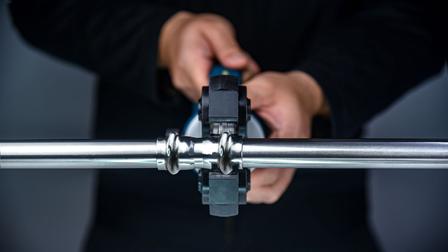
The press-fit process itself is simple to describe but strict to execute. The pipe is cut square, deburred, marked at insertion depth, inserted fully into the fitting, and then compressed with matched pressing jaws around the fitting's groove. The radial compression creates a leak-tight joint without heat. This is why press-fit systems are attractive for occupied buildings and retrofit work where open flames are undesirable.
M-Profile and V-Profile: Compatibility Boundaries
In Europe, two press geometries dominate: M Profile and V Profile. Both are legitimate and can comply with the same regulations, as noted in Eurotubi's technical guide, and M Profile is available up to 168.3 mm in Europe. The choice is often a matter of local convention and available tools.
The EN Standard Series from Zhengxin is designed for the European M-profile system. The company also produces a GB Double-press Series for markets using the Chinese V-profile system. The two systems are not interchangeable. Mixing M-profile fittings with V-profile tubes, or using a pressing jaw from the other system, can cause poor sealing, leakage or pipe disconnection. Fittings, tubes and pressing tools must all belong to the same profile type.
Applications in Building Services and Infrastructure
Typical application environments for these fittings include building construction, water supply and drainage, and gas supply. Within those projects, EN-standard press fittings are used in residential buildings, public constructions, hotels and hospitals, where space, hygiene and 24/7 operation are common requirements. The main functions are water distribution, gas conveying and drinking-water pipeline connection.
In a documented application case, a plumbing distributor and construction contractor used 12,000 pieces in a potable water plumbing system. The project required corrosion-resistant, leak-free pipeline operation, and the recorded highlights were fast installation, no welding and long service life. This is a typical volume for a mid-sized construction project and gives buyers a useful order-of-magnitude reference.
Market Trends: Compliance, Profiles and Tool Compatibility
The 2025 valuation of USD 3.8 billion and the 2034 projection of USD 6.4 billion suggest that press-fit technology will continue to gain share in the piping industry. The sub-sector estimate of USD 1.03 to 1.30 billion for stainless steel press fittings shows that stainless steel is one of the main growth segments within the broader press fitting category.
For European buyers, the practical consequence is that procurement specifications should treat CE conformity and profile type as core requirements, not optional extras. The presence of both M and V profiles in the market means that profile compatibility must be documented in every order. Zhengxin's EN Standard Series reflects this environment by linking the product to CE-PED certification and European standards, while its GB Double-press Series serves markets where V-profile tooling is standard.
Press-Fit vs. Welded and Threaded Connections
When press-fit is compared with traditional welded or threaded stainless steel connections, the differences are clear. Press-fit removes hot work, reduces installation time, and creates a repeatable joint quality that depends more on the tool and procedure than on welder skill. Threaded connections need pipe threading and can create multiple leak paths at thread seal points.
However, press-fit has boundaries. The joint is only as good as the preparation of the pipe end and the match between jaws and fitting. The rated working pressure and temperature are defined limits; for this series they are 1.6 MPa cold water, 1.0 MPa hot water at ≤95°C, and up to 120°C for the high-temperature model. If a system operates beyond those limits, or requires pipe diameters outside DN15 to DN100, a welded or flanged connection should be evaluated instead.
| Factor | Press-fit | Welded | Threaded |
|---|---|---|---|
| Installation speed | Fast after pipe prep | Slower; weld prep and cooling | Moderate; threading and sealing |
| Hot work / flame | No | Yes | No |
| Required skill | Correct tool and procedure | Qualified welder and inspection | Pipe threading and joint assembly |
| Visual quality check | Pressed indentation visible | Weld inspection required | Thread engagement visible |
| Typical limit for this guide | ≤ DN100; ≤1.6 MPa; ≤120°C | Broad if welded per code | Usually limited by pipe wall thickness |
Future Outlook
The direction of the market is toward documented, tool-friendly systems. As the installed base grows, contractors and distributors will increasingly standardize on one profile family to avoid tool inventory duplication. Manufacturers that provide clear standards evidence and complete parameter sheets will be easier for buyers to specify. The practical action for procurement teams is to build a short checklist: material grade, pressure and temperature rating, sealing gasket, profile type, and certificate number. That checklist will reduce installation failures and lifecycle costs.
Frequently Asked Questions
304 stainless steel is generally suitable for normal tap water and dry compressed air. 316L is recommended for seawater, weak acid-alkali environments, chemical service and coastal locations with high chloride exposure. 304 can be prone to pitting corrosion in high-chloride conditions. For general gas pipelines, 304 is commonly used; for seaside gas projects, upgrading to 316L is often advisable.
The sealing ring must match the medium being transported. EPDM is commonly specified for water supply and drainage systems; HNBR is often specified for gas and oil-gas media. If a water-service EPDM gasket is used in a gas line, it may age rapidly and create a gas leakage hazard. Always confirm the gasket material with the pipe or fitting supplier before installation.
No. Euro-standard M-profile and Chinese V-profile fittings have different press-groove dimensions and sealing ring groove positions. Forced assembly can cause poor sealing, water leakage or pipe disconnection. Fittings, tubes and pressing jaws must be the same profile type.
The standard procedure is: cut the pipe square, deburr inner and outer edges, mark insertion depth, insert pipe fully into the fitting socket, place matched pressing jaws on the fitting groove, and press until the jaws close completely. After installation, carry out a pressure test. Improper cutting, incomplete insertion or wrong jaw position will cause leakage risk.
Leakage is usually caused by human error: unremoved pipe burrs, insufficient insertion depth, misaligned pressing jaws, mismatched profile tools, or a damaged sealing gasket. Inspect the joint, check the gasket and verify that the correct jaws were used. Replace damaged parts and reinstall according to the standard procedure. Do not press an old deformed fitting a second time.
Further Reading
For the complete range of press-fit fittings, download the product catalog: Product Catalog PDF.