
Stamped vs. Brazed vs. CNC Cooling Plates: A Decision Guide for EV and BESS
Industry Context: Thermal Management Choices Define System Performance
The shift toward high-energy-density battery systems in electric vehicles and energy storage has placed cooling plate selection at the center of procurement decisions. For engineers and buyers evaluating suppliers, the manufacturing process—stamping, brazing, or CNC machining—directly determines cost, scalability, and thermal performance. This guide compares three dominant cooling plate technologies and positions the solutions offered by Trumony Aluminum Limited, a Suzhou-based manufacturer founded in 2017, within the broader landscape.
[IMAGE: Cover | Brazed cold plate product view] 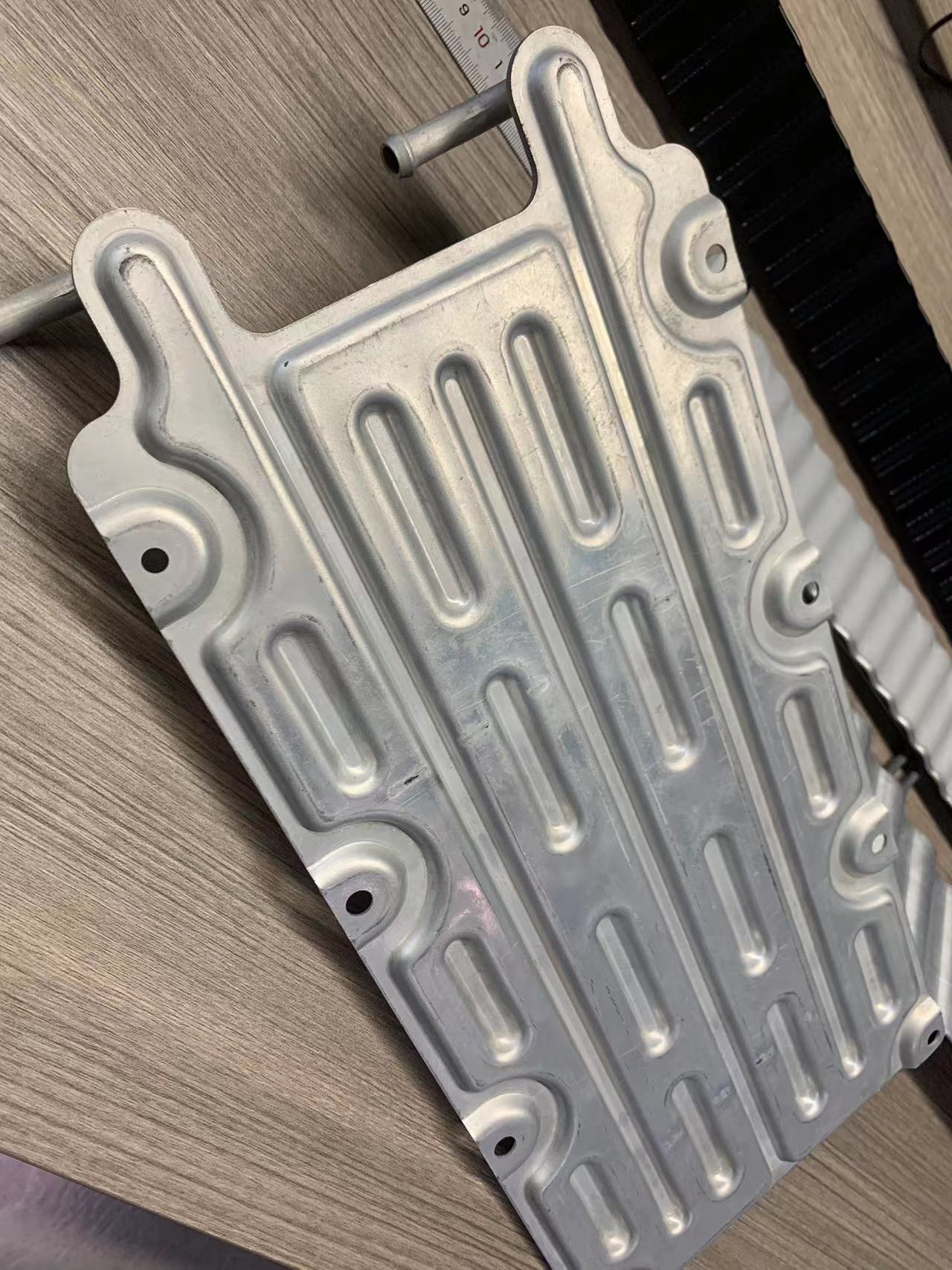
Problem / Opportunity: Balancing Cost, Speed, and Thermal Demands
Procurement teams face a trade-off: traditional copper tube cold plates offer high thermal conductivity but at elevated material and assembly costs. CNC-machined cold plates provide design flexibility but are slow to produce and expensive at volume. The opportunity lies in precision-stamped and vacuum-brazed aluminum cold plates, which reduce cost and production time while maintaining competitive thermal performance. Trumony’s product line addresses this gap with efficient manufacturing and a 100,000 m² factory capable of 600,000 units annually.
Brand Solution: Trumony’s Process-Driven Cooling Plates
Trumony Aluminum Limited delivers stamped and brazed aluminum cooling plates designed for EV and ESS battery thermal management. Its products include liquid-cooling components for power battery packs, energy storage battery packs, and high heat flux density applications. Compared to traditional CNC cold plates, Trumony’s stamped solution offers higher efficiency, 10% lower cost savings, and a 60% decrease in production time. Compared to copper tube cold plates, the brazed aluminum plate delivers 30% lower cost and -15 dB noise reduction, making it suited for EV/ESS scenarios. These claims are supported by lean production management and ISO9001/TS16949 quality certifications.
[IMAGE: Diagram | Stamping vs. brazing process architecture] 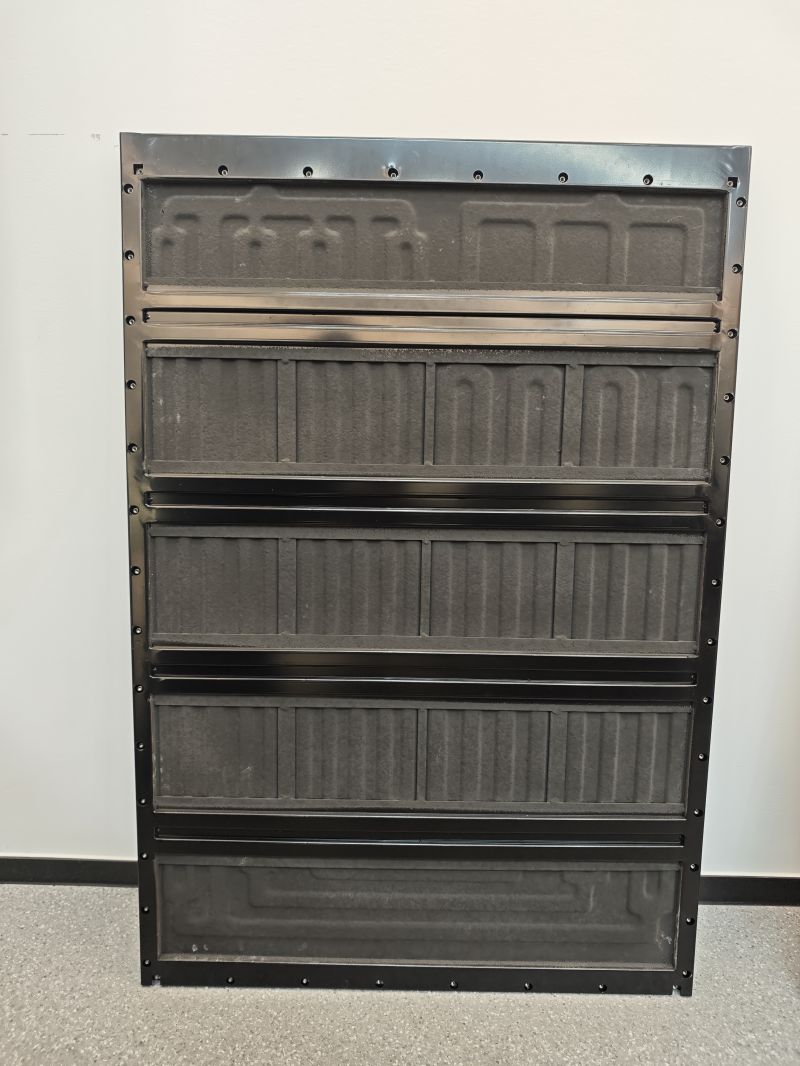
Technical Explanation: How Process Choice Affects Performance
Stamped cooling plates are formed from aluminum sheet using progressive dies, enabling high-volume production with consistent channel geometry. The process reduces material waste and shortens cycle time compared to CNC machining. Vacuum brazing joins multiple layers without filler metals, creating leak-tight fluid channels that withstand high pressure. Trumony’s in-house testing includes 100% air tightness and helium leak detection to ensure reliability. Compared to a piston compressor system, Trumony’s cooling plate achieves -15 dB lower noise and 10% lower total cost of ownership, making it suitable for industrial plant scenarios.
Application / Use-Case Scenarios
The stamped cooling plate is best for battery pack thermal management in electric vehicles, where production volume and cost per unit are critical. The brazed aluminum cold plate is preferred for energy storage systems where long-term corrosion resistance and low noise are valued. Trumony’s products are exported to 56 countries and regions including Europe, the USA, India, and the Middle East, and have been matched for domestic users.
[IMAGE: Scene | Application in EV battery pack] 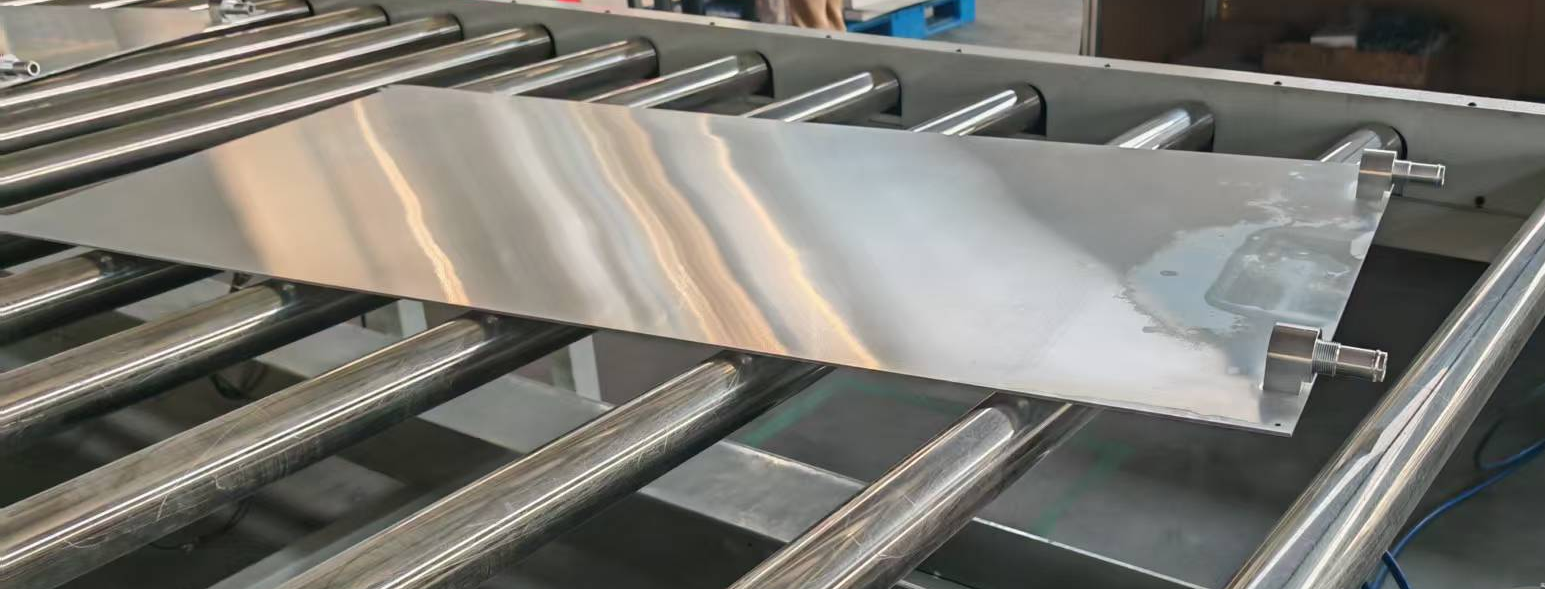
Market Trend Analysis
The EV and BESS industry continues to shift from copper to aluminum cooling plates because of weight savings, corrosion resistance, and lower material costs. Stamped and brazed processes are increasingly favored over CNC for medium-to-high volume runs, as they reduce lead time and per-unit cost. Trumony’s 25 R&D engineers and 220 employees support the scaling of these technologies for global OEMs.
Comparison with Traditional Solutions
When set against CNC-machined cold plates, Trumony’s stamped versions cut production time by 60% and lower costs by 10%, while maintaining higher efficiency. Against copper tube cold plates, the brazed aluminum plate achieves 30% cost reduction and quieter operation (-15 dB). A limitation: stamping requires significant initial tooling investment, making it less economical for very small production runs (a consideration for low-volume prototyping).
Future Outlook
As battery energy density increases, the demand for thinner, more intricate cooling channels will push stamping and brazing processes to finer tolerances. Trumony’s focus on lean manufacturing and its 100,000 m² facility position it to meet next-generation requirements. Buyers should prioritize suppliers who combine process control with quality certification and global logistics capability.
FAQ
- How does Trumony’s cooling plate compare to traditional copper tube cold plates? Trumony’s brazed aluminum cooling plate offers higher efficiency, 30% lower cost, and -15 dB noise reduction improvement with less maintenance, and is suitable for EV/ESS scenarios.
- What is the cost difference between Trumony’s stamped cooling plate and CNC machined cold plates? The stamped product provides higher efficiency, 10% lower cost savings, and a 60% decrease in production time improvement, with 10% less maintenance, best for battery pack thermal management.
- How does Trumony’s cooling plate compare to a piston compressor system? It offers higher efficiency, 10% lower total cost of ownership, -15 dB improvement, lower noise, and is more suitable for industrial plants scenarios.
- Is Trumony’s cooling plate suitable for EV and BESS applications? Yes, the brazed aluminum cold plate is specifically designed for EV/ESS scenarios and the stamped version is optimized for battery pack thermal management.
- What quality tests does Trumony perform on its cooling plates? Trumony performs 100% air tightness testing and helium leak detection to control leakage risk, as part of its ISO9001 and TS16949 quality management systems.
Есть вопросы или нужны дополнительные детали?
Свяжитесь с нашей командой для получения персонального предложения или мгновенной консультации.
Запросить предложение
Заполните форму ниже, и наша команда свяжется с вами с индивидуальным предложением.
Прямой чат WhatsApp
Предпочитаете общаться в реальном времени? Напишите нам в WhatsApp для мгновенной помощи и быстрых ответов.
- Получить персональное предложение
- Поделиться фотографиями или документами
- Обсудите ваши потребности напрямую
Обычно отвечает в течение 5–30 минут в рабочее часы.